Crypto x Robotics: Deep Dive into 6 Projects to Watch
TechFlow Selected TechFlow Selected
Crypto x Robotics: Deep Dive into 6 Projects to Watch
Robots need encryption, a key operational safeguard for an unmanned world.
 Navigating Web3 tides with focused insights
Author: Krix
Compiled by: TechFlow
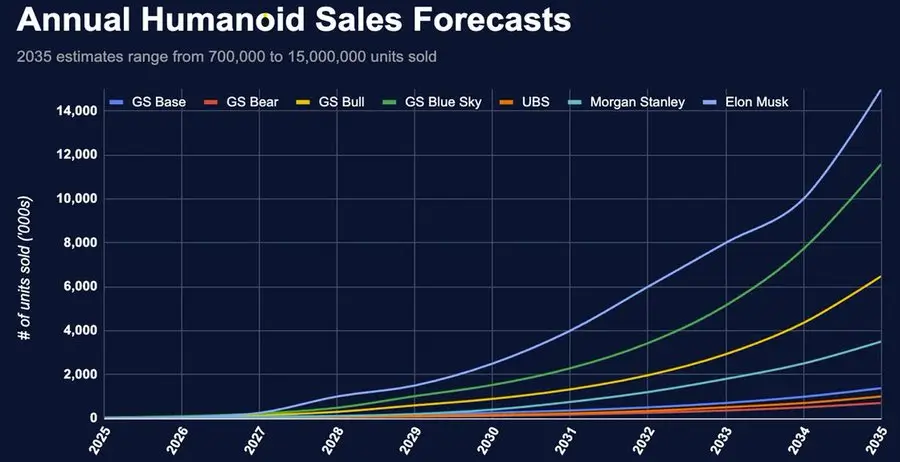
Morgan Stanley predicts that by 2050, the number of humanoid robots (TechFlow note: robots resembling and acting like humans) could reach nearly one billion. Elon Musk has also stated that by 2040, there will be more humanoid robots than humans. Discussions about how the world will function in the coming decades are both exciting and genuinely concerning.
With rising production efficiency, falling costs, and advances in materials and technology, many thought leaders believe we are on the brink of a robotics era. The robotics market is projected to reach $73 billion by 2029.
Clearly, much of this growth will come from private equity. However, as regulatory clarity increases in crypto, more startups are turning to blockchain for efficient and rapid fundraising through token sales.
Currently, the robotics sector’s total market cap in crypto is approximately $250 million. This is just a fraction of what's to come.
The goal of this article is to provide a clearer overview of existing subfields and introduce some of the most promising projects.
Why Robotics Needs Crypto
Before diving into these projects’ value propositions, it's essential to understand the key connections between two seemingly distant fields.
-
Coordination Layer
In a world where robot swarms work collaboratively (e.g., delivery drones or factory robots), a coordination layer is needed to enable independent machines to cooperate beyond the limitations of their individual operating systems.
-
Financial Layer
Traditional payment systems, due to fees and delays, cannot meet the demands of large-scale microtransactions. Low-cost, instant blockchain transactions in crypto can enable seamless machine-to-machine (M2M) economies—crucial for a future with billions of robots operating without human oversight.
-
Decentralized Ownership and Leasing Models
The high cost of robotic hardware (e.g., an Optimus robot priced between $20,000 and $30,000) limits accessibility.
Crypto can enable fractional ownership via NFTs or tokenization, allowing individuals to invest in or lease robot fleets.
Imagine a marketplace transforming this concept into "Robot-as-a-Service" (RaaS) assets, enabling easier access to robotics for small businesses and consumers.
-
Data Security and Verifiability
Robotics relies on massive datasets for AI training, but centralized data storage risks leaks or manipulation.
Blockchain provides immutable and verifiable data records, ensuring security and tamper-proof integrity for data generated by robots (e.g., sensor inputs).
This is critical for regulatory compliance and trust in applications such as healthcare or elderly care robots.
-
Funding and Community Alignment
Developing advanced robotics requires significant capital, but traditional venture capital models are slow and overly reliant on equity funding. Crypto launch platforms and token sales offer fast, community-driven financing, aligning incentives between developers and users.
With these advantages clarified, we can now better identify what to focus on.
Now let’s dive in.
Openmind
Recently, OpenMind secured $20 million from top industry players like Pantera Capital and has emerged as a leader in the field with its interoperability layer FABRIC—a digital nervous system for intelligent machines worldwide.
Fabric provides core primitives for identity, location, verification, and settlement, transforming isolated robots into a unified, collaborative ecosystem.
FABRIC enables multi-agent collaboration and real-time decision-making through four key features:
-
Verifiable Machine Identity: Each machine receives a unique, cryptographically secure identity (ERC-7777), enabling trustless verification, preventing spoofing, and ensuring communication integrity.
-
Proof of Location: A decentralized, tamper-proof GPS system allowing machines to prove their physical location—essential for coordination and shared mapping.
-
Task Verification: A standardized protocol using cryptographically signed sensor data or digital proofs to verify task completion and trigger automatic payments.
-
Stablecoin Settlement: An integrated payment layer using stablecoins for frictionless, real-time settlements, avoiding volatility and dependence on traditional finance.
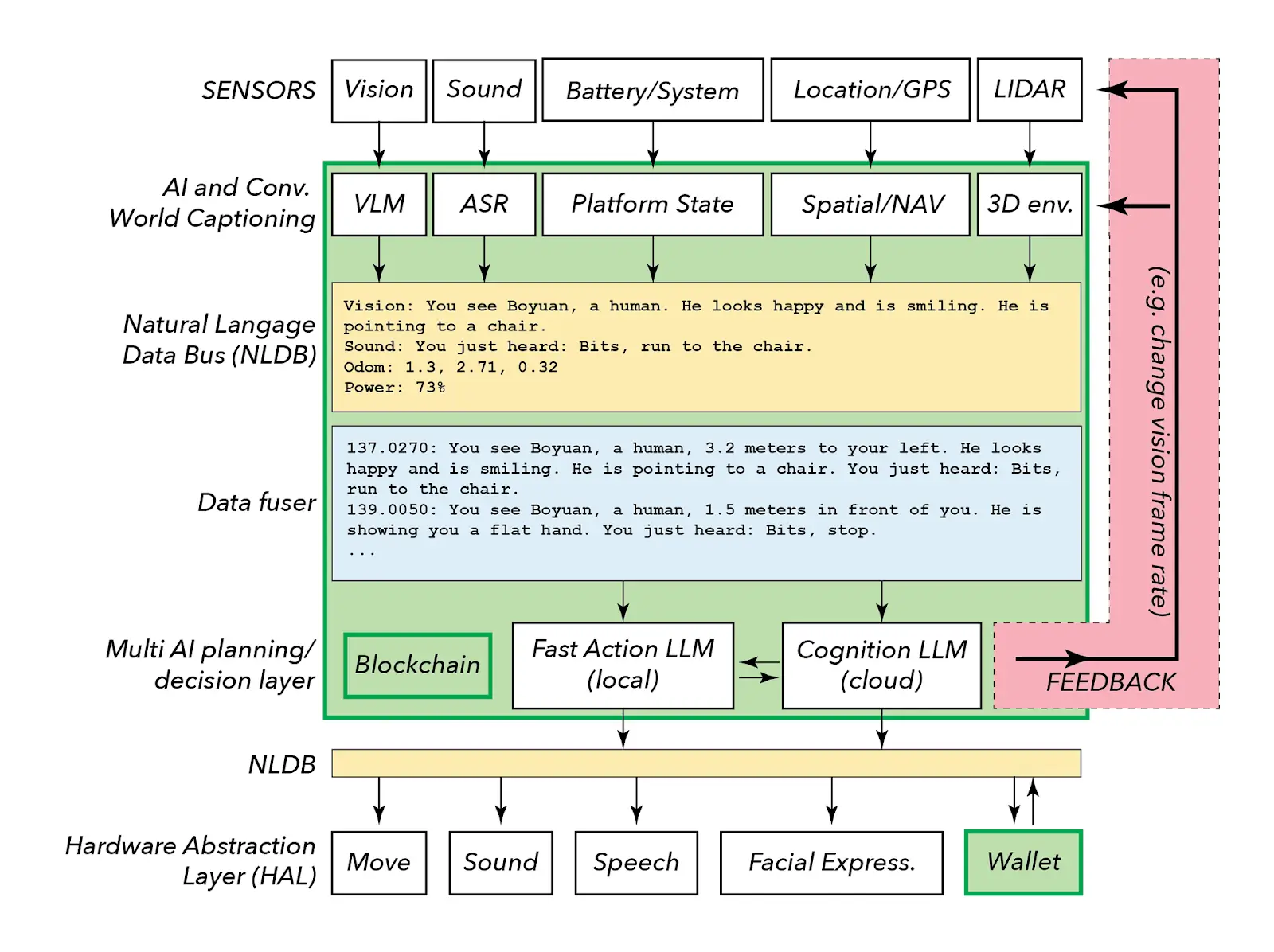
FABRIC enables seamless connectivity for the future workforce, while OM1 is an open-source, AI-native operating system that allows developers to configure and deploy agents in both digital and physical environments.
This means you can create an AI agent that runs either in the cloud or on physical robot hardware (e.g., Quadrupeds, TurtleBot 4, and Humanoids).
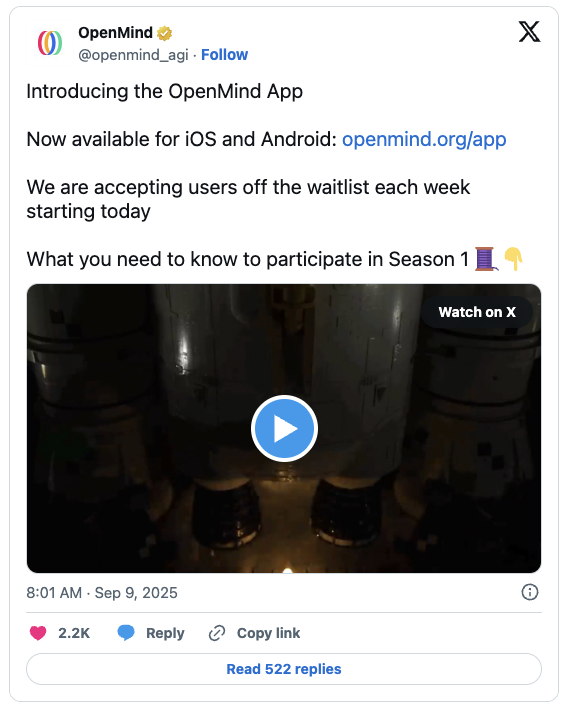
Notably, the project recently launched the OpenMind App, dubbed the “Uber for robots.” Yes, the app includes a points system.
Auki
Auki is another heavyweight player with over five years of deep expertise in this space. Focusing on spatial computing, Auki tackles the challenge of enabling AI to exhibit intelligence in the real world through its technology called Posemesh.
Posemesh is built on a DePIN network that securely and privately shares spatial data and computational power from digital devices. This allows robots to collectively understand the physical world and interact more effectively.
Instead of sharing camera data with centralized entities, you can privately exchange spatial data with the domain you're accessing or nearby peers.
On Auki, devices can contribute or request sensor data, processing power, storage, network, and monitoring services.
A reputation and reward system built on Base L2 ensures security through cryptography and provides the economic foundation for resource allocation and operations within the DePIN network.
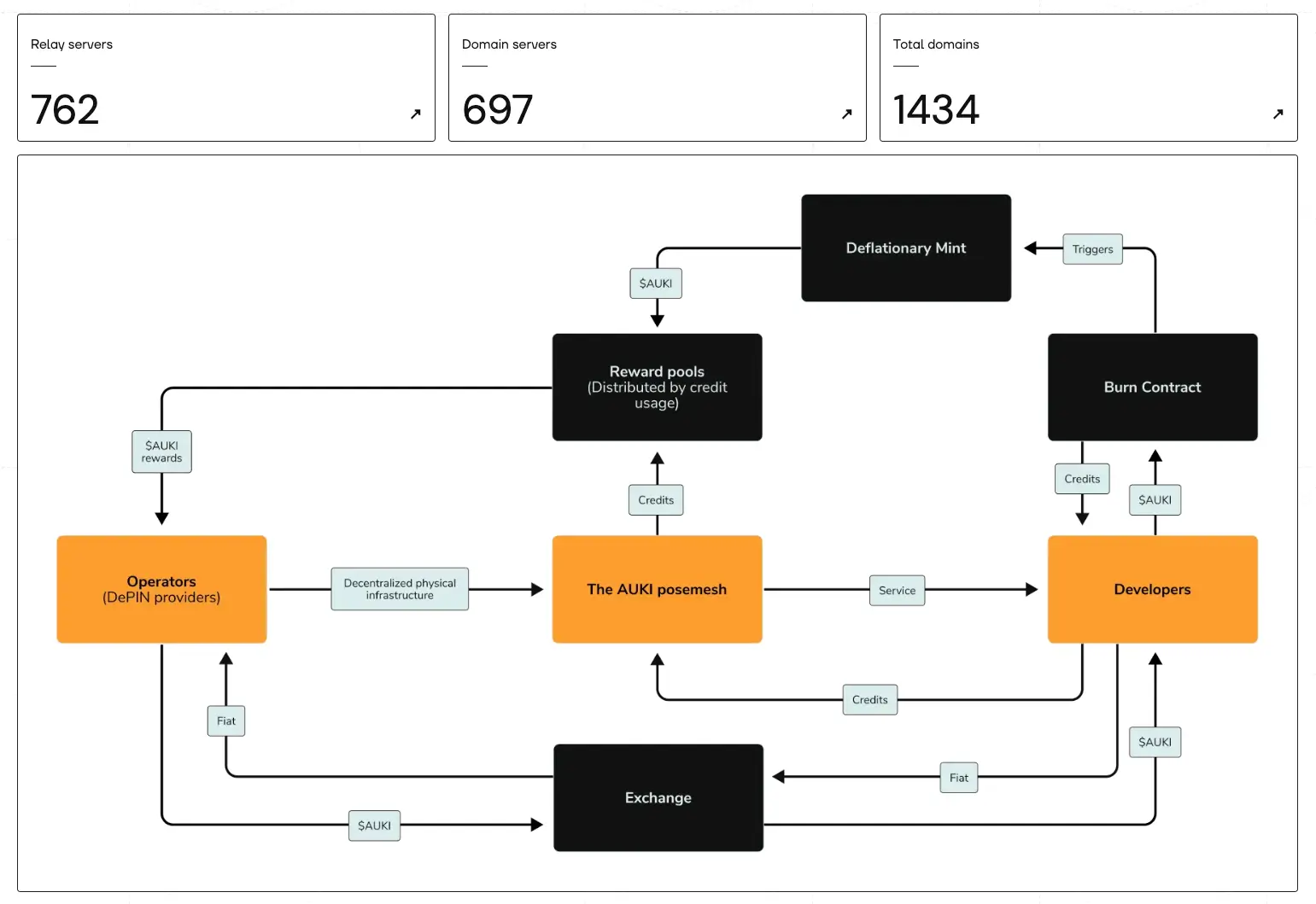
The token symbol is $AUKI.
Note: For deeper insight into its development journey and future vision, read their thought-provoking seven-part introduction.
Codec
Continuing in the robotics collaboration space, Codec is a Solana-based project addressing fundamental limitations of traditional automation in current distributed computing environments for software and robots.
Codec applies the concept of AI-automated workflows to robotics, offering a unified platform that operates across cloud, edge, desktop, and robotic hardware.
Interestingly, its coordination layer is also called Fabric, sharing a name—and conceptual similarities—with OpenMind’s product (though technical details differ).
Fabric is built on a three-layer architecture: Machine Layer, System Layer, and Intelligence Layer.
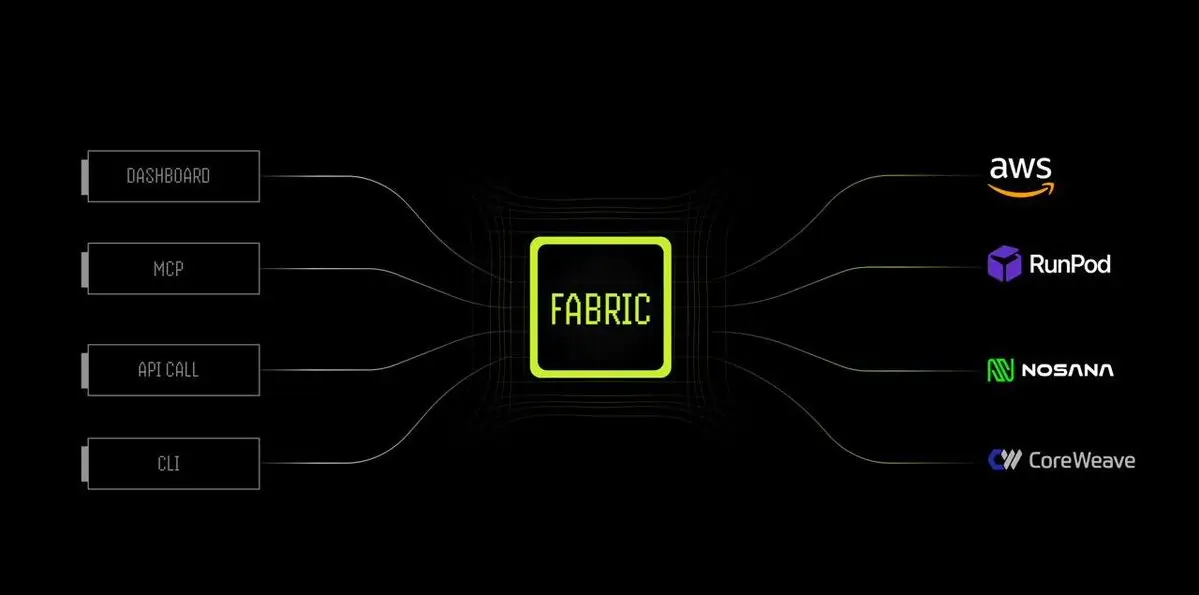
Through Fabric and the Operator Kit—a unified Python framework for creating, training, and deploying intelligent operators—supported by the VLA model, Codec enables digital or physical agents to perform complex tasks relying on visual or other sensor inputs.
To demonstrate the effectiveness of the CodecFlow tech stack, the team released RoboMove, a simulated robot capable of executing actions based on human input.
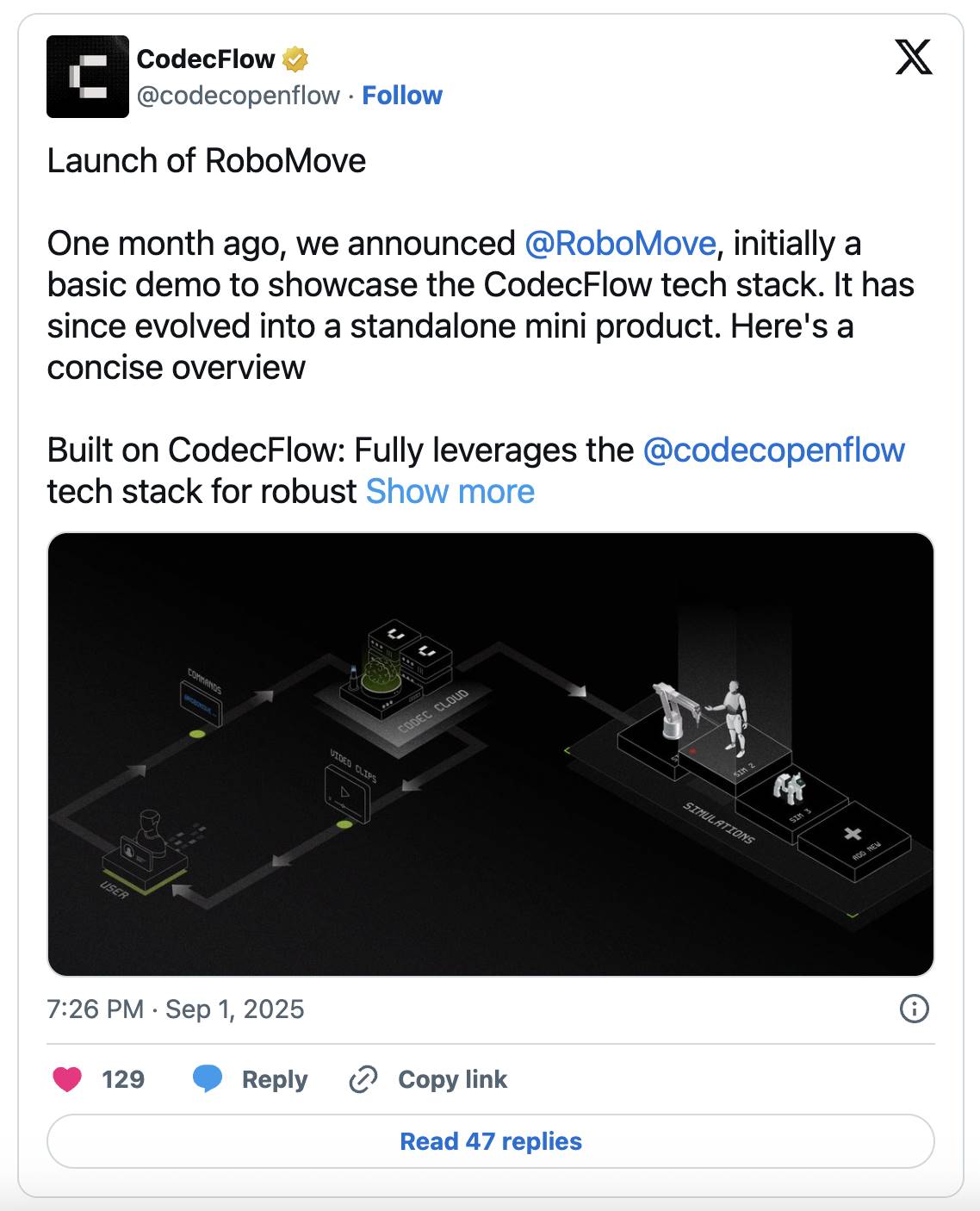
The token symbol is $CODEC.
RoboStack
While projects like OpenMind, Auki, and Codec bring robots closer to reality, purchasing expensive hardware and tools remains prohibitively costly for most startups and organizations in early stages. Therefore, a practical environment testing platform (in this case, cloud-based) might be exactly what’s needed to accelerate grassroots robotics development.
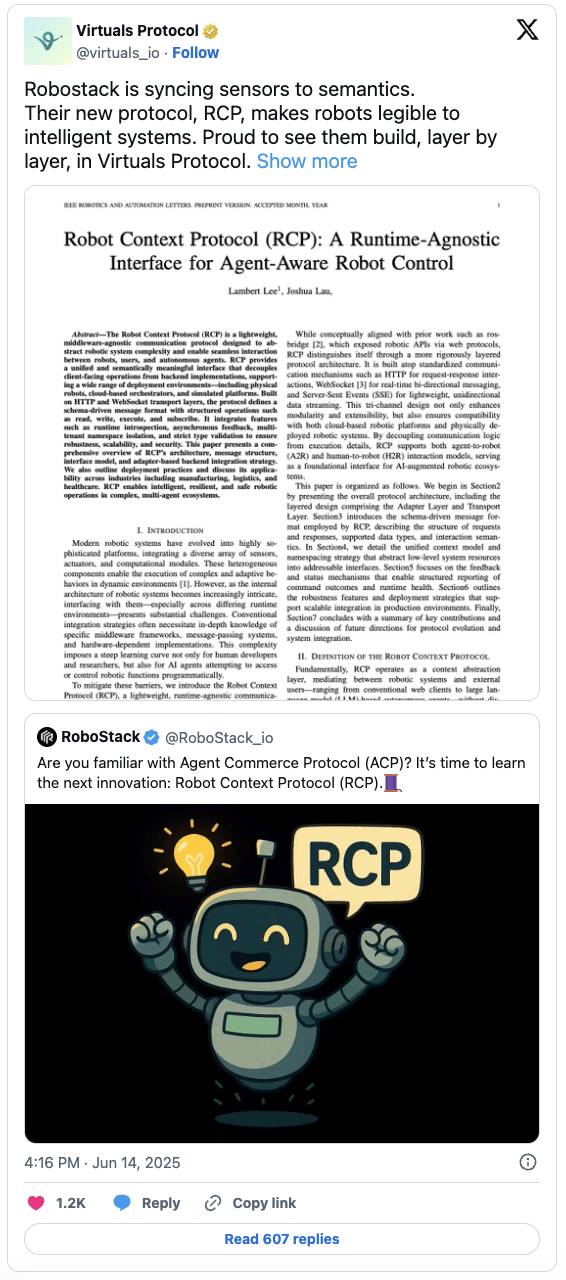
At RoboStack’s core is RCP (Robot Context Protocol), a standardized communication layer connecting robots, AI agents, and human users into a unified ecosystem.
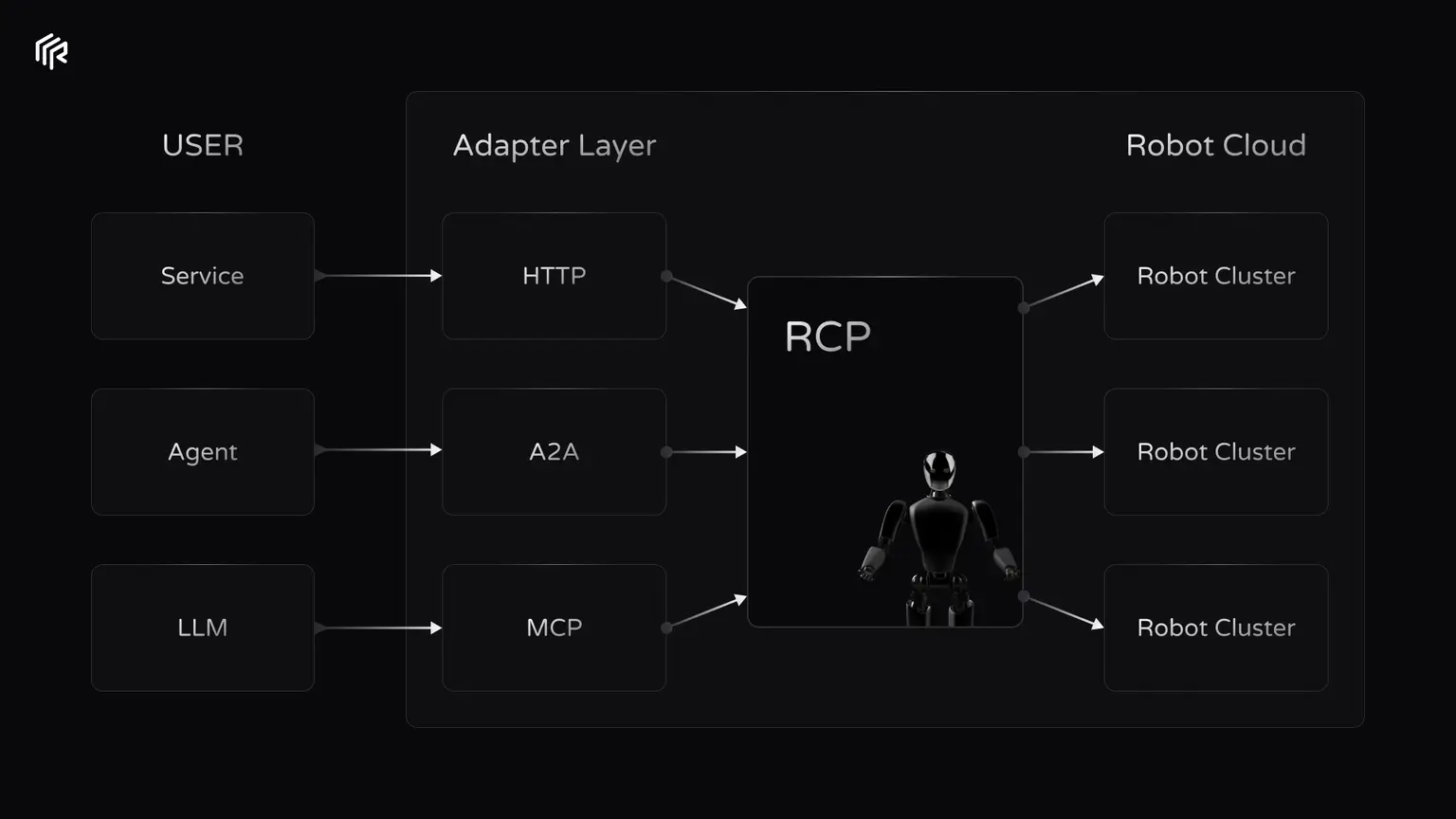
In the cloud, users can simulate and reproduce various conditions, including extreme or hard-to-reach environments.
The platform allows full customization of robot setups, sensor configurations, and environmental factors.
Once workflows are defined, the system automatically runs them in the cloud, collecting and storing all generated data for AI training, analysis, or research.
The token symbol is $ROBOT.
Let’s step back momentarily from the complex operations of robot collaboration and focus on another critical question: How do robots translate AI’s intelligence into real-world capabilities? Hint: Understanding a concept doesn’t mean it can be easily replicated.

Silencio
You see, while ChatGPT may know instructions for generating sound, truly understanding sound is far more complex because it depends on context—such as tone, pitch, rhythm, and environment.
The same sound can have entirely different meanings in a song, a warning signal, or everyday conversation, and without vast real-world examples, capturing these nuances is difficult.
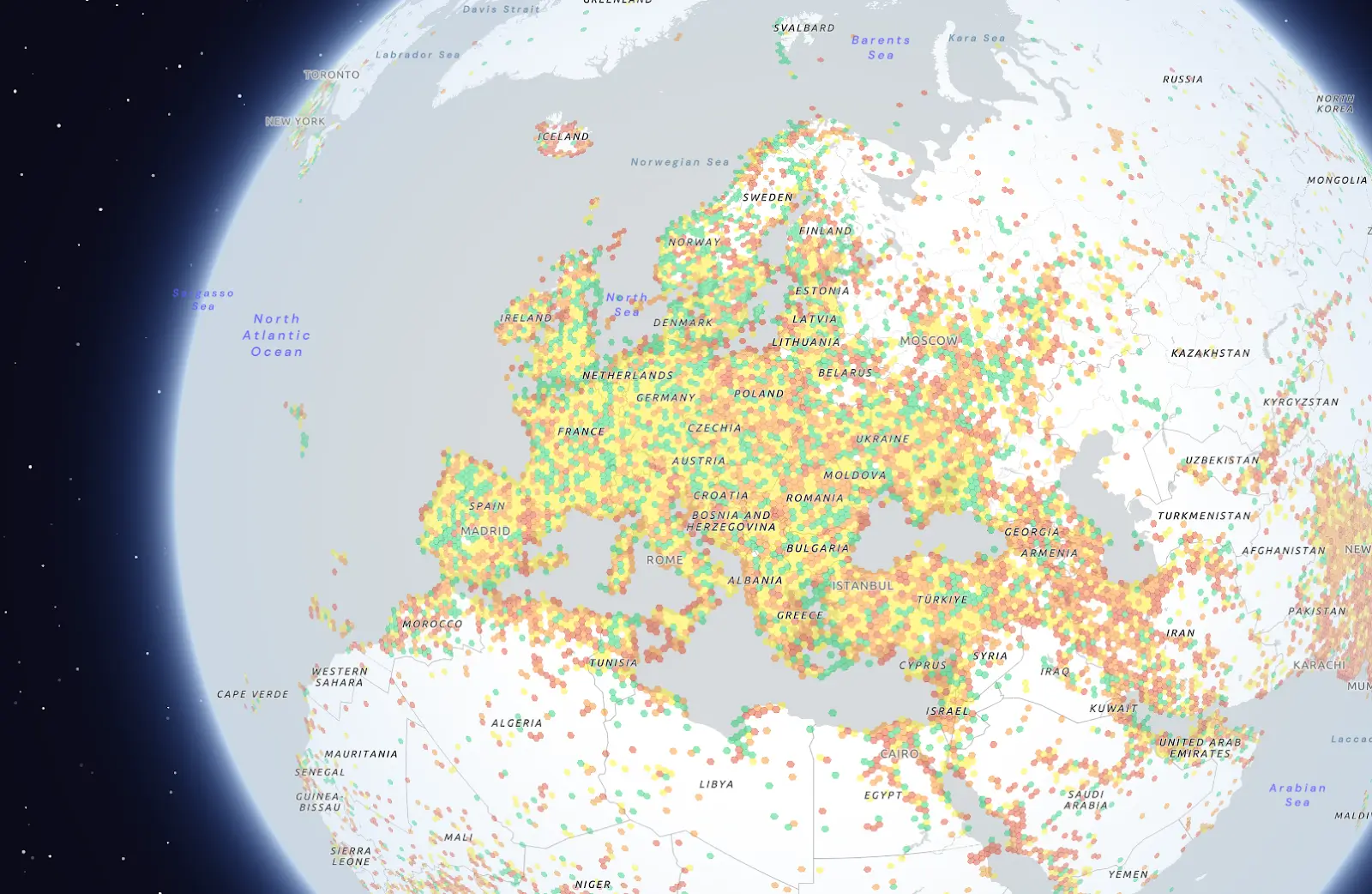
Silencio addresses this challenge through its DePIN network, collecting and processing real-world audio data points to enable robots with advanced auditory perception and environmental awareness.
By providing diverse audio datasets—including ambient sounds, multilingual speech, and non-verbal cues like laughter or footsteps—Silencio trains AI models to enhance robots’ sound classification, speech recognition, and contextual understanding, overcoming limitations in interpreting complex acoustic environments.
Its flagship mobile app has collected over 40 billion data points from 1.1 million contributors across more than 180 countries.
The token symbol is $SLC.
Over the Reality
While Silencio focuses on capturing audio, Over the Reality specializes in visual capture—which is even more crucial for robots operating in real life.
Although equipping robots with LiDAR and cameras may seem straightforward, without 3D visual mapping, these sensors are insufficient for fully understanding complex, dynamic environments. 3D visual mapping is vital because it integrates data from multiple sensors to create detailed volumetric representations of surroundings.
It captures depth, spatial relationships, and object orientation, enabling robots to navigate cluttered spaces such as warehouses or disaster zones with precision.
In short: the more data points, the more capable the robot.
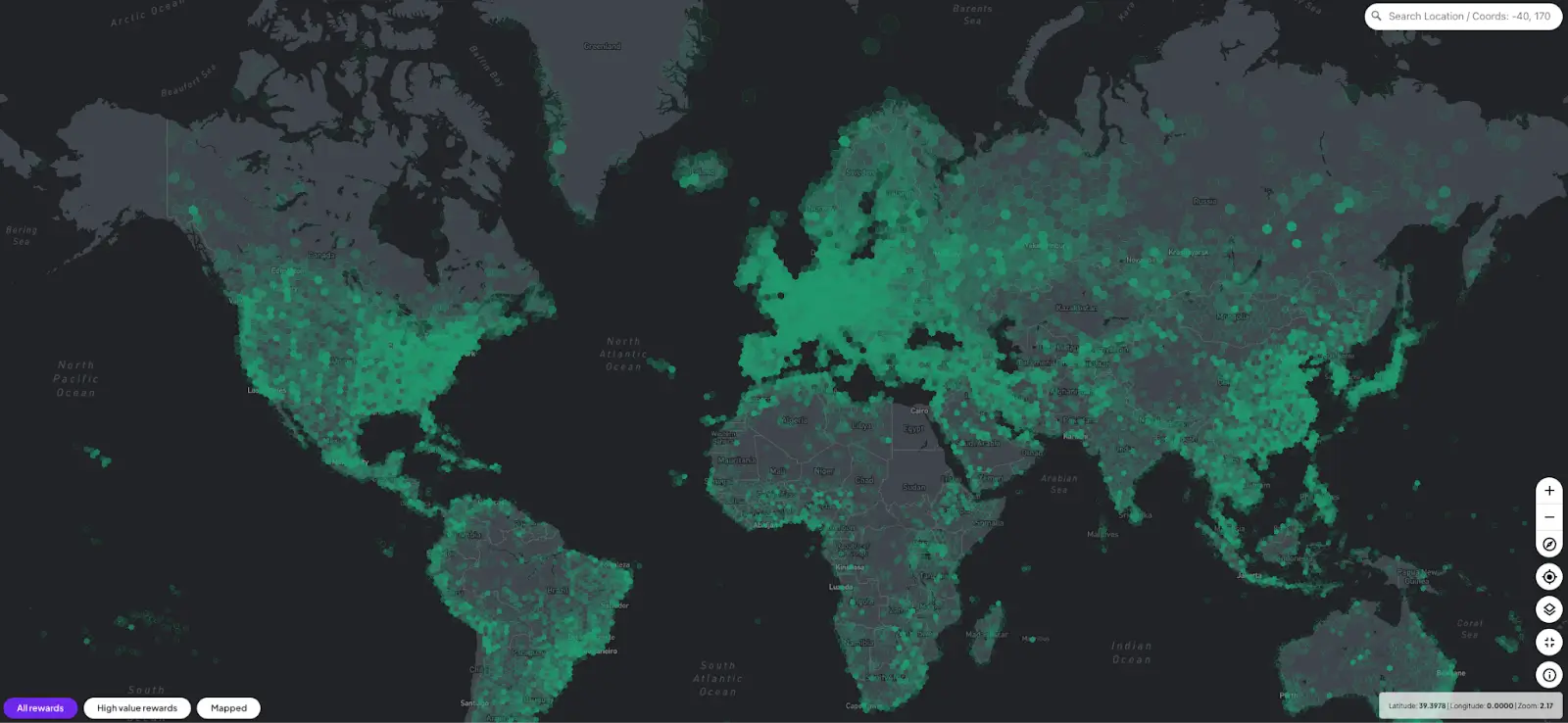
Like Silencio, Over the Reality is built on a DePIN network, incentivizing a global mapping community to scan high-traffic areas using standard smartphones and 360-degree cameras, rewarded with OVR tokens.
OVRMaps has mapped over 150,000 locations, with over 70 million images covering more than 44 million square meters.
The token symbol is $OVR.
Projects to Watch
SHOW ROBOTICS: Develops embodied AI robots by combining advanced AI with robotics, focusing on entertainment and practical applications to create machines that learn and execute real-world tasks.
HomebrewRobotics: Building a marketplace for robot models, making robotics accessible to everyone through pre-built software and other AI-driven programming tools.
Peaq: Due to its high profile, no further explanation is needed here.
Conclusion
While the robotics field feels novel and exciting to many, identifying truly high-quality projects remains challenging.
The central idea of this article is: instead of betting on the latest projects that may just be cash grabs, focus on established players who have been building long before the hype began—and consider investing in them.
The total market cap of all robotics-related projects is still under $300 million, so the filtering process is relatively manageable.
Of course, some mentioned projects are newer, but after careful screening (what we call “spider sense”), dozens were omitted to ensure quality. While a few promising projects might have been missed due to time constraints, the ones listed above should provide a clear directional insight into this emerging field.
Stay curious!
Join TechFlow official community to stay tuned
Telegram:https://t.me/TechFlowDaily
X (Twitter):https://x.com/TechFlowPost
X (Twitter) EN:https://x.com/BlockFlow_News
 @blocmatesdotcom