Pyth moves into second phase: institutional-grade commercialization through off-chain data
TechFlow Selected TechFlow Selected
Pyth moves into second phase: institutional-grade commercialization through off-chain data
Pyth Network is moving from DeFi data infrastructure into its second phase of development, launching institutional-grade subscription services aimed at reshaping the $50 billion market data industry and becoming the "source of truth" for financial data
 Navigating Web3 tides with focused insights
Since its founding in 2021, Pyth has been redefining the infrastructure and distribution of financial market data. Its goal has always been to become the "source of truth" for financial data. Today, Pyth is entering its second phase: launching institutional products, expanding token use cases, and achieving deeper integration with traditional finance (TradFi).
Pyth was designed to bring “the price of everything” to “everywhere”—a concept that sounds simple but has historically been difficult to realize. The internet has democratized access to content: CDs have been replaced by streaming, local media by global apps; yet in financial data infrastructure, this paradigm shift has not truly occurred.
Today’s institutions remain constrained by legacy systems, forced to pay billions annually to intermediaries like Bloomberg and Refinitiv. These aggregators, in turn, source data from various exchanges—exchanges that themselves operate as siloed entities across geography, asset class, and venue. The result is a fragmented and outdated market data ecosystem, even as other sectors have undergone digital transformation.
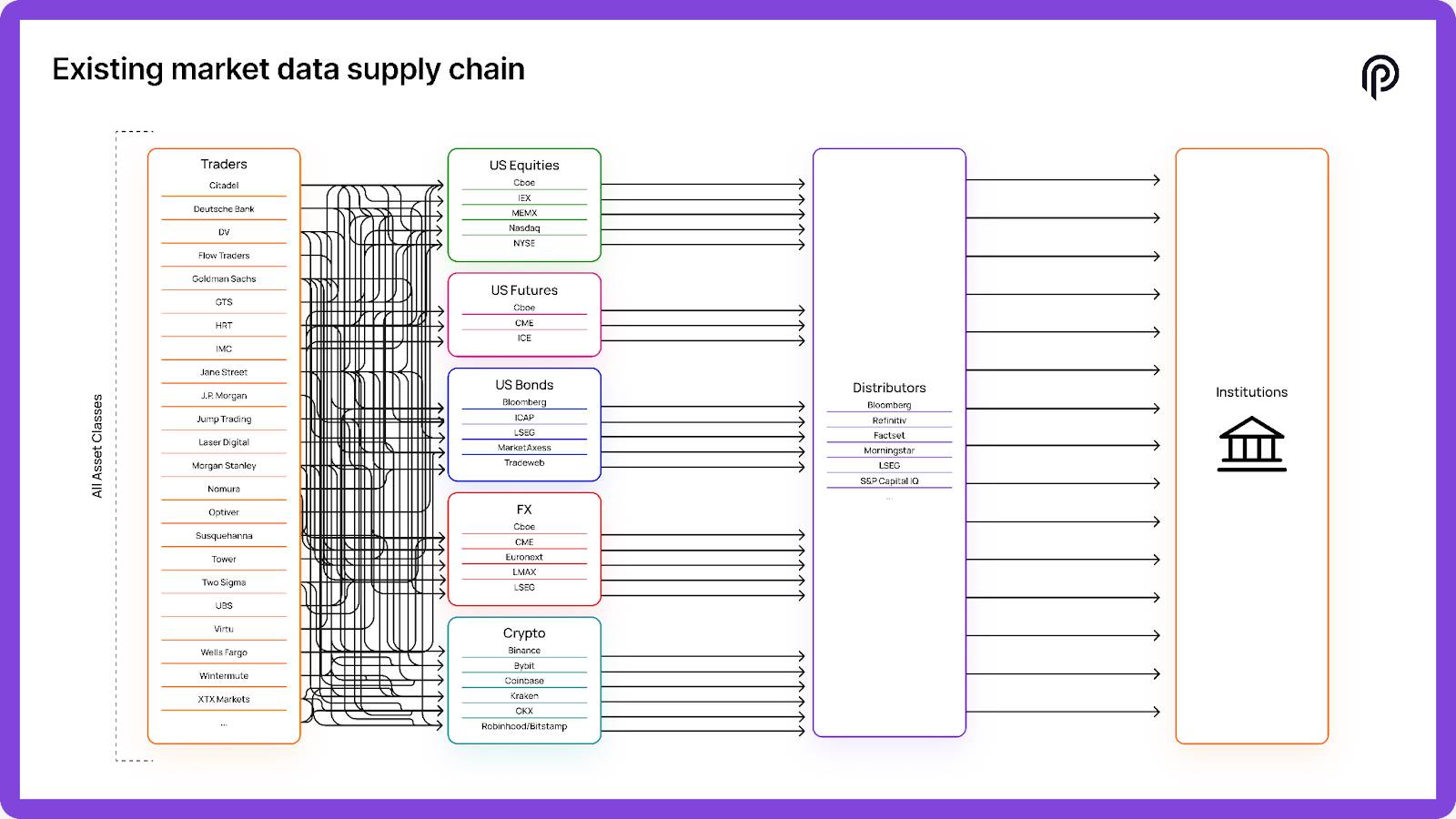
Pyth uses blockchain technology to build a “source of truth” because existing systems cannot deliver trusted data in a permissionless environment. Initially aggregating data among a small group of trading firms and exchanges, Pyth now enables hundreds of institutions to publish their proprietary market data onto a single network. With over $1.6 trillion in cumulative trading volume, more than 60% market share in DeFi derivatives, 600+ integrations, and a partnership with the U.S. Department of Commerce, Pyth’s distribution reach places it among the most influential protocols. Pyth has become one of the strongest and most valuable institutional-grade market data repositories globally.
More importantly: Pyth has become the world’s most robust and valuable institutional-grade market data repository.
Phase 1 validated product-market fit within DeFi and laid the foundation for Phase 2 by creating a new economic model for market data. The proposed next phase focuses on increasing DAO revenue, expanding into adjacent markets, and enhancing value accrual across the entire Pyth network.
What is the clearest proof of its value proposition? An increasing number of on-chain and off-chain applications are actively seeking to pay for Pyth data—Pyth is reshaping the market data supply chain.
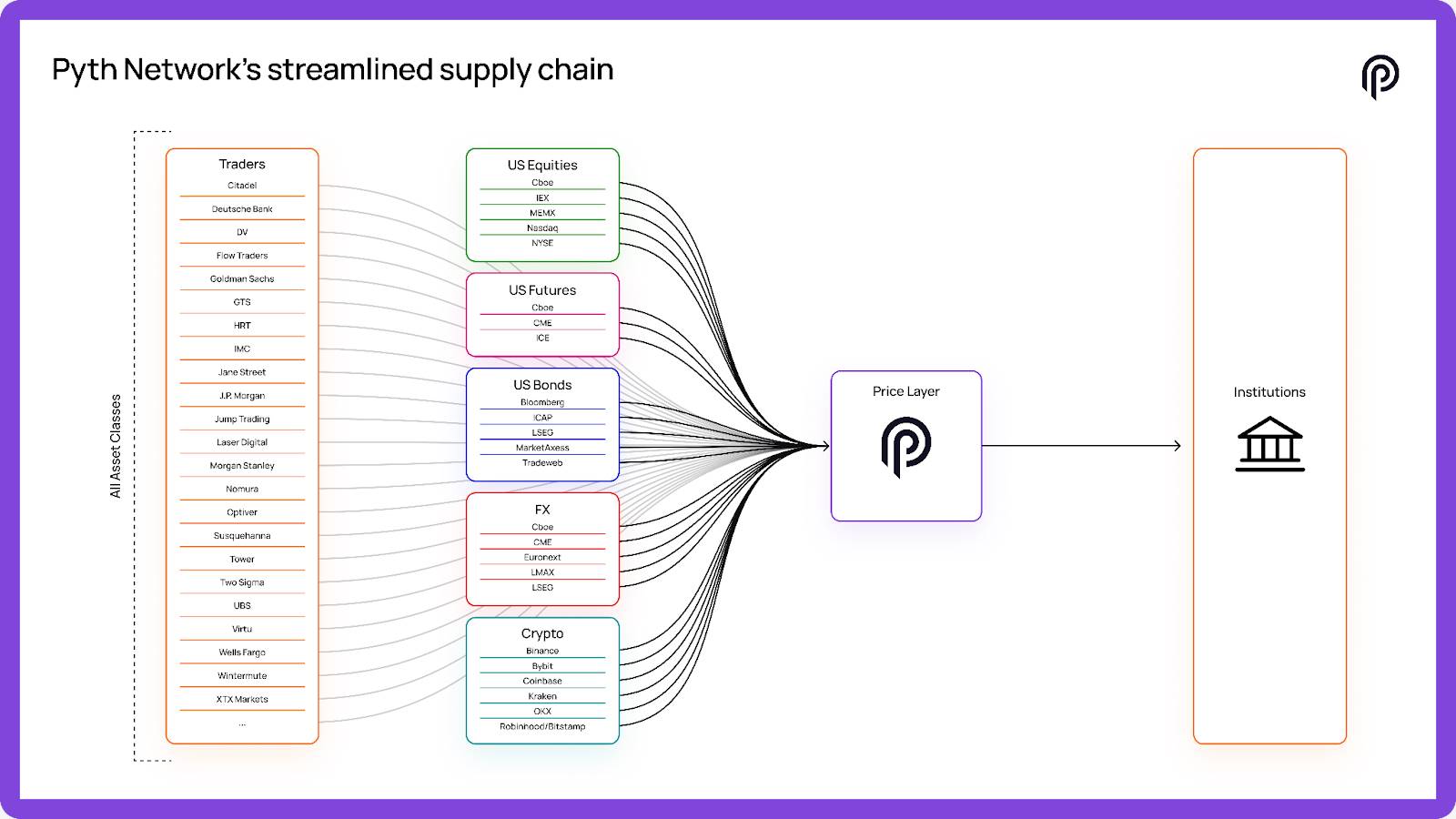
Most critically, institutions are actively seeking Pyth data; we are entering the final stage of developing a new product that could redefine market data across the entire financial industry.
Institutions spend approximately $50 billion annually on “all the market data they need.” From pricing multi-billion dollar trades to powering trading floor dashboards, market data is the fuel of institutional finance. Yet the current model is slow, expensive, and highly fragmented. If Pyth captures just 1%, it would generate $500 million in annual recurring revenue (ARR). But Pyth’s ambition goes beyond capturing $500 million—it aims to win this market and create sustainable value for the entire network.
Phase 1: Building Infrastructure, Dominating DeFi, Establishing the Most Valuable Data Source
Pyth’s first chapter focused on one goal: building and scaling on-chain infrastructure for verifiable, distributable, institutional-grade data.
The contributor team has steadily achieved this mission, and the data speaks for itself. With over 60% market share in DeFi derivatives and $1.6 trillion in cumulative trading volume, Pyth is uniquely positioned: as more real-world assets (RWA) are tokenized, it will capture exponential growth and value accrual. In our vision of the future, all data—including economic data from the U.S. Department of Commerce—is verified via Pyth Network and published to every blockchain. This business model will continue to thrive, reinforcing Pyth’s position as the “on-chain source of truth for data.”
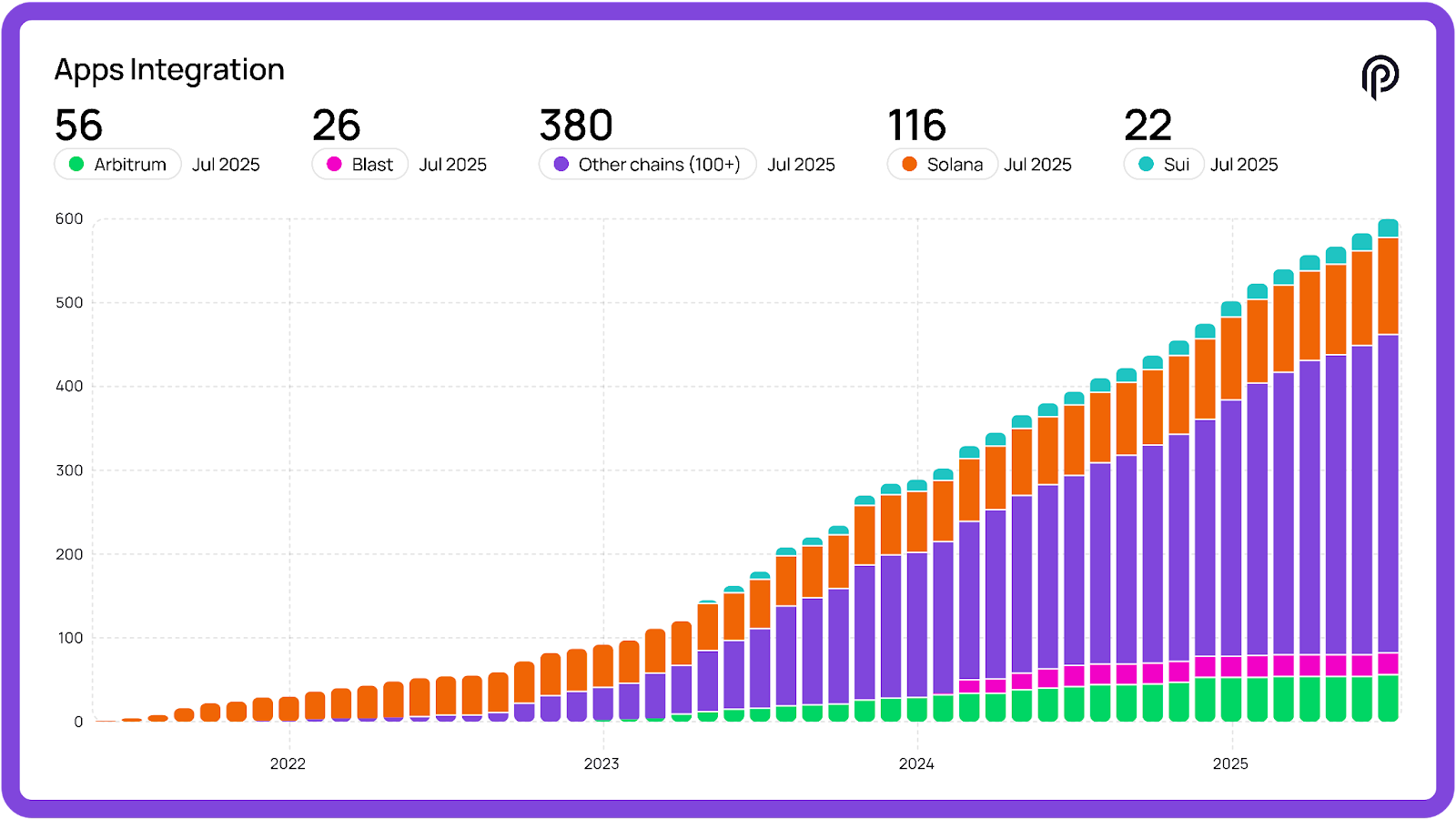
Over time, as data is delivered to smart contracts via proof-backed secured messages, on-chain fees will gradually increase. Earlier this year, the DAO approved a gradual increase in verification fees across dozens of blockchains—a process that will continue as more data comes online. Pyth’s adoption will accelerate through: integration with more blockchains, entry into new markets, enhanced trust parameters, and the upcoming trend of “mass tokenization.” We expect more data to come on-chain, and most of it will rely on Pyth for verification and distribution.
To date, Pyth has achieved the following:
-
600+ protocol integrations across 100+ blockchains
-
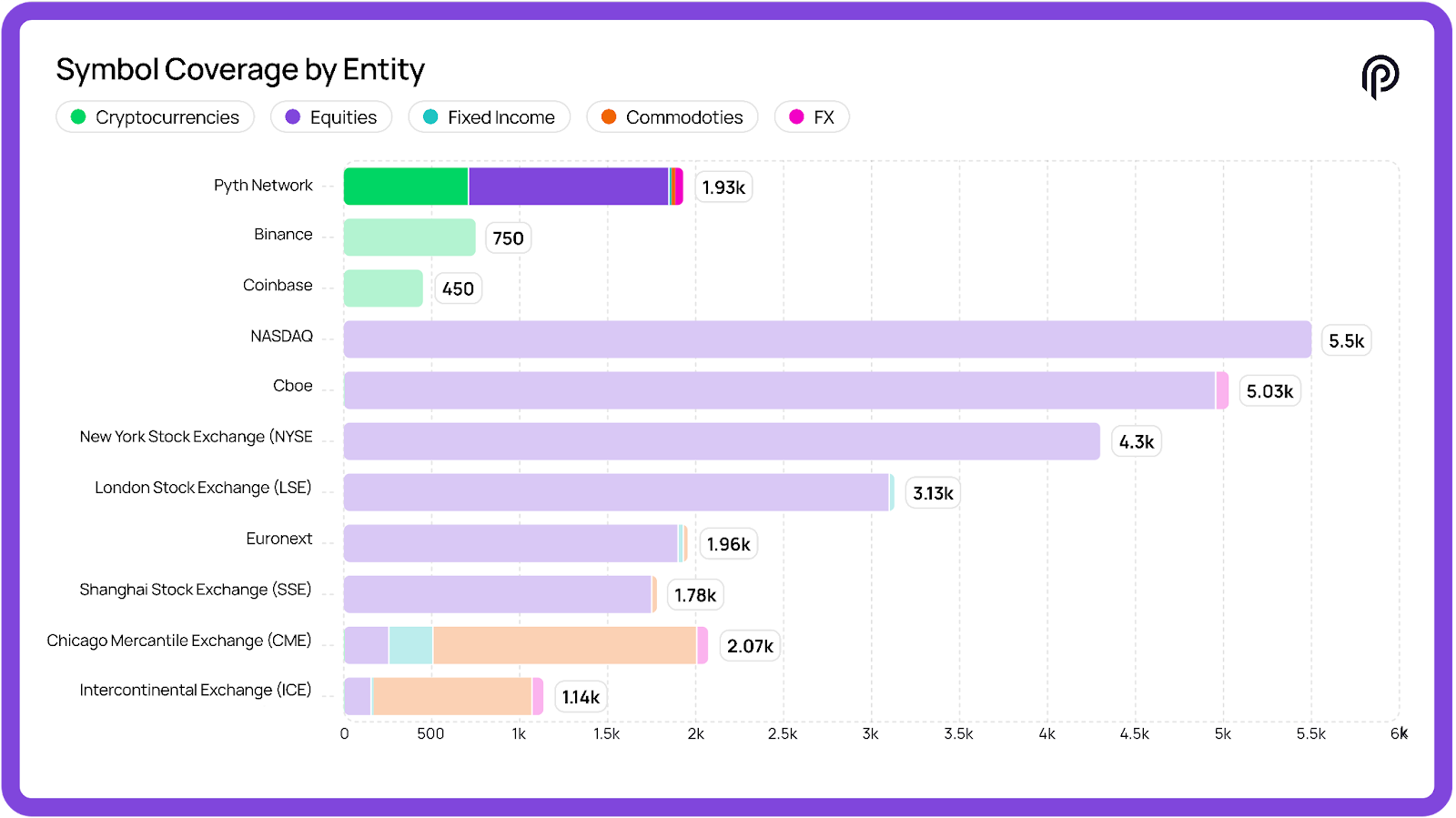
1,800+ price feeds, including 900+ for real-world assets
-
Top oracle by trading volume across major blockchain ecosystems
Pyth’s differentiation:
-
Proprietary data from top global trading firms and exchanges: DRW, Jump, Jane Street, Optiver, HRT, SIG, IMC, Virtu, GTS, Flow, Cboe, LMAX, MEMX, MIAX, IEX, etc.
-
Cross-asset coverage: crypto, equities, FX, commodities, rates—all delivered via a unified network
-
Global perspective: breaking down regional data silos, unifying multi-region pricing
-
Millisecond updates: meeting the demands of high-performance trading environments
-
Selected by the U.S. Department of Commerce to verify and distribute U.S. economic data on-chain
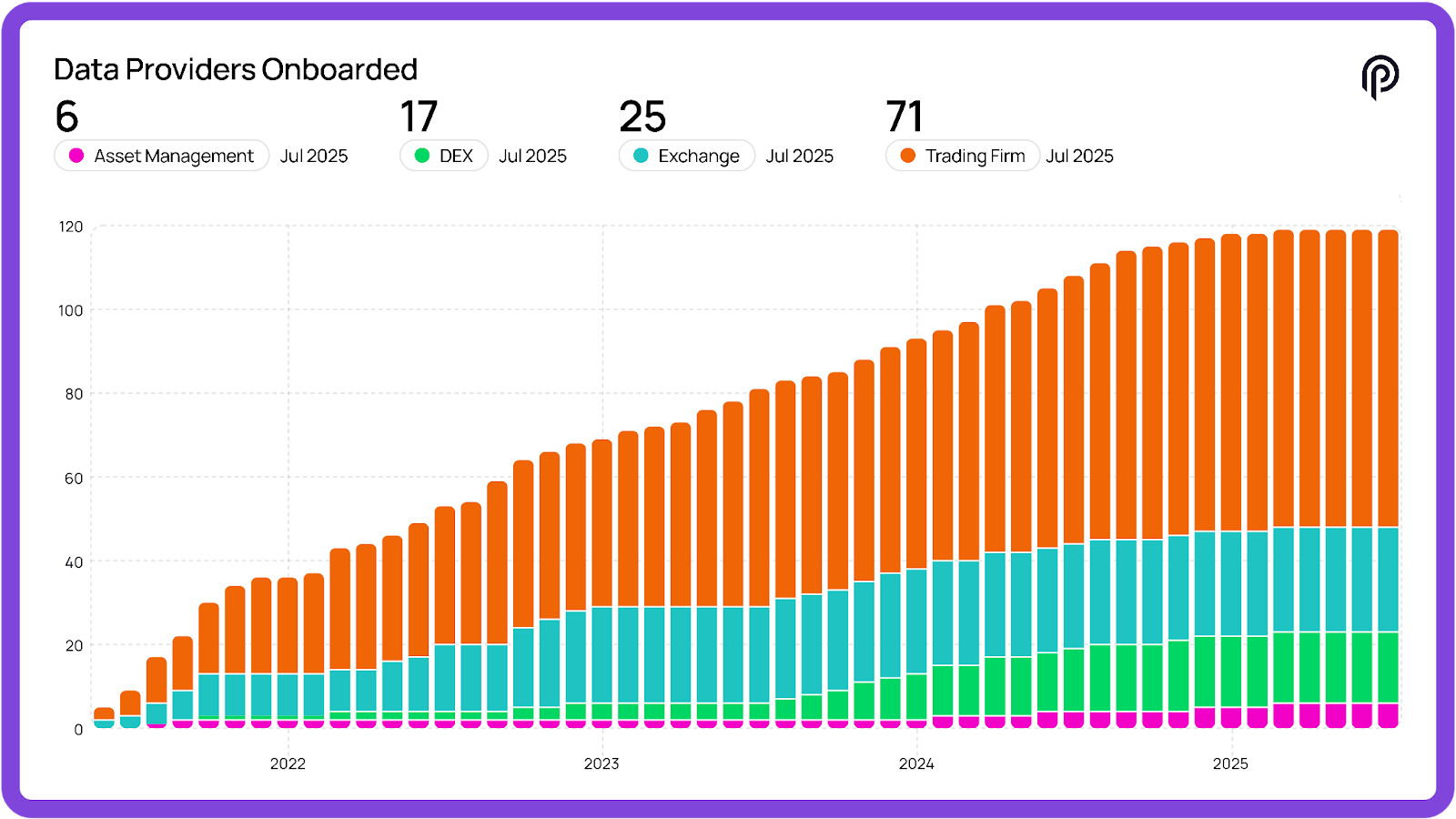
Phase 1 proof: the product works at scale. Now entering Phase 2: redefining the market data economy and becoming the cross-domain “source of truth” for finance.
Phase 2: Unlocking a $50 Billion Market Opportunity
Pyth is now ready to enter Phase 2, starting with monetizing the first market data network built by institutions, for institutions.
The global market data industry exceeds $50 billion annually, dominated by a few traditional giants that:
-
Increased prices by over 50% in the past three years
-
Charge some clients up to five times more than others for the same product
-
Artificially segment access by region and asset class
-
Create barriers for new professional financial service entrants
Market data costs have risen far faster over the past 25 years than most other major asset classes.
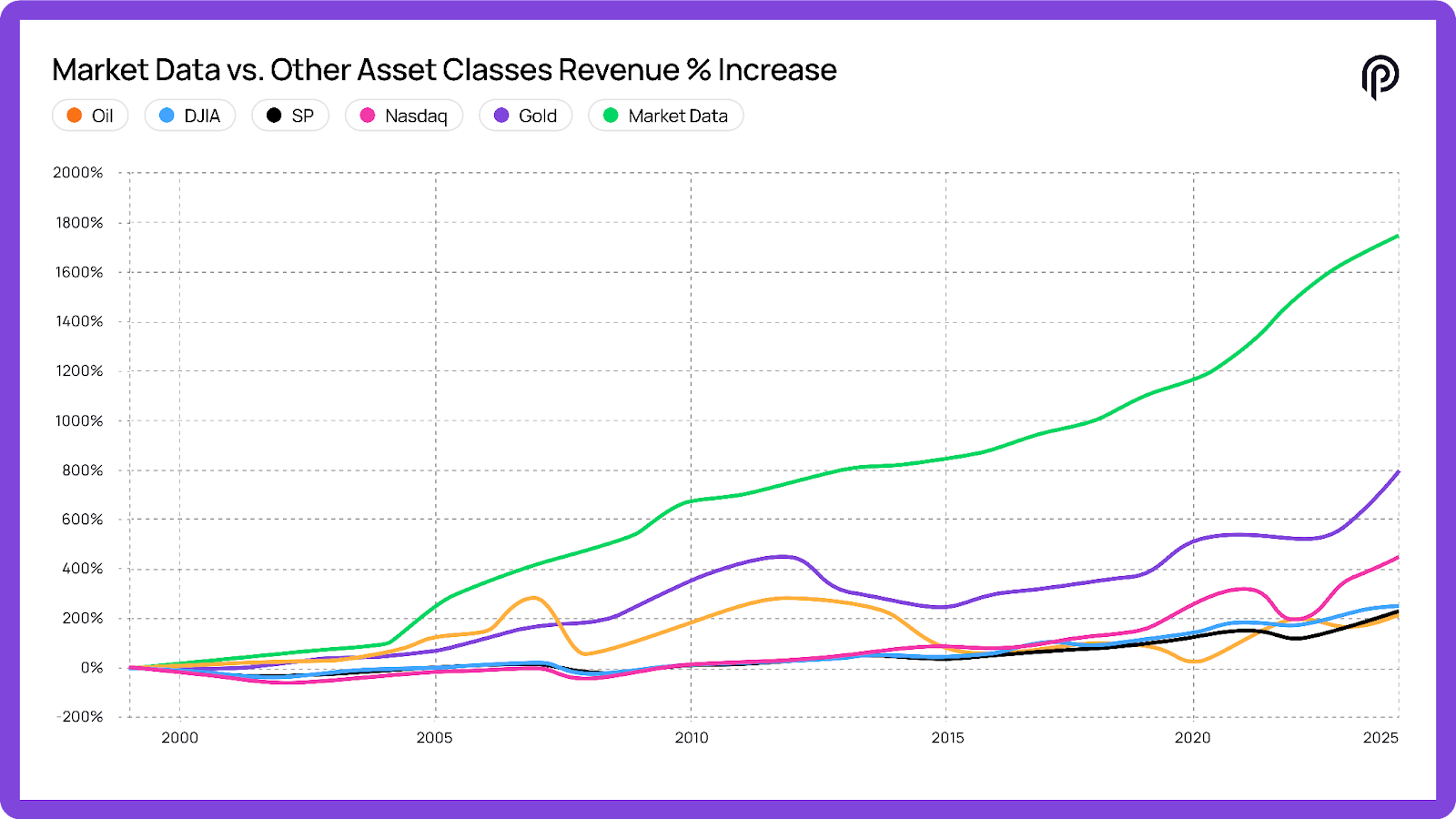
The sector is ripe for reinvention. Companies worldwide responsible for pricing and driving markets are now collaborating with Pyth to build solutions. Here are their pain points:
-
Exchanges only see their own order books (market slices), often limited to one region or asset class
-
Proprietary data streams sold by exchanges ignore trades elsewhere, creating blind spots
-
Data giants like Bloomberg and Refinitiv patch together these incomplete datasets and resell them in expensive, bundled, inflexible formats
-
The trading firms generating the fastest, most accurate prices do not benefit from the commercial value their data creates
Core structural flaw:
-
The most valuable prices are generated “upstream” (before reaching exchanges), yet most revenue flows downstream to intermediaries and redistributors
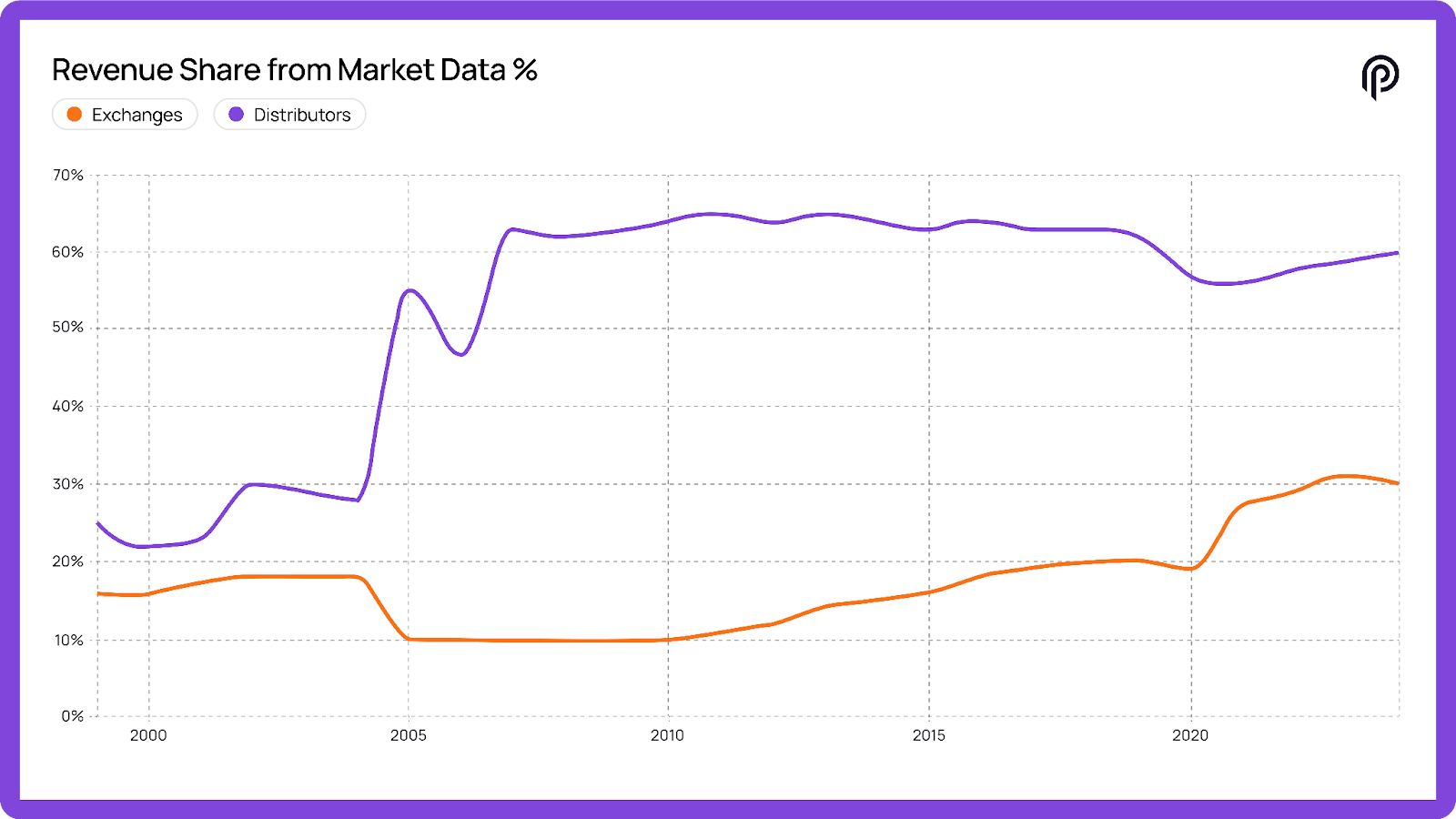
Pyth’s new product has the potential to simplify global market data access, empower institutions with more specialized data, and reshape the market data economy.
This product extends Pyth’s innovative model of sourcing institutional-grade data directly from the “source,” while enhancing performance, accessibility, and asset coverage. This “upstream-first” approach fixes a fundamental flaw in traditional market data: capturing value before data is fragmented, marked up, and delayed—and returning that value to the true producers of the data.
The proposed subscription product will deliver pure market data directly into existing off-chain workflows, including:
-
Risk modeling and analytics
-
Clearing and settlement systems
-
Government regulation and compliance processes
-
Accounting and reporting tools
-
Market data displays and terminal screens
-
Historical data research
Imagine a world where everyone—from the largest global institution to individual traders—can purchase comprehensive, customizable professional market data via Pyth Network. Payments can be made in USD, on-chain stablecoins, or PYTH tokens. This flexibility expands the potential subscriber base into the millions.
Under the proposal, subscription revenue will flow into the Pyth DAO, which will decide how best to redeploy it to strengthen the network and align incentives for contributors. Potential paths being discussed in governance forums include token buybacks, revenue-sharing models, and reward mechanisms for publishers, users, stakers, and holders. As adoption grows, this feedback loop amplifies network reach, improves data quality, and compounds value for all participants.
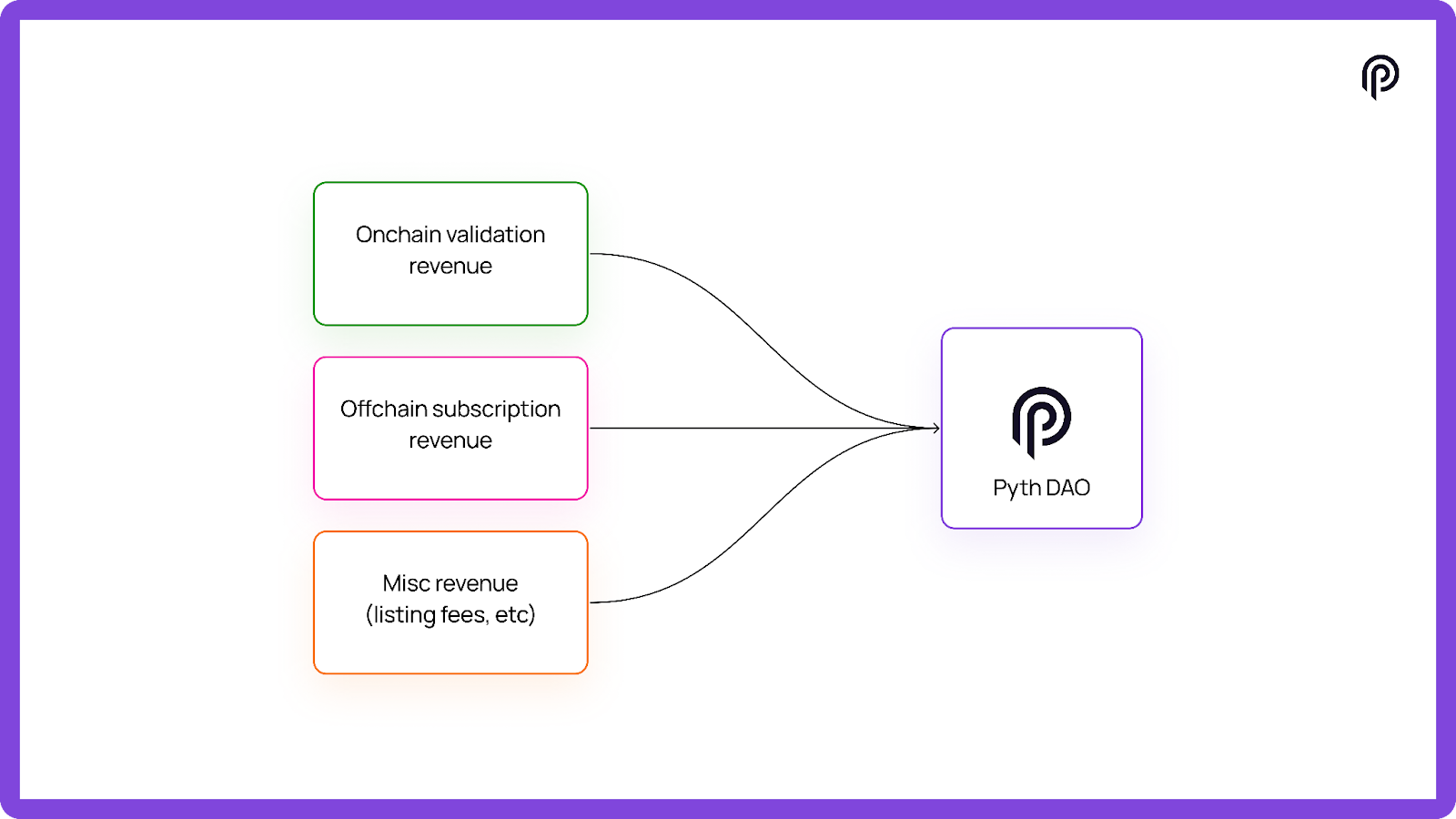
Pyth already meets the bar in quality, speed, and coverage to enter and win this market. With the new product entering DAO discussion, demand accelerating, and a clear path toward the $50 billion industry, Phase 2 lays the financial and structural foundation for Phase 3—the global price layer for all markets.
Phase 3: Global-Scale Expansion
After infrastructure is built and the subscription data model is launched, Phase 3 will pursue “full market coverage”:
-
Add 200–300 new assets per month
-
2025: 3,000+ assets
-
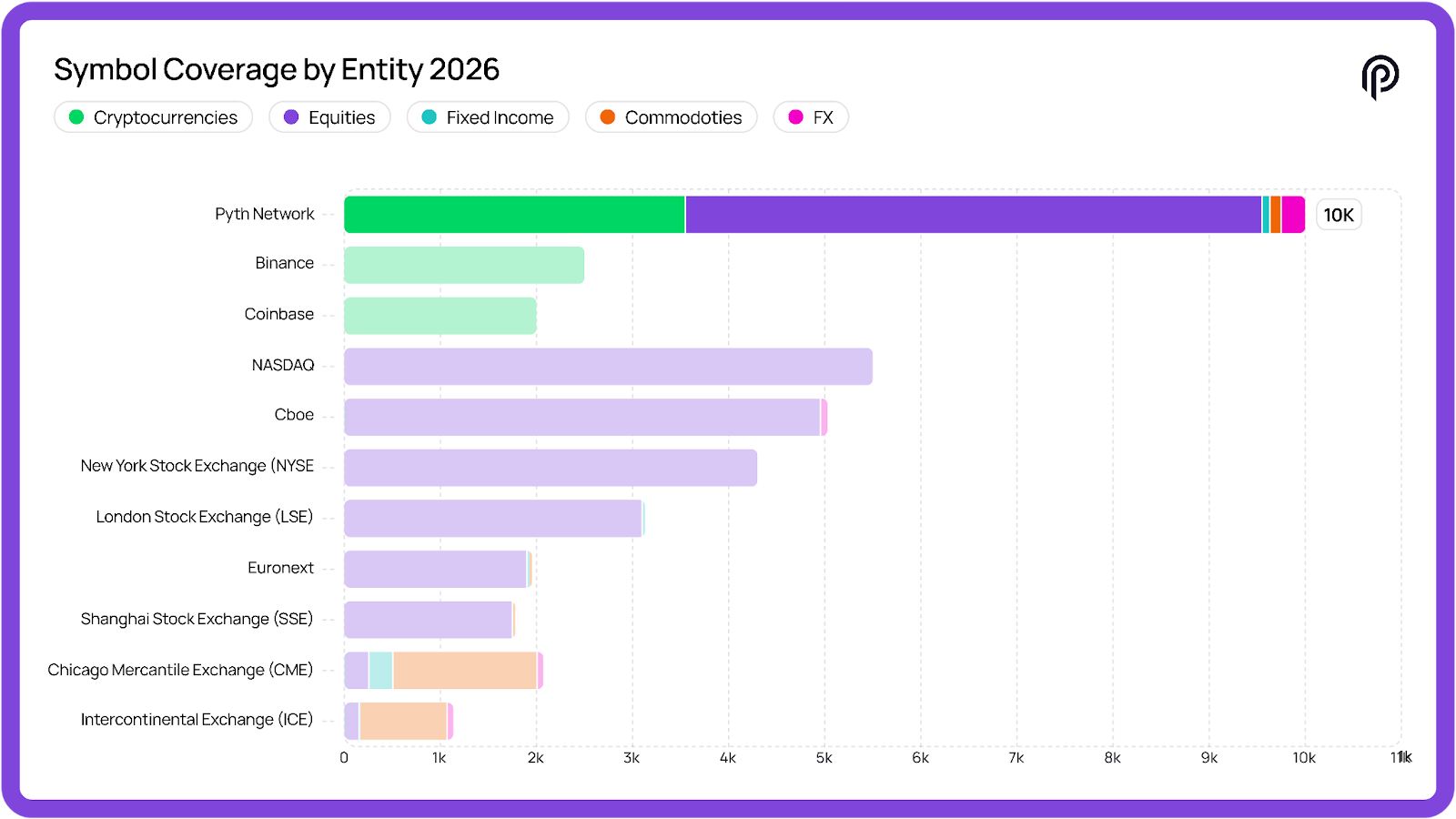
2026: 10,000+ assets
-
2027: 50,000+ assets
-
-
Achieve universal coverage:
-
Trading Venues
-
Permissioned DeFi
-
Unpermissioned DeFi
-
OTC Markets
-
The significance:
-
Build the most complete financial data layer globally
-
Erase multiple gaps caused by geography, asset class, and vendor complexity
-
Like Spotify, the catalog continuously expands—but unlike traditional providers, contributors share in the growth upside
Pyth’s current position:
Target position by end of next year:
Each new data source attracts more builders and institutions, driving adoption and subscription revenue; this revenue strengthens the Pyth DAO and expands incentives for contributors; higher incentives attract more data sources, accelerating the positive cycle.
The path forward is clear: with dominance in DeFi and accelerating penetration into TradFi, Pyth Network is poised to capture a significant share of the $50 billion global market data industry. But this is not the end—Pyth has the potential to become the “single source of truth” for global finance.
Join TechFlow official community to stay tuned
Telegram:https://t.me/TechFlowDaily
X (Twitter):https://x.com/TechFlowPost
X (Twitter) EN:https://x.com/BlockFlow_News