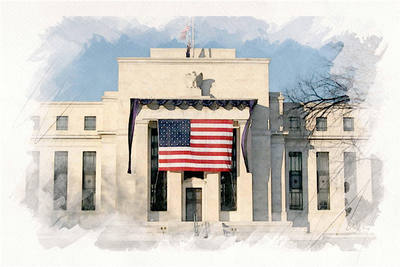
Do not underestimate Trump's determination: How will the US "cut interest rates"?
TechFlow Selected TechFlow Selected
Do not underestimate Trump's determination: How will the US "cut interest rates"?
Was it a "politicized" rate cut or a data-driven rate cut?
 Navigating Web3 tides with focused insights
Author: Li Xiaoyin
Source: Wall Street Insights
The Federal Reserve's monetary policy meeting will be held this month, and the market is currently focused on whether the Fed's independence could be compromised and whether the upcoming rate cuts will carry a "political" tint.
Recently, Peter Tchir, macro strategist at Academy Securities, wrote that such concerns have fueled a widespread expectation: even if the Fed begins cutting rates, it will only lower short-term interest rates, while long-term yields will face upward pressure due to inflation worries. This view has now become mainstream in the market and is guiding many investors' positioning.
However, Tchir believes investors may not have thought creatively enough and thus underestimate the government's plan to suppress interest rates. Beyond conventional monetary policy, the U.S. government might adopt a series of unconventional measures—including adjusting the Fed’s balance sheet, changing inflation data calculation methods, or even revaluing gold reserves—to achieve its goal of lowering long-term interest rates.
Tchir added that these potential policy options go beyond simple rate cuts and could involve coordinated actions among the Fed, the Treasury Department, and even accounting standards.
"Political" Rate Cuts or Data-Driven Rate Cuts?
The market's concern over "political" rate cuts may overlook the economic rationale behind rate cuts themselves.
The article states that if there is sufficient data justifying aggressive rate cuts, the market's panic over long-term rates may not materialize.
Tchir pointed out that economic data had already shown signs of weakness before policymakers began disagreeing on rate cuts. For example, two officials dissented from the decision not to cut rates at the July Fed meeting, and the June employment data released afterward were significantly revised downward; Powell's speech at Jackson Hole also reflected a dovish stance.
These signs suggest that internal support for rate cuts at the Fed may be stronger than what the meeting minutes reveal.
Tchir believes that if subsequent employment data fail to show strong improvement, a 50-basis-point rate cut in September would fall well within a "reasonable" range and should not be simplistically viewed as politically driven. If rate cuts are perceived by the market as justified, then the anticipated "alarm"—a sell-off in long-dated bonds—is less likely to occur.
Declining Effectiveness of Traditional Rate Tools
Tchir believes another reason the U.S. government is considering unconventional options is the diminishing effectiveness of traditional monetary tools.
The article explains that influencing the economy solely through adjustments to the front-end federal funds rate involves a "long and variable" lag, making outcomes hard to assess. Within the months it takes for policy to take effect, factors like trade wars or geopolitical conflicts could alter the economic trajectory.
Moreover, since the era of zero interest rate policy, many corporations, individuals, and municipal bond issuers have locked in long-term low rates, greatly reducing their sensitivity to changes in short-term rates. This means the effectiveness of monetary policy transmission via short-term rates is no longer what it once was.
What Might Be in the Unconventional Policy 'Toolkit'?
If traditional tools prove ineffective, the government may turn to its unconventional policy toolkit to directly intervene in long-term interest rates.
Aggressive Rate Cuts with Forward Guidance
One possible strategy is a "one-shot" approach—e.g., a single 100-basis-point rate cut combined with a commitment to hold rates steady for several quarters unless data shift dramatically.
This aims to quickly eliminate market speculation about future rate-cut paths. A 100-basis-point cut would require an extremely steep yield curve for the 10-year Treasury yield to remain above 4%, a scenario that might be difficult for the so-called "bond market vigilantes" to sustain.
Attacking Inflation from the Data Side
Another strategy is to directly challenge the validity of inflation data. Currently, the housing cost component in the U.S. CPI—due to the lagging methodology of "owners' equivalent rent" (OER)—is artificially inflating inflation figures.
Tchir notes that a new indicator compiled by the Cleveland Fed shows real rental inflation has already returned to normal levels, far below housing inflation in the CPI. By highlighting such data discrepancies, the U.S. government could effectively reduce market fears over inflation and clear the way for rate cuts.
Restarting 'Operation Twist'
The most central tool may be restarting 'Operation Twist' (OT), selling short-term Treasuries while buying long-term ones to suppress long-term rates.
Currently, the Fed’s balance sheet is heavily skewed toward short-dated debt, holding about $2 trillion in bonds with maturities under seven years, compared to only $1 trillion in bonds over 15 years. Analysts envision the Fed selling around $1.2 trillion in three-year and shorter bonds and using the proceeds to buy 20-year and longer bonds.
Tchir指出,this move would nearly triple the Fed’s holdings in the ultra-long bond market, giving it enough purchasing power to influence or even control about 50% of the free-floating ultra-long bond market, thereby directly lowering long-term yields.
Other Potential Options
Other more disruptive options might also be considered.
For instance, yield curve control (YCC), though unprecedented in the U.S., has been practiced in Japan. For a government accustomed to setting prices via tariffs, setting a ceiling on yields is not unimaginable.
In addition, revaluing U.S. gold reserves is another option. Estimates suggest that revaluing official U.S. gold reserves at market prices could generate about $500 billion in accounting gains. While complex, this move could effectively divert market attention and potentially fund other investment initiatives.
Tchir added that this could lead to a weaker dollar, but for a government aiming to improve the trade deficit, this might be “a feature, not a bug.”
Join TechFlow official community to stay tuned
Telegram:https://t.me/TechFlowDaily
X (Twitter):https://x.com/TechFlowPost
X (Twitter) EN:https://x.com/BlockFlow_News