Interview with Cathie Wood: Unveiling Ark Invest's Crypto Investment Methodology
TechFlow Selected TechFlow Selected
Interview with Cathie Wood: Unveiling Ark Invest's Crypto Investment Methodology
I believe AI will soon disrupt traditional quantitative strategies, making them completely commoditized.
 Navigating Web3 tides with focused insights
Compiled & translated: LenaXin, ChainCatcher
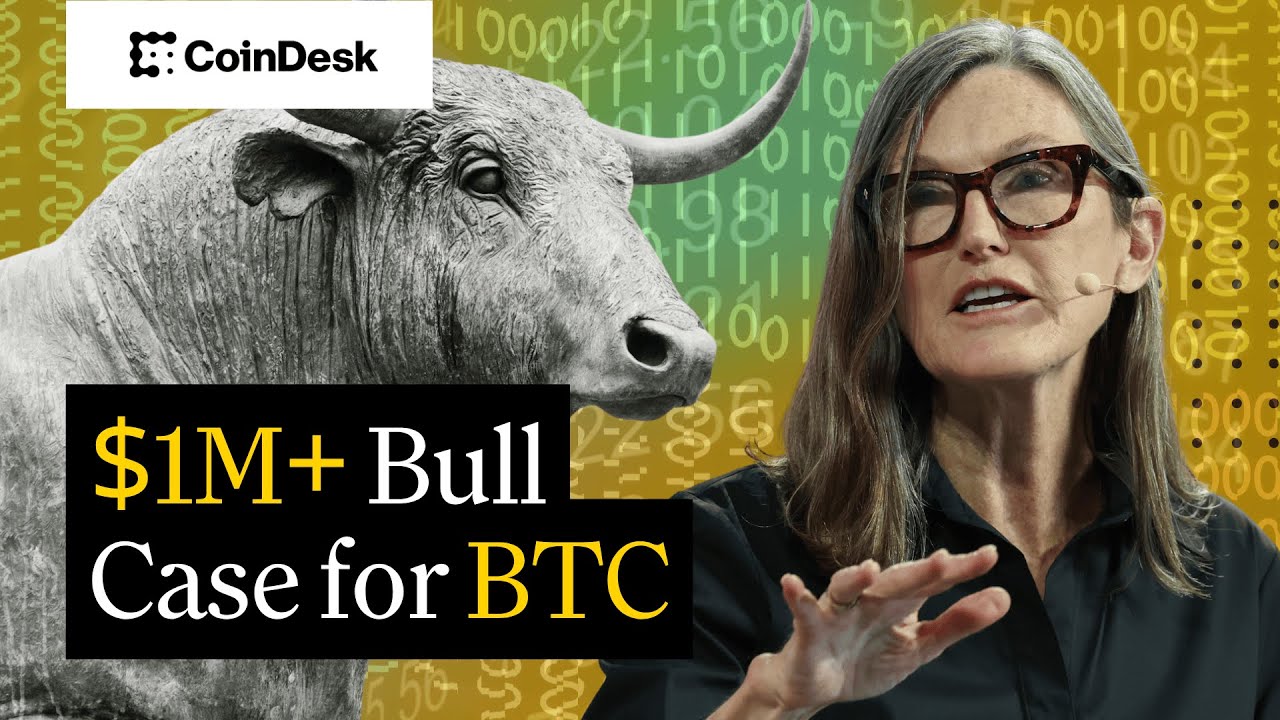
Guest: Cathie Wood, CEO and CIO of ARK Invest
Podcast date: August 12, 2025
ChainCatcher Summary:
This article is compiled from a CoinDesk spotlight podcast interview with Cathie Wood, CEO and CIO of Ark Invest. She discusses how the rapid adoption of stablecoins impacts her famous $1.5 million Bitcoin prediction, shares her personal journey into economics research and her distinctive investment philosophy, and reveals Ark Invest’s methodology for allocating crypto assets, its transparent operational logic, and regulatory challenges.
ChainCatcher has compiled and translated the content.
Key Insights
-
Excessively high tax rates actually suppress tax revenue growth.
-
Chairman Powell breaking consensus reflects not only political considerations due to his term ending in May next year, but also deeper economic concerns.
-
If high interest rates persist, a substantial decline in housing prices will become the only viable solution to the housing crisis.
-
The current U.S. economy stands on the brink of transitioning from a "rolling recession" to an "overperforming recovery."
-
Ethereum is emerging as the primary platform driving the explosion of stablecoins.
-
Bitcoin's two core values: serving as the entry point for institutional digital asset allocation and representing the digital form of gold.
-
In a bull market scenario, the target of Bitcoin surpassing $1 million within five years remains valid—and could even be significantly exceeded.
-
We are more focused on the potential boundaries of AI, which is the true transformative theme today.
-
From an investment perspective, markets such as Europe face fragmented regulation and geopolitical risks.
-
I believe AI will soon disrupt traditional quantitative strategies, rendering them fully commoditized.
(1) Cathie’s Journey
CoinDesk: What was your earliest impression about markets, financial systems, and innovation?
Cathie Wood: During college, I had no idea what direction to take, so I tried everything—engineering, education, geology, astronomy, physics... I really explored every field. To be honest, I didn’t take economics initially, partly because my father strongly wanted me to. It wasn't until the final semester of my sophomore year at UCLA that I took an economics course—and I became completely fascinated.
Upon discovering that UCLA didn’t offer undergraduate business courses, I immediately transferred to the University of Southern California, where I met renowned economist Arthur Laffer. He recognized my passion for economics and introduced me to Capital Group, then Los Angeles’ largest and most prestigious investment firm.
When I first joined the company, I knew nothing about finance, but instantly found a connection between economics and the real world. Participating in market activities made me fall in love with investing almost immediately. I realized this job not only paid me to learn, but also gave me insight into how the world works. At age 20, joining Capital Group, I decided this would be my lifelong career.
CoinDesk: What sparked your passion for economics?
Cathie Wood: Although close to my father, adolescent rebellion led me to deliberately avoid economics—the very subject he recommended. It wasn't until I met Professor Arthur Laffer that his unique teaching style captivated me. Each class began with real-world problems, used humor to spark interest, and ended with derivations filling the blackboard with equations. He gave us a panoramic view of clashing economic schools: Keynesianism at Harvard, monetarism at Chicago, and supply-side economics, which he championed.
This pluralistic perspective gave me a competitive edge throughout my career. While Wall Street was uniformly Keynesian in the 1980s, I accurately foresaw that Reagan’s supply-side reforms would trigger the longest bull market in history. Even during the economic winter when interest rates soared to 15%, I remained convinced of the truth revealed by the Laffer Curve: excessively high tax rates actually suppress tax revenue growth. Over the next 18 years at Jennison Associates, we frequently invited our mentor to reinforce this principle. The intellectual foundation laid during those years ultimately enabled me to forge my own path in investing.
(2) Rare Fed Dissent Hints at Economic Shift?
CoinDesk: The Federal Reserve just decided to hold rates steady. What are your thoughts on interest rate trends?
Cathie Wood: Today’s Fed decision saw two dissenting votes—a rare occurrence and the first time since 1993 that there have been dual dissents. Chairman Powell, who usually values consensus, breaking that balance may signal deeper issues. This reflects not only political calculations with his term ending in May next year, but also profound underlying economic concerns.
The two dissenting governors may have spotted signs like persistent weakness in the housing market and failed tariff transmission, suggesting inflation will continue to fall. The labor market shows structural divergence—unemployment among college graduates is rising, reflecting how AI is accelerating the replacement of entry-level jobs. We’ve observed that housing inflation has already turned downward, though statistical lags obscure the real trend. If high interest rates persist, a meaningful decline in home prices will become the only viable solution to the housing crisis.
The U.S. economy currently stands at the threshold of shifting from a “rolling recession” to an “overperforming recovery.” As policy uncertainty fades, productivity leaps over the next 6–9 months will become the biggest highlight. Breakthroughs in robotics, energy storage, AI, blockchain, and gene sequencing are generating unprecedented deflationary forces. This “creative destruction” will create polarization: benign deflation for innovators, but fatal shocks for incumbents. Mainstream economists are severely underestimating the depth and breadth of this deflationary revolution.
(3) Regulatory Relief + AI Revolution: Could Ethereum Become Core Institutional Crypto Infrastructure?
CoinDesk: Looking ahead 6–9 months, what role will cryptocurrencies play in the recovery you foresee?
Cathie Wood: Regulatory shifts are reshaping the innovation landscape. The move from Gensler-era “enforcement-based regulation” to a legislatively supported friendly framework is accelerating the rise of “agentive AI”—future AI assistants that make autonomous decisions and collaborate. This requires smart contracts as foundational infrastructure. When AI agents automatically settle payments with media platforms, the convergence of blockchain and AI becomes evident.
With regulatory barriers breaking down, traditional institutions are aggressively entering blockchain, cutting payment costs from 3.5% to 1%. With global asset management projected to reach $250 trillion in five years, a 2% cost saving translates into massive efficiency gains. This will also catalyze micro-payment networks driven by agentive AI. These innovations form a “digital infrastructure” that is becoming the core engine of the next productivity revolution—this is the strategic pivot for crypto-economics in the new cycle.
CoinDesk: Do you see Ethereum as the foundational layer for building efficient agentive AI ecosystems?
Cathie Wood: We continuously track institutional logic in selecting digital asset protocols. Despite Solana’s stronger market performance, institutions like Coinbase and Robinhood still choose Ethereum as their Layer 2 base. This confirms our thesis that “Ethereum will become the institutional-grade protocol,” thanks to its superior security from greater decentralization—even if transaction efficiency lags behind Solana.
The “bad income” clause in the 1940 Investment Company Act restricts funds from gaining exposure via ETFs—if profits from a single investment exceed 10%, they risk losing tax advantages.
We’ve now circumvented this constraint to establish an Ethereum position, whose value extends beyond asset holding. As an early investor in Circle, we observe that the Ethereum network is becoming the primary vehicle for the stablecoin explosion, and future staking yields will further enhance its utility. This stands in sharp contrast to MicroStrategy’s strategy of simply hoarding Bitcoin.
(4) Bullish on Bitcoin Long-Term, Quantum Risks Still Distant
CoinDesk:Has your stance on Bitcoin changed? I know you previously predicted Bitcoin would reach $1.5 million by 2030. Has that forecast been adjusted?
Cathie Wood: If I reflect on our biggest misjudgment over the past decade, we initially expected Bitcoin to fulfill the role that stablecoins now occupy in emerging markets. Tether co-founder Paolo admitted it wasn’t until the pandemic that they realized Tether had become a revolutionary tool for accessing dollar exposure in emerging markets. Young people started teaching their parents, “You don’t need to go to the black market to exchange currency anymore.”
The explosive adoption of stablecoins exceeded our expectations, prompting us to possibly fine-tune emerging market weightings in our “Big Ideas 2025” model. But Bitcoin’s two core value pillars remain unchanged: one as the entry point for institutional digital asset allocation, and the other as the digital form of gold.
Based on this, we maintain our original forecasting framework. In a bull market scenario, the goal of Bitcoin surpassing $1 million within five years still holds—and could even be greatly exceeded.
CoinDesk: As an investor known for anticipating technological change, how do you view the potential threat of quantum computing to Bitcoin’s security?
Cathie Wood: We’ve established a Chief Futurist role specifically to study existential issues like this. Our former research director Brett, along with on-chain analysis expert David Puell, continuously monitor developments. Currently, quantum computing remains in a phase of incremental progress.
Brett predicts quantum threats may first emerge in the late 2030s, as AI evolution is progressing far faster than expected—even beyond the imagination of long-term observers. Many problems originally thought to require quantum computing will likely be solved first by AI.
The exponential progress in AI—training costs dropping 75% annually, inference costs falling 85–98% per year—is continuously pushing performance curves beyond ceilings. This computing-power-driven technological paradigm is reshaping investment directions. We are more focused on the potential boundaries of AI, which is the true transformative theme today.
(5) ARK Invest’s Crypto Allocation Methodology
CoinDesk: Beyond Bitcoin, which protocols or projects are most worth watching right now?
Cathie Wood: We currently maintain a core allocation matrix of “Bitcoin + Ethereum + Solana” (though we once held heavy Solana positions, we’ve adjusted based on market dynamics), while continuously monitoring Layer 2 developments.
We’re preparing a special report for traditional finance professionals, using quantitative tools like the Sharpe ratio to analyze the risk-return characteristics of digital assets. Inspired by the model of “Bitcoin Monthly,” we plan to regularly publish on-chain data analyses for Ethereum, Solana, and others. These blockchain-specific transparent metrics are creating new evaluation dimensions unavailable in traditional markets. As more protocols mature, our research scope will continue expanding.
CoinDesk: You’ve just listed three major crypto ecosystems. In the crypto stock space, are there also three top picks you favor?
Cathie Wood: Within our core portfolios (ARKK, ARKF, ARKW), Coinbase, Circle, and Robinhood form a strategic triangle. Though Robinhood is a hybrid player, reviewing our quarterly meeting records from three years ago shows all our inquiries focused on its crypto strategy: “Demand is clear—what’s your plan?” We reduced holdings due to their hesitation at the time, but their current product matrix showcased at analyst day confirms their transformation commitment.
MicroStrategy, while a Bitcoin benchmark company, isn’t in our top three. We place higher value on diversified players like Coinbase, which serve as “ecosystem barometers.” As Ethereum gains institutional acceptance, emerging names like Bitmine Immersions are entering our strategic watchlist—reflecting our multidimensional “core protocol + application ecosystem” investment logic.
(6) ARK’s Three Battles: Regulation, Transparency, and AI Challenges
CoinDesk: What “existential issues” keep you up at night?
Cathie Wood: What truly keeps us awake is the disastrous regulatory trajectory in the U.S. over the past four years. We’re even seriously considering shifting more of our research overseas. Particularly in blockchain, U.S. innovation vitality is being completely stifled. Blockchain represents the next-generation internet revolution—just as the internet once allowed the U.S. to lead the tech revolution—and yet we’re voluntarily abandoning this even larger technological transition.
From an investment standpoint, markets like Europe face regulatory fragmentation and geopolitical risks. We once publicly called SEC Chair Gensler a “threat to innovation” during a livestream, only realizing afterward—we’re an SEC-regulated institution! Such statements carry real business risk, but when it threatens the foundation of U.S. tech enterprises, we must speak up.
CoinDesk: Why do you openly share trading information on social media? What strategic significance does this transparency have for your business?
Cathie Wood: After the 2008 financial crisis, we noticed the trend of mutual funds being replaced by ETFs. As active investors, I conceived an idea: package active strategies into an ETF structure. This innovation not only lowered investment costs by making fees more transparent, but also responded to the post-crisis era’s demand for transparency.
While peers either shifted to passive investing or chased the “Magnificent Seven” stocks—leading to homogenized portfolios—we focused on innovative sectors. Though this strategy was overlooked during the 2021–2024 tech rally, recent market broadening has validated our approach.
Our practice during the pandemic—freely sharing research reports and publishing trade records—unexpectedly went viral in Asia, helping build a global brand. Drawing on my economics background, I predicted in March 2020 that massive stimulus combined with a 27% surge in savings rates would overheat the economy. That prediction came true, but the subsequent rate-hiking storm severely impacted non-giant innovative firms.
CoinDesk: Have you ever worried that AI might surpass ARK’s investment capabilities?
Cathie Wood: AI is currently most likely to break through in passive investing and benchmark-sensitive strategies—precisely the areas many investors shifted to during the dominance of the “Magnificent Seven.” By contrast, I’m more wary of risks in benchmark-sensitive or quantitative strategies—those relying on factor analysis models (growth, cash flow quality, volatility, profitability, etc.).
When quantitative analysts study our strategy, they find large “residuals” unexplained by existing factors. That’s because the future won’t simply repeat the past—and we invest precisely in the future. Quantitative models are inherently backward-looking, based on historical data—that’s exactly where our advantage lies.
I believe AI will soon disrupt traditional quantitative strategies, making them fully commoditized. But our strategies rely on original research, which can be fed into large language models like OpenAI or Grok. While AI can identify certain patterns, this will actually enhance our research efficiency. For instance, our core “Wright’s Law” analysis work—AI will dramatically reduce the time burden on these labor-intensive tasks.
(Note: Wright’s Law, a sister to Moore’s Law, states that each doubling of cumulative production leads to a fixed percentage reduction in cost.)
But I never underestimate human intelligence, especially the creativity of our research team. The synergy between AI and human researchers will elevate our investment capabilities to new heights.
(7) Conversing with “Young Cathie”
CoinDesk:If you could go back and talk to your 20-year-old self—who was exploring various possibilities—what would you tell her?
Cathie Wood: I’d praise her open-minded and inclusive attitude. That period of exploration was truly enjoyable—college is indeed the best time to try different paths.
Dedicating yourself to a passion brings lasting fulfillment. The seeds of innovation I planted in the first two decades of my career are now bearing fruit.
Looking back at the dot-com bubble at the end of the 1990s, IPOs surging fourfold on debut highlighted market frenzy. Take gene sequencing: in 2003, the cost was $2.7 billion per genome; today it’s just $200. The gap between technological maturity and market performance perfectly illustrates collective irrationality.
Today’s market appears healthy. Amid widespread caution, frontier fields like AI healthcare are developing steadily. Meanwhile, investment opportunities are spreading from tech giants to emerging assets like blockchain—fully in line with expectations.
Join TechFlow official community to stay tuned
Telegram:https://t.me/TechFlowDaily
X (Twitter):https://x.com/TechFlowPost
X (Twitter) EN:https://x.com/BlockFlow_News
 ChainCatcher 链捕手