Interview with Cathie Wood: ARK's Three Major Investment Directions, Bitcoin, Ethereum, Solana Are the Final Choices
TechFlow Selected TechFlow Selected
Interview with Cathie Wood: ARK's Three Major Investment Directions, Bitcoin, Ethereum, Solana Are the Final Choices
"Hyperliquid reminds me of Solana's early stage of development."
 Navigating Web3 tides with focused insights
Compiled & Translated: TechFlow

Guest: Cathie Wood, Founder and CEO of Ark Investment
Host: Wilfred Frost
Podcast Source: The Master Investor Podcast with Wilfred Frost
Original Title: Cathie Wood Part II: Why Bitcoin Will Always Be #1 Cryptocurrency
Air Date: September 27, 2025
Key Takeaways
Cathie Wood, founder and CEO of Ark Invest, shares her strong conviction that Bitcoin will remain the leading cryptocurrency, and elaborates on the critical role stablecoins play within the crypto ecosystem. She also mentions her friendly divergence of views with Tom Lee from Fundstrat. While she does not believe Ethereum will surpass Bitcoin, her stance on Ethereum has evolved, and she recently invested in BitMine.
In addition, Cathie discusses the potential implications of gold's recent strong performance on both the cryptocurrency market and the broader financial markets. She offers valuable insights for investors navigating this rapidly evolving landscape, helping them better understand market trends and investment opportunities.
Highlights of Key Insights
-
Ark’s primary investment focus is on Bitcoin, Ethereum, and Solana.
-
Few cryptocurrencies will truly have long-term promise. In the pure cryptocurrency space, Bitcoin dominates. Beyond that, there are stablecoins, which are also cryptocurrencies.
-
Bitcoin plays three key roles. First, it serves as the foundation of a global monetary system; second, as a Layer 1 blockchain, it has never been hacked; third, it is the pioneer of the crypto asset space.
-
Beyond these, we’re watching emerging projects like Hyperliquid. It reminds us of Solana’s early development stage, and it’s now proving its value and beginning to compete with established players.
-
We also monitor other services such as money market funds and projects linked to the Solana ecosystem, like Jito.
-
We haven’t invested in gold, but that doesn’t mean it’s a bad investment.
The Value of Stablecoins
Wilfred Frost:
I hear you're a strong supporter of cryptocurrencies. But do you believe in all of them, or only certain specific ones?
Cathie Wood:
We don’t think every cryptocurrency has potential. In fact, we believe only a few will prove promising. In the pure cryptocurrency space, Bitcoin dominates. Then there are stablecoins, which are also cryptocurrencies, but primarily pegged to the dollar because they’re typically backed by U.S. Treasuries. Therefore, we see Bitcoin as the only true cryptocurrency and expect it to become the largest in the market. Bitcoin is a rules-based monetary system grounded in the quantity theory of money. With a hard cap of 21 million coins and about 20 million already in circulation, it embodies this theory. Stablecoins, on the other hand, are dollar-denominated digital assets. If you find ways to use stablecoins—such as in DeFi—you can earn yield. Just last week, Coinbase launched a product allowing users to lend USDC to others in the DeFi ecosystem. Although regulatory constraints prevent traditional interest payments, users can still earn yields as high as 10.4%.
Wilfred Frost:
I’d like to explore stablecoins further. I understand why dollar-denominated, easily transferable assets would be appealing—for example, in some countries, stablecoins may help avoid asset confiscation. But what’s the rationale for people in London or New York? After all, dollars or pounds can already be transferred easily, earn interest, and are backed by central banks and governments. What advantages do stablecoin transactions offer in these countries?
Cathie Wood:
You're right. Currently, two main stablecoins dominate: Tether and Circle. Tether circulates mostly outside the U.S. and Europe, while Circle is more compliant with U.S. regulations. Circle has also introduced a euro-denominated version of USDC, though it’s not yet widely adopted. In Europe, under the Mica (Markets in Crypto-Assets) regulatory framework, Tether and Circle now control about 90% of the stablecoin market.
So why do people in developed economies need stablecoins? We understand demand in emerging markets—where economic instability drives people to protect wealth via stablecoins. We initially thought Bitcoin would fill this role, but the emergence of stablecoins has captured part of that market, something we didn’t anticipate in our early analysis.
In the world of blockchain technology, we’re gradually eliminating intermediaries in financial services—what I’ve jokingly called “toll booths.” These intermediaries exist to reduce transaction risk and secure inter-institutional transfers. However, in blockchain’s peer-to-peer model, they become obsolete. Traditional credit card transactions usually carry fees around 2.5%, representing intermediary costs. Blockchain-based transactions can drastically reduce these. In developed nations, fees could drop from 2–4% to below 1%. In emerging markets, remittance fees—like Nigeria’s 25%—could also fall significantly. Ultimately, blockchain will compress global transaction costs to minimal levels.
Wilfred Frost:
Where exactly are these savings happening now? Because mining and trading costs in crypto are still far from dropping to 1%.
Cathie Wood:
These changes take time. For instance, take the USDC example I mentioned—someone says, “I can lend at 10.4%—a rate you can’t get elsewhere.” That’s a high-yield savings option for depositors. Meanwhile, borrowers paying 10.4% are often too small to qualify for bank loans. DeFi is changing this, giving access to credit for those previously excluded, while offering savers higher returns.
The on-chain ecosystem is highly transparent, and many loans are over-collateralized. We learned from collapses like 3AC and Luna. On blockchain, if someone’s collateral falls below required value, it’s automatically liquidated—allowing institutions to recover funds quickly. In opaque, highly centralized systems like FTX, however, funds could vanish entirely. From a security standpoint, on-chain transparency is actually more reliable than FTX, which was clearly a fraudulent operation.
Bitcoin’s Key Roles
Wilfred Frost:
A few weeks ago, we interviewed Tom Lee—he supports Bitcoin, but he’s even more bullish on Ethereum’s future. He believes Ethereum will eventually surpass Bitcoin. Why do you think he’s wrong? Why will Bitcoin always be more important than Ethereum?
Cathie Wood:
Bitcoin has three key roles. First, it forms the foundation of a global monetary system, governed by strict quantity rules—a powerful concept in itself. Second, as a Layer 1 blockchain technology, it has never been hacked, unlike other blockchains. This reliability is precisely why monetary systems might build on Bitcoin. Third, it is the pioneer of the crypto asset space—we published our first white paper on Bitcoin back in 2016. These attributes give Bitcoin unique advantages.
That said, Ethereum plays an important role in decentralized finance (DeFi). Ether is the native currency of the DeFi ecosystem, and many transaction fees flow to Layer 2 scaling solutions—like Robinhood’s recently announced network, similar to Coinbase’s Base. These Layer 2 networks capture disproportionate fees. Now, as more Layer 2s emerge, will they compete with each other, thereby increasing the importance of the base Layer 1? This is a trend worth watching and one reason we invest in Ethereum. Still, this dynamic may be something Tom and I could discuss further.
Focusing on Bitcoin, Ethereum, and Solana
Wilfred Frost:
Regarding other cryptocurrencies, do you think many are worth investing in, or are only a few actually viable?
Cathie Wood:
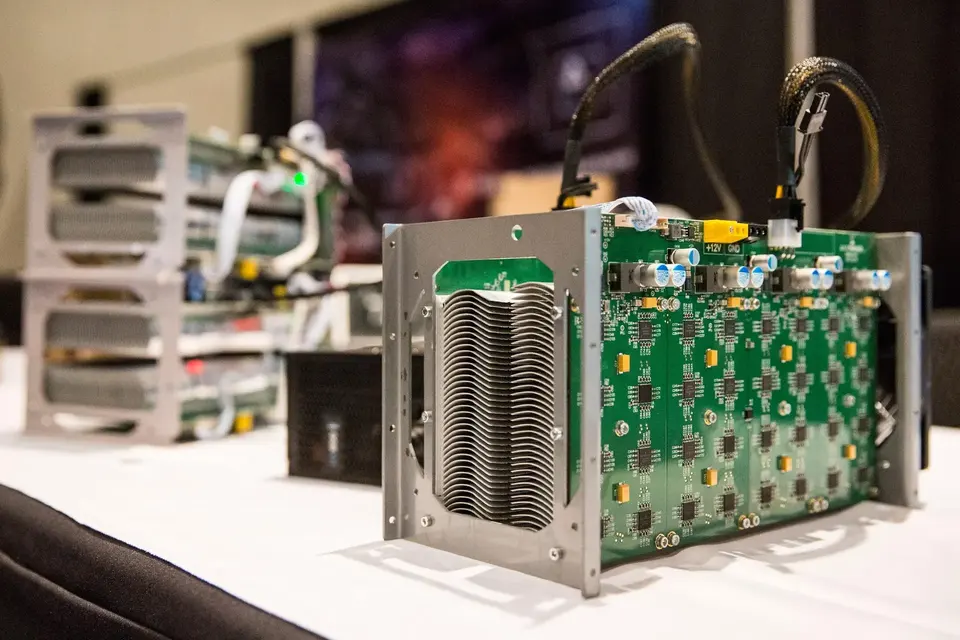
Only a few cryptocurrencies are currently worth attention. In our public funds, we primarily invest in Bitcoin and Ethereum. These trades are public, so I can confirm we’ve found a regulatory-compliant way to invest in Ethereum. We’ve also identified bitcoin mining companies as a key investment area.
Beyond Bitcoin and Ethereum, Solana is our third major focus. Our Solana investment is made through Brara Sports. Some think I or Ark acquired sports teams, but that’s not the case. Brara Sports is a company collaborating with the Solana Treasury and supported by the UAE—these partnerships elevate Solana’s strategic importance.
These three cryptocurrencies represent our core investments. Additionally, we’re monitoring emerging projects like Hyperliquid. It resembles Solana in its early development phase and is now demonstrating value, gradually competing with industry leaders.
We also track other services, such as money market funds and Solana ecosystem projects like Jito. While these derivatives matter, if you ask about our primary investment focus, it remains Bitcoin, Ethereum, and Solana.
Why Is Gold Rising?
Wilfred Frost:
Gold has clearly performed exceptionally well this year. Do you think the investment case for gold is stronger now than ever? And how does your view compare with Bitcoin?
Cathie Wood:
We haven’t invested in gold, but that doesn’t mean it’s a poor investment. It simply falls outside our focus on technological innovation. We prioritize technology-driven disruptive innovations. That said, from an economic perspective, I always take gold’s performance seriously. Typically, gold rallies signal inflation, but this time seems different.
We’ve been tracking an indicator called the Metals-to-Gold Index, which measures metal prices relative to gold. Currently, it has dropped below 0.8 to 0.9—a level that concerns me and suggests deeper underlying factors. This may relate to China’s economic situation, which is still undergoing deflationary adjustment due to real estate speculation. Moreover, I believe this gold rally is driven more by geopolitical risks.
For example, the recent chaos surrounding H-1B visa policies Friday night created anxiety—especially among international students from India and China and their families—who may wonder, “What comes next?” Personally, I see this as a negotiation issue between the U.S. and India, likely to be resolved. After all, the U.S. won’t want to lose top global talent, despite rhetoric that causes concern. Yet media amplifies these events, prompting people to ask: “How should I respond?” Wealthier investors, especially older generations, may choose to shift capital into gold rather than digital assets.
Join TechFlow official community to stay tuned
Telegram:https://t.me/TechFlowDaily
X (Twitter):https://x.com/TechFlowPost
X (Twitter) EN:https://x.com/BlockFlow_News
 深潮TechFlow