The Hong Kong Stablecoin Draft officially takes effect, analyzing Hong Kong's digital asset regulation: development journey + sandbox practices
TechFlow Selected TechFlow Selected
The Hong Kong Stablecoin Draft officially takes effect, analyzing Hong Kong's digital asset regulation: development journey + sandbox practices
Witness history.
 Navigating Web3 tides with focused insights
Authors: Zhao Qirui, Lynne
"The digital asset regulatory framework established in Hong Kong, along with its pioneering sandbox use cases, clearly demonstrates a concrete pathway for innovation to achieve stable development within a compliant framework. As stated in the 'Hong Kong Digital Asset Development Policy Declaration 2.0,' Hong Kong is continuously building a 'trusted and innovation-focused digital asset ecosystem' and will continue to consolidate its leading position in the global digital asset arena, driving Hong Kong to become a global innovation hub."
I. The Evolution of Hong Kong's Digital Asset Landscape
(I) Prelude: Mainland’s “Pause Button” and the Global “Fast-Forward Button” (2017–2022)
In 2017, mainland China implemented a full suspension policy on the virtual asset market, pressing the "pause button" on digital asset development. In September that year, seven Chinese regulatory bodies jointly issued the "Announcement on Preventing Risks Associated with Token Issuance Financing," halting all initial coin offerings (ICOs) and shutting down all domestic cryptocurrency trading platforms to effectively clear market risks. Since then, the mainland has further intensified efforts against "disguised transactions" and "over-the-counter trading," and in September 2021 explicitly classified all virtual currency-related activities—including trading, settlement, intermediation, and advertising—as illegal financial activities. These stringent regulatory measures have effectively safeguarded the stability and risk controllability of the financial system.
However, this strict "lockdown" inadvertently acted as a catalyst for the global crypto industry, triggering a wave of talent, capital, and projects moving overseas. A large number of Web3 entrepreneurs, technical teams, and funds previously active in mainland China began seeking compliant development opportunities abroad, accelerating the global dissemination and expansion of Web3 concepts.
While maintaining strict regulation, Hong Kong played a more cautious and nuanced role—serving both as a "firewall" to prevent risk spillover and quietly becoming an "observation post" for monitoring global Web3 developments. To encourage fintech innovation while protecting investor interests, the Hong Kong Monetary Authority (HKMA) launched its "Fintech Regulatory Sandbox" in September 2016. Subsequently, the Securities and Futures Commission (SFC) and the Insurance Authority (IA) also introduced their own sandboxes, upgrading them to "Sandbox 2.0" in 2017 to enable cross-sector coordination. In the same month of September 2017, the Securities and Futures Commission of Hong Kong (SFC) issued its first statement on ICOs, noting that tokens with "security" characteristics might be regulated under the Securities and Futures Ordinance, emphasizing the principle of "substance over form." Thereafter, the SFC continued monitoring virtual asset fund managers and trading platforms, launching the Fintech Regulatory Sandbox in 2018 to allow companies to test fintech innovations—including virtual asset-related services—in a controlled environment.
At the application level, the Hong Kong government actively explored practical applications of blockchain technology. For example, it completed four blockchain pilot projects in 2020 covering trademark transfers, environmental impact assessments, pharmaceutical traceability, and corporate document archiving to evaluate feasibility and benefits. In June 2022, the government further launched a "Common Blockchain Platform" and planned to develop additional generic services and reference modules to assist various policy bureaus/departments in developing more blockchain applications.
Additionally, Hong Kong actively explored central bank digital currencies (CBDCs) and real-world asset (RWA) tokenization. The HKMA initiated research on the "Digital Hong Kong Dollar" project in June 2021 and released the "Discussion Paper on Crypto Assets and Stablecoins" in January 2022, outlining a proposed regulatory framework for stablecoins. In 2021, the HKMA collaborated with the BIS Innovation Hub’s Hong Kong Centre to complete "Project Genesis," testing the issuance of tokenized green bonds in Hong Kong. In 2022, the Hong Kong government itself participated in an NFT issuance trial during Hong Kong Fintech Week to test the technological benefits brought by virtual assets.
Drawing connections during this period, one cannot help but wonder why Hong Kong, standing firmly alongside the Chinese people on the frontlines of finance and economy, quietly prepared and researched a regulatory framework for virtual assets when the mainland imposed strict controls? Although relatively slow in policy initiation, Hong Kong laid a solid foundation for future strategic positioning thanks to its deep roots as an international financial center, a robust traditional financial sector, and strong professional financial service capabilities.
(II) The Critical Move: Hong Kong’s Strategic “Play” (2023–2025)
From late 2022 to 2023, Hong Kong witnessed a landmark shift in its digital asset regulatory policy—a pivotal "move" in the broader global digital economy strategy. On October 31, 2022, the Hong Kong Special Administrative Region government released the "Policy Statement on the Development of Virtual Assets in Hong Kong," explicitly stating its intention to "actively promote" the development of a virtual asset ecosystem, marking a shift in regulatory mindset from "risk-oriented" to "opportunity-oriented." Shortly after, on December 7, 2022, the Legislative Council passed the "Anti-Money Laundering and Counter-Terrorist Financing (Amendment) Bill 2022," formally establishing a mandatory licensing regime for Virtual Asset Service Providers (VASPs). This regime took effect on June 1, 2023, allowing licensed Virtual Asset Trading Platforms (VATPs) to serve retail investors under strict investor protection requirements. Following this, Hong Kong approved spot virtual asset ETFs, becoming the largest virtual asset ETF market in the Asia-Pacific region. As of June 2025, the SFC had formally licensed 10 VATPs, with another 11 institutions in the application process. Furthermore, the Hong Kong SAR government designated that the "Stablecoin Ordinance" would officially take effect on August 1, 2025, further refining the digital asset regulatory framework.
This decision to "open the door" at this particular moment can be interpreted as a high-level strategic choice at the national level. After the global crypto market experienced a cycle of unregulated growth and exposed risks (e.g., FTX, LUNA), demand for compliance, transparency, and trust became stronger than ever. At this juncture, having Hong Kong act as a "bridgehead" to enter the scene in a "compliant" and "controllable" manner—consolidating global digital asset resources and competing for leadership in next-generation fintech—is undoubtedly the optimal timing. Hong Kong’s unique "one country, two systems" framework enables it to balance its role as an international financial center with considerations for mainland financial security. Norman Chan, Chief Executive of the HKMA, noted that the ordinance establishes a "risk-based, pragmatic, and flexible regulatory environment," providing healthy, responsible, and sustainable conditions for Hong Kong’s stablecoin and broader digital asset ecosystem. The goal is to significantly enhance Hong Kong’s appeal to global Web3 talent, capital, and projects through a robust regulatory architecture and ecosystem, empowering the real economy and providing new momentum for economic development. This aims to transform Hong Kong from a traditional international financial center into a globally leading digital asset innovation hub, reinforcing its strategic status as a bridgehead for RMB internationalization and a "super connector." Financial Secretary Paul Chan emphasized that Hong Kong’s approach to Web3.0 goes beyond mere regulation—it seeks balance, ensuring market integrity without stifling innovation.
Hong Kong’s "first-mover" policy has also received proactive responses and synergies from mainland cities, signaling a potential model of “Hong Kong-led pilot, mainland collaboration.” For instance, Ant Digital Technologies has designated Hong Kong as its overseas headquarters and successfully completed tests within the regulatory sandbox. Its RWA (real-world asset) tokenization practices have been validated—such as Langxin Group collaborating with Ant Digital to complete China’s first RWA project based on new energy physical assets, and GCL Energy partnering with Ant Digital to finalize an RWA based on photovoltaic physical assets—both announced through the HKMA’s Ensemble project sandbox. These cases indicate that Hong Kong’s regulatory clarity and international openness are providing critical channels for mainland enterprises to participate in the global digital asset market under compliant conditions. A report by Zeng Shengjun from China Bank Shenzhen Branch Greater Bay Area Finance Institute and Guan Zhenqiu from China Bank Hong Kong Finance Institute suggests summarizing Hong Kong’s stablecoin pilot experience and strengthening research on offshore RMB-linked stablecoins. Moreover, the Hong Kong SAR government itself has taken a leading role—for example, issuing NFTs in 2022, becoming the first government in the nation to issue tokenized green government bonds in 2023, and issuing a second batch of tokenized green government bonds in 2024.This strategic synergy not only promotes the development of Hong Kong’s digital asset ecosystem but also builds a new bridge connecting the mainland with international capital markets.
Timeline: Major Events in Hong Kong from 2015 to August 2025

II. Hong Kong’s “Twin Peaks” Digital Asset Regulatory Framework
Hong Kong’s digital asset regulatory system is characterized by its "Twin Peaks" model, with clear division of labor between the Securities and Futures Commission (SFC) and the Hong Kong Monetary Authority (HKMA), jointly creating a regulatory environment that encourages financial innovation while strictly managing risk. The essence of this model lies in well-defined responsibilities: the SFC focuses on the "investment" nature of virtual assets, while the HKMA concentrates on their "payment" functionality. The table below systematically outlines the functions, legal basis, jurisdiction, and regulatory tone of the two key regulators, offering a clear guide to understanding Hong Kong’s regulatory blueprint.
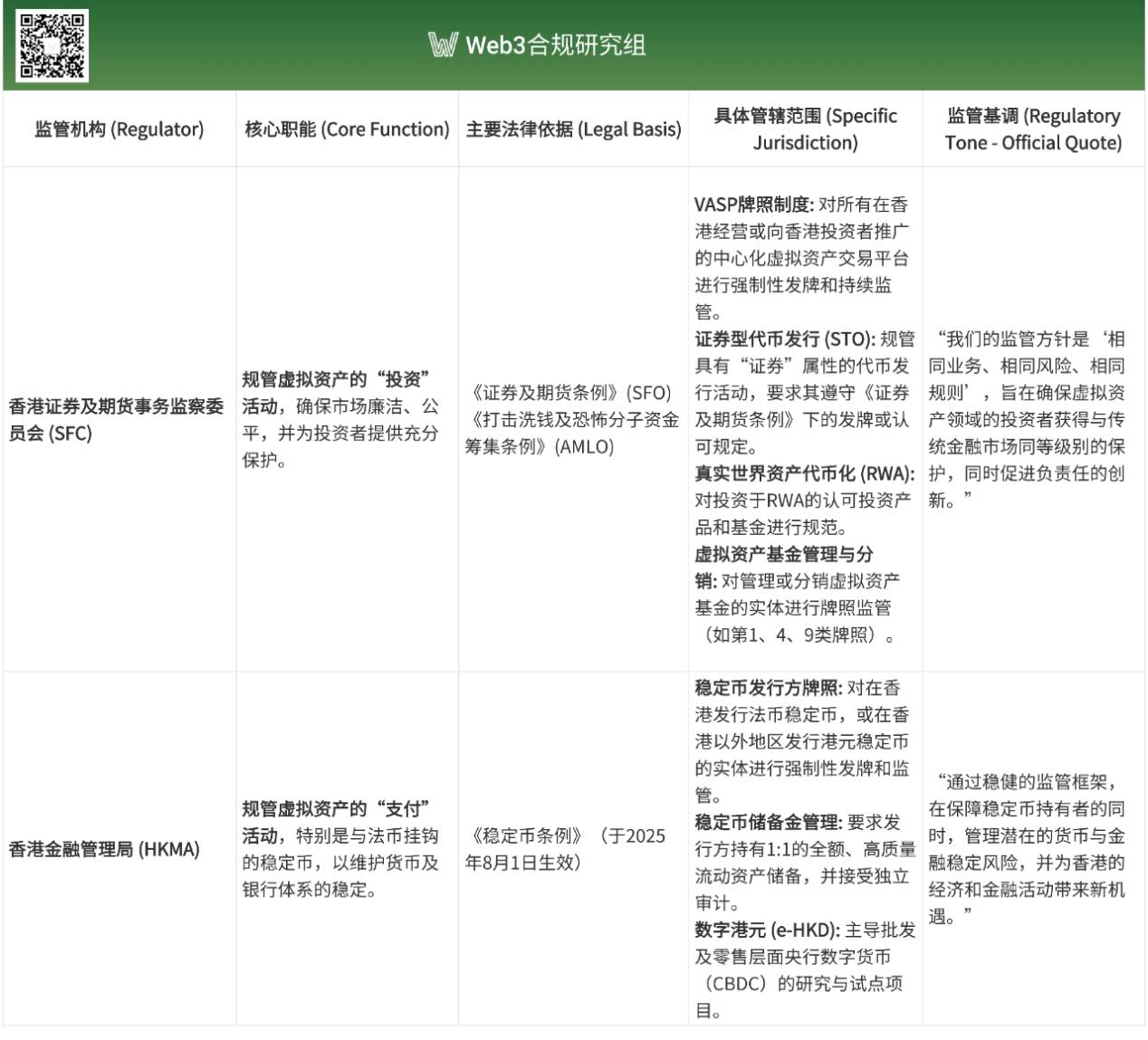
Table: Comparison of Core Regulatory Authorities
The SFC and HKMA, through clearly delineated roles and close cooperation (including signed memoranda of understanding), have formed a coordinated and complementary regulatory landscape. As guardian of the securities market, the SFC extends mature investor protection principles to virtual asset investments; meanwhile, the HKMA, as the backbone of the financial system, ensures that innovations in payment tokens do not undermine Hong Kong’s monetary foundations. This twin-peak, responsibility-driven model collectively forms a solid institutional foundation for Hong Kong to emerge as a world-leading virtual asset hub.
III. Key Analysis of VASP Licensing and Stablecoin Regulation
Hong Kong’s virtual asset regulatory framework rests on two core pillars: the Virtual Asset Service Provider (VASP) licensing regime and stablecoin issuance regulation. This section provides an in-depth examination of the key elements and logic behind these two frameworks.
(I) VASP Licensing System: Drawing Red Lines for Trading Platforms
The VASP licensing regime, effective from June 1, 2023, is central to Hong Kong’s regulation of virtual asset trading. It mandates that all centralized virtual asset trading platforms (VATPs) operating in Hong Kong or serving Hong Kong investors—regardless of whether they trade security tokens—must hold a license. This move brings all relevant platforms under a unified, rigorous regulatory umbrella.
1. Investor Protection: Informed, Risk-Aware, and Risk-Bearing
To protect retail investors, regulators have set multiple thresholds. Before opening accounts for retail clients, platforms must assess their knowledge of virtual assets and conduct thorough risk disclosures. When making trading recommendations, platforms must ensure such advice aligns with the client’s personal circumstances. The underlying logic is clear: ensure investors are "informed, risk-aware, and capable of bearing risk" before entering the market, preventing unnecessary losses due to information asymmetry. Additionally, the SFC retains the authority to impose investment limits on high-risk virtual assets, adding another layer of protection for retail investors’ funds.
2. Client Asset Security and Financial Soundness
Learning from the collapse of platforms like FTX due to misuse of client funds, Hong Kong has set globally top-tier standards for client asset security.
· “Hard Isolation” of Assets: The core requirement is that platforms must entrust clients’ virtual assets to independent third-party custodians (typically Hong Kong-licensed trust companies), following the industry best practice of 98% cold storage and 2% hot storage—maximizing prevention of platform misappropriation. Clients’ fiat currency must also be held in separate trust or designated accounts.
· High Financial Thresholds: Platforms must maintain no less than HK$5 million in paid-up capital and HK$3 million in liquid capital, plus sufficient liquid assets to cover at least 12 months of operational expenses. This ensures platforms have the resilience to withstand market volatility and sustain operations, avoiding harm to investors due to financial distress. Additionally, platforms must purchase SFC-approved insurance for client assets.
3. Anti-Money Laundering / Countering the Financing of Terrorism (AML/CFT)
The anonymity and cross-border nature of virtual assets make them prone to illicit activities. Therefore, the VASP licensing regime requires platforms to strictly implement Know-Your-Customer (KYC) and Customer Due Diligence (CDD) measures. This includes continuous transaction monitoring, reporting suspicious activities, and encouraging the use of blockchain analytics tools to enhance traceability. These rules aim to increase transaction transparency, combat financial crime, and uphold Hong Kong’s reputation and financial integrity as an international financial center.
4. Token Listing and Trading Scope
To control risks at the source, platforms must establish independent token review committees. These committees are responsible for conducting rigorous due diligence on all tokens intended for listing, assessing legality, security, team background, and technical foundation. Regulations clearly state that only non-security, highly liquid tokens included in mainstream indices may be offered to retail investors. This prudent screening mechanism aims to protect investors—especially retail investors—from low-quality or fraudulent projects, ensuring fairness and transparency in the market.
5. Prohibited Activities
To ensure platform neutrality, VATPs are prohibited from proprietary trading using their own accounts—a core measure to prevent conflicts of interest between platforms and clients. Additionally, current guidelines still prohibit platforms from issuing or trading virtual asset futures and related derivatives. This reflects regulators’ cautious stance toward complex, high-risk products, prioritizing market stability. The SFC has indicated it will review this in due course and consider allowing such products for institutional investors.
(II) Stablecoin Regulatory Framework: Rules for “Quasi-Currency”
Stablecoin regulation is a critical step for Hong Kong in becoming a global virtual asset hub, led by the Hong Kong Monetary Authority (HKMA). The relevant bill was passed on May 21, 2025, and will officially come into force on August 1 of the same year.
1. Focusing on Fiat-Backed Stablecoins
The regulatory framework primarily targets "designated stablecoins" pegged to one or more fiat currencies, as these assets possess payment potential and their stability directly impacts financial safety. Based on lessons from the Terra/LUNA collapse, algorithmic stablecoins lacking real asset backing are explicitly excluded from regulation. Notably, the regulation has extraterritorial effect: regardless of where the issuer is located, if its Hong Kong dollar stablecoin reaches Hong Kong users, it must comply with Hong Kong’s licensing requirements.
2. Ensuring “Stability” Lives Up to Its Name
To issue stablecoins in Hong Kong, issuers must obtain a license from the HKMA. Core requirements revolve around “stability” and “trustworthiness”:
· 1:1 Full Reserves: Must be fully backed by high-quality, liquid assets.
· Transparency and Trust: Reserves must undergo regular third-party audits and be disclosed to the public.
· Robust Operations: Must establish reliable redemption mechanisms, strict AML/CFT measures, and plans ensuring cybersecurity and business continuity.
These high barriers aim to ensure stablecoins are always redeemable, preventing “de-pegging” risks and building market confidence.
3. Cautious Start, Encouraging Innovation
The HKMA will adopt an extremely cautious approach in the initial phase of license issuance, expecting to grant only a small number of licenses and requiring applicants to demonstrate clear, viable use cases for their stablecoins.
Hong Kong has established a "sandbox" mechanism allowing interested institutions to test their business models and risk management capabilities in a controlled environment. This strategy of "prudent licensing + sandbox trials" aims to ensure the first licensed entities serve as benchmarks while generating valuable practical experience for both regulators and the market, ultimately promoting compliant applications of stablecoins in areas like payments and cross-border remittances, reinforcing Hong Kong’s status as a financial innovator. The next section will further analyze how this mechanism operates.
IV. The Regulatory Sandbox Journey from an Applicant’s Perspective
The cornerstone of Hong Kong’s approach to virtual asset regulation is its carefully designed "regulatory sandbox" mechanism—not merely a regulatory tool, but a strategic platform fostering fintech ecosystem development, aiming to balance financial innovation with financial stability and investor protection.Hong Kong’s “regulatory sandbox” is essentially a “dialogue mechanism between regulation and innovation” and a “risk-isolated testing ground.”
This process is far more than a simple licensing application—it is a long, rigorous, and deeply interactive journey of "co-evolution" that places high demands on applicants’ capital, technology, compliance, and risk management capabilities.
To visualize this complex, multi-stage approval process, we have constructed the following“Regulatory Sandbox全景Process Map.” This chart, organized chronologically, details every key step, interaction mode, and deliverable from initial conception to final licensing, aiming to provide potential applicants with a clear roadmap.
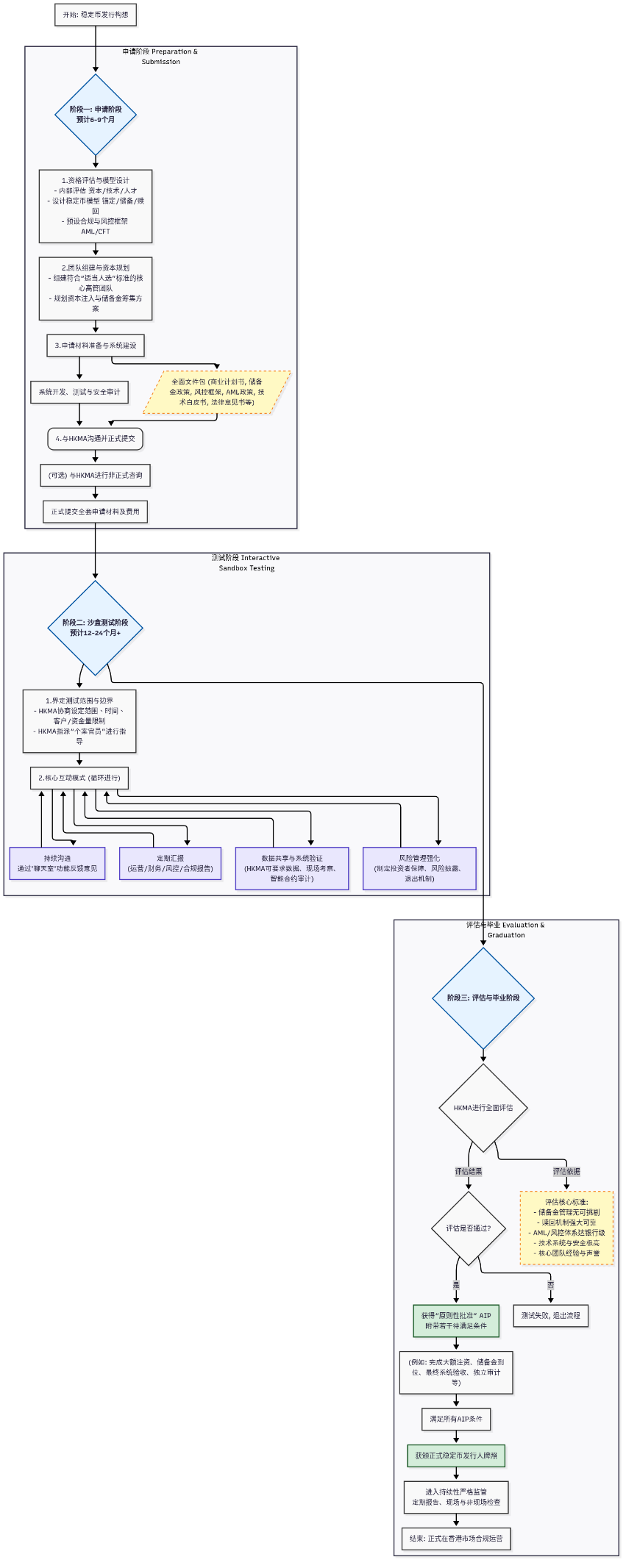
As shown above, the entire process reflects the Hong Kong regulator’srigor, interactivity, and penetrative oversight.
1. Preparation is King (Application Phase): The focus here is internal "refinement." The HKMA expects applicants to have already developed a highly mature business model, built technical systems, and established a compliance framework before formal submission. This effectively shifts most preparatory work upfront, ensuring only well-prepared, high-quality participants enter the sandbox.
2. Deep Interaction (Testing Phase): The sandbox is far from a passive observation period—it is a "laboratory" where regulation and innovation deeply collide and co-evolve. Through assigning "case officers," establishing "chat rooms," and requiring continuous data sharing and reporting, the HKMA gains deep insights into the actual operational risks of innovative businesses, while companies can adjust and optimize their solutions under regulatory guidance, reducing the risk of non-compliance.
3. High Standards for Graduation (Evaluation Phase): The "graduation" bar is set very high, with evaluation criteria targeting the core of financial stability—reserves, redemption mechanisms, risk controls, and technical security. The design from "Approval-in-Principle (AIP)" to "formal license" adds a final safeguard for market entry, ensuring all committed capital and systems are fully in place.
This rigorous process is not just a regulatory gate—it creates a mutually beneficial ecosystem between regulators and innovators. Its practical effects are bidirectional, reflected in two aspects:
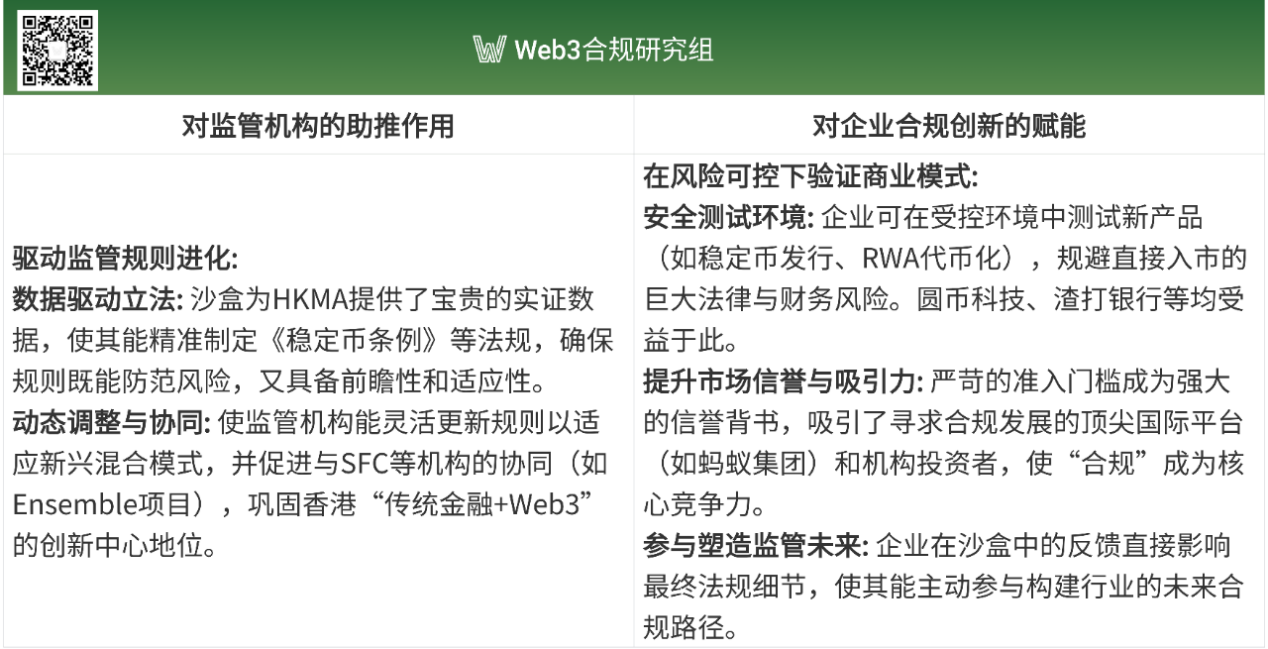
In summary, Hong Kong’s regulatory sandbox mechanism, particularly its path design for stablecoin issuers, is the most strategically forward-looking component of its digital asset regulatory framework.It transcends the one-way model of traditional approvals, creatively integrating “strict regulation” and “cutting-edge innovation”—two seemingly opposing concepts—into one.
Through this meticulously designed process, Hong Kong not only sets globally leading compliance standards but also builds a dynamic, self-optimizing ecosystem of regulatory-industry interaction. This serves both to safeguard its own financial stability and to declare to the world: Hong Kong has the capability and wisdom to navigate the future of digital finance and is committed to becoming the safest, most regulated, yet most vibrant hub in the global virtual asset space. This "mutually empowering" sandbox is precisely the cornerstone upon which Hong Kong builds its global leadership in digital finance. In Part Five, we will dive inside the sandbox to examine this dynamic interaction process.
V. Regulatory Sandbox—Case Studies Along the Compliance Path
This chapter analyzes practical cases from Hong Kong’s regulatory sandbox in the digital asset sector, revealing core regulatory considerations and attempting to capture the "pulse of development" in Hong Kong’s embrace of Web3 innovation.
(I) Stablecoin Regulatory Sandbox: Practical First Steps, Solving Real Pain Points
In July 2023, the HKMA consulted on legislative proposals for regulating stablecoin issuers and announced the launch of a sandbox arrangement. In July 2024, the HKMA revealed the first cohort of sandbox participants: Jingdong Bilian Technology (Hong Kong), Circle Tech, and a consortium comprising Standard Chartered Bank (Hong Kong), Anchain Group, and Hong Kong Telecom. All three initially plan to issue Hong Kong dollar-pegged stablecoins.
· Jingdong Bilian Technology (Hong Kong): According to Jingdong Bilian CEO Liu Peng, its stablecoin project (JD-HKD) focuses on three practical use cases: cross-border payments, investment trading, and retail payments. It aims to expand users in cross-border payment scenarios through direct customer acquisition and indirect methods (e.g., partnering with compliant wholesalers), and to grow investment trading clients via collaborations with global compliant exchanges. For retail payments, it will first deploy on JD Global Purchase’s Hong Kong and Macau site, enabling users to pay bills using stablecoins within JD’s e-commerce operations in Hong Kong and Macau. Strategically, JD will tailor stablecoin payment solutions for different industries and integrate data from overseas SME orders and warehouses into the blockchain through JD International Logistics, improving payment and financing efficiency. Reports indicate that JD’s subsidiary Jingdong Bilian has registered “JCOIN” and “JOYCOIN,” widely believed to be names for its stablecoins.
· Circle Tech: Founded by former HKMA Chief Executive David Carse, Circle Tech is preparing to launch HKDR, a Hong Kong dollar-pegged stablecoin, targeting three main areas: cross-border trade, virtual asset trading, and RWA. Leveraging its parent company’s Stored Value Facility (SVF) license and the foundational strengths and channels of shareholders/partners such as HashKey Exchange, Cobo digital asset custodian, and LianLian Pay in Web3, custody, payments, and trading, Circle Tech aims to leverage ecosystem synergies to build a full-stack Web3 ecosystem payment solution, achieving seamless integration between Web2 and Web3.
· Consortium of Standard Chartered Bank, Anchain Group, and Hong Kong Telecom: Anchain Group, a native Web3 practitioner, leads in developing native Web3 use cases; Standard Chartered, as a Hong Kong dollar note-issuing bank, brings banking customer resources; Hong Kong Telecom, with its Tap&Go e-payment app, focuses on reaching retail customers.By applying jointly, the three parties maximize stablecoin promotion, scale, circulation, and application, achieving comprehensive coverage across traditional banking customers, traditional payment users, and Web3 users. Use cases include virtual asset trading in Web3 gaming and cross-border trade and financial settlements in traditional finance.
Notably, on July 23, HKMA Chief Executive Eddie Yue reiterated that dozens of institutions have expressed interest in applying for stablecoin licenses, many lacking actual use cases, feasible implementation plans, or even awareness and capability in risk management. Some capable of providing use cases lack the technical expertise and financial risk control experience required to issue stablecoins. He advised such entities to collaborate with issuers rather than act as issuers themselves.Overall, the HKMA will approve only a few stablecoin licenses, “potentially disappointing many applicants.”
We believe that, based on current sandbox participants, the HKMA considers the following three factors in selecting stablecoin issuers:First, whether the applicant has genuine use cases, particularly in real-economy sectors such as cross-border trade, e-commerce, and finance, leveraging stablecoin advantages to improve payment efficiency and financial convenience.Second, whether the applicant possesses financial risk management awareness and capability to ensure appropriate investor protections.Third, controlling the total number of licenses issued to avoid financial risks and waste of competitive resources due to inadequate preparation.
(II) Ensemble Sandbox: Innovating Financial Market Infrastructure, Advancing Tokenization
In March 2024, the HKMA announced the launch of the Ensemble project, aimed atfacilitating interbank settlement of tokenized deposits using wholesale central bank digital currency (wCBDC) and enabling tokenized asset transactions using tokenized currencies. In May of the same year, an Ensemble Project Architecture Working Group was formed to collaborate with the industry in setting standards and making recommendations to promote interoperability among wCBDC, tokenized currencies, and tokenized assets. In August, the HKMA published progress on the first phase of the Ensemble project and introduced four major tokenization use case themes: fixed income and investment funds, liquidity management, green and sustainable finance, and trade and supply chain finance.
Julia Leung, CEO of the SFC, stated that the “Ensemble” project is a critical infrastructure initiative that will drive the scalable development of the tokenization ecosystem in its next phase, forming the core of Hong Kong’s innovative financial infrastructure. Tokenizing central bank money and bank deposits at the wholesale level will inject strong momentum into the overall tokenization effort. Tokenized currencies and deposits are prerequisites for fully unlocking the potential of tokenization.
Over the past year, the Ensemble project has gradually unveiled numerous use cases. This chapter highlights key examples.
1. Green and Sustainable Finance
Ant Digital Technologies is a key participant in two major areas—green and sustainable finance, and trade and supply chain finance—and has implemented several use cases. Besides the three cases involving Ant Digital, the CR Land Longdi "Chongmeihao" EV charging station tokenization case was also selected for Hong Kong’s Ensemble project, with a business model similar to Langxin Technology. This section focuses on the three Ant Digital cases.
· RWA for Charging Pile Industry (with Langxin Technology): Langxin Technology is a leading domestic energy tech enterprise, developing multiple energy digital products and new energy internet platforms. Examples include:a life utility payment platform co-developed with Alipay, providing “inquiry-billing-payment-invoice” online services for over 450 million metered users;the Xinyao Photovoltaic Cloud Platform, which connects various distributed PV stations and aggregates surplus green power trading;its new energy aggregation charging platform—Xindiantu, building a "charging AI intelligence hub" linking EV demand with over 2 million charging devices. Thus, Langxin is not a traditional energy firm transformed via digital tech, but a digital tech solutions provider whose core competency is digital technology—"a technology and service provider specializing in IT systems for public utilities."
This first-of-its-kind RWA in the charging pile sector raised RMB 100 million.Langxin Group used certain charging piles operated on the Xindiantu platform as underlying assets, issuing "charging pile" digital assets on the blockchain based on trusted data, with each digital asset representing partial revenue rights of a corresponding charging pile. AntChain’s inside product module provided technical support for data uploading. Small and medium-sized local charging stations connected to Xindiantu face typical SME financing challenges—low credit ratings, difficulty securing bank loans—but possess advantages in local resource familiarity and flexible operations. By uploading equipment operation data to the blockchain, this project aims to support thousands of small and medium-sized energy storage and charging operators on the platform, helping them unlock existing quality assets.
· RWA for Photovoltaic Industry (with GCL Energy): Ant Digital further partnered with GCL Energy to complete an RWA based on photovoltaic physical assets, involving over RMB 200 million. GCL Energy’s "Xin Yangguang" brand, rooted in residential PV business, offers an integrated system including product R&D, sales, engineering, and intelligent O&M.GCL Energy used about 82MW of "Xin Yangguang" residential PV installations in Hubei and Hunan provinces as RWA collateral, combining blockchain and IoT technologies to package and store data on project value, operations, and revenues onto the blockchain, forming digital tokens.
· RWA for Two-Wheeler Battery Swapping (with Xunying Group): Designated assets include approximately 4,000 battery swap cabinets and 16,000 lithium batteries operated by Anhui Xunying New Energy Group nationwide, raising RMB 20 million through private placement. Combining IoT and blockchain technologies, data on the project’s value, operations, and revenues are stored on the blockchain to create digital tokens, unlocking existing assets, accelerating capital recovery, and enhancing liquidity and tradability of swapping assets.
From these three renewable energy RWA cases involving Ant Digital, several commonalities emerge:
First, compared to operational assets like agriculture, real estate, or restaurant operations requiring human intervention, new energy charging and swapping assets have a natural advantage—they are already connected to power and networks, enabling autonomous operation and data upload without manual input, eliminating concerns such as "hiring a cleaning staff earning RMB 100,000 monthly to wipe equipment" as operational costs harming investor rights.
Second, unlike direct financing where large corporations are borrowers or indirect financing relying on creditworthiness, RWA financing uses project-based structures (as seen in the above cases—all involve revenue rights from hundreds of thousands of small-to-medium-sized new energy terminals)—offering a new solution for SME financing (or collective SME operators) and supporting overseas funding for China’s new energy sector.
Third, Ant Digital provides multiple technologies safeguarding investor rights: IoT ensures real-time asset connectivity and instant tracking of device operations; AI improves operational efficiency; asset data is uploaded to the blockchain to ensure authenticity and reliability. Ultimately, detailed data such as charging device ID, status, volume, amount, and time are synchronized across multiple parties, making asset and revenue conditions transparent and visible.
These cases offer new inspiration for potential underlying assets of future RWA products.Existing assets possessing four characteristics—networked management, local operation, connected to power and network, and generating direct revenue—hold significant potential as RWA collateral. Examples include shared rental equipment locally (children’s strollers and scooters in malls), smart unmanned retail machines, revenue rights from leased industrial equipment, smart parking revenue rights, and edge computing node computing service lease revenue rights.
2. Trade and Supply Chain Finance
International trade involves numerous documents—one ocean shipment may require 50 pages of paperwork and 30 parties. The bill of lading, a key title document, ensures goods are delivered to the consignee named on the document. However, paper-based handling remains dominant—electronic bills of lading (eBL) accounted for less than 4% in 2024. In 2018, COSCO Shipping initiated the Global Shipping Business Network (GSBN); GSBN was incorporated in Hong Kong in 2021 and launched its first "paperless cargo release" product in July that year. In June 2022, the first blockchain-based electronic bill of lading on the GSBN platform—IQAX eBL—was approved by the International Group of P&I Clubs.
Electronic Bill of Lading (eBL): Ant Digital assisted the HKMA in building a tokenized asset platform within the sandbox to facilitate delivery-versus-payment (DvP) transactions between traditional assets and tokenized deposits, enabling GSBN-issued electronic bills of lading (eBL) to be traded as tokenized assets. HSBC, Hang Seng Bank, and Bank of China (Hong Kong) have already facilitated eBL transfers settled using tokenized deposits. This solution significantly enhances trade efficiency, strengthens data and transaction security, and opens new avenues for addressing trade finance gaps.
3. Fixed Income and Investment Funds
Fixed income and investment funds focus on tokenizing bonds and funds. In the bond market, Hong Kong has explored green bond tokenization via EvergreenHub:
· February 2023: The Hong Kong SAR government announced the successful issuance of HK$800 million in tokenized green bonds under its Green Bond Programme—the world’s first tokenized green bonds issued by a government. Primary issuance used a private blockchain network, settling security tokens representing bond equity and cash tokens representing HKMA’s HKD-denominated bonds on a DvP T+1 basis. Settlement was handled by the HKMA’s CMU system, with Goldman Sachs’ tokenization platform GS DAP™ handling delivery. Subsequent processes—including coupon payments, secondary market settlements, and maturity redemptions—will also occur digitally on the private blockchain.
· February 2024: The Hong Kong SAR government announced another successful issuance of digital green bonds worth approximately HK$6 billion, denominated in HKD, RMB, USD, and EUR, under its Government Green Bond Programme. The settlement and delivery system used CMU and HSBC Orion’s digital asset platform, making these among the world’s first multi-currency digital bonds.
· Traditional bond or fund trades typically take 2–5 business days to settle, whereas tokenized bonds and funds support 7×24 real-time payments and settlements, drastically reducing processing time, simplifying workflows, eliminating settlement delays, and lowering associated risks.
· In August 2024, at the Ensemble sandbox launch ceremony, HKMA Deputy Chief Executive Joseph Yam indicated that the bond issuance tested in the sandbox aims to validate end-to-end transaction flows, differing technically from earlier tokenized bonds. The development of tokenized finance is not instantaneous and requires validation across different technical layers. This suggests earlier tests focused on issuance and settlement on blockchain networks and digital asset platforms, while later phases will verify bond circulation across broader, diverse entities, confirming 7×24 technical capabilities for tokenized green bonds.
For money market funds, HSBC and Bank of China (Hong Kong) are among the first participants. According to disclosures,they have achieved the feasibility of tokenizing deposits and financial assets, transacting between tokenized deposits and tokenized assets, and transferring deposit tokens across different financial institutions’ blockchains.
This use case exemplifies how Ensemble advances interbank tokenization and trading of traditional financial assets and builds new financial market infrastructure. The diagram below illustrates the specific process, with thick arrows indicating new technologies and transaction channels tested in the sandbox.
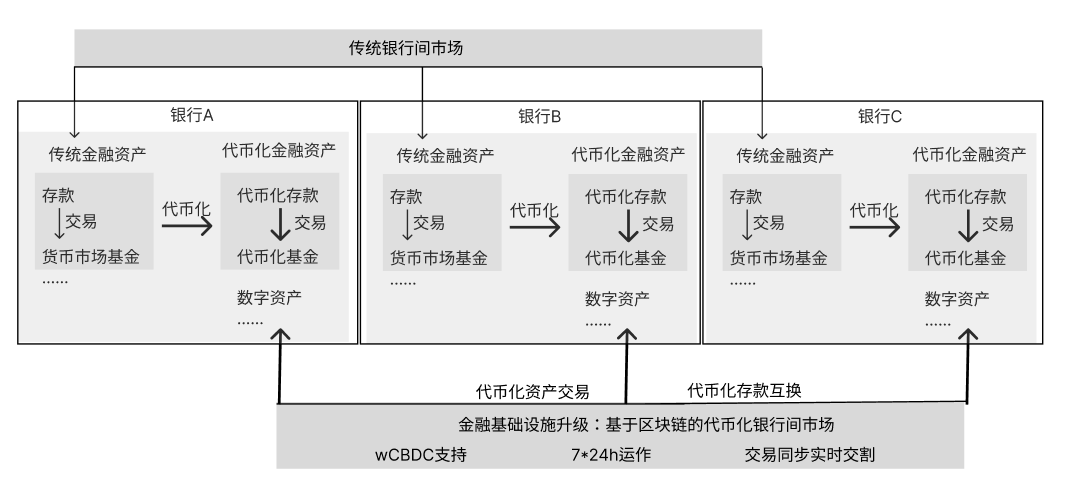
Figure: Ensemble Sandbox Supporting Tokenization of Financial Assets and New Infrastructure Development
4. Liquidity Management
Liquidity management focuses on repurchase agreements and treasury management use cases, promoting banks to build enterprise treasury solutions based on tokenized deposits for clients. In May 2025, HSBC’s tokenized deposit infrastructure went live, launching Hong Kong’s first blockchain-based settlement service offered by a bank. Ant International was the first corporate client to adopt the solution—its subsidiaries, after tokenizing deposits in HSBC accounts, successfully executed instant internal fund transfers via Whale, its internal treasury platform, instructing HSBC to execute tokenized deposit transactions.By leveraging programmable and instantly settleable features of tokenized deposits, tokenized treasury solutions promise greater transparency, efficiency, and convenience in corporate payments and fund management.
VI. Outlook
Hong Kong’s established digital asset regulatory framework, along with its pioneering sandbox use cases, clearly demonstrates a concrete pathway for innovation to achieve stable development within a compliant framework. As stated in the "Hong Kong Digital Asset Development Policy Declaration 2.0," Hong Kong is continuously building a "trusted and innovation-focused digital asset ecosystem" and will continue to consolidate its leading position in the global digital asset arena, driving Hong Kong to become a global innovation hub.
With the official implementation of the "Stablecoin Ordinance" on August 1, Hong Kong now has a stronger institutional foundation and broader development space to promote stablecoin use cases, expand the range of tokenized products, and enhance the liquidity and adoption of stablecoins and tokenized financial products.
Looking ahead, leveraging its deep roots as a traditional international financial center, first-mover advantage in systematic digital asset regulation, and natural position as a bridge between mainland China and global digital asset markets, Hong Kong is poised to rise as a key global node in digital assets and a core hub for real-world asset tokenization, building an irreplaceable competitive edge.
Join TechFlow official community to stay tuned
Telegram:https://t.me/TechFlowDaily
X (Twitter):https://x.com/TechFlowPost
X (Twitter) EN:https://x.com/BlockFlow_News