








SEC announces new standards—will a wave of spot ETF approvals follow?
TechFlow Selected TechFlow Selected
SEC announces new standards—will a wave of spot ETF approvals follow?
Coinbase could become the biggest winner.
 Navigating Web3 tides with focused insights
By: 1912212.eth, Foresight News
On July 29, the U.S. Securities and Exchange Commission (SEC) announced approval of in-kind creation and redemption mechanisms for crypto-based exchange-traded products (ETPs). Previously, crypto ETPs primarily used cash-based creation and redemption models. This change significantly reduces trading costs and improves efficiency. In addition, the SEC has released listing standards for spot ETFs, with new rules expected to take effect in September or October 2025, aiming to streamline the ETF listing process and open doors to mainstream finance for more crypto assets.
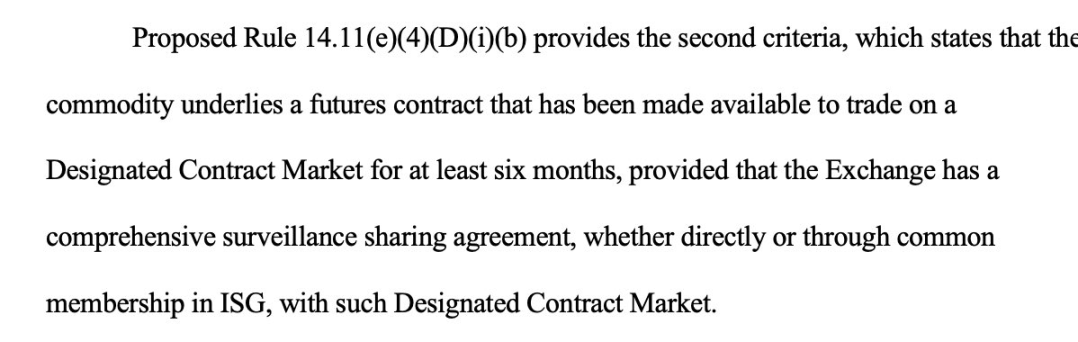
Must Have Futures Listed on Major Exchanges Like Coinbase for at Least 6 Months
The SEC's new listing standards focus primarily on eligibility requirements and operational mechanisms for crypto ETPs. First, in-kind creations and redemptions are now officially permitted, meaning authorized participants can exchange actual crypto assets—rather than cash—for ETP shares. This model reduces tax burdens, lowers transaction friction, and enhances ETF liquidity. The SEC Chair emphasized in a statement that this decision aims to provide crypto ETPs with treatment similar to traditional ETFs while maintaining market integrity. Previously, crypto ETPs were forced to use cash-based models, leading to higher operating costs and potential manipulation risks.
In addition, the SEC established "universal listing criteria," requiring that crypto assets must have futures listed on major exchanges such as Coinbase for at least six months. This rule is designed to ensure sufficient liquidity and market depth to prevent manipulation. According to documents cited by Phyrex, tokens without futures or newer meme coins (such as Bonk and Trump coin) seeking ETF status would need to go through the 40 Act process.
Which Projects Might Get ETF Approval
Spot ETFs for Bitcoin and Ethereum were approved in 2024 and 2025 respectively, and these products will continue to benefit from optimized in-kind mechanisms.
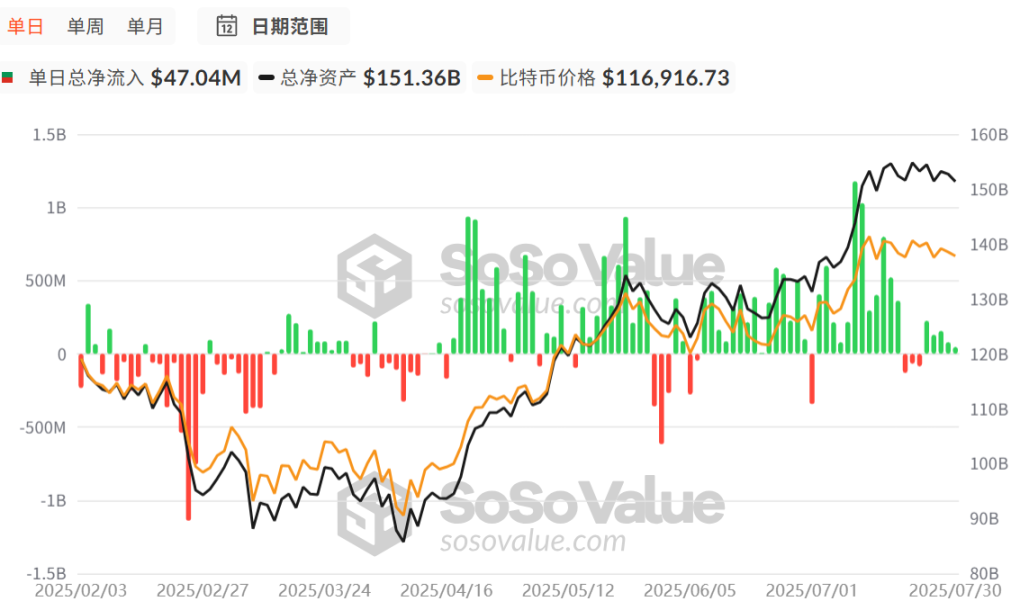
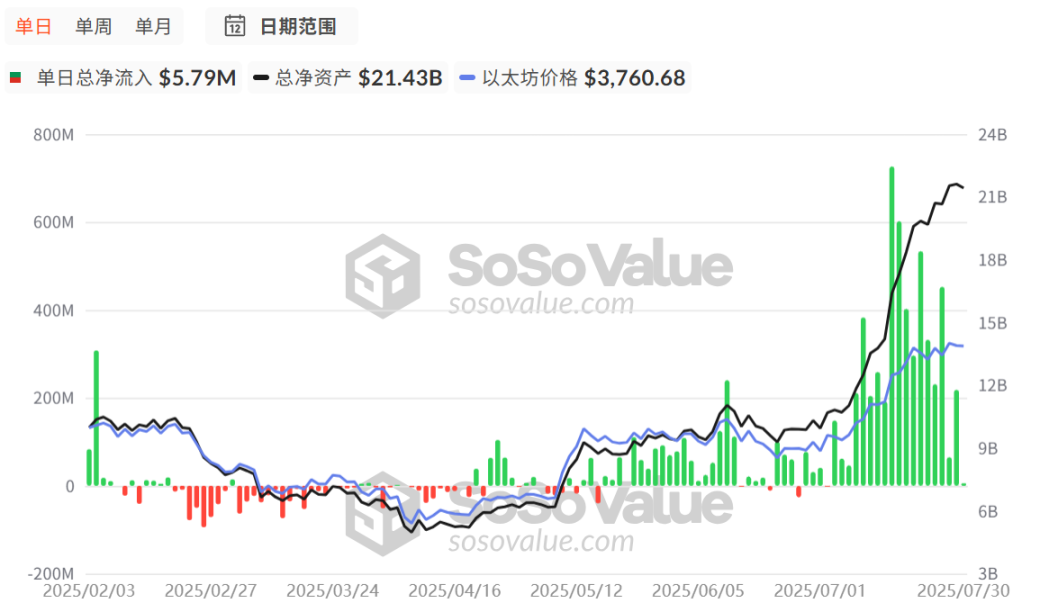
According to SoSoValue data, as of July 31, 2025, cumulative net inflows into U.S. Bitcoin spot ETFs reached $55.11 billion. U.S. Ethereum spot ETFs achieved cumulative net inflows of $9.62 billion, showing strong growth momentum after overcoming a sluggish period. The approval of spot ETFs has clearly provided solid price support and upward momentum for these cryptocurrencies.
The new standards open the door for altcoins. Solana (SOL) and Ripple (XRP) are seen as the first beneficiaries. Cboe’s proposal explicitly mentions that SOL and XRP ETPs are expected to launch in Q4 2025, supported by active futures markets. XRP futures contracts officially launched on Coinbase on April 22, and XRP’s cross-border payment applications have attracted institutional interest. Analysts predict high approval probabilities for these ETFs, potentially realized before the end of 2025.
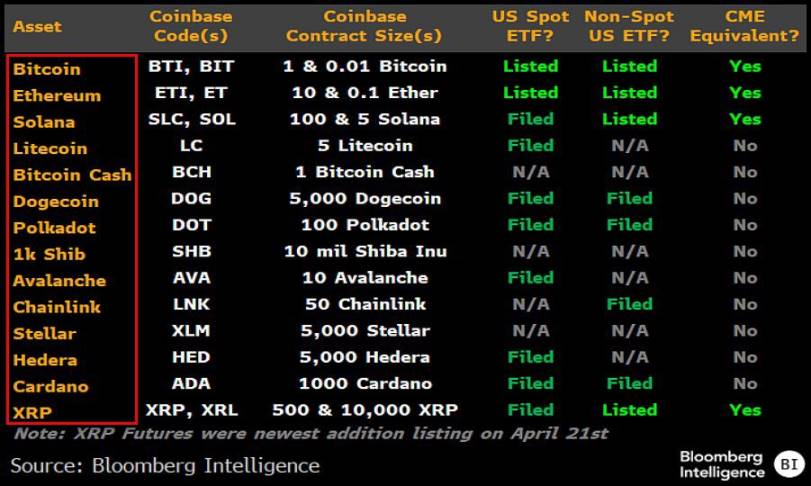
Other potential candidates include Chainlink, Polkadot, and Cardano—cryptocurrencies that meet minimum listing duration requirements and have emerging futures contracts. However, not all projects will qualify: DOGE may be excluded due to lack of futures history unless its market maturity improves. Overall, the new standards are expected to approve 10–15 new ETFs covering the top 20 crypto assets by market cap, accelerating the industry’s shift from speculation to investment.
Coinbase Could Be the Biggest Winner
On May 9, Coinbase Derivatives, a subsidiary of Coinbase, launched the first CFTC-regulated 24/7 leveraged futures trading service for Bitcoin and Ethereum in the U.S., serving both retail and institutional users. This marks the first time the U.S. derivatives market offers round-the-clock trading, allowing users to hedge risks and capture market opportunities at any time. Coinbase also plans to introduce perpetual contracts and expand its suite of compliant derivatives in the future.
As the largest crypto exchange in the U.S., Coinbase stands to gain significantly from the SEC’s new standards. First, the standards directly reference Coinbase as a qualification benchmark: coins traded on its platform for over six months become eligible for ETP applications, reinforcing Coinbase’s regulatory influence. This means assets listed on Coinbase will find it easier to transition into ETF products, attracting more issuers to partner with the exchange. For example, Coinbase has served as custodian for multiple Bitcoin and Ethereum ETFs, with custody revenue rising 30% in Q1 2025.
Second, the new standards will boost Coinbase’s trading volume and revenue. The in-kind redemption mechanism requires ETF issuers to hold actual crypto assets, driving institutions to conduct large-scale trades via Coinbase. Bloomberg analysts estimate this could generate an additional $1 billion in annual fee revenue for Coinbase. Moreover, as more ETFs are approved, retail investors are likely to turn to Coinbase to purchase underlying assets, creating a positive feedback loop.
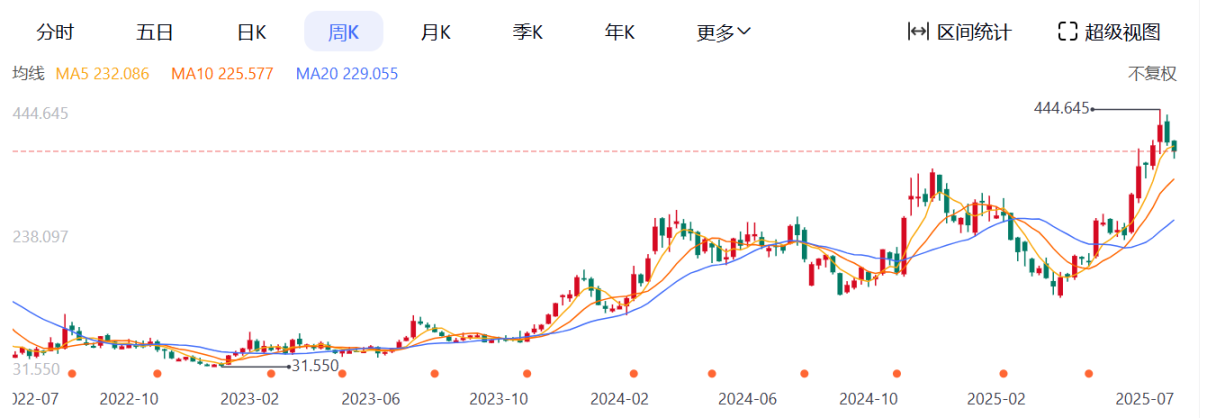
On February 21, the U.S. SEC dropped its lawsuit against Coinbase without imposing any fines. Policy-wise, Coinbase now faces no major obstacles. The new standards enhance Coinbase’s legitimacy, transforming it from a regulatory adversary into a collaborator.
CFTC’s Authority Over Spot ETF Approvals May Take Precedence
The Commodity Futures Trading Commission (CFTC), as the commodities regulator, is playing an increasingly important role in the spot ETF space. Since crypto assets like Bitcoin are classified as commodities, regulation of spot ETFs involves coordination between the SEC and the CFTC. In 2025, a White House policy report called for stronger cooperation between the two agencies, including establishing a “safe harbor” mechanism to avoid regulatory overlap. The CFTC’s leadership vacuum—due to an empty chair position—has caused decision delays, but this also presents opportunities for the crypto industry: the CFTC tends to favor a more permissive commodity framework, which could accelerate innovation in spot ETF derivatives. If the CFTC classifies more crypto assets as commodities, spot ETF approvals could speed up, reducing the SEC’s burden under securities review.
Currently, regulators appear to have found a balancing act. Twitter KOL qianbafrank commented that the SEC’s new listing standards mean “the SEC’s authority over spot crypto ETF approvals has effectively been前置 (pre-positioned) to the CFTC (Commodity Futures Trading Commission), since the CFTC is the primary regulatory body deciding which assets can have futures contracts.”
However, the CFTC’s growing influence also brings challenges: if incidents of manipulation in the crypto futures market increase, the CFTC may tighten oversight, indirectly slowing down spot ETF approvals. Reports show the CFTC handled multiple crypto fraud cases in 2025, which could lead to stricter reporting requirements for ETF issuers.
Join TechFlow official community to stay tuned
Telegram:https://t.me/TechFlowDaily
X (Twitter):https://x.com/TechFlowPost
X (Twitter) EN:https://x.com/BlockFlow_News
 Foresight News






