Exclusive Interview with CZ: From Bitcoin Believer to Leader of the World's Largest Exchange, I Don't Want to Live a Life of Running and Hiding
TechFlow Selected TechFlow Selected
Exclusive Interview with CZ: From Bitcoin Believer to Leader of the World's Largest Exchange, I Don't Want to Live a Life of Running and Hiding
To build a successful company, you must have strong convictions and a clear worldview—you need to recognize the potential of certain trends earlier than others.
 Navigating Web3 tides with focused insights
Compiled & Translated: TechFlow
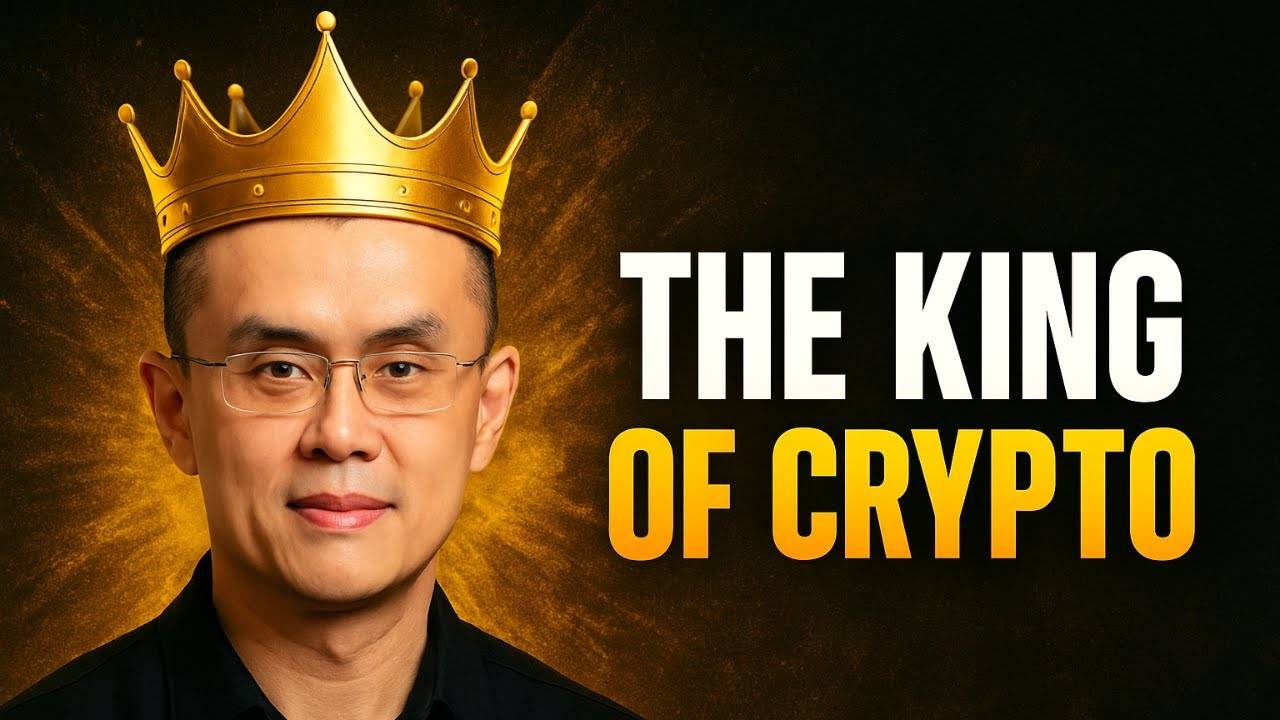
Guest: Changpeng Zhao, Founder of Binance
Host: Anthony Pompliano
Podcast Source: Anthony Pompliano
Original Title: The King of Crypto: CZ’s Rapid Rise
Release Date: July 2, 2025
Key Takeaways
CZ is the founder of Binance and one of today's most successful entrepreneurs. In this interview, we dive deep into his life journey—from buying Bitcoin in 2013, navigating the ups and downs of the crypto market, to his vision for the future. Topics include his childhood, career path, founding Binance, and the many challenges he has faced in the crypto industry.
Highlights Summary
- I missed the internet wave, but when Bitcoin emerged in 2013, I was already 35. I realized I couldn't miss this opportunity again, so I quit my job, sold my house, and fully committed myself to the crypto space.
- Traditional financial markets will also enter the cryptocurrency sector at a much larger scale.
- Bitcoin, blockchain, and artificial intelligence are the three core technologies I’ve encountered in my adult life.
- What truly limits me isn’t money, but other factors—talent, team, health, and time. These are the finite resources. That’s why I now focus more on these aspects.
- I've never felt particularly different from others, so I’ve never had feelings of superiority or inferiority. I hope I won’t become overly arrogant, but neither too pessimistic.
- I believe the U.S. has the potential to become the global center of crypto, and we want to contribute to that. We’re like in a simulation—when facing challenges, all we can do is try our best and keep moving forward.
- Starting an exchange isn’t a new idea. Almost everyone I’ve met in crypto has considered launching one. I’ve always believed that execution matters far more than the idea itself.
- To build a successful company, you need strong conviction and a clear worldview—you must see the potential of certain trends earlier than others.
- Binance made around one billion dollars in profit during its first year—possibly the first startup ever to achieve a billion-dollar profit so quickly.
- We hold our profits in cryptocurrency rather than converting them into fiat, because we believe in the long-term value of crypto assets.
- When checking my personal wallet, I’ve never cashed out these assets. To me, it’s more like a virtual number than real wealth. This mindset helps me stay focused on long-term growth instead of short-term volatility.
- Although I could live in a country without extradition treaties and lead a relatively safe life, that’s not the lifestyle I want. I don’t want to live a life of escape and hiding.
- I have some trust in the American judicial system. Despite political pressures on the crypto industry, I still believe the U.S. legal system remains relatively fair.
The Role of Bitcoin and Cryptocurrency in the World
Anthony:
CZ, as one of the most influential entrepreneurs globally, you’ve not only achieved personal success but also led Binance to become a leader in the crypto industry. However, I think many people outside the crypto world don’t fully understand how large companies like Binance grew so fast or appreciate your achievements.
People who reach the top of their field often have fascinating worldviews. Given that you built your company in crypto, tell us about Bitcoin and cryptocurrency. What role do you think they play in the world? How will their importance continue to grow?
CZ:
Absolutely. You’ve touched on a key point—I’ve learned over the years that to build a successful company, you need strong conviction and a clear worldview. You must recognize the potential of certain trends earlier than others.
I feel lucky to have been exposed to Bitcoin early. This is our third podcast together. Back in 2013 and 2014, when I first encountered Bitcoin, I thought, “This technology is amazing—it could be even bigger than the internet.” I missed the internet wave, but when Bitcoin appeared in 2013, I was already 35. I realized I couldn’t afford to miss this chance again, so I quit my job, sold my house, and went all-in on crypto.
I believe this kind of conviction is crucial. Blockchain technology isn’t just useful for money—it can be applied to any future scenario requiring verification. Traditional databases store data, but they don’t make verification easy. Blockchain offers a more reliable way to verify information. Its potential in finance is enormous, and we’re still in the early stages of its application in the financial world. To me, this is an unmissable technological opportunity. The next major tech revolution might come in 10 to 15 years, and AI is clearly another big direction. I believe Bitcoin, blockchain, and AI are the three core technologies I’ve encountered in my adult life. This worldview is essential for building platforms and advancing the industry.
Anthony:
You mentioned worldview, which clearly ties back to personal experience. You’ve worked in various types of companies and lived through many different environments—experiences that seem to have fostered empathy and intuition. Intuition is like your human algorithm—the more exposure you have, the better you can spot potential. When you first encountered Bitcoin, what made you believe it would be so big? Was it the technology itself, price trends, or something else in the market? What convinced you it would change the world?
CZ:
I was fortunate to have lived in different countries, which gave me a deeper understanding of globalization. I was born in China, later moved to Canada for education, and then worked in Tokyo, New York, and Shanghai. This global experience taught me that money shouldn’t be confined by national borders. When moving between countries, I had to exchange currencies—and during my trip from Japan to New York, I lost a significant amount due to exchange rates. That showed me the limitations of the current monetary system.
Also, I have a technical background. As early as 1998, I used PGP encryption, which helped me understand Bitcoin’s cryptographic algorithms. I also worked on Wall Street—for example, at Bloomberg and on systems for the Tokyo Stock Exchange—giving me fintech experience. All this helped me grasp Bitcoin’s potential earlier. Plus, I observed the Bitcoin community in 2013—it was full of innovation and collaboration, which further strengthened my belief.
I think this combination of experiences allowed me to see Bitcoin’s value earlier than most. It also helped me stay committed to the industry. All these experiences broaden your perspective and understanding of the world. Having a global view, rather than a narrow national one, is very important.
CZ’s Outlook on the Future and the Crypto Industry
Anthony:
You’re one of the most successful entrepreneurs of our generation. People are curious about your financial situation—can you talk about it publicly? Everyone wants to know how successful you really are, and wealth is often seen as a measure of success.
CZ:
I know I have enough money to live comfortably and fund whatever I want to do. To me, money is a tool—it enables me to pursue things I believe are important. For instance, if I want to launch a business that helps people and creates positive impact, I have the resources to do so. But what truly limits me isn’t money—it’s other factors like talent, team, health, and time. These are the scarce resources. So now I focus more on these, not on money itself.
Anthony:
Bitcoin was clearly your entry point into this industry, and you’ve successfully built the world’s leading exchange. Where do you see the crypto industry heading now, especially as more countries support crypto and hundreds of millions of people begin registering and using these assets?
CZ:
I’m very optimistic about this market. Some of the world’s most powerful governments are pushing crypto forward. For example, we now see public companies holding Bitcoin reserves—that’s a huge step forward. I expect to see even more institutional adoption—ETFs, public reserves, Bitcoin treasuries. We’re also seeing companies create BNB and Ethereum reserves. All of these are positive trends.
I believe traditional financial markets will enter the crypto space at a much larger scale. On the innovation side, we’ll also see more convergence between AI and blockchain. This intersection is rapidly expanding. For example, many governments are already adopting blockchain for decentralized identity, land registration, healthcare benefits distribution, tax systems, and more. This shows blockchain is evolving from a single-use financial tool into multi-dimensional solutions—all of which are very exciting.
If you’d asked me nine months ago, I wouldn’t have imagined we’d be in this position today.
This also reflects the importance of changes in government structures. Elections can quickly bring new ideas and innovative policies. I believe the U.S. has the potential to become the global center of crypto, and we want to help make that happen. While there are current limitations, we look forward to contributing more in the future.
Anthony:
That’s kind of crazy, right? You’re the largest crypto exchange in the world, yet you’re not in the U.S.
CZ:
We hope to enter the U.S. market. Right now, crypto exchanges in the U.S. charge fees that are 10 to 20 times higher than elsewhere in the world. That’s unusual—usually in the U.S., goods are cheaper and delivery faster. For example, when I use Amazon in the U.S., prices are lower and shipping quicker. But in crypto, U.S. consumers pay more and have fewer choices. We want to change that, but we’re currently limited by regulations. We need to take it step by step.
I believe we’re like in a simulation—when facing challenges, all we can do is try our best and keep moving forward. I also want to thank you for your long-time support. Although we haven’t had many opportunities to work together, I deeply respect your contributions to the industry. You’re a rational voice in American crypto. I’m very grateful for everything you’ve done, and I hope we can collaborate more in the future.
CZ’s Childhood
Anthony:
Although we’ve known each other for a while, I find that most people only focus on your professional achievements and know little about your childhood. When I talk to people and learn more, I realize your upbringing in China was actually quite tough. Can you share what your childhood was like?
CZ:
I was born in a remote rural area in China, later moving to an even smaller village. Before I could remember, our home had no running water or electricity. In elementary school, I often studied under an oil lamp with a glass cover. A few years later, we installed a pump to draw water. Then, years after that, we finally got electricity. Later, we moved to a small Chinese city, then immigrated to Canada. All this happened before I turned 12, so my life changed dramatically.
Even in Vancouver, my parents faced many challenges. In China, they were both teachers. But in Vancouver, my father pursued further studies to become a professor. My mother, due to language barriers, could only work in a sewing factory making clothes. She left home at 7 a.m. and returned at 7 p.m., earning close to minimum wage. We weren’t starving, but we were definitely at the bottom of society. Still, we never carried debt—Chinese parents tend to save. I saw my parents working extremely hard to give me better opportunities. That experience shaped me deeply. I developed frugal habits—no luxury spending—but I also learned to work hard. I think this combination helped me greatly.
From a village without running water to where I am today, I feel incredibly lucky. This experience makes me appreciate life more. I remember as a child, my mother walked 300 meters to the village well, carrying two buckets on a bamboo pole. To go from that life to today fills me with gratitude.
Anthony:
It’s interesting—your career is deeply tied to innovation and technology, but the childhood you described seems almost entirely devoid of technology, right? No running water, no electricity. As you were growing up, did you realize you were missing out on things? Or did everyone around you live similarly, so you thought that was just normal life?
CZ:
As a child, I thought everyone lived like us. Even today, I still carry that mindset. I believe comparisons between people are relative. In the village, everyone’s living standard was similar. In fact, since my parents were teachers, we were slightly above average. But when we moved to a bigger city, I realized urban life was much better. We moved to Hefei, home to one of China’s top universities. On campus, I saw paved cement roads for the first time—so much better than dirt paths. These experiences taught me that the world is much bigger than I imagined.
This also cultivated my openness to new things. Early adopters of crypto usually have open minds, and I think my upbringing helped with that. I’ve never felt superior or inferior to others. I hope I won’t become overly arrogant, but neither too pessimistic. Overall, I’ve always been an optimist.
Relationship With His Parents
Anthony:
I recently watched the NBA draft, and one player talked about living without electricity, relying on a generator for seven years. You could feel the emotion—he said, “I came from seven years on a generator; my mom sacrificed so much, and now I’m in the NBA.”
While I don’t know how good you are at basketball, in the tech world, you’ve reached a similar elite level. Can you talk about your relationship with your parents? Have you discussed with them the huge difference between your lives and upbringing? Have they expressed pride in you?
CZ:
I’m lucky to have had a fairly good relationship with my parents. I didn’t spend much time with my father—he worked away most of the time to provide better conditions for us. I spent more time with my mother. Her expectations for me were low, and she remained very frugal. Now she’s 83 or 84, but she still complains that groceries are too expensive. I often say, “Mom, you can buy anything you want now.” But she keeps her frugal habits.
My father was also very frugal. Once I gave him some money, and six months or a year later, I asked, “Dad, do you need more? I can give you more.” But he refused, saying, “No, I haven’t even spent the money you gave me last time.” So I only gave him money once. Their lifestyle hasn’t changed much—they don’t want to change.
My father passed away two years ago. Though we weren’t especially close, his lifestyle influenced me deeply. He lived simply and frugally, never chasing luxury—my mother is the same. Overall, my relationship with my parents was normal—not overly close, but not distant either.
Immigrating to Canada
Anthony:
When you moved to Canada at age 12, what memories stand out? From an American perspective, Canada is sometimes jokingly called the ‘little brother’—though Canadians may not like that term. But it’s a very Westernized country, almost the closest thing to the U.S. Moving from a Chinese village to a slightly larger city, then to developed Canada—such a transition must have been shocking, right?
CZ:
It was indeed a very special experience. When we first arrived in Canada, a friend of my father’s drove to the airport to pick us up. To me, that was a big deal—I’d never ridden in a private car before. In China, private cars were rare; I only took buses. A few days later, my father bought a used car for 400 Canadian dollars. I was thrilled—“Wow, we have our own car!” Life in Canada was great—high quality of life, safe environment, wide lawns to play on with friends. School wasn’t stressful—relatively relaxed—and I had time to learn English. Overall, the system was excellent. I’m deeply grateful for my teenage and university years in Canada, and I developed many good habits there.
In high school, I loved volleyball, practicing about 15 hours a week. I was captain of the school team for four out of six years. I wasn’t captain in grades eight and the first half of nine, but from the second half of grade nine onward, I became captain. I loved sports and did well academically. I had great relationships with my teachers. Our school was small—started with 200 students, grew to 400 by graduation. Because it was small, everyone knew each other. I think my teenage years were among the best periods of my life—very helpful for my growth. I remain deeply grateful to Canada; it helped me grow immensely.
Anthony:
Hearing your story reminds me of my wife. She’s from Bulgaria and found math in American schools surprisingly simple when she moved here. In Bulgaria, she solved equations, but in the U.S., other kids were doing basic addition. She went from worst to best in math class. I assume China’s education system is also stricter. So, how was the transition from China’s education system to Canada’s for you?
CZ:
Yes, my mother being a high school teacher didn’t want to stay home with my sister and me, so she enrolled us two years early. In China, I completed eighth grade and moved to Canada at age 12. But upon arrival, they placed me in elementary school based on age. I spent one year in elementary, then entered eighth-grade middle school. Despite the delay, I studied math at a tenth-grade level. I participated in multiple Canadian National Math Competitions—Fermat and Euclid. These are advanced high school-level contests, and I ranked in the top 100 most years, even top 25 in my final year, winning some small medals. Math has always been my strength, naturally guiding me toward programming and tech. That part was relatively easy for me.
English was my challenge—it was my second language. In high school, I joined ESL (English as a Second Language). Typically, ESL students struggle to get As in regular English classes, but I mostly earned As. That’s thanks to my English teacher—he really liked my writing style. He found my essays interesting, and though my vocabulary was limited, I often added humor, which he appreciated. Our good relationship gave me great confidence in writing. My grammar wasn’t perfect—I made frequent mistakes—but humor helped a lot. Academically, I excelled in math, and gradually improved in English through effort.
Career and Life Before Bitcoin
Anthony:
Between your high school graduation and encountering Bitcoin, what was your life like? You were around 35—I’m unclear about this period. Where did you go? What jobs did you have? I heard you worked at financial firms and returned to Asia. Can you share your journey?
CZ:
During my fourth year at McGill University, I interned every summer. First summer: software development internship. Second summer: continued at the same company. Third summer: interned at a company in Tokyo that provided trading systems for the Tokyo Stock Exchange—I handled junior development tasks. Fourth year: stayed with the company on a major project. But due to delays, my manager wanted me to extend a semester to finish, as I’d become essential to the project. To avoid disrupting the team, I agreed.
But the project still wasn’t completed on time—not due to me. After multiple delays, I never returned to McGill to finish my degree. Later, I realized lacking a degree would hurt work visa applications, so I transferred credits via online distance learning, completed some courses, and eventually earned a bachelor’s degree. Then, I continued working in Tokyo for several years until the 2000 dot-com bubble burst. Tech stocks crashed, my company was acquired by a Nasdaq-listed firm, but post-acquisition stock performance was poor, and many employees left. I started looking for new jobs, but hiring was scarce. In 2001, Bloomberg recruited me—I passed a phone interview and got the job.
Just as I prepared to move to New York, 9/11 happened. I called to confirm the job was still available—they said yes and asked if I still wanted to join. I said yes without hesitation. So in November 2001—just two months after 9/11—I moved to New York. The streets were unusually quiet, but the work environment was stable. I worked there for four years.
At Bloomberg, I grew significantly. Joining as a senior developer, I was promoted three times within two years, eventually managing a 60-person team that expanded to 80, spread across New York, Princeton, London, and Tokyo. We built a futures trading system—my first full-time involvement in a second-generation trading platform. But in the following two years, I didn’t get promoted again. I was the youngest manager on the team and the only Asian face. Promotions were limited—might take years to advance.
So I started exploring startup opportunities. A group was launching a startup in Shanghai—I thought that might be a good fit. Some senior founders I’d worked with in Japan were starting a new project there, so I decided to join them as the youngest partner. In 2005, the six of us founded Fusion Systems—a fintech solutions company. We expanded to Tokyo, Hong Kong, Shanghai, and Los Angeles. Initially small—around 200 people. Despite difficulties, we eventually became profitable, and life improved for the partners. We sustained this for eight years—from 2005 to 2013.
In 2013, I first encountered Bitcoin. I saw it as a novel technology and tried to get Fusion Systems to develop a Bitcoin payment service, similar to BitPay. I raised $4 million, but the other partners—older and less familiar with Bitcoin’s potential—decided not to proceed. So I chose to leave and officially entered the Bitcoin industry. That was my career turning point.
Anthony:
Looking back, people always find clues in their careers—seeing how past actions connect and eventually lead to success. But this clarity usually comes in hindsight, right? When you joined Bloomberg or Fusion, you probably couldn’t predict the future.
First Encounter With Bitcoin in 2013
Anthony:
After your first encounter with Bitcoin, what was the first thing you did?
CZ:
I first encountered Bitcoin in July 2013, when it was around $70. I spent about six months fully understanding it and building confidence. By December 2013, when I fully grasped Bitcoin’s potential, the price had risen to $1,000—one-year high. I felt I’d entered late and needed to act fast. So in January 2014, I sold my apartment and used the proceeds to buy Bitcoin. Each time I received funds, I bought more—e.g., in January 2014, I bought at $800 and $600. Later, Bitcoin prices dropped. By February or March, when I received my final payment, I bought at around $400. Ultimately, my average purchase price was about $600.
However, from 2014 to early 2015—18 months—Bitcoin hovered between $150 and $200. My investment temporarily lost two-thirds of its value. Fortunately, my family supported me, though my mom constantly complained: “You silly kid, why do this? Why not stay at Bloomberg? You had a good income.” But she only complained—she didn’t stop me.
My thinking was: either I was wrong, or others hadn’t yet recognized Bitcoin’s potential. I believed I was just early, so I decided to stay the course. In 2016, China’s central bank governor Zhou Xiaochuan publicly mentioned blockchain for the first time—an official nod that sparked widespread attention. After that, China’s crypto industry shifted toward blockchain, and prices began rising. This was my first experience of a crypto “winter cycle”—a prolonged market downturn. Surviving the first cycle made the second easier, as the foundation was stronger.
The Idea and Process of Founding Binance
Anthony:
So when did you decide to start Binance? Was it a solo effort, or did you build a team from the beginning?
CZ:
Starting an exchange isn’t a new idea—in the crypto space, nearly everyone I’ve met has considered launching one. As early as 2013, we discussed it, but I felt I lacked experience, so I joined an existing exchange instead. But it didn’t go well—I left in under a year. Then, I tried launching a Bitcoin exchange in Japan, since Mt. Gox—the world’s largest Bitcoin exchange—collapsed in 2014 due to security flaws. I saw demand for new exchanges in Japan, so I started pursuing that in 2015.
At the time, I approached several venture capital firms to raise funds. But they advised against launching an exchange directly—instead, they suggested becoming a technology provider for other exchanges, since they’d already invested in Japanese exchanges and I was skilled at building systems. So I gathered a few partners and focused on developing exchange systems. We shifted from launching our own exchange to providing tech support to others. The company did well—we served over 30 exchanges, many small crypto platforms. Meanwhile, in China, a new phenomenon called OTC (over-the-counter) trading emerged—these clients needed order book matching systems. We adopted a B2B model, charging monthly fees—business was stable.
But in early 2017, the Chinese government shut down most of our clients, banning that type of exchange. By then, our team had grown to about 25—mostly engineers, a few salespeople. So we decided to pivot back to our original goal: launching our own exchange.
I’ve always believed the idea itself isn’t the most important—execution is key. By 2017, we had a mature system and a highly efficient team. Most team members were young and less experienced, but exceptionally talented. At the time, most exchanges only supported Bitcoin—even big players like Coinbase didn’t support Ethereum yet. ERC20 tokens on Ethereum weren’t widely accepted by mainstream exchanges, but 2017 marked the start of the ICO boom, with many projects issuing ERC20 tokens. We seized this gap, quickly launching support for Ethereum and all ERC20 tokens, gaining a competitive edge.
We also made major improvements in customer service. Back then, submitting a support request could take over two months to get a reply—especially painful when users couldn’t withdraw Bitcoin. We committed to replying within 24 hours, and eventually reduced response times to under one hour. Through superior products and excellent service, we attracted a large base of active users and stood out in the industry. These efforts and decisions helped us succeed in the early stage.
Rapid Growth and Becoming the #1 Global Exchange
Anthony:
During Binance’s rapid growth, you launched products the market urgently needed—solving real pain points. I’ve noticed that many business successes trace back to meeting market demands. So during Binance’s explosive rise in 2017, what was your experience like?
At that time, I experienced my first crypto cycle—I realized the market would go crazy. It wasn’t just Bitcoin—almost all cryptocurrencies surged. Then came the crash—I know price swings often bring emotional highs and lows. So in Binance’s early days, how did you handle this?
CZ:
The first eight months were surreal—everything was unexpected. We officially launched on July 14, 2017. Just six weeks later, the Chinese government announced it would no longer allow crypto exchanges to operate. We faced a choice: shut down or relocate? My international experience helped here. Relocating didn’t seem complicated—I’d lived in many countries. So we decided to move our 30-member team from China to Tokyo and no longer base ourselves in China. This might be unimaginable for many companies, but it was feasible for us.
At the time, we had no fiat channels—banks in China and elsewhere refused to work with crypto exchanges. So we focused solely on blockchain operations, becoming a crypto-to-crypto exchange. Users deposited Bitcoin via blockchain, traded Ethereum, withdrew—all on-chain. This model limited our user base per country, but we found that in each country, a small segment of users was willing to use this method. Gradually, we evolved into a global platform.
After relocation, business grew rapidly. Two months after launch, we entered the global top 10 exchanges. Four months later, we were in the top five, staying in the top four for about a month. By December 2017—five months after launch—I received a message in Tokyo: “Congratulations, Binance is now the #1 crypto exchange in the world.” Around the same time, Bitcoin rose from $3,000 at the start of the year to $17,000–$19,000 in December—aligning closely with our volume peak. But this also put immense pressure on our systems.
I remember our CTO hardly got any rest. Product managers monitored community forums late at night—any issue, they’d contact the CTO. Operations managers woke up at dawn to check communities—any problem, they’d immediately alert the CTO. For months, the CTO dealt with emergencies daily—workload was extreme.
In January 2018, our registration peaked—200,000 new users per hour, 300,000 per day. The system was under tremendous strain—couldn’t process registrations in time. We had to pause one-hour or 24-hour response services. Luckily, as Bitcoin prices cooled, the market calmed down—giving us breathing room. We used that time to re-optimize systems, preparing for the next phase.
Anthony:
In Binance’s first year, how much did you earn? It’s an incredible story—launching a product that quickly became the market’s focal point. How big was the scale?
CZ:
I recall our first-year profit was about one billion dollars. I think we might have been the first startup to generate a billion-dollar profit.
Anthony:
Was that achieved within the first six months? Since you launched in July.
CZ:
Yes, most of the profit came in the first three to eight months—especially months three to seven, when our trading volume was highest. We found that while some companies reached a billion-dollar valuation faster, from a profitability standpoint, we might have been the fastest startup to hit that milestone.
Anthony:
One billion dollars in profit in the first year—unbelievable. What were you thinking then? Did you feel extremely successful, or worried it might vanish? What was your emotional state? Did you stop to celebrate this milestone?
CZ:
My mindset was balanced—it closely tied to Bitcoin’s price volatility. We held profits in cryptocurrency, not converted tofiat, because we believe in crypto’s long-term value. This volatility is something we have to face. As long as we ensure sufficient financial buffers, we can handle any downside risks. So I wasn’t overly excited, nor did I distribute all profits—avoiding trouble if the market dropped.
In early 2018, Bitcoin fell from $20,000 to $3,000. That reminded me that profit figures heavily depend on asset holdings on the platform. We had to reorganize wallets, moving billions in assets. Doing this for the first time was nerve-wracking, but after a few times, I got used to it—gradually became numb to the numbers. When checking my personal wallet, I’ve never cashed out these assets—so to me, it’s more like a virtual number than real wealth. This mindset helps me stay focused on long-term growth, not distracted by short-term fluctuations.
Binance Hack in 2019 and the “Funds Are Safu” Incident
Anthony:
I remember walking in New York when I suddenly heard Binance was hacked. Was it 2018 or 2019? I immediately contacted a Binance executive, asking if they were okay, if they needed help. It was chaotic—everyone was trying to figure out what happened, whether funds were safe. Can you walk us through that event? Because when people hear Binance went from zero to a billion dollars in profit in its first year, they might think everything was smooth—but you’ve also faced many challenges and hardships, right?
CZ:
Exactly. This happened in May 2019—we suffered a major hack. Hackers stole 7,000 BTC from our hot wallet—worth about $40 million then. To respond, we paused withdrawals for a week, but trading continued normally to avoid price discrepancies with other exchanges. A few hours after the incident, I attended a pre-scheduled AMA. Though originally planned for the next day, I decided to go live as scheduled—to communicate directly with users. Many users analyzed my tone and demeanor, concluding we had enough funds to weather the crisis.
To provide more transparency, in 2019, $40 million equaled about one month’s revenue. The event wouldn’t bankrupt us, but the entire team was extremely tense. We worried hackers might attack other assets. Security remains one of crypto’s biggest risks. After the incident, we created a detailed response plan—updating progress on Twitter every two hours, explaining measures taken, and providing proof of assets. Looking back, this crisis turned into a blessing in disguise.
A week later, we resumed withdrawals—and deposits actually exceeded withdrawals. Many users praised and trusted our handling of the situation. I learned a key lesson: transparent, timely communication, taking responsibility, and solving problems quickly can actually strengthen user trust. We’ve seen other companies adopt similar strategies in crises and gain greater credibility. It’s a complex business, full of challenges.
Anthony:
We can’t discuss this hack without mentioning the phrase “funds are safu.” Can you explain the origin of this meme?
CZ:
At the time, I publicly stated, “Funds are safe.” Later, a YouTuber made a parody video portraying me as a Japanese person dramatically saying, “Funds are safe.” The video went viral. Whenever we paused withdrawals or performed system updates, I’d respond with “Funds are safe.” Gradually, I embraced the meme—the community supported it—and it eventually became a popular internet culture phenomenon.
Anthony:
Every time I see that meme, I laugh—it’s tied to that moment. Anyway, 2019 is behind us, and the hack is history. 2020 was clearly a special year, especially after the pandemic hit. Can you talk about that year? Your business was stabilizing and starting to scale, right? I think now anyone paying attention to crypto finance realizes it’s been successful. So what happened in 2020 and 2021?
CZ:
2020 was a warm-up year, 2021 an explosive one. In 2019, we launched Binance Launchpad—a platform helping new projects raise funds via token sales. It was near the bottom of the crypto winter—Bitcoin around $3,000. We introduced many new features via Launchpad, giving users more options. 2020 saw gradual recovery—a transition year. Then 2021 brought full-scale explosion in the crypto industry.
In early 2021, Binance had about 20 million users—by year-end, 120 million, a 5–6x increase. Bitcoin rose to $60,000 that year. Though stressful, we were better prepared—larger team, more experience. We still faced customer support and system issues, but overall, we’d matured. 2021 wasn’t just strong user growth—it was also when Binance’s reputation solidified. We were no longer just a new platform—we’d become an industry leader. That’s my main memory of that period.
Bitcoin Boom in 2021 and Regulatory Environment
Anthony:
At some point, Binance rapidly grew from a niche crypto product to the world’s leading crypto exchange. Eventually, you stepped onto the global stage, attracting worldwide attention. Entering 2021, I noticed increased scrutiny on the crypto industry, though not much action initially. Clearly, by 2022 and 2023, regulatory pressure intensified. This trend challenged many companies, including Binance.
Can you discuss the 2021 crypto boom and the regulatory friction you faced globally, especially pressure from the U.S.?
CZ:
I remember we met in January 2019—during the crypto bear market, Bitcoin around $3,100. Even in the downturn, our conference attracted massive attendance. By 2021, the market exploded—crypto热度 reached new heights.
But a few months later, the SEC sued Binance—alleging fraud, claiming we misappropriated customer funds, and issued an emergency freeze order attempting to restrict all company asset flows. To help the company survive, I provided a $250 million loan—but only recovered it after the case was fully dismissed.
Anthony:
Clearly, regulators’ attention on you intensified. Can you detail what happened? I think many only saw headlines—truth is, even I wasn’t fully aware. What were you accused of? How did it affect you?
CZ:
This happened in November 2022. In December 2022, amid market concerns about centralized exchange fund safety, Binance faced massive withdrawals. In one week, we processed ~$14 billion in withdrawals—the peak day (Wednesday) hit $7 billion. That day, I was having dinner in Dubai with industry peers marveling at Binance’s resources—while I mentally noted I wasn’t directly involved in withdrawal operations.
Despite the pressure, our systems ran stably—processed all requests without issues. But a month later, in January 2023, the SEC filed suit—trying to link Binance to FTX’s collapse, accusing us of misappropriating customer funds. During court proceedings, the judge clearly stated the SEC had no substantial evidence. This is all on record and publicly accessible.
During the SEC lawsuit, Binance’s trading volume accounted for ~35% of Coinbase’s global volume. In the U.S. market, our share even reached 50% of Coinbase’s. But after the lawsuit, Binance U.S. lost banking channels—volume plummeted to ~1% of Coinbase’s. This severely impacted our business.
Later, the U.S. Department of Justice (DOJ) also investigated. Regarding DOJ charges, I reached a plea agreement—admitting to violating one provision of the Bank Secrecy Act. I can’t disclose more details, but the key point is: I became the first person in U.S. history sentenced to prison for a single violation of the Bank Secrecy Act—no fraud or other crimes involved. I was very surprised, but that’s how it happened. I voluntarily flew to the U.S. to handle it—though I thought the outcome unlikely, it still occurred. I spent four months in prison—fortunately, everything was fine afterward.
The Story of Binance and CZ
Anthony:
I find your decision to voluntarily return to the U.S. remarkable. Maybe you didn’t expect prison, but you chose to face the charges. I think no one would advise escaping, but realistically, many might choose to avoid it, right? They’d say, “I’m not going.” So how did you make this decision? Did you talk to friends or family? What was your emotional state throughout?
CZ:
It was an extremely difficult process—hard to describe in words so others fully grasp its complexity. It was an unimaginable psychological challenge. Throughout, I weighed different options, listened to friends and lawyers.
I had to consider—if I escaped, I’d become an international fugitive—life would be extremely hard. I’d have to watch border checks carefully, maybe never move freely again. My career would suffer greatly. More importantly, many of our users—especially BNB holders—would lose out. BNB’s price could crash, the entire crypto industry might be shaken—even Bitcoin’s price could fall. We’d seen how FTX’s collapse impacted the market.
Though I could live in a country without extradition treaties and lead a relatively safe life, that’s not the lifestyle I want. I don’t want to live a life of escape and hiding.
I have some trust in the American judicial system. Despite political pressures on crypto, I believe the U.S. legal system remains relatively fair. So I thought, why not face it? Even in the worst case—prison—it likely wouldn’t be long. I expected house arrest for 6–12 months—still safer, no contact with other inmates.
Besides, I’d already resigned from Binance, paid a huge fine, and the company paid an even larger one. I thought that should be enough. After careful consideration, I decided to face the issue and take responsibility—rather than run.
Anthony:
During this process, I heard you missed the birth of one of your children—is that true?
CZ:
No, I didn’t miss my child’s birth. My younger son was born in July 2023—I flew to the U.S. in November 2023. But I did miss a minor surgery for another son. When I flew to the U.S., the plea deal wasn’t finalized. The U.S. government wanted me to stay, promising not to restrict my movement—I could move freely in the U.S.—but they didn’t want me to leave the country.
We argued about this. I posted a $150 million bail, and three friends mortgaged their homes as collateral. I believed I should be allowed to leave—I’d voluntarily flown in to plead guilty. If I pled guilty but didn’t appear, that’d be absurd. If someone doesn’t want to come, they should just reject the plea and go to trial.
The initial judge agreed I could leave, but the government appealed. Such appeals are rare—more surprising, the judge sided with the government, ordering me to stay. I’d only brought a small carry-on with a few clothes—later had to buy new clothes in the U.S. I also missed an important medical procedure for my older son.
My sentencing was supposed to take three months, but the government requested a delay on my birthday—court approved a three-month extension. I requested to leave the U.S., but the court denied it. So I stayed in the U.S. for six months, away from family, just waiting for sentencing. Then came four months in prison.
CZ’s Prison Experience
Anthony:
I think anyone with children and family can relate to your situation. Goodness, if they come to the U.S. and can’t leave or face other issues—it’s truly worrying. Right? I think that’s understandable. So you were sentenced. From what I understand, you served four months in prison—correct? I also heard your first cellmate was a double murderer—is that true?
CZ:
Yes, that’s true.
More interestingly, before incarceration—between sentencing and imprisonment—the government requested the judge to handcuff me to prison. But the judge refused—since I’d behaved well on bail, with no violations in six months, the judge saw no need for extra supervision.
After sentencing, I expected to go to a minimum-security prison—white-collar crime typically goes there. In theory, minimum-security prisons have no fences, looser environments—prisoners can move freely as long as they don’t leave. But since I’m not a U.S. citizen, they placed me in a low-security prison.
Low-security prisons mainly house drug offenders and other criminals. My first cellmate was a double murderer serving a 30-year sentence—already served 18 years. Due to good behavior, he’d been downgraded from medium to low security—but could never reach minimum security.
Prisons group inmates by ethnicity to reduce conflict. I was assigned to the Asian, Pacific Islander, and Native American group. My roommate was a double murderer, but we got along fine. He was actually easygoing—the hardest part wasn’t his crime, but his snoring at night. The first night, I hesitated whether to kick him awake—but considering he was a double murderer, I decided against it. The next morning, I politely told him, “Bro, your snoring is really loud.” He replied, “No problem, you can kick me awake.” So I did that later—we got along well.
Before I entered prison, Bloomberg and the Wall Street Journal reported I might be the richest person in the U.S. prison system. That reporting didn’t help—it made me worry about becoming a ransom target. Luckily, most inmates didn’t read those media outlets.
Anthony:
Were there any unsafe situations or attempts to extort you?
CZ:
Actually, no. I was worried, but I quickly blended in and joined a group. I adapted well, didn’t show weakness—so no one tried to extort me. Some might try to negotiate better conditions, but I faced no physical threats.
Anthony:
I can imagine, if a very wealthy, successful person enters a low-security prison, others would surely ask you about investing or crypto. Did you talk to them about Bitcoin or other cryptocurrencies in prison?
CZ:
Soon, both inmates and guards learned my identity. Some prisoners showed interest in learning crypto and investing. So we managed to get some crypto books sent to prison. I formed a small study group—we spent 30 minutes daily discussing investment knowledge. I gave them homework, answered questions. The prison had nine TVs—one was set to a financial channel to track Bitcoin prices. This study group helped me build supporters and reduced trouble.
Some guards also asked if it was a good time to buy Bitcoin. I usually replied: “I don’t have internet here, no market info—can’t give advice.” Though friends sent me market updates by mail, I stayed low-key to avoid unwanted attention.
Overall, guards treated me fairly well. I didn’t face major violence—occasional fights, but none involved me. I think the U.S. prison system—at least the low-security facility I was in—is relatively safe.
Views on Pardon and Legal Battles
Anthony:
Join TechFlow official community to stay tuned
Telegram:https://t.me/TechFlowDaily
X (Twitter):https://x.com/TechFlowPost
X (Twitter) EN:https://x.com/BlockFlow_News
 深潮TechFlow