Bitcoin to the Rescue? A Desperate Gamble Amid Global Economic Turmoil
TechFlow Selected TechFlow Selected
Bitcoin to the Rescue? A Desperate Gamble Amid Global Economic Turmoil
Are struggling nations betting everything on Bitcoin?
 Navigating Web3 tides with focused insights
Author: Thejaswini M A
Translation: Block unicorn
Introduction
Pakistan’s Minister of Blockchain and Cryptocurrency announced at the Bitcoin 2025 Conference in Las Vegas on May 28 that the country had established a strategic Bitcoin reserve.
This is a dramatic reversal for a nation that just a few years ago declared, "Cryptocurrency will never be legal." Now it has made a 180-degree turn, pledging never to sell its Bitcoin holdings. Minister Bilal Bin Saqib stated: "The nation's Bitcoin wallet is not for speculation or hype—we will hold these Bitcoins and never sell them."
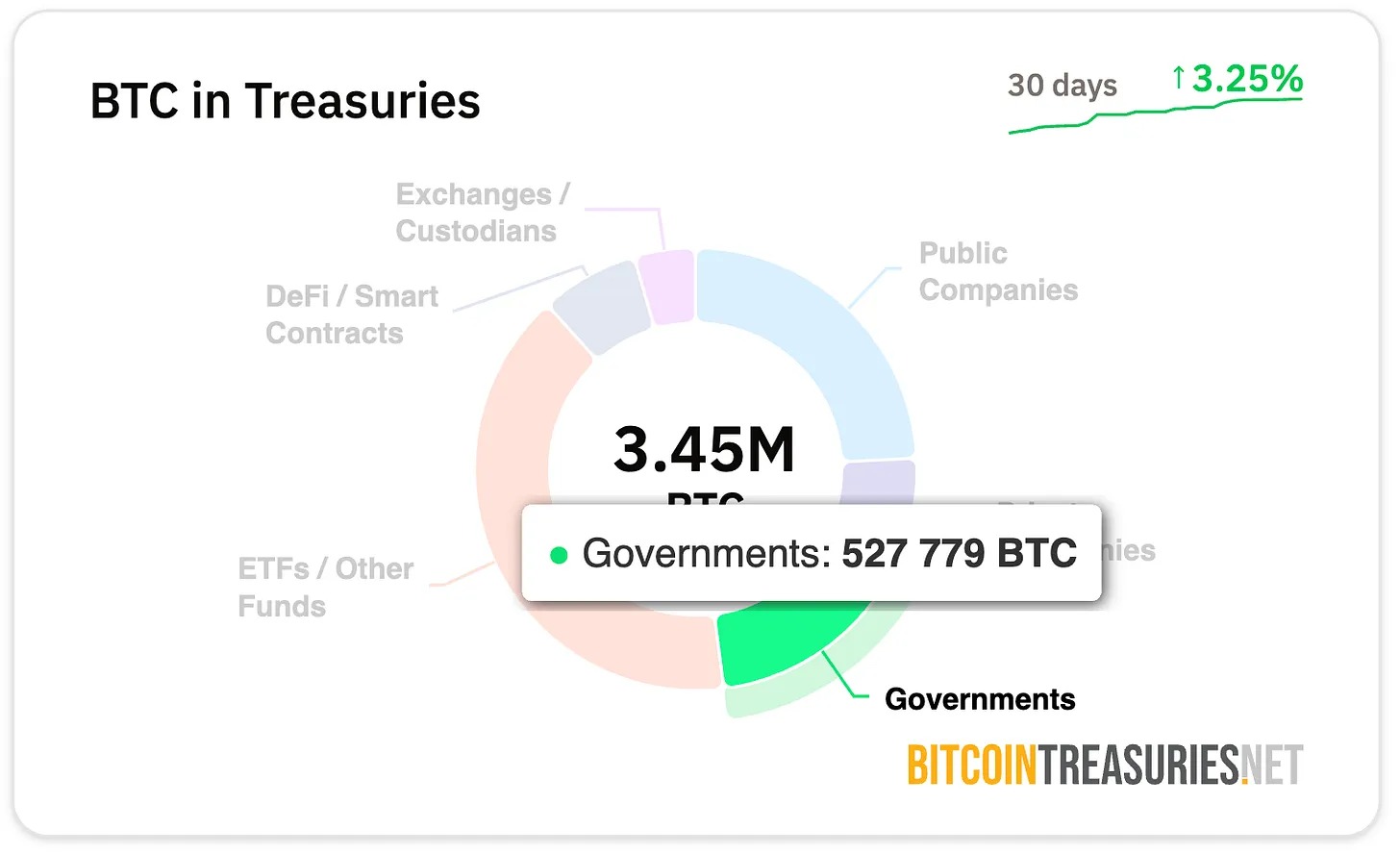
It's not just Pakistan. Ukraine also hopes to include cryptocurrency in its national reserves.
Brazil is considering allocating up to 5% of its foreign exchange reserves to Bitcoin.
We are witnessing the rise of a strategic Bitcoin economy, with nations actively adopting Bitcoin as a modern treasury tool.
So is this financial innovation driven by opportunity or necessity?
This trend has become impossible to ignore—especially since the Trump administration expressed support in March 2025 for a U.S. strategic Bitcoin reserve.
Ukraine, still engaged in war, submitted Bill No. 13356 to parliament on June 11, allowing its central bank to include cryptocurrencies in national reserves.
Brazil quickly followed with the "RESBit" proposal, potentially dedicating up to 5% of its forex reserves to Bitcoin. Even the mayor of Panama City hinted mysteriously at a "Bitcoin reserve" after meeting with Bitcoin advocates from El Salvador in May.
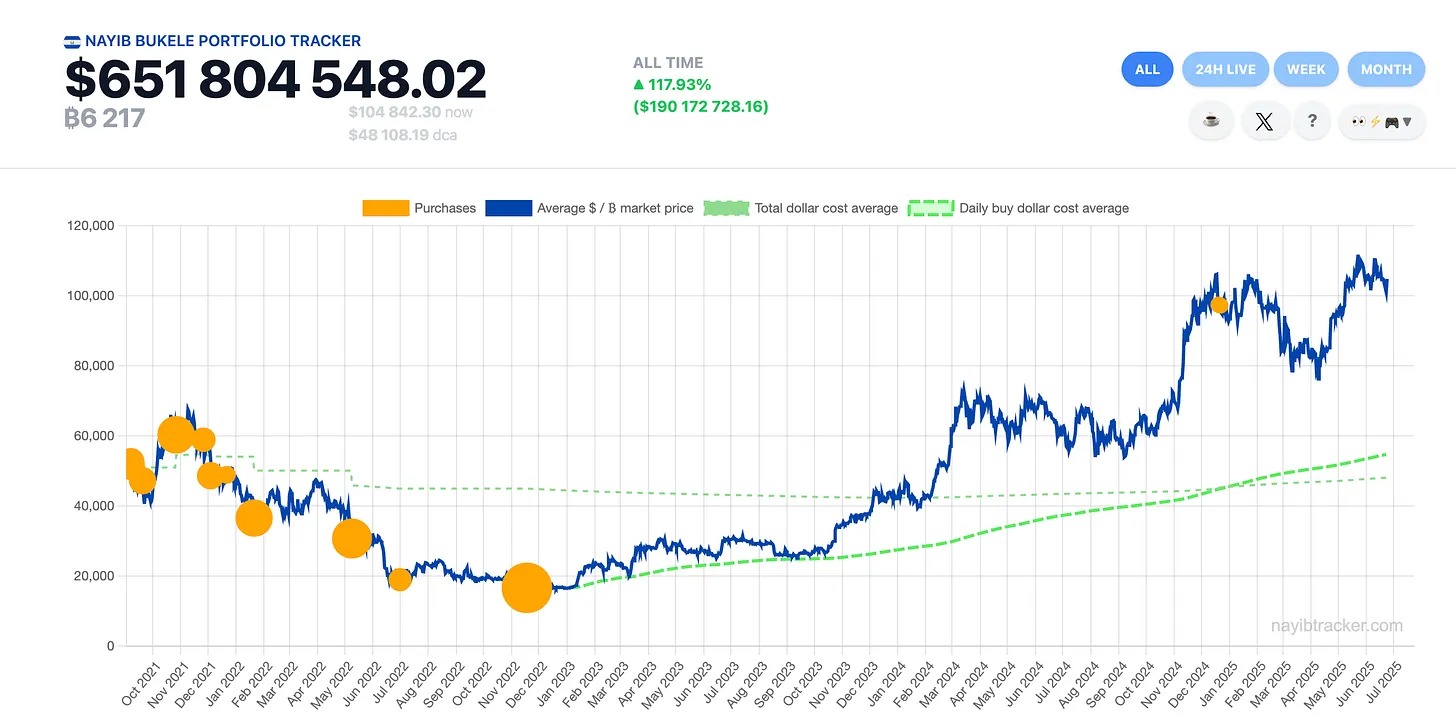
Then there's El Salvador—the poster child of this movement. Despite signing a $1.4 billion loan agreement with the International Monetary Fund (IMF) in December 2024 that explicitly discouraged further Bitcoin accumulation, the country has quietly continued buying Bitcoin daily. Since the agreement, they’ve added 240 BTC, maintaining what President Bukele’s government calls “technical compliance” through what the IMF refers to as a “flexible interpretation.”
They’re finding creative ways to keep buying Bitcoin while preserving access to IMF funding.
The Hail-Mary Strategy
These countries are following what I call the “hail-mary strategy”—a deliberate bet on emerging financial technologies when traditional economic policies stall.
Pakistan has allocated 2,000 megawatts of electricity to Bitcoin mining and AI data centers, effectively turning its power grid into a crypto casino. The minister declared: "We welcome all miners to come to Pakistan," as if foreign miners using local power could solve deep-rooted economic problems.
The rationale sounds compelling: Bitcoin’s limited supply hedges against inflation; its decentralization offers independence from traditional finance; and its recent performance appears almost magical—a silver bullet for struggling economies.
When Pakistan talks about “100 million unbanked people” and how crypto can help them “break economic class barriers,” it reflects a genuine policy response to financial inclusion—one that traditional banking has failed to deliver.
These nations are positioning Bitcoin at the core of their economic strategies.
Economic Innovation Index
Why are distressed economies turning to Bitcoin? The answer lies in their fundamental monetary challenges. Traditional currencies in developing countries face three existential threats—precisely the kind that Bitcoin theoretically addresses:
Between 2020 and 2024, U.S. inflation rose by 20%, while Bitcoin appreciated over 1,000%. For countries facing even higher inflation, this math is highly attractive.
Look at the leading adopters—you’ll see a pattern. They are nations grappling with severe structural challenges.
Pakistan’s reality check: After narrowly avoiding collapse, Pakistan’s economy remains in fragile stability. FY2025 GDP growth stands at only 2.6–2.8%, well below the government’s initial target of 3.6%. The country faces massive structural issues: over 100 million citizens lack bank accounts, widespread financial exclusion persists, and the economy had contracted before a modest recent recovery. Per capita income is just $1,824.
Ukraine’s war economy: Though stabilized through massive foreign aid, Ukraine’s economy remains deeply scarred. GDP shrank nearly 30% in 2022, and 2025 growth is projected at only 2–3%. Ongoing conflict has destroyed 70% of energy infrastructure, damaged 13% of housing stock, and displaced millions of workers, creating acute labor shortages. Nine million Ukrainians live in poverty. Reconstruction needs over the next decade are estimated at $524 billion. Lawmakers are exploring Bitcoin reserves as assets immune to traditional financial systems, aiming to “strengthen macroeconomic stability” in an economy entirely dependent on external support.
El Salvador’s gamble: The economy relies heavily on remittances, which account for over 20% of GDP, making it vulnerable to external shocks. Average annual growth is only 2–3%, with 2025 projections slowing to 2.2–2.5%. The country faces persistent fiscal deficits, public debt peaking at 88.9% of GDP, and low productivity.
Bhutan’s Bitcoin lifeline: Bhutan’s economy suffers from devastating “brain drain”—over 10% of skilled workers left in 2022 alone—and youth unemployment stands at 19%. Tourism struggles to recover post-pandemic. How is this landlocked kingdom responding? By leveraging surplus hydropower to mine Bitcoin and using the proceeds to double civil servant salaries. According to Arkham Intelligence, Bhutan holds over $600 million worth of Bitcoin—more than 30% of its GDP. Essentially, Bhutan has shifted from measuring development via “Gross National Happiness” to betting its economic future on cryptocurrency mining.
Brazil’s hedging policy: Brazil’s situation is more complex—not yet in crisis but slowing. After strong 3.4% growth in 2024, 2025 GDP is expected to slow significantly to 2.1–2.3%, due to tighter monetary policy and reduced fiscal stimulus. The central bank’s benchmark rate remains high at 14.75% to combat inflation above the 3% target, while rising social spending and structural weaknesses continue to pose fiscal risks. Brazil’s consideration of PL 4501/2023—to allocate 5% of foreign reserves to Bitcoin—reflects growing concern over fiat dependence and a desire for portfolio diversification.
You might call it desperation. But here’s how I see it: These countries recognize Bitcoin’s potential as a strategic asset class and are incorporating it innovatively into monetary policy.
When you face chronic inflation, currency depreciation, and limited access to traditional safe-haven assets, Bitcoin stops looking like speculation—and starts resembling a pragmatic hedge.
Academic research supports this view. As James Butterfill’s analysis shows, after the 2024 halving, Bitcoin’s annual inflation rate dropped to just 0.83%, and continues to decline with each subsequent halving—compared to global fiat currencies averaging 2–5% annual inflation. For nations watching their purchasing power erode year after year, this mathematical certainty is deeply appealing.
What about the corporate story? We’ve seen 240 publicly listed companies add Bitcoin to their balance sheets—up from just 124 a few weeks ago. This reflects institutional recognition of shifting monetary landscapes.
Developing Nations Already Know
While Pakistan and Ukraine’s Bitcoin reserve announcements may seem sudden, they actually follow a strategy quietly validated over years across developing nations. Their motivations stem from daily economic realities.
When domestic currency purchasing power steadily declines, Bitcoin’s fixed supply ceases to be merely a technical feature—it becomes a lifeline. Countries long plagued by inflation have observed how citizens naturally turn to Bitcoin as a store of value, because traditional monetary systems fail to provide needed stability.
In Nigeria, Kenya, Vietnam, and other developing nations, populations have already embraced Bitcoin. When governments can print local money without limit, an asset capped at 21 million units begins to look like sound monetary policy.
Traditional banking systems in many developing countries exclude large segments of the population due to documentation requirements, minimum balance thresholds, or lack of infrastructure. Bitcoin requires neither credit scores nor minimum balances—only internet access and a smartphone.
Those excluded from traditional financial services find they can participate in global commerce, receive remittances, and build savings through crypto platforms. Bitcoin provides financial access to the underbanked.
Many developing nations impose strict capital controls, restricting citizens’ access to foreign currencies or international fund transfers. Bitcoin operates outside these constraints, offering a pathway to global financial markets otherwise unavailable.
El Salvador’s remittance case: Suppose El Salvador receives around $10 billion annually in remittances, and traditional services charge an average fee of 10%. That means $1 billion flows to intermediaries like Western Union and MoneyGram each year—not to Salvadoran households.
If Bitcoin and stablecoin transfers reduce fees to 2–3%, the same remittances would cost only $200–300 million—potentially saving $700–800 million annually. This money could instead flow directly into the local economy. For a country with a GDP of approximately $32 billion, retaining over 2% of total economic output—rather than losing it to transaction costs—is transformative.
Bitcoin-based transfers can drastically reduce these costs, ensuring more funds actually reach families in need.
The current trend of corporate balance sheet adoption is, in fact, institutional validation of what individual users in developing nations discovered years ago: When traditional financial options are limited or expensive, Bitcoin functions as practical financial infrastructure—not speculation.
Our View
Risks are worth noting.
Certainly, this strategy isn’t without risks, and potential pitfalls deserve attention.
As James Butterfill points out, Bitcoin’s 165% annualized return since 2009 makes it highly attractive—but this occurred during an unprecedented era of monetary expansion and risk appetite. What happens if that environment changes?
If Bitcoin’s correlation with traditional markets increases during major recessions—as it has in the past—these reserves may fail to deliver the diversification benefits countries expect. An asset meant to hedge systemic risk could instead amplify it.
There’s also concentration risk. If every struggling economy adopts the same strategy, we could end up with the most vulnerable nations being the most exposed to cryptocurrency volatility.
Yet, early adopters of Bitcoin reserves are positioning themselves at the forefront of monetary transformation—one that may define the next decade. If this trend continues and Bitcoin proves resilient under economic stress tests, early movers like El Salvador, Pakistan, and Ukraine could gain strategic advantages in digital asset holdings and blockchain infrastructure.
Regulatory momentum appears increasingly favorable: With the U.S. committed to its own strategic Bitcoin reserve and other major economies exploring similar frameworks, broad institutional adoption won’t create systemic risk—it will validate Bitcoin’s status as a legitimate reserve asset and generate network effects that make these early strategic decisions appear visionary.
Join TechFlow official community to stay tuned
Telegram:https://t.me/TechFlowDaily
X (Twitter):https://x.com/TechFlowPost
X (Twitter) EN:https://x.com/BlockFlow_News