From a small Ukrainian exchange to third place in platform token market cap: Did WhiteBIT unexpectedly thrive amid the Russia-Ukraine war?
TechFlow Selected TechFlow Selected
From a small Ukrainian exchange to third place in platform token market cap: Did WhiteBIT unexpectedly thrive amid the Russia-Ukraine war?
WhiteBIT rose amid the conflict, with its platform token surging fourfold in a year, propelling its token market capitalization into the top three among exchanges.
 Navigating Web3 tides with focused insights
Author: Zen, PANews
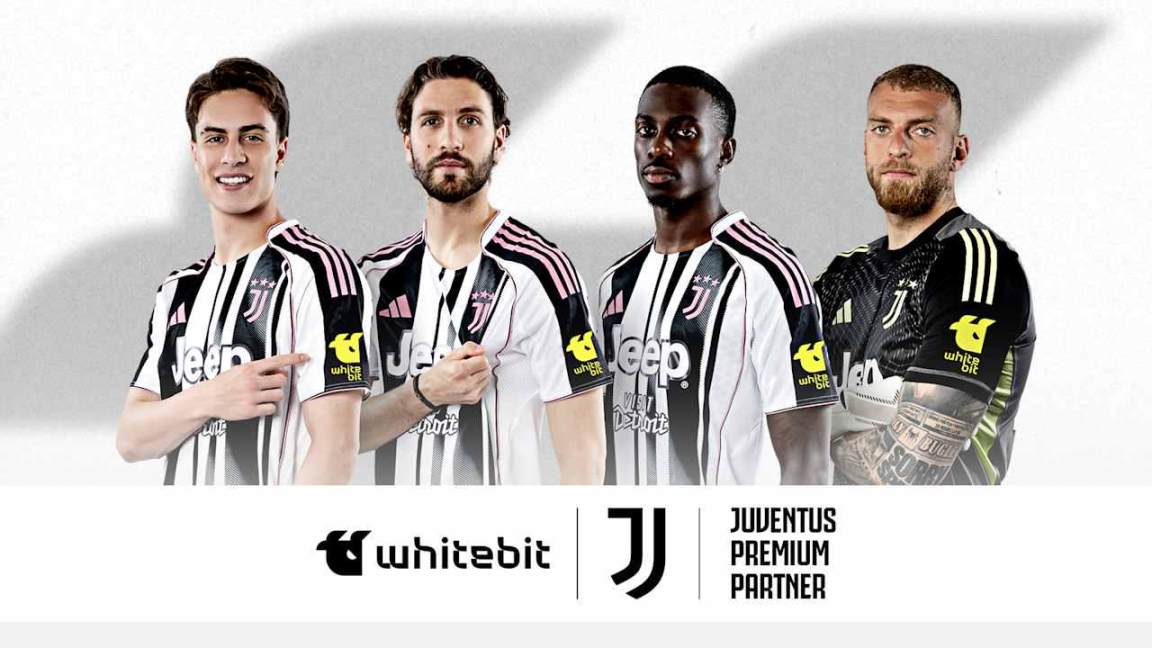
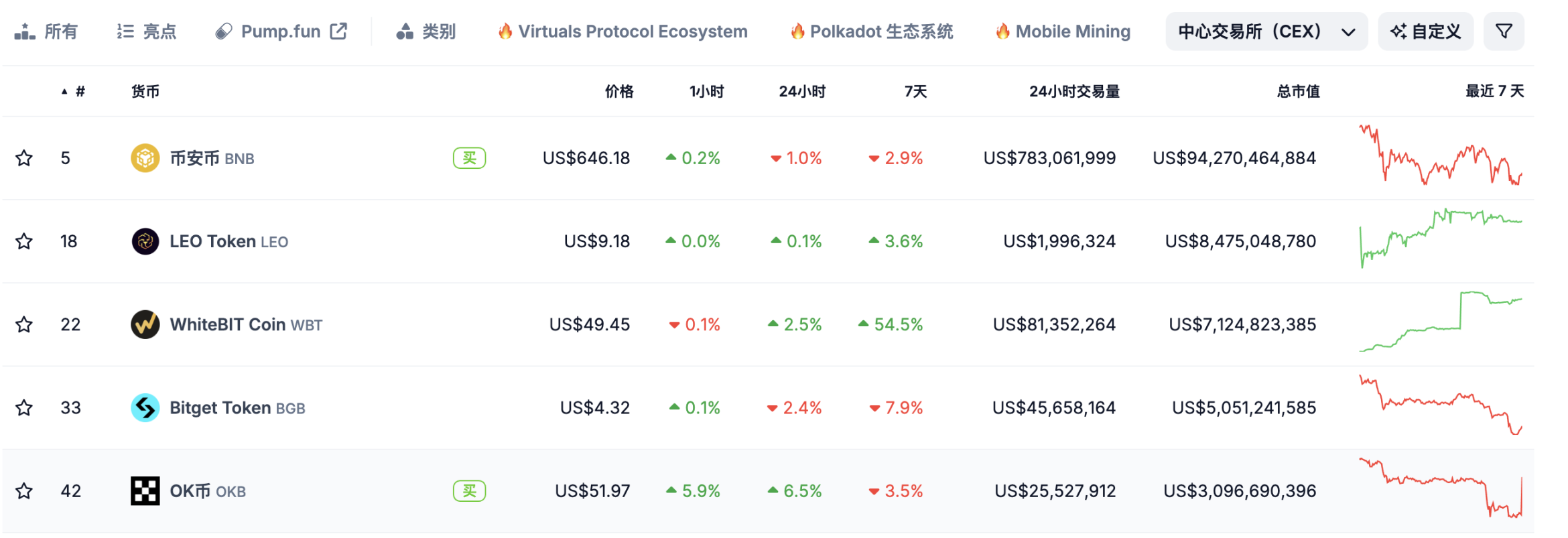
Recently, WhiteBIT announced a three-year strategic partnership with Italian Serie A football giant Juventus, becoming the club's "Official Cryptocurrency Exchange Partner" and sleeve sponsor. Following the announcement, WhiteBIT’s native token WBT surged over 30% within 24 hours, reaching an all-time high. The token has risen more than fourfold in one year and now ranks third among exchange tokens by market capitalization.
How did this Ukraine-born exchange—relocated due to war and now expanding across the EU—rise to prominence? Can it truly become a dark horse in the industry?
A Turning Point Amid the Russia-Ukraine War
Founded in 2018, WhiteBIT was initially headquartered in Ukraine but is now registered and licensed in multiple EU countries. According to official data, the WhiteBIT Group currently offers over 600 trading pairs and supports more than 300 crypto assets, with derivative leverage up to 100x. As of the end of 2024, the platform reported approximately $2.7 trillion in annual cumulative trading volume—an increase of about 200% year-on-year—and total assets under management (AUM) of around $38.9 billion.
WhiteBIT claims its ecosystem serves around 30 million active users, while some reports suggest its user base exceeds 35 million. Reuters reported that WhiteBIT’s trading volume even surpassed long-standing industry competitors. For instance, in 2024, WhiteBIT’s full-year trading volume was roughly four times that of Kraken, which recorded $628 billion in annual volume.
In its early days, WhiteBIT did not hold formal regulatory licenses and operated under the personal name of its founder in Ukraine. Prior to the full-scale outbreak of the Russia-Ukraine conflict in 2022, Russian users accounted for 30% of WhiteBIT’s user base. After Russia launched its full-scale invasion, WhiteBIT—originating from Ukraine—immediately ceased all services to Russian individuals and institutions, including shutting down RUB payment gateways and implementing IP-based access blocking.
As Ukraine became embroiled in war, WhiteBIT relocated its headquarters from Ukraine to Lithuania and established subsidiaries in Spain, Poland, and the Czech Republic, aligning itself with local financial regulatory frameworks. This move can be seen as proactive risk mitigation against geopolitical instability and indirectly laid the groundwork for future registration and transitional authorization as a Virtual Asset Service Provider (VASP) within EU member states.
Despite rapid growth in users and trading volume, WhiteBIT’s revenue performance remains modest. Annual financial statements from WhiteBIT UAB, its Lithuanian limited liability company, show that in 2024, the company generated approximately €15.128 million in revenue, with pre-tax profit of about €4.392 million and net profit of around €3.764 million. In comparison, Kraken reported $1.5 billion in revenue and $380 million in profit during 2024.
Volodymyr Nosov, founder and CEO of WhiteBIT, revealed that many team members are Ukrainians who have deep emotional ties to the war. Since the beginning of Russia’s full-scale invasion, WhiteBIT has actively supported Ukraine.

Volodymyr Nosov
In 2022, WhiteBIT signed a Memorandum of Understanding and Cooperation with Ukraine’s Ministry of Foreign Affairs to jointly establish a “Blockchain Humanitarian Aid Channel.” Through this initiative, WhiteBIT launched a 24/7 global hotline supporting Ukraine and an intelligent chatbot to provide real-time fund transfers, information consultation, and logistics coordination for Ukrainian diaspora and overseas support teams, ensuring donations are fully traceable, transparent, and publicly verifiable.
Beyond technical support, WhiteBIT has continued donating funds throughout the war. Official statistics indicate that since February 24, 2022, the group and its founding team have donated over $11 million collectively toward humanitarian relief, medical supplies procurement, frontline families’ living allowances, and other public welfare initiatives.
In a way, Ukraine’s crisis seems to have acted as a catalyst for WhiteBIT’s global expansion. Yet Nosov is also an ambitious crypto entrepreneur who once boldly declared, “From day one, WhiteBIT’s goal has been to build a platform capable of competing with global giants.”
Questions Around the Actual Controller
According to a public report by the Ukrainian independent non-governmental organization NON-STOP Ukraine (NSU), there are controversies surrounding WhiteBIT’s actual controlling parties and funding sources. NSU claims that Volodymyr Nosov (V. Nosov), WhiteBIT’s founder and CEO, is merely a front figure for the exchange, while the true shareholders are Dmytro Shentsev—a former pro-Russian MP from Kharkiv, Ukraine—and his son Mykyta Shentsev.

The Shentsev family
The NSU report states that when WhiteBIT was founded in 2018, no formal legal entity existed to operate it. Instead, shell companies were later registered in Estonia, Seychelles, and the UK to circumvent regulations. Investigations reveal that WhiteBIT initially conducted business through domestic Ukrainian individual enterprises and affiliated companies (such as SMART 2019 LLC, ETHOMIC GANS RECORDS LLC, etc.), then incorporated low-capital firms in EU countries—for example, the Estonian WhiteBIT entity founded in 2019 with only €12,000 in capital. NSU argues these arrangements facilitated fund transfers and evasion of Ukrainian regulation, potentially enabling illicit transactions and tax avoidance.
Moreover, NSU points out that WhiteBIT became a target of Ukraine’s anti-corruption agency NABU, suspected of money laundering, tax evasion, and financing terrorism. NSU analysis suggests that Nosov, presented as a “cryptocurrency expert,” functions primarily as a figurehead to conceal the Shentsev family’s control over illegal financial flows. According to NSU disclosures, the Shentsev family previously held 51% of shares in WhiteBIT’s Estonian subsidiary, only transferring them to Nosov after March 2023.
NSU believes this restructuring may aim to obscure connections between the company and Russian capital: Dmytro Shentsev, who holds a Russian passport, has been placed on Ukraine’s list of individuals stripped of citizenship. NSU further alleges ongoing transactional links between WhiteBIT and the Russian crypto market—for example, a reported $83 million Bitcoin transfer to the Russian exchange BTC-e in March 2023.
The NSU report also reveals cases implicating WhiteBIT in overseas money laundering. It notes that WhiteBIT was involved in a fund transfer scheme initiated by Four Dragons, a virtual asset exchange based in Kyrgyzstan: victims’ funds from Four Dragons were dispersed via “splitting techniques,” with multiple streams ultimately flowing into WhiteBIT accounts to conceal their origins. Seven months later, WhiteBIT claimed it had frozen relevant funds and cooperated with investigations.
According to an NSU update in March this year, new intelligence indicates Ukrainian law enforcement has listed WhiteBIT founder Nosov as a suspect and issued an international arrest warrant. Early in 2025, reports suggested the involved parties reached a settlement, temporarily halting the case; however, the investigation was later resumed by Kyrgyzstan’s State Committee for National Security. NSU also stated it has submitted complaints to domestic and international regulatory bodies—including the EU, FATF, and IOSCO—as well as payment networks such as Visa, Mastercard, and SWIFT, urging thorough investigations into WhiteBIT’s suspicious activities.
It should be emphasized that NSU is a self-described “volunteer human rights organization” focused on anti-corruption and exposing pro-Russian forces. Its reporting carries a clear ideological stance, primarily targeting corruption linked to pro-Russian figures. Currently, NSU is not an official law enforcement body, and its findings have not undergone judicial review, attracting external skepticism. Therefore, NSU’s allegations should be treated cautiously—not as proven facts, but as one perspective among others.
Token Up Over 400% in a Year—Does Sports Sponsorship Work Wonders?
While most altcoins suffered losses amid volatile markets, WhiteBIT’s token WBT stood out with exceptional performance. Data from CoinGecko shows WBT has surged 421% over the past year, with a monthly gain of 63%. After announcing the partnership with Juventus on June 16, WBT spiked 30% in a single day, setting a new record high.
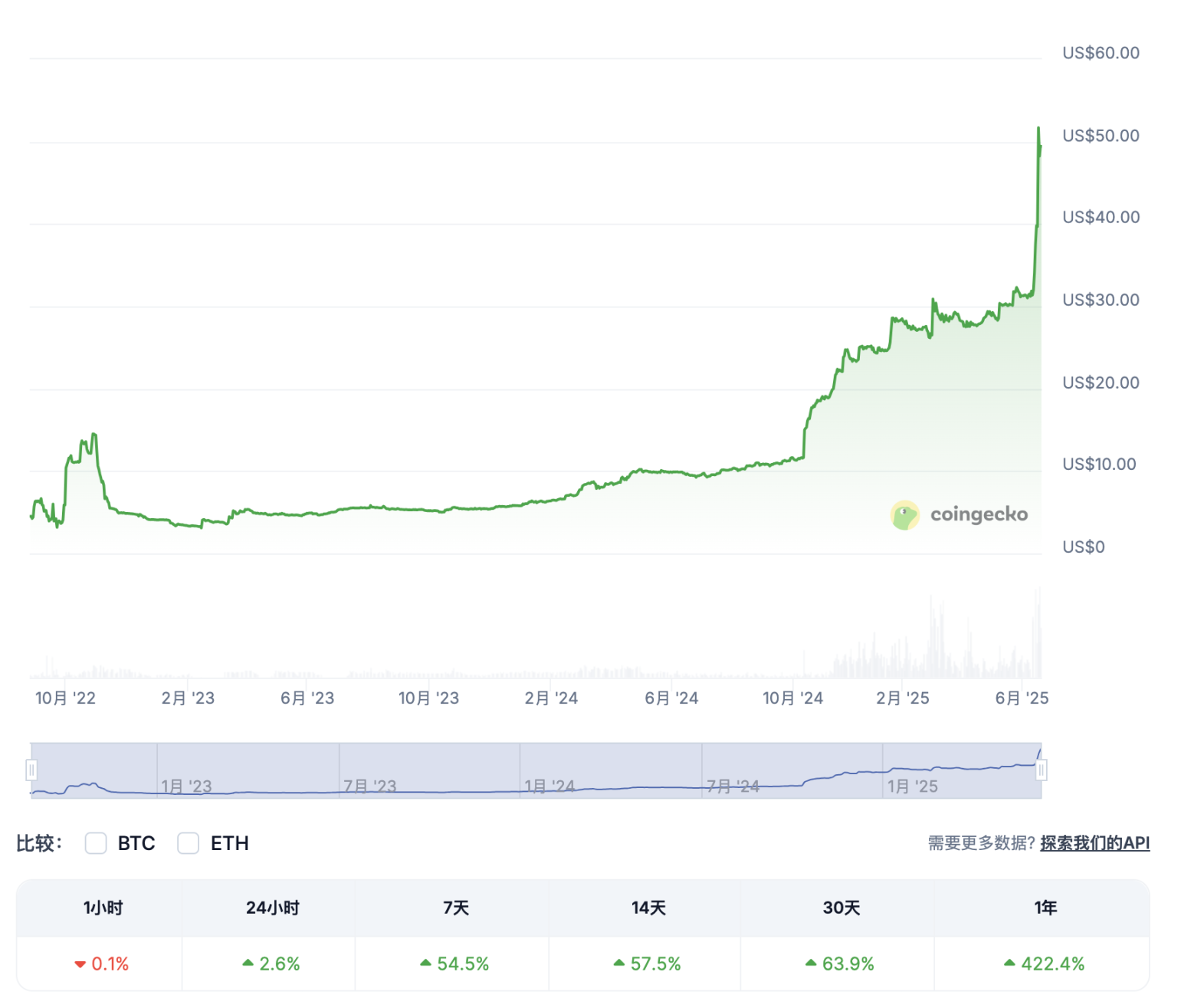
Currently, WBT ranks third in market cap among exchange tokens, behind Binance’s BNB and Bitfinex’s LEO, surpassing Bitget, OKX, and Cronos. However, according to CoinGecko, WhiteBIT ranks only 27th in terms of 24-hour spot trading volume among exchanges—its daily volume is less than one-tenth of Binance’s and roughly half of Bitget’s or OKX’s. Considering WhiteBIT’s relatively modest trading volume and market influence, its token appears significantly overvalued. Aside from concentrating major trading activity on its own exchange—which allows controllable liquidity—ongoing brand partnerships appear to be a direct driver of price appreciation.
Like other leading exchanges, sponsoring major sporting events has become a key marketing strategy for boosting visibility and brand credibility.
As early as December 2022, WhiteBIT entered a global partnership with La Liga powerhouse FC Barcelona. As a global partner of FC Barcelona, WhiteBIT advertised at stadiums and on LED billboards and co-launched blockchain online courses (“Game-Changing Tech”) with the Barça Innovation Hub (BIHUB). Additionally, WhiteBIT sponsored the Ukrainian national football team and partnered with Turkish football club Trabzonspor. These collaborations reinforce WhiteBIT’s positioning as a “leading European exchange,” enhancing brand recognition during major sports events like the World Cup.
In esports, WhiteBIT collaborated with the renowned platform FACEIT to host global gaming competitions and prize campaigns. In November 2022, WhiteBIT and FACEIT jointly launched a $1 million Counter-Strike: Global Offensive (CS:GO) community championship, featuring top-tier teams like NAVI and NiP and prominent gaming influencers, distributing USDT prizes to players.
WhiteBIT also attracts traders through online trading contests and user incentive programs. For example, in May 2025, WhiteBIT hosted its first International Crypto Trading Cup (ICTC 2025), a global event where elite traders competed live, with real-time strategies broadcast to audiences. The final match aired on LED screens at the FC Barcelona vs. Real Madrid derby. Furthermore, WhiteBIT regularly runs online contests such as “Trading Time: FC Barcelona Ticket Challenge,” rewarding top-performing traders with tickets to FC Barcelona matches.
For WhiteBIT, commercial sports partnerships and rising token prices mark the first step toward greater visibility. But to secure a lasting position in the fiercely competitive crypto exchange landscape, the road ahead remains long.
Join TechFlow official community to stay tuned
Telegram:https://t.me/TechFlowDaily
X (Twitter):https://x.com/TechFlowPost
X (Twitter) EN:https://x.com/BlockFlow_News
 PANews