The Battlefield Without Smoke: The Twitter War
TechFlow Selected TechFlow Selected
The Battlefield Without Smoke: The Twitter War
New media formats and financial mechanisms are shaping people's perception of war and also influencing the course of conflicts. In the current war in Ukraine, Twitter is clearly reshaping the relationship between perception and reality.
 Navigating Web3 tides with focused insights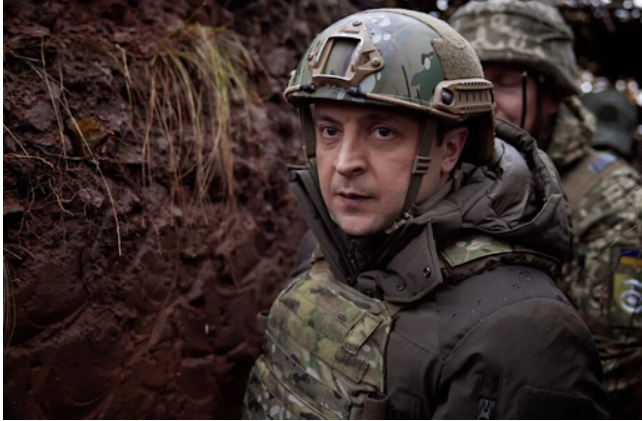
Author: Blockworks & KAIKO
Translation: TechFlow Intern
“The Pope? How many divisions does he have?” — Joseph Stalin
Crypto Twitter’s Divisions
When the first battle of the American Civil War broke out, countless excited spectators poured out from Washington, D.C., walking, riding horses, or taking carriages to hilltops for a view of the battlefield. Many expected an easy victory for Union forces and even brought picnic baskets with them.
However, when Confederate troops broke through Union lines, the shocked onlookers fled back to the city in panic.
This battle was an early sign that the war would be longer and far more horrific than anticipated.
Its unexpectedly long duration and massive costs forced the government to adopt financial innovations. For the first time, the U.S. issued “greenbacks”—paper money not backed by gold.
Financier Jay Gould effectively created a bond market to absorb new government bond sales. During the war, $2.2 billion in bonds were issued, while the Union’s deficit at the start of the war had been just $77 million.
The war also popularized a new medium: photography.
Photographs of soldiers’ bodies scattered across battlefields brought the horrors of war into civilian homes far removed from the frontlines.
People learned about war and realized it was nothing like a picnic. New forms and uses of media and finance began shaping subsequent wars.
History suggests the current war in Ukraine will be no different.
Driving Change
World War II had propaganda films (starring a young Ronald Reagan) and the rise of Keynesianism. The Vietnam War brought burning villages on evening news broadcasts and the end of the gold standard. The Gulf War saw General Schwarzkopf hosting CNN like a talk show host and ushered in an era of aggressive economic sanctions.
New media and financial forms shape how people perceive war—and influence its course. In the current war in Ukraine, Twitter is clearly reshaping both perception and reality.
This microblogging platform also happens to be where much of the cryptocurrency community resides, meaning the new medium of information is instantly entangled with a new medium of finance.
Certainly, compared to recent headlines dominated by SWIFT and central bank sanctions, the scale of crypto-based finance is relatively small—measured in far fewer dollars.
But it is deeply intertwined with media narratives, and I believe crypto Twitter has already exerted significant influence on events.
Yesterday, I found around $4 million in transactions sent to BTC and ETH addresses posted by the @Ukraine Twitter account. This morning, the account announced an upcoming airdrop, pushing the figure even higher.
Sending funds to crypto addresses posted on Twitter usually feels somewhat informal (though Ukraine has Vitalik’s approval).
Pussy Riot and PleasrDAO support the more organized @Ukraine_DAO initiative, which raised $6.7 million in four days by selling NFTs of the Ukrainian flag.
Currently, the most reassuring and formal effort is Aide for Ukraine DAO, rapidly built by Solana developers. So far, it has raised $1.4 million and is being used to “directly assist local Ukrainians.”
Crypto donations are converted into fiat by FTX and deposited into NGO and government bank accounts.
Solana founder Anatoly Yakovenko said in a podcast that FTX was the only financial institution to immediately agree to help—indicating that the crypto industry has changed humanitarian responses to war.
So far, over $31 million in cryptocurrency has been donated to Ukraine. Of course, Web3 isn’t the only force mobilizing.
Airbnb is offering temporary housing to 100,000 Ukrainian refugees.
Elon Musk responded to a request from Ukraine’s Prime Minister by launching satellites over the country to ensure stable internet connectivity. Most strikingly, even after Russia threatened to deorbit the International Space Station over a nation opposing the war, Musk pledged to keep it in orbit.
Given Russia’s history of retaliation, these actions strike me as admirably brave—especially for such high-profile missions with significant risks.
And both initiatives were triggered by events on Twitter.
Hearts and Minds
In a sense, Twitter has been weaponized.
Putin successfully used social media to disrupt the U.S. presidential election, but this time he appears to have overlooked its potential impact. Perhaps he anticipated the war would be unpopular domestically and sought to downplay it through minimal social media exposure. Or perhaps it was simply an oversight.
Whatever the reason, Putin ceded the battleground of public opinion to his opponent Zelenskyy, leaving Zelenskyy unchallenged on Twitter. As a result, Ukraine has won the media war on Twitter.
Of course, this brings little comfort to ordinary people directly affected by the war. But by rallying global formal and informal support channels, it has had a real impact on the war’s trajectory. Thanks to cryptocurrency, some of this financial support is reaching war-affected civilians at unprecedented speed.
Putin launched a 19th-century-style war but received a 21st-century response. He may win the former, but he has already lost the latter in the court of public opinion.
Public opinion mobilized via social media may become the defining feature of this avoidable, unnecessary war.
In an inevitable war of history, Joseph Stalin could dismiss the Pope’s influence by asking how many divisions he commanded.
Now, having ignored Twitter’s power, Putin might one day look back and ask in frustration: “How many followers do I have on crypto Twitter?”
Join TechFlow official community to stay tuned
Telegram:https://t.me/TechFlowDaily
X (Twitter):https://x.com/TechFlowPost
X (Twitter) EN:https://x.com/BlockFlow_News
 Blockworks