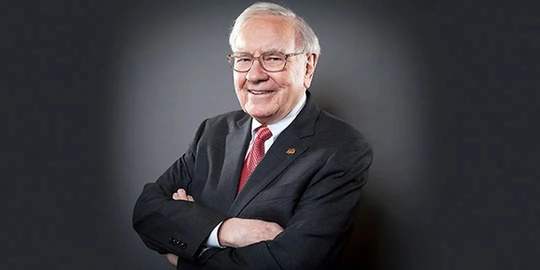
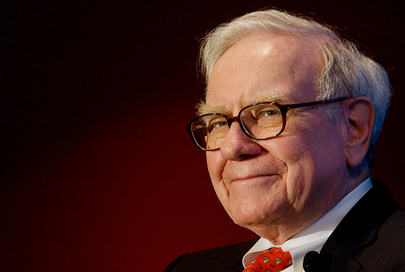
Buffett retires, who is Abel, the designated successor
TechFlow Selected TechFlow Selected
Buffett retires, who is Abel, the designated successor
As the Buffett era nears its end, understanding Greg Abel may be the key to unlocking Berkshire's trajectory over the next decade or two.
 Navigating Web3 tides with focused insights
At 9 p.m. Beijing time on May 3, the Berkshire Hathaway shareholders meeting will kick off in Omaha.
This year, Greg Abel and Ajit Jain will once again sit alongside Warren Buffett on stage. Particularly notable is Abel, the designated successor, who will accompany Buffett throughout the entire event.
In 2020, due to the impact of the pandemic, the annual shareholder meeting held on May 1 was conducted online. Abel and Jain, representing non-insurance and insurance businesses respectively, participated in the Q&A session with Buffett for the first time.
After Charlie Munger passed away in November 2023, Berkshire experienced its first annual meeting without him (in 2024), with Abel seated at Buffett’s left hand as the heir apparent.
In the February shareholder letter this year, Buffett mentioned Abel several times, specifically highlighting him.
When discussing Berkshire's capital allocation, Buffett praised Abel for demonstrating a patience in stock and subsidiary investments similar to Munger’s—waiting quietly until opportunities arise, then acting decisively and boldly.
Regarding Berkshire’s investment in Japan’s five major trading companies, Buffett wrote: “Over time, our admiration for these companies has deepened. Greg has met with them multiple times, and I regularly follow their progress. I expect Greg and his successors to hold this Japanese investment for decades.”
Buffett reminded us that Berkshire’s 10-K filing has never been “empty flattery and pretty pictures,” and this will not change when Greg takes over.
“I am 94 years old now. Before long, Greg Abel will succeed me as CEO and begin writing the annual shareholder letter. Like me, Greg adheres to Berkshire’s creed—that reporting is not just an annual formality, but a responsibility of the CEO to shareholders. He also deeply understands that once you start deceiving shareholders, you’ll soon deceive yourself as well.”
As the Buffett era nears its end, understanding Greg Abel may be the key to unlocking Berkshire’s trajectory over the next ten or twenty years.
This year’s February/March double issue of Fortune magazine featured an article by Shawn Tully titled “Meet the man picked to succeed Warren Buffett,” which is perhaps the most comprehensive profile of Abel we’ve seen so far.
Abel is low-key, with a mild and outgoing personality, highly sensitive to numbers. People who know him say he resembles Warren in demeanor, though lacking the boss’s signature flair for performance.
As described in the feature, unlike Buffett’s hands-off management style, Abel pays extreme attention to detail and emphasizes tangible progress within subsidiaries.
Jim Weber, former CEO of Brooks Running, once said: “If your performance is subpar, Greg will tell you directly and give you a few months to adjust.”
Larry Cunningham, professor at the University of Delaware, also commented: “Greg won’t let underperformers stay underperforming.”
This focus on execution and improvement aligns perfectly with Berkshire’s culture of valuing real results over empty promises, gradually earning Abel Buffett’s highest trust.
Throughout this process, Abel has demonstrated three traits identical to those of the "Oracle of Omaha": a talent for building trust, an eye for spotting opportunities, and wisdom in avoiding risks.
The article systematically traces Abel’s journey from a small prairie city in Edmonton, Canada, into the core of Berkshire—from energy operations to overall group management—and how he gradually earned the trust and responsibilities he holds today.
It is rich and compelling.
Smart Investor (ID: Capital-nature) has specially translated and compiled this article as a footnote to this significant moment.
01 On Tariffs and Global Trade
“Warren, who is your CEO successor?”
This question might be one of the most frequently asked yet long-unanswered riddles in corporate history.
At Berkshire Hathaway’s annual shareholder meetings, during the live Q&A sessions hosted each year by Warren Buffett and Charlie Munger, shareholders routinely pose this classic question. The two leaders’ standard response—“The board has appointed a successor, but we won’t disclose the name”—has become as much a tradition as the 5K run, See’s Candies’ coconut bonbons demonstration, and other weekend festivities.
Then, on the afternoon of May 1, 2021 (when the pandemic still required the meeting to be held online), a turning point occurred. At age 97, Munger unexpectedly blurted out while answering a question about the company’s future culture: “Greg will carry on this culture.”
This slip of the tongue ended the longest-running, most-watched CEO succession mystery in business history.
Berkshire investors and observers immediately realized “Greg” referred to Greg Abel. Two days later, Buffett confirmed in a CNBC interview that upon his departure, Abel would take over leadership of Berkshire.
Thus concludes an era that began in 1970—a period marked by anti-Vietnam War protests sweeping college campuses, Elvis dominating music charts, and Nixon’s ascent to the presidency—ushering in a new chapter. This revelation set a crucial course marker for Berkshire’s future development.
Aged 62, Abel had been a top contender since early 2018, when Buffett and Munger jointly appointed him and fellow candidate Ajit Jain as vice chairmen and directors.
Since then, Abel has overseen all of Berkshire’s non-insurance operations—spanning two broad sectors: industrial giants in rail, aerospace, and the energy industry where he began his career, along with a portfolio of well-known consumer brands such as Dairy Queen (DQ), Brooks Running shoes, and Benjamin Moore paint.
This dazzling array of diversified businesses forms the largest non-financial balance sheet in the U.S., contributing two-thirds of Berkshire’s non-investment revenue. Meanwhile, 73-year-old Jain continues to lead the insurance division.
Meanwhile, Buffett personally still manages the massive investment portfolio—worth approximately $600 billion, frequently adjusted in recent years, comprising stocks, bonds, and cash—with support from two long-time deputies, Ted Weschler and Todd Combs. Notably, both assistants were also considered potential “dark horse” candidates for CEO.
02 On Investment in Japan
Abel’s connection with Buffett dates back a quarter-century, to Berkshire’s entry into the energy sector. Since becoming CEO of Berkshire Hathaway Energy (BHE) in 2008, he has built an energy empire encompassing utilities, oil pipelines, natural gas plants, wind and solar farms, and extensive transmission networks—now a cornerstone of Buffett’s business kingdom.
Today, the businesses under Abel’s purview generate roughly $270 billion in annual revenue—if standalone, BHE would rank among the top ten on the Fortune 500, surpassing Microsoft and Chevron (Berkshire itself ranks fifth).
As he gradually earned Buffett’s trust, Abel displayed the same three traits as the “Oracle of Omaha”: a talent for building trust, an eye for spotting opportunities, and wisdom in avoiding risks.
As Buffett said in 2021: “There are many smart people in the world, but some smart people do foolish things. Greg is smart, but he never does anything foolish.”
Of course, 94-year-old Buffett has not announced any retirement plans, and his outstanding performance at the May 2024 shareholder meeting proves his mind remains sharp.
Yet it cannot be ignored that Berkshire’s overall performance has declined compared to past glories. From 1965 to 2003, Berkshire delivered an average annual return of 19.8%, outperforming the S&P 500 by nearly 10 percentage points annually. Over the past decade, however, Berkshire’s average annual return has been 11.6%, trailing the S&P 500’s 13.2%.
“The sole justification for a conglomerate’s existence is beating the S&P index,” said Dave Cote, who led diversified manufacturing giant Honeywell from 2002 to 2017.
For decades, Buffett successfully fended off activist investors seeking to “unlock value.” Even after his passing, Berkshire will maintain strong defenses.
Although Buffett has donated more than half of his Berkshire shares to charitable causes since 2006 (primarily the Bill & Melinda Gates Foundation), he still controls over 30% of voting power.
In addition, he revised his will last Thanksgiving, deciding to leave almost his entire estate to a charitable trust managed by his three children—Howard, Peter, and Susan.
According to the will, this wealth will be disbursed gradually over ten years following Buffett’s death to various charitable causes (including foundations they manage themselves).
Therefore, the substantial Berkshire shares held by this trust will effectively deter potential threats from activist investors for many years to come. Meanwhile, Buffett has designated Howard to succeed him as chairman, further solidifying Berkshire’s defense structure.
However, as the trust’s Class A shares convert into Class B shares for charitable use, external investors—including fund managers, ETFs, and individual shareholders—will gain increasing voting power.
This shift in power is likely to occur during Abel’s tenure.
While Berkshire’s nearly trillion-dollar market cap makes a full takeover impractical for private equity firms or industrial giants, dispersed voting rights could invite harassment from activists.
03 On Cash Holdings
In stark contrast to the globally celebrated Buffett, Abel’s background, personal style, and management philosophy remain largely unknown to the public.
Beyond attending one or two events with Buffett, he has never granted interviews to business media, with only limited appearances at the past three Berkshire shareholder meetings—last year taking over the podium seat formerly occupied by the late Munger (who died in late 2023).
Berkshire Hathaway Energy declined Fortune magazine’s request to interview Abel, but Buffett replied via email: “I couldn’t be more pleased with Greg’s performance. But I no longer give interviews. At 94, not only is my bridge game slowing down, but I’m reducing or canceling many other activities. Still, I enjoy it, and I can still do a few things well.”
Nevertheless, through interviews with those familiar with Abel, reviewing his past public remarks and management philosophies, and analyzing his actual track record at Berkshire, a clear picture emerges: he is a leader whose temperament closely resembles Buffett’s, yet is likely to forge his own distinct path.
Ultimately, for everyone watching Berkshire, there is only one real question: Warren Buffett created Wall Street’s greatest wealth-generating machine in history. After him, even if led by his personally chosen successor, can this behemoth continue to thrive?
If Buffett’s chosen heir possesses down-to-earth charm, few would be surprised. Those who know Abel say he resembles Warren in spirit, minus the boss’s iconic showmanship.
Abel grew up in Edmonton, a Canadian prairie city known as the nation’s “oil capital,” famed for cycles of economic boom and bust. His mother was a homemaker who also worked as a legal assistant; his father sold fire extinguishers.
“Back then, people were sometimes employed, sometimes not,” Abel recalled in an interview with the Horatio Alger Association (a scholarship organization for severely disadvantaged students, of which Abel is a longtime supporter). “But family and close friends always gave you the strength to dream.”
His first business venture was riding a bike door-to-door delivering advertising flyers, earning 0.25 cents per piece.
Young Abel—seen in photos with messy Beatles-style hair—then started collecting discarded soda bottles. He constantly searched for better routes home to find more bottles. By the end of each school day, he’d pick up as many as five, accumulating around 20 by weekends—worth about $1.
In high school, he helped at his father’s company, refilling fire extinguishers.
Abel’s lifelong passion for hockey began in Edmonton, made famous by Oilers legend Wayne Gretzky.
His hockey mentor was his uncle Sid Abel, a Hall of Fame player who spent 14 seasons with the Detroit Red Wings and Chicago Blackhawks.
Young Greg practiced on the ice every day until his parents called him in for dinner. The rugged sport taught him the essence of teamwork. “Hockey teaches you that you’re far more likely to succeed fighting for your team than going it alone,” Abel said.
Until his mother Bev passed away at the end of 2022, he called her every July 1 to analyze the Oilers’ offseason moves and missteps in depth.
Abel’s modest Midwestern values resonate perfectly with Des Moines (headquarters of Berkshire Energy), his current hometown. He self-funded the construction of the Abel Ice Arena, where he coached his son’s youth hockey team at the large RecPlex sports complex. This year, he stepped down as head coach to assistant, easing some pressure.
Friends in Des Moines say that if you met Abel at the Iowa State Fair or Calgary Stampede, you’d assume he was a local teacher or bank clerk—not someone on the verge of assuming one of American business’s most important roles.
“His approachability lets him blend into any setting,” said Mark Oman, former executive at Wells Fargo. “As a neighbor, he’s unassuming and grounded—the perfect person to watch Oilers or NFL games with.”
Oman added that Abel has a great sense of humor. Last year, while watching the Olympics together, Abel joked he’d finally found a competition he could win: “I could enter the Iowa curling championships.” After all, in the Hawkeye State, there’s hardly any competition in curling.
04 On Insurance and AI
Those who know him say Abel excels at building deep relationships. “He becomes friends with people instantly upon meeting,” Oman described. “Not extroverted in a flashy way, but 100% friendly. No one creates a better party atmosphere than Greg—not through spectacle, but through personalized care ensuring every guest enjoys themselves.”
Even when busy, Abel gladly offers selfless advice.
Larry Cunningham, professor at the University of Delaware and author of several books on Buffett, marveled: “He has extraordinary intelligence, yet strangely, you never feel stupid or irrational around him. He always puts you at ease.”
Dawn Farrell, current chair of pipeline giant Trans Mountain, became friends with Abel through business collaboration and often seeks his counsel: “If I need strong advice on issues unrelated to him, he always makes time to help me think clearly.”
To former Honeywell CEO Dave Cote, what stands out most is Abel’s involvement with the Horatio Alger Association. The organization provides scholarships to extremely impoverished students, many of whom have suffered abuse, lived in cars with their mothers, or witnessed families destroyed by drugs.
Abel served as the organization’s chair in 2018 and remains active on its executive committee.
“He’s done a lot for these kids,” Cote said. He also believes Abel is not only passionate about philanthropy but genuinely humble. “Given his status, he could choose detachment, keeping distance for protection. I’ve seen far less accomplished people act far more aloof.”
Abel may have won the succession race precisely because his mild, outgoing nature most closely mirrors Buffett’s—an affinity carrying significant business advantages.
Of course, you won’t see Abel dancing with the University of Nebraska cheerleaders, riding bulls through Omaha streets, or strumming “My Way” on a ukulele on the Today Show like Buffett—iconic stunts that cemented Buffett’s legendary image.
But Abel expresses “big-man charisma” in his own way: calmly weaving through the audience at Berkshire meetings with a microphone, explaining utility technicalities in plain language; inheriting Buffett’s authentic sincerity, a trait that helped the latter earn trust from regulators to stubborn founders—those willing to entrust their life’s work only to someone trustworthy.
Oman notes that Abel possesses “massive information-processing ability.” Business partners say he can even “speed-read” balance sheets and income statements, quickly extracting key data.
Buffett marvels at his work ethic, jokingly saying “Greg must have discovered a time warp in Des Moines where each day has over 48 hours.”
Abel’s deep understanding of business mechanics, especially the flow of every dollar, began during his studies at the University of Alberta. Initially focused on finance, he switched to accounting to better grasp the relationship between balance sheets and cash flow statements.
After graduating in 1984, he joined PwC’s Edmonton office. A few years later, he was briefly transferred to San Francisco.
In 1991, Abel became auditor for CalEnergy, then the second-largest geothermal power producer in the U.S. This experience shaped his management philosophy and introduced him to a key mentor.
05 On Patient Investing and Decisive Swings
At the time, Buffett’s childhood friend and Berkshire board member Walter Scott sought to diversify his engineering firm, Peter Kiewit Sons’, holdings by acquiring debt-ridden CalEnergy. He already had a candidate in mind to lead the company—David Sokol.
Sokol, a 35-year-old business prodigy, had just founded and taken public a waste-to-energy company in Omaha, making a fortune.
Kiewit acquired controlling interest in CalEnergy for $28 million, with Sokol taking charge and appointing 28-year-old Abel as company accountant.
Kiewit’s culture profoundly influenced Abel’s working style and negotiation approach.
The company valued plain-spoken hard work: employees stayed for life, moving across sites building dams, bridges, and oil platforms.
Sokol became Abel’s deal-making mentor, while Scott, 20 years his senior, modeled leadership for him.
In 2020 (a year before Scott’s death), Abel interviewed his former boss at a charity event in Omaha, guiding Scott to recall mowing fields on a farm as a boy, sleeping in shacks while surveying Monticello Dam during college summers, and holding 18 jobs over 12 years.
Abel admitted his favorite pastime was visiting landmarks like the St. Lawrence Seaway and Garrison Dam—engineering feats where Scott had labored. Listening on stage, filled with admiration, he would exclaim: “Amazing, I love this story!”
David Wit, a tech entrepreneur and then CalEnergy director, observed the tight triangle of Scott (chairman), Sokol (CEO), and Abel (financial architect). He marveled that the team dared bold acquisitions yet insisted on deeply understanding financials and anticipating risks before acting.
“Scott had great vision,” Wit told Fortune, “and Greg combines likability with sharpness—humble, hardworking, free of elite arrogance, and above all, truly fluent in numbers.”
During this period, CalEnergy launched a series of acquisitions, including a UK utility, which Abel successfully transformed into a profit engine.
This achievement earned Scott’s high praise, who then recommended Abel’s talents to his friend Warren Buffett.
They later acquired a major power provider and renamed the company MidAmerican Energy.
But in the late 1990s energy boom, utilities remained unfashionable—investors paid premium prices for Enron, AES, Calpine, etc., drawn to their rapid acquisition of transmission lines, power plants, pipelines, and utility assets amid deregulation.
MidAmerican instead focused on regulated assets overlooked by the frenzy—assets with monopoly positions and stable customer bases that emerging players lacked.
Scott敏锐ly realized these “cash cow” assets were tailor-made for Buffett.
In a 2002 Fortune interview by Andy Serwer, Buffett recalled: Scott, then leading fiber-optic firm Level 3, flew from Omaha to Carmel, California, specifically to pitch Buffett on acquiring MidAmerican at his sister’s dinner table.
“Walter pulled me into a room and told me this utility kept trying to explain its business model to Wall Street analysts, but they weren’t interested—they preferred fast-moving, deal-heavy firms like AES and Calpine,” Buffett recalled.
Scott asked if Buffett would join him and the team of Sokol and Abel to take MidAmerican private.
Buffett, always fond of contrarian investing, was thrilled. In October 1999, Berkshire announced the acquisition of MidAmerican’s controlling stake, with Scott joining as a minority investor.
As the energy market’s deregulation turned into crisis, MidAmerican quickly became the “buyer of choice” when corporations divested assets.
In 2002, Williams Companies sold the Kern River gas pipeline to MidAmerican for $960 million. Connecting the Rockies, Las Vegas, and California, the price was hundreds of millions below its valuation two years earlier.
That same year, Sokol and Abel acquired Northern Natural Gas Co. for $928 million—a 17,000-mile natural gas pipeline linking the Permian Basin in Texas to upstream Midwest regions. The price was about $600 million less than Dynegy paid months earlier when buying it from Enron.
Serwer reported that Buffett recounted these deals “with the excitement of landing a giant tuna.”
06 On Dollar Depreciation
Starting in 2007, Buffett dispatched Sokol to restructure troubled Berkshire subsidiaries, including insulation maker Johns Manville and private jet operator NetJets.
The following year, Abel was promoted to CEO of MidAmerican Energy.
Sokol’s stellar performance as a “firefighter” led many investors to believe he was the top CEO successor. However, in 2011, Sokol abruptly resigned amid allegations that he bought shares in Lubrizol, a lubricant manufacturer he later recommended Buffett acquire (Berkshire ultimately completed the purchase). Fortune attempted to contact Sokol by email but received no reply.
After Sokol’s departure, Abel’s promotion became inevitable.
Under his leadership, the energy division maintained strong profit growth, skillfully leveraging Berkshire’s robust balance sheet to acquire assets at low prices, reinvesting all cash flow to expand operations—creating the compounding miracles Buffett cherishes.
In 1997, CalEnergy had $2.3 billion in revenue and $139 million in profit; by 2022, Berkshire Hathaway Energy (BHE) generated $26.4 billion in revenue and $3.9 billion in profit.
Abel also secured a visionary negotiation that avoided a potential PR crisis for Berkshire on environmental issues, further strengthening the company’s image among environmentalists and regulators.
At the time, hydroelectric dams along the Klamath River in Oregon and northern California damaged fishery resources vital to Native American tribes. With patient and flexible negotiation, Abel reached an agreement: MidAmerican would decommission these dams, provided they could continue operating temporarily to recoup part of their investment, with removal costs covered by state-issued bonds and minor rate hikes.
This largest dam removal project in U.S. history was completed earlier this year. The Klamath River now flows freely, expected to soon restore fisheries and benefit local tribal fishermen.
In a 2015 video interview, Abel summarized his negotiation style: “The key is, how do you bring the other side in? How can we become long-term partners?”
Whether serving as CEO of MidAmerican from 2008 to 2018, or later overseeing all of Berkshire’s industrial operations, Abel demonstrated a strong, hands-on management style, becoming a major driver of green energy infrastructure in the U.S.
Under his leadership, Berkshire aggressively expanded into solar power and became America’s largest regulated wind power utility, operating numerous wind farms in Texas, California, and the Midwest—especially in Iowa.
At the May 2024 Berkshire annual meeting, Abel announced that just weeks earlier, on Earth Day, strong winds enabled wind turbines to supply 100% of electricity needs for over 800,000 Iowa customers served by MidAmerican. (In mid-2022, Berkshire acquired the remaining 8% of BHE previously held by the Scott family and Abel himself, with Abel cashing out his 1% stake for $870 million.)
In the manufacturing, services, and retail segment (valued at $165 billion, encompassing dozens of subsidiaries like NetJets, Benjamin Moore, Clayton Homes, excluding rail and energy), Abel also drove significant improvements, raising operating margins from 4.9% in 2017 to 7.6% in 2023.
Unlike Buffett’s “hands-off” approach, Abel is deeply involved and shows zero tolerance for poor performance.
Jim Weber, former CEO of Brooks Running, revealed that Abel visits the company’s Seattle headquarters several times a year to discuss strategy with management. “If you’re underperforming, he’ll tell you straight and give you a few months to fix it,” Weber said in an interview at the 2021 Berkshire annual meeting.
Larry Cunningham added in an interview: “Greg won’t let laggards stay behind. If you’re underperforming, you’ll get a call from him.”
Buffett himself acknowledged in a 2023 CNBC interview: “Greg may be tougher on execution than I am. He can walk away smiling after enforcing discipline, and the person being disciplined still feels good about it.”
07 On the Efficiency Department’s Work
From the outside, Abel appears poised to inherit a stable, well-managed business empire. Yet in reality, Berkshire faces significant challenges.
Recent performance is acceptable, but clearly lagging behind past glory. Some once-thriving subsidiaries are now struggling:
Auto insurance giant GEICO trails rivals like Progressive in using telematics for risk pricing, losing market share;
BHE profits declined from 2022 peaks due to wildfire liabilities;
Railway subsidiary BNSF ranked last among the five major U.S. railroads in returns over the past two years, prompting Buffett to publicly state BNSF urgently needs to “radically reshape its cost structure.”
Buffett himself admits some Berkshire subsidiaries have long underperformed and that certain segments are “dragging down” the whole.
Facing these challenges, how will Abel respond? Can he sustain Buffett’s legacy? This not only determines Berkshire’s future but also Wall Street’s confidence in this “wealth machine.”
Abel could boost performance through three main strategies, revitalizing underperforming units. Yet each would inevitably affect Berkshire’s long-standing competitive advantage—the high autonomy of its subsidiaries, which lies at the heart of its business ecosystem.
Traditionally, Berkshire acquires quality businesses at fair prices and grants them full independence. This “non-interference” policy enables it to act as the “buyer of last resort” during crises. Adam Mead, investment manager and author of the definitive financial history of Berkshire, believes this is Berkshire’s key competitive edge.
Strategy 1: Set Profit Targets and Replace CEOs When Necessary
Buffett rarely sets profit targets for subsidiary CEOs or fires them for poor performance. Abel, however, may challenge this norm.
“He’ll push us like any great manager would,” said Troy Bader, CEO of Dairy Queen (DQ).
Recently, Abel demonstrated this style by assigning Adam Wright—a 47-year-old executive who successfully ran MidAmerican—to manage Pilot Travel Centers, the nation’s largest truck stop chain.
Wright, a former NFL halfback, is praised by Buffett as an “outstanding executive.” He has already begun renovating outdated convenience stores and improving the company’s financial health.
Strategy 2: Build an Operations Management Team
This kind of centralized structure is unprecedented in Berkshire’s history, but may become necessary.
It should be noted that Abel will have substantial support—Jain, an experienced veteran, will continue leading insurance operations; in managing the massive stock and bond portfolio, he can rely on Todd Combs and Ted Weschler.
Ram Charan, legendary CEO advisor, pointed out: “Greg can’t personally manage 80 subsidiaries.” David Kass, professor at the University of Maryland, suggests Abel could group non-insurance businesses by industry, managing about 20 companies per group with dedicated leads.
Strategy 3: Integrate Procurement and Operational Resources
Successful conglomerates like Honeywell and Danaher achieve scale by centralizing raw material and component purchases and spreading “best practices” across factories.
In contrast, Berkshire’s synergies remain largely financial—for instance, the headquarters can lend to Clayton Homes at rates lower than banks or bond markets.
As Mead notes, Berkshire does not integrate procurement—discouraging joint purchases of aluminum or semiconductors, nor promoting cross-selling of GEICO insurance.
Buffett admits that as Berkshire grows larger, it cannot replicate the ultra-high returns of its first 40 years.
Yet he believes Berkshire can still outperform the S&P 500 by 1 to 2 percentage points. The most likely scenario is that Abel will largely preserve the core formula behind Berkshire’s success:
Acting as the “buyer of last resort,” ready to write multi-billion-dollar checks in times of crisis;
Increasing equity investments when the stock market is down, trimming positions when valuations are high;
Aggressively repurchasing shares when the company’s market value falls below intrinsic value.
And as for what Berkshire’s true “intrinsic value” really is—perhaps no one, aside from Buffett himself, is closer to the right answer than Greg Abel.
Join TechFlow official community to stay tuned
Telegram:https://t.me/TechFlowDaily
X (Twitter):https://x.com/TechFlowPost
X (Twitter) EN:https://x.com/BlockFlow_News