2025 Berkshire Hathaway Annual Meeting 800-Word Summary (with Full Transcript)
TechFlow Selected TechFlow Selected
2025 Berkshire Hathaway Annual Meeting 800-Word Summary (with Full Transcript)
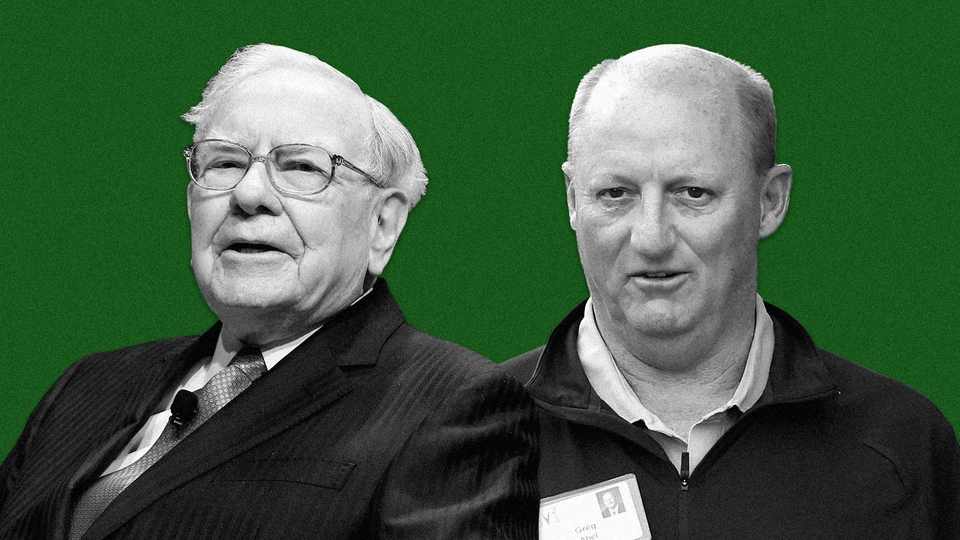
93-year-old Buffett announced at Berkshire's 2025 shareholders meeting that he will step down as CEO by the end of the year, with Greg Abel succeeding him, while pledging to retain all his shares and gradually dispose of them through donations, demonstrating confidence in the company's future development.
 Navigating Web3 tides with focused insights
The annual gathering of the investment world—the Berkshire Hathaway shareholders meeting—kicked off on May 2, with the shareholder Q&A session beginning at 9 p.m. Beijing time on Saturday.
"Oracle of Omaha" Warren Buffett participated once again in full, alongside his CEO successor—Greg Abel, head of Berkshire's non-insurance operations—and Ajit Jain, head of its insurance business, answering questions from shareholders.
Key takeaways from Warren Buffett's shareholder meeting, as summarized by Wall Street Insights:
1) On Trade
"Trade should not be used as a weapon." The U.S. should seek trade with other countries and focus on what each does best. Protectionism is a "serious mistake."
2) On the United States
"Fiscal policy is my biggest concern in America." When governments act irresponsibly, the value of money could become "frightening."
Buffett implied strong confidence in America and belief in American exceptionalism, saying the luckiest day of his life was being born in the U.S., and that America is a paragon of capitalism.
3) On Japan
We don't easily invest overseas unless I believe there’s a truly significant opportunity.
We intend to hold Japanese trading companies' stocks for another fifty to sixty years. Even if the Bank of Japan raises interest rates, he won’t consider selling.
Berkshire's current investment in Japan has reached $20 billion; I even wish we had invested $100 billion instead of $20 billion.
4) On U.S. Stocks
Recent movements in U.S. stocks are “not a major fluctuation,” and compared to past crashes, “this isn’t a dramatic bear market” or anything similar.
5) On Record Cash Reserves
Regarding how to deploy Berkshire’s record-high cash reserves, investment opportunities may emerge within the next five years.
Recently, Berkshire nearly made a $10 billion investment.
6) On Succession
Greg Abel, head of Berkshire’s non-insurance operations, will likely become CEO by year-end. He won’t sell any of his Berkshire shares but will gradually donate them.
7) On Berkshire
If one day Berkshire’s stock price halves, it would actually be an opportunity for me. Not that I lack emotions, but stock volatility won’t sway my rational judgment. It won’t affect my assessment of value.
Overall, Berkshire’s earning power will continue growing over time.
8) On Investing in Companies
Buffett believes a balance sheet is a good starting point when evaluating whether a company is worth investing in.
He said: "I spend more time studying balance sheets than income statements. Wall Street doesn’t really pay much attention to balance sheets, but I prefer to examine eight to ten years of a company’s balance sheet before looking at its income statement because certain things are harder to hide or manipulate on a balance sheet."
9) On Young Investors
If you have a direction in life, strive to make friends with people you respect and aspire to be like.
The fastest path to success is finding truly outstanding individuals and walking alongside them.
At the end of the Q&A session, Buffett announced he plans to propose to the board that he step down as CEO by the end of this year, marking the beginning of the end of Berkshire’s “Buffett era.” Investors must prepare for a Berkshire without Buffett at the helm.
Before the Q&A began, Berkshire Hathaway also released its first-quarter earnings report. Key highlights include:
The company reported operating profit of $9.64 billion in the first quarter, down 14% from $11.2 billion a year earlier and below analyst expectations. The company warned tariffs could further hurt profits.
Berkshire’s overall profits were also hurt by the dollar’s depreciation in the first quarter. The company recorded about $713 million in foreign exchange losses, compared to $597 million in gains from currency fluctuations a year ago.
Berkshire has been a net seller of stocks for the tenth consecutive quarter, selling $1.5 billion in stock assets during the quarter.
The earnings report showed Berkshire’s cash reserves reached a record high of $347.7 billion this quarter. Amid high uncertainty caused by tariffs, Buffett remains cautious about current investments. He expects good investment opportunities may arise in the next five years and noted that Berkshire’s pause in share buybacks partly stems from a 1% excise tax on stock buybacks introduced last year under the Biden administration.
Below are key excerpts from the Q&A session of the shareholder meeting, arranged by question order:
21:00 Opening Remarks at 2025 Shareholder Meeting
The shareholder meeting begins. Buffett said in his opening remarks that this is his sixtieth shareholder meeting. The audience erupted in applause.
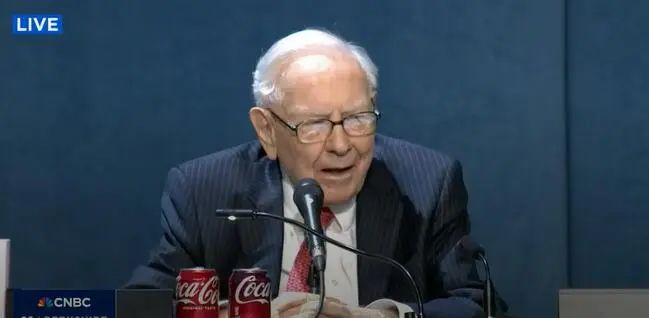
Buffett said 19,700 people attended in person this year, setting a new attendance record. At the event, sales of See’s Candies reached $317,000. Brooks running shoes sold $310,000, and toys and other products under Jazwares generated $250,000 in sales.
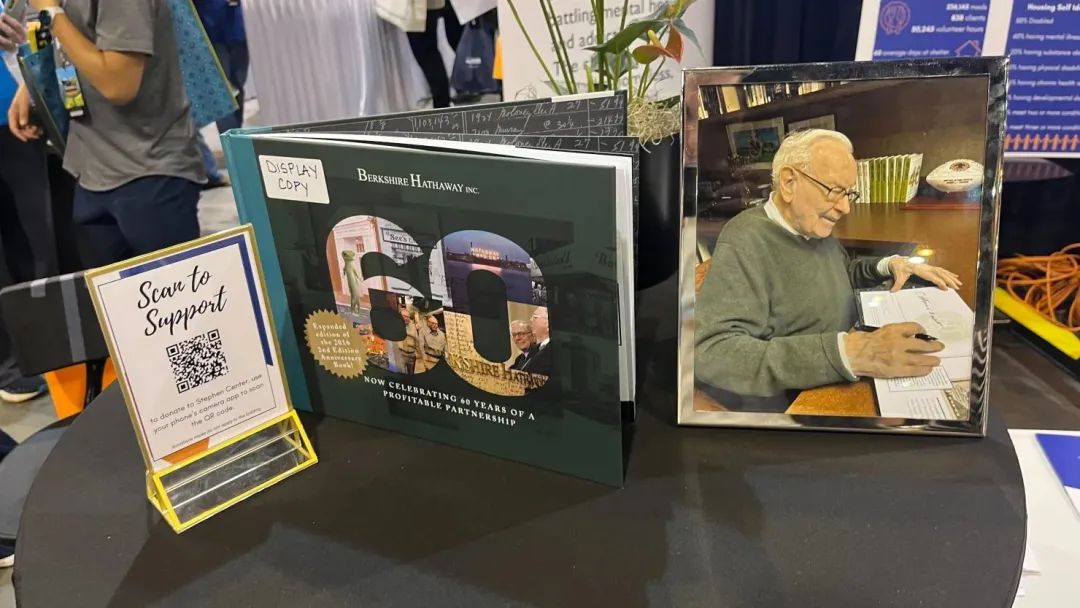
Buffett noted that a limited-edition book commemorating Berkshire’s 60th anniversary since acquisition was available for sale. This was the only book sold at the official bookstore Bookworm this year. Berkshire printed approximately 8,000 copies—about 3,000 more than originally planned—with around 4,000 already sold at the venue.
21:21 First Question: Trade
The first question posed to Buffett concerned import certificates—a proposal he advocated in a 2003 column aimed at narrowing the U.S. trade deficit.
Buffett said: "Import certificates were designed to balance trade. I came up with the idea of import certificates. It has some gimmicky aspects, but I think it would certainly be far better than anything we’re talking about now."
Buffett criticized tariffs and trade protectionism, stating "trade should not be used as a weapon." He pointed out that America rose from nothing to become an extremely important nation.
Buffett said: "We should seek trade with the rest of the world. We should do what we do best, and they should do what they do best. More trade is better."
When asked about trade barriers, Buffett said: "You can make very good arguments that balanced trade benefits the world. There’s no doubt trade and tariffs can be acts of war. I think they’ve already led to bad consequences, just in terms of the attitudes they provoke."
Buffett believes long-term protectionist policies could negatively impact the U.S., especially now that America has become the world’s leading industrial power.
He said, "In my view, it’s a serious mistake. When you have 7.5 billion people who don’t particularly like you, while 300 million somehow flaunt their achievements—I don’t think that’s right, nor smart. I truly believe the more the rest of the world thrives and prospers, the less harm it causes us."
We grew from nothing 250 years ago into an exceptionally important nation—an unprecedented phenomenon in history.
Buffett’s remarks earned applause from the audience. He did not directly mention former U.S. President Trump during his speech.
21:26 Second Question: Japan
Asked whether rising interest rates by the Bank of Japan would stop him from investing in Japanese stocks, Buffett said he would not sell the shares.
Buffett said, "We won’t sell these stocks over the next fifty years. These Japanese companies have excellent operating histories," noting that Apple, American Express, and Coca-Cola have performed well in Japan.
Buffett stated that investments in Japan fully align with Berkshire’s investment philosophy. The five Japanese trading companies Berkshire invested in have performed excellently, and he intends to hold their stocks for fifty to sixty years, hoping to build long-term, deep partnerships.
Buffett said their culture and practices differ from ours, and their management styles vary—but precisely because of this, we value the partnership more. "We won’t sell any shares. That won’t happen decades from now either. Our investment in Japan suits us perfectly."
Buffett said Berkshire currently has no plans to sell its stakes in these Japanese trading firms in the near term. Their operations are highly successful, and he feels this way even at age 94. Berkshire also plans to expand cooperation further.
Buffett said Berkshire’s current investment in Japan has reached $20 billion, and he even wishes they had invested $100 billion instead of $20 billion.
21:35 Third Question: Deployment of Berkshire’s Massive Cash Holdings
Asked about Berkshire’s massive cash reserves, Buffett joked that he stopped investing not to make Greg Abel look good in the future.
Buffett remains cautious about current investment opportunities. He said he’s constantly searching for opportunities and that Berkshire is “highly opportunistic.” He hopes to reduce cash holdings, possibly down to $50 billion.
Buffett said Berkshire will find ways to deploy its record-level cash, likely within the next five years.
"Occasionally, there are extremely attractive opportunities. But good ones don’t come every day. It’s unlikely an exceptional deal will appear tomorrow, but over five years, yes. We’ve made a lot of money in the past by not being fully invested at certain times."
Buffett revealed that Berkshire recently nearly made a $10 billion investment.
"For example, not long ago, we almost spent $10 billion. But now we’d spend $100 billion. I mean, when a project makes sense to us, we understand it, and it offers solid value, making such decisions isn’t hard."
Buffett noted a problem in the investment industry: progress doesn’t unfold in an orderly fashion.
21:43 Fourth Question: Challenges of Real Estate Investment Amid Global Uncertainty
Asked how to address real estate challenges amid current global uncertainty, Buffett said real estate investing is more complex and difficult than stock investing. Whether communication, negotiation, or pricing, many parties and factors are involved—ownership, legal structures, funding arrangements, etc. Striking a good real estate deal with favorable terms is genuinely hard due to too many variables.
If you choose to invest in stocks, a huge advantage is that countless opportunities appear every second—especially in the U.S. market. In contrast, real estate deals move slowly and heavily depend on personal communication and negotiation. A real estate investment might be handled solo or by a team.
On the NYSE, tens of billions of dollars trade daily, with thousands of unknown investors participating. You can buy or sell 20,000 shares of Berkshire in five seconds at the right price. But real estate isn’t like that. Completing a real estate transaction involves cumbersome processes and long timelines. Even for large-scale deals today, weighing and coordinating numerous factors becomes essential once negotiations begin.
Buffett said Berkshire has done real estate investments—for instance, during the 2008–2009 financial crisis. He advised that if you enter real estate, you must compare and select options more intelligently and strategically.
21:49 Fifth Question: AI’s Impact on the Insurance Industry
Ajit Jain, Berkshire’s insurance chief, answered first regarding whether artificial intelligence (AI) could transform the insurance industry.
Jain said people are dedicating significant time and capital to AI. AI will be a game-changing tool. AI technology could "truly change" how the insurance industry currently assesses, prices, and sells risk, as well as handles claims.
But Jain emphasized, Berkshire won’t be the first to adopt AI in the industry. We take a more cautious stance toward any flashy new technology claims.
Jain said: "Of course, I also believe people will eventually pour vast sums chasing the next trendy thing." "We aren’t good at being the fastest or first movers. We tend to wait and observe until opportunities become concrete and we have clearer understanding of failure risks and pros and cons."
However, Jain added that once suitable opportunities arise, Berkshire will invest without hesitation.
He said, "Currently, some insurers are indeed experimenting with AI and trying to find optimal uses, but we haven’t consciously allocated substantial funds to seize this opportunity. I guess we’ll be ready—once the moment comes, we’ll jump in quickly."
Buffett said he would let Jain decide Berkshire’s insurance strategy for the next decade. Whether to use AI will be Jain’s choice.
21:52 Sixth Question: Why Did Berkshire Invest in Hot Dog Chain Portillo’s?
Somone asked why Berkshire acquired Chicago hot dog chain Portillo’s. Buffett replied he didn’t know much about Portillo’s and joked it might have been secretly invested in by someone else.
Buffett then shared an anecdote about Jay Pritzker, a relative of Illinois Governor JB Pritzker, who decades ago acquired a Brooklyn chocolate company. Buffett called Jain an outstanding manager.
Abel clarified, Berkshire does not own Portillo’s. The company is actually owned by an investment firm with a name similar to Berkshire’s.
22:00 Seventh Question: With America Seemingly Undergoing Major Change, Should We Be Pessimistic or Optimistic?
The questioner said Buffett has always believed strongly in America’s long-term strengths, but today America seems to be undergoing unprecedented, near-"revolutionary" changes. As investors, how should we evaluate the current situation—should we remain optimistic or pessimistic?
Buffett responded that the questioner represents a new generation of investors. Such macro commentary typically doesn’t appear in Berkshire’s managers’ annual reports. But he said, America won’t undergo such drastic "revolutionary" changes.
Buffett said America was once an agricultural nation, but society changed and economic performance improved significantly. It used to be male-dominated, but fair reforms occurred, constitutional amendments were passed, and women gained equal opportunities.
"I mentioned we started as an agricultural society. We began as a hopeful society, but we didn’t deliver on our promises well. We’ve always been changing. You’ll always find various criticisms in this country, but the luckiest day of my life was the day I was born—because I was born in America."
From 1920 to now, from 1776 to present, we’ve accomplished many things over a long period. I was lucky to be born in America, when almost everything happened here—but that’s no longer true. Being a male born in America was incredibly fortunate—not easy—but America has changed.
"We’ve experienced the Great Depression, world wars, and the development of atomic bombs, which I couldn’t have imagined at birth. So even if we seem unable to solve all emerging problems, I won’t lose heart. If I were born today, I’d negotiate inside the womb until they let me go to America."
From 1930 to now, we’ve gone through many things—like the Great Depression, two world wars, and tensions brought by nuclear weapons. These are part of our journey. We’re an incredibly lucky nation, and I’m an incredibly lucky person. I feel far luckier being born in America than anywhere else.
22:04 Eighth Question: Can Patience Be Broken in Investing?
Somone asked whether impatience can sometimes be shown in investing, breaking the principle of patience?
Buffett said sometimes you must act swiftly. Berkshire earned a lot of money precisely because it was willing to act fast. You shouldn’t be patient when meaningful deals arise.
Buffett said, "When a good opportunity appears, you shouldn’t show patience then. You should be patient waiting for those rare chances. But for reasonable deals, you shouldn’t hesitate. And for empty talk that will never materialize, you shouldn’t patiently listen."
22:13 Ninth Question: Auto Insurer Geico
Jain said Geico did face a crisis, but we turned it into an opportunity. Initially, two main issues existed: first, our rate structure was flawed; second, systemic problems in our actuarial and pricing mechanisms. Five or six years ago, these were our major concerns.
Through rapid technical adjustments and process optimization, these issues have now been resolved. We’ve not only improved pricing models but also done extensive work on risk matching and optimized the overall pricing system.
Today, Geico can price each individual based on comprehensive risk levels, performing exceptionally well in this area, translating into substantial profits.
While we’ve achieved much, I don’t believe our mission is complete. We still have technologies to leverage, like AI and other new tools. Our goal isn’t to “catch up with others” but to “do better.”
Buffett said this is a fascinating case study, especially regarding how a company adapts to changes in industry rules. Every business faces unique challenges and opportunities.
In the 1970s, Berkshire bought Geico for $50 million, initially holding a partial stake. Later, Geico generated enormous returns for us. Now fully owned, it earns $2 billion in profit per quarter alone. But this resulted from decades of continuous investment and improvement.
A century ago, auto insurance barely existed; now, besides property and casualty insurance, auto insurance has become one of the largest lines. Geico generates substantial profits, holding $29 billion in liquid cash. Buying this company for $50 million back then was an incredible deal.
Founded in 1936 by a government employee formerly with USAA, Geico made a profit in its first year and earned more the second year, later expanding and going public. The auto insurance industry thus emerged.
No one likes buying insurance, but everyone loves driving—making auto insurance a necessity. Geico’s growth story is fascinating—growing threefold in a few years, veering off course temporarily, but ultimately returning to track. We discuss Geico-related topics at nearly every annual meeting.
Buffett specifically mentioned Geico CEO Todd Combs. He said Combs did an outstanding job during this transformation, successfully turning around the subsidiary. The telematics system, once seen as a competitive disadvantage, is no longer a liability. Combs also drastically streamlined the workforce, cutting thousands of positions, significantly boosting efficiency.
22:22 Tenth Question: Why Is Abel the Right Successor?
Buffett didn’t answer directly. He said it’s crucial to surround yourself with talented people you enjoy working with.
Buffett offered advice on choosing careers and starting professional lives. He said, you need to “do what you love.” Buffett reminded, employees’ habits can influence colleagues, so carefully choosing your workplace is critical.
Buffett advised that while you should “carefully” choose your employer, you shouldn’t obsess over starting salary or similar factors. "If you can find excellent colleagues there, go there."
Abel said he was honored to contribute to Berkshire.
22:31 Eleventh Question: Dollar Depreciation and Currency Risk
Someone asked about the weakening dollar and currency risk. In response to how to reduce exposure to dollar depreciation risk, Buffett said his company won’t invest in currencies deemed “worthless.” "We don’t want to hold any currency we believe will depreciate."
Buffett also mentioned increased holdings in yen and hasn’t ruled out exploring or monitoring other currencies in the future.
Buffett emphasized the complexity of currency speculation and noted one government responsibility is devaluing its own currency.
Buffett said he won’t take actions based on quarterly or annual earnings to manage currency risk. Establishing effective checks and balances within currency value systems is extremely difficult.
Additionally, Buffett said: "U.S. fiscal policy frightens me because of how it’s formulated and all the incentives driving actions that could cause monetary trouble. But this isn’t limited to the U.S.—it’s global."
"In my annual report, I briefly mentioned fiscal policy is my biggest concern in America because of how it’s structured."
He said, "All incentives push behaviors that could and do cause monetary trouble. This isn’t exclusive to America—many places worldwide experience this. In some areas, it often spirals out of control."
Buffett said, "We won’t actually invest in a currency about to 'collapse,'" adding, when governments act irresponsibly, currency value could become “frightening.”
Talking about the late Charlie Munger, Buffett said: "Charlie always believed that if he had to pick an investment field beyond stocks, he thought he could make a lot of money in foreign exchange markets."
Buffett said: "We tried it once. I can’t say we won’t do it again, but it’s unlikely. Unless something happens in America that makes us want to hold large amounts of other countries’ currencies."
22:41 Twelfth Question: Mongolia
The questioner said Mongolia is an emerging market between China and Russia, with livestock and mining industries, and ongoing economic growth. They hosted a Mongolian investor conference in New York last year, attracting many interested investors. What does Buffett think of emerging markets like Mongolia? Any long-term investment plans?
Buffett said he recalled attending an annual meeting roughly twenty years ago, where he first learned about Mongolia, so he has some awareness—though that was long ago.
Now we hear government reports and assess which business opportunities are truly developable. But we don’t easily invest overseas unless I believe it’s a truly high-potential opportunity.
Many believe you must go where inflation is high to make money, but I don’t see it that way. Currently, we have no short-term investment plans in Mongolia unless it’s a project highly attractive in scale.
Maybe twenty years ago we’d have considered visiting. But I don’t know much about your economy—livestock, mining, etc. That’s my current view.
22:45 Thirteenth Question: Private Equity Firms Competing in Insurance
Somone asked about Blackstone, Apollo, KKR, and other private equity firms expanding into insurance—these firms are more aggressive—what’s your view?
Jain admitted competition from private equity has made insurance investments harder for Berkshire. "Undoubtedly, private equity firms have entered this space, and we’ve lost competitiveness. We used to participate heavily, but in the past three or four years, I believe we haven’t completed a single deal."
However, Jain said private equity employs higher leverage and more aggressive investment strategies. During good economic periods, private equity takes on certain risks in leverage and credit, especially in life insurance. "As long as the economy performs well and credit spreads are low, they make a lot of money."
Jain said a persistent risk exists: regulators might eventually object, saying they’re taking excessive risks on behalf of policyholders, potentially ending tragically. "We don’t like the risk-reward ratio in such scenarios, so we chose to raise the white flag and decided not to compete with private equity in life insurance."
Buffett said many companies want to mimic Berkshire’s model, but their CEOs don’t commit all their assets to the company like we do.
Buffett added, what differentiates Berkshire from competitors is his greater personal accountability in investing. He said:
"Their fiduciary sense of responsibility for what they do might differ—sometimes it works, sometimes not. When it fails, they move on. But if what we do at Berkshire fails, I’ll spend the rest of my life regretting everything I created. That’s a completely different personal relationship. In property and casualty insurance, no company can truly replicate Berkshire’s model."
22:50 Fourteenth Question: Young Investors
The questioner was a young girl. She said she’s just starting to learn investing and wanted Buffett’s views—what lessons did he learn early in investing?
Buffett said this is an excellent question. He wished someone had given him such advice when young.
It deeply relates to who you surround yourself with. Don’t expect every decision to be correct. If you have a direction in life, strive to make friends with people you respect and aspire to become.
He mentioned several people he collaborated with, who may not have operated at his scale but were people he greatly admired—being with them meant a lot. Walking through life with like-minded people is invaluable. Unfortunately, you often realize this only later in life. When you’re older, you understand these are truly important things.
Buffett mentioned two former Berkshire directors, Tom Murphy and Walter Scott. He said if you have people like Tom Murphy and Walter Scott around you, your life will be better. But this doesn’t mean chasing wealthy people or copying their lifestyles. I suggest approaching truly smart, wise individuals, learning from them, consulting them, and trying things together.
If you’re seeking meaningful work and aren’t急于 earning money, I recommend spending time with exceptional people like Charlie Munger. Find such opportunities and share in their success; if you can’t, that’s fine—just keep doing what you’re doing and keep striving. Persist, and eventually you’ll find people who live and think seriously like you.
Buffett recalled his first visit to Geico—the door was locked, and he didn’t know who was inside. Ten minutes later, he met the person who profoundly impacted his life. When you meet such people, remember their help and think about how you can repay them. Never forget these mentors.
Of course, you might occasionally encounter undesirable situations. But if you’re truly lucky—living in a good environment surrounded by great people—cherish it. You don’t need to feel guilty for being lucky. With 8 billion people globally and over 300 million in the U.S., if you’re here, you’re already ahead in the game—use that advantage.
If at work, someone asks you to do things you fundamentally dislike, don’t stay with them. Different industries have different standards, but if you find a direction that excites you, pursue it vigorously—especially if it’s a career you want for life.
The investment field is fascinating—many quit after earning their first fortune. But I’ve been lucky—I saw its long-term appeal from the start.
Tom Murphy lived to 98 and had a remarkable ability to see potential in others. We’ve never met anyone else who spots talent so keenly. If you want to become a better person, strive to find people like him and work with them.
There are many successful people, but not everyone makes the right choices. The fastest path to success is finding truly outstanding individuals and walking alongside them.
Berkshire’s experience has been valuable to me. Sandy Gottesman managed our assets from 1963 until his death a few years ago, along with Walter Scott and Abel—all exemplify long-term success. You can learn truly valuable things from them.
That’s my advice. Some live long perhaps because they’re surrounded by good people, or maybe because they drink Coke daily (laughs). But I believe happy, joyful people live longer because they’re always doing what they truly love.
22:59 Fifteenth Question: Do Recent Market Turbulences Offer Investment Opportunities?
Asked whether recent market volatility provided big investment opportunities, Buffett downplayed recent market swings, calling them "really nothing"—part of investing. He dismissed recent stock market fluctuations that unsettled investors.
Buffett said: "What happened in the past 30, 45, or 100 days… really isn’t much."
Buffett noted, in the past 60 years, Berkshire’s stock price halved fewer than three times. During those periods, the company faced no fundamental issues.
In the past 60 years, Berkshire Hathaway’s stock price halved fewer than three times. He pointed out that during those periods, the company had no fundamental problems.
Given this, compared to events like the 1929 stock crash, Buffett believes recent U.S. market moves are "not a huge move," and "this isn’t a dramatic bear market, nor anything similar."
Buffett recalled that on his birthday in 1930—August 30—the Dow stood at 240, later falling to 41. Despite some "bone-chilling" events, the Dow closed above 41,300 this Friday.
To those worried about cyclical ups and downs in their portfolios, Buffett advised: they should change their investment mindset to adapt to the world—not expect the world to adapt to them.
Buffett said: "If whether your stock drops 15% matters greatly to you, then you need to change your investment philosophy. The world won’t adapt to you—you must adapt to the world."
He added: "People have emotions. But you must control them when investing."
23:03 Sixteenth Question: How to Handle Life Setbacks?
A shareholder from Shanghai sought advice on handling life setbacks.
Buffett said, "I’d focus on the good things, not the bad. Life can often be wonderful—but may also bring terrible setbacks."
23:09 Seventeenth Question: Autonomous Driving
Somone asked about autonomous driving not yet being widely adopted in the U.S. If it eventually rolls out, how will it affect Geico’s insurance business? What about liability allocation, software issues, and broader changes brought by autonomous driving?
Jain, responsible for insurance, answered that from an insurance perspective, autonomous driving won’t immediately bring fundamental changes. Most current auto insurance premiums are priced based on driver error frequency, and our policies and claims systems operate according to such risk calculations.
Jain said autonomous driving technology could indeed reduce accident likelihood, a view shared by Geico and other insurers. But once the technology truly becomes widespread, we’ll make corresponding adjustments.
Buffett said this reminds him of something Charlie Munger once told him. When we decided to enter the textile industry, we couldn’t foresee the entire industry’s future transformation.
The world keeps changing. Like baseball or golf, not every swing results in a home run, nor every stroke a hole-in-one. You must accept that you’ll make mistakes.
Today we discuss whether auto insurance will change—a very important question. But currently, autonomous driving hasn’t fully commercialized, nor has the U.S. pushed it at scale. No one can accurately predict what the insurance industry will look like in the next hundred years.
One thing is clear: the world is dynamically changing. People love driving—we don’t want to destroy this world. We’ve learned to protect Earth better, though the journey is tough. We know eight nations profoundly impact humanity’s development—we hope they have the best leaders.
Einstein published special relativity in 1905, advancing research on energy conversion into powerful forces, ultimately leading to nuclear weapons threats we now face. Born in 1930, I witnessed these consequences. Even Einstein couldn’t foresee how his inventions would reshape the world.
We’ve also seen North Korea’s development. No one can truly predict their next move. Such uncertainties won’t vanish soon.
Yet, change brings many benefits, making today’s life far better than a century ago. But we still face real issues like weapons of mass destruction.
Like today’s auto insurance, we see fast technological progress, but to me, this change isn’t as impactful as the textile industry’s upheaval. Now might be one of humanity’s “luckiest” phases—you should enjoy life while paying attention to changes in the insurance industry.
We excel in this industry. Though it has structural issues, we don’t fully control everything. If you don’t know how to swing, don’t play golf.
Product liability and accidents from autonomous driving indeed require clarification of many clauses. When accidents occur, repair costs rise significantly due to technological upgrades. Today’s cars are increasingly high-tech products, and these tech-related new issues aren’t fully resolved.
For example, when I first visited Geico in 1950, average annual premiums were around $40, depending on the state. Now, $2,000 annually is typical. Yet, traffic fatality numbers have dropped sharply. Viewed differently, driving is much safer now. The industry’s future trajectory is hard to predict. You must combine research, reality, and various data.
Energy, healthcare, and political environment changes may also trigger industrial restructuring. In business, many problems have no “answers,” only “action points.” Today’s rules differ vastly from the past, so you must rethink your industry strategy every morning.
Additional notes on Berkshire’s first-quarter earnings:
Our insurance segment’s performance declined noticeably this quarter. Last year was strong, but this year faces pressure from falling prices and rising risks.
Some achievements can’t be replicated, and we don’t advise copying others’ models. We do have advantages.
Investment income changed little because we made few overall mistakes. We expect total investments around $40 billion this year—earnings slightly lower but fewer negatives than before.
Railway business grew slightly versus last year, some issues improving—still a quality asset for Berkshire. Energy segment issues mostly resolved, earnings rebounded. Other businesses need more effort.
We ran many projections—some up, some down—overall decent. Regarding cash flow, please stay patient. Munger once told me: "As long as you’re patient, read financial reports daily, and listen to politicians speak, you’ll find excellent opportunities."
We still have ample cash. As long as our underwriting brings profits, this cash can be deployed. We may make significant investments in the next 50 or 100 years. Difficult years will come, when these cash reserves become vital.
Current life insurance float stands at -2.2%. If unprepared for the future, you could get into trouble. Running a business requires shifting mindsets.
We made no acquisitions this year. If you buy Berkshire stock, you’ll get your rightful share.
Buffett said Berkshire paused its stock buyback program partly because about a year ago, the Inflation Reduction Act introduced a 1% excise tax on stock buybacks. This hurts us more than other companies.
Buffett said: "This确实 makes buybacks slightly less attractive than before."
Buffett cited Apple, which performed well this year, spending $100 billion on buybacks. The tax paid on these buybacks is enormous. They repurchased at prices higher than your purchase price—that’s good news.
Now people seek ways to boost success odds, but I emphasize: you must read diligently. Without deep reading, you can’t make wise decisions.
If major changes arise, our company will maintain a conservative, cautious participation strategy. Though we’ve done some buybacks, tax burdens are now significant.
00:05 Second Half Opening and Eighteenth Question: What Did You Learn from Munger and Others?
Before the second half Q&A, Buffett recommended a documentary about the late Washington Post publisher Katharine Graham: Becoming Katharine Graham.
Buffett appears in the film due to his friendship with Graham and role on the Washington Post’s board.
Jain didn’t return to the stage for the second half; Buffett and Abel continued answering questions.
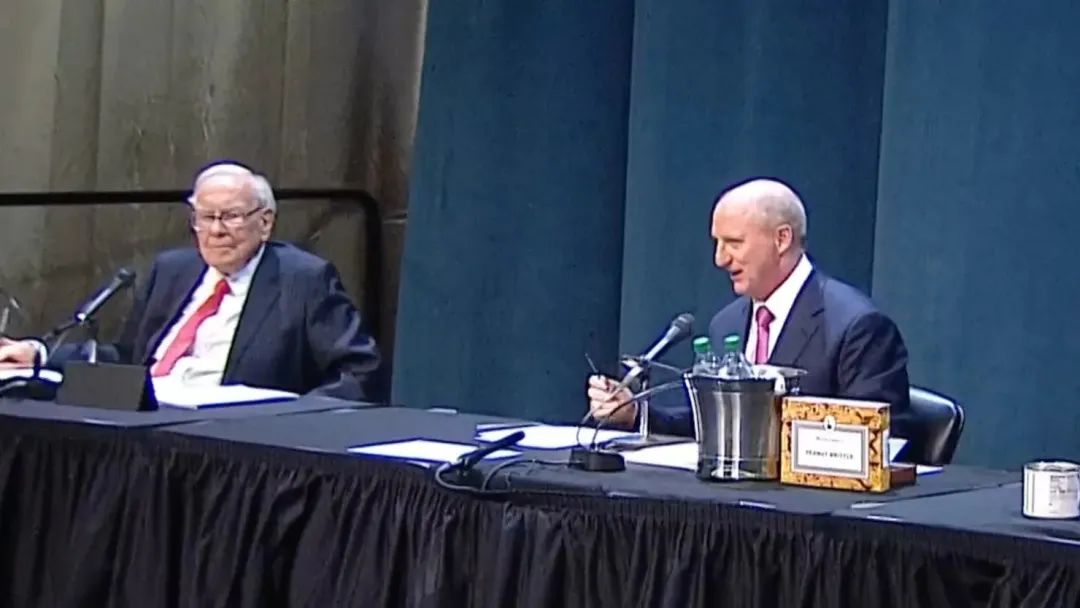
A shareholder asked Abel how he wants to be remembered. He said being a father and coach matters greatly to him.
Buffett joked he wants to be remembered for his "advanced age," drawing laughter from the audience.
Buffett explained why he sees the balance sheet as a good starting point for evaluating investment-worthy companies.
He said: "I spend more time studying balance sheets than income statements. Wall Street doesn’t really focus on balance sheets, but I like examining eight to ten years of a company’s balance sheet before looking at its income statement because certain things are harder to hide or manipulate on a balance sheet."
He added: "Of course, neither gives you the full picture."
00:13 Nineteenth Question: Capital Allocation at Berkshire After Abel Succeeds Buffett
Somone asked that for over a decade, everyone focused on Buffett and Charlie Munger’s investment strategies. Now Abel will succeed Buffett as CEO, and future capital allocation decisions may be led by him. How does he view this succession, and what about the future?
Abel first noted Berkshire has a strong investment culture built by Mr. Buffett over the long term. All colleagues uphold shared values.
Capital allocation is the core of our business philosophy. When making decisions, it’s not just management discussing—it’s more importantly that we have clear risk awareness. These values are key to our company’s success.
We always value Berkshire’s reputation—our greatest wealth. Buffett once reminded everyone that in any investment decision, the first step is checking the income statement to understand real numbers.
Now we hold substantial cash—a huge advantage but also a challenge—how to allocate it? It’s not simple but a profound philosophy. We’re always ready to allocate, but we pursue “better allocation.”
We always emphasize Berkshire won’t rely on others in any environment—we won’t depend on bank loans for capital operations. Both insurance and non-insurance businesses must have sufficient cash flow to ensure Berkshire’s continuity.
We’ll keep watching quality opportunities across industries, not limited to insurance. Our goal is to fully understand a company’s vision, whether buying 100% or a partial stake.
As Buffett mentioned earlier: We completed a $10 billion acquisition last quarter. Full acquisitions are sometimes appropriate, sometimes partial stakes suffice. The key is, whether we own 1% or 100%, we must understand what kind of company it aims to become over the next 5, 10, or 20 years.
We’ll continue this philosophy. It’s the core of Berkshire’s success over the past 60 years—we won’t change.
Buffett added that America indeed faces significant transformation needs now. Our power grid and highway systems lag behind population and economic growth.
To drive these changes, the U.S. government must take stronger measures. America has 50 states, each with different mindsets. Like after WWII, we mobilized the entire manufacturing sector to support the war rapidly—efficiency was astonishing. But in peacetime, achieving similar efficiency is difficult.
Investments depend on context—we have knowledge and capital but also need strategic shifts. How Berkshire contributes requires solutions meaningful to the nation, people, and the company.
Abel may soon share his views on these issues. But one thing is clear: we need ample cash reserves ready for critical interventions.
In the past, we’ve done many joint projects. For example, the U.S. highway system was completed under federal leadership. One company alone couldn’t achieve it. Future large-scale projects will also require close collaboration between government and private sectors.
Abel said from an energy perspective, many areas remain to advance. Electricity demand grows rapidly; meeting long-term energy needs requires necessary capital investment. We have strong capabilities here and are actively managing related risks.
Only by resolving these risks can we deploy capacity for future demand. And we must start preparing now.
Buffett agreed, adding that we must leverage U.S. federal power. Like building highways during WWII, national coordination made rapid completion possible.
We do have capital and sufficient knowledge, enabling participation. But goodwill alone isn’t enough—we need the ability to “concentrate strength on major tasks.”
We achieved this during WWII, but in peacetime, pushing similar nationwide construction is extremely difficult. This task may ultimately fall to the next generation.
00:26 Twentieth Question: A 14-Year-Old Girl Wants to Join Berkshire—How to Prepare?
A 14-year-old girl from Hong Kong said she hopes to join Berkshire someday and asked what jobs she might pursue. Abel said hard work and willingness to contribute will take you far. "We sincerely look forward to the day you become part of Berkshire."
Buffett added: "Stay curious, read more."
00:29 Twenty-First Question: Wildfires Affect Utilities—What Strategic Protections Exist?
On wildfire risks, Abel said: "It won’t disappear. The company decided that when fires come, equipment power sometimes needs cutting. It’s not as simple as turning off lights." Wildfires occur in California, Texas—location affects investment decisions.
On Berkshire utility companies’ liabilities during spreading wildfires, Abel said, "We can’t just be the last insurer. We can’t be responsible for everything that happens."
Buffett assured shareholders Berkshire won’t use their money on things the company considers "foolish."
He added that if they did, shareholders "should fire us."
"It’s easier to do foolish things with other people’s money than your own. That’s one common government problem. We don’t want to bring that to private enterprise," Buffett joked.
00:43 Twenty-Second Question: A Female Fan Hopes Buffett Arranges an Office Meeting
The question came from a Polish woman. She said in January 1951—74 years ago—Buffett took an 8-hour train ride to Washington solely to learn about insurance and has stayed on that path ever since—a deeply moving story. In 2011, she was only 15 but set a goal: one day she must meet you. Today, she fulfilled that promise and wants to ask a small favor: could you give her an hour in your office?
Buffett thanked her for the question, laughed, and said you don’t need to announce my life story, but I appreciate your persistence and effort. Today there are 40,000 people here—your question is truly special.
Buffett said when young, he often drove nationwide visiting various companies. Back then, most lacked investor relations departments, so CEOs often received him personally. He worried they might ignore him, but he’d prepare two very specific questions in advance.
That approach isn’t bad. If you want to visit someone and chat ten minutes, think clearly about what you’ll say, what you’ll ask. You should set the terms for those ten minutes, not leave it to the other party.
You’ll find most companies now have investor relations departments whose job is telling you why you should buy their stock. It’s a growing business. But you can absolutely learn and understand the world your own way. Berkshire has our own way—we don’t copy others.
Now we have sufficient resources and talent, so we don’t need to interview one by one as before. With over 40,000 people here, we truly can’t fulfill every one-hour request. But I deeply appreciate your passion and persistence—I can only say this to you.
00:50 Twenty-Third Question: Acquiring Remaining Assets of Berkshire’s Own Energy Division
On Berkshire’s decision to acquire remaining assets of its own energy division, Buffett expressed pessimism about the utility industry, saying, "Utility operations aren’t as good as they were a few years ago." He attributed this to social factors, saying value changes and doesn’t always rise.
Buffett discussed investment opportunities in the U.S. energy sector and Berkshire’s potential role. "The solution lies in some form of cooperation between government and private enterprise, just like during wartime. I don’t think the government sent people to lay vast amounts of concrete or do similar work when building the highway system."
He added: "We do have capital, and we possess knowledge found in very few places."
00:54 Twenty-Fourth Question: Berkshire’s Future Profitability
Somone asked Buffett about his earnings estimate for the latest fiscal year—will future profits rise or possibly decline?
Buffett said he believes our utility revenue will be somewhat affected. Profitability isn’t solely determined by M&A, but we do make irregular acquisitions. This year we invested $10 billion.
Such questions often depend on market conditions and people’s emotions. Some are more pessimistic. As someone born in the 1930s, I’ve lived through very tough times. Sometimes you find opportunities highly attractive but don’t act, missing them. This happened many times in my life.
Often, I choose not to attempt things I’m unsure about—like asking me to walk a tightrope, I wouldn’t do it. But in financial markets, some things others fear don’t scare me.
If one day Berkshire’s stock price halves, it would actually be an opportunity for me. I know many react differently, but I won’t worry. Not that I lack emotions, but stock volatility won’t sway my rational judgment. It won’t affect my value assessment.
Overall, Berkshire’s earning power will continue growing over time. We need to retain our earnings and make rational decisions. Everyone’s abilities and risk tolerance differ—that’s what creates opportunities in investment markets.
00:59 Twenty-Fifth Question: Tech Giants’ Stocks
Major tech firms are heavily investing capital expenditure in AI. Buffett said tech giants earn lots of money and make many investments. Coca-Cola has its bottling companies, but these investments aren’t actually huge. Initial corporate investments, like machinery, are large, then decrease later.
Buffett said observing rising capital intensity among the Magnificent Seven tech giants will be very interesting. "Many Americans became very wealthy by watching how others invest."
01:09 Twenty-Sixth Question: What High School Courses or Activities Help Future Investing?
Buffett said you can learn in future school teaching or work.
01:17 Twenty-Seventh Question: Is DOGE Good or Bad for America Long-Term?
Asked about the Department of Government Efficiency (DOGE), Buffett laughed and said why ask me such a hard question. To me, government bureaucracy has always been confusing. In capitalist markets, inefficient bureaucratic structures can "spread"—their inefficiencies may spill into other areas. Many systems could be better managed—even Berkshire has room to streamline and improve efficiency.
But government is government. It lacks a true "supervisor," making future governance and fiscal conditions worrisome. Especially when elected officials say one thing but do another—it’s truly concerning.
I’ve always believed that if a politician is rich but lacks integrity, that’s a very negative signal for me. On fiscal policy, America has long failed to truly resolve budget deficits—never a thoroughly settled issue.
For America, "our current budget deficit situation can’t persist indefinitely. We don’t know if that means two years or twenty, because no country has been like America—this can’t go on forever."
Sometimes you know something can’t last, but you don’t know how to stop it—eventually you just throw up your hands. Paul Volcker once saved America from the worst inflation collapse. Now, U.S. inflation is severe, and we’ve experienced consequences of such policies.
Buffett didn’t directly address DOGE but acknowledged reducing budget deficits is a difficult but important task.
Honestly, I wouldn’t want the job of fixing the fiscal system and balancing budgets—"not the job I’d want, but it’s the job that should be done." But Congress doesn’t seem to be tackling it.
We’re a great nation with the world’s most innovative talent, but we do have many structural problems. When issues arise, they don’t explode immediately but slowly ferment.
Governance naturally has incentives and checks. Just like in companies—even the most successful ones aren’t flawless.
Buffett again mentioned risks of dollar depreciation, saying:
"Yet, at the root of all this is having a currency that doesn’t depreciate. If everyone trusting the government gets deceived while those scheming to profit become rich or richer, what impact would depreciation have on social stability? I don’t think you’d want a society operating this way."
01:23 Twenty-Eighth Question: Suppose You Traveled to 1776—How Would You Build Capitalism’s Foundation to Support America’s Long-Term Prosperity?
Buffett said: "We’ll make our best deals when people are most pessimistic." He said Berkshire will keep enhancing earning power, but this growth won’t be linear. Buffett defended Berkshire’s long-term decision not to use others’ capital in transactions.
Buffett called America a shining example of capitalism and likened the system to a grand cathedral with an attached casino. He said, "American capitalism has achieved unprecedented success. It’s a magnificent cathedral combining to create an economic system unseen before, with a giant casino attached. Temptations are immense, especially now—the temptation is to enter that casino."
"Inside that cathedral, people are essentially designing systems to produce goods and services for over 300 million people—a scale unprecedented in history."
While devoting all time and energy to the casino in this metaphor is tempting, Buffett reminded that balance is crucial. "In the casino, people have fun, money flows freely, but you must also ensure the cathedral is nourished. In the next 100 years, America must ensure this cathedral isn’t consumed by the casino."
He added, "We built an interesting system, and it actually works. Capitalism’s reward distribution seems arbitrarily capricious."
01:31 Twenty-Ninth Question: Berkshire’s Subsidiary Management Model
Berkshire uses a "non-intervention" approach in managing subsidiaries. Someone asked for specifics on how it operates.
Abel said since 2018, he’s gained deeper insight into Berkshire’s various businesses. Buffett’s knowledge is admirable, and he generously shares it—he points out potential risks in business models, and we promptly communicate with him when issues arise.
Our discussions with him focus more on framework issues—like industry trends or strategic soundness. But in daily operations, we have great autonomy to make independent decisions and advance projects.
If an opportunity suddenly arises in an industry or we plan to pursue a new direction, we’ll discuss with Buffett whether it’s worthwhile. But in execution, we have high freedom. Managers Berkshire selects deeply understand their industry operations—like Geico’s leaders. Especially during insurance industry changes in recent years, visionary leadership is critical. We benefit from past experiences.
Buffett joked he’s worked with Abel for years. Abel works very seriously—sometimes he wishes he could be a bit more relaxed and artistic, not work so hard. But honestly, if a business runs well, you don’t need to worry about getting fired.
Abel excels. Not everyone suits being a manager. Some want instructions; others resign if given orders—I don’t blame them. But Abel is different—he’s autonomous yet welcomes advice or assistance. He’s a true leader.
At Berkshire, we don’t require every manager to operate identically. Some are admirable, others less so. But organizational management quality is visible—if organizational culture starts declining, leadership may need improvement.
For example, in one of our retail stores, an employee once told a friend, "Come shop, I’ll give you a discount," well-intentioned but violating employee discount rules. Such behavior can "spread."
We don’t want senior managers setting examples of changing rules for personal gain. Once that happens, the entire organization may head in the wrong direction.
01:38 Thirtieth Question: How Does Berkshire View Environmental Changes?
Abel said Berkshire considers this when supporting and acquiring energy companies, complying with federal and state requirements.
Abel gave an example of Iowa’s power structure change in the early 2000s.
Abel said in the early 2000s, Iowa faced power shortages, relying entirely on coal-fired power. He discussed with the governor how to ensure long-term energy supply, reviewing various energy types.
Abel emphasized, with state legislators’ support, Iowa built a large wind power project while retiring some coal units. Berkshire developed America’s largest wind farm in Iowa, investing $16 billion while retiring coal units.
Abel added that coal units are still needed to maintain stable power supply. This drew applause from the audience.
Abel said renewable and non-carbon energy must comply with national advancement requirements. Berkshire made decisions fully aligned with federal and state mandates, respecting all states’ processes and cooperating accordingly. "We’ll continue collaborating with states to determine their desired planning paths."
Abel warned: "We must avoid situations like Spain or Portugal." He referred to recent blackouts sweeping Spain and Portugal across the Iberian Peninsula, meaning Berkshire’s energy business still needs coal plants to generate sufficient power.
01:44 Thirty-First Question: U.S. Healthcare Reform
A nurse asked why Berkshire ended its healthcare collaboration with JPMorgan Chase and Amazon and sought Buffett’s views on U.S. healthcare reform. Buffett said the partnership ended because resistance to change was too great.
01:54 Thirty-Second Question: Abel’s Future Role
Somone asked that with Abel fully taking over Berkshire in the future, including capital allocation responsibilities, would his focus be more as an investor or as a business operator?
Buffett said frankly, being a business operator is very difficult, while managing money from a room is relatively easier and more enviable. He felt lucky to choose whom he works with. In his life, he’s never been let down by teachers or partners—rare indeed.
He’s also grateful for the freedom to choose daily activities—a flexibility many professional managers lack. Honestly, he never wanted to be a company’s "top executive"—not his skill or preference.
Now he can run the company his preferred way, which brings happiness. Abel is an outstanding operator, skilled in complex operational matters. The reason Buffett can hand over this role is confidence Abel will handle it well.
As for capital allocation, that’s naturally part of future work. But he stressed the real challenge isn’t just "investing" but using Berkshire’s resources to do the right things. Abel will be someone who combines both excellently.
01:57 End of Q&A Session
Buffett announced:
"Greg [Abel] should become CEO of the company by year-end."
Buffett said he’ll remain at Berkshire to help after stepping down, but "final decision-making authority" rests with Abel.
Buffett said Abel didn’t know this. Except for his children, no other board members knew either.
Buffett said he has no intention of selling any Berkshire shares but will gradually donate them. He said: "I absolutely have no plans to sell any Berkshire Hathaway shares. I will gradually give them away." This drew cheers and applause from the audience.
Buffett continued: "I’d add: retaining all shares is an economic decision because I believe Berkshire’s prospects under Greg [Abel] will be better than under my management."
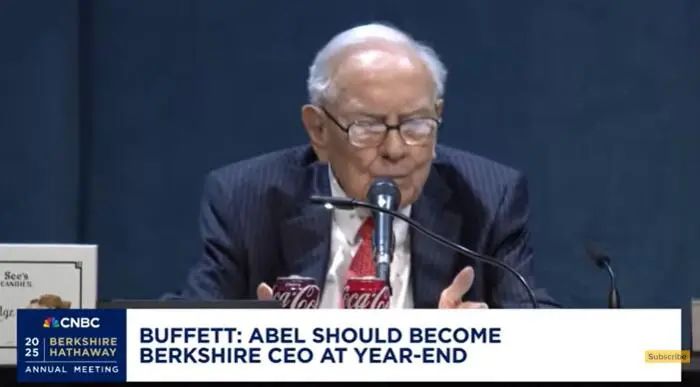
He said this decision also shows his confidence in Abel’s leadership. Buffett concluded:
"But I’ll be involved—maybe one day we’ll have a chance to invest substantial funds. Then, I think it might help the board—knowing I’ve put all my money into the company, believing it’s wise, and having seen Greg’s results."
Join TechFlow official community to stay tuned
Telegram:https://t.me/TechFlowDaily
X (Twitter):https://x.com/TechFlowPost
X (Twitter) EN:https://x.com/BlockFlow_News