Buffett's "final letter" full text: I was "purely lucky," but the "man of time" has caught up with me, and I will "keep quiet"
TechFlow Selected TechFlow Selected
Buffett's "final letter" full text: I was "purely lucky," but the "man of time" has caught up with me, and I will "keep quiet"
He admitted that he has been blessed by "Lady Luck" throughout his life, as if he had drawn an extraordinarily long lottery stick.
 Navigating Web3 tides with focused insights
By Ye Zhen
Source: Wall Street Insights
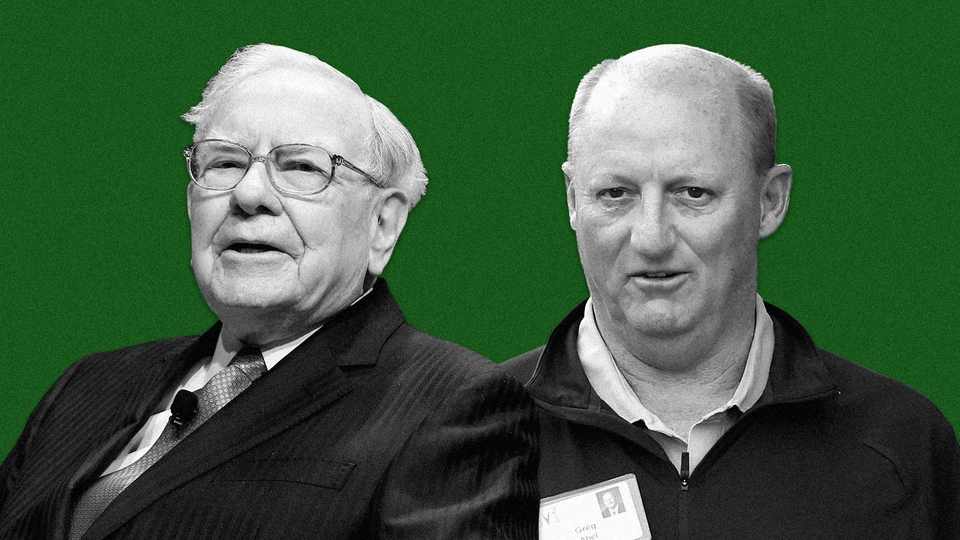
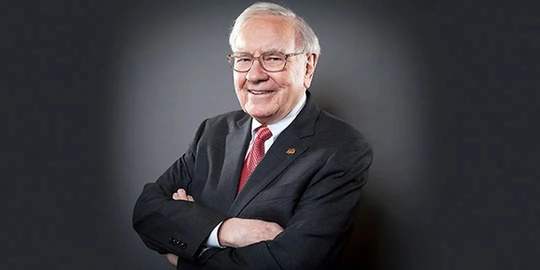
Warren Buffett has announced to his shareholders that he is about to "go quiet," marking the end of his illustrious sixty-year career leading Berkshire Hathaway and ushering in a historic turning point for the corporate empire he built.
In a letter to shareholders released on Monday, Buffett used the British expression "I'm 'going quiet'" to signal a major shift in his career. The 95-year-old billionaire made it clear that he will step down as CEO by the end of this year and formally withdraw from the company's day-to-day management.
Buffett also confirmed that the next annual company letter—closely watched by investors worldwide—will be written by someone else. However, he said he will continue communicating with shareholders about his charitable work through an annual Thanksgiving message.
This succession plan has already affected market sentiment. Since Buffett first announced his retirement plans in May, Berkshire's Class A shares have fallen about 8%. In his letter, Buffett said he will retain a "substantial portion" of Berkshire's Class A stock to ensure a smooth transition for his successor, Greg Abel.
While announcing his personal transition, Buffett also delivered his signature business wisdom and moral warnings. He sharply criticized greed in corporate culture, particularly the unchecked competition over executive pay, leaving a profound caution for his successor and the entire business world.
Advice for His Successor
In the letter, Buffett issued clear warnings to future leaders, focusing squarely on corporate greed. He noted that requirements for disclosing executive compensation have had unintended negative consequences, sparking a race among CEOs to "out-earn" one another.
"What troubles very wealthy CEOs is often seeing other CEOs become even wealthier," Buffett wrote. "Envy walks hand in hand with greed." He emphasized that Berkshire should especially avoid hiring CEOs who expect to retire at 65, crave being "look-at-me-rich," or seek to build a "dynasty."
Commitment to Long-Termism
Buffett’s investment philosophy stands in stark contrast to the evolution of finance over recent decades. Amid the rise of speculative assets like cryptocurrencies and trading speeds reduced to milliseconds, his advocacy for long-term value investing remains uniquely relevant. His candid communication with shareholders—whether through annual letters or marathon Q&A sessions at Berkshire’s Omaha shareholder meetings—has become a hallmark of his tenure.
Since first investing in the struggling textile company Berkshire in 1962, Buffett has transformed it into a vast business empire spanning well-known consumer brands such as Dairy Queen and Fruit of the Loom, as well as insurance, manufacturing, utilities, and one of North America’s largest railroads. "Berkshire’s way of doing business will always make it an asset to America and steer clear of activities that could reduce it to begging," he wrote.
Ongoing Philanthropy
Alongside announcing his career transition, Buffett also revealed his latest charitable donations. According to the letter, he has donated 2.7 million shares of Berkshire Class B stock—worth approximately $1.3 billion—to four family foundations managed by his children. This continues a pattern of philanthropic announcements he has made in previous Thanksgiving letters.
Buffett first pledged in 2006 to donate all of his Berkshire stock to charity. Since then, he has joined Bill Gates and Melinda French Gates in launching the Giving Pledge, encouraging the world’s wealthiest individuals to give away more than half of their wealth to charitable causes.
Click the link to read Warren Buffett’s full letter to shareholders. Below is the Chinese translation:
To our shareholders:
I will no longer write Berkshire’s annual report, nor will I speak endlessly at our annual meeting. In British terms, I am “going quiet.”
Sort of.
Greg Abel will take over at year-end. He is an exceptional manager, tireless worker, and straightforward communicator. I wish him a long and successful tenure.
I will continue talking with you—and my children—about Berkshire each Thanksgiving. Berkshire’s individual shareholders are a special group, consistently generous in sharing their gains with those less fortunate. I’ve enjoyed staying connected with you. This year, please allow me to reflect on the past. Then I’ll discuss my plans for distributing my Berkshire shares. Finally, I’ll share some thoughts on business and personal matters.
************
As Thanksgiving approaches, I feel both grateful and amazed to have lived to age 95. In my youth, such an outcome seemed unlikely. Early on, I nearly died.
That was in 1938, when Omaha residents viewed local hospitals as either Catholic or Protestant—a natural classification at the time.
Our family doctor, Harley Hotz, was a kind Catholic who carried a black medical bag and made house calls for modest fees. Dr. Hotz called me “Little Captain.” When I had severe stomach pain in 1938, he came by, examined me, and assured me I’d feel better by morning.
Later that evening, after dinner and a game of bridge, Dr. Hotz couldn’t shake my unusual symptoms and rushed me to St. Catherine’s Hospital for emergency appendectomy surgery. For the next three weeks, I felt like I was in a monastery and grew fond of my new “pulpit.” I loved talking—yes, even back then—and the nuns were very kind to me.
The best part? My third-grade teacher, Miss Madsen, asked each of my 30 classmates to write me a letter. I probably tossed the boys’ letters, but reread the girls’ many times; hospital stays do have their perks.
The highlight of my recovery—though the first week was quite dangerous—was a gift from my beloved Aunt Edie. She brought me a professional-looking fingerprint kit, which I immediately used on the nuns who cared for me. (I may have been the first Protestant child they’d seen at St. Catherine’s, and they weren’t sure what to expect.)
My idea—completely fanciful, of course—was that someday a nun might commit a crime, and the FBI would discover they hadn’t taken her fingerprints. The FBI and its director, J. Edgar Hoover, were revered in the 1930s. I imagined Mr. Hoover coming personally to Omaha to examine my precious fingerprint collection. I dreamed that J. Edgar and I would quickly identify and arrest the errant nun. National fame seemed within reach.
Obviously, my fantasy never came true. But ironically, years later I learned I should have taken J. Edgar’s own fingerprints—he later fell from grace due to abuse of power.
Well, that was 1930s Omaha, when kids like me dreamed of owning a sled, a bicycle, a baseball glove, and an electric train. Let’s look at a few other kids from nearby who greatly influenced me, though I didn’t know they existed for a long time.
I’ll start with Charlie Munger, my friend of 64 years. In the 1930s, Charlie lived just one block from the house I’ve occupied since 1958.
I almost became friends with Charlie earlier. He was six-and-a-half years older. In summer 1940, he worked 10 hours a day for $2 at his grandfather’s grocery store. (Frugality runs in the Buffett family.) I did similar work at the same store a year later, but didn’t meet Charlie until 1959, when he was 35 and I was 28.
After WWII service, Charlie graduated from Harvard Law School and settled permanently in California. Yet he always regarded his early years in Omaha as pivotal. For over sixty years, Charlie has profoundly influenced me—an outstanding teacher and a protective “big brother.” We’ve disagreed, but never argued. He never says, “I told you so.”
In 1958, I bought my first and only house. Of course, it’s in Omaha—about two miles from where I grew up (roughly), less than two blocks from my in-laws, about six blocks from Buffett Grocery, and a 6–7 minute drive from my office where I’ve worked for 64 years.
Now consider another Omahan, Stan Lipsey. In 1968, Stan sold the weekly Omaha Sun to Berkshire. Ten years later, at my request, he moved to Buffalo. There, a Berkshire subsidiary owned the Buffalo Evening News, locked in a life-or-death battle with the city’s sole Sunday paper publisher—its morning rival—and we were losing badly.
Stan ultimately created our new Sunday product. After that, this investment, once losing heavily every year, earned annual pre-tax returns exceeding 100% for years. In the early 1980s, this $33 million investment was significant for Berkshire.
Stan grew up about five blocks from my home. One of his neighbors was Walter Scott Jr. You may recall that in 1999, Walter brought MidAmerican Energy to Berkshire. He served as a Berkshire director until his death in 2021 and was a close friend. For decades, Walter led philanthropy in Nebraska, leaving a deep mark on Omaha and the entire state.
Walter attended Benson High, which I originally planned to attend—until 1942, when my father unexpectedly defeated a four-term incumbent in a congressional race. Life holds surprises.
Wait, there’s more.
In 1959, Don Keough and his young family lived across the street from me, about 100 yards from Charlie’s old house. At the time, Don was a coffee salesman, but later became president of Coca-Cola and a loyal Berkshire director.
When I met Don, he earned $12,000 a year while raising five children with his wife Mickey—all attending expensive Catholic schools.
Our families quickly became close friends. Don came from a farm in northwest Iowa and graduated from Creighton University in Omaha. Early on, he married Mickey, an Omaha girl. After joining Coca-Cola, Don gained global recognition.
In 1985, while serving as Coca-Cola’s president, the company launched the ill-fated New Coke. Don delivered a famous speech apologizing to the public and reintroducing the “old” Coke. This reversal followed his remark that letters to the “supreme idiot” landed quickly on his desk. His “retraction” speech was classic—watchable on YouTube. He cheerfully admitted that Coca-Cola products truly belonged to the public, not the company. Sales surged afterward.
You can watch a superb interview with Don on CharlieRose.com. (Tom Murphy and Kay Graham also have excellent segments.) Like Charlie Munger, Don remained a genuine Midwesterner—warm, friendly, and quintessentially American at heart.
Finally, Ajit Jain, born and raised in India, and Greg Abel, the Canadian who will soon become our CEO, both lived in Omaha for several years in the late 20th century. In fact, during the 1990s, Greg lived on Farnam Street just a few blocks from me, though we never met.
Is there something magical in Omaha’s water?
************
I spent several teenage years in Washington, D.C. (while my father served in Congress) and in 1954 found a job in Manhattan that I thought I’d keep for life. There, Ben Graham and Jerry Newman treated me well, and I made lifelong friends. New York has a unique charm—still does. Yet just a year and a half later, in 1956, I returned to Omaha and never left.
Later, my three children and several grandchildren grew up in Omaha. My kids attended public schools (graduating from the same high school that educated my father [Class of ’21], my first wife Susie [’50], Charlie, Stan Lipsey, Irve and Ron Blumkin—who played key roles in developing Nebraska Furniture Mart—as well as Jack Ringwald [’23], who founded National Indemnity and sold it to Berkshire in 1967, forming the foundation of our massive property-casualty business).
************
Our country has many great companies, schools, and medical institutions, each with unique strengths and talented people. But I feel incredibly lucky to have formed lifelong friendships, met both of my wives, received a solid education in public schools, known many interesting and kind Omaha adults from childhood, and made diverse friends in the Nebraska National Guard. Overall, Nebraska has always been my true home.
Looking back, I believe Berkshire and I achieved more because we were rooted in Omaha. Had I been born elsewhere, outcomes might have differed greatly. America’s heartland is an ideal place to be born, raise a family, and build a business. Pure luck favored me—I drew an extraordinarily long straw.
************
Now about my advanced age. My genes offered little advantage—the family longevity record (of course, the farther back, the fuzzier the records) stood at 92 until I broke it. Still, I’ve had wise, kind, and diligent Omaha doctors, starting with Dr. Harley Hotz and continuing today. At least three times, doctors near my home saved my life. (Though I no longer fingerprint nurses. A 95-year-old man can have quirks… but limits exist.)
************
Reaching extreme old age requires enormous luck—daily dodging banana peels, natural disasters, drunk or distracted drivers, lightning strikes, and more.
But Lady Luck is fickle—and, no other word fits—extremely unfair. Often, our leaders and the wealthy receive far more fortune than they deserve—and rarely admit it. Some are born with lifelong financial security, while others face hellish hardships from infancy, or worse, disabilities that strip them of everything I take for granted. In many densely populated regions, I might have lived miserably, and my sisters even worse.
I was born in 1930 in the U.S.—healthy, intelligent, white, male. Wow! Thanks, Lady Luck. My sisters were equally smart and better tempered, yet faced vastly different life prospects. Lady Luck favored me most of my life, but she doesn’t serve ninety-somethings. Luck has limits.
Father Time, however, grows ever more intrigued by me as I age. He’s undefeated; everyone eventually lands on his “winners” list. When balance, vision, hearing, and memory steadily decline, you know Father Time is near.
I entered old age relatively late—onset varies—but once it arrives, denial is futile.
Surprisingly, I still feel pretty good overall. Though slower and reading harder, I still work five days a week in my office alongside exceptional people. Occasionally, I come up with useful ideas, or someone proposes opportunities we wouldn’t otherwise see. Due to Berkshire’s size and market conditions, good ideas aren’t plentiful—but they exist.
************
Yet my unexpected longevity has brought significant and unavoidable impacts on my family and the fulfillment of my charitable goals.
Let’s explore them.
What Comes Next
My children are past normal retirement ages—72, 70, and 67. Expecting them—all in many ways at their peak—to delay aging like me is clearly unrealistic. To increase the likelihood they handle nearly all my estate before my designated trustees replace them, I need to accelerate lifetime gifts to their three foundations. My children are now at their peak in experience and wisdom, but not yet in old age. This “honeymoon period” won’t last forever.
Luckily, adjusting course is easy to execute. But another factor matters: I want to retain a substantial number of “A” shares until Berkshire shareholders feel as confident in Greg as Charlie and I do. That level of trust shouldn’t take long. My children fully support Greg, as do Berkshire’s directors.
Today, these three children are mature, intelligent, energetic, and instinctive enough to manage large wealth. They’ll remain active long after I’m gone—a major advantage. If needed, they can adopt both proactive and responsive strategies toward federal tax policies or other developments affecting philanthropy. They’ll likely need to adapt to massive changes in the world around them. Remote control after death rarely works, and I’ve never felt the urge.
Luckily, all three inherited dominant genes from their mother. Over time, I’ve also become a better role model in their thinking and behavior. Yet I’ll never match their mother.
My children have three backup guardians in case of accidental death or disability. These backups are listed without order or tied to any specific child. All are outstanding individuals with worldly wisdom. None have conflicting motives.
I’ve assured my children they needn’t perform miracles or fear failure or disappointment. These are inevitable—I’ve experienced them. They simply need to improve upon typical achievements in government action and/or private philanthropy, while recognizing shortcomings in wealth redistribution methods.
Earlier, I envisioned grand charitable schemes. Stubborn as I am, none came to fruition. Over my long life, I’ve witnessed politicians’ clumsy wealth transfers, dynastic decisions, and incompetent or eccentric philanthropists.
If my children do reasonably well, they can be certain both their mother and I will be pleased. Their instincts are strong, and each has years of practice—starting small, then growing to over $500 million annually.
All three enjoy working long hours to help others, albeit in different ways.
************
My accelerated giving to my children’s foundations reflects absolutely no change in my view of Berkshire’s prospects. Greg Abel has exceeded my expectations since I first believed he should succeed me as Berkshire’s CEO. He understands our many businesses and people far better than I do and grasps issues many CEOs never consider. Whether you name a CEO, management consultant, scholar, or government official, I can’t think of anyone better suited to manage your savings and mine.
For example, Greg understands the potential gains and risks in our property and casualty operations far better than many executives long immersed in the business. I hope his health remains strong for decades. With luck, Berkshire may need only five or six CEOs in the next century. Especially avoid those eager to retire at 65, obsessed with becoming “look-at-me-rich,” or seeking to build a dynasty.
An unpleasant truth: Sometimes, a capable and loyal CEO at a parent or subsidiary company develops dementia, Alzheimer’s, or another debilitating, long-term illness.
Charlie and I encountered this issue multiple times but took no action. Such failures can lead to disaster. Boards must stay vigilant at the CEO level; CEOs must do the same at the subsidiary level. Easier said than done—I can cite examples from past large corporations. All I can advise is that directors stay alert and speak up.
In my lifetime, reformers tried shaming CEOs by requiring disclosure of CEO pay versus average employee pay. Proxy statements ballooned from about 20 pages to over 100.
But these well-intentioned efforts failed—backfiring instead. In my observation, when the CEO of Company A sees data from rival Company B, he hints to his board that he deserves higher pay. Naturally, he also raises director pay and carefully selects compensation committee members. The new rules sparked envy, not restraint.
This spiral seems to have a life of its own. What troubles very wealthy CEOs is often seeing other CEOs grow richer. Envy and greed walk hand in hand. What advisor would recommend slashing CEO pay or board compensation?
************
Overall, the prospects of Berkshire’s businesses are slightly above average, including several sizable, uncorrelated gems. Yet, ten or twenty years from now, many companies will outperform Berkshire; our size brings disadvantages.
Berkshire faces a smaller risk of catastrophic failure than any other company I know. Moreover, Berkshire’s management and board prioritize shareholder interests more than virtually any company I’m familiar with (and I’ve seen many). Finally, Berkshire’s way of doing business will always make it an asset to America, avoiding actions that could reduce it to begging. Over time, our managers should become quite wealthy—they carry significant responsibilities—but they don’t crave dynastic wealth or conspicuous riches.
Our stock price will be volatile, sometimes dropping around 50%, as it has three times under current leadership over 60 years. Don’t despair—America will recover, and Berkshire shares will rebound.
Final Thoughts
Perhaps this is a self-serving observation. I’m happy to say I’ve enjoyed the second half of my life more than the first. My advice: Don’t dwell on past mistakes—at least learn a little from them, then move on. Improvement is never too late. Find worthy role models and emulate them. Start with Tom Murphy—he’s the best.
Remember Alfred Nobel? Later famed for establishing the Nobel Prizes, he reportedly once read a mistakenly published obituary—intended for his deceased brother. Shocked by what he read, he realized he needed to change his ways.
Don’t count on newsrooms making errors: Decide how you want your obituary to read, then live accordingly.
Greatness doesn’t come from amassing huge wealth, gaining massive exposure, or wielding great government power. You help the world when you assist others in thousands of ways. Kindness costs nothing yet is priceless. Whether religious or not, the Golden Rule is hard to surpass as a code of conduct.
I write this as someone who has been careless countless times and made many mistakes, yet was fortunate to learn from wonderful friends how to behave better (though far from perfect). Remember, a janitor is as much a person as a chairman.
************
Happy Thanksgiving to everyone reading this. Yes, even the jerks; change is never too late. Don’t forget to thank America for giving you the greatest opportunity. But America distributes rewards—inevitably—capriciously, sometimes even greedily.
Choose your role models carefully, then emulate them. You’ll never be perfect, but you can always improve.
Join TechFlow official community to stay tuned
Telegram:https://t.me/TechFlowDaily
X (Twitter):https://x.com/TechFlowPost
X (Twitter) EN:https://x.com/BlockFlow_News