








Cambridge Latest Report: Bitcoin Mining Energy Mix Has Quietly Changed
TechFlow Selected TechFlow Selected
Cambridge Latest Report: Bitcoin Mining Energy Mix Has Quietly Changed
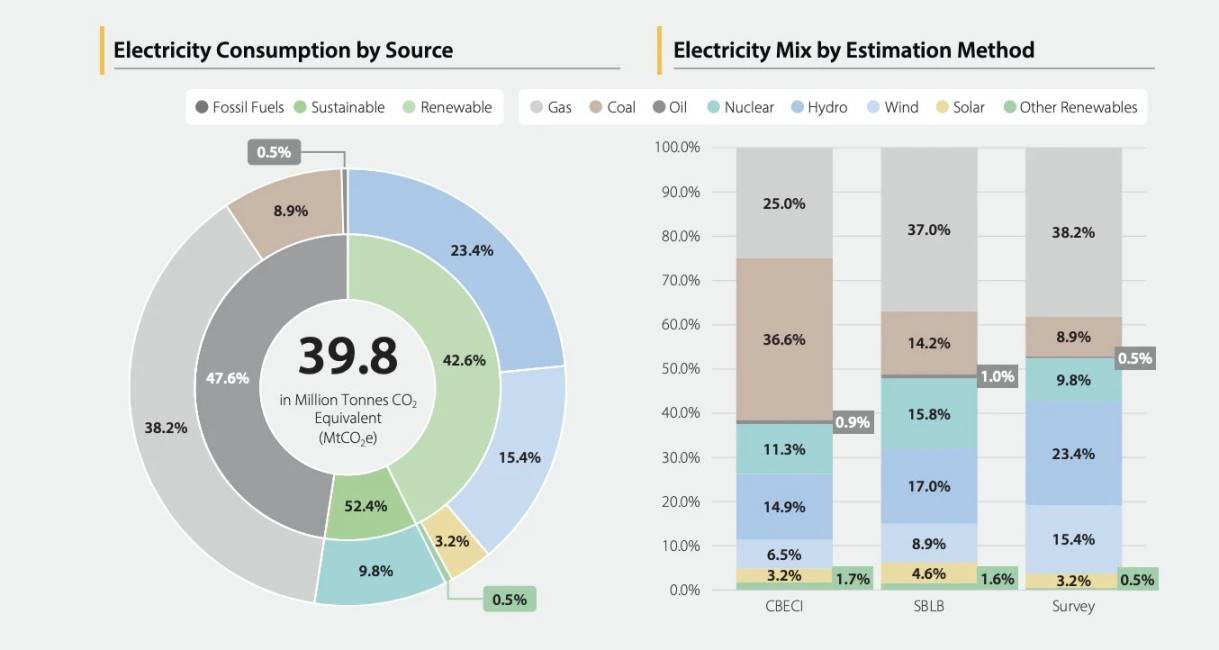
Currently, 52.4% of the Bitcoin network's computing power comes from "zero-emission" energy sources.
 Navigating Web3 tides with focused insights
Author: DSBatten
Translation: Dingdang (@XiaMiPP)
Editor's note: The Cambridge Centre for Alternative Finance (CCAF) has released its latest Bitcoin Mining Sustainability Report, presenting a crucial new figure: currently, 52.4% of Bitcoin network computing power comes from "zero-emission" energy sources. In the previous report, this proportion was only 37%. In other words, the pace of Bitcoin mining’s “green transition” in terms of energy mix is far exceeding many people's expectations.
Today, the Bitcoin network has already:
-
More than half of its computing power derived from zero-carbon energy
-
A lower carbon intensity than most industries
-
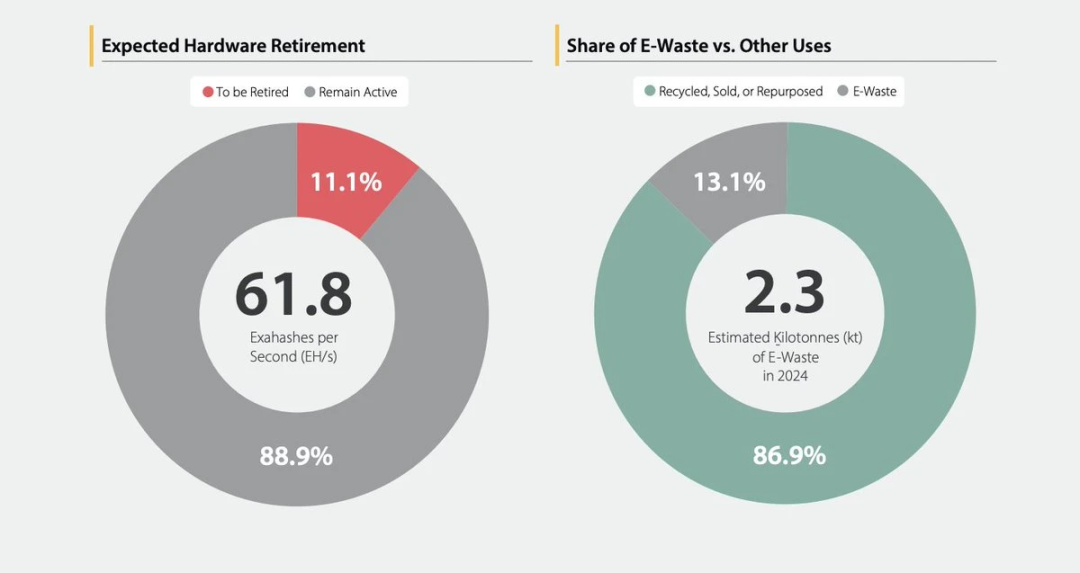
An equipment recycling rate exceeding 86%
-
Methane emission reductions making tangible impact
The following is @DSBatten’s summary of key points from the report, translated by Odaily Planet Daily:
Full report: https://www.jbs.cam.ac.uk/wp-content/uploads/2025/04/2025-04-cambridge-digital-mining-industry-report.pdf
Note: For the first time, the research team conducted an in-depth survey of 49 real-world operating Bitcoin mining companies, moving beyond outdated models to estimate data. This significantly enhances the report's credibility and provides us with a more comprehensive understanding of how Bitcoin mining uses energy.
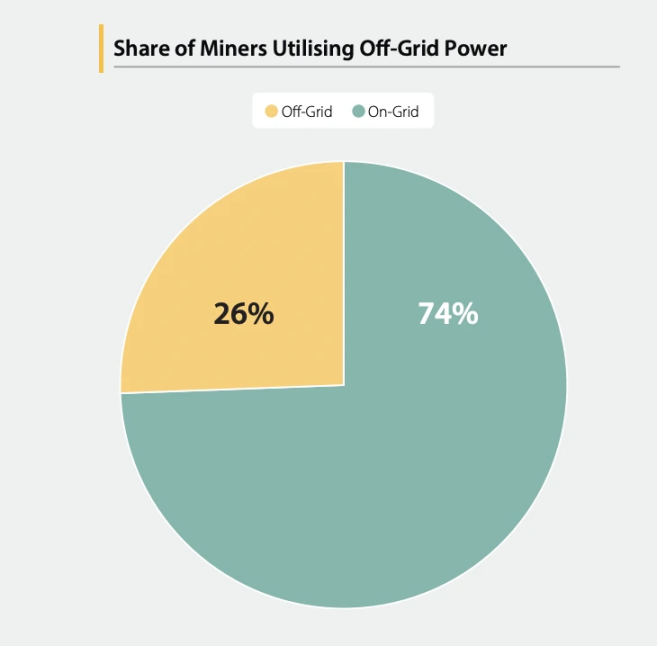
1. 26% of mining powered by off-grid electricity, where green energy is more common
A significant new finding is that 26% of global Bitcoin mining computing power comes from off-grid energy sources—those not connected to the main power grid. These mining sites are typically located in areas with lower electricity costs and close to clean energy sources, such as mountainous regions rich in hydropower, high-altitude wind-rich zones, geothermal-abundant areas, or even using associated natural gas for on-site power generation.
In contrast, earlier reports largely assumed mining was always “grid-connected,” overlooking the existence of these off-grid miners. In reality, off-grid mining is actually more likely to use renewable energy or waste-energy recovery methods, resulting in relatively lower environmental impact.
2. Carbon intensity drops sharply, now lower than many traditional industries
On carbon emissions, the report provides a new estimate: Bitcoin network emissions stand at 288.2 grams CO₂e/kWh. This value is already lower than many large traditional industries and closely aligns with independent researcher Daniel Batten’s estimate of 266 grams, indicating the data is credible.
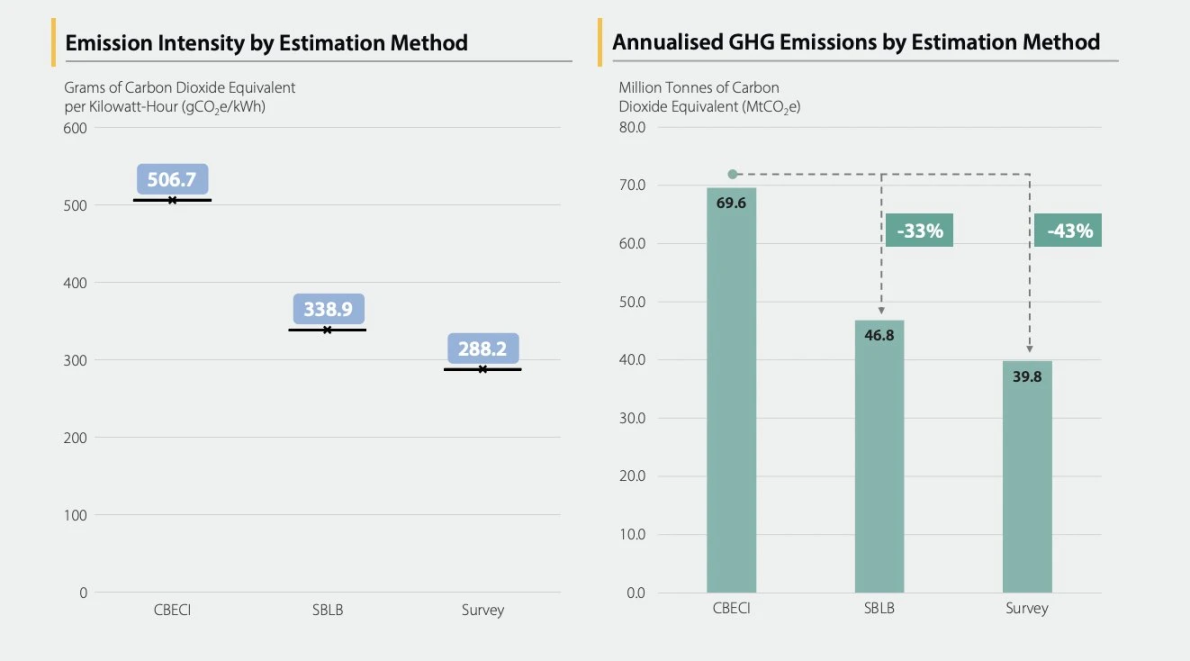
More importantly, Bitcoin’s total annual carbon emissions are approximately 39.8 million tons CO₂e—lower than many expect—and have shown no significant growth over the past four years. This is primarily due to two factors:
-
Mining hardware efficiency continues to improve, increasing computational power per unit of energy;
-
An increasing number of miners are actively relocating to regions powered by clean energy.
3. Methane reduction efforts begin to show results, offsetting 5.5% of emissions
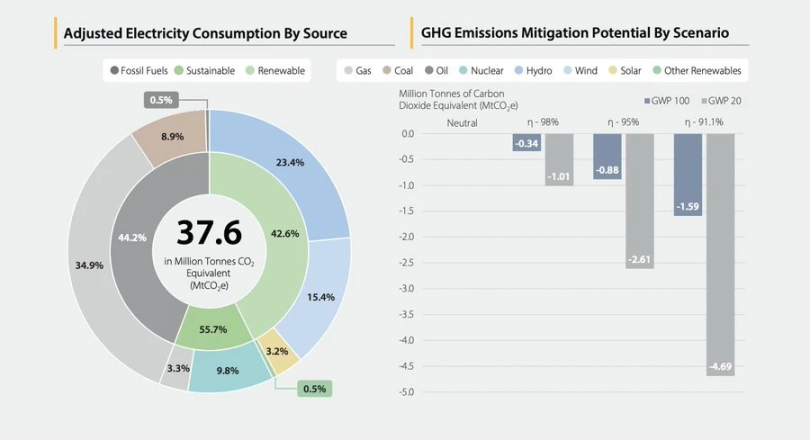
Beyond just “what kind of electricity is used,” the mining industry is adopting more “aggressive” decarbonization strategies. For example, some mining firms directly generate electricity using flare gas—the natural gas that would otherwise be flared (burned off) at oil and gas fields—to power Bitcoin mining. This not only mines Bitcoin but also prevents methane from being directly released into the atmosphere.
When this “negative-carbon energy” is accounted for, Bitcoin’s net emissions drop to 37.6 million tons CO₂e, about 5.5% lower than the initial figure. This emission reduction contribution can no longer be ignored.
4. Mining hardware recycling rate reaches 86.9%, e-waste management outperforms most industries
Many worry that rapid turnover of Bitcoin mining equipment could create massive electronic waste. The report addresses this concern directly:
-
86.9% of equipment is recycled, resold, or reused rather than scrapped;
-
Only 3.2% of companies lack dedicated e-waste management plans.
This indicates that environmental awareness within the Bitcoin mining industry is much higher than commonly perceived.
5. Mining hardware is becoming increasingly efficient—many underestimate this progress
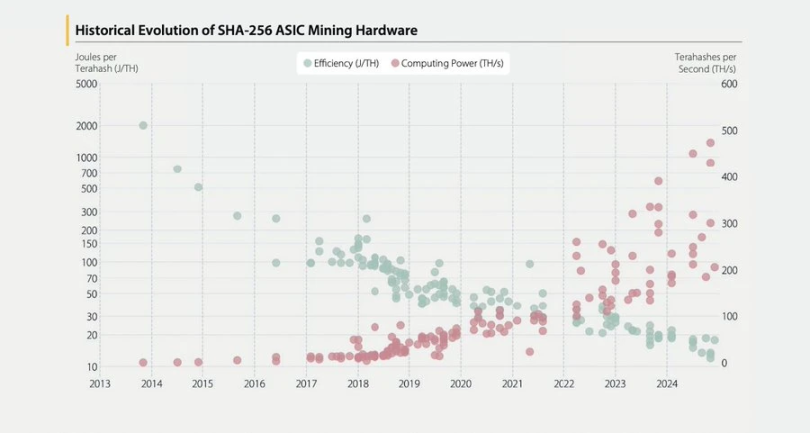
The Cambridge team emphasized that many past criticisms of Bitcoin’s “high energy consumption” overlook a critical variable: continuous improvements in hardware efficiency.
From early CPU/GPU setups to ASIC-specific chips, each iteration brings greater computational power per unit of energy. Just as critics who once called the internet “too power-hungry” failed to account for Moore’s Law, many today overlook the energy-efficiency revolution driven by advances in mining hardware.
6. Bitcoin’s use in illegal activities is declining, not increasing
The report also clarifies Bitcoin’s role in illicit activities: data shows usage peaked in 2019 in relative terms and reached an absolute peak in 2022. Since then, both metrics have been steadily declining.
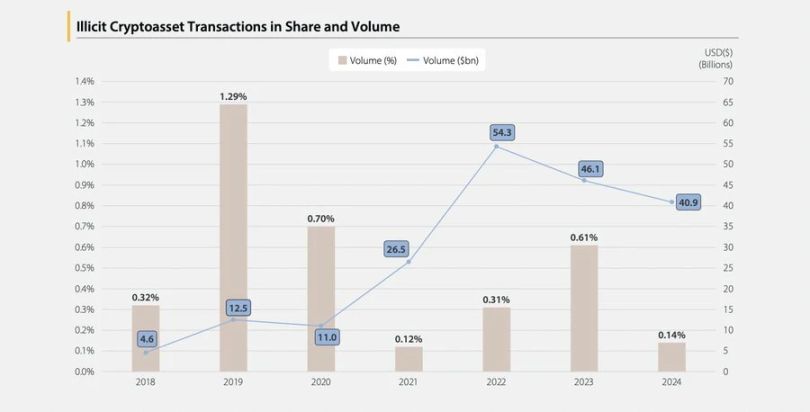
This report serves as a corrective response to the widespread misperceptions about Bitcoin. It dispels the outdated notion of “Bitcoin = fossil fuels” and provides policymakers, regulators, and media with a new factual foundation.
Join TechFlow official community to stay tuned
Telegram:https://t.me/TechFlowDaily
X (Twitter):https://x.com/TechFlowPost
X (Twitter) EN:https://x.com/BlockFlow_News
 @DSBatten


