Bear Market Strategy: Which Assets Deserve Close Attention?
TechFlow Selected TechFlow Selected
Bear Market Strategy: Which Assets Deserve Close Attention?
A total of 12 categories and 132 investable tokens were identified, of which 45 distribute dividends to holders.
 Navigating Web3 tides with focused insights
By Ignas | DeFi Research
Translated by Saoirse, Foresight News
CoinGecko tracks 17,148 tokens.
But in today’s crypto market environment, how many of these truly qualify as “investable assets” under the following criteria?
- They generate returns for holders;
- The protocol generates revenue—even if it’s not yet distributed;
- They possess strong narratives and market recognition, enabling survival through bear markets.
I set out to answer this question.
Most data comes from DefiLlama, CoinMarketCap, and protocols reflecting market热度 (e.g., DexScreener, Messari, LunarCrush).
I used Claude Code to process the data—minimizing personal bias.
For instance, I would’ve excluded certain tokens (e.g., XRP, ADA, BCH) outright—but they’ve survived multiple cycles and maintain robust liquidity, proving enduring viability.
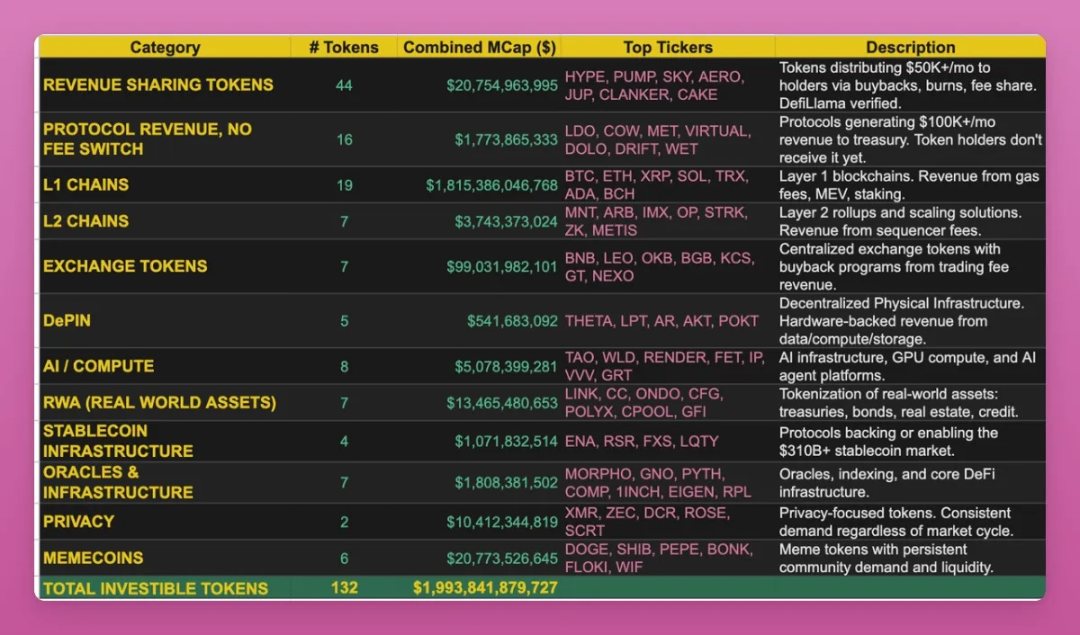
Claude still made numerous errors—debugging took 10× longer than writing the article—so the table data is for reference only (link at end).
Final results:
- 12 categories and 132 investable tokens identified;
- 45 tokens distribute dividends to holders (excluding those with negligible yields);
- Annualized yield flowing to holders: $1.8 billion.
These categories reflect my subjective judgment of “survivability and future potential”—you may disagree.
Key finding #1: The truly investable crypto market is shockingly small.
And the tokens that actually generate returns for holders are nearly monopolized by just two projects—details below.
Ironically, while compiling this list and verifying each token, I arrived at the following conclusion:
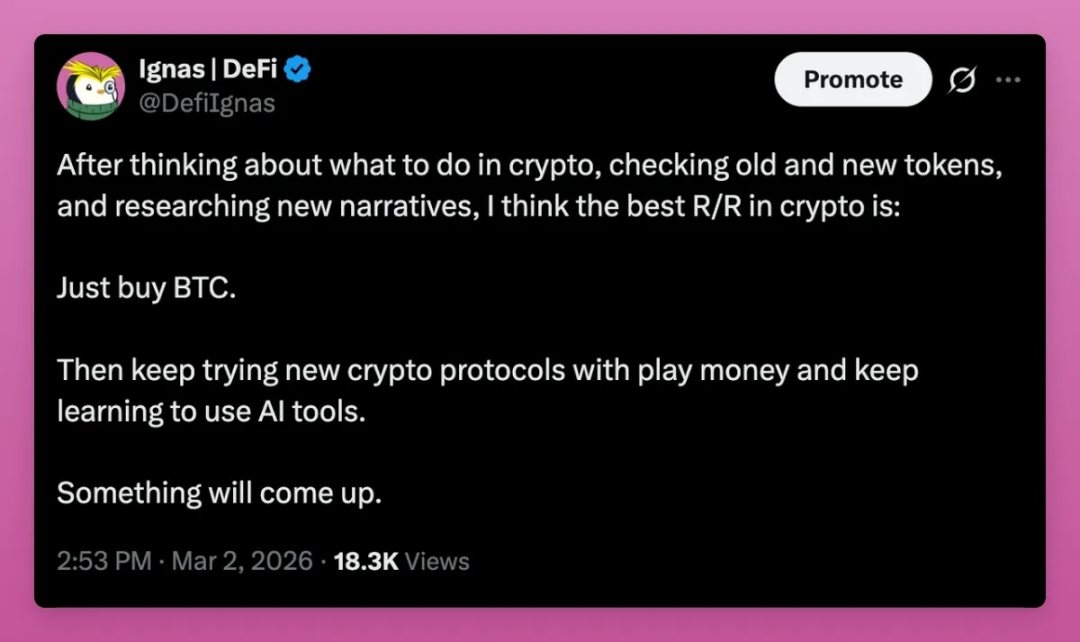
After repeatedly reflecting on what to do in crypto, reviewing old and new tokens, and studying emerging narratives, I conclude that the optimal risk/reward (R/R) trade in crypto is:
Buy Bitcoin (BTC) outright.
Then allocate “play money” to experiment continuously with new crypto protocols—and keep learning to use AI tools.
New opportunities will always emerge.
Top Investable Tokens: Revenue-Sharing Tokens
The dominant narrative in today’s market is:
Projects without revenue will die!
Even ETH struggles to escape this “revenue-based valuation” framework.
Thus, the most investable tokens are those distributing revenue to holders via buybacks, burns, fee-sharing, etc.
I relaxed the threshold to: ≥ $50,000 in holder yield over 30 days on DefiLlama.
These 45 tokens deliver $15.3 million in monthly yield to holders,
equating to $1.8 billion annually.
Top 10 Revenue-Sharing Tokens:
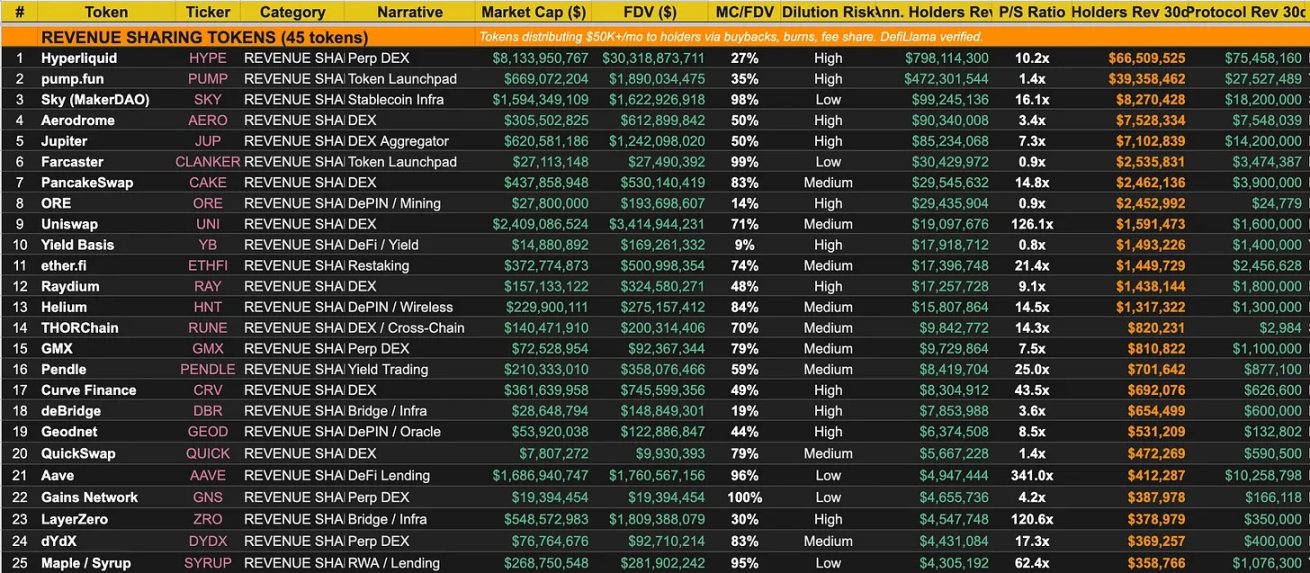
Note: Revenue-sharing ≠ “holder yield” on DefiLlama.
Example: EtherFi doesn’t appear on the holder-yield leaderboard but conducts buybacks.
L1 blockchains like TRON are categorized separately.
Beyond the top five, monthly yields drop sharply below $3 million.
If crypto continues trending toward the “token = stock” paradigm,
then the Price-to-Sales (P/S) ratio—market cap ÷ revenue—will grow increasingly important.
- Pump.fun: 1.4x
- Aerodrome: 3.4x
By traditional finance standards, these valuations are extremely cheap.
At current revenue rates, they’d recoup their entire market cap in under three years.
In contrast:
- Uniswap: P/S = 121x
- Aave: P/S = 341x
Because the market values them far beyond “current revenue.”
Aave recently launched buybacks—but distributes only $412,000/month to holders, versus $10M in monthly protocol revenue. Future governance changes could alter this.
Lowest-P/S tokens:
- Farcaster’s Clanker: 0.9x
- ORE: 0.9x
- Yield Basis: 0.8x
- Pump.fun: 1.4x
- QuickSwap: 1.4x
All can recoup market cap via revenue within three years.
Most critical insight:
Hyperliquid + Pump.fun = 69% of total holder yield!
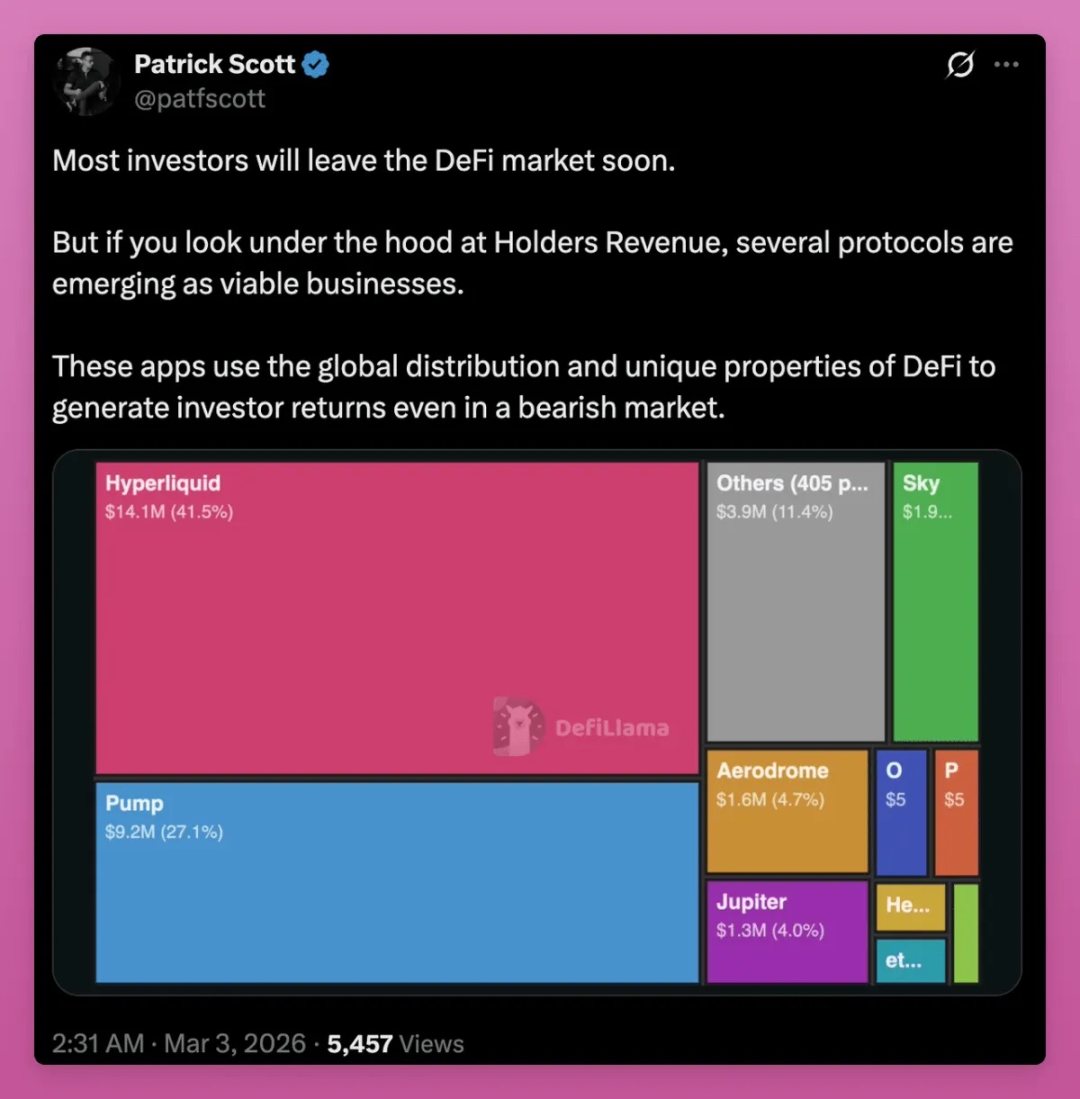
Just two projects among the 45 contribute over two-thirds of all cash flow.
This concentration warrants serious reflection.
Ansem’s tweet neatly summarizes HYPE’s investment thesis:
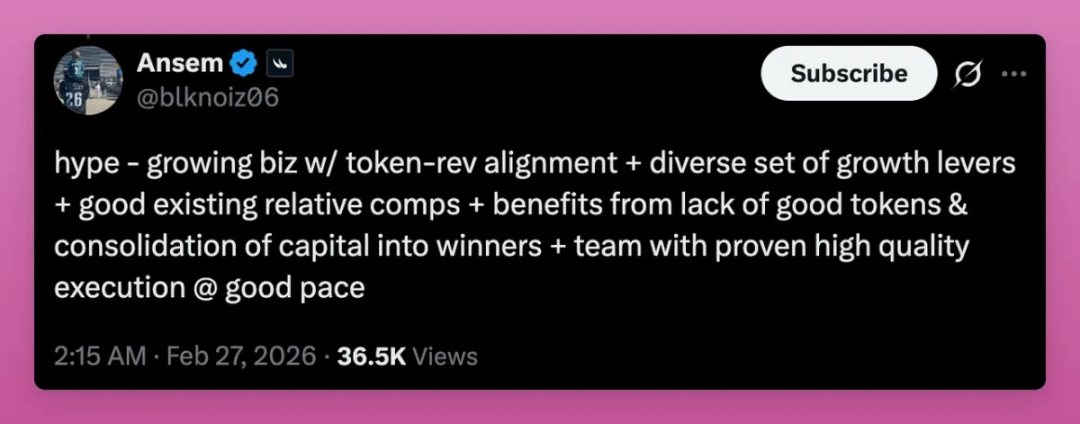
HYPE:
- Business is growing sustainably; token economics tightly aligned with revenue;
- Multiple levers for growth;
- Comparable peers performing well;
- Benefits from scarcity of quality tokens and capital concentration toward top-tier projects;
- Strong team execution, steady cadence, proven track record.
Protocols With Revenue But No Distribution
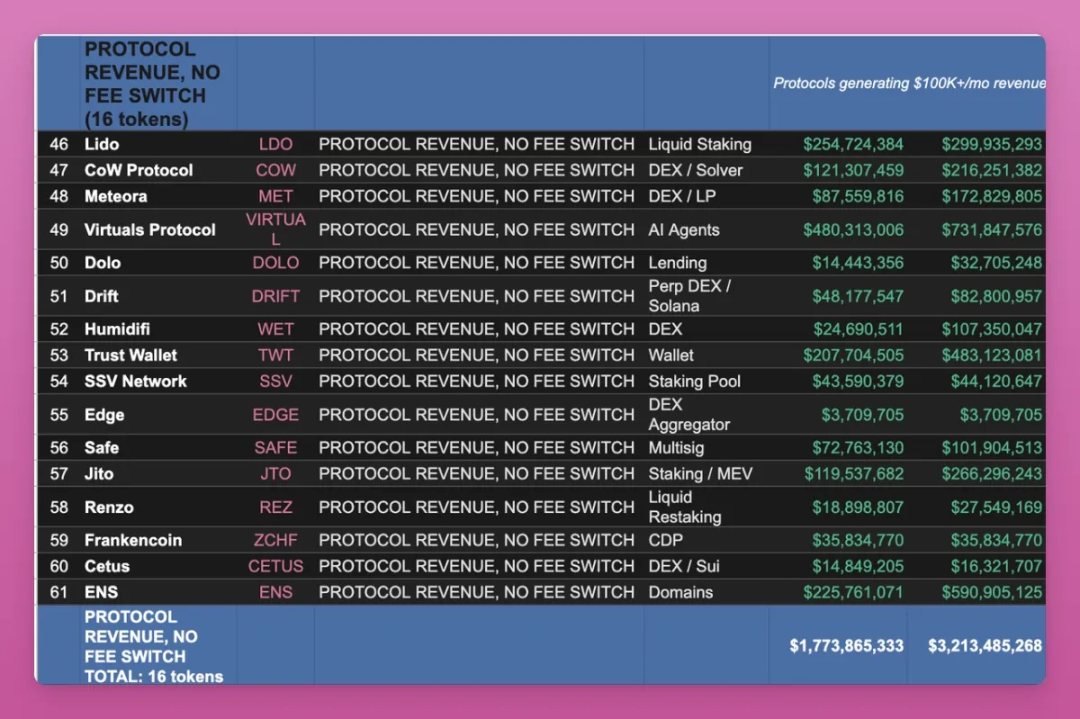
16 tokens with ≥ $100,000 monthly protocol revenue—retained in treasury.
Top projects:
- Lido: $4.3M/month, $32B TVL (previously proposed staking rewards);
- CoW Protocol: $3M/month;
- Meteora (Solana): $2M/month;
- Virtuals Protocol: $1.4M/month;
- Drift: $868K/month.
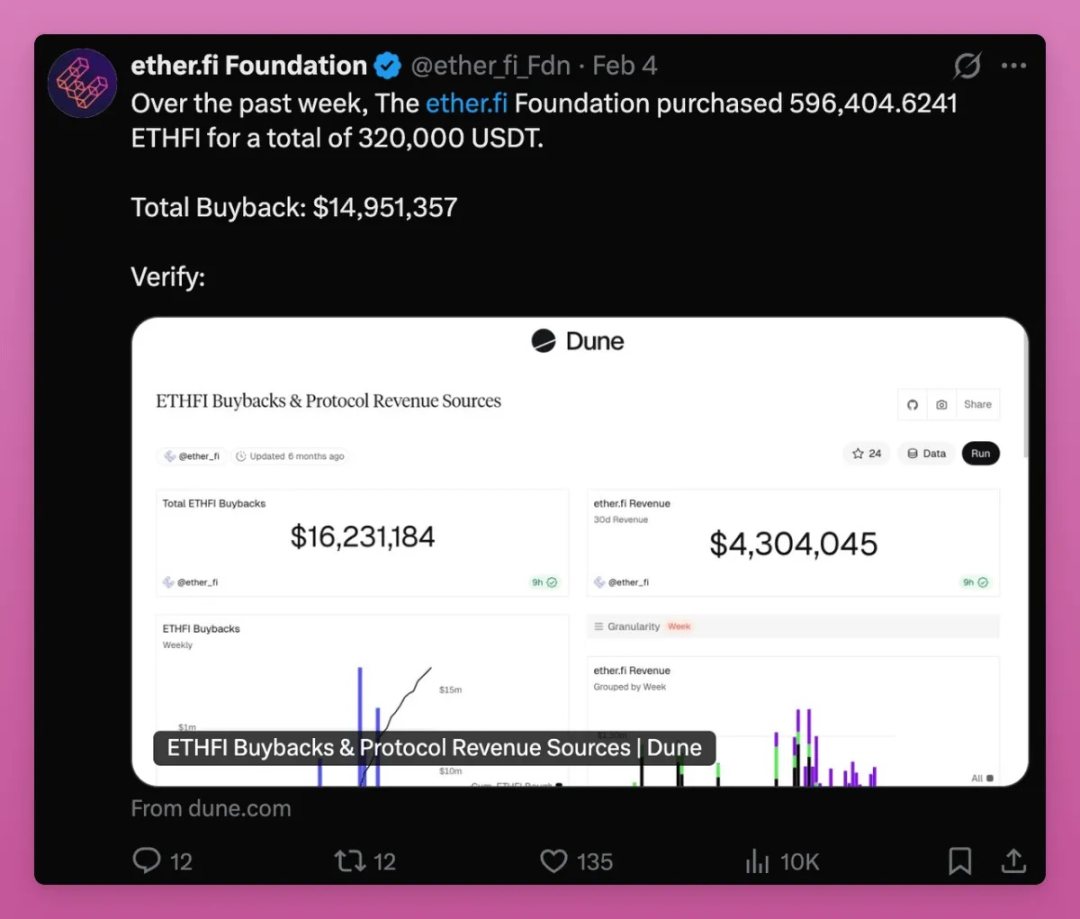
Lido vs ether.fi is an instructive comparison:
- Lido’s TVL is 10× higher, revenue 3× higher—but LDO holders receive zero;
- ether.fi distributes $1.5M/month to holders via buybacks.
If you’re navigating a bear market, you’ll want the one paying you.
Investment logic for this group:
These protocols will eventually flip the “distribution switch.”
Lido has been saying this for years.
Jito collects $5.3M/month in total fees—but only $544K flows into its treasury.
The gap between total fees and holder yield represents both opportunity and risk.
Overview of Other Categories
Exchange Tokens (7 tokens, $99B total market cap, including BNB)
Profitable in all market conditions. CEX volume declines—but never drops to zero.
- BNB: $85B;
- LEO and OKB held up almost unchanged during the 2022 and 2024 bear markets.
Many have buyback programs—not reflected in DefiLlama data.
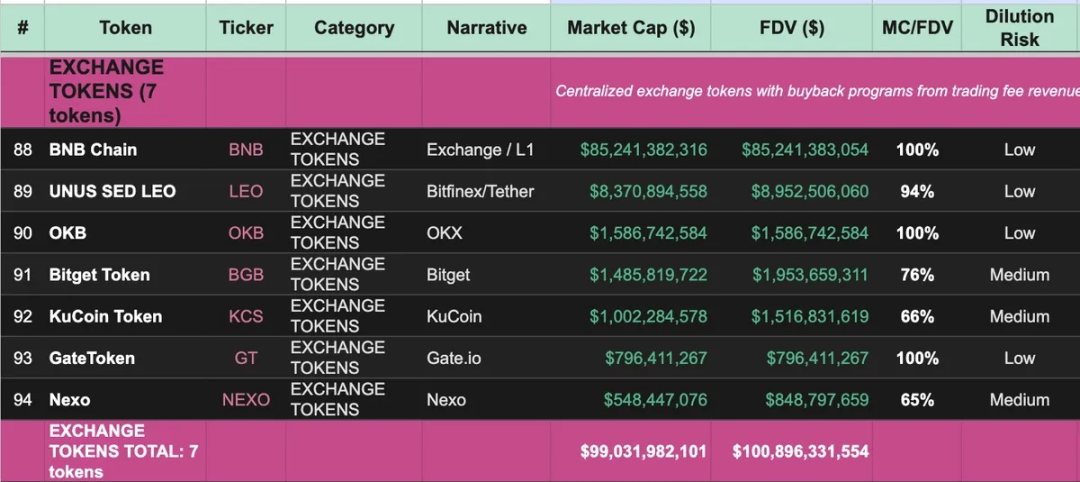
CEX tokens feature high circulating supply ratios—further reducing downside risk.
L1 Blockchains (19 tokens, $1.8T total market cap)
L1s form the foundational layer.
- BTC: $1.36T
- ETH: $245B
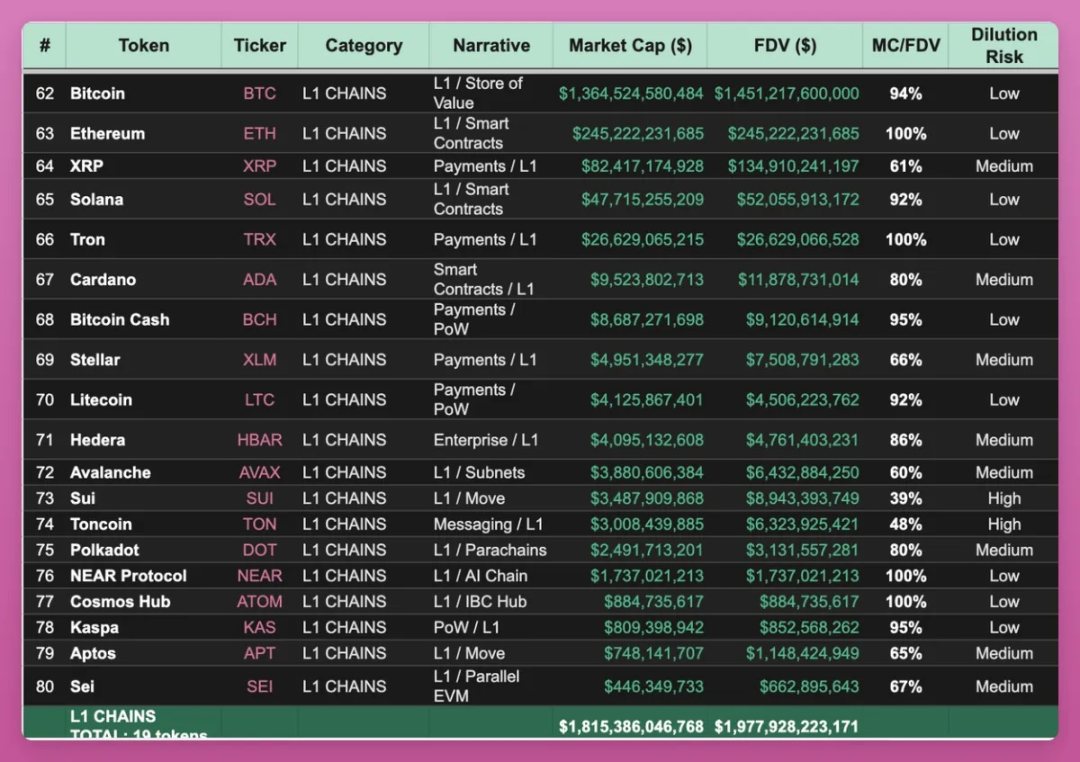
I relaxed criteria for XRP, ADA, and especially Cosmos—because they’ve survived multiple cycles, retain loyal communities and liquidity, and demonstrate staying power.
You might dislike TRON—but it generates $26M/month in fees—more than Solana or Ethereum.
Its performance this cycle has also been strong—you can verify via price charts.
L1 blockchains won’t disappear—but valuations swing wildly. Volatility risk is yours to bear.
AI & Compute (8 tokens, $5.1B total market cap)
Most lack real revenue—except one:
Venice (VVV): The only AI token funding buybacks/burns via subscription and API revenue—43% of supply already burned.
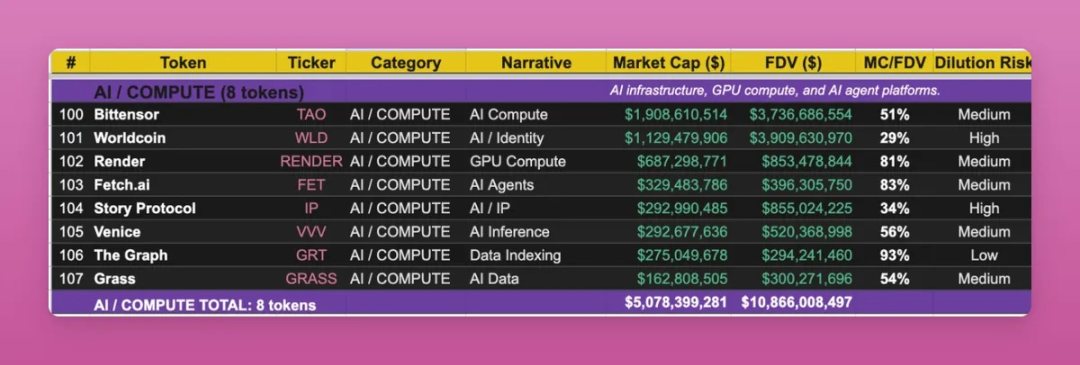
- Bittensor: $1.9B market cap, 128 subnets, no protocol revenue;
- Render, Akash: Sell GPU compute—cheaper than centralized platforms;
- Grass: Provides decentralized network data for AI training.
Note: Some unlisted AI tokens are surging now—potentially suitable for short-term trading, but questionable as “investable” assets.
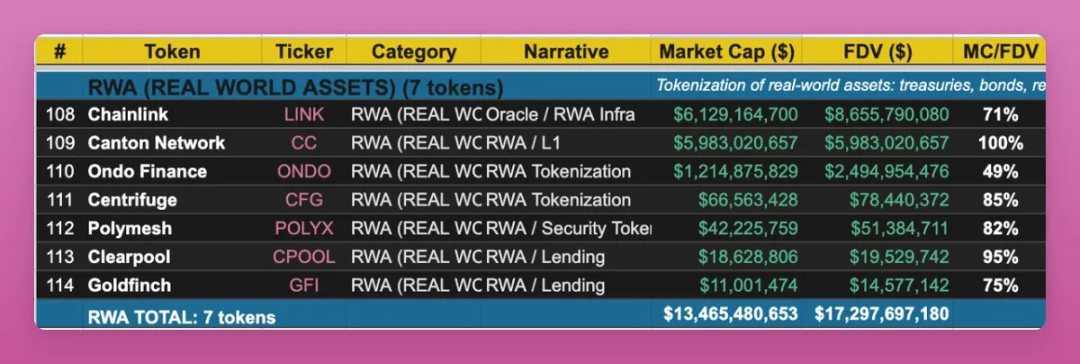
RWA Tokenization (7 tokens, $13.5B total market cap)
Growing quietly—I believe the true RWA bull market hasn’t yet begun.
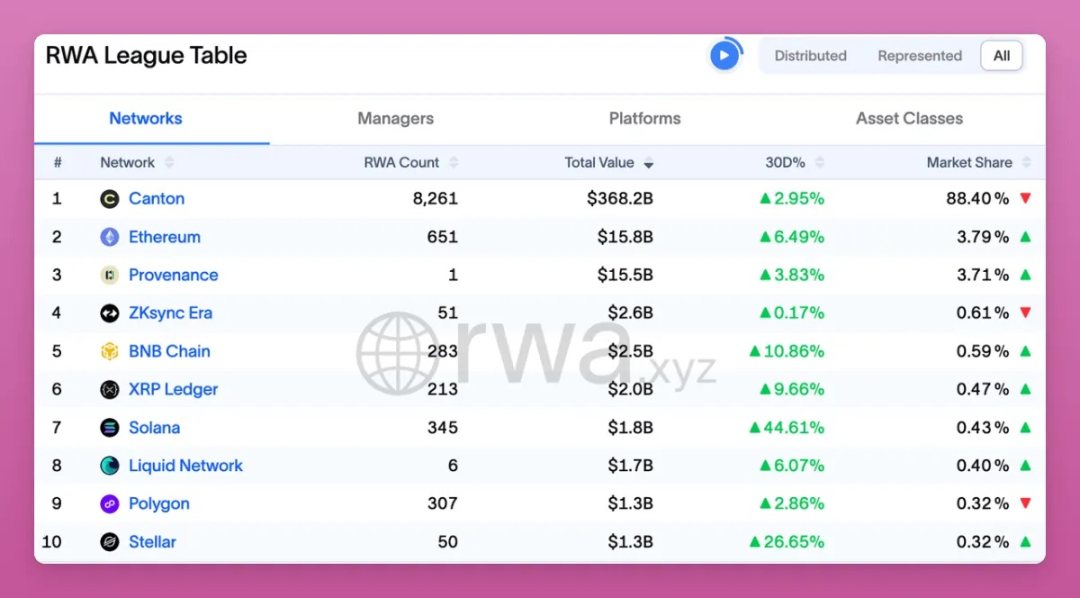
Canton Network hosts 88.57% of on-chain RWA—~$372B in tokenized assets. Yet real-world assets are rarely as simple as they appear.
Chainlink is a critical oracle for RWA infrastructure—but LINK staking rewards come from inflation and fixed reward pools—not protocol revenue sharing.
Chainlink earns solid revenue—but it flows to node operators and treasury—not directly to holders.
Privacy Tokens (2 tokens, $9.7B total market cap)
High-risk sector: Either grows more vital amid tightening regulation—or faces outright bans.
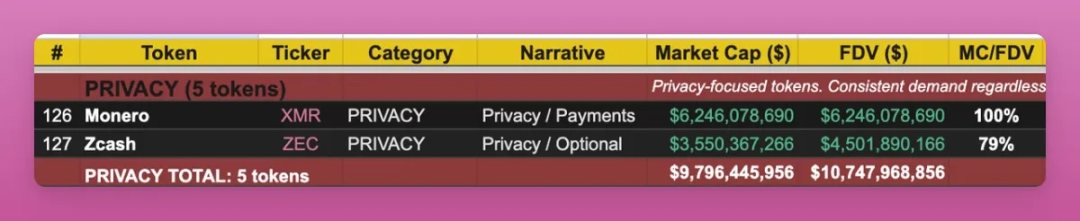
Yet demand remains stable across market cycles.
- Monero (XMR): $6.2B
- Zcash (ZEC): $3.6B
Meme Coins (6 tokens, $20.8B total market cap)
Classifying them as “investable” may be controversial.
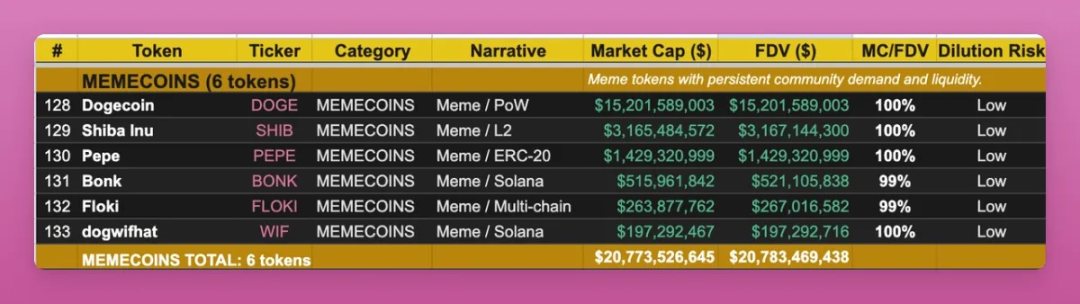
But like Bitcoin, they survive on community strength.
- DOGE: $15.2B market cap, exists for over a decade;
- SHIB, PEPE, BONK, FLOKI, WIF also make the list.
If the market rebounds, they may outperform high-yield tokens.
With no revenue ceiling, they have no upside cap.
And near-total circulation minimizes sell pressure.
Other Categories
- L2 Blockchains (7 tokens, $3.7B total market cap);
- DePIN (5 tokens, $500M total market cap): Decentralized storage, data collection;
- Oracles / Infrastructure (7 tokens, $1.8B total market cap);
- Stablecoin Infrastructure (4 tokens, $1.1B total market cap): Ethena leads.
Super-Profitable Projects Without Tokens
Some of crypto’s most profitable businesses have no investable token.
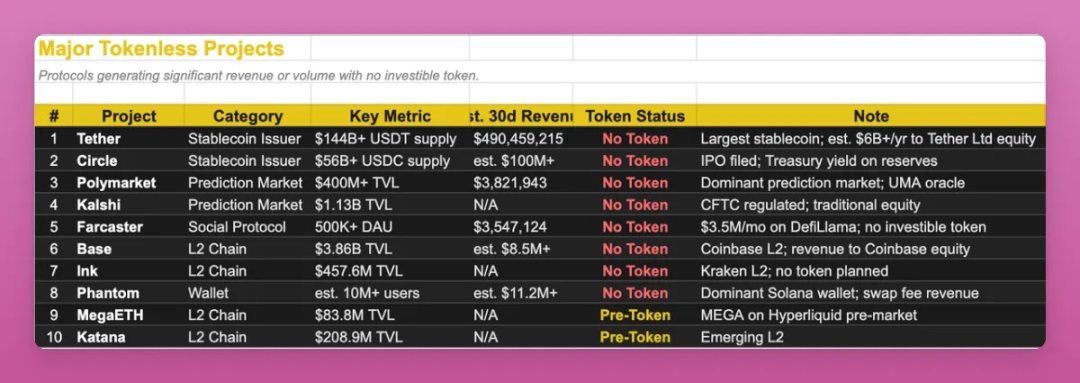
- Tether: >$6B annual revenue—exceeding the combined yield of all 45 revenue-generating tokens—100% retained by shareholders;
- Polymarket: $3.8M/month revenue, no token;
- Base: Revenue accrues to Coinbase shareholders; token possible in future;
- Phantom: Multi-million-user wallet with high fee capture;
- Circle: USDC issuer; returns realized via IPO;
- Kalshi: CFTC-regulated; no token;
- Farcaster: Acquired; expected airdrop dilution lowered—but token launch remains possible.
So—How Should You Use This Information?
The ideal bear-market holding satisfies four criteria:
- Delivers holder yield
- Low P/S ratio (market cap ÷ revenue)
- High MC/FDV (circulating market cap ÷ fully diluted market cap)
- Stable, persistent demand
Few tokens satisfy all four.
Closest matches:
- PUMP: 1.4x P/S, 33% MC/FDV
- AERO: 3.4x, 50%
- JUP: 7.3x, 51%
- SKY: 16x, 98%
- CAKE: 15.1x, 96%
Lower-risk options:
Exchange tokens: LEO, OKB, GT
Near-total circulation, supported by exchange-profit buybacks—most resilient in bear markets.
Higher-risk, higher-reward:
HYPE: Dominates in yield—but MC/FDV only 25%.
Per Coingecko’s new methodology—which excludes long-illiquid and burned tokens—this rises to 41%.
Tradeable opportunities:
Watch governance developments:
Bet on revenue-generating protocols that haven’t yet flipped the “distribution switch.”
Key candidates:
Lido, Meteora, Drift, CoW Protocol
Everything else rests on conviction.
Do you believe AI compute will migrate onchain?
Do you believe RWA tokenization will continue growing?
I believe both will—but are these tokens the right vehicles to express that belief?
Join TechFlow official community to stay tuned
Telegram:https://t.me/TechFlowDaily
X (Twitter):https://x.com/TechFlowPost
X (Twitter) EN:https://x.com/BlockFlow_News
 Ignas | DeFi Research