








Data shows the bear market bottom will form in the range of $55,000 to $70,000
TechFlow Selected TechFlow Selected
Data shows the bear market bottom will form in the range of $55,000 to $70,000
If the price falls back to the $55,000–70,000 range, it would be a normal part of the cyclical movement, not a sign of systemic collapse.
 Navigating Web3 tides with focused insights
Author: Matt Crosby
Translation: AididiaoJP, Foresight News
While the current market is more focused on how high Bitcoin can rise in this bull cycle, it's equally important to prepare for the next market shift. This article will use historical cycles, on-chain valuation metrics, and Bitcoin fundamentals to estimate the next bear market bottom through data and mathematical models—not as a precise prediction, but as a framework for analysis.
Cycle Model: Decoding Historical Price Bottom Patterns
The "Bitcoin Cycle Model" is one of the most reliable tools available for identifying bottoms, combining multiple on-chain indicators to establish a price valuation range.
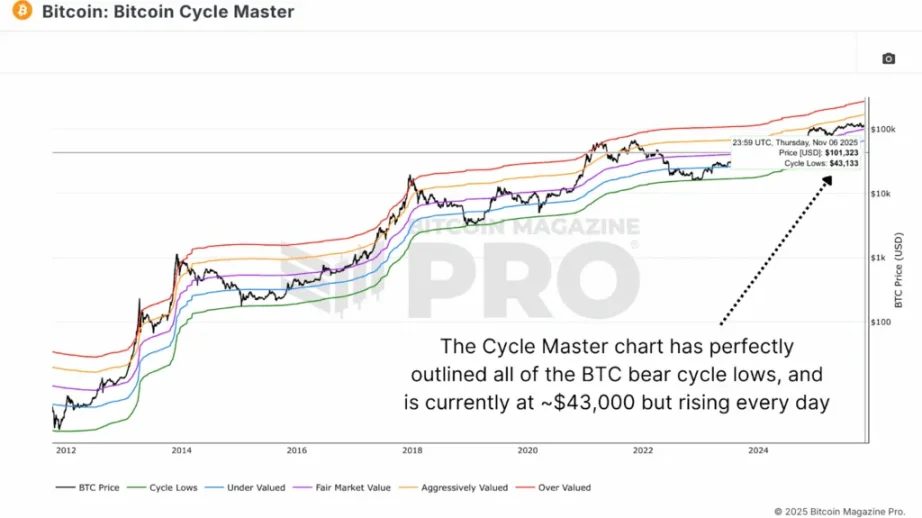
Figure 1: The model’s "Cycle Low" indicator has accurately captured every past bear market bottom
The green "Cycle Low" line has historically marked macro bottoms with precision: $160 in 2015, $3,200 in 2018, and $15,500 at the end of 2022. Currently, this indicator stands at $43,000 and continues to rise, offering a reference point for estimating the next cycle bottom.
Declining Drawdowns: Why Bear Market Retracements Are Getting Milder
Using the MVRV ratio (Market Value to Realized Value), we observe that during deep bear markets, Bitcoin prices typically fall to 0.75x of realized value—25% below the network-wide average cost basis.
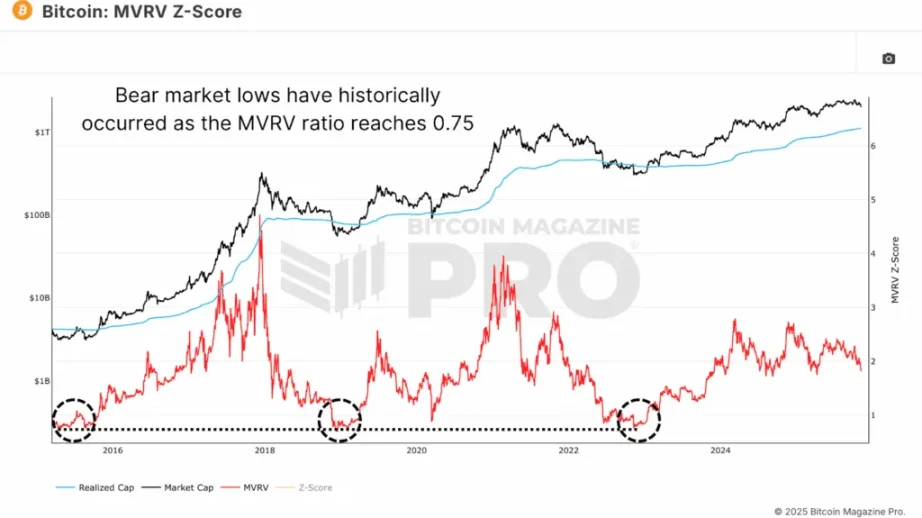
Figure 2: Past bear market bottoms consistently occurred when the MVRV ratio reached 0.75
Analyzing the trend of declining drawdowns: early cycles saw maximum drops of 88%, which compressed to 80% in 2018 and further declined to 75% in 2022. Following this trajectory, the next bear market could see a maximum drawdown of around 70%.
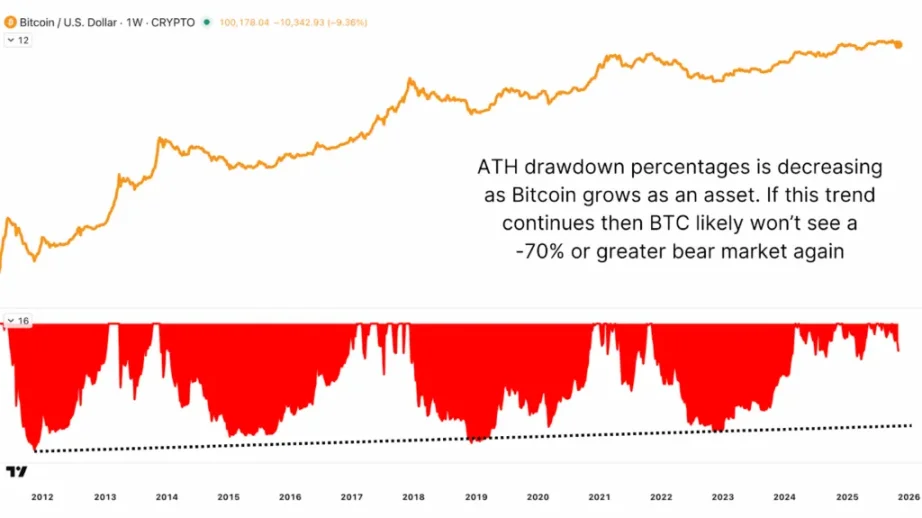
Figure 3: The declining drawdown trend suggests the next retracement may not exceed 70%
Predicting the Next Bull-Bear Turning Point
Before estimating the bottom, we must first identify the peak of the current bull run. Historical data shows that Bitcoin tops typically occur near 2.5x the realized price. If this pattern holds, the peak by the end of 2025 could reach approximately $180,000.
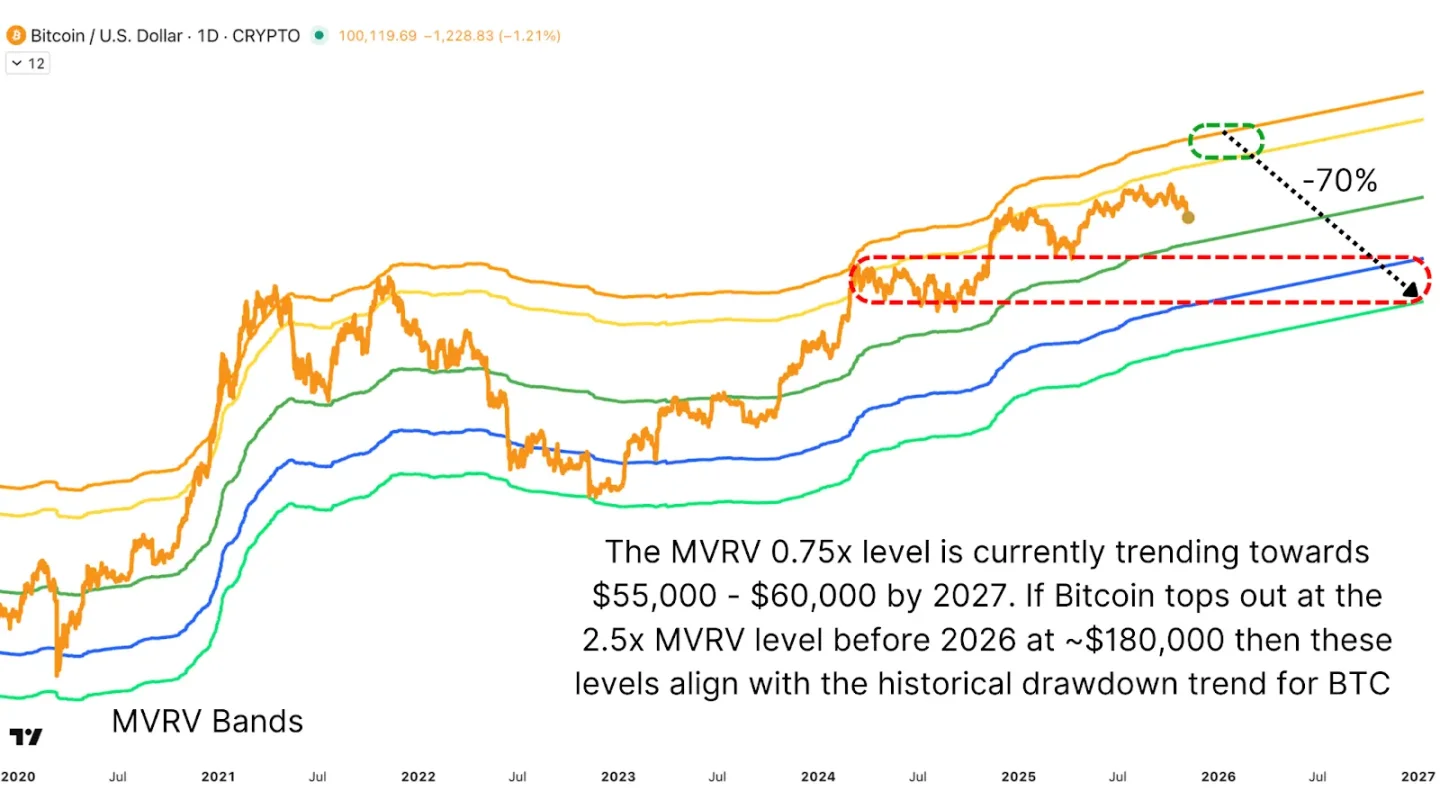
Figure 4: Integrated model forecasts suggest a cycle top of $180,000 and a 2027 bear market bottom range of $55,000–$60,000
If Bitcoin follows the historical pattern of bottoming one year after peaking, and experiences a 70% retracement from its top by 2027, the bottom range would fall between $55,000 and $60,000. This range aligns technically with last year’s consolidation platform.
Production Cost as a Price Support
Bitcoin production cost (electricity cost per coin mined) serves as a key long-term value anchor and has historically aligned closely with bear market bottoms. After each halving, costs double, creating an upward-shifting price floor.
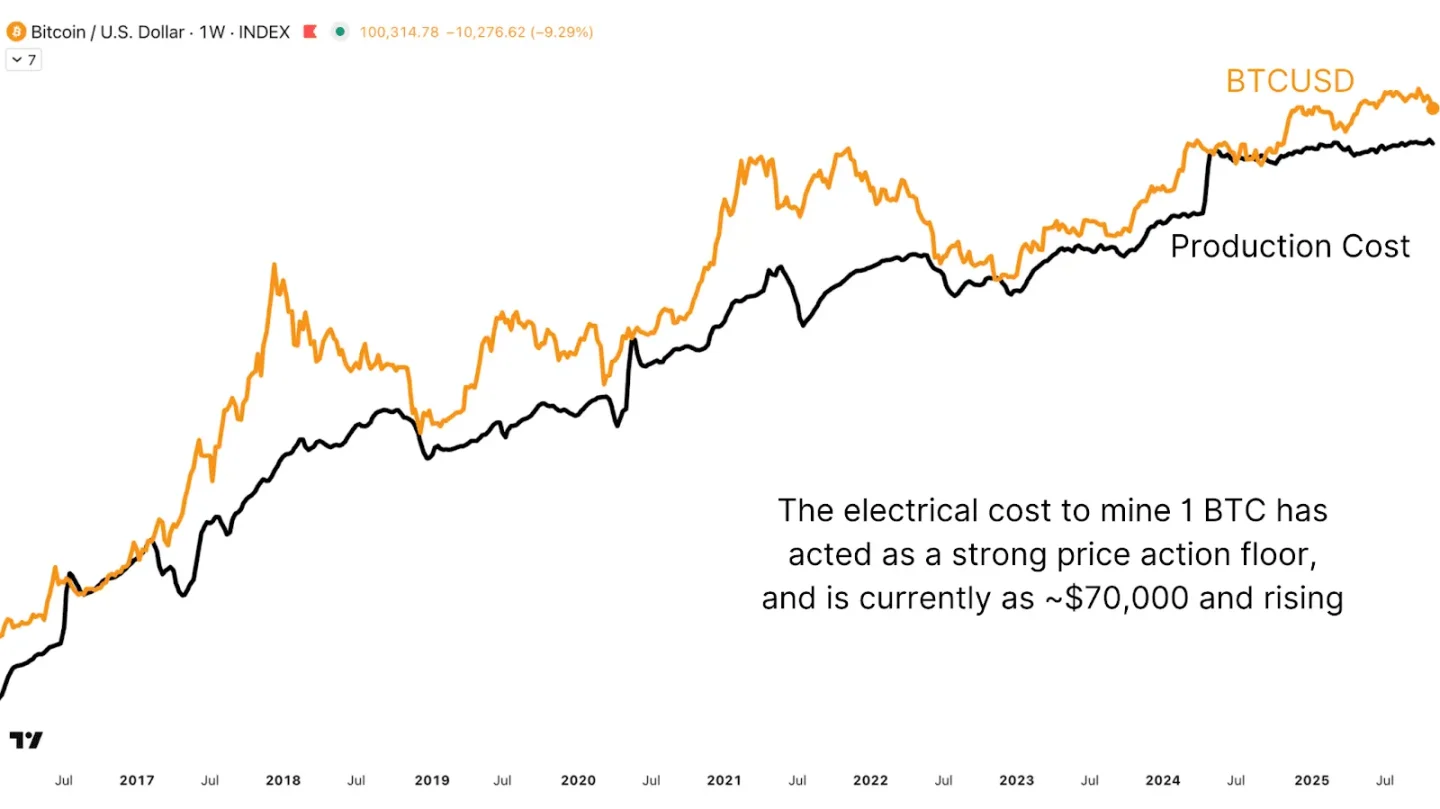
Figure 5: Current single-coin production cost of around $70,000 provides strong price support
When prices fall below production cost, miners often reduce output, historically creating major buying opportunities. After the April 2024 halving, the cost floor has risen significantly, and recent approaches to this level have triggered strong rebounds. The current value anchor stands at approximately $70,000.
Conclusion: The Next Cycle Will Be More Moderate
In every cycle, some claim “this time is different,” yet data consistently reveals underlying patterns. Although institutional adoption and financialization have changed market structure, they have not eliminated cyclical behavior.
All signs indicate the next bear market will be milder, reflecting a maturing market and deeper liquidity. A price decline to the $55,000–$70,000 range would represent normal cyclicality, not a signal of systemic collapse.
Join TechFlow official community to stay tuned
Telegram:https://t.me/TechFlowDaily
X (Twitter):https://x.com/TechFlowPost
X (Twitter) EN:https://x.com/BlockFlow_News
 @BitcoinMagazine






