After BTC, traditional companies increasing their holdings in SOL are becoming a growing trend
TechFlow Selected TechFlow Selected
After BTC, traditional companies increasing their holdings in SOL are becoming a growing trend
Different methods, same goal.
 Navigating Web3 tides with focused insights
By: TechFlow
Did MicroStrategy buy more BTC today?
This question has seemingly become a key barometer of bullish sentiment in the crypto market. In 2020, the company ignited the trend of traditional firms investing in cryptocurrencies and set a benchmark for other conventional companies to embrace digital assets.
However, now another indicator might need to be added to the list: Solana.
The latest trend is that traditional companies are increasingly accumulating SOL through various means.
From real estate and consumer goods to investment funds, more and more companies across diverse industries are gradually considering “SOL reserves” as part of their corporate investment strategy.
Since the sharp drop following TRUMP’s token launch, SOL’s price once fell to around $95 but has since rebounded to $150. Historically, this isn’t the first time SOL has demonstrated price resilience.
After enduring volatility, SOL may potentially become the next "Bitcoin" pursued by traditional corporations. Early adopters among these companies are actively transforming and positioning themselves amid rising return expectations.
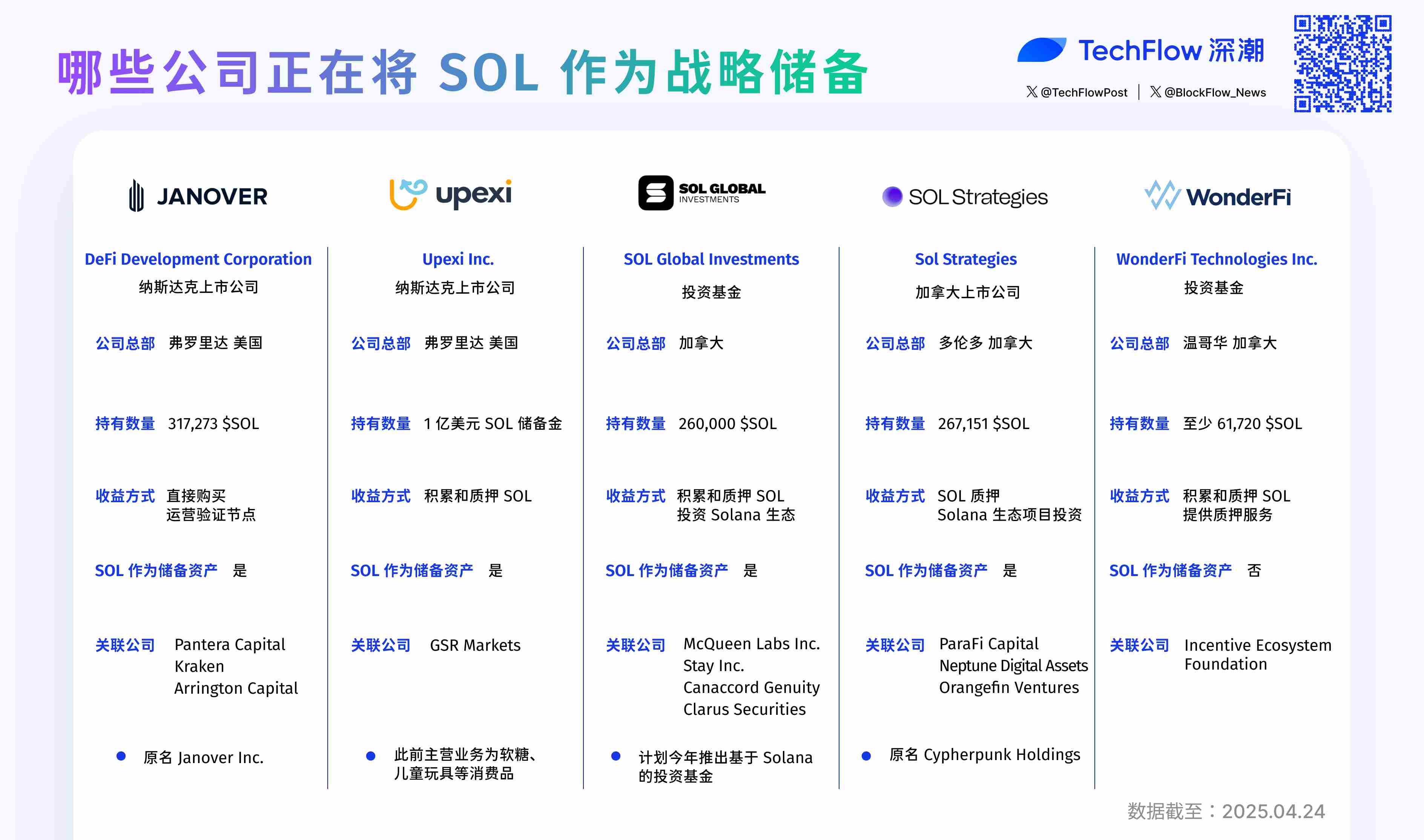
Janover Inc.: An Crypto Team Reinventing Real Estate FinTech
Janover Inc. is a Nasdaq-listed fintech company (ticker: JNVR), headquartered in Boca Raton, Florida, focusing on commercial real estate loan facilitation. Founded in 2018, Janover uses an AI-driven online platform to connect borrowers—such as real estate developers, property owners, and small business owners—with lending institutions, offering financing solutions for multifamily housing and commercial properties.
The company's operations were previously affected by a downturn in the real estate market, yet its small business loan revenue grew for two consecutive years. In July 2023, Janover raised $5.65 million through an IPO, ending the year with $5.1 million in cash reserves and just 26 employees, positioning itself as a small but innovation-driven FinTech firm.
In April 2025, Janover announced a bold asset allocation strategy: acquiring 163,651.7 Solana (SOL) tokens worth approximately $21.2 million, becoming a prime example of a traditional-sector company entering the crypto space.
This wasn't the company’s first purchase of SOL.
With previous acquisitions included, this transaction brought Janover’s total SOL holdings to 317,273 tokens, valued at about $48.2 million (including staking rewards).
On April 4, the board approved adding SOL to its corporate treasury; the market purchases were completed on April 15. Janover plans to stake these tokens to earn 5–7% annualized returns and is considering operating Solana network validator nodes to participate in ecosystem development.
The funding came from its existing cash reserves and a $42 million convertible bond raised on April 7 from crypto industry institutions including Pantera Capital and Kraken.
Beneath this move lies deeper ties to the crypto industry.
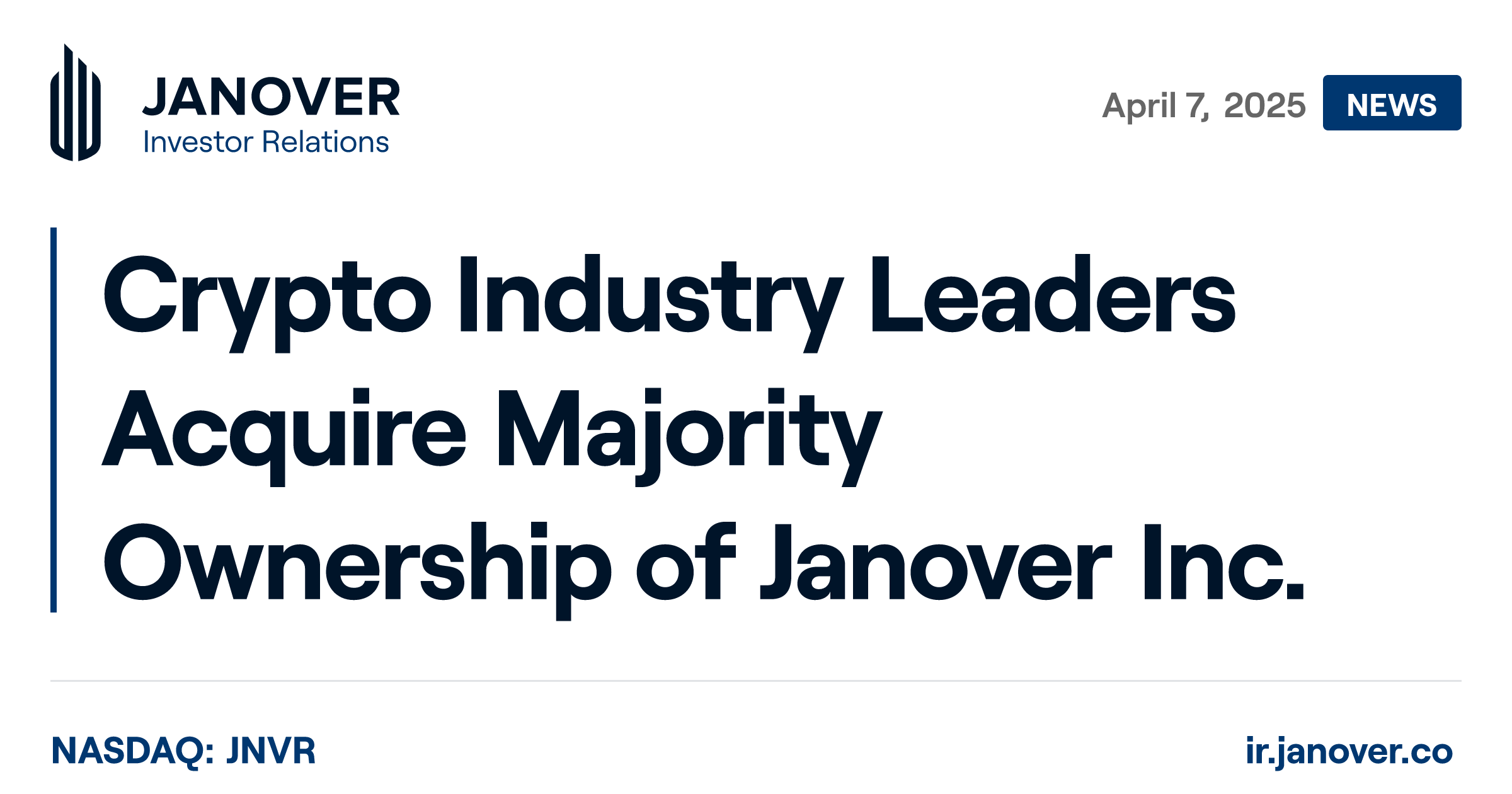
According to a press release on Janover Inc.'s official website, a team composed of former Kraken executives has acquired majority ownership of the company. As part of this transaction, the company name and stock ticker will be changed in the future. The new name will be "DeFi Development Corporation."
The board has passed financial resolutions directing that the primary holdings within the balance sheet's reserve assets be allocated to digital assets, starting with Solana (SOL). The company intends to explore acquiring Solana validators and plans to acquire and stake SOL through them. The validator business aims to raise external equity and use the resulting income to purchase additional SOL.
Blake Janover, CEO of Janover, stated: "I am very excited about the value this transaction can create for shareholders and how it will drive our future growth. I’ve spent considerable time learning about every aspect of the DeFi ecosystem and find myself highly aligned with the vision of the new leadership." So rather than a traditional company embracing crypto, it's more accurate to say that crypto insiders have taken over the company—removing barriers to aggressive SOL accumulation.
SOL Global: A Pioneer in Crypto Investing
SOL Global Investments Corp. is a Toronto-based Canadian investment firm focused on unlocking the potential of cryptocurrencies, blockchain technology, and emerging tech. Since its founding in 2017, this company listed on the Canadian Securities Exchange (symbol: SOL) has gained recognition for its bold alternative investment approach, managing approximately 150 million CAD in assets spanning medtech and digital assets.
In 2025, SOL Global doubled down on Solana (SOL), reinforcing its pioneering status in the crypto market by purchasing 40,350 SOL tokens (worth ~$8.7 million), setting a benchmark for traditional investment firms adopting the Solana ecosystem.
In January 2025, SOL Global announced a private placement raising 18 million USD, allocating 10 million USD directly toward buying SOL, with the remainder invested in DeFi and NFT projects within the Solana ecosystem. By March, about 60% of the company’s 40,350 SOL holdings had been staked on the Solana network, earning a 6.26% annualized yield.
Latest reports indicate SOL Global currently holds around 260,000 SOL tokens.
CEO Paul Kania said in a statement: "Our ambition is to become a super-company for Solana, providing public market investors direct access to the transformative opportunities within the Solana ecosystem."
SOL Global’s involvement goes beyond simply holding tokens. Its portfolio includes high-profile Solana-based projects such as decentralized exchange Serum and NFT marketplace Magic Eden, reflecting its ambition to deeply engage in ecosystem building.
SOL Global also plans to launch a Solana-based investment fund before the end of 2025, further amplifying its influence. Unlike traditional investment firms, SOL Global’s crypto-native DNA—its team largely drawn from the blockchain sector—enables it to navigate the Solana wave with ease.
SOL Strategies: Veteran Rebrands, Vision Remains
Sol Strategies Inc., formerly Cypherpunk Holdings, is a holding company listed on the Canadian Securities Exchange (ticker: HODL), deeply engaged in cryptocurrency investments since 2018. This veteran investment firm, originally founded in 1995, initially focused on privacy technologies (like Tor and VPNs), shifting toward Bitcoin, Ethereum, and other digital assets after 2018, with approximately 60 million CAD in assets under management.
In September 2024, under the leadership of Leah Wald, former CEO of Valkyrie Funds, the company underwent a dramatic transformation: rebranding to Sol Strategies and fully pivoting to focus on Solana (SOL), making it a pioneering case of a crypto investment firm aligning entirely with the Solana ecosystem.
In February 2025, Sol Strategies announced it held 189,968 SOL tokens, valued at approximately $40.89 million, making it one of the largest publicly disclosed Solana investment entities.
The company accumulated SOL through phased purchases between October 2024 and January 2025, funded by proceeds from its existing crypto portfolio (including partial liquidation of Bitcoin) and a 25 million CAD private placement completed in November 2024.
To date, public data shows the company holds roughly 260,000 SOL tokens.
Sol Strategies doesn’t just hold tokens—it operates multiple Solana network validator nodes, participating in consensus mechanisms and expecting annualized returns of 6–8%. CEO Leah Wald stated: "Solana represents high-growth opportunity and is a logical extension of our strategy. We offer a more active form of participation than ETFs."
Upexi Inc.: Consumer Goods Firm Takes a Crypto Leap
Upexi Inc. (Nasdaq: UPXI) is a Nevada-based consumer goods company specializing in data-driven brand development and distribution across health supplements, pet products, and children's toys.
Founded in 2018, Upexi rapidly expanded through acquisitions and organic brand-building, achieving $83 million in revenue in 2024—a 54% year-on-year increase—and securing a strong presence on e-commerce and Amazon platforms. After going public on Nasdaq in 2023, the company reached a market cap of about $120 million, employs around 150 people, and positions itself as a mid-sized player in the consumer goods sector.
In 2025, this company—previously unrelated to cryptocurrency—invested nearly $100 million into accumulating Solana (SOL), emerging as an unexpected star in traditional companies venturing into crypto.
On April 21, 2025, Upexi announced a $100 million private placement, allocating $94.7 million specifically to purchase SOL and establish a Solana corporate treasury. The exact quantity of holdings hasn't been disclosed. The round was led by GSR Markets, a major crypto trading firm, signaling institutional confidence in Upexi’s strategy.
Upexi stated that SOL purchases will be executed via phased market buys, with the first batch expected to begin in May 2025. The company also plans to stake a portion of its SOL holdings to earn 5–7% annualized returns. CEO Allan Marshall commented in the announcement: "This strategic initiative will deliver long-term value for shareholders by capturing growth opportunities in the crypto market, while maintaining core competitiveness in our consumer goods business."
Upexi’s pivot stems from management’s growing belief in crypto assets. At the end of 2024, the company brought on a former Coinbase financial advisor to its board, accelerating the formulation of its crypto strategy. Given that Upexi’s consumer business relies heavily on volatile e-commerce trends, establishing a SOL treasury is seen as an innovative hedge against risks in traditional markets.
WonderFi: Digital Asset Platform Builds on Solana
WonderFi Technologies Inc. is a leading Canadian digital asset platform operator based in Vancouver, dedicated to providing retail and institutional clients with cryptocurrency trading, custody, and investment services.
Founded in 2019, WonderFi quickly rose to prominence in North America’s crypto landscape by acquiring Coinsquare—one of Canada’s largest crypto exchanges—and CoinSmart. By 2024, it managed over 1 billion CAD in assets and served more than 1 million registered users.
Listed on the Canadian Securities Exchange (ticker: WNDR), WonderFi has a market cap of about 280 million CAD and employs around 200 people. In 2024, the company turned its attention to Solana (SOL), strengthening its position in the crypto industry through increased holdings and ecosystem integration, becoming a key driver behind Solana’s mainstream adoption.
As of February 2024, WonderFi held 61,720 SOL tokens, valued at approximately $8.4 million (based on a SOL price of $136), with plans to stake all tokens to earn 5–7% annualized returns.
On January 16, 2025, the company acquired Blade Labs, a Solana ecosystem tool developer, for about 15 million CAD, gaining validator node technology and developer resources. Through its Coinsquare platform, WonderFi launched SOL staking services, allowing users to directly participate in the Solana network. By the end of 2024, this service generated 8.8 million CAD in staking-related revenue.
WonderFi’s Solana strategy reflects its deep strategic insight into native crypto ecosystems. The acquisition of Blade Labs not only enhanced WonderFi’s technical capabilities but also established it as an active validator on the Solana network, projecting validator earnings of 2 million CAD in 2025.
Different Approaches, Same Goal
These five companies adopted different methods to accumulate SOL in 2025, citing reasons ranging from asset diversification to DeFi potential—but their ultimate goal is essentially the same:
Capturing growth opportunities in the crypto market to maximize shareholder value.
The underlying logic is clear: these companies believe SOL still has room to rise, because no one wants to make losing investments.
As Bitcoin gradually becomes a widely accepted consensus, the incremental gains from holding BTC are being steadily diluted. For smaller or more aggressive traditional firms, holding SOL now resembles an alpha strategy, while holding BTC has become more like beta exposure.
Compared to degens gambling in the trenches, choosing SOL is certainly conservative; but compared to most traditional businesses grinding for thin margins, this choice offers potentially higher payoff odds.
More market participants will likely vote with their feet, striving to capture a share of the growth returns offered by the crypto market.
Join TechFlow official community to stay tuned
Telegram:https://t.me/TechFlowDaily
X (Twitter):https://x.com/TechFlowPost
X (Twitter) EN:https://x.com/BlockFlow_News
 深潮TechFlow