Interview with Mantra Co-Founder: On the Night $5 Billion Vanished, I Had No Negligence or Malicious Conduct
TechFlow Selected TechFlow Selected
Interview with Mantra Co-Founder: On the Night $5 Billion Vanished, I Had No Negligence or Malicious Conduct
"This is not a case of reaping韭菜."
 Navigating Web3 tides with focused insights
Compiled & Translated: TechFlow
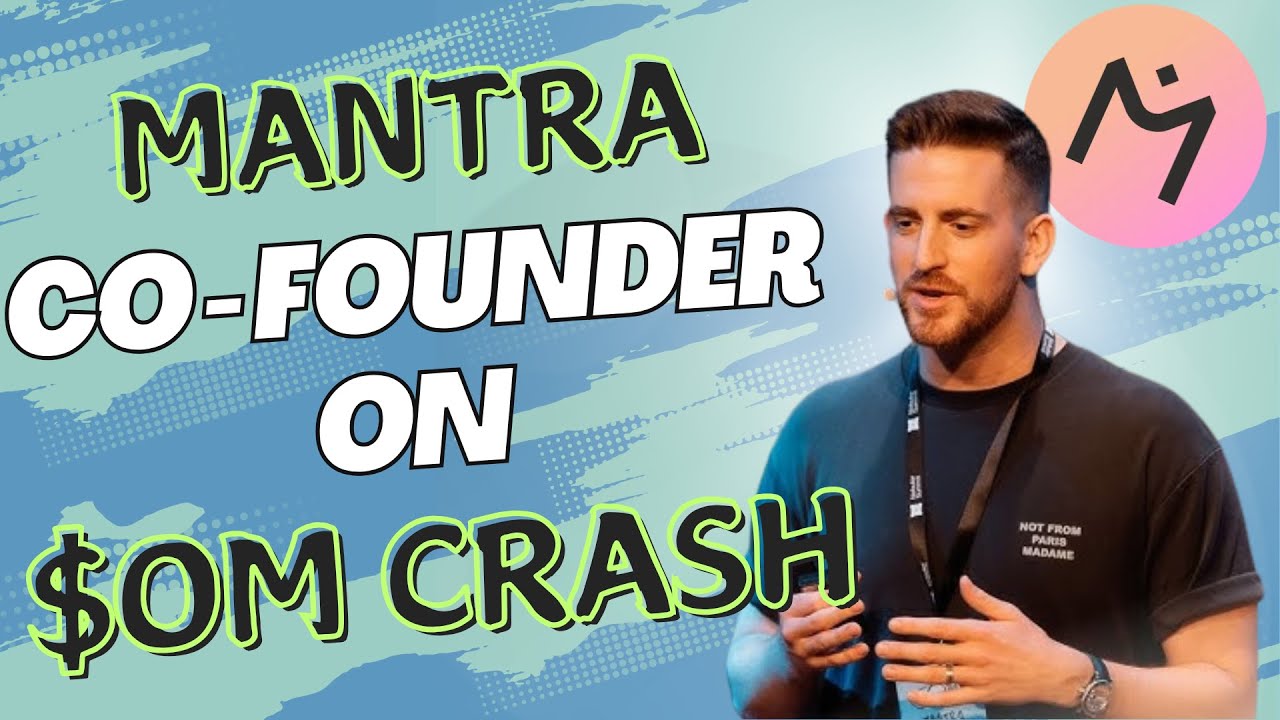
Guest: JP Mullin, Co-Founder of Mantra
Host: Zack Guzman
Podcast Source: Coinage
Original Title: Mantra Co-Founder Explains $5 BILLION OM Token Collapse
Release Date: April 15, 2025
Key Takeaways
Mantra co-founder JP Mullin joined the Coinage podcast to explain why the project's OM token crashed by 90%, wiping out $5 billion in market value.
The real-world asset (RWA)-focused Layer-1 blockchain launched last year but attributed the crash to a liquidation event at an unnamed exchange. Coinage dives into the decision-making that led to the collapse and examines why this has drawn scrutiny from the U.S. Securities and Exchange Commission (SEC) over transparency concerns.
Key Quote Highlights
-
"This is not a rug pull."
-
"I feel responsible. Even though I did nothing negligent or malicious, people trusted me… and lost money because of it."
-
"I'm not blaming one individual—actually, I think it was a group and multiple parties involved. We believe this centers around a specific exchange."
-
"We are actively considering a buyback program, and we're also looking at burning some of the future supply of tokens."
-
"I can clearly state that we have never engaged in any form of price manipulation or token pumping with our market makers. That’s simply not how we operate, and we don’t even have the capital to do so. Mantra hasn't raised that much funding in the past 12 to 16 months. This isn't something we’ve ever done or would do."
-
"We are a regulated company. We’re handling requests and staying transparent about what we need to do."
-
"I've been through many ups and downs. This is no different. I do take responsibility. This event was unprecedented—I believe there was malicious behavior, and we’re working hard to uncover the truth."
-
"I think the best thing we can do right now is publish as much on-chain information as possible to show the current state of the token and exactly what happened."
JP Mullin Responds to the OM Token Crash
Zack Guzman:
There's been a lot going on in crypto recently, and over the weekend everyone was focused on the crash of a token in the RWA space. We saw the OM token drop more than 80% in a single day, erasing roughly $5 billion in market cap. There are many questions around this event, and hopefully today we can get answers and understand what really happened. Thank you to JP Mullin, co-founder of Mantra, for joining Coinage today. I want to start by asking—you mentioned some things on Twitter yesterday. What did you find out? What happened in the past 24 hours?
JP Mullin:
Obviously, this has been a long and difficult day for me, the team, and especially the community.
Last week I was in Paris for Blockchain Week. On Saturday, Paris time, I flew from Paris to Seoul, South Korea, and I’m now in my hotel room. We have an artist summit today, which I’ll talk about.
I went to bed around midnight local time and was woken up at 5 a.m. by a call from the hotel—the team had reached out to them because they couldn’t reach me on my phone. It was chaotic—asking what happened, that the token had crashed, etc. We immediately checked for on-chain exploits or stolen tokens. After talking with key partners, investors, and exchanges, we discovered that OM tokens were being used as collateral for leveraged positions on centralized exchanges, leading to a massive forced liquidation.
These positions were rapidly liquidated during low liquidity, particularly on Sunday night in Asia. Again, I was asleep. The liquidations happened quickly, causing a sharp price drop, triggering further cascading liquidations and sell-offs, resulting in a significant price decline. I woke up to all of this. We then issued a statement saying we were investigating and would continue communicating as transparently as possible. We’ve been in touch with all investors, partners, exchanges, and community members, ready to engage, clarify what happened, how we’ll respond, and answer any potential questions.
Was the Token Collapse Triggered by Liquidations?
Zack Guzman:
Mantra is an RWA-related Layer-1 protocol, headquartered in Dubai, which is where most of your operations are based. Who are the partners you're working with on this project? The goal is to tokenize RWAs. Before your Layer-1 launched last year, the OM token existed for years as an ERC-20 on Ethereum. Can we go back to the beginning and walk through the project’s evolution?
JP Mullin:
I can start by explaining how Mantra was founded and how we got started, to help clarify the relationship between the ERC token and the mainnet token.
Mantra was founded in early 2020 during the pandemic. On August 18, 2020, we launched the ERC version of OM. So the project has nearly five years of history. In March 2021, we listed on Binance, initially launching as a DeFi protocol and building some early products. We rode the early DeFi wave, then entered a bear market. Mantra experienced a significant market drawdown, falling to around 1.7 cents (about RMB 0.12) during the 2023 bear market. From late 2023 into early 2024, I met with key partners including Shorooq from the UAE and Laser Digital, the crypto arm of Nemora. They helped us raise institutional capital to build a compliant DeFi protocol. We’ve been working with Dubai’s regulator Vara on licensing. Earlier this year, we received the world’s first DeFi license. We also launched a Layer-1 blockchain designed for tokenization, featuring compliance, permissioning, and identity layers.
During this period, we began integrating the token model. Initially, we planned to run the ERC Mantra token separately from a chain called Omega, which would have an AUM token. But after a community vote, the community wanted to support OM, so we merged them and began developing an institutional-grade RWA business in the UAE. We obtained Vara licensing in Dubai and launched the blockchain at the end of last year. At launch, we initiated the token bridging process. At that time, about 95% or 96% of the tokens were already in circulation—now it’s around 98%. It’s a fixed-supply ERC token with a total of 8,888,888. All of this is verifiable on Etherscan—you can see wallet distributions, many of which are exchanges and other labeled wallets. On the mainnet side, most tokens are locked in custody, working with qualified custodians like Anchorage and third-party lock-up mechanisms.
All this information has been verified. Last week we released a transparency report in response to demands for specifics. We’ll continue providing as much transparency as possible on wallets, etc. Essentially, the ERC tokens have been bridged to other chains—I believe they were bridged via Polygon POS to Polygon. There’s also a BSC version of OM on Binance and a base OM, but they’re all part of the existing ERC 8,888,888 supply.
Zack Guzman:
I think this is also what I found interesting when reviewing—the mirrored aspect, where you mirrored some tokens to the new chain. If someone wants to exchange a token, it gets burned and converted. Whenever a project has existed for a while, decisions and processes are involved. But returning to now, given people now understand these decisions and the context of tokens existing across multiple chains, could you reflect on how many tokens might have been available on exchanges to be used as leverage, creating the opportunity to build a very large position, as you described yesterday? Exchanges might say, “Hey, you’re going to be liquidated.” When that happens, there’s a process. It sounds like this is essentially what occurred.
When large positions were liquidated, a flood of OM tokens hit the market, causing the price to drop. Do you know who held these positions and which exchange was involved? Did you receive any notification before the liquidation occurred?
JP Mullin:
Prior to this, we’d been in communication with exchanges asking when tokens would be listed. Do you know who holds these wallets? Are they team members or market makers? In this case, we did receive inquiries from some exchanges about what was happening. This wasn’t within the last 24 hours—it’s been over the past few months. We didn’t know the specifics of the last 24 hours, but we’ve contacted several exchanges to ask about the origin of these tokens and their use as collateral. These tokens came from new wallets not linked to any we previously knew. At least I’ve marked all wallets I know of on Etherscan for tracking purposes. These were new wallets. We know certain exchanges may have played a role.
That said, I don’t want to comment too much now, as we and our institutional investors and partners are exploring potential legal actions to support our community and affected investors. But clearly, in a low-liquidity environment on a Sunday night, a massive forced liquidation occurred. We’ve stayed in contact with institutional partners like Shorooq and Laser and tried to remain transparent.
Zack Guzman:
Those partners have stated they weren’t involved in such trades—Shorooq and Laser both confirmed they weren’t the entities behind the sale. You mentioned the low-liquidity environment during weekends and off-peak hours. Assuming you also work with market makers, can you disclose who your market makers are? What has the discussion been like with them in this situation?
JP Mullin:
We have several market makers who are also our investors. We work with multiple large trading firms who are also investors. They actively support the market, hold OM positions, and have loan agreements with OM. To my knowledge, their holdings couldn’t withstand such a massive forced sell-off, possibly exceeding hundreds of millions of dollars. But I don’t have exact figures—that’s something we hope to learn more about. Once we have more information, we’ll release it as soon as possible.
Zack Guzman:
Is the position you’re referring to in the range of around $100 million?
JP Mullin:
We believe it’s in that ballpark. It was a very large position. This was once a multi-billion dollar token, with major investors holding positions and using these tokens to back other collateralized positions supporting their leveraged exposure. All of this unfolded in a very short time frame. Again, I went to bed at midnight and woke up at 5 a.m.—by then, it had already been going on for an hour or two. So it happened extremely fast. That’s why we describe this as an unprecedented, rapid event. Clearly, we’re doing everything we can to gather and share information.
Explaining Token Design and Cross-Chain Mechanics
Zack Guzman:
I agree—it’s unprecedented, especially given it happened over the weekend. If it wasn’t your main investors, then who could have built a $100 million position here, leading to such a liquidation event? This may be an off-chain issue. Let’s discuss this, because I think many in the crypto space may not fully understand it.
Making these decisions as a founder must be incredibly difficult. You have to weigh various trade-offs—how to list on centralized exchanges, how to work with market makers, ensuring they won’t abandon you in critical moments. If possible, can you talk about whether you decided to conduct over-the-counter (OTC) deals during the 2024 launch process? How were those OTCs conducted? Given that many tokens were already circulating before your launch, what did those transactions look like? Are they related to what we discussed earlier?
JP Mullin:
We conducted two rounds of mainnet token fundraising, as part of our transparency commitment. These tokens remain in custody with Anchorage, with lockups starting last October—12+24 months for one batch, another batch unlocking in a few months with a 12-month vesting period. Additionally, some investors bought tokens through over-the-counter (OTC) deals—long-term supporters like Shorooq and Laser—who still haven’t sold their tokens. Their tokens were supposed to unlock over approximately 18 months. We began gradual unlocks last March, and these tokens have been circulating for a long time—but no one has sold. We have a very strong base of long-term investors, and I’m deeply grateful for their support. We’ll continue backing them to refute any false claims of dumping. Sorry, it’s been a long day—I’m struggling with my words a bit.
Zack Guzman:
About the accusations you mentioned, I want to be very specific because I don’t think anyone is making explicit allegations. As a journalist, I need to be precise. I don’t think many things happening in this space are “rug pulls”—for example, the Terra incident. I believe many events aren’t rug pulls—we’re not talking about some small meme coin.
We’re talking about JP Mullin and his team building an RWA-related Layer-1 blockchain, partnering with major companies, like those in the tobacco industry in Dubai. I think it’s important to discuss where you think the problem lies. If you’re trying to build a legitimate, real project, where do you think the issue emerged? The accusations seem to point toward an exchange. It sounds like you’re implying—given your trading volume—a $100 million liquidation is effectively equivalent to your daily trading volume on many days.
JP Mullin:
I'm not blaming one individual—actually, I think it was a group and multiple parties involved. We believe this centers around a specific exchange, but we’re working to get more information and stay in contact with all exchange partners.
Clearly, this was an unprecedented event, unfortunate for our community. We’ll do our best to address it. I’ve participated in several AMAs and discussions. I want to talk about how we’ll respond. Right now, the priority is managing PR, communicating with media like you, engaging the community—we’re deeply grateful. This morning in Korea, we held an RTA (Real-Time Asset)-based summit, and I showed up in person because I want people to know we’re not running away or hiding. This is not a rug pull. We’ve been doing this for five years, and we’ll continue—we have more ahead.
But the next step is how we actually repair trust with our community and holders. We are actively considering a buyback program, and we're also looking at burning some of the future supply of tokens. We hope to combine both and announce details soon.
Beyond that, we want to provide as much detailed information as possible—ensuring transparency, verifying on-chain data, and giving the community as much evidence as we can to back up what we’re saying. They should be able to verify it themselves and see all our information.
Preliminary Ideas on Buyback and Burn Plans
Zack Guzman:
After the crash, many people actually bought the token, significantly increasing your holder count. But I’m curious—regarding the buyback plan, what’s your current financial situation? What do people need to know?
JP Mullin:
First, let me clarify—we are in good business health, financially sound. We have enough capital to keep operating. In fact, we’ve received interest from existing and new investors willing to fund our buyback plan or conduct long-term OTC deals. We’re actively evaluating these options and plan to develop a comprehensive plan soon. Our business will continue operating normally, and we’ll keep everyone updated. So financially, we’re solid—we’ll keep moving forward.
Zack Guzman:
You mentioned long-term OTC deals, which I think is important because OTCs in token trading can influence price. Investors like Laser Digital and Shorooq have stated they didn’t sell their tokens. As founders, did you conduct due diligence on this? Has Mantra done OTCs before?
JP Mullin:
We did conduct OTCs with multiple institutional partners, high-net-worth individuals, and family offices. These were all long-term arrangements, and no tokens have unlocked yet. We want to ensure investors aren’t hedging and instead become long-term holders to avoid unnecessary selling pressure. We work with brokers who notify us if someone intends to sell, allowing us to communicate with investors and facilitate orderly OTC transactions to maintain market health.
Zack Guzman:
Isn’t regulating this quite difficult? OM's reputation has taken a hit, and there are already many tokens in circulation. After migrating from ERC20 to the mainnet token, has this made the situation harder to manage?
JP Mullin:
Not really. Over 100 million OM tokens have already been bridged from Ethereum to the mainnet. That means there’s a large circulating supply. We don’t sell circulating tokens—we sell only long-held or reserved ones. This explains how someone could build a $100 million position, as these tokens could serve as strong collateral. But if liquidity is low and trading volume small, exchanges may trigger liquidations.
Why aren’t these tokens worth much on paper? Mainly due to liquidity issues. Circulating tokens are meant for trading on exchanges, not as collateral. We’ve talked to exchanges, but liquidations should be between them and investors. Usually, these are handled gradually with communication. But what we saw was an aggressive, rapid liquidation—so we’re concerned and exploring legal remedies. We’re working with investors to consider all options.
Zack Guzman:
Regarding the token timeline, do you have updates? There were votes and proposals around this. You had a token distribution plan and were wary of sybil attacks—people faking wallets to claim extra tokens. How much does timing matter here? As a founder, how do you handle this? Could this be a red flag indicating tokens ended up in the wrong hands?
JP Mullin:
I think it was just an unfortunate coincidence. A few weeks ago, we did our first 10% airdrop, which was delayed. Briefly, on tokenomics: in February 2024, we announced the initial airdrop of 50 million tokens, valued at $5–10 million, later peaking at $400–500 million.
These were zero-cost basis OM tokens, which caused some concern among existing token holders. So we adjusted the unlock method and proceeded with the first airdrop. We reduced sybil activity but detected malicious behavior—multiple accounts and wallets trying to exploit the system, which we obviously don’t want. We aim to protect and support those who genuinely bought tokens. So in March, we made detection decisions and completed the airdrop about a week and a half ago.
Zack Guzman:
Why do you want to protect those who spent money supporting your project from those who didn’t pay the same price getting tokens?
JP Mullin:
I believe those who supported the project spent their hard-earned money, and I have a responsibility to help them. When someone tries to exploit the system to unfairly obtain tokens and profit, as a founder and project supporter, we can’t allow that. It doesn’t mean we don’t support community engagement. After the airdrop, over 200,000 wallets remained active on the mainnet—all verified real users unaffected by sybil attacks, continuing to hold. So this is a group that needs protection. It’s not just mainnet holders—there are also OM holders on Ethereum, around 100,000 users, not counting exchange wallets—so the number is substantial. This matters greatly to us, and I take it seriously. It’s a very unfortunate event.
Transparency, Investors, and Market Maker Relationships
Zack Guzman:
As a founder, you need to diligently ensure token lock-up periods are strictly enforced. Some project founders fail at this. Also, with the current market cap exceeding $6 billion, the gradual price rise may have been artificially inflated by market makers propping up prices during low liquidity. Seeing this, are you concerned? Because without sufficient volume and market activity to support the price, investors might enter at excessively high prices. How much does this market dynamic affect your sense of responsibility?
JP Mullin:
I can share some adjustments we made to our tokenomics. When we adjusted the airdrop unlock schedule, we also restructured team token allocations. Team tokens remain in custody with Anchorage—this info is disclosed in our transparency report. As part of the airdrop, we extended the lock-up period for team and advisor tokens to the maximum—30 months locked, followed by a 30-month vesting period.
For my personal ERC tokens, I’ve reinvested them all and committed to continue investing for another six years, on top of the four and a half years I’ve already spent building Mantra.
Our goal is long-term stability. I've been through many ups and downs. This is no different. I do take responsibility. This event was unprecedented—I believe there was malicious behavior, and we’re working hard to uncover the truth. But I’m still here, actively participating in the Korea summit, maintaining communication and transparency, because I’m passionate about this project. The community means everything to me. We’ll keep supporting them. I must accept all responsibility, good or bad. Now is a tough time for us, but we’ll keep moving forward, building on a solid foundation with strong partners.
Zack Guzman:
I think I’m starting to understand what you mean by malicious behavior—that’s a new angle for me, because something may indeed have happened. It sounds like you’re saying someone holding a large amount of tokens got liquidated.
JP Mullin:
I find the timing suspicious, and the execution questionable. Such a large-scale crash doesn’t happen overnight. So we want to investigate exactly what happened.
Typically, such liquidations don’t happen instantly. If you’ve ever been force-liquidated or had a loan called, you know. If you communicate with the exchange or lender, provide collateral, or try to find solutions, no one suddenly wipes you out completely—especially not a $100+ million position. It’s a big position; it clearly requires careful handling. We believe this wasn’t managed properly. That’s why we want to find out what really happened, because many people were hurt.
Zack Guzman:
I agree, but I think this also highlights a key point about market maker relationships. Again, from the outside, I can only speculate—likely the person who knows the most is you. So I want to understand why this happened. Some say it’s easy to understand. Let’s use your liquidation example. If the token wasn’t actually trading based on supply-demand dynamics, but was being propped up by different market participants, exchanges might say, “Look, this pattern and price movement are normal—if there were no buying, the price would collapse.”
Assuming you, as a founder, might know these conversations, or at least should know the flow of tokens, trading volume, or which exchanges are involved.
JP Mullin:
To some extent, yes. We did receive contact from exchanges asking, “What are these tokens doing, where are they coming from, why are they being placed as collateral on exchanges?” They’d send me a new wallet address from another exchange. I couldn’t make decisions or access definitive info about where these tokens originated.
We work with multiple market makers, all of whom are our investors. I’m happy to name them. We work with Laser, Amber, and Manifold Trading—all investors and partners. I can clearly state that we have never engaged in any form of price manipulation or token pumping with our market maker partners. That’s simply not how we operate, and we don’t even have the capital to do so. Mantra hasn't raised that much funding in the past 12 to 16 months. This isn't something we’ve ever done or would do.
I believe token value should be determined by the market. I hope we can find a fair market value for what we’re building. Over the past 12–15 months, we’ve executed strongly. We’ve had major announcements and support from institutional capital and partners, including major real estate developers and network partners like Google. So it’s not like we failed the “sniff test” of due diligence. We are a regulated company. We’re handling requests and staying transparent about what we need to do. By the way, we’re also in contact with regulatory partners.
Zack Guzman:
I want to ask—since you’re a Vara-approved project, have you discussed this event with them?
JP Mullin:
They were one of the first we contacted. We’ve maintained communication. I think everyone wants to know the truth, and we’re committed to sharing all facts and information as transparently as possible.
Besides recovery plans, the next step is providing a detailed post-mortem—publicly sharing every fact and piece of information we can, including public wallets. We hope to restore community trust and clearly show on-chain what we’ve gone through. Shorooq has publicly shared their wallet info, Laser has published theirs, and we’ve shared ours. We’ll keep publishing as much as we can—we won’t run from responsibility, we’ll stay here.
Zack Guzman:
I want to circle back to transparency—Shorooq has stated these tokens weren’t dumped by them. So, how should we approach transparency moving forward? What’s the future for Mantra? What will happen to the OM token? These questions have raised many concerns.
Before the event, while preparing, I noticed someone asked about transparency on Twitter, and you responded mentioning supply. We mainly discussed the airdrop sybil issue—you replied: “I neither pump nor dump this token. From day one, we’ve been transparent about tokenomics, and recently released another report for the community.” I want to know what report you meant. I’m not sure if you meant the sybil issue, but the main concern is whether supply dynamics are transparent. I also saw Binance recently issued a warning on the OM listing due to concerns about increased token supply.
JP Mullin:
Throughout Mantra’s development, we’ve consistently updated the issuance and supply of the OM token. This verification was done early last year when merging the ERC token with the new chain token, approved via governance votes and the ERC20 Mantra DAO community. Over the past few months, we’ve continued releasing updates. I don’t have the links now, but I’m happy to share them.
You can track this progress. We work closely with Binance and other exchanges. Whenever tokenomics change, we immediately communicate with them. Any changes are directly shared with Binance and others via publicly verified governance proposals or our media posts.
I know they’re aware of these changes—that’s why many exchanges intended to support the mainnet, including Binance. We’ve coordinated with them on this support, and they understand the supply changes. This isn’t new—it happened last October.
What’s Next for Mantra?
Zack Guzman:
Still, I find it particularly interesting how your token mirrors existing tokens with a 1:1 burn mechanism. Has there been discussion about converting some tokens if circulating supply is too high?
I’m reviewing the proposal—many mentioned it could’ve been one of them. I recall you mentioned 91 votes. Many once said we were already dead. Yes, as a leader, tell me what that decision-making process was like—would you go back and change it?
JP Mullin:
No, I wouldn’t change it. I think if that proposal passed, we wouldn’t even have a Mantra Layer-1 chain. Originally, we planned to have the Mantra ERC token and a fully independent L1 chain that would do some kind of airdrop back to OM—the token was called Omega AUM. We discussed this with investors and key team members in late 2023 and early 2024, when nobody really knew Mantra. Our price had dropped 95%. Everyone thought we were done. Then we had a miraculous rebound, partly thanks to re-pricing a “dead” DAO token into a new L1 for real-world assets (RWAs).
Clearly, it was a combination of different narratives and what we’ve been working on. Regarding how the mirror pool works—when we created new supply for the chain, it was all public, and everyone supporting the project fully understood it.
The mirror pool is essentially a bridge between the ERC token and the mainnet token. We effectively have a mirrored version of the existing ERC supply, verifiable on-chain. When people send their ERC tokens, they go to a burn address. So far, about 100 million tokens have been burned.
Mirror tokens are one-to-one fungible tokens. For example, on Bybit, you can see they list both ERC and Mantra chain versions. You can deposit ERC OM, or deposit/withdraw Mantra OM, and vice versa.
Our threshold is 30,000 tokens. If you send via the bridge, it’s filled almost instantly—once it’s verified as sent to the burn address, the new token is issued. If over 30,000 tokens, it requires manual approval via multisig wallet, which can take up to 24 hours—to ensure this isn’t exploited.
At launch—I forget the exact price of OM then—but there were still hundreds of millions of dollars worth of OM in this bridge wallet. We wanted to ensure this wouldn’t become an attack vector and that people could correctly bridge their tokens to the mainnet version, where all new activity begins.
Zack Guzman:
Given the 90% drop, thinking about those who entered at higher prices and lost their hard-earned money—do you think you and your team were transparent enough in warning people about what could happen here?
JP Mullin:
That’s a good question. I think we’ve always tried to be as transparent as possible. The issue here is, I want to continue being as transparent as I can, to ensure everyone sees we didn’t sell any tokens.
Zack Guzman:
I don’t think people are angry about token sales. Interestingly, the U.S. SEC recently commented on transparency, especially regarding how these things are handled. They basically demanded, “Reveal your market makers, reveal your agreements, reveal who might be holding tokens, and disclose supply changes.”
So I want to ask—now that OM has dropped from nearly $7 to $0.70, just 10% of its peak, are you willing to transparently discuss these agreements? Regarding others—large market makers or investors and their cost basis—these represent huge supply pressures. If you’re speaking to new people now, what level of transparency do you want to offer?
JP Mullin:
I think the best thing we can do right now is publish as much on-chain information as possible to show the current state of the token and exactly what happened.
Off-chain factors are limited—we’ve publicly released unlock schedules since inception, so we’re willing to share as much transaction info as possible. We are committed to this. I’ll support it—we’ll publish it, but we’re not able to do so yet. I think investors want to know what happened. Great question—you touched on both on-chain and off-chain aspects. We’re fully committed to sharing as much as we can. I make this promise.
Zack Guzman:
On future direction—this is a big question, and many are watching. Perhaps you can talk about the path forward and how you plan to move ahead. Regarding real-world assets on your chain, you said you haven’t raised much funding. When discussing buybacks, returning to previous levels seems nearly impossible. JP, what’s your plan to achieve that? What assets do you currently have to leverage?
JP Mullin:
Absolutely. We’ve been through similar situations before. When we first launched, the price dropped over 95%. People thought we were done, but we bounced back. We’re committed to doing it again.
From a founder’s perspective, I’m willing to do anything to ensure the community is treated fairly. I’ll do whatever it takes. That matters more to me than anything else. Right now, we need to document what happened and support our community through this difficult time.
We have long-term, large institutional partners. Our business is funded. We’ll keep moving forward and executing our plan. Institutional interest has increased significantly, which is encouraging.
We’re committed to doing what we can from a buyback perspective. I’ll reinvest everything I hold as a founder. This isn’t a financial transaction to me—frankly, it never was. So I want to ensure we can revive the business and keep going. We’ll work with partners like Subaru, Laser, etc., to create a proper buyback plan, establish a burn mechanism, show people what’s happening, and burn unnecessary supply. I’ve already spoken with our investors—they’ve pledged support.
Zack Guzman:
On these points, I want to confirm—if investors or institutions were interested in stepping in during the liquidation, could they have intervened? You said these conversations didn’t happen.
JP Mullin:
It happened too fast—on a Sunday night, we didn’t have much time to react. I was asleep. We obviously work with partners who hold tokens and will continue supporting the project. New investors have shown interest and expressed willingness to support. So that’s reassuring—we’ve been building something for a long time, and this isn’t our first challenge. We’ll keep pushing forward.
Zack Guzman:
Talking about the personal impact—you’ve mentioned it. You’ve worked on this project for a while. I’ve seen your interviews over the years, from discussing OM to last year’s mainnet launch. Personally, going through this—I’ve interviewed many project founders, including Do Kwon after Terra’s collapse, SBF after FTX’s fall. I’m curious, JP—is there a sense of relief? Because clearly, today, you don’t sound relieved. But knowing what might happen when the price rises, is there a sigh of relief thinking, “Well, the token is priced here”? As you said, you’ve been through crashes before. Is there any feeling that perhaps this is where we should be?
JP Mullin:
I don’t think so. Regardless of market value, I don’t feel relieved. An unprecedented event occurred—many people lost money, were hurt, and I feel deeply uneasy about it. It’s been a very tough day. I feel sad for our community, for those who lost money, for our team, and for some foreign investors. It’s truly terrible, and I’m heartbroken. So I won’t feel relieved by market shifts. I’m committed to doing everything I can, spending every moment to fix this, to do the right thing. I’ll stand by my word, and those who’ve supported us over the past five years can vouch for that. I’ll do my best to support the project and take responsibility—not run away.
Zack Guzman:
You said you feel bad—I want to understand specifically what bothers you. The price drop is clearly a factor, but it sounds like you don’t think it’s your fault. So beyond price, what specifically makes you feel bad? Because you said you didn’t dump, your investors didn’t dump—I’m curious what exactly troubles you?
JP Mullin:
What bothers me is that people lost money. They trusted this project and token, and overnight, their tokens lost 80% or 90% of their value. That’s really bad. I feel terrible for those who supported us.
Zack Guzman:
As a founder, do you feel responsible? If so, I’d like to know specifically what makes you feel bad?
JP Mullin:
They trusted me, believed in this project, and lost money because of it. I feel a fiduciary duty to token holders and supporters. I can’t shake that feeling—I’m truly sorry. Honestly, I don’t know what else to say.
I’m hurt, and I feel our community is hurt. Our token holders and entire base have been affected. I feel responsible—even though I didn’t commit any negligence or malice, I still feel accountable.
Zack Guzman:
I’m curious—if your investors hear you say they were hurt, do they actually feel hurt—even though the token now trades at $0.7?
JP Mullin:
I don’t think they’re truly hurt. That’s why, as I said, investors holding liquid tokens haven’t sold any.
Zack Guzman:
Maybe it’s not those investors who are hurt, but others—like those you mentioned who joined later and were tied to the token’s changes. Your work in the RWA space is clearly a hot topic. Before we wrap up, I’d like to give you a final word—what would you like to say to those who might be holding this token?
JP Mullin:
First, thank you for having me here to share our story. I want to reiterate—we’ll develop a plan to fully and transparently explain what happened. Please follow me and our company on Twitter, where all updates will be posted. We’ll roll out the buyback and burn plan in the coming days and do our best to support investors. We’ll maintain ongoing communication with the community. I assure the community—we’ll do everything possible to correct this situation.
Thank you to everyone who’s supported us and reached out—it means a great deal. And to those who are skeptical of us right now—we’ll keep working, and come back stronger than ever.
Join TechFlow official community to stay tuned
Telegram:https://t.me/TechFlowDaily
X (Twitter):https://x.com/TechFlowPost
X (Twitter) EN:https://x.com/BlockFlow_News
 深潮TechFlow