Eggs, the new Bitcoin
TechFlow Selected TechFlow Selected
Eggs, the new Bitcoin
Hen, new mining rig.
 Navigating Web3 tides with focused insights
Author: TechFlow
Along the U.S.-Mexico border, law enforcement is accustomed to intercepting drugs and undocumented immigrants. But recently, they’ve encountered an unexpected new challenge—smuggling eggs.
According to The Wall Street Journal, U.S. Customs and Border Protection intercepted a truck in El Paso, Texas, containing not only 29 kilograms of methamphetamine but also, surprisingly, large quantities of smuggled eggs cleverly concealed within seats and tires.
This is no isolated incident. So far this year, about 90 “egg smugglers” have been apprehended just in El Paso alone. Nationwide, egg smuggling cases at the border have increased by 36% compared to last year, with seizures in the San Diego area more than doubling.
In February, a shocking “Great Egg Heist” took place in Pennsylvania when approximately 100,000 eggs—worth over $40,000—were stolen from a supplier’s delivery trailer. Days later, two men stole 540 eggs from a coffee shop in Seattle.
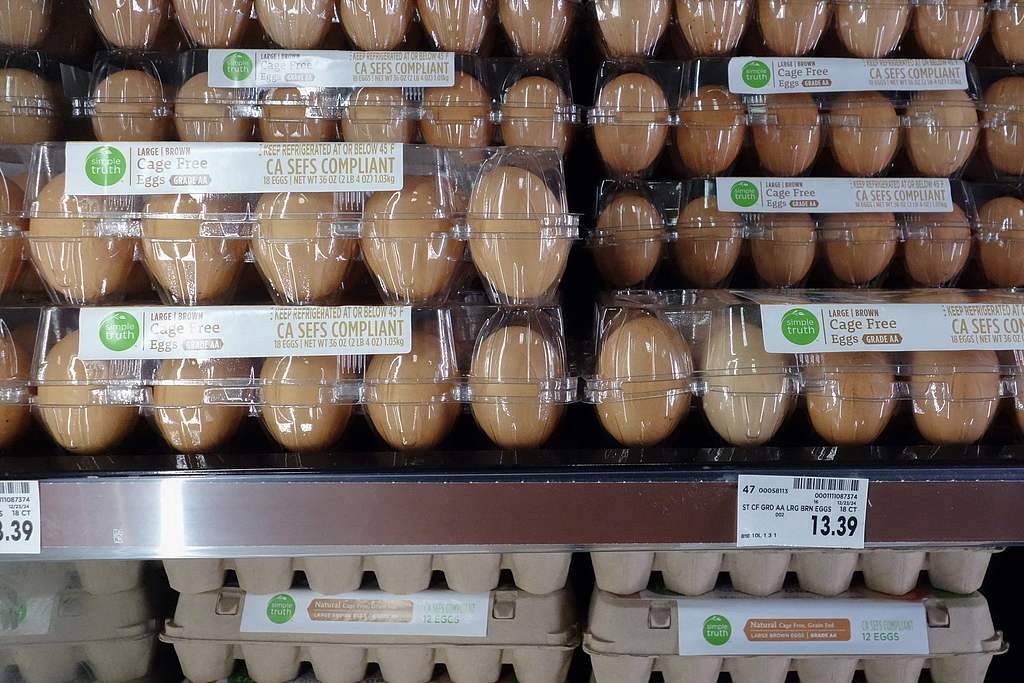
Eggs, once an ordinary staple on American tables, are now being smuggled across borders alongside narcotics—a reflection of the wild surge in U.S. egg prices. In February, egg prices soared 58.8% year-on-year. A dozen eggs now averages nearly $8, exceeding $10 in some regions. Meanwhile, in Mexico, the same eggs cost only one-third as much.
Due to supply shortages, supermarkets and grocery stores across the U.S. have posted purchase limits on egg shelves, with premium-priced eggs quickly selling out. A New Hampshire company called "Rent the Chicken," which allows customers to rent two hens for about $600 for six months to secure a steady egg supply, has rapidly gained popularity.
Eggs are becoming the new “Bitcoin” in an era of trade wars.
Double Blow: Avian Flu and Policy Shifts
The root of this “egg crisis” traces back to the outbreak of highly pathogenic avian influenza (HPAI) at the end of 2024.
Data from the U.S. Department of Agriculture shows that more than 6 million laying hens were culled in California alone to contain the virus. The flu has spread nearly nationwide, with Indiana and Ohio hit hardest.
John Parker, an egg farmer, lamented that he had to cull 150,000 birds entirely, halting production completely. It will take at least six months to resume normal operations.
Beyond avian flu, “cage-free” policies enacted in several U.S. states have further tightened supply. Ten densely populated states—including California, Massachusetts, and Washington—have passed laws requiring eggs to come only from cage-free environments. While more humane, this farming method is more vulnerable to disease outbreaks. Agricultural analyst Brian Ernest noted, “When cage-free farms face an outbreak, replenishing supply becomes extremely slow.”
Meanwhile, demand for eggs continues to rise. The popularity of high-protein, low-carb diets and the growth of all-day breakfast chains have driven up consumption.
Under this dual pressure of supply and demand, the USDA predicts egg shortages could persist throughout 2025—the recovery timeline depending heavily on how quickly avian flu is controlled and the industry rebounds.
Cal-Maine Foods, one of America’s largest publicly traded egg producers, has seen its profits soar, with its stock rising about 50% over the past year.
Tariff Wars Add Fuel to the Fire
Facing domestic shortages, the U.S. government has sought external solutions. In March, it approached European countries like Denmark about importing eggs—but was politely declined.
Data from the USDA shows the U.S. imported over 1.6 million dozen eggs in the first two months of 2025. Agriculture Secretary Brooke Rollins announced plans to source eggs from countries such as Turkey and South Korea to ease the shortage.
However, the Trump administration’s “reciprocal tariff” policy has made this relief effort backfire. Turkey, South Korea, and other egg-exporting nations now face steep tariffs, significantly raising import costs. Secretary Rollins warned this move could push U.S. egg prices even higher in the short term. Financial analysts caution that retailers and suppliers will likely pass these added costs onto consumers already struggling with high prices.
In the midst of tariff wars, eggs have landed squarely on politicians’ negotiation tables.
Zulkifli Hasan, Indonesia’s Coordinating Minister for Food, stated, “These eggs could become a negotiating tool with the U.S. over the 32% ‘reciprocal’ tariffs imposed on Indonesia. Indonesia holds great potential to supply eggs to countries affected by avian flu—including the United States.”
Eggs: The New Bitcoin
In the U.S., eggs have evolved into a peculiar form of “hard currency.”
In Silicon Valley, where egg shortages are severe, a tech employee joked, “We spend our days discussing how AI will change the world, yet we line up to buy a carton of eggs—eggs that have become more valuable than the Bitcoin I hold.”
Bitcoin is prized for its scarcity—its total supply capped at 21 million coins. Similarly, U.S. egg prices have surged due to constrained supply. The avian flu wiped out millions of laying hens—an event analogous to a “halving” in the Bitcoin world—abruptly reducing market availability.
More strikingly, eggs and Bitcoin have sparked similar social phenomena.
In the Bitcoin ecosystem, “arbitrage trading” (or “brick moving”) is a well-known profit strategy. Traders exploit price differences across exchanges. The most famous example is the “Kimchi Premium,” where Bitcoin prices on South Korean exchanges often exceed global averages by as much as 20%. Savvy traders buy Bitcoin internationally and sell high in Korea, pocketing the difference. Though simple in theory, this practice faces real-world hurdles including regulation, capital controls, and transaction fees.
Today, egg smugglers along the U.S.-Mexico border are doing something eerily similar. They buy eggs in Mexico at around $1.70 per dozen and sell them in the U.S. for $8 or more—profiting over 400%. This “egg arbitrage” mirrors Bitcoin trading, except digital assets are replaced with physical goods.
Just as Bitcoin has “miners” who mine coins, chickens have become the new mining rigs. Many American households are now “mining eggs” in their backyards. One Meta employee achieved “egg self-sufficiency” by raising chickens at home and was dubbed “the truly wealthy one” by coworkers.
Egg smugglers resemble early underground Bitcoin exchanges—they both operate outside regulations, exploiting price discrepancies for profit. The only difference is that Bitcoin’s value rests on consensus, while eggs derive their worth from fundamental human needs.
When a single egg reaches the price of 6 yuan ($0.83), we must ask: In an age of persistent inflation, frequent black swan events, and broken supply chains, what will be the next “Bitcoin”? Will more everyday essentials become new forms of “hard currency” due to scarcity?
The answer may well be yes. On April 9 at 12:01 p.m., the U.S. imposed a 104% tariff on Chinese goods.
“With 10% profit, it ensures its use everywhere; with 20%, it becomes lively; with 50%, it grows bold; with 100%, it breaks all legal barriers; with 300%, men will risk their lives, even face the gallows.”
Driven by profit, the U.S.-Mexico border may soon be flooded with various Chinese goods.
This “egg crisis” might be just a glimpse of a new economic normal—not only for the U.S., but for the global economy.
A new storm is coming. And this is only the beginning.
Join TechFlow official community to stay tuned
Telegram:https://t.me/TechFlowDaily
X (Twitter):https://x.com/TechFlowPost
X (Twitter) EN:https://x.com/BlockFlow_News
 深潮TechFlow