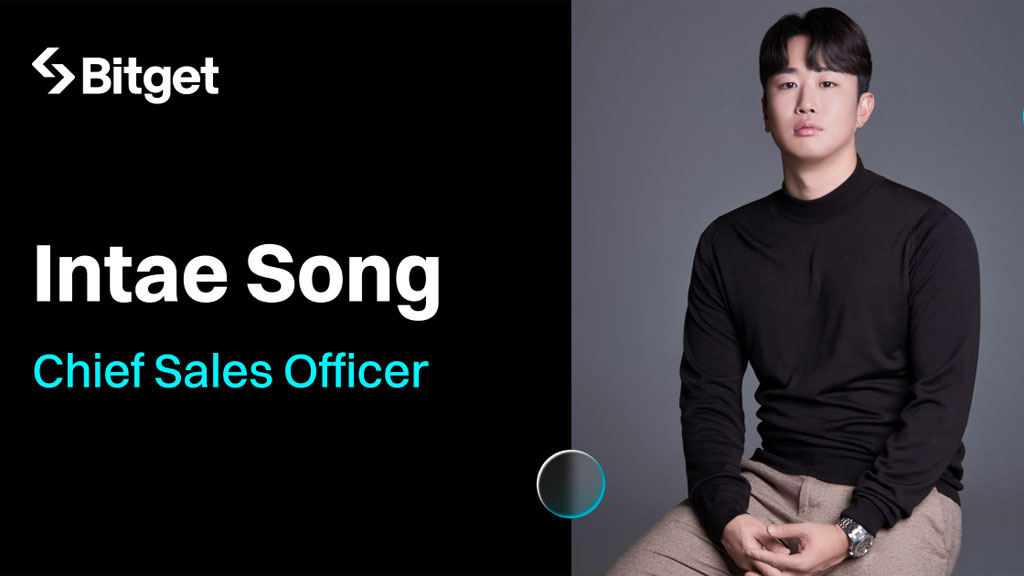
Interview with Bitget Chief Sales Officer Intae Song: Results-Oriented, High Performers Will Be Fully Rewarded
TechFlow Selected TechFlow Selected
Interview with Bitget Chief Sales Officer Intae Song: Results-Oriented, High Performers Will Be Fully Rewarded
The most important point—embrace uncertainty.
 Navigating Web3 tides with focused insights
From an individual investor to Bitget's Global Chief Sales Officer, Intae Song shares in this article his motivations and challenges entering the crypto industry, reflects on the team culture and development journey during Bitget’s early entrepreneurial days, details his strategies and experiences in global expansion, and offers insights into the future of derivatives markets, the role of institutional investors, and the convergence of blockchain and AI. He particularly emphasizes maintaining a habit of meeting two clients face-to-face every week—a practice that has helped him capture market shifts promptly and adjust strategic and product directions more effectively. He also highlights the importance of continuous learning and adapting to market changes, offering advice and warnings for newcomers.
The views expressed in this article are those of the author and do not represent Wushuo's opinions.
1. How did you initially enter the crypto industry as an individual investor? What were the key triggers or inspirations at the time?
What was the biggest challenge during this process, and how did you overcome it?
Entering the crypto industry wasn’t something that happened overnight. As an individual investor, I was originally focused on inefficiencies within the traditional financial system—particularly settlement cycles and barriers to cross-border payments. As I deepened my understanding of cryptocurrency technology and blockchain, I realized it could not only solve these problems but also create entirely new ways of financial interaction. It was this recognition of technological potential that ultimately led me to fully commit myself to the space.
One of the greatest challenges I faced was navigating the extreme volatility of crypto markets and filtering through information noise. In the early stages, I was often confused by technical details—identifying which pieces of information were actually valuable for investment decisions proved difficult. At times, overwhelming market sentiment would push me toward herd behavior. Learning how to stay rational and make long-term sound judgments was a hurdle I gradually overcame.
What eventually clarified my thinking was applying traditional investment analysis frameworks to the crypto space. By focusing on project fundamentals and real-world applications rather than chasing market hype, I learned to distinguish signal from noise. This mindset strengthened my conviction in the crypto industry.
2. When you joined Bitget as an early employee, what was the team size and company atmosphere like? Any memorable stories from the startup phase?
When I joined, Bitget was still a small team of fewer than 50 people. My department had only three members. Due to limited manpower, everyone wore multiple hats—but we shared a common belief: cryptocurrencies could reshape traditional finance. Despite the steep learning curve, we maintained a hands-on mentality, pushing things forward relentlessly. The crypto industry evolves at lightning speed, and in the early days, we were racing against time—not only building products aligned with market demand but also establishing robust infrastructure to support high-volume trading while continuously launching innovative features.
One particularly memorable experience occurred during the early launch phase of Bitget’s futures market. After hours, our team stayed behind to debug a critical issue that could have prevented users from opening or closing positions under extreme market conditions. The atmosphere was tense, but everyone supported each other, working side by side to ensure an on-time release. Beyond technical hurdles, customer service posed its own challenges. With no dedicated support staff at the time, I personally handled a large volume of user feedback. These experiences taught me that teamwork and adaptability are essential to success.
The team culture back then was intense yet highly collaborative. We shared a unified goal and a strong drive for growth and progress, because the entire industry was striving to earn trust and recognition from the market. I believe this mindset remains relevant today—maintaining foresight, anticipating user needs, and actively shaping the industry we aim to lead.
3. What roles did you play or responsibilities did you take on during Bitget’s global expansion? What major challenges did you encounter?
Can you share a particularly memorable case when expanding into a new market?
Successful exchanges each have their strengths, and one of my core responsibilities has been leveraging derivatives trading to uncover Bitget’s competitive edge. However, introducing Bitget to different markets involves far more than simply launching contract trading. We must deeply understand cultural differences, as they directly influence trading behaviors. Additionally, regulatory requirements and licensing vary significantly across regions. Entering a new market without proper understanding can backfire; moving too slowly risks missing opportunities. Therefore, close collaboration with legal teams and local stakeholders is crucial to ensure our products meet both local needs and global standards.
Through in-depth market research, we tailor products to specific regions instead of applying a one-size-fits-all model. While no single event stands out during our expansion, the key lesson learned is that successful market entry depends on the right strategy—achieved through close coordination with relevant regulatory bodies.
4. From sales lead to business partner, and now CSO—what changes and upgrades have come with these evolving roles? Could you explain the specific responsibilities of each position? What will be your focus going forward?
My core mission hasn’t changed significantly—I remain focused on expanding Bitget’s partnership network and sales opportunities. However, my scope now includes a stronger emphasis on global expansion.
Key priorities going forward include:
Global Market Expansion: Continuing to expand Bitget’s presence in emerging markets, especially Southeast Asia, Latin America, and other underserved regions. We’ll customize products and strategies based on regional culture, regulations, and market demands to maximize global growth.
Innovative Products and Services: As the crypto industry evolves, we’ll continue responding to market needs with platform innovations. For example, recently launched offerings such as Bitget Seed and Early Hunter airdrop help users discover and access high-potential assets early.
Deepening Institutional and VIP Services: Building a more diversified user base; institutional clients will benefit from 24/7 dedicated service, upgraded API interfaces, exclusive data dashboards, lower fees, faster execution speeds, higher trading limits, flexible margin options, and customized wealth management solutions.
Regulatory Compliance and Industry Collaboration: With global crypto regulation maturing, we’re placing greater emphasis on compliance to ensure operations align with local laws in every market. We’re also strengthening partnerships across and beyond the industry to build a robust ecosystem of collaborators, enhancing Bitget’s competitiveness and brand influence.
5. Bitget is known for its "wolf culture"—is this especially evident within the sales team? What are the current team’s main goals? How do you view the outlook for the derivatives market?
As I mentioned earlier, Bitget’s core strategy centers on creating differentiated advantages. Rather than “wolf culture,” I’d describe our ethos as practicalism—results-driven, where individuals who deliver outcomes receive full empowerment and rewards. Efficiency and simplicity are paramount. For instance, last year we distributed $70 million in bonuses to over 1,700 employees, regardless of bull or bear markets—the annual bonus never arrives late. Our focus is collective progress toward shared goals, not internal competition. Collaboration is a core principle, supported by an open feedback mechanism. The sales team’s mission is to bring crypto into the mainstream. While external trends help drive industry growth, the sales team must constantly monitor shifts in market demand and regulatory developments to ensure Bitget remains a top choice for investors.
I believe the derivatives market will increasingly cater to professional traders and institutional investors. In traditional finance, derivatives are primarily used for hedging and leveraged strategies—the same trajectory applies to crypto. As institutional capital enters, trends toward compliance and structured products will accelerate. Currently, the core users of derivatives are high-frequency traders and arbitrageurs, but more institutions are beginning to allocate digital assets and explore complex trading strategies. With clearer regulations, market liquidity and depth will improve further, potentially leading to more sophisticated, customized derivative instruments. We’ll continue refining our products to provide richer tools and a stable trading environment for both retail and institutional users.
6. I heard you still maintain the habit of meeting two clients per week—how has this benefited you?
Yes, it’s a habit I’ve kept since joining the company, and I don’t plan to stop. This practice has been extremely valuable. Direct conversations allow me to hear firsthand about client needs and feedback, helping us continuously improve our products and services. Face-to-face interactions are among the most direct and effective ways to truly understand customer perspectives and detect market shifts. Features like Bitget Seed, for example, originated from ideas proposed by clients—we refined them internally and turned them into actual products.
This kind of dialogue not only helps me spot new opportunities faster but also enables timely problem-solving, giving me greater confidence in decision-making because I can ground our strategies in real user needs. Moreover, these interactions deepen mutual trust and help establish longer-term, more stable relationships.
7. Which cryptocurrencies do you currently hold? What is your largest holding? Your largest altcoin and meme coin holdings? How do you view the current cooling of alts versus the relative heat of memes?
As an individual investor, staying sensitive to market dynamics is essential—my personal investment strategy integrates broader industry trends. My portfolio includes major assets like BTC and ETH, along with select quality altcoins and projects in emerging sectors.
BGB holds a special place in my portfolio. It’s not just an investment—it feels like a partner that has grown alongside us. Its value appreciation reflects market recognition of our efforts, and this positive feedback loop motivates the team to keep pushing forward.
Regarding current market trends, the recent slowdown in altcoins stems largely from macroeconomic conditions, capital flows, and market sentiment. In contrast, the surge in meme coins reflects shifting short-term preferences, often fueled by community culture and emotional momentum—meme assets can generate outsized returns in certain phases. But in the long run, high-quality projects will prevail through technological innovation and real-world utility. Under current conditions, investors should pay attention to short-term sentiment while managing risk prudently.
8. Which sector in crypto are you currently most focused on? What’s your outlook for future market trends?
I’m consistently tracking structural shifts and long-term growth opportunities in the crypto market. Right now, my primary areas of interest include derivatives markets, institutionalized trading, and the integration of AI with blockchain.
In the derivatives space, contract trading is maturing rapidly, with growing participation from institutions and professional traders. Bitget continues optimizing user experience to meet increasingly sophisticated trading demands.
On institutional trading: with the launch of Bitcoin spot ETFs, more traditional financial institutions are entering crypto. Going forward, compliance, liquidity management, and professional-grade trading tools will become new growth drivers. As the industry matures, regulatory frameworks will clarify further, creating a safer environment for institutional adoption.
As for AI and blockchain convergence, AI is already transforming the industry through intelligent trading, data analytics, and security risk control. Looking ahead, AI’s potential in smart contracts, automated trading, and fraud detection deserves close attention.
9. How do you balance work and life? What does your daily schedule look like? Any hobbies or interests?
Rather than “work-life balance,” I’d say “work-life integration” better describes my reality. There’s no fixed nine-to-five routine—work and life often intertwine.
Golf is my favorite sport. Interestingly, almost all my golf partners are clients I’ve known for over three years. Over time, playing together has turned business relationships into genuine friendships. I introduce them to golf, and our bond deepens. Professionally, we support each other—it’s incredibly rewarding.
Besides golf, I cook for my family every weekend, experimenting with new recipes. To me, cooking resembles crypto investing in some ways: both require patience and finding the right “formula,” adjusting ingredients according to taste and needs. My cooking skills may be average, but finishing a meal brings a sense of accomplishment—especially when sharing it with loved ones and providing meaningful, quality time.
I enjoy light-hearted banter with teammates, keeping the atmosphere relaxed. Though work is busy, occasionally shifting gears and maintaining a calm mindset is important. I’m deeply grateful for my family’s understanding and support. My wife and son are my greatest motivation, so I make it a point to set aside weekends or free moments to spend with them and enjoy quality family time.
I believe true efficiency isn’t just about working hard—it’s about knowing how to shift rhythms and find your own balance between speed and stillness.
10. As someone who transitioned from individual investor to executive, what advice or warnings would you give to young people interested in entering the crypto industry or pursuing trading-related careers?
The crypto industry differs fundamentally from traditional finance—it’s not merely a new asset class, but an entirely new financial paradigm. To succeed here, curiosity is vital. You must continuously learn new technologies and models, challenge existing assumptions, and adapt quickly to rapid change.
When it comes to trading, practice outweighs theory. Markets don’t follow textbook rules—real growth comes from repeated hands-on experience. My advice: start small, develop your own strategy, and focus more on data than emotions. Trading isn’t gambling; long-term success hinges on understanding and managing risk.
Finding the right community is also crucial. Whether through mentors, trading groups, or joining industry companies, engaging with experienced individuals accelerates your growth. The industry moves fast—walking alongside talented people helps you identify your strengths and direction sooner.
Most importantly—embrace uncertainty. Crypto markets are volatile, but every challenge carries opportunity. Stay patient, keep learning, manage risks well, and you’ll find your place in this industry.
Join TechFlow official community to stay tuned
Telegram:https://t.me/TechFlowDaily
X (Twitter):https://x.com/TechFlowPost
X (Twitter) EN:https://x.com/BlockFlow_News
 吴说区块链
吴说区块链