








White House Crypto Summit: Is America Now Leading the Bitcoin Revolution?
TechFlow Selected TechFlow Selected
White House Crypto Summit: Is America Now Leading the Bitcoin Revolution?
What happened at the crypto summit?
 Navigating Web3 tides with focused insights
Author: Stellaris
Translation: Baicai Blockchain
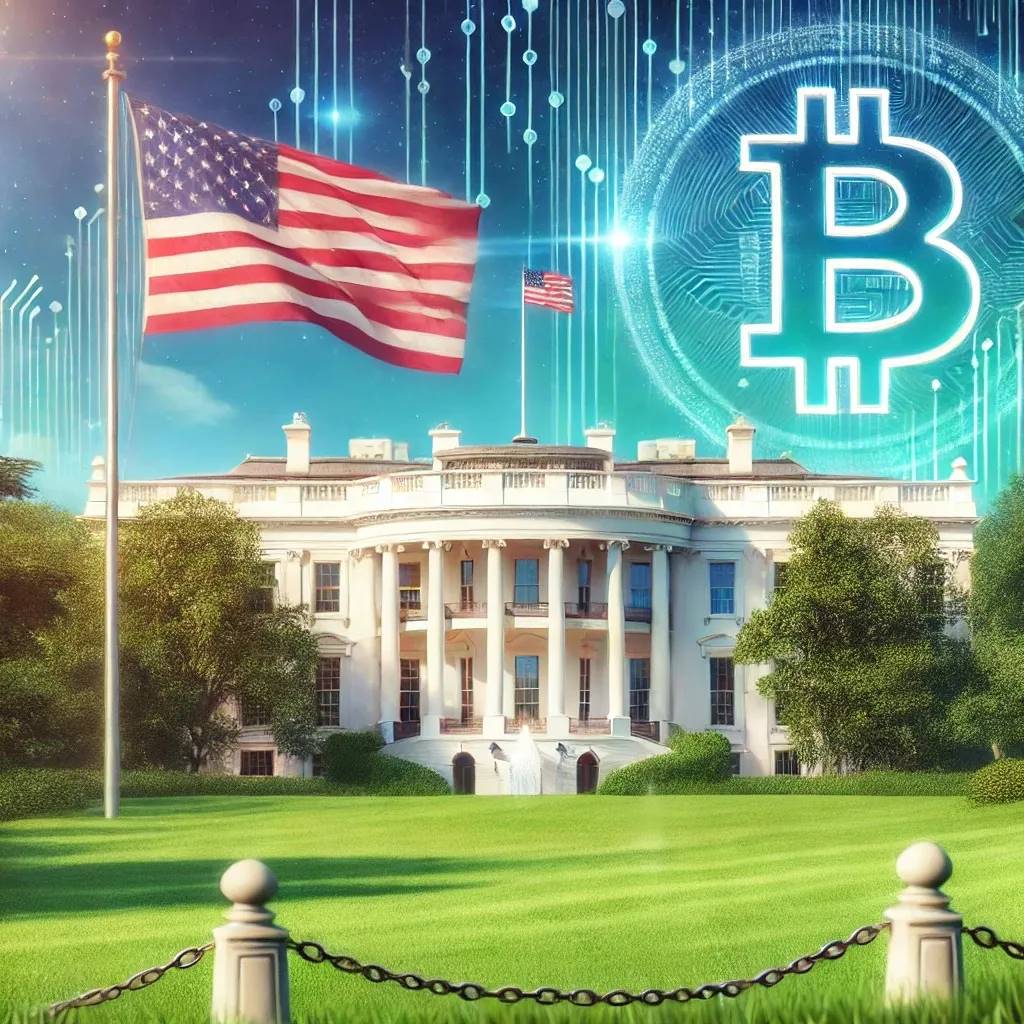
For years, cryptocurrency has been a battleground between innovation and regulation. The White House crypto summit was supposed to be a turning point—a gathering of policymakers, financial leaders, and blockchain advocates to discuss the future of digital assets in the United States.
Amid market volatility and regulatory uncertainty, the industry looked to this summit for clarity. Would it provide clear direction, or would it turn out to be yet another hollow political spectacle?
Interestingly, in the days leading up to the summit, the crypto market saw a slight rebound. Some attributed this to new stablecoin regulations; others pointed to institutional accumulation and signals from the Federal Reserve.
So, what actually happened at the crypto summit? Did it truly drive the market, or did it simply coincide with a natural recovery?
1. Expectations vs. Reality
In the weeks before the summit, policymakers indicated discussions would cover comprehensive regulatory frameworks for stablecoins and digital assets. Rumors included potential restrictions on decentralized finance (DeFi), clearer tax policies, and even the possibility of a U.S. central bank digital currency (CBDC).
For the industry, this was a pivotal moment. Would regulators finally acknowledge crypto as part of the financial system—or continue viewing it with skepticism?
-
What actually happened: Some progress, more uncertainty
-
Stablecoin regulation advanced: The Senate Banking Committee passed the GENIUS Act, aiming to integrate stablecoins into the traditional financial system.
-
Bitcoin and DeFi were ignored: Despite external expectations, the summit barely mentioned Bitcoin regulation, staking protocols, or decentralized finance (DeFi).
-
No executive actions taken: Unlike previous regulatory meetings, this summit introduced neither new restrictions nor a clear path toward broad crypto adoption.
-
Stablecoins gained regulatory attention, but the broader crypto industry remains in limbo.
2. What Caused the Crypto Market Crash? Is Recovery Coming?
A week before the summit, the crypto market took a major hit. Bitcoin dropped 25% from its all-time high, and other altcoins followed sharply lower. What triggered this crash?
Several factors converged to drive the downturn:
-
Institutional liquidation: After Bitcoin reached record highs, large investors took profits, and selling pressure triggered a chain reaction.
-
Interest rate policy: Remarks from the Federal Reserve on inflation and economic tightening unsettled markets.
-
Regulatory uncertainty: Fears of sweeping regulatory crackdowns intensified market volatility.
3. Will Cryptocurrency Rise Again?
Despite fear dominating headlines, more optimistic signs are emerging. Signals of recovery are appearing—slowly but clearly:
-
Increased institutional interest in stablecoins: Major financial institutions like Bank of America and PayPal are investing in blockchain-based payment systems.
-
Bitcoin's market share is growing: As traders exit riskier altcoins, Bitcoin’s dominance in the market is increasing.
-
No major regulatory crackdown: Unlike past sell-offs driven by regulatory fears, this summit remained relatively neutral, allowing market sentiment to stabilize.
While the summit itself wasn’t the cause of the recovery, progress on stablecoin regulation has helped sustain this trend.
4. Strategic Bitcoin Reserves – Will Governments Support Crypto?
Imagine a world where nations hold Bitcoin just like gold. Some governments and institutions have already started doing so:
El Salvador adopted Bitcoin as legal tender and holds it as a reserve asset.
Private companies like MicroStrategy have invested billions betting on Bitcoin as the future "digital gold."
What about the U.S.? So far, the United States has been reluctant to formally recognize Bitcoin’s status. However, the idea gained traction when President Trump signed an executive order establishing a "Strategic Bitcoin Reserve," officially positioning Bitcoin as a national reserve asset.
Still, the U.S. is currently more focused on easily regulated stablecoins. Is the government being overly cautious about supporting Bitcoin—or is this trend inevitable?
While MicroStrategy and some governments are betting on Bitcoin, the U.S. remains cautious, favoring stablecoins instead.
5. Stablecoins vs. Cryptocurrencies
Unlike Bitcoin, which experiences sharp swings due to market speculation and macroeconomic signals, stablecoins are designed to maintain a fixed value—typically pegged to fiat currencies like the U.S. dollar. This price stability makes them more attractive within traditional financial environments, where predictability and compliance are paramount.
Stablecoins have several real-world applications:
-
Institutional trading: Financial institutions and fintech platforms use stablecoins for faster, cheaper settlements without relying on volatile cryptocurrencies.
-
Regulated financial products: Banks and payment providers are beginning to experiment with integrating stablecoins into regulated digital offerings.
-
Cross-border payments: International transfers via stablecoins can be nearly instantaneous and significantly cheaper than traditional SWIFT systems.
Why are stablecoins more favored? While Bitcoin always represents decentralization and monetary freedom, stablecoins are gaining favor among regulators and institutions. Why? Because they offer the benefits of blockchain without the burden of price volatility.
Governments see them as “controllable” crypto: Unlike Bitcoin, which operates beyond institutional control, stablecoins can be monitored, paused, or restricted—making them easier to integrate into regulated financial frameworks.
They can be taxed, audited, and backed by reserves. This opens the door to mass adoption by banks and corporations.
The GENIUS Act aims to bring stablecoins into the banking system, treating them as digital cash rather than speculative assets. If passed, this could become the first bridge between decentralized finance and traditional institutions.
In short, stablecoins are becoming the government’s preferred entry point into blockchain, while Bitcoin remains the decentralized alternative.
6. What’s Happening With Cryptocurrency?
No immediate crash: Despite fears of overregulation, the crypto market did not collapse after the summit. Many assets even saw modest gains.
More stablecoin regulation coming: Lawmakers made it clear that stablecoins are the first step in integrating crypto into the financial system, meaning stricter rules may be on the horizon.
Bitcoin untouched by regulation: Despite being central to the crypto narrative, Bitcoin was almost entirely absent from the summit’s official outcomes.
In the long run?
CBDCs may become a priority: As interest in central bank digital currencies grows, the U.S. may accelerate development of its own CBDC to maintain control over monetary policy in a digital future.
Institutional adoption of stablecoins is rising: Banks, fintech firms, and even traditional financial giants are beginning to integrate stablecoin infrastructure, driving broader adoption.
The crypto legal framework remains unclear: Although discussions have begun, the U.S. still lacks a unified regulatory structure for crypto. Projects, investors, and even regulators continue navigating in uncertainty.
7. Summary
This summit was not mere political theater, but neither was it a game-changing event. It brought cryptocurrency into the spotlight—but due to a lack of bold action or clear direction, most core issues remain unresolved.
Days after the summit, President Trump delivered a major speech at the New York Digital Assets Summit, reaffirming his pro-crypto stance and pledging to make the U.S. the “undisputed Bitcoin superpower.” His remarks added weight to a broader narrative—that cryptocurrency is becoming a central part of America’s economic and political agenda.
The market is already recovering. Bitcoin and other assets had begun rebounding before the summit, driven by improving sentiment, technical factors, and signs of institutional buying. The summit may have boosted optimism, but it was not the direct catalyst for the rally.
Investors should focus on actual regulatory developments, not just PR-driven events. Public speeches and summits may grab headlines, but real policy changes—such as stablecoin legislation or tax clarity—are what will ultimately drive the market in the long term.
Join TechFlow official community to stay tuned
Telegram:https://t.me/TechFlowDaily
X (Twitter):https://x.com/TechFlowPost
X (Twitter) EN:https://x.com/BlockFlow_News
 @thecapital_io






