








White House Crypto Summit Behind-Closed-Doors Meeting Revealed: What Proposals Did Industry Leaders Make?
TechFlow Selected TechFlow Selected
White House Crypto Summit Behind-Closed-Doors Meeting Revealed: What Proposals Did Industry Leaders Make?
Five proposals were submitted for official consideration at this crypto summit.
 Navigating Web3 tides with focused insights
Author: Veronica Irwin
Compiled by: TechFlow
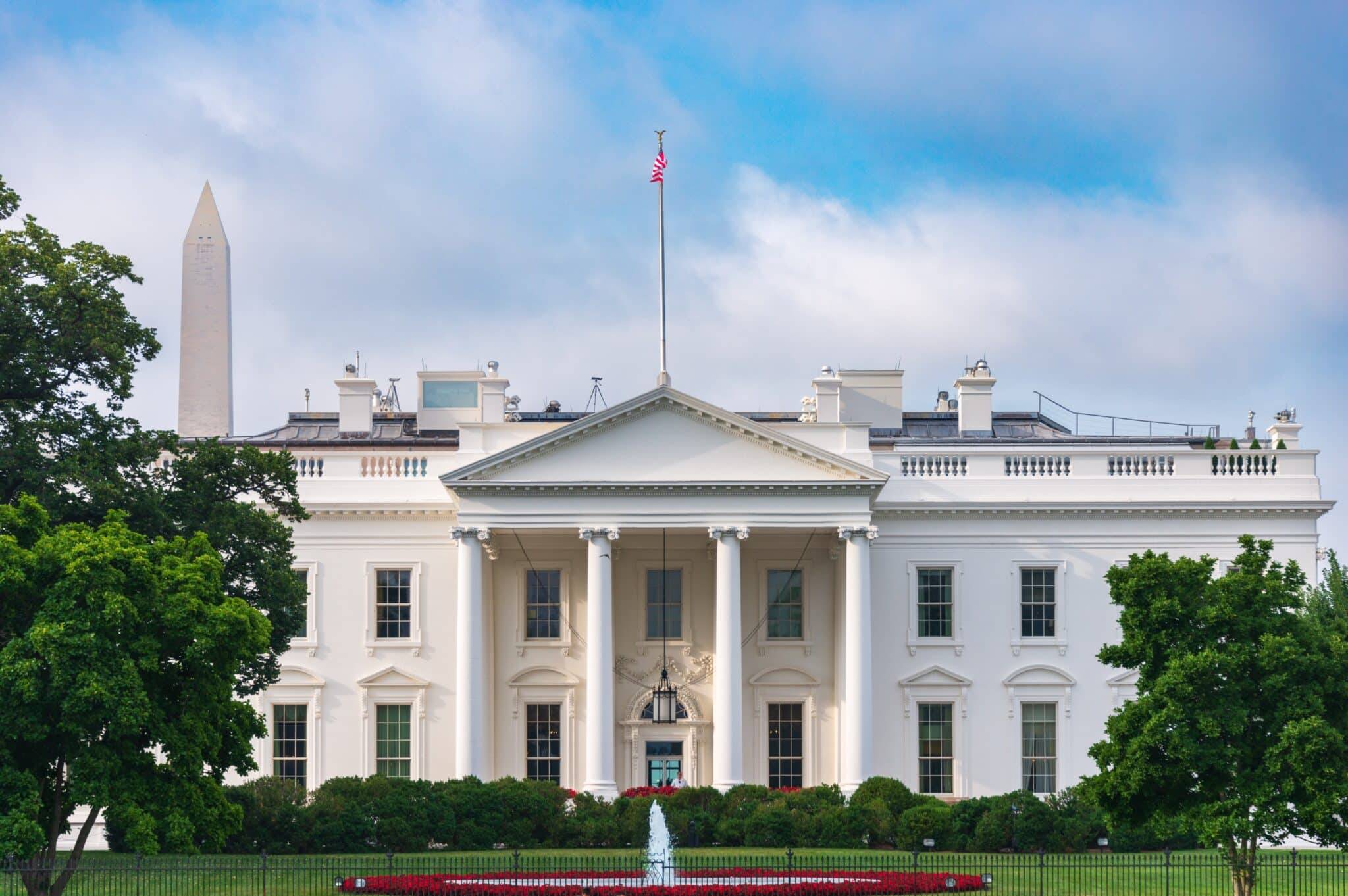
On March 7, the first-ever White House Crypto Summit took place in Washington. Before the official livestream began, attendees were given a rare opportunity to directly present specific policy recommendations to the White House crypto team and top regulatory agencies.
Although President Trump did not attend this closed-door meeting, the event still featured a powerful lineup including "Crypto Czar" David Sacks, Executive Director of the Presidential Digital Assets Advisory Council Bo Hines, Treasury Secretary Scott Bessent, SEC Commissioner Hester Peirce, CFTC Acting Chair Caroline Pham, Small Business Administration (SBA) Administrator Kelly Loeffler, and House Majority Whip Tom Emmer.
During the private session, David Sacks invited participants to suggest key policy priorities for the administration. While discussion details remain confidential, according to Unchained, five proposals were formally submitted for official consideration.
Former CFTC Chairman Chris Giancarlo: Empower "White Hat Hackers" to Serve National Interests
Chris Giancarlo, former CFTC chairman and the only representative from Trump’s first term administration attending this summit, proposed that the U.S. government revive a more than 200-year-old policy tool—Letters of Marque and Reprisal. This mechanism authorizes private entities to act on behalf of the government by attacking foreign adversaries’ websites and seizing their assets. Giancarlo suggested that modernized Letters of Marque could allow the U.S. government to hire private firms—“white hat hackers”—to combat foreign cyber threats such as the North Korea-linked Lazarus Group, which is alleged to have stolen over $6 billion.
Historically, Letters of Marque authorized private ships to attack enemy fleets and return captured property to the state. However, the policy previously led to piracy issues. Giancarlo’s proposal aims to repurpose this tool in a modern context to protect America’s digital asset security.
Treasury Secretary Scott Bessent reportedly showed strong interest in the idea and requested copies of a commentary article co-authored by Giancarlo and CoinFund managing partner Chris Perkins published in Cointelegraph for further study.
Michael Saylor, Co-Founder of MicroStrategy: The U.S. Should Massively Buy Bitcoin
Michael Saylor, co-founder of MicroStrategy, proposed at the summit that the U.S. government should purchase large quantities of bitcoin. According to CoinDesk, Saylor expressed his hope that the U.S. would hold between 5% and 25% of the global bitcoin supply within the next 20 years—that is, approximately 1,050,000 to 5,250,000 bitcoins, valued currently between $83 billion and $417 billion.
Saylor’s proposal is more aggressive than Senator Lummis’s “Bitcoin Bill,” which calls for the U.S. to buy one million bitcoins (about 5% of total supply) over the same period. That bill previously failed to pass due to political divisions within Congress and insufficient Republican support. Critics also argue that holding such a large amount of bitcoin could contradict the core principle of decentralization and lead to centralization within the bitcoin ecosystem.
Legal experts note that while the president can pursue budget-neutral strategies via executive order, direct federal purchases of bitcoin may require congressional approval under the Constitution, which grants spending authority to Congress. Nevertheless, some pro-bitcoin advocacy groups have drafted potential executive orders aimed at circumventing these legislative constraints.
In addition, according to reports by CoinDesk and photos of Saylor’s notes circulating on social media, he also introduced a new classification framework for crypto assets to address current regulatory uncertainty. He categorized digital assets into four types: securities tokens used for capital creation; asset-backed tokens supported by securities or commodities; digital currencies; and store-of-value tokens designed for capital preservation.
Matt Huang, Co-Founder and Managing Partner of Paradigm: Call for Justice for Tornado Cash Developer Roman Storm
Matt Huang, co-founder and managing partner of Paradigm, did not propose new policy initiatives at the summit but urged the government to re-examine an overlooked case—the Department of Justice’s prosecution of Tornado Cash developer Roman Storm. Huang called on the DOJ to reconsider charges of money laundering, unlicensed money transmission, and sanctions violations against Storm.
Tornado Cash is a decentralized cryptocurrency mixer built on the Ethereum blockchain, primarily designed to enhance user privacy by obfuscating transaction trails. In the six months prior to being sanctioned by the U.S. Treasury’s Office of Foreign Assets Control (OFAC), Tornado Cash processed over $2.8 billion in transactions. However, in August 2022, OFAC imposed sanctions on Tornado Cash, citing its failure to prevent use by sanctioned entities—including the North Korean hacking group Lazarus—for illicit activities. A year later, Tornado Cash developer Roman Storm was indicted.
Advocates in the DeFi community warn that this case could have far-reaching implications for the entire decentralized finance sector. Holding developers criminally liable for third-party misuse could stifle innovation in privacy tools and create a chilling effect across DeFi projects. While the SEC has dropped several civil cases against crypto firms, the DOJ has yet to make further moves on this criminal case. Paradigm has donated $1.25 million toward Storm’s legal defense ahead of his trial scheduled for April. Huang previously stated on X: “This case attempts to hold software developers criminally responsible for third-party misconduct, which could severely impact not only the crypto industry but the broader tech sector.”
David Bailey, CEO of BTC Inc and Bitcoin Magazine: Push for the U.S. to Urgently Establish a Bitcoin Reserve
David Bailey, CEO of BTC Inc and Bitcoin Magazine, urged the White House at the summit to take urgent action to acquire bitcoin at scale. He advocated for passage of Senator Lummis’s Bitcoin Bill, which proposes that the U.S. government hold one million bitcoins over the next two decades. Bailey emphasized that enshrining a strategic bitcoin reserve into federal law is critical to prevent future administrations from reversing the policy.
Bailey also stressed the need for swift action to compete with other nations. For example, El Salvador and Bhutan have already begun accumulating bitcoin, while countries like Germany, Brazil, and Poland are considering establishing bitcoin reserves. He even suggested that the U.S. could collaborate with bitcoin miners, offering resources such as hydropower in exchange for miners contributing hash power to support the strategic bitcoin reserve.
Additionally, Bailey proposed issuing bitcoin-backed Treasury bonds using the strategic reserve. He explained that debt backed by appreciating assets like bitcoin could reduce the U.S. government’s interest expenses and increase the appeal of U.S. Treasuries.
Vlad Tenev, CEO of Robinhood Markets: Advance Asset Tokenization to Reshape the Investment Landscape
Vlad Tenev, CEO of Robinhood Markets, raised a key proposal at the summit: leveraging blockchain technology to tokenize traditional financial instruments such as private company equity.
Tenev argued that asset tokenization would give American businesses a global competitive edge. He explained: “It benefits companies by attracting more potential shareholders; it benefits global investors by giving them easier access to high-quality enterprises; and it benefits entrepreneurs by making fundraising simpler.”
Moreover, Tenev advocated for lowering the current wealth-based thresholds for accredited investors, allowing ordinary individuals to purchase tokenized equity and invest in pre-IPO companies. Currently, U.S. regulations require individuals to have a net worth exceeding $1 million or annual income above $200,000 ($300,000 for joint income) to qualify as accredited investors—a barrier that excludes many average investors from early-stage opportunities in high-growth startups.
In a previous op-ed, Tenev criticized this wealth threshold as unfairly limiting investment potential for everyday Americans. He recommended that the SEC allow investors to self-certify based on demonstrated understanding of investment risks rather than relying solely on financial status. Such a change could open private market investing to a much broader population, fundamentally transforming America’s investment landscape.
Notably, Robinhood’s investment platform is built around the core principle of reducing investment barriers, primarily serving low- and middle-income users. If tokenized assets become more widely available, both the platform and its user base would benefit directly.
Outlook
While no government representatives at the summit committed to adopting any specific proposal, a White House insider said the primary goal was to gather input and feedback from the crypto industry. He added: “The summit was very successful and received high praise from both government and industry leaders.”
Join TechFlow official community to stay tuned
Telegram:https://t.me/TechFlowDaily
X (Twitter):https://x.com/TechFlowPost
X (Twitter) EN:https://x.com/BlockFlow_News
 @Unchained_pod






