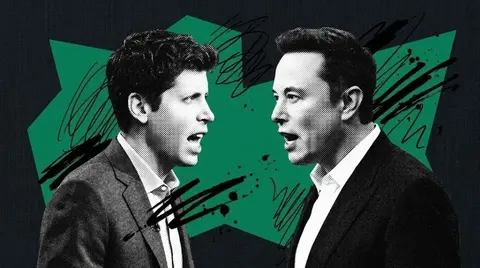
Musk bows his head in "regret"—Silicon Valley is ultimately no match for the White House
TechFlow Selected TechFlow Selected
Musk bows his head in "regret"—Silicon Valley is ultimately no match for the White House
While the relationship between Musk and Trump is difficult to fully repair, it may improve in the coming months.
 Navigating Web3 tides with focused insights
Author: Jinshi Data
Elon Musk, the tech billionaire, said Wednesday he regrets some of his social media posts last week about U.S. President Donald Trump, following a public feud that has fractured their once-close alliance.
The conflict ended the close collaboration behind Musk’s “Department of Government Efficiency” (DOGE), which had spearheaded budget-cutting efforts during Trump’s second term, and sparked market concerns over the future prospects of Tesla and SpaceX, companies led by Musk. After the dispute erupted, Tesla suffered its largest single-day market value drop in history, though its stock price has since gradually recovered.
"I regret some of my posts last week about President Trump (@realDonaldTrump); they were a bit over the top," Musk wrote on the social media platform X.
The dispute was triggered by Musk's opposition to the tax-and-spending package known as the "Beautiful Big Bill," supported by Trump. In interviews, Musk claimed the plan "undermined" DOGE’s work and further criticized it on social media for significantly increasing the U.S. budget deficit. The Trump administration pushed back against these claims.
By last Saturday, Musk appeared to have deleted several posts that intensified the conflict with the White House leader, including one linking Trump to documents related to the late sex offender Epstein—a claim previously denied by the White House. Another post, in which Musk replied “agree” to a user comment calling for Trump’s impeachment and Vice President Vance’s succession, has also been removed.
In this clash, played out simultaneously on Musk’s X platform and Trump’s Truth Social, Trump also hinted at terminating government contracts and subsidies awarded to Musk’s companies. However, on Monday, Trump indicated plans to retain Starlink—the satellite internet service under Musk’s SpaceX—at the White House.
Analysts believe Musk’s apology is unlikely to mend the rift between them. Though Trump, known for holding grudges, wished Musk well, he clearly rejected reconciliation. The peak of their relationship occurred in the months before Trump’s second term, when Musk-led DOGE aimed to cut $1 trillion in federal spending but ultimately achieved only an $180 billion reduction.
Dan Ives, a technology analyst at Wedbush, believes that the Musk-Trump relationship is “damaged but not dead, and could improve over the coming months.” After all, “Trump needs Musk to maintain ties with the Republican base, and Musk needs Trump even more”—especially regarding key policies such as the federal framework for autonomous driving.
This conflict highlights the fragility of Silicon Valley’s relationship with the White House. Over the past five months since taking office, Trump has pressured through lawsuits or rhetoric every major tech CEO who attended his inauguration—including Meta’s Zuckerberg, Apple’s Cook, Amazon’s Bezos, and Google’s Pichai. Microsoft emerged as one of the few winners after receiving approval for its $69 billion acquisition of Activision Blizzard, though the Federal Trade Commission (FTC) continues to investigate its ties with OpenAI.
Anat Alon-Beck, professor at Case Western Reserve University School of Law, noted: “Tech giants must now accept the terms set by the current administration.” While Trump has continued multiple antitrust investigations launched under Biden, his repeal of AI safety executive orders and relaxation of regulatory environments have provided the industry with much-needed breathing room.
Join TechFlow official community to stay tuned
Telegram:https://t.me/TechFlowDaily
X (Twitter):https://x.com/TechFlowPost
X (Twitter) EN:https://x.com/BlockFlow_News