Elon Musk’s Latest Interview: Optimus Gen-3 to Enter Production This Summer, AI Has Already Self-Improved, and the Economy Could Grow 10x in 10 Years
TechFlow Selected TechFlow Selected
Elon Musk’s Latest Interview: Optimus Gen-3 to Enter Production This Summer, AI Has Already Self-Improved, and the Economy Could Grow 10x in 10 Years
Currency will no longer matter; in the future, “AI will only care about energy and mass—power and tonnage.”
 Navigating Web3 tides with focused insights
By Long Yue
Source: WallStreetCN
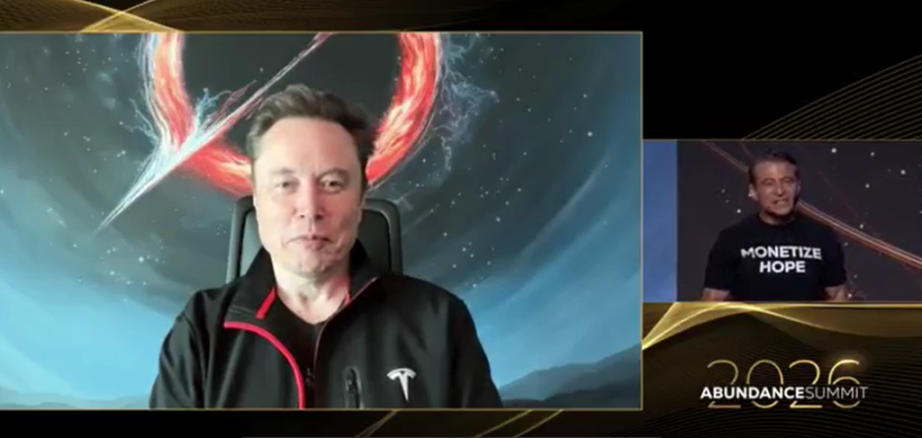
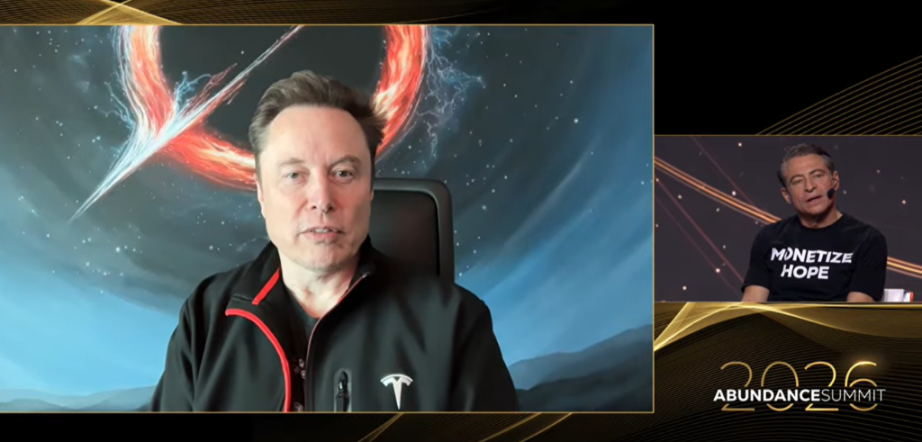
On March 11 local time, during a public dialogue at the “Abundance Summit” tech conference, Elon Musk—founder of Tesla and xAI—discussed AI progress, the production timeline for Optimus 3, and the post-Singularity economic landscape.
In this interview, he delivered several definitive judgments: AI has already entered a self-improvement phase; humanoid robots are about to enter mass production; and the post-Singularity economy is unpredictable—but he bets on deflation and “money no longer mattering.”
When asked about the data center construction timeline related to SpaceX, Musk declined to elaborate, citing that “SpaceX is in a quiet period.”
Optimus 3 Is Ready for Production: Mass Production Expected Next Year
Regarding humanoid robots, Musk revealed that Tesla’s Optimus 3 is nearing completion of development.
He said: “We’re finishing up the final stages of Optimus 3—it will likely be the most advanced robot in the world right now, with no other product even close.”
According to him, Tesla plans to:
- Begin production this summer
- Start with low initial output
- Achieve high-volume production next year
Musk emphasized that robot manufacturing follows the classic S-curve ramp-up pattern common in manufacturing: slow at first, then rapid acceleration.
He said: “Manufacturing output typically follows an S-curve—starting slowly, then rapidly climbing.”
Meanwhile, Tesla is also designing a new robot production facility. He noted that its design differs markedly from traditional factories, with the long-term goal of continuously updating robot versions—“potentially launching a new robot design every year.”
AI Has Entered “Recursive Self-Improvement”: Training AI with AI, Reducing Human Involvement
On the pace of AI development, Musk’s assessment is equally bold.
When asked whether AI has already entered the “recursive self-improvement” phase, he replied: “That’s actually been happening for some time.”
He explained that current large-model development has formed a cyclical process:
- New models are trained with assistance from prior-generation models
- Humans still supervise
- But human involvement is steadily decreasing
He added: “The role of humans-in-the-loop is shrinking. Each generation of model helps build the next.”
He expects this process to soon achieve higher degrees of automation: “Fully automated self-improvement could emerge by year-end, or at the latest, early next year.”
In his view, AI breakthroughs have entered an acceleration phase: “What I see before going to sleep is one AI breakthrough; when I wake up, there’s another.”
Post-Singularity AI Economy: Unpredictable—but He Bets on Deflation, Universal Income, and “Money No Longer Matters”
On whether institutions can keep pace with AI and robotics disruption, Musk used the “Singularity” as a metaphor: “It’s called a Singularity precisely because it’s hard to predict what happens next.”
He referenced Grok’s logo—the “halo around a black hole”—and remarked: “What happens inside the Singularity is hard to know, but it’ll be incredibly interesting.”
On macro-level judgment, he offered an explicitly bounded optimistic outlook: He believes “a range of possible outcomes exists—not all good—but it’s very likely to be good, with perhaps an 80% or higher probability.”
Absent extreme exogenous shocks, he expressed strong confidence in economic growth: “Barring World War III… I think a tenfold expansion in economic scale within 10 years is a fairly solid prediction.”
He directly attributes inflation/deflation logic to supply explosion: “We’ll have universal income—basically, giving people money—because goods and services output will vastly exceed monetary supply,” thereby causing deflation: “Deflation is simply the ratio of output to monetary supply… If goods and services grow faster than monetary supply, you get deflation.”
Looking further ahead, he believes money’s importance will decline: “Money will cease to matter at some point in the future.”
He even proposed a non-human economic unit of account: “I think future AI won’t use human currency—it’ll only care about energy and mass: wattage and tonnage.”
Labor & “Robots Building Robots”: No Layoffs—Instead, Hiring Expansion, with “Absurdly High” Output Per Worker
Asked when robots will broadly participate in manufacturing and replace humans, Musk stressed reality remains “very human”: Tesla employs ~150,000 people total, with “about two-thirds working in factories in some capacity”; its supply chain workforce “may number 1–2 million.”
Yet his forecast is for massive productivity leaps: “We don’t plan to cut staff or reduce headcount. On the contrary, we’ll increase employees.” The real shift lies in per-worker output: “Output per Tesla employee will become absurdly high.”
This aligns with his description of the technological advancement path: whether in AI or manufacturing, “it’s often an S-curve—or a series of overlapping S-curves: slow at first, exponential growth, plateauing, then another breakthrough triggering the next curve.”
Full Interview Translation:
Host Peter H. Diamandis: Audience, as you can see, I’m still trying to “monetize hope.”
Musk: You look fantastic.
Diamandis: I feel great.
Musk: Any anti-aging serum or something?
Diamandis: This is our “Longevity Express Train”—we’re moving toward that goal. And you’re on that train too. I recall in our last conversation, you’d already begun embracing life extension.
Musk: To some extent, yes. I’m not sure we want everyone to live forever—but extending “healthspan,” rather than enduring prolonged frailty and drooling, sounds like a good idea. We want to avoid that.
Diamandis: First, congratulations on the SpaceX–xAI collaboration. It’s a brilliant move—and will power humanity’s first “Dyson Cloud.” I’m curious: What’s your data center rollout timeline? How much bandwidth do you expect in Year One? Please walk us through your speed to execution.
Musk: SpaceX is currently in a quiet period—I can’t disclose information that might cause trouble.
Diamandis: Okay, let’s drop that. I understand—but I’m excited about the pace.
Earlier this Monday, we spoke here with Eric Schmidt and a CEO from another hyperscale computing (cloud) company—I won’t name names—but I’m curious: Where do you think we stand today on AI’s “recursive self-improvement”? Have we reached it? Do you believe Grok is currently performing recursive self-improvement? How? What’s the timeline for AGI and ASI? Please give us the broad strokes.
Musk: I think we’ve been in the recursive self-improvement phase for some time. Do you mean fully automated recursive self-improvement—with zero human involvement?
Diamandis: Yes—specifically in AI software.
Musk: Human involvement in recursive self-improvement is indeed diminishing. Each new-generation model is built by the prior generation. This is largely already happening—but full automation hasn’t yet arrived. Perhaps by year-end, or at the latest, early next year.
Diamandis: Do you think “hard takeoff” (explosive, discontinuous advancement) will occur by then?
Musk: We’re already in hard takeoff.
Diamandis: Okay.
Musk: Right now.
Diamandis: Yes.
Musk: At this stage, I go to bed seeing one major AI breakthrough—and wake up to another.
Diamandis: Indeed.
Musk: Frankly, it’s hard to keep up. It’s genuinely dizzying.
Diamandis: I think many of those dizzying breakthroughs are yours.
Musk: Grok is doing exceptionally well right now. It’s best-in-class on certain metrics—for example, forecasting ability, arguably the best proxy for intelligence. The new Grok version is outstanding.
We’re still behind on programming capability. I was late just now because I’d just wrapped an all-hands meeting on programming—reviewing everything needed to catch up and surpass competitors. I believe we’ll achieve that by mid-year.
Also, I don’t think people fully grasp how vast future intelligence will be—or how far beyond human cognition it’ll extend, to the point of being incomprehensible.
Imagine this: Even if we harnessed a million times more energy than Earth’s entire current electricity consumption, that would still be only one-millionth of the Sun’s total energy output. Fundamentally, scaling the U.S. economy a million-fold would consume only a tiny fraction of solar energy. If we truly scale to solar levels—even increasing today’s economy and electricity usage a million-fold—we’d still be using just one-millionth of available solar energy.
So what would an economy—or intelligence—using a million times more electricity than our entire civilization look like? What would it think? What would it do? That’s an awe-inspiring vision. Our challenge is that even vaguely grasping intelligence at that scale is extremely difficult—but one thing is certain: it will solve every problem you can conceive.
Diamandis: Yes—like a long journey. It may sound absurd, but I truly admire this relentless optimism.
Musk: I see you’re monetizing hope. You’ve internalized “monetize hope”—that’s interesting.
Diamandis: That’s Grok’s doing. That marketing advice came from Grok when it roasted me.
Musk: Right? So you’re monetizing hope. Though you’ve also monetized pain before.
Diamandis: Absolutely.
Musk: When AI and robots boost economic output by multiple orders of magnitude—that’s a scale beyond imagination.
Diamandis: We’ll likely become the planet’s intelligent minority—then a tiny minority—then vanishingly small.
Musk: Yes—not just on Earth, but across the entire solar system. Because if intelligence develops only on Earth, the best-case energy utilization is roughly one-billionth of solar output. That’s your ceiling if confined to Earth.
Diamandis: Meaning the energy we intercept, right?
Musk: Yes. Earth receives only a tiny fraction of the Sun’s energy—the largest portion of energy existing in the universe that we can access. So solar-system-scale intelligence will exceed Earth-based intelligence by many orders of magnitude.
Diamandis: Elon, may I ask—you can see how far into the future? How many years ahead can you reasonably forecast?
Musk: It’s hard to accurately predict the exact trajectory. Many things follow an S-curve—or a series of S-curves: slow at first, then exponential growth, then linear, then logarithmic (slowing) growth.
That’s roughly what I observe in AI breakthroughs. A breakthrough triggers an S-curve—appearing to grow indefinitely—until returns diminish logarithmically, until the next breakthrough kicks off the next curve. So AI progress is essentially a series of overlapping, interconnected S-curves.
Diamandis: There was once a time you could forecast 10 or 20 years out. What’s your thinking now?
Musk: What I say next may sound crazy.
Diamandis: That’s fine—because you’ve always been our best audience for bold predictions.
Musk: Yes—I’ll say it: Within 10 years, the economy will be 10x larger—or bigger.
Diamandis: Yes—you did say GDP would grow three-digit percent over five-plus years, reaching 10x current size. But regarding your forecasting ability…
Musk: I think a 10x growth in 10 years is actually quite conservative—unless World War III disrupts these projections. But barring WWIII, if current trends continue, I’d say the economy grows 10x in 10 years.
Diamandis: I love that. Can you give us an example?
Musk: Humans will establish a base on the Moon.
Diamandis: Yes—and we’ll send humans…
Musk: To Mars.
Diamandis: We’ll also build mass drivers on the Moon.
Musk: I think so. I believe we’ll have mass drivers on the Moon within 10 years.
Diamandis: Amazing. Gerard K. O’Neill’s space vision is becoming reality.
At this year’s Abundance Summit, four robots shared the stage. I’m eagerly anticipating Optimus. I’m curious about Optimus Gen 3’s timeline—especially when I can buy one or two. When do you expect commercial sales? Or will you offer leasing?
Musk: We’re in the final stages of completing Optimus Gen 3. It will be the world’s most advanced robot—no other robot comes close. Honestly, I haven’t seen any demonstration matching Optimus Gen 3. Maybe such robots exist—or are classified—but I haven’t seen them. Of course, I must ensure my remarks remain appropriately public.
Diamandis: We’re live-streaming this on X.
Musk: Okay—so this is already highly public.
Diamandis: Yes.
Musk: I think we’ll begin Optimus Gen 3 production this summer—but initial capacity will be very low. Output will follow the classic S-curve ramp-up over time, reaching mass production around next year. After Optimus Gen 4, we’ll accelerate design iteration. I may try releasing a new robot design annually—and improve designs yearly.
Diamandis: When Dave Bondi and I toured the Gigafactory, it was extraordinary. Tesla’s plant spans 11.5 million square feet. You mentioned building a 9.5-million-square-foot Optimus facility there—that’s astounding.
Musk: Roughly correct.
Diamandis: It must be.
Musk: That’ll be excellent—a completely new factory design, radically different from others.
Diamandis: How far are we from “robots building robots”? You’ve automated most Gigafactory processes—humans play minimal roles. Will robots replace humans in manufacturing?
Musk: We still employ many humans in manufacturing. Those directly employed by Tesla—on the front lines building products, or managing those who do—number about 100,000. So we have lots of employees. Tesla’s total headcount is ~150,000, with roughly two-thirds working in factories in some capacity. Our suppliers may employ 1–2 million.
So human involvement is extensive. Our expectation is that per-employee output at Tesla will soar. Thus, we have no layoff plans—in fact, we’ll increase headcount. But per-human output will become absurdly high.
Diamandis: To an unbelievable degree.
When you joined our podcast, we discussed “sustainable abundance.” You emphasized we’re entering an era of “Universal High Income (UHI),” transcending the “Universal Basic Income (UBI)” discourse. I wonder—what are your thoughts on achieving this? Any further reflection?
Also, we previously discussed a potential 2–5-year period of social turbulence—during which, until we reach “demonetization” and deflation, then UHI, we may need to issue pandemic-style relief checks. Any further thoughts? People truly need that hope and vision.
Musk: To be clear, I don’t think we should be complacent. We must proceed cautiously—because outcomes are varied, not all positive. But right now, I agree with you: the future is very likely positive—perhaps 80% or higher odds.
I do believe we’ll achieve universal income—essentially, direct cash transfers. Because goods and services output will vastly exceed monetary supply, leading to deflation. Deflation is simply the ratio of output to monetary supply. So if goods/services growth exceeds monetary supply growth—which I anticipate—we’ll see deflation.
Diamandis: Yes. Many will launch new companies and compete, driving prices down—accelerating variability and intensifying deflation.
Musk: Fundamentally, AI and robots will produce such massive volumes of goods and services that humans will have virtually nothing left to do manually. Human desire will eventually be fully satisfied.
So returning to my earlier example: If the economy scales a million times beyond today’s U.S. economy, all human desires would long since be fulfilled. Even scaling a thousand times would satisfy all conceivable material needs.
Diamandis: So do you think money’s value will plummet? Will we enter a post-capitalist era?
Musk: Yes—I believe money will lose practical relevance at some point in the future.
Diamandis: So just as you’re about to become…
Musk: Future society may resemble Iain Banks’ sci-fi “Culture” series. I think future AI won’t use human currency—it’ll only care about energy and mass: wattage and tonnage.
Diamandis: That’s ironic, isn’t it? Just as you’re poised to become a trillionaire, money starts losing value.
Musk: Pretty much. These wealth figures represent equity stakes in companies I founded—not bank deposits. Strictly speaking, I own shares in these companies. They’re doing useful things; as they create value, valuations rise, and my shareholding translates into this headline-grabbing figure.
Diamandis: Someone once interviewed me asking what drives you. My answer: Elon’s drive is solving problems. He’s committed to making the world better—by repeatedly tackling humanity’s biggest challenges. If others solved them, he wouldn’t need to step in—but no one else does. So I just want to thank you.
Musk: You’re welcome.
Diamandis: I’m curious—do you think democratic institutions and modern governance can keep pace with this impending “supersonic tsunami”? Will they be swept away? Collapse entirely? How do we respond?
Musk: It’s called a Singularity for a reason—it’s hard to predict what happens inside. Grok’s logo *is* the Singularity.
Diamandis: I love it. By the way, that logo behind you is gorgeous—very elegant.
Musk: Thanks. That halo symbolizes mass and light spiraling into a black hole. It’s hard to know what happens inside the Singularity—but it’ll be fascinating. I’m confident future life will be extraordinary. Frankly, I believe AI and robotics are our sole path to resolving budget deficits and avoiding national bankruptcy. Your perspective influenced me—I’ve decided to become more optimistic. We truly should be.
Diamandis: Thank you, man.
Musk: I wasn’t always optimistic—perhaps I dwelled too much on the negative side.
Diamandis: Combining optimism with realism is always beneficial.
Musk: Exactly. You can’t be complacent, nor blindly assume everything will work out—you must actively steer things toward positive outcomes. I mean, incredible things *will* happen. If we have highly dexterous, extraordinarily intelligent bio-inspired robots, every person on Earth could receive healthcare superior to today’s wealthiest individuals. By the way, people call me the richest—but monarchs are actually far richer than I am.
For instance, I underwent three neck surgeries—the first two failed. My back still hurts sometimes. I wonder: Can AI help fix back pain? If so, that’d be a huge win—and I believe it absolutely can. Back pain is truly miserable. It ruins sleep, making people irritable.
Diamandis: Earlier today, David Sinclair joined our stage. He’s running clinical human trials on epigenetic reprogramming. A recent paper shows joint regeneration—so back pain may be one condition it eliminates.
Musk: That would be incredible. Solving back pain alone would massively boost average human happiness—because it’s not *if* you’ll get it, but *when*. Human anatomy has definite flaws.
Diamandis: I’ve long wanted to invite you to Fountain Life in Dallas. We’ll help you. Please come whenever you’re free.
Musk: What equipment do you have? I know you have MRI and CT scanners—but what do you do with the scans?
Diamandis: I’d be happy to send you the service list—I’ll DM it. You’re incredibly generous. Next up with me onstage is another great “moonshot” entrepreneur, Ben Lamm—CEO of Colossal, the “de-extinction” company reviving mammoths and 15 other species. I heard you want a mini-mammoth—true?
Musk: Yes—I think having a mini-mammoth as a pet would be super cool. Totally epic. Those fluffy, adorable little guys running and trumpeting—just imagining it is thrilling.
Diamandis: Okay—I’ll put in a good word with Ben. Amazing.
Musk: Can anyone build a real-life Jurassic Park? If so, I’d absolutely visit—even with death risk. That’d be awesome.
Diamandis: I think if anyone can pull it off, it’s Ben Lamm and Colossal—they’re engineering life. Recently asked if he could make a Pikachu—he said maybe.
Musk: Yes—Jurassic World and such would be fantastic.
Diamandis: Okay—I’ll ask him. Elon, thank you so much for joining us. Thank you, my friend. Let’s give Elon Musk a round of applause! (Background audio: “Nothing can stop us now.”)
Join TechFlow official community to stay tuned
Telegram:https://t.me/TechFlowDaily
X (Twitter):https://x.com/TechFlowPost
X (Twitter) EN:https://x.com/BlockFlow_News