Anthropic Surveyed 80,000 Claude Users: Those Who Boost Productivity with AI the Fastest Feel the Least Secure About the Future
TechFlow Selected TechFlow Selected
Anthropic Surveyed 80,000 Claude Users: Those Who Boost Productivity with AI the Fastest Feel the Least Secure About the Future
AI Doubles Your Efficiency—So Why Are You More Afraid of Losing Your Job?
 Navigating Web3 tides with focused insights
Author: Anthropic
Compiled and translated by TechFlow
TechFlow Introduction: This is the first large-scale survey conducted by an AI company to probe users’ genuine economic anxieties. The data reveals a stark paradox: programmers, designers, and others who are most adept at using AI are precisely those most fearful of being replaced by it; those experiencing the fastest productivity gains feel the least secure about the future. For investors, this signals that AI’s penetration into the economy is accelerating faster than anticipated—and its impact on labor markets has already begun at the psychological level.
Key Findings:
Our recent survey of 81,000 Claude users shows that individuals in occupations more readily automatable by AI express greater concern about AI-induced job displacement—especially those early in their careers.
Workers in both the highest- and lowest-income occupations report the largest productivity gains, primarily driven by task expansion (i.e., taking on new types of work).
Respondents who experience the greatest speed improvements from AI express heightened concern about job loss.
To help the public understand the AI-driven economic shifts we observe, our Economic Index shares what tasks people ask Claude to perform—and where Claude completes the largest share of tasks. Yet until now, we lacked insight into how these usage patterns map onto people’s perceptions and attitudes toward AI.
Our recent survey of 81,000 Claude users provides a method to link people’s economic concerns with the quantified usage patterns we observe in Claude traffic.
The survey asked respondents about their hopes and fears regarding AI progress. Many responses centered on economic themes. We learned that many fear job loss—even while reporting higher efficiency and enhanced capabilities. In some cases, AI enables entrepreneurship or frees up time for more meaningful work; in others, it feels oppressive—or is imposed by employers.
The findings offer preliminary evidence linking observed exposure (our metric for AI replacement risk) to economic anxieties surrounding AI. Individuals in high-exposure occupations—as defined by the share of tasks observed to be performed by Claude—express greater tension around economic displacement. This aligns with widespread awareness of AI’s diffusion and potential impact. We elaborate on our findings below.
Who Fears Job Loss?
"Like all white-collar workers today, I’m 100% worried—almost 24/7—that I’ll eventually be replaced by AI." — A software engineer.
One-fifth of survey respondents expressed concern about economic displacement. Some voiced abstract worries: one software developer warned, "AI, in its current state, is being used to replace entry-level positions." Others lamented that their jobs—or aspects of them—are being automated away. A market researcher said, "It undoubtedly enhances my capabilities—but AI may replace my job in the future." In certain roles, people feel AI makes their work harder. One software developer observed, "When AI arrived, project managers started assigning me increasingly difficult tickets and bugs to resolve."
Throughout this report, we use a Claude-powered classifier to infer respondents’ attributes and sentiments from their open-ended answers. For example, many participants casually mentioned their occupational field or shared detailed information about their work lives, enabling us to infer their profession. Similarly, we quantify concern about job loss by prompting Claude to identify and interpret direct quotes in which respondents indicate their role faces AI-driven replacement risk. Sample prompts are provided in the Appendix.
Respondents’ perceived AI threat correlates with our own observed exposure metric—a measure reflecting the share of tasks performed by Claude within a given occupation. When a respondent’s observed exposure metric is higher, their AI-related anxiety is also greater. For instance, elementary school teachers express less concern about replacement than software engineers—a finding consistent with Claude’s observed usage skewing heavily toward coding tasks.
We illustrate this in Figure 1 below. The y-axis shows the percentage of respondents in a given occupation who indicated that AI has already replaced—or may soon replace—their role. The x-axis shows observed exposure. The figure indicates that, on average, individuals in higher-exposure occupations express greater concern about automation of their work. Each 10-percentage-point increase in exposure corresponds to a 1.3-percentage-point rise in perceived job threat. Those in the top 25% of exposure mention such concerns three times as frequently as those in the bottom 25%.
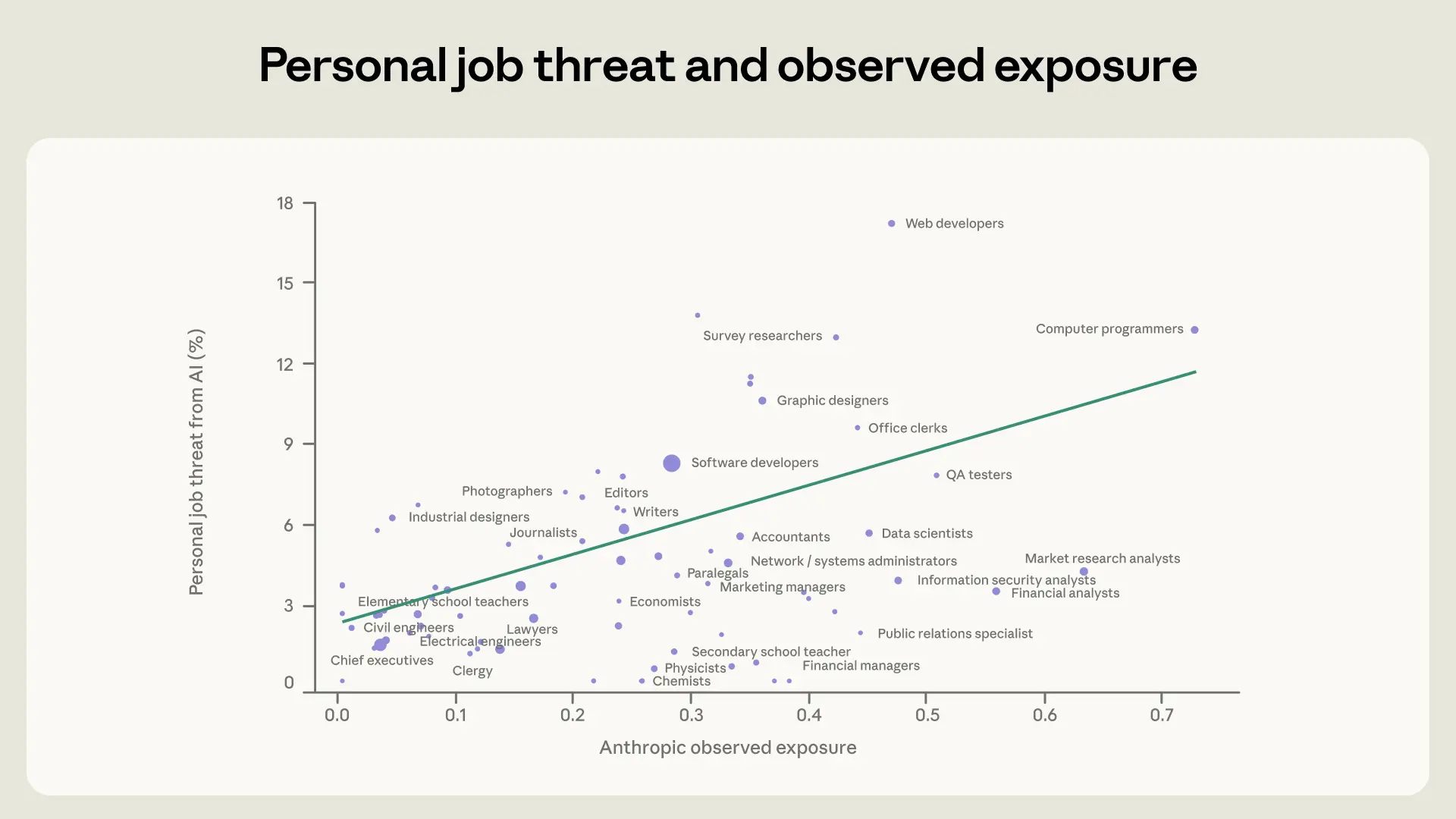
Figure 1: Perceived job threat from AI versus actual exposure level. The plot shows the percentage of respondents who perceive AI as posing some job threat, alongside the actual exposure metric proposed by Massenkoff and McCrory (2026). A respondent is coded as perceiving job threat if they indicate their position has already been replaced or significantly reduced—or if such change appears imminent (coded via Claude-assisted analysis). The green line represents a simple linear fit.
Another critical worker characteristic is career stage. In prior research, we reported preliminary signs of slowed hiring for U.S. new graduates and early-career workers. For approximately half of the respondents in this survey, we inferred career stage from their open-ended answers. We found that early-career respondents were more likely than senior professionals to express concern about job loss.
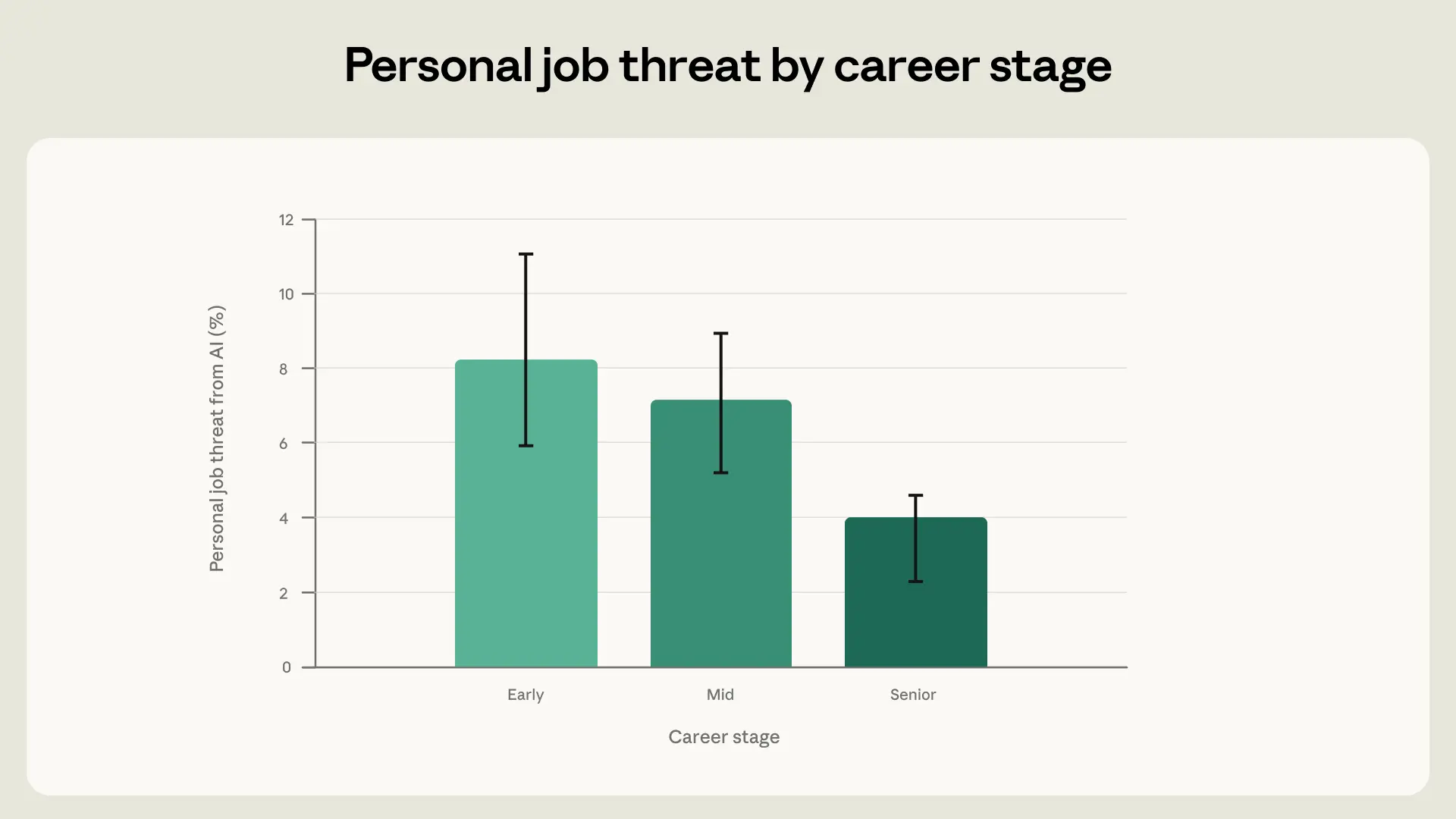
Figure 2: Concern about economic job loss across career stages. Percentage of respondents indicating AI poses some threat to their job, segmented by career stage. Both dimensions are inferred from free-text responses using Claude-based classifiers.
Who Benefits from AI?
Using Claude to evaluate survey responses, we assessed self-reported AI-driven productivity gains on a 1–7 scale, where 1 = “reduced productivity,” 2 = “no change,” and each subsequent level reflects progressively larger gains. Responses scoring 7 included testimonials like, “I build websites in 4–5 days that previously took months”; Claude assigned a score of 5 to statements like, “Tasks that used to take four hours now take half the time,” and a score of 2 to, “Personally, I used AI to fix code on my website—but only after multiple attempts did I get the result I wanted.”
Overall, respondents reported meaningful productivity gains. The average productivity score was 5.1—corresponding to “substantial productivity improvement.” Of course, our respondents are active individual-account users of Claude.ai who opted to participate in the survey. This may make them more likely than average users to report productivity benefits. Approximately 3% reported negative or neutral impacts, while 42% gave no explicit indication of productivity change.
This varies somewhat by income level. The left panel of Figure 3 shows that high-income workers—such as software developers—reported the largest AI-driven productivity gains. This result is not solely driven by coding tasks; it persists even when we exclude computer and mathematical occupations. It echoes a prior finding from our Economic Index, which similarly favored high-income workers: Claude reduces task completion time (relative to non-AI workflows) by a higher percentage in tasks requiring more advanced education.
Some of the lowest-income workers also described substantial productivity gains. This includes a customer service representative who said, “AI saved me significant time drafting replies based on prior responses.” In some cases, low-income workers use AI for technical side projects. For example, a delivery driver is using Claude to launch an e-commerce business, and a gardener is building a music application.
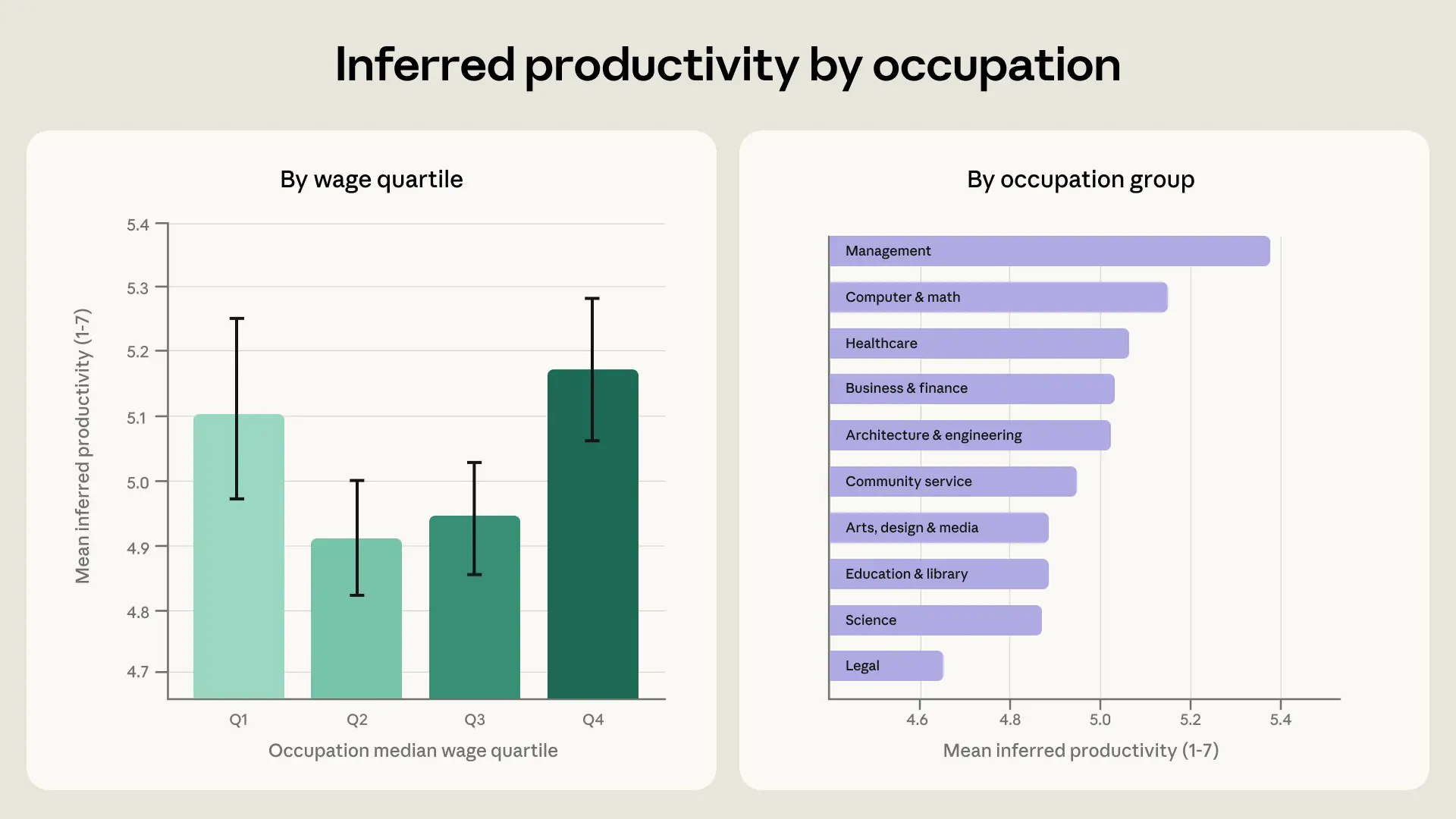
Figure 3: Inferred productivity gains by occupation. The left panel shows average inferred productivity gains from AI, grouped by occupational wage quartiles (using median wages from the U.S. Bureau of Labor Statistics, BLS), as inferred by a Claude-based classifier. The right panel shows the same results, but grouped by major occupational category. Error bars indicate 95% confidence intervals.
We examine this further in the right panel of Figure 3, showing inferred productivity gains across major occupational categories. At the top are management occupations—whose respondents are mostly entrepreneurs using Claude to launch ventures. The second-highest category is computer and mathematical occupations, including software developers. The two groups reporting the most modest productivity improvements are scientists and legal professionals. Some lawyers worry about AI’s ability to follow precise instructions—for example: “I’ve given extremely specific rules about what goes where, how to read legal documents, and what I want it to do… yet it deviates every time.”
As AI diffuses across the economy, a key question is where the gains accrue—workers, their managers, consumers, or firms. Roughly one-quarter of respondents explicitly identified beneficiaries of these gains in their interviews. Overall, most of these respondents cited personal benefits—faster task completion, expanded scope, and freed-up time. However, 10% of respondents who named beneficiaries indicated that employers or clients demanded—and received—more output. A smaller share mentioned benefits accruing to AI companies; an even smaller share characterized AI as net-negative. These differences depend on career stage: only 60% of early-career workers said they personally benefit from AI, compared to 80% among senior professionals.
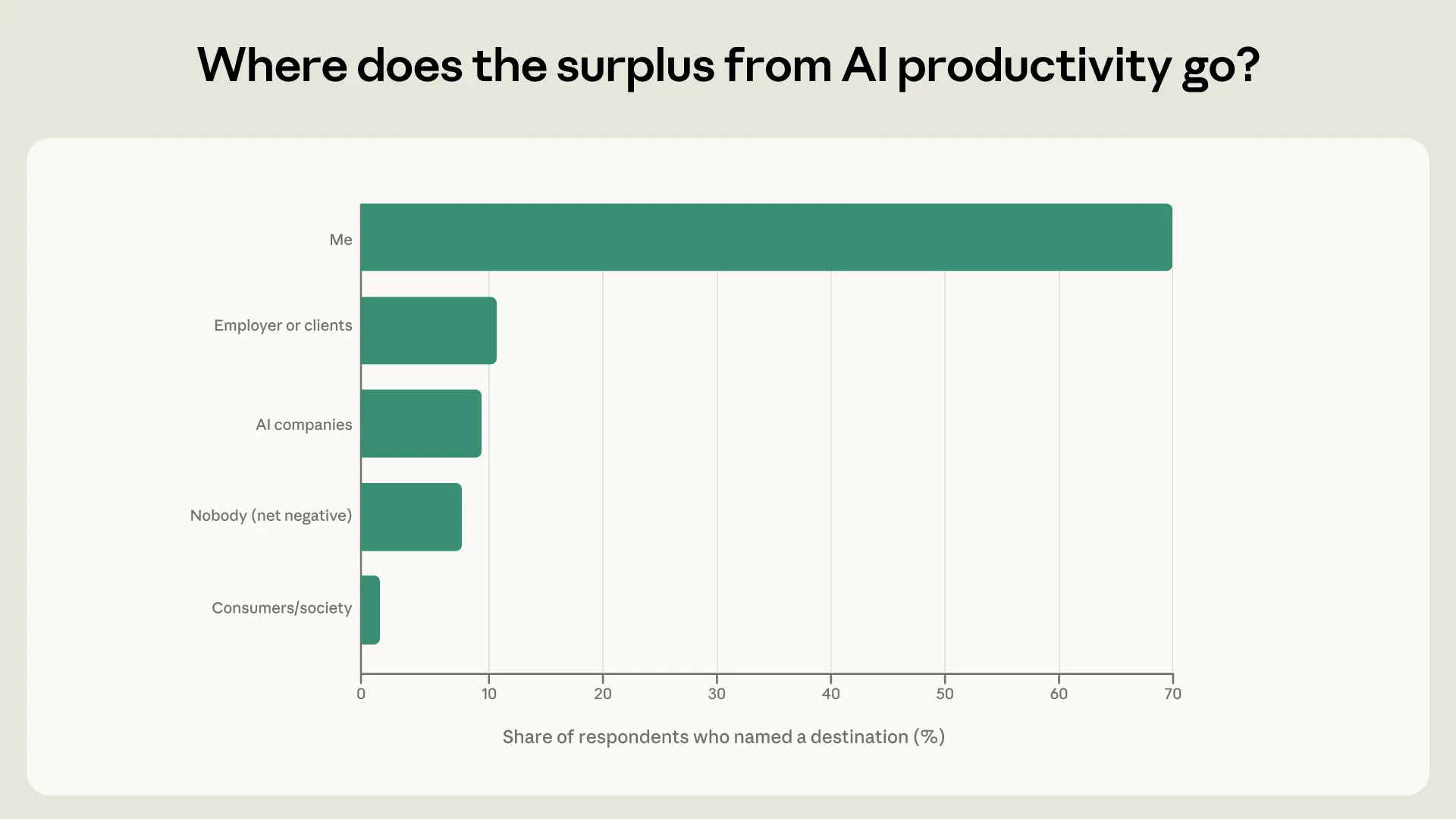
Figure 4: Where do AI-driven productivity gains flow? Among respondents who named beneficiaries of AI-driven productivity gains, the share naming each beneficiary.
Scope and Speed
Respondents also shared where they experienced productivity gains. We categorized these into scope, speed, quality, and cost. For example, many users applying AI to coding tasks said, “I’m not a technologist—but now I’m a full-stack developer.” This reflects scope expansion: AI unlocks new capabilities. By contrast, some users accelerated tasks they were already performing—e.g., an accountant who said, “I built a tool that helps me complete financial tasks in 15 minutes that used to take two hours.” Quality improvements often stem from more thorough review of code, contracts, and other documentation. A small subset of respondents cited AI’s low cost: “Hiring a social media manager would exceed my budget.”
We found scope expansion to be the most common productivity gain, mentioned by 48% of respondents who explicitly cited productivity impact. Speed improvements were highlighted by 40% of respondents who discussed productivity.
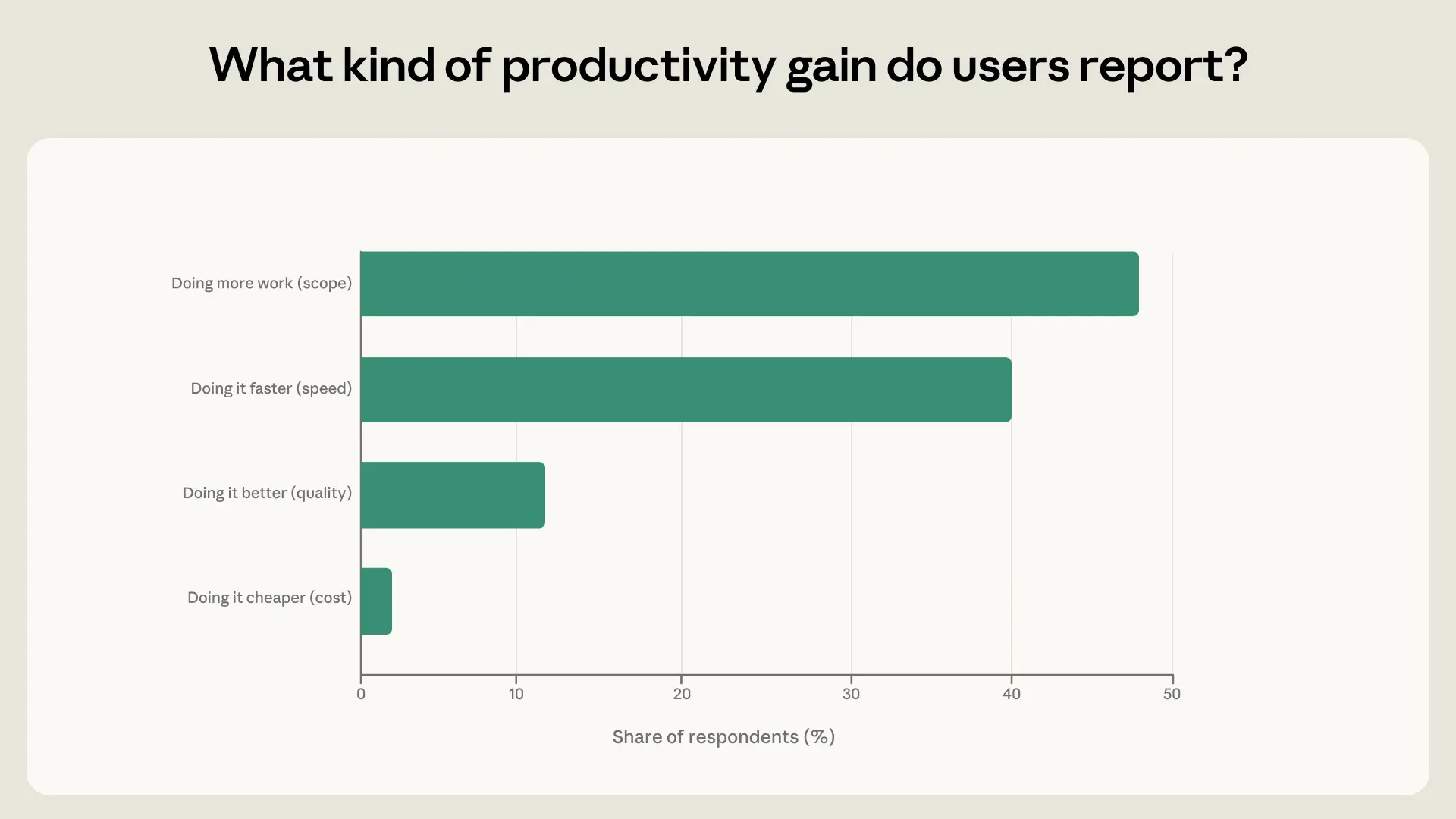
Figure 5: What types of productivity gains do users report? Percentage of respondents describing each type of productivity gain.
People’s experiences using Claude may also shape their AI-related concerns. To assess this, we measured respondents’ reported speed improvements by extracting whether their work now feels much slower (coded as 1), unchanged (4), or much faster (7).
We found a U-shaped relationship between speed improvement and perceived job threat (see Figure 6). The leftmost bar shows respondents who reported AI slowing them down. These respondents were more likely to indicate AI poses a significant threat to their livelihood. For example, some creative professionals—including artists and writers—found AI too restrictive and rigid to assist in their work. Simultaneously, they worry AI’s spread into creative domains will make it harder for them to find employment.
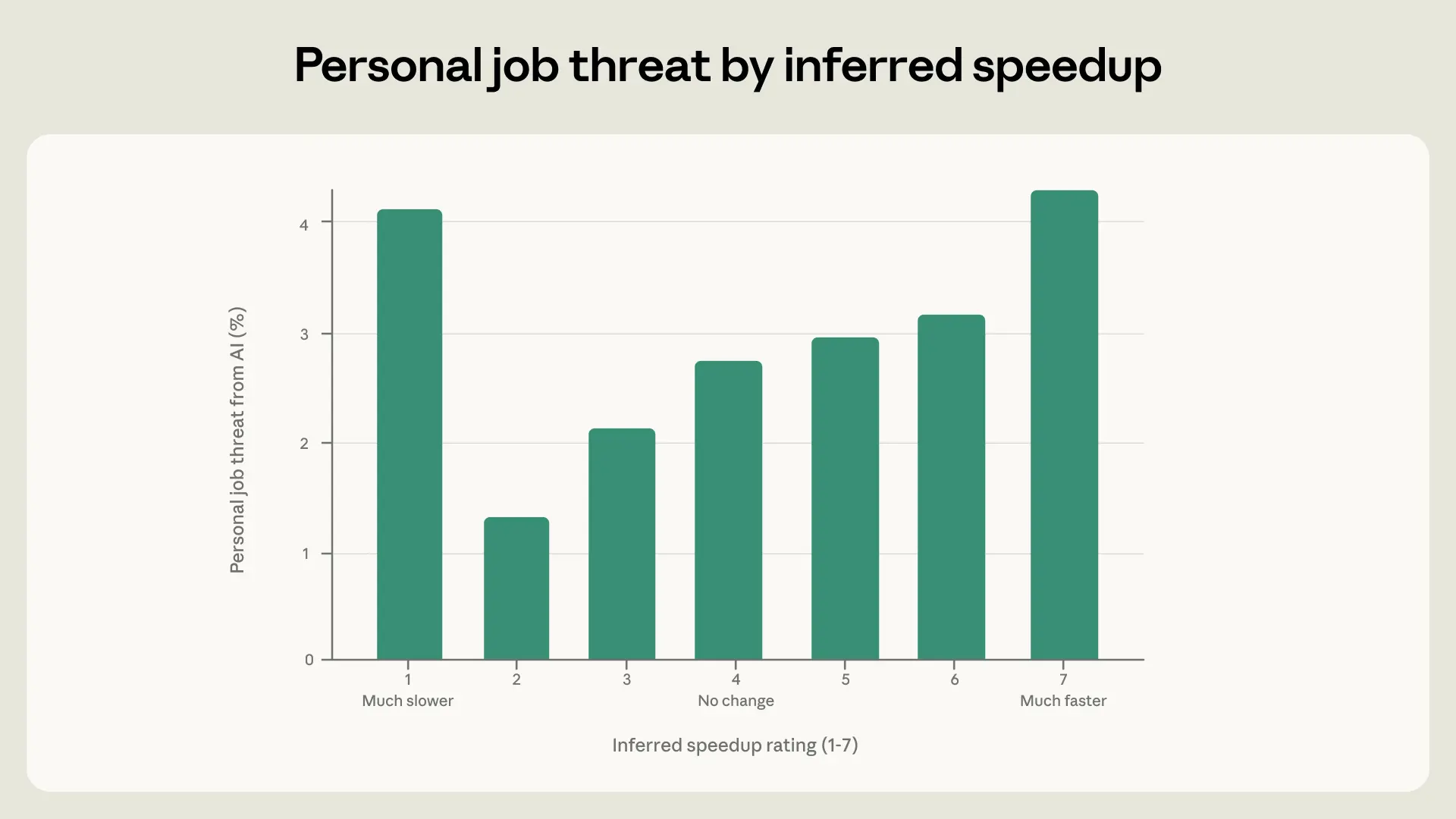
Figure 6: Job threat from AI and acceleration. Percentage of respondents indicating their job has already been—or may soon be—displaced, segmented by inferred acceleration level.
For the remaining respondents, perceived job threat rises steadily with the degree of speed improvement implied by their responses. This is economically intuitive: if task completion time is shrinking rapidly, the long-term viability of that role may become increasingly uncertain.
The Economic Index reveals what people use AI for. But another critical input for understanding AI’s economic impact is hearing directly from people about their lived experiences. The responses explored here show that people’s intuitions align with usage data: they worry most about AI’s impact in precisely the occupations where we observe Claude performing the most work. We also found elevated levels of economic anxiety among early-career workers—a finding consistent with prior research.
There are also signs that Claude empowers users. People most commonly describe gains flowing to themselves—not to employers or AI companies. High-income workers are most enthusiastic about AI’s productivity effects, yet lower-income and less-educated workers also report substantial productivity gains. Most respondents report that Claude enhances their capabilities either by expanding their scope of work or accelerating task execution. Yet those experiencing the greatest speed gains also express the strongest concerns about AI’s impact on their jobs.
Given the nature of the data, our analysis carries important caveats. First, our survey is limited to Claude.ai individual-account users who chose to respond. Among other potential biases, these users may be more inclined to perceive benefits as flowing to themselves. Second, many derived variables were not directly queried—so our inferences about occupation, career stage, and other attributes, drawn from contextual cues, may be inaccurate. Relatedly, because the survey was open-ended, our measurements rely on whatever respondents happened to mention; these findings should be validated through structured surveys that directly probe these topics.
Nonetheless, the interviews yield genuine insights into how people feel about AI’s economic implications—demonstrating how qualitative data can surface quantitative hypotheses. The sheer prevalence of economic concerns itself is a strong signal.
Acknowledgments
We thank the 80,508 Claude users who shared their stories.
Maxim Massenkoff led the analysis and authored this blog post. Saffron Huang led the interview project and provided guidance throughout.
Zoe Hitzig and Eva Lyubich provided critical feedback and methodological guidance. Keir Bradwell and Rebecca Hiscott offered editorial support. Hanah Ho and Kim Withee contributed to design. Grace Yun, AJ Alt, and Thomas Millar implemented Anthropic’s Interviewer tool on Claude.ai. Chelsea Larsson, Jane Leibrock, and Matt Gallivan contributed to survey and experience design. Theodore Sumers supported data processing and clustering infrastructure. Peter McCrory, Deep Ganguli, and Jack Clark provided critical feedback, guidance, and organizational support.
We also thank Miriam Chaum, Ankur Rathi, Santi Ruiz, and David Saunders for discussions, feedback, and support.
This scale is not centered on its midpoint because most respondents rated productivity gains positively—yielding predominantly 6s and 7s on the original Likert scale. Here, the scale runs from 1 = productivity decline, 2 = no change, 3 = slight improvement, 4 = moderate improvement, 5 = substantial improvement, 6 = significant improvement, to 7 = transformative improvement—where AI fundamentally changes what or how much they can produce.
Even excluding these “independent entrepreneurs,” management occupations remain tied with computer and mathematical occupations in showing the highest productivity gains.
Yet a key limitation is that this survey targets users with Claude individual accounts. A more representative picture would also include enterprise users—who may be more inclined to attribute value to employers.
Related Content
Announcing the Anthropic Economic Index Survey
We are launching the Anthropic Economic Index Survey—a monthly survey conducted via Anthropic Interviewer.
Automated Alignment Researcher: Scaling Supervision Using Large Language Models
Can Claude autonomously develop, test, and analyze alignment ideas? We ran an experiment to find out.
Trustworthy Agents in Practice
AI “agents” represent the latest major shift in how people and organizations use AI. Here, we explain how they work—and how we ensure their trustworthiness.
Join TechFlow official community to stay tuned
Telegram:https://t.me/TechFlowDaily
X (Twitter):https://x.com/TechFlowPost
X (Twitter) EN:https://x.com/BlockFlow_News
 @AnthropicAI