No Entry, No Funding? Unveiling the “Male Charm” Power Map of Silicon Valley’s Venture Capital Circles
TechFlow Selected TechFlow Selected
No Entry, No Funding? Unveiling the “Male Charm” Power Map of Silicon Valley’s Venture Capital Circles
This is a group characterized by “a hunger for power, driven by networks—and sometimes, an insatiable hunger.”
 Navigating Web3 tides with focused insights
Author: WIRED
Translated and edited by TechFlow
TechFlow Intro: In recent years, rumors that a “Gay Tech Mafia” rules Silicon Valley have evolved from hushed whispers on X (formerly Twitter) into an industry-wide “common sense.” From Peter Thiel to Sam Altman—and even the sauna photo controversy involving Y Combinator CEO Garry Tan—this subculture, fusing identity politics, power brokering, and financial resources, has ignited intense debate.
This article offers an in-depth investigation into the tightly knit social circles of gay elites at Silicon Valley’s highest echelons, probing whether this phenomenon represents the hard-won ascent of a marginalized group—or has morphed into a new form of exclusionary privilege. Amid the AI boom, fundraising success hinges not only on code but increasingly on access to this “invisible network”—a topic now routinely debated over coffee and cocktails across Silicon Valley.
Full text below:
No one can pinpoint exactly when—or even whether—gay men began to take control of Silicon Valley. For at least five years, and possibly longer, they appear to have occupied top-tier positions across the industry. Clues abound on platforms like X: whispered references to private-island getaways; tech executives pretending to come out purely to “clout”; even suggestions that a “seed round” isn’t strictly a financial term at all. In fact, the idea has become so normalized that when I called a well-connected hedge fund manager to ask his thoughts on what some call the “Gay Tech Mafia,” he yawned audibly over the phone. “Of course,” he said. “It’s always been like this.”
The hedge fund manager said things were already this way back in 2012—when he was raising money from a venture capitalist whose office employed dozens of “charming, muscular young men,” all “under 30,” who looked as if they’d just stepped off the high-school debate team. “They all slept with each other and co-founded companies,” he recalled. He added that the situation remains unchanged today: gay men run highly influential Silicon Valley companies and maintain entire social calendars where straight men—and especially women—are nearly invisible. “The Gay Tech Mafia absolutely exists,” he continued. “This isn’t some Illuminati conspiracy theory. And you don’t even need to be gay to join—you’re actually more welcome if you’re straight and sleep with them.”
Since I began reporting on Silicon Valley in 2017, I’ve heard variations of this rumor repeatedly—just as AI founder Emmett Chen-Ran quipped, “Gays rule here.” On its face, the “Gay Tech Mafia” seems too absurd to warrant serious investigation. Of course, there are gay men in leadership roles: Peter Thiel, Tim Cook, Sam Altman, Keith Rabois—the list goes on. But the notion that they operate some shadowy secret society appears rooted entirely in homophobia; indulging it risks playing directly into the hands of conspiracy-minded conservatives like Laura Loomer, who tweeted in 2024: “The high-tech VC world looks like one giant, exploitative gay mafia.”
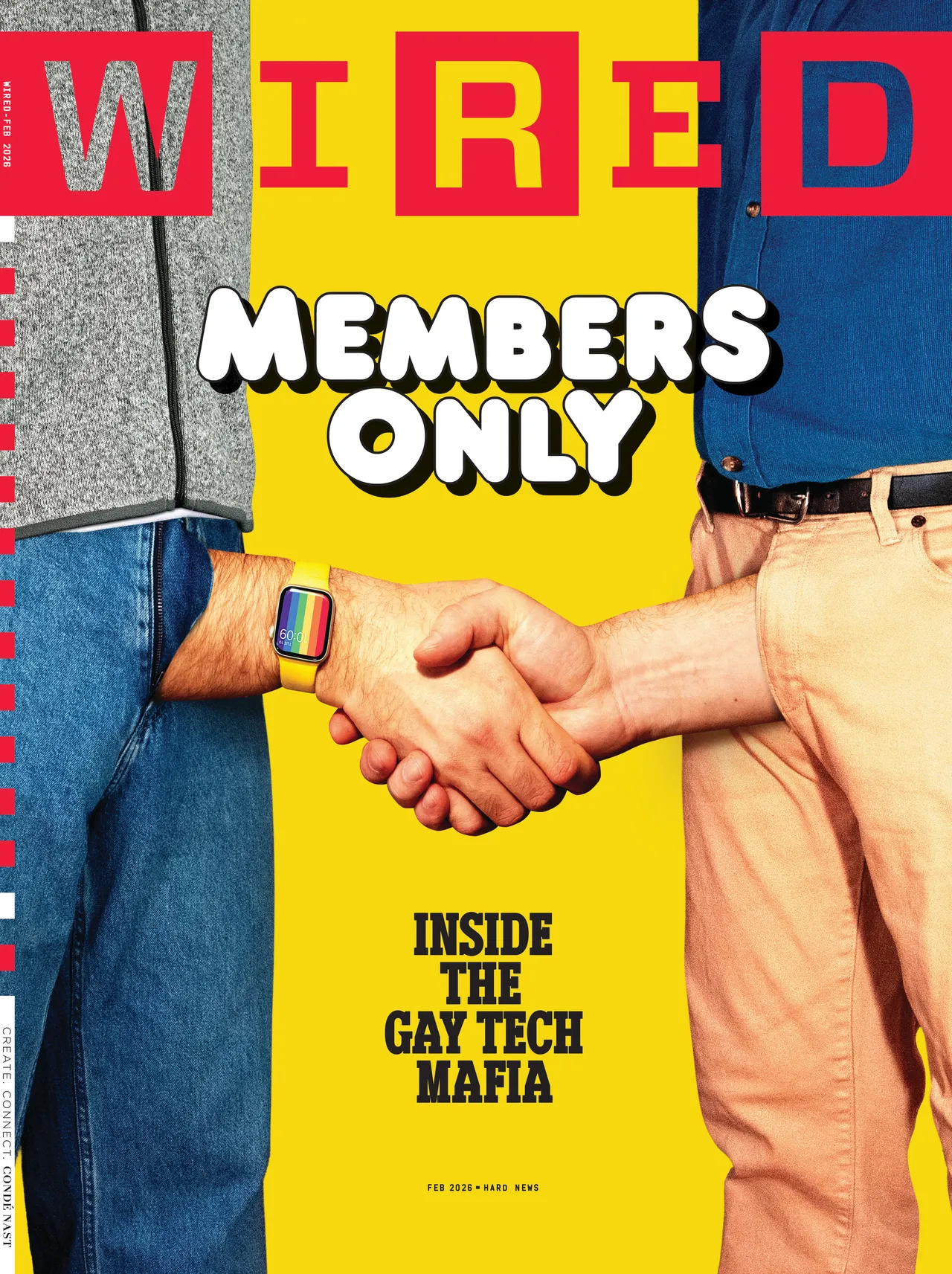
Yet rather than fading, the rumor has instead solidified into something approaching consensus. Last spring, at a VC party in Southern California, a middle-aged investor launched into a long, impassioned rant about how difficult it was for him to raise a new fund. He explained the root cause: discrimination. As he spoke, I sized him up—he wore the signature uniform: a white man with a crew cut, a garish button-down stretched taut over a modest paunch, fluent in his conviction that AI is “the next big thing, thank God.” He looked exactly like the kind of man the Silicon Valley system was built to reward. Yet right then, he insisted the system had failed him. “If I were gay, I wouldn’t have any trouble,” he said. “That’s just how Silicon Valley is now. The only way to get opportunity,” he claimed, “is to be gay.”
Throughout 2025, similar comments proliferated on X. Tech workers joked about offering “fractional advisory services” to the “gay elite.” Anonymous accounts hinted at an underground world of gay power brokers in Silicon Valley who influence, recruit—or “groom”—aspiring entrepreneurs. At an AI conference in Los Angeles, an engineer casually referred to the offices of a top AI company as “Twink Town”—more than once.
By fall, speculation escalated further. A photo appeared on X showing a group of founders backed by Y Combinator gathered near a sauna, alongside the incubator’s CEO, Garry Tan. The image seemed innocuous enough: several young, nerdy men in swim trunks squinting at the camera. Yet almost instantly, it triggered viral gossip about unusually intimate dynamics within VC culture. Soon after, German founder Joschua Sutee posted a photo of himself and a male co-founder—clearly naked, wrapped in bedsheets—apparently submitted as part of a Y Combinator application, seemingly designed to appeal to an unspoken erotic male aesthetic. “I’m here, @ycombinator,” the caption read.
The idea that Y Combinator is “grooming” male entrepreneurs doesn’t hold up—for many reasons, not least a central fact: “Garry is straight—very straight,” said someone who knows Tan. “But he does believe in the benefits of saunas.” When I asked Tan for comment, he responded candidly: some founders came over for dinner and asked to use his newly installed sauna and cold plunge. Tan said that afterward, some “rejects”—founders YC had turned down—began “manufacturing this meme, implying it’s about more than just bathing.”
Still, similar rumors persist and intensify, fueled both by outsiders—sometimes with suspect political motives—and insiders. When I called longtime industry sources to ask their views on the “Gay Tech Mafia,” not only had they heard the term—they possessed remarkably specific knowledge about how it operates. These are widely regarded as credible figures, yet they firmly believe things that sound utterly implausible.
A San Francisco investor told me he believes the Thiel Fellowship is essentially a training ground for cultivating gay leaders in the industry. (When I relayed this idea to several former Thiel Fellows, they told me they’d only met Peter Thiel once—at a dinner—where he seemed “kind of boring.” One straight fellow added, “I mean, I wish Peter tried to ‘groom’ me.”)
Meanwhile, people’s “gaydars” seem perpetually overheated. I heard more than once: in Silicon Valley, anyone achieving extraordinary success is probably gay.
A San Francisco-based VC mused aloud about how strange it was that a defense-tech executive had achieved such massive success at such a young age. “Isn’t he gay?” the VC asked. “He must be.” I told him he was mistaken—the executive is married to a woman. “Of course,” he replied. “But have you actually seen them together?”
Another entrepreneur—who raised funds from two prominent gay investors—told me he’s grown accustomed to scrutiny over his sexuality. “People say I’m gay,” he said. “There are always jokes like, ‘Dude, how did you get that money?’”
Then there are anonymous X accounts amplifying allegations of misconduct. Their posts are meticulously crafted to attract attention: detailed enough to suggest insider knowledge, yet vague enough to invite darker interpretations. I took the bait. On a late November afternoon, I spent an hour exchanging messages via encrypted Signal with one account holder, who agreed to speak only after I promised strict anonymity.
This person described Silicon Valley as a place known for “MDMA- and psychedelic-fueled gay sex stuff.” Had he experienced it himself? No. But he knew people who had—people who were “very scared” and “extremely young (young af).” He refused to reveal his name or connect me with anyone else, but swore that every negative rumor about gay men in Silicon Valley was true. He hinted at a conspiracy vast enough to rival QAnon—even implicating the U.S. government. He offered cryptic advice for my reporting: “This should be easy to find. The kind of thing that shows up on Google’s second page.”
Finally, frustrated by his evasiveness, I asked what he thought would happen if he told me everything he knew.
“I’m convinced,” he said, “I’d be killed.”
Then he offered a suggestion: the only way to expose this blockbuster story was “in the style of Project Veritas—find a 20-year-old guy, set him up with an X account, send him to the ‘right’ venues in San Francisco. Dig deep enough, and you’ll bust it open.”

WHITNEY; GETTY IMAGES
The problem with conspiracy theories—even repellent ones—is that they’re rarely pure fiction. They almost always originate in fragments of truth, warped by imagination. The difficulty with this particular rumor is that while I couldn’t verify the darker claims, parts of the story still resonated. Across interviews with 51 people—including 31 gay men, many of them highly influential investors and entrepreneurs—a complex, layered, often contradictory portrait of gay male power in Silicon Valley emerged: a world where power, desire, and ambition intertwine in visible and invisible ways—richer and more nuanced than the rumor itself suggests.
Most people I interviewed for this story requested anonymity. Some cited simple caution. “Describing these parties to a journalist might not be wise,” one said, “because people will think, ‘Wow, why would we invite you?’” Others gave vaguer justifications: “Discussing these details isn’t safe,” said an AI founder. “Anyone involved is either a dealmaker or a VC—and that could raise questions about who’s gaining unfair advantage.” Yet beneath these evasions and murmurs lies an undeniable reality: gay men are rising.
“Gay men working in tech have achieved tremendous success,” a gay angel investor told me. “There’s a cohort of gay co-founders who hang out together because gay men always cluster. That’s how they become friends and go on vacation together.” More importantly: “They support each other—whether hiring, making angel investments, or leading each other’s funding rounds.”
Some of these networks have already entered public view. There’s a Substack newsletter called Friend Of, written by Jack Randall, formerly of Robinhood’s PR team, chronicling how gay men have ascended to power centers. “We run the tech mafia (see Apple, OpenAI),” Randall wrote. “We hold top government posts (see Treasury Secretary). We anchor prime-time news and New Year’s Eve countdowns. Our dating app stocks outperform heterosexual competitors. In the U.S., gay men are, on average, better educated and wealthier than the general population.”
A new company called Sector aims to formalize this network. Founded by Brian Tran, formerly a designer-in-residence at Kleiner Perkins, its website features photos of handsome men at beach gatherings and dimly lit dinners. A member described it to me as a vetted social network where successful gay men with shared interests connect. “It’s up to you,” the member told me, “whether it’s professional, purely platonic, or romantic.” In an interview with Randall, Tran said: “I think we can replace Grindr in the next few years.”
In any given week in San Francisco, Partiful invites circulate through the community. “If there’s a regular Halloween party, gay men have their own Halloween party—and Sam Altman shows up,” said Jayden Clark, a straight host of a tech-culture podcast who wasn’t invited to that gay Halloween party. (Altman attended dressed as Spider-Man, paying homage to Andrew Garfield—who played the role in film and has been cast to portray Altman in an upcoming biopic.) I heard not of one but two The White Lotus-themed gay tech parties—both equally lavish. “Women aren’t present,” the angel investor said. “They simply aren’t there.” There’s also a “Gay VC Mafia” group chat, as one member described it, where “60% is business” and “40% is classic gay banter.” As tech events for gay men multiply, social incentives compound rapidly. Relationships blur—as one AI founder put it, “professional, physical, sometimes romantic.” He added that the bubble’s allure is so strong that “socializing with straight men feels like a grueling battle.”
In Silicon Valley—a society built on cliques—none of this feels wholly unfamiliar, because brilliant, successful, ultra-wealthy people naturally form in-groups. There’s the “OpenAI Mafia,” the “Airbnb Mafia,” and before them, the “PayPal Mafia”—alumni from star companies who fund the next wave of startups. So some things that appear privileged are, on closer inspection, structural and unremarkable. San Francisco uniquely combines two things at extremely high density: one of the nation’s largest gay populations, and the tech industry that reshaped global power. “It’s certain that gay men are overrepresented in the Bay Area—and have enjoyed an incredible golden era,” said Mark, another gay entrepreneur running an AI startup. “In a city with the world’s densest venture capital, it’s unsurprising that that money flows directly to gay men.” (Notably, this perception contradicts statistics: between 2000 and 2022, only 0.5% of venture capital went to LGBTQ+ founders.) “It’s not that there’s some gay mafia,” Mark continued. “But if I name the friends I’d invest in, they happen to be gay. Who are the people without kids who can work weekends relentlessly? Gay men.” (Interviewees identified only by first name, like Mark, used pseudonyms.)
Imagine, Mark said: You’re a young, nerdy, closeted gay man. You never quite fit in growing up. Your parents start asking questions: Why don’t you have a girlfriend? You tell them you’re too busy to date. Eventually, you move to San Francisco—described by one person as “Disneyland for gay men.” Your world opens. You meet others like you—men who are openly gay, many for the first time in their lives. These men happen to work at highly influential companies. They’re building astonishing technology. You slowly realize: Maybe you—the person long overlooked and underestimated—can achieve greatness too. “Gay men feel,” Mark said, “they have something to prove.”
Power and money have flowed through networks like this since time immemorial. And gay male networks seem inherently suited to the dynamics of venture capital—the collision of wealth and emerging talent. “A key point to recognize is that gay men differ from straight men in many ways,” said a veteran gay VC. “Gay men are intergenerational.” While straight men tend to socialize mostly with peers, “gay men don’t. I can chat with an 18-year-old at an event—and Peter Thiel might be there too.”
Simply being a gay man working in tech doesn’t make you part of the so-called “Gay Tech Mafia.” At events for gay founders, many members of the broader LGBTQ+ community—across the queer spectrum—are conspicuously absent. “Barriers exist within the community,” said Danny Gray, leader of Out Professionals, an LGBTQ+ workplace networking organization. “Cisgender gay men are the largest group in that acronym—and it’s far harder for the other letters—L, B, T, etc.—to gain entry.” Lesbians are often marginalized; when I asked veteran tech journalist Kara Swisher—known for her extensive industry contacts—about the “Gay Tech Mafia,” she said she’d never heard of such a group. And even if you’re gay, acceptance isn’t guaranteed. “I’ve found it hard to break into this group myself,” a gay investor told me. “I might need to lose 20 pounds first.”
Perhaps the “Gay Tech Mafia” perceived by outsiders isn’t a reference to gay people in tech broadly—or even gay men in general—but rather a small, self-selecting group sharing political leanings and aesthetic tastes. They’re said to champion aesthetics and athletic male physiques, scorn identity politics, reject DEI, and instead embrace MEI—Merit, Excellence, and Intelligence. Their politics lean rightward, even MAGA-aligned. I’ve heard straight founders describe them as “Greco-Roman gays”—a “closed, hypermasculine culture” where “women are seen as entirely superfluous and unnecessary.” (One woman who worked for a gay Republican founder put it this way: “The misogyny you feel is about the same—but there’s no sexual harassment. So it’s kind of okay.”)
So where do these omnipotent “power gays” actually congregate? This was one of the central questions of my research—but the answer kept eluding me. When I asked a gay investor if I could attend one of these parties as a “fly on the wall,” he declined, saying it would be awkward—because, unfortunately for this story, I’m a woman. “People will ask, ‘Is that your sister?’” he said. I’d proposed to my editor that I go undercover as a man. I even suggested discussing my “drag” budget? Though my editor wasn’t entirely dismissive, he offered another idea: that he—a gay man—accompany me as a kind of chaperone, citing “safety.” After that, neither of us mentioned it again.
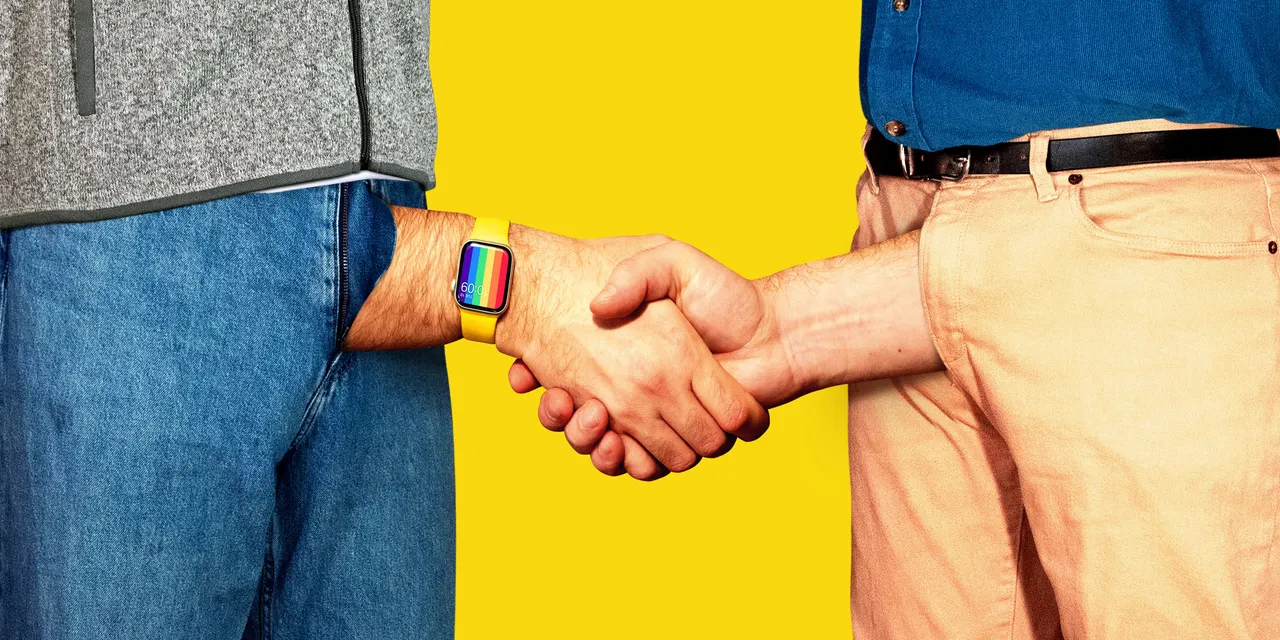
ILLUSTRATION: SAM WHITNEY
One location, however, came up repeatedly: Barry’s, the fitness studio that has become a gay sanctuary—partly thanks to prominent investor Keith Rabois, a longtime devotee who occasionally teaches classes there. The Castro location was named most frequently: “The Castro Barry’s ranks highest,” said the gay angel investor. “It’s all men, all gay, and everyone has abs.” (“From my experience working there, gay men do love fitness,” confirmed a female employee at the Castro Barry’s.)
The truth is, most people seemed eager to talk—no subterfuge required. Many replied almost instantly to my vague inquiries. More surprising was how readily they engaged in long conversations. Calls often lasted hours, weaving deep reflections on life in male-dominated cultures with the most sensational insider gossip of my career. Yet these anecdotes carried an edge—suggesting that one of Silicon Valley’s most reliable paths to power may pass through the bedroom. Some men eagerly picked up the phone, asking if I’d already heard rumors about them. One gay founder told me a rumor persists—that he and his husband slept with a gay investor to raise their down payment. “Do people really think,” he wondered, “we can’t afford an apartment?”
Many have been suspected of romances—even when they’ve never been in the same room. When I called Ben Ling, an early Google employee and investor, to ask about longstanding speculation that he’s Tim Cook’s perfect match—cited even by The Atlantic—he laughed. “People make up these rumors because they’re bored,” he said. “Tim Cook doesn’t know who I am.”
While some of these men do meet socially—and sometimes romantically—those meetings don’t always lead to romance. A friend of Rabois told me Rabois loves telling a story from years ago: He invited Sam Altman as his plus-one to an event. “Sam brought two phones and texted on both the whole time,” the friend said. “Keith said it was the worst date he’d ever been on.” (The use of the word “date” remains contested among those involved.)
For newcomers who’ve forged genuine friendships with powerful gay industry leaders, success sometimes comes with a cost: people assume it’s borrowed—not earned. Brad, a gay industry leader, has long lived under rumors about his friendship with Peter Thiel—even as his career soared. “Early on, when I started working with Peter, people would say, ‘Oh, did you sleep with him?’ or nonsense like that,” he said. The answer is no. Yet, “for some reason, everyone thinks it’s perfectly natural to ask. Straight people are curious, but other gay men are obsessed. Guys think, ‘What does he have that I don’t?’ So they assume, ‘Well, Peter must find you adorable.’” (Thiel did not respond to requests for comment.)
Still, it’s naive to insist proximity to power confers no advantages. When Altman’s ex-boyfriend, Stripe early employee Lachy Groom, raised a $250 million personal VC fund in his twenties, some observers saw the feat less as a triumph of talent than a product of access. Yet by the time Groom raised that fund, he’d already launched two funds—including a second targeting $100 million. So, according to a gay investor close to both Groom and Altman, that interpretation isn’t fully fair: “When Lachy and Sam were dating, Sam was known—but nowhere near as famous as he is now—and Lachy himself was capable,” the investor said. “I did write a letter of recommendation to one of Groom’s LPs saying, ‘Yes, he hasn’t been proven as an investor yet, yes, he’s young—but he’s in this network, and he’s Sam’s ex.’ But Lachy didn’t date Sam to get those things.” (Groom declined formal comment; neither did Altman’s representative.)
Meanwhile, when straight men try to infiltrate the gay network, gay investors whisper privately. Mark hosts dinners and events for gay tech folks in San Francisco, and says he noticed one man RSVPing regularly. “We don’t administer purity tests,” he said, “but someone said that guy is definitely not gay—he’s just attending gay events for deal flow.” That’s not to say straight men are excluded outright, but they’re not particularly welcome in gay capital circles. If a straight founder does show up, the joke is: Just don’t tell anyone you’re straight.
“I’ve seen straight men behave inappropriately,” said a gay investor. “There’s an obscure, not-worth-naming straight guy who pitches projects to all gay VCs. At a VC partners’ meeting, he was talking with a gay GP I know—and during the meeting, he put his hand under the GP’s leg, under the table. It was wildly unprofessional. It became a running joke: ‘Don’t let it be that guy again.’”
One person especially fuels the idea that being gay helps career advancement: Delian Asparouhov. Co-founder of Varda Space Industries, 31, mischievous, and formerly Rabois’s chief of staff. Rabois helped Thiel launch PayPal, later becoming a partner at Thiel’s VC firm Founders Fund—and faced company-level scrutiny years ago. While at Square, Rabois was accused of sexual harassment by a male colleague—an incident that ended with Rabois leaving the company. (An internal investigation ultimately supported Rabois.)
In 2018, about 100 people attended Rabois’s wedding to Jacob Helberg—a former Palantir advisor now serving as U.S. Deputy Secretary of State for Economic Growth. The multi-day celebration included many of tech’s most important figures, culminating in a seaside ceremony officiated by Sam Altman. (Clearly, Rabois’s disastrous “date” with Altman blossomed into deep friendship.)
During the wedding, Asparouhov gave a toast—a moment recalled by Fred, a senior gay tech leader who attended. “Delian said something like, ‘I was Keith’s intern at Square—I wore shorts and tank tops to work,’” Fred said, recalling sitting at a table with two prominent tech executives. “We just raised our eyebrows,” Fred continued. “It was incredibly awkward for Delian to say that at someone else’s wedding—Keith was marrying Jacob, after all.” (Other guests said they didn’t recall the speech but agreed it sounded like Asparouhov’s style.)
Rumors about Asparouhov and Rabois’s private lives have circulated in industry circles for years—partly amplified by Asparouhov himself online. (“Delian is like Gretchen Wieners from Mean Girls,” Fred explained.) In 2022, a prominent anonymous tech insider account on X, Roon, tweeted: “VCs have reinvented Roman pederasty—it’s insane.” Asparouhov replied almost immediately: “Just a little gay, and now I get to work at a space factory,” he wrote. “A pretty reasonable trade.” He now says the tweet was “obviously a joke.”
But as Fred noted, when Asparouhov joined Square in 2012, he was known for neon tank tops, ultra-short shorts, and mismatched shoes. “He’d bounce around constantly—very weird,” said someone who worked there then. Others recalled similarly. Rabois’s Miami-based company OpenStore—co-founded in 2021 and largely shuttered last year—was described by John, who visited its office, as “almost like a harem: full of ripped white guys, all hot, both straight and gay. People wore inappropriate clothes—extremely short shorts and tight shirts, despite blasting AC.” When I asked Rabois for comment, he flatly denied it. “The dress code is standard for Florida,” he said. “And I doubt fewer than two of the 100-plus employees could reasonably be described as ‘jacked.’”
Rabois is known for lavish vacations—helicopter trips to Icelandic volcanoes, white-water rafting in Costa Rica. Being excluded stirs fierce envy, as a young gay tech consultant told me, who launched a “micro-investigation” tracking several young men appearing on Rabois’s Instagram. He said they’re “entry-level” staff—but “always post photos from St. Barts.” “I’m scrolling the A train, thinking, ‘What gives these guys private jets?’”
But how far back do these rumors stretch? Has Silicon Valley always been semi-publicly, more-or-less gay? I was told more than once to contact Joel—a gay man who’s worked in tech and spent years embedded in Silicon Valley’s older generation of powerful gay men. “So,” I asked when he answered my call, “are you part of the Gay Tech Mafia?” He laughed. “Maybe someone thinks I am—that’s why you called.”
When I asked Joel to explain how the Gay Tech Mafia operates, he compared it to people who “went to the same college or share similar backgrounds or hometowns.” He said it truly began with figures like Rabois and Thiel, who, upon gaining power, “brought along large groups. Keith hired gays at Square; Peter hired Mike [Solana] at Founders Fund. Then there was Marissa Mayer’s cohort of gay Googlers in 2010. And Sam—he’s Keith’s friend, operating parallel, gathering other gays around him.”
Joel told me about the parties back then—specifics remain off the record. But broadly, they were as you’d imagine. “There’d be lots of alcohol, escalating into weird situations. Random hookups. Usually with a sexual tone.” But that was years ago. Such parties, at least as I’ve heard, have either vanished or gone completely underground. (“Once you finish your reporting, you’ll find the real story isn’t that explosive,” Mark said. “Like wild orgies—if you actually find where they happen, please tell me, because I want to go.”)
I told Joel I’d heard some young people in tech feel pressured to sleep around indiscriminately to get ahead. Was that true in his experience? “Hmm…” He paused, then laughed. “I mean, there are strange gray areas in all this. It can be highly sexualized—not all professional. Lots of people dated or slept together.” He’d personally felt pressure. “I did feel pressure to do it—not anything illegal, exactly. But they skirt the line.” Now older, Joel understands why some might call it abuse of power—but resists that framing. Sex-and-status exchange may not be the sole reason for rapid ascent, but it can be a factor—as he put it, simply because sex “makes people intimate quickly.”
As Silicon Valley matured into the world’s power center, it grew brutally ruthless. Stakes are scarce; ambition is often laced with cold opportunism. In gay circles, some see Silicon Valley as Hollywood’s old “casting couch.” Many critics are themselves emerging gay entrepreneurs and investors—for whom certain parts of the gay community seem steeped in 1970s–80s attitudes and values. “There’s this feeling,” one observer noted, “that because decades of oppression weren’t acknowledged until recently, some think, ‘I can do this—or I deserve it—because no one will cancel me for it.’”
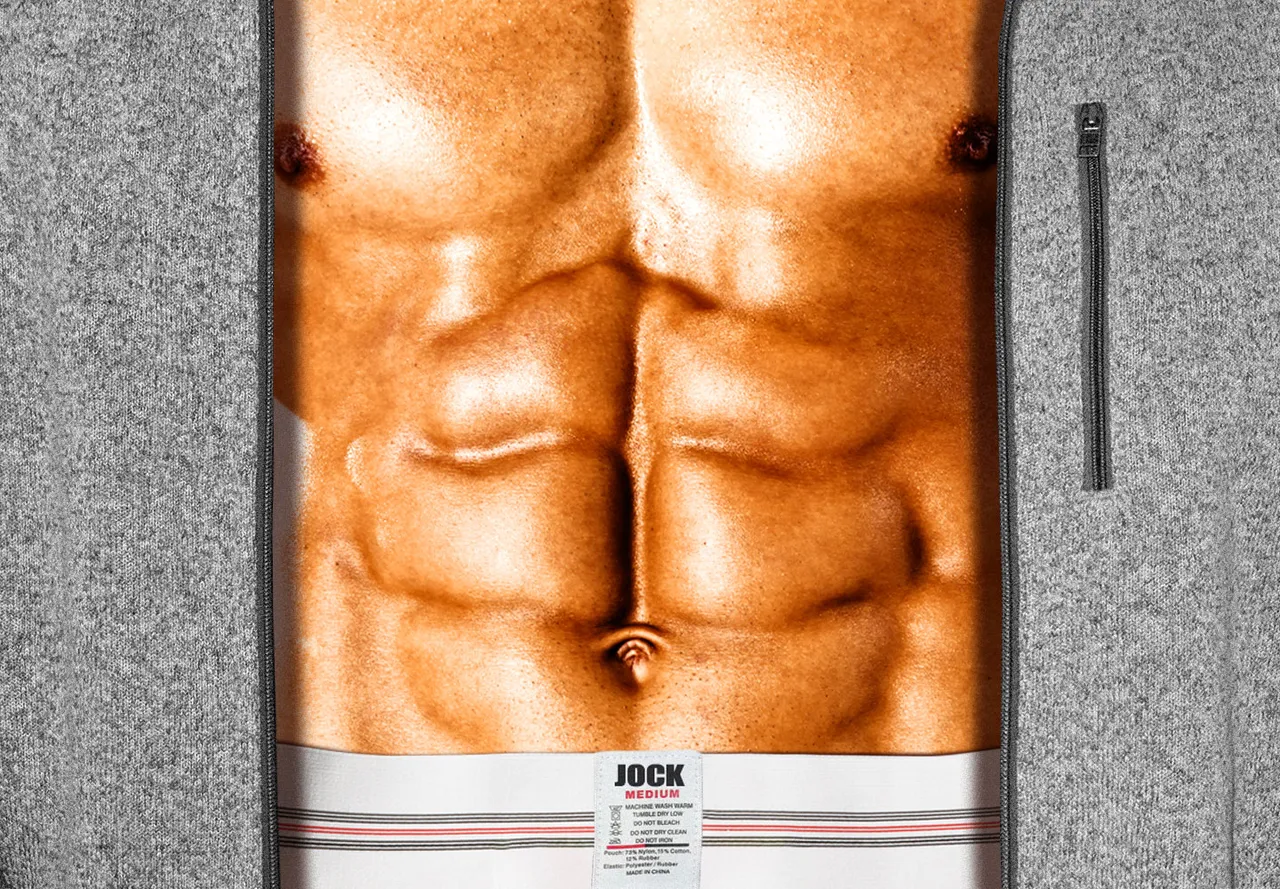
SAM WHITNEY; GETTY IMAGES
As one young gay investor described it, this is a “power-hungry, network-driven, sometimes intensely hungry” group. He suggested the arrangement is tacitly understood by all involved: “Both sides know they’re playing a game—and want something from the other. I guess if you’re into that, it’s fine.” To him, this isn’t the whole picture—most of it is a “lovely, astonishing community supporting its members and their careers.” But beyond that lies a sexual undercurrent—he insists it’s undeniable, especially in AI circles. “It’s like a gay version of nepo baby,” he said. “No one explicitly says it’s for sex—but that element is operating in the background. Like, you’re young and hot—I’ll sleep with you.”
A gay man named Dean described his experience in a profession saturated with sexual cues. Early on, those cues came from limited partners (LPs) interested in his fund; after raising it, they came from founders seeking capital. Once, a potential LP suggested meeting at his home. “He said, ‘We don’t need to wear clothes—we can talk about your fund in my hot tub,’” Dean recounted. He characterized these encounters as harassment—environmental, expected, and largely harmless. “Sex is devalued in gay culture,” he said. “Often, it’s just another currency.”
After Dean raised his fund, young men occasionally approached him—“founders seeking funding who said they’d do anything to get it.” At LGBT founder events, young men requested one-on-one drinks. Sometimes, they sent nude photos on Instagram. “Like, ‘Hey…’ with a wink emoji. Then, ‘Do you like it?’ And I’d reply, ‘No, that’s actually inappropriate,’” he said. He added this isn’t unique to Silicon Valley. After leaving tech for another industry, Dean realized the entanglement of sex, power, and ambition recurs across certain gay professional circles.
Another person working in queer tech put it this way: “As a queer person, building relationships in business and life has an aspect that’s frankly both sexual and nonsexual. You can flip that switch and discuss business with someone you slept with yesterday.” Moreover, he added, it’s an unavoidable fact that gay culture leans heavily sexual. “Straight men have golf courses. Gay men have orgies,” he said. “That doesn’t mean it’s problematic. It’s consensual—but it’s how we connect and build bonds.”
Of the 31 gay men I interviewed for this report, nine told me they’d experienced unwanted advances from other gay men in the industry. Some were mild but irritating: repeated invitations to hot tubs or wine cellars. Others involved unwanted physical contact. One—a rising gay investor—told me he believes rejecting a senior colleague’s sexual overture cost him a job. Multiple sources referenced serial harassers sending unsolicited genital photos and making explicit solicitations.
“What frustrates me about discussions of gay men in tech in San Francisco is that none of this is entirely secret,” said a gay investor who’d endured unwanted advances. “People recognize it’s a problem.” Another gay man in tech added: “There’s a cautionary element to this story. You have an amazing idea and an exceptional entrepreneur trying to break into the VC world. Then they have to endure someone sending them a dick pic and demanding an investment meeting. That shouldn’t be normalized. And now, everything’s so blurry. Like, ‘It’s our little circle, our little world.’ But it has huge impact.”
Gay men in tech repeatedly asked me: Why has this story never been written? In a way, the question answers itself. Unfair bias against gay men still exists—otherwise why do sources insist on pseudonyms? I was warned more than once to tread carefully—Silicon Valley figures are “vengeful.” Though many see this sexual-pressure culture as a feature of Silicon Valley life, as another person told me, writing about it is a “real minefield.”
Gerald knows that feeling. A young gay man in San Francisco, described by acquaintances as a “quirky individual” and “social operator.” In one call, Gerald explained why he’d hesitated to speak about his time in tech. “It’s a complicated topic,” he said. “I don’t think readers can distinguish between ‘some bad people are gay’ and ‘all gay people are bad.’ It slides easily into homophobia.”
He wasn’t ready to tell me his story yet. But he did tell me he suspects other stories will surface in the coming months. “People struggle to articulate power dynamics with nuance,” he said. “This isn’t just one story. There will be many.” Based on what he’s told me so far—and everything else I’ve heard: heartfelt confessions on late-night calls; insights shared privately and held in confidence; dozens of witty, brilliant, fiercely competitive young gay men acknowledging they compete not just for power, money, and recognition—but for love, romance, and belonging in the heart of San Francisco—I believe him.
Join TechFlow official community to stay tuned
Telegram:https://t.me/TechFlowDaily
X (Twitter):https://x.com/TechFlowPost
X (Twitter) EN:https://x.com/BlockFlow_News
 @WIRED