








White House report contains 100+ legislative recommendations and serves as a crypto barometer
TechFlow Selected TechFlow Selected
White House report contains 100+ legislative recommendations and serves as a crypto barometer
166-page encryption report is not just "paperwork"
 Navigating Web3 tides with focused insights
Source: The White House
Compiled by: KarenZ, Foresight News
On July 31, Beijing time, the U.S. Presidential Working Group on Digital Asset Markets released a report titled "Strengthening American Leadership in Digital Financial Technology."
The 166-page report covers an overview of the digital asset ecosystem, market structure, and existing regulatory frameworks. It provides over 100 specific legislative recommendations and guidance on topics including digital asset classification, payment stablecoins, regulatory frameworks, and taxation. The core objectives are to ensure U.S. global leadership in digital assets and blockchain technology, promote clear regulatory frameworks, foster innovation, protect consumers and investors, and mitigate financial risks.
TL;DR
1. U.S. citizens and businesses should be able to own digital assets and use blockchain technology for legitimate purposes without fear of prosecution. Similarly, U.S. entrepreneurs and software developers should have the freedom and regulatory certainty to leverage these technologies to upgrade all sectors of the American economy.
-
Congress should enact legislation confirming that individuals can self-custody their digital assets without financial intermediaries and use them for lawful peer-to-peer transactions.
-
Congress should codify principles regarding how control over assets affects obligations under the Bank Secrecy Act (BSA), particularly for money transmitters. For BSA purposes, software providers who do not retain full independent control over value should not be deemed to engage in money transmission.
-
The Financial Crimes Enforcement Network (FinCEN) should assess whether and how its existing guidance related to digital assets—including guidance issued in 2013 and 2019—should be rescinded, modified, or updated to reflect legislative and regulatory changes. FinCEN may consider whether additional guidance is needed for specific markets or applications of specific BSA obligations.
2. Policymakers and market regulators should lay the foundation for U.S. digital asset markets to become the deepest and most liquid in the world.
-
The SEC and CFTC should use their existing authorities to immediately advance digital asset trading at the federal level.
-
Congress should enact legislation granting the CFTC explicit authority to regulate spot markets for non-security digital assets. This legislation should allow registrants with both regulatory agencies to operate multiple business lines under the most efficient licensing structure.
-
When determining DeFi regulation, policymakers should fully consider the extent to which a particular software application (i) exercises “control” over assets; (ii) is technically modifiable; (iii) operates in a centralized structure or manner; and (iv) is technically or logistically capable of complying with current regulatory obligations.
3. Banking regulators should advance digital asset and blockchain technology development.
-
Federal banking regulators should ensure that practices or guidelines regarding risk management and bank participation—existing or new—are technologically neutral.
-
These regulators should restart cryptocurrency innovation initiatives. The U.S. should adopt capital requirements for bank digital asset activities that accurately reflect the risks of the assets or activities involved.
-
Relevant federal banking regulators should provide clarity and transparency regarding the process for qualified institutions to obtain bank charters or Federal Reserve master accounts.
4. Dollar-backed stablecoins represent the next wave of innovation in payments, and policymakers should encourage their adoption to strengthen the dollar’s dominance in the digital age.
-
All agencies authorized under the U.S. GENIUS Act should efficiently fulfill their responsibilities.
-
U.S. agencies, including the Treasury Department, should promote private-sector leadership in the responsible development of cross-border payment and financial market technologies. These agencies should also promote U.S. leadership in establishing international legal, regulatory, and technical standards and best practices for new payment technologies that reflect U.S. interests and values.
-
Relevant U.S. government departments, including the Treasury, should promote private-sector leadership in the responsible innovation and development of cross-border payment and financial market technologies. These agencies should also advance U.S. leadership in shaping international legal, regulatory, and technical standards and best practices for new payment technologies that reflect U.S. interests and values.
-
Congress should legislate to prohibit the adoption of any central bank digital currency (CBDC) within the United States. At the international level, the U.S. should urge other countries to adopt policies that promote private-sector roles in upgrading payment and financial systems.
5. U.S. law enforcement agencies should have the necessary tools and authorities to hold accountable those who misuse digital assets for illegal activities. These enforcement tools must never be abused to target lawful activities by compliant citizens.
6. The Presidential Working Group on Digital Asset Markets is committed to resolving tax ambiguities in the digital asset space through clear tax guidance and legislative adjustments, balancing support for innovation with tax compliance needs.
-
This includes specific tax guidance on token wrapping, mining, staking, and payment stablecoins.
-
Congress should enact legislation treating digital assets as a new asset class and modifying federal income tax rules applicable to securities or commodities to include digital assets. Digital assets should be added to the list of assets subject to wash sale rules.
Overview of the Digital Asset Ecosystem
The report outlines the digital asset ecosystem:
Since Bitcoin’s inception in 2009, the digital asset market has grown exponentially, evolving from a niche area into a multi-trillion-dollar ecosystem for payments and transactions.
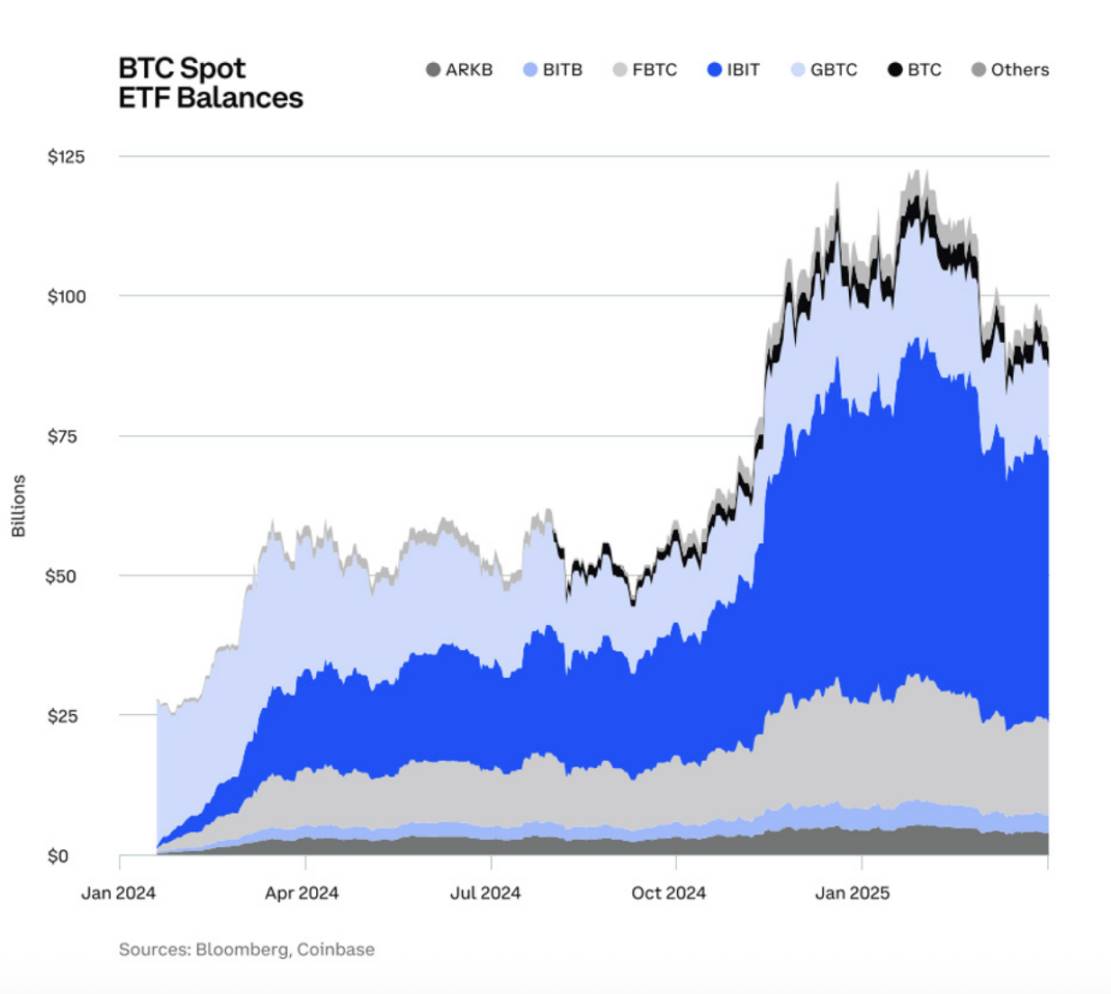
Institutional adoption is accelerating: data on Bitcoin spot ETFs continues to grow.
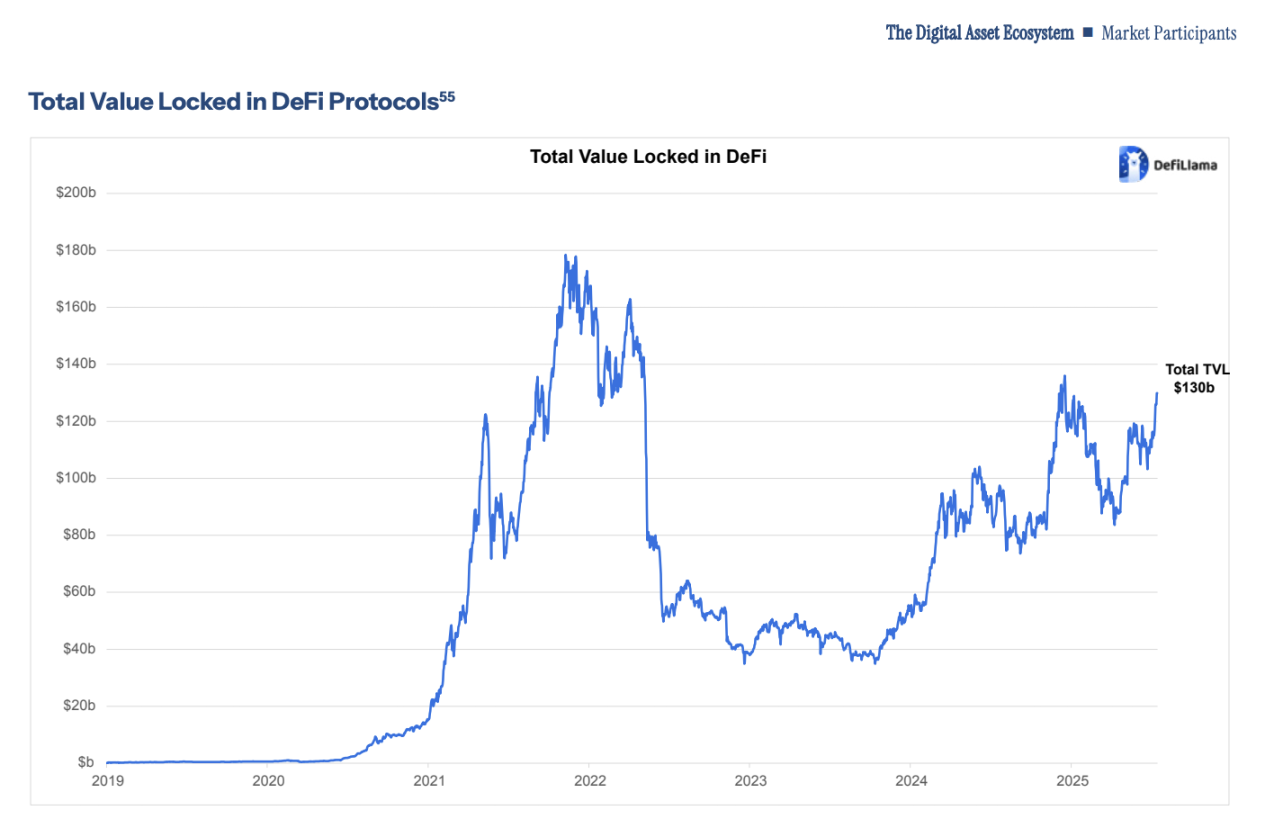
Rise of DeFi: Total Value Locked (TVL) in DeFi protocols reached $130 billion in 2025.
Sports clubs and video game developers, among others, have begun experimenting with NFTs as symbols of loyalty to teams or in-game assets.
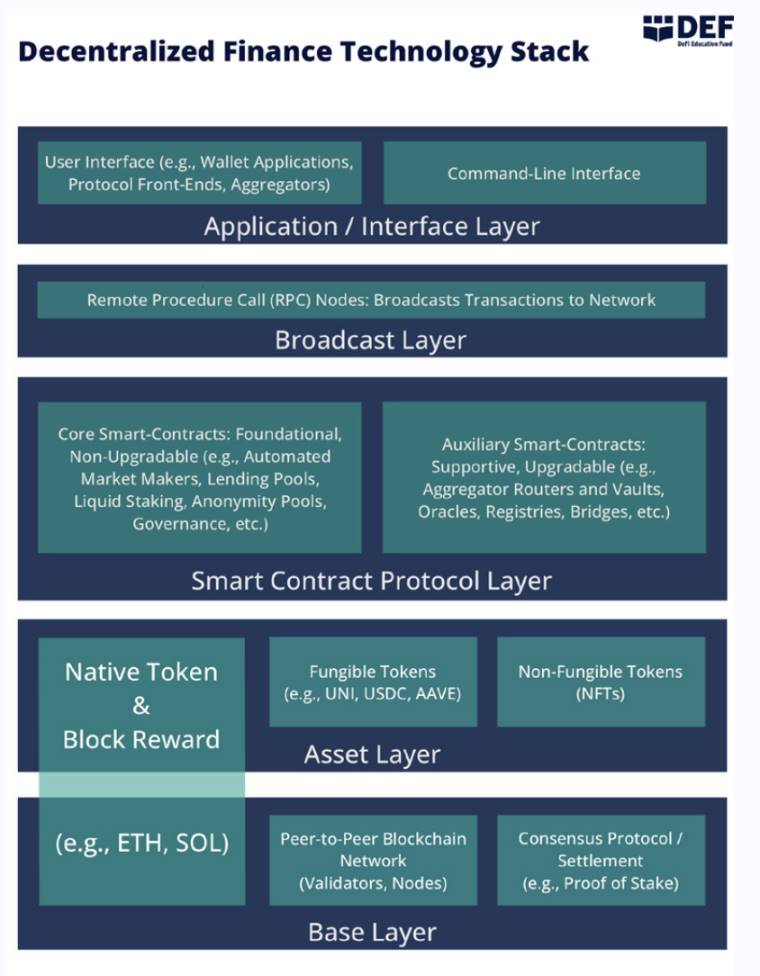
The report also outlines numerous market participants in the digital asset ecosystem, the DeFi technology stack, and introduces DAOs, protocol consensus mechanisms (PoW and PoS), mining, staking, key infrastructure providers, and tools.
Multiple Market Participants:

DeFi Technology Stack:
Key Infrastructure Providers and Tools:

Existing Regulatory Framework
Federal Level
-
Securities and Exchange Commission (SEC), Commodity Futures Trading Commission (CFTC): primary federal regulators for secondary digital asset markets.
-
Self-regulatory organizations such as the Financial Industry Regulatory Authority (FINRA) and the National Futures Association (NFA) also assist in regulating and supervising certain financial industry participants.
-
Banking regulators: Federal Reserve, Office of the Comptroller of the Currency (OCC), Federal Deposit Insurance Corporation (FDIC), National Credit Union Administration (NCUA).
-
U.S. Department of the Treasury: The Financial Crimes Enforcement Network (FinCEN) enforces the Bank Secrecy Act (BSA), requiring financial institutions to file suspicious activity reports (SARs), currency transaction reports (CTRs), and other measures to protect the financial system from illicit activities, combat money laundering, and terrorist financing. The Treasury’s Office of Foreign Assets Control (OFAC) administers U.S. economic sanctions. The Internal Revenue Service (IRS) collects taxes and provides tax-related assistance to taxpayers.
State Level
Some state financial services agencies have applied state-level money transmission laws to digital asset custodians and exchanges, requiring intermediaries to register as money transmitters to serve customers located in those states. Some states exclude digital asset trading from money transmission laws, meaning companies focused solely on digital asset trading may not be subject to licensing requirements in those jurisdictions. Other states have established specialized regulatory regimes for digital assets.
-
New York (NYDFS): Requires digital asset businesses to obtain a license through the "BitLicense" regime, criticized for its lengthy process.
-
Wyoming: Established the "Special Purpose Depository Institution" (SPDI) charter and recognizes DAOs as legal entities.
-
California: Will implement dedicated digital asset regulations in 2026.
Key Market Activities Requiring Further Regulatory Clarity
The report discusses key market activities needing further regulatory clarification, including:
-
Digital asset issuance (ICO, airdrops, forks);
-
Trading;
-
Custody and wallets;
-
Clearing and settlement;
-
Lending and collateralization;
-
Tokenization.
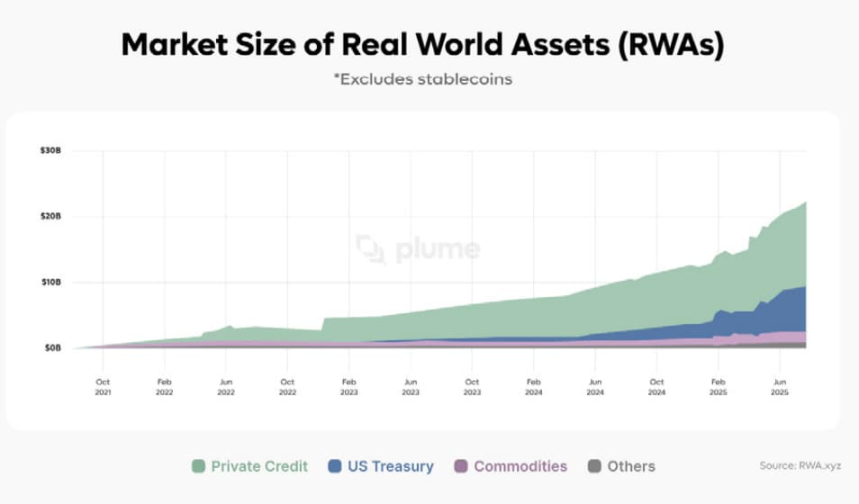
Regarding tokenization, the report cites industry estimates suggesting that over $600 billion in “real-world assets” could be tokenized by 2030. The regulatory structure for tokenization depends on the underlying asset being tokenized, not merely the act of tokenization itself. Where tokenized instruments are regulated, they are often treated as securities, since a significant portion of current tokenized trading volume involves securities-like assets (e.g., fixed income and private credit). Other non-security uses of tokenization include tokenized commodities (e.g., gold) and tokenized non-financial assets (e.g., commercial real estate and rare items).
Market Structure and Regulatory Recommendations
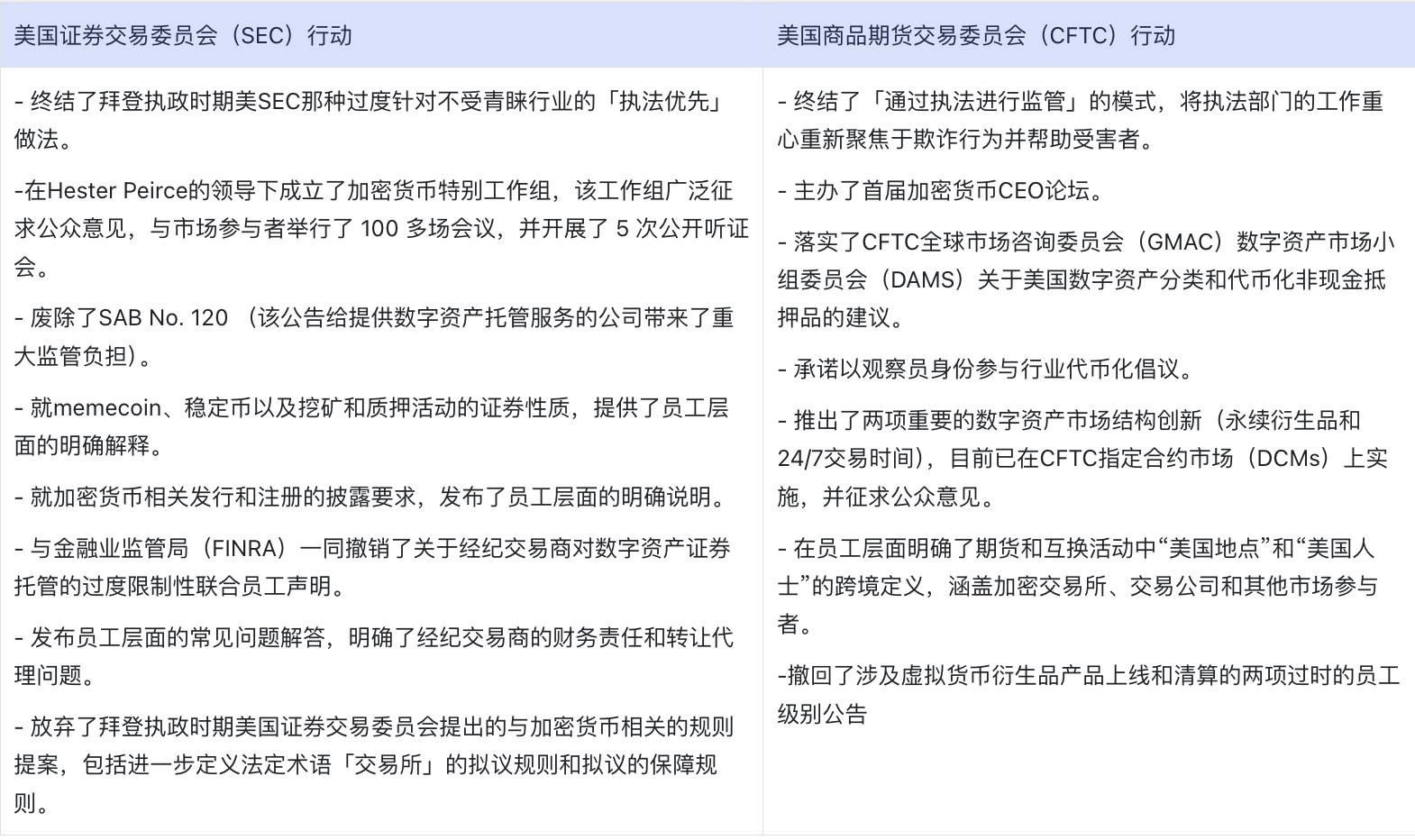
The report notes that since Trump took office, both the SEC and CFTC have taken strong initial steps to provide much-needed clarity to market participants.
Establishing a Digital Asset Taxonomy
The report categorizes digital assets into three types: security tokens, commodity tokens, and commercial/consumer-use tokens.
1. Security Tokens
Definition: Assets meeting the definition of a security under securities laws, such as stocks, bonds, or investment contracts (determined via the Howey Test).
Regulatory Requirements:
-
Issuance must be registered with the SEC or qualify for an exemption.
-
Any platform meeting the definition of an “exchange” under Section 3(a)(1) of the Securities Exchange Act and Rule 3b-16(a), offering trading of security-type digital assets, must either register as a national securities exchange or operate under an exemption (e.g., as an ATS).
Tokenization does not alter the substance of the underlying security. Issuers or their agents using blockchain do not create new or different types of assets. Therefore, tokenized securities fully meet the federal definition of “securities,” and unless exempted, all such issuances and sales must be registered. The SEC has exemption authority and can use it to address concerns related to the issuance and trading of tokenized securities.
2. Commodity Tokens
Definition: Digital assets viewed by the CFTC as “commodities” (e.g., Bitcoin, Ethereum), whose derivatives (futures, options) are regulated by the CFTC.
Regulatory Requirements: No uniform federal framework currently governs spot markets, but the CFTC may take action against fraud and manipulation. If involving digital asset derivatives, trading must occur on designated contract markets (DCMs) or swap execution facilities (SEFs), and comply with clearing rules under the Commodity Exchange Act (CEA). Digital asset derivatives will be cleared by registered derivative clearing organizations (DCOs), which act as central counterparties for each buyer and seller.
Network tokens (protocol tokens) differ from securities and typically do not grant equity, debt, or profit-sharing rights. Even if initially issued as a “investment contract” (security), once the network is fully functional and sufficiently decentralized, such tokens should no longer be considered securities.
3. Tokens for Commercial and Consumer Use
Definition: Tokens used to access specific goods, services, or rights (often NFTs), or loyalty tokens redeemable within closed systems for consumption purposes.
Regulatory Recommendations for Advancing Digital Asset Trading at the Federal Level
1. Recommendations for Immediate SEC Actions:
1. Utilize rulemaking and exemption authority under the Securities Act to advance:
-
Establish customized exemptions for securities offerings involving digital assets.
-
Create a temporary safe harbor for functional but incomplete or insufficiently decentralized tokens, allowing them to develop without immediate securities regulation.
-
Create a safe harbor for specific airdrop activities to prevent them from being classified as “sales” under Section 2(a)(3) of the Securities Act or exempt them from registration under Section 5. Also consider exemptions for digital asset distributions by DePIN providers incentivizing network participation, and for certain NFT issuances.
2. Utilize rulemaking and exemption authority under the Securities Exchange Act to advance:
-
Allow non-security digital assets linked to investment contracts (excluding payment stablecoins) to trade on platforms not registered with the SEC after their initial distribution.
-
Provide exemptions for certain DeFi service providers from registration requirements under Sections 15 (broker-dealer), 5 and 6 (exchange), and 17A (clearing agency) of the Securities Exchange Act.
-
Revise the ATS Rule (or establish a similar framework) to better coordinate parallel trading of non-security digital assets and securities under a suitable regulatory regime for digital assets.
-
Establish a conditional “innovation exemption” under the Securities Exchange Act, allowing SEC-registered entities to pursue innovative business models.
-
Reinterpret the definition of “facility” in Section 3(a)(2) of the Securities Exchange Act to accommodate new business models in digital asset trading.
-
Revise the NMS Rules and related National Market System plans to promote:
-
Tokenization of NMS securities
-
Parallel trading of non-security digital assets and NMS securities
-
Optimization of quote/order aggregation mechanisms and trade reporting requirements
-
Support for oracles, aggregators, and other DeFi components in trading NMS securities or non-security digital assets
-
Update transfer agent rules to explicitly permit the use of blockchain technology.
-
Clarify when self-custody wallet providers must register as broker-dealers.
3. Advance under the Investment Advisers Act and Investment Company Act:
-
Clarify custody requirements for registered investment companies/advisers holding security-type digital assets.
-
Evaluate whether certain state-chartered trust companies should be included in the category of “qualified custodians.”
2. Recommendations for Immediate CFTC Actions
1. The CFTC should consider using its rulemaking, interpretive, and exemption authority under the Commodity Exchange Act to advance:
-
Provide clear guidance for designated contract markets (DCMs) on listing leveraged, margined, or financed retail commodity spot transactions involving digital assets.
-
Clarify criteria for determining when digital assets may be considered commodities.
-
If digital asset investment vehicles or their managers may be deemed “Commodity Pools” or required to register as “Commodity Pool Operators” (CPOs), the CFTC will update relevant rules accordingly.
-
Collaborate with FinCEN to issue new rules providing guidance for qualified intermediaries and other market participants on using new technologies to implement Customer Identification Programs (CIPs).
-
Allow institutions to offer bundled trading and custody services.
-
Clarify the applicability of existing CFTC registration frameworks to DeFi activities, smart contract protocols, and DAOs (following the principle of technological neutrality).
-
Guide futures commission merchants (FCMs) on calculating and managing segregation obligations when holding digital assets in custody.
-
Clarify valuation haircut rules for digital assets held by registered intermediaries (including FCMs, Swap Dealers, and DCOs) for margin calculations, capital and financial resource reporting, and settlement obligations.
-
Review the eligibility criteria under CFTC Rule 1.49 for digital assets as qualified collateral.
-
Develop collateral guidelines for derivative clearing organizations (DCOs) regarding digital assets (including payment stablecoins), covering:
-
DCO financial resource requirements
-
Asset valuation and margin haircuts
-
Settlement finality
-
Self-custody and third-party custody arrangements
-
Daily reporting for 7×24 trading assets
-
Legal risks associated with netting and collateral rights.
-
Promote the use of tokenized non-cash collateral as compliant margin.
-
Clarify classification standards for digital asset swaps, along with margin and reporting requirements.
The SEC and CFTC should coordinate to ensure efficient rulemaking processes and solicit public input on proposed rules.
For long-term planning, the SEC and CFTC should explore providing flexibility to allow registrants to offer multiple services within a single user interface. The CFTC should consider how to modify existing rules to allow blockchain-based derivatives.
For example, combining exchange services with asset custody could enable real-time settlement. Integrating exchange and brokerage services would allow customer orders to be processed directly using the same technology stack, achieving economies of scale and reducing operational complexity. However, exchanges and intermediaries must keep customer property separate from their own funds.
What Should Congress Consider in Structuring Digital Asset Market Legislation?
The report states that when finalizing market structure legislation, Congress should consider the following to ensure the most cost-effective and innovation-friendly regulatory structure for digital assets.
1. Allocation of Regulatory Authority:
-
The CFTC should be explicitly granted regulatory authority over spot markets for non-security digital assets.
-
Registrants with the SEC and CFTC should be allowed to conduct diverse business operations under an efficient licensing framework, preventing regulatory arbitrage. SEC registrants should be able to offer trading in digital asset securities and, under a congressional-defined licensing structure, engage in non-security digital asset trading. CFTC registrants should be able to offer trading in digital commodity derivatives, retail digital commodity transactions, other CFTC-regulated products, and non-security digital assets designated by Congress.
-
Federal law should preempt state law, ensuring uniform application of securities and commodity regulations.
2. Intermediary Regulatory Framework:
-
Digital asset exchanges, brokers, and similar entities should register with the SEC or CFTC based on their business nature, with rules consistent with existing financial regulatory standards but not unduly burdensome.
-
Allow institutions to conduct lending, hedging, and similar operations involving both securities and non-securities assets, provided risks are controlled.
-
Digital asset exchanges and other intermediaries should publish listing standards and highlight information such as tokenomics.
-
Digital asset exchanges, brokers, dealers, and other SEC- and CFTC-registered entities must disclose their role when acting on behalf of clients, principals, or counterparties.
3. DeFi Regulatory Principles: Regulation should focus on a protocol’s control over user assets, code modifiability, and degree of centralization, avoiding imposition of traditional financial rules on technically non-compliant entities. Frameworks should balance innovation and safety, while preventing legal circumvention when integrating DeFi into the mainstream financial system.
4. Accounting Standards Enhancement: The Financial Accounting Standards Board (FASB) must further clarify recognition/derecognition criteria for digital assets (addressing accounting issues arising from lending, wrapping, and trading) and accounting for token issuers.
Banking and Cryptocurrency
Banks currently provide various services to digital asset companies:
1. Traditional banking products and services such as commercial deposit accounts, loans, and capital markets advisory;
2. Payments;
3. Tokenization;
4. Tokenized deposits;
5. Digital asset custody;
6. Facilitating digital asset trading;
7. Digital asset-related lending.
Recommendations:
1. Restart Bank Crypto Innovation Support Program
1. Prioritize Clarifying High-Demand Areas
-
Expand the list of compliant digital asset activities banks may conduct within the legal framework.
-
Ensure fair access to business permissions across different types of chartered banks.
-
Develop prudent regulatory standards for areas including private/public chain applications, deposit tokenization, and the entity conducting core banking operations (depository institution vs. holding company).
2. Initial Priority Topics
-
Digital asset custody: Supplement with technical best practice guidance (e.g., key management, cold/hot wallet separation).
-
Third-party partnerships: Clarify that banks may outsource digital asset services (e.g., sub-custody, infrastructure support).
-
Stablecoin reserve management: Update OCC rules in conjunction with the GENIUS Act.
-
Proprietary account holdings: Define compliance and risk management requirements for banks holding digital assets on their balance sheets.
-
Innovation pilots: Allow depository institutions to participate in experimental digital asset projects.
-
Tokenization activities: Establish differentiated准入 rules based on the risk level of underlying assets (including deposit tokenization).
-
Public chain usage: Apply technological neutrality, focusing on the substantive risks of the business rather than the technology itself.
2. Encourage State Bank Technological Innovation
-
Repeal restrictive policies:
-
The Federal Reserve should rescind the 2023 Section 9(13) Policy Guidance and 12 C.F.R. § 208.112 and accompanying guidance to ensure state member banks are permitted to explore innovative banking technologies and products.
3. Build a Principles-Based Regulatory Framework
-
Standardize risk governance
-
Enhance regulatory capacity building
Stablecoins and Payments
Legislative recommendations:
-
Swift implementation of the GENIUS Act: The Presidential Working Group on Digital Asset Markets urges all relevant federal agencies—including the Treasury, OCC, FDIC, Federal Reserve, NCUA, SEC, and CFTC—to swiftly implement the GENIUS Act as required by law, advancing dollar-based stablecoins and ensuring smooth implementation of the stablecoin regulatory framework.
-
The U.S. Treasury and other agencies should support private-sector leadership in cross-border payments and financial market technologies, promoting international standards aligned with U.S. interests and values.
-
Legislation should prohibit the use of CBDCs in the United States and call on other countries to support private-sector dominance in payment systems.
Combating Illicit Financing
The report presents a series of regulatory and policy recommendations aimed at combating illegal financial activities (e.g., money laundering, terrorist financing), summarized as follows:
-
Clarify the scope of the Bank Secrecy Act (BSA).
-
Enhance public-private information sharing on risks of illicit finance.
-
The Treasury and relevant agencies should provide clear AML/CFT compliance guidance for traditional financial institutions and digital asset service providers, clarifying requirements for customer identification (CIP), transaction monitoring, and suspicious activity reporting (SAR).
-
Combat systemic illicit financial risks.
-
Protect rights of legitimate users.
-
Technical standards and compliance tools.
Taxation
The Presidential Working Group on Digital Asset Markets is committed to resolving tax ambiguities in the digital asset space through clear tax guidance and legislative adjustments, balancing support for innovation with tax compliance needs.
Priority Guidance
The Treasury Department and IRS should issue guidance:
-
Clarify how unrealized gains and losses on digital assets held as investment assets are determined for Adjusted Financial Statement Income (AFSI).
-
Address whether trusts holding digital assets, staking them, and receiving staking rewards can be treated as investment trusts under grantor trust rules.
-
Clarify whether “wrapping” (e.g., converting Bitcoin into a tokenized version on Ethereum) and “unwrapping” transactions constitute taxable events.
-
Update the IRS FAQ on digital assets.
-
Establish a de minimis threshold for minor digital asset income (e.g., airdrops, staking rewards, hard forks) to simplify small-scale tax reporting (excluding node operators and digital asset mining taxpayers).
In addition, the working group will also issue future guidance on taxation related to mining and staking, airdrops, NFTs, digital asset losses, and charitable contribution deductions.
Possible future legislation or guidance may also include requiring taxpayers to report foreign digital asset accounts, simplifying reporting requirements under the Internal Revenue Code, requiring basis reporting when transferring digital assets between centralized exchanges, and requiring digital asset brokers to report information on foreign controllers of certain passive entities.
Priority Legislative Recommendations
-
Congress should enact legislation treating digital assets as a new asset class, subject to modified versions of federal income tax laws applicable to securities or commodities. Provisions applicable to actively traded substitute digital assets should be expanded to include: (a) mark-to-market, trading safe harbors, securities lending, etc. Additionally, Section 1091 (wash sale rules) and Section 1259 (constructive sales) should apply to digital assets. Alternatively, legislation could clearly specify when digital asset commodities or other digital assets are treated as securities or commodities for federal income tax purposes.
-
Legislation should characterize payment stablecoins for federal income tax purposes; the GENIUS Act does not address this. Given the structure of payment stablecoins and potential gains or losses upon disposition, characterizing them as debt appears most appropriate. If payment stablecoins are treated as debt, legislation should also consider the applicability of existing federal tax rules that might hinder their widespread use as financial assets. In particular, legislation should address wash sale and anti-anonymity bond rules.
-
Modify wash sale rules to add digital assets to the list of assets subject to wash sale restrictions. If such legislation is enacted, broker reporting rules should be updated accordingly. Wash sale rules should not apply to payment stablecoins.
-
Clarify that tax treatment for digital asset lending should mirror that of securities lending.
U.S. Strategic Bitcoin Reserve and Digital Asset Stockpiling
Regarding a U.S. strategic Bitcoin reserve and digital asset stockpiling, the U.S. Treasury has submitted its views to the White House on establishing and managing a Strategic Bitcoin Reserve and a Digital Asset Stockpile. The Treasury will continue coordinating with the White House and other working group members to advance appropriate follow-up measures to operationalize this reserve and stockpile.
Join TechFlow official community to stay tuned
Telegram:https://t.me/TechFlowDaily
X (Twitter):https://x.com/TechFlowPost
X (Twitter) EN:https://x.com/BlockFlow_News
 @WhiteHouse






