Wall Street Bigwigs Weigh In: Bitcoin or Gold? A Complete Analysis of Market Dynamics Under Trump's New Policies
TechFlow Selected TechFlow Selected
Wall Street Bigwigs Weigh In: Bitcoin or Gold? A Complete Analysis of Market Dynamics Under Trump's New Policies
Once the Nasdaq index rebounds, Bitcoin's performance will outperform gold.
 Navigating Web3 tides with focused insights
Compiled & Translated: TechFlow
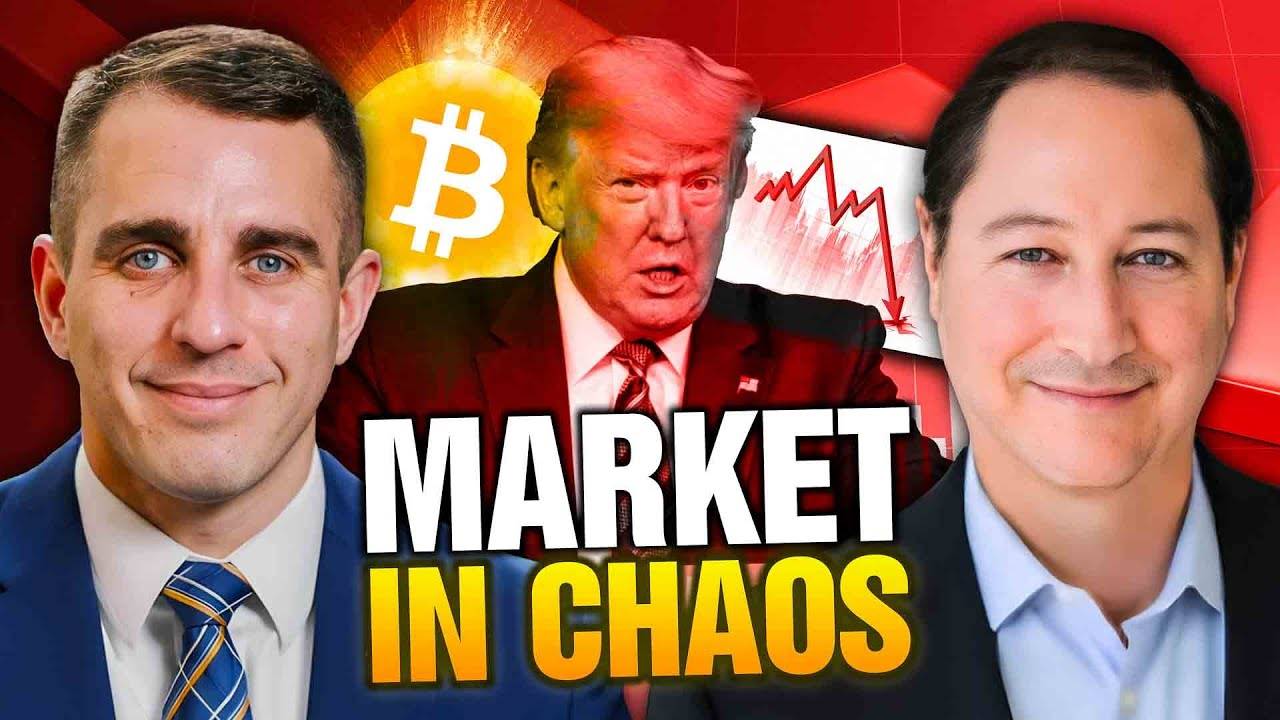
Guest: Jordi Visser, macro investor, former President & CIO of Weiss Multi-Strategy Advisers (over 30 years of Wall Street experience)
Host: Anthony Pompliano, Founder & CEO of Professional Capital Management
Podcast Source: Anthony Pompliano
Original Title: Trump Throws Bitcoin & Stocks Into CHAOS
Air Date: March 15, 2025
Key Takeaways
Jordi Visser is a macro investor with over 30 years of experience on Wall Street. He runs a Substack investment newsletter called "VisserLabs" and regularly publishes investment-related YouTube videos. In this interview, we had an in-depth discussion about Trump’s economic policies, including tariffs, tax proposals, the rift between Trump and Fed Chair Powell, inflation, gold vs. bitcoin, stock market outlook, internal dynamics within the Trump administration, and policy uncertainty.
Highlights Summary
-
Bitcoin is “gold with wings,” due to its higher volatility and greater upside potential.
-
Once the Nasdaq rebounds, bitcoin will outperform gold.
-
For many people, stocks and cryptocurrencies are not just investment tools—they represent hope.
-
Gold appeals more to older generations of investors, while younger generations lean toward bitcoin.
-
Tariffs are effectively a hidden tax designed to shift funds from the private sector to the public sector to ease debt pressure.
-
Tariff policy serves both as a revenue tool and a negotiation tactic.
-
I believe the income tax proposal aims to address domestic wealth distribution issues.
-
From a neutral standpoint, I don’t think Trump’s tax policy is solely intended to benefit the wealthy. In fact, his policies focus more on addressing domestic wealth inequality.
-
Typically, market corrections of 20% to 30% are associated with recessions, but there are currently no signs indicating we’re heading into one.
-
Now might be a good time to look for future investment opportunities.
-
Economic recessions usually require a credit crisis, and the size of the private-sector credit market is relatively small compared to the stock market.
-
A recession is defined by losing about 1.5% of jobs—roughly 2.5 million people unemployed and unable to find work for one or two years.
-
First, when debt levels are too high, market collapses can happen very quickly; second, many problems stem from deleveraging, where rapid unwinding of leverage intensifies market turmoil.
-
Whether looking at consumer confidence indices or University of Michigan surveys, current sentiment metrics are far below expectations—an important reason being wealth inequality.
-
The market is more concerned about short-term inflation. Survey data shows this expectation split also reflects political divisions: Democrats generally expect inflation to rise further, while Republicans believe it will decline.
What Is the Trump Administration’s Economic Plan?
Anthony Pompliano: The Trump administration is rapidly advancing a series of policies, but to many, everything seems chaotic and uncertain. The stock market is falling, and people desperately want to know: what’s their plan? What exactly are they doing? Perhaps we should start by understanding what they’re trying to achieve and why.
Jordi Visser:
I think the biggest confusion in the market right now is: Does the Trump administration actually have a clear plan? If so, what is it? And how are they executing it? This uncertainty has left many feeling lost and caused fluctuations in market sentiment. Recent surveys show that uncertainty indices are rising sharply. Last week, FactSet released its first-quarter corporate earnings revisions report, which showed significantly lowered earnings expectations—largely due to uncertainty around tariff policies.
When you ask, “What’s their plan?” I think those who haven't yet grasped the seriousness of the situation need to prepare themselves, because this economic policy adjustment needs to move quickly. If you follow traditional media, you’ll hear two completely different narratives: On one hand, some say it's a disaster, scaring many people; on the other, others believe it's the right direction, even insisting, “We don’t care about stock market volatility because we’re fighting an economic war—we must get what we want.”
Overview of Tariffs and Negotiation Strategy
Jordi Visser: First, we must recognize that U.S. debt levels are extremely high right now. $9 trillion in debt matures this year and needs refinancing. At the same time, the federal budget deficit is expected to increase by another $1.8 to $2 trillion, meaning even more bonds will need to be issued to fill the funding gap. Ray Dalio has pointed out that this ever-growing debt burden creates a “death spiral”—if not addressed swiftly, it could lead to a severe economic crisis. His advice is that governments must use a combination of tools to respond.
Currently, tariff policy is one such tool. Tariffs are essentially a disguised tax aimed at shifting funds from the private sector to the public sector to relieve debt pressure. Additionally, the government is attempting fiscal tightening to improve the debt situation, while also using tax cuts and other stimulus measures to balance the economy. Therefore, I believe the Trump administration does have an overall plan. While we can debate whether it’s being executed well, the plan itself undeniably exists.
Anthony Pompliano:
I think many people don’t fully grasp that our deficit keeps growing every year. It used to be $1 trillion annually, then rose to $1.5 trillion, now around $2 trillion. Latest data suggests it may reach $2.75 trillion—and it continues expanding. As you said, we already carry a massive debt load that requires constant refinancing. In simple terms, it’s like using a higher-limit second credit card to pay off the first. Each time you do this, you need to find willing “lenders” offering higher limits.
The government realizes this is a major problem that needs solving. Like taking over a struggling company, they need comprehensive reform: keep effective programs, eliminate inefficient ones, cut unnecessary spending, and collect more “taxes” from the public—their “customers.”
Tariff policy is part of this reform. Many see tariffs as a way for the government to raise revenue, but others view them more as bargaining chips in negotiations with foreign leaders. For example, Ontario imposes a 25% tariff on electricity, so the U.S. retaliates with 50% tariffs on steel and aluminum; Europe taxes American whiskey at 50%, so the U.S. hits back with 200% tariffs on wine and spirits. Are these tariffs meant to generate income, or are they negotiation tactics?
Jordi Visser:
Undoubtedly, tariffs serve both as actual revenue tools and negotiation instruments. During his first term, Trump clearly pushed forward tariff policies and famously dubbed himself the “Tariff Man.” Tariffs are real and unavoidable.
When you say the stock market falls due to tariffs, I think people must realize many of these measures aim to restore trade reciprocity. You impose tariffs on our cars—why shouldn’t we impose them on yours? Through this approach, the government tries to rebalance trade relationships while bringing some money back domestically to improve fiscal health.
Trump’s negotiation style traces back to his book *The Art of the Deal*. He excels at applying pressure and leveraging positions to achieve goals. For instance, when the U.S. announces 200% tariffs on wine, the mere announcement triggers market reactions. This is a negotiation strategy designed to force concessions.
I think there’s also a broader agenda here, possibly tied to tax cuts and avoiding government shutdowns—he’s trying to pressure everyone. As Ray Dalio said, the government must act fast, especially given the ballooning debt and deficits. Tariffs do increase consumer costs, but part of the proceeds flows into government coffers to help manage debt pressures.
But frankly, tariffs are a form of indirect tax hike—but they can also be seen as a wealth redistribution mechanism, bringing more funds back into the country. That’s undoubtedly one of the core objectives of tariff policy.
Tax Proposals
Anthony Pompliano:
Regarding tax policy, criticism of Trump often centers on the political narrative that he “only cuts taxes for the rich and helps his friends.” Yet surprisingly, figures like Howard Lutnick, Donald Trump, and Scott Bessent have proposed a goal: eliminate federal income tax for households earning under $150,000 annually.
Current data shows approximately 130 million households in the U.S., with 85% to 90% earning under $150,000 per year. That means roughly 110 million households could be completely exempted from federal income tax. If implemented, this would be one of the most transformative measures for ordinary families and the U.S. economy. However, it would also significantly impact federal revenue sources. We can discuss these tax proposals—they clearly aren’t just benefiting the wealthy, but also targeting middle- and lower-income households.
Jordi Visser:
This is precisely why I believe we must stay vigilant when reading daily news, because both left- and right-leaning media reports come with inherent biases. From a neutral perspective, I don’t think Trump’s tax policy is purely about helping the wealthy. In fact, his policies focus more on addressing domestic wealth distribution. He’s trying to solve this issue, but not by directly raising taxes on the rich—which could negatively affect economic growth.
From a consumption standpoint, a large portion of U.S. GDP is driven by the top 20% of earners. These high-income individuals already account for a dominant share of consumption—a reflection of existing wealth imbalances. Thus, increasing prices through tariffs is effectively an indirect way of taxing the wealthy.
So I believe this income tax proposal aims to address domestic wealth inequality, though its ultimate success depends on how various factors unfold.
Additionally, short-term negotiation pressures cannot be ignored. Currently, tariff policy functions more as a negotiation tool to gain advantages in international trade. Meanwhile, the government seeks to stimulate the economy via tax cuts and avoid government shutdowns. Balancing economic growth on one side with compensatory fiscal revenues via tariffs on the other is the central objective of current policy. Especially amid negative headlines, I believe these measures aim not only to stabilize the stock market but also to ease public anxiety about the economy.
Anthony Pompliano:
Whether it’s tariff policy, tax reform, economic strategies, geopolitical negotiations, or attempts to broker a ceasefire between Russia and Ukraine—these actions directly impact the stock market. Over the past three weeks, equities have dropped about 10%. According to statistics, this may be the fifth-fastest decline since 1950. But Peter Mallouk from Creative Planning points out that over the past 75 years, average intra-year drawdowns have been around 14% to 15%. So the question is: Should we worry about this 10% drop? Or is this simply normal market behavior?
Jordi Visser:
I think this is a key point. Over the past two weeks, investor sentiment surveys show a significant drop in confidence. Initial mood swings were limited to short-term traders, but now they’ve spread to long-term investor sentiment. Data indicates current market sentiment is nearing bearish territory.
Nonetheless, a 10% market pullback isn’t uncommon. Indeed, this correction is the fastest since the pandemic, but it hasn’t severely impacted market breadth. As of last Tuesday, about 40% of S&P 500 stocks remained positive year-to-date. In other words, fundamentals remain solid.
I think the more critical question is whether current conditions could trigger a recession. Generally, market corrections of 20% to 30% correlate with recessions, but there are currently no signs pointing toward one. If the administration quickly softens its rhetoric on trade wars, markets could rebound rapidly, and investors would adjust their plans accordingly. Until then, many choose to wait and see—that’s partly why sentiment remains low.
Fear and Recession
Anthony Pompliano:
I’ve always felt that the more people talk about a recession, the less likely it becomes. Do you think that when sentiment indicators show heightened fear, the market might actually be close to bottoming? After all, if everyone is worried about future risks, hasn’t the market already priced them in? What’s your take?
Jordi Visser:
First, we can examine this from technological and crypto perspectives. Looking back historically, true economic recessions are typically triggered by credit crises and debt problems. Take the 2008 financial crisis—it was a systemic collapse caused by excessive credit expansion, ultimately forcing the government to absorb vast amounts of private-sector debt onto its balance sheet.
If we go back to 1980, the recession then was more pronounced—manufacturing employment made up one-third of the economy, whereas today it’s less than 10%. This signifies a massive structural shift in employment. I bring up employment because recessions usually require a credit crisis, and the scale of the private-sector credit market is relatively small compared to the stock market. Therefore, the stock market must fall sharply before having broader economic impact. Today, most new jobs are concentrated in healthcare—many government-supported roles that are less sensitive to economic cycles. As you mentioned in your recent video, many jobs are tied to government, including contractors.
Anthony Pompliano:
In the past two years, government jobs accounted for 25% of total employment.
Jordi Visser:
Yes, that’s a substantial proportion. Healthcare jobs aren’t cyclical. With aging populations, demand for nurses and medical professionals will only grow. Short of humanoid AI robots replacing humans, this demand won’t decrease anytime soon. Three of my four children work in healthcare—I have firsthand insight into this reality.
Our current concept of recession differs from the past—not just due to credit issues, but changes in job nature. But when I refer to the private sector, I want viewers to understand: now might be a great time to seek future investment opportunities. Those already invested, especially in crypto, may be accustomed to volatility. But the stock market isn’t like that—so people start worrying about a full-blown recession.
For me, a recession means losing about 1.5% of jobs—roughly 2.5 million people unemployed and unable to find work for one or two years.
Looking back at the 2008 global financial crisis, unemployment spiked to 10% and took years to return to 4%.
Today, our main challenge is labor shortages. Slowing population growth and tighter immigration policies have tightened labor supply. Therefore, I don’t believe current economic conditions support a large-scale recession. Moreover, the rapid advancement of AI is significantly boosting productivity, helping companies maintain healthy profit margins.
Thus, we’re actually in a strong position. Growth over the next few quarters may hover around 1%, with possible brief contractions, but I don’t expect a systemic collapse like 2008.
Anthony Pompliano:
You mentioned hedge fund deleveraging—it seems like a crucial market dynamic. Can you explain how it happens and why?
Jordi Visser:
This phenomenon is indeed drawing increasing attention. If conditions don’t improve, it could become a bigger problem. Let me share two relevant experiences.
My career began in emerging markets. In the 1990s, I worked at Morgan Stanley. My first assignment was taking over Mexico’s trading portfolio—just two months before the Mexican financial crisis erupted. It was a derivatives book. Fortunately, my predecessor had hedged the risk well.
From that experience, I learned two crucial lessons: First, when debt levels are too high, market collapses can happen extremely fast; second, many problems originate during deleveraging, where rapid release of leverage amplifies market turbulence. The collapse of Long-Term Capital Management (LTCM) is a classic example. I witnessed similar patterns during Brazil’s emerging market crisis.
Last week, I mentioned my concern about AI-optimized risk management models. Machine learning and AI applications arrived much earlier than most realize. While ChatGPT made the public aware of AI’s potential, machine learning has long been widely adopted. Some major hedge funds spend over $100 million annually developing quantitative models and optimizing hedging strategies, giving them a huge edge in risk management.
With AI proliferation, new market dynamics are emerging. For example, momentum strategies have performed exceptionally well recently. Partly because widespread access to technical tools allows retail investors to easily backtest strategies and build portfolios. This makes markets more dynamic—but introduces new risks.
In the current relatively loose market environment, many funds running pairs trades or risk-optimization strategies are underperforming. Compared to performance over the past six to seven years—or even 13 years—this is highly unusual. I believe this relates to global complexity: escalating trade wars, NATO potentially dissolving, tariffs reverting to 19th-century levels—variables history can’t predict. Risk optimization models rely on historical correlations and volatility, so they struggle in such environments. Many funds thus reduce exposure, worsening losses in a self-fulfilling cycle.
Market divergence is also striking. For example, in the S&P 500, only about 200 stocks are rising, while ~300 are falling. Declining stocks are largely AI-related, while gainers are concentrated in European or Chinese markets—areas where investors tend to hold smaller positions. Deleveraging occurs cyclically, but the current situation stands out.
If this trend continues, it could impact credit markets. I’d also highlight the private debt market—a critical area. Over the past five weeks, private equity fund performance has sharply declined, along with significant drops in their stock prices. Historical data shows private equity valuations closely track private debt markets, and we’re already seeing early signs of weakness. This could be another latent risk point requiring close monitoring.
Anthony Pompliano: When every market participant simultaneously reduces risk, what effect does that have on the market? Individually safer, but could this collective behavior create systemic risks?
Jordi Visser:
That’s exactly the crux. If the government is trying to lower the 10-year Treasury yield, people cheer when rates drop from 4.80% to 4.25%. But meanwhile, the stock market has returned to September levels. In fact, over the past six months, equities have barely moved. Six months ago, when stocks fell, the 10-year yield was 3.67%; now it’s 4.25%. Rising yields reflect market complexity.
The government seems to send the message: “We don’t care about the stock market.” I think that attitude is unwise. Rather than pressuring through trade wars, resolving tariff issues via negotiation would be better. Yet this negotiating style may accumulate further market stress. Current signals suggest this pressure is already showing—not just in approval ratings, but also in social media debates and policy disputes. This collective risk reduction is creating a self-reinforcing negative impact on markets.
The market is at a critical juncture. Hedge fund circles widely watch April 2nd as a potential turning point in sentiment. Right now, many investors are waiting—no one wants to take on more risk before April 2nd. We simply don’t know what lies ahead, especially as economic data and corporate earnings may reveal deeper vulnerabilities. As earnings season approaches, we’ll gradually see the real impact of consumers pausing spending.
Anthony Pompliano: I’ve noticed some companies are already blaming tariffs for poor performance. Interestingly, these firms began citing tariffs as the culprit less than 60 days after the new administration took office—even though these policies had no bearing on their Q4 results. How do hedge funds assess the relationship between rhetoric and actual data in such cases?
Jordi Visser:
That’s an excellent question. I’d look at it from two angles. First, stock market capitalization equals about 200% of GDP, meaning equities have enormous influence over overall economic sentiment. Yet both consumer confidence indices and University of Michigan surveys show current sentiment metrics are far below expectations—an important reason being wealth inequality.
AI development is reshaping social mobility, particularly reducing upward mobility for younger generations. For example, my daughters recently graduated college—they’re working hard, but even after five years, their income isn’t enough to live in places like New York City. Instead, they’ve chosen lower-cost areas like Little Rock, Arkansas. I mention this to illustrate that for many, stocks and crypto aren’t just investments—they embody hope.
When the stock market falls, that hope gets crushed. Data shows vacation plans in the U.S. have sharply declined, PMI new orders have plummeted, and consumer spending has clearly slowed. The Atlanta Fed’s GDPNow model hovers between 0% and 1%. This slowdown isn’t due to an imminent recession, but rather uncertainty about the future causing people to cut spending.
If the government’s goal is to create better economic conditions, they may be moving in that direction. But the current challenge is debt. $9 trillion in debt matures in 2025, mostly short-term. Even if 10-year yields fall, without Fed rate cuts, the improvement to debt sustainability is limited. So markets remain in wait-and-see mode, awaiting clearer signals.
Trump vs. Powell
Anthony Pompliano: Trump frequently pressures Fed Chair Powell on social media, demanding lower interest rates and rate cuts. Powell’s stance is clear: “No, I won’t cut.” This even prompted journalists to ask, “If Trump asks you to resign, will you? Or does he have the authority to fire you?” Powell replied he wouldn’t resign. This near-confrontational attitude raises the question: Is it really as simple as Trump and some economists suggest—slowing the economy to force the Fed to cut? Or is this actually a complex power struggle between the Federal Reserve and the executive branch?
Jordi Visser:
Bill Dudley wrote a commentary in Bloomberg this week discussing the Fed’s dilemma. The Fed is indeed watching for signs of slowing growth, but its primary mandate revolves around employment, which remains relatively strong. However, inflation puts them in a bind. This week’s PCE data—the Fed’s preferred inflation gauge—showed a monthly increase exceeding 0.3%. On an annualized basis, core PCE inflation remains above 3%. This means the Fed faces a tough balancing act: trying to cut rates while still managing inflation.
Market expectations show two-year inflation forecasts (via interest rate swaps) have risen above 3%—a trend accelerating since Trump took office. Currently, the 10-year yield is below that level, while the 2-year yield sits around 2.70%. Meanwhile, TIPS yields are approaching 3%, creating a 30-basis-point spread—short-term inflation expectations exceed long-term ones. This suggests markets are more concerned about near-term inflation. Survey data reveals this expectation split also mirrors political divisions: Democrats generally expect inflation to keep rising, while Republicans believe it will fall.
This divide complicates the Fed’s decision-making. Unless the labor market shifts dramatically, Powell faces immense challenges responding to both tax cuts and tariff hikes—both of which push inflation upward. The Fed currently lacks a clear solution. So I believe they’re still in wait-and-see mode, awaiting more data before acting.
What Is the Real Inflation Rate?
Anthony Pompliano: Talking about inflation data, I recently published some analysis. Official figures show inflation at 3%, while “True Flation” reads 2.8%. To clarify, True Flation is an alternative inflation metric aiming to reflect economic conditions in real-time. While some value it highly, others point to its limitations. Its latest reading is 1.35%. If official data says 2.8% and True Flation says 2.6%, they’re nearly aligned. But when True Flation is 50% lower than official data—after previously being higher three months ago—it suggests it doesn’t systematically underestimate inflation long-term, but reacts more sensitively to real-time changes. For instance, when the government reports 2.93%, True Flation might show 3.1%.
Now, True Flation has suddenly dropped to 1.35%—a sharp decline. Do you think official inflation data could fall below 2% in the next two to four months? Could this be due to lagging government data failing to capture the latest trends?
Jordi Visser:
I’m starting to align with the data reflected by True Flation. At the end of last year and beginning of this year, I leaned toward believing inflationary pressures would persist—not entirely due to tariffs, but other factors. But if oil prices drop to around $60 per barrel—the lower end of its range—gasoline prices would fall directly, affecting a flexible pricing segment. However, costs like auto insurance and home insurance have surged. Those may not decline, but I do believe we’ve entered a weaker economic phase, and I expect further weakening ahead.
I estimate current policies could reduce nominal GDP growth by about 100 basis points—from the current ~5% down to ~4%. That would be a significant signal. Additionally, China’s CPI has turned negative again, which could ripple globally. While tariffs push prices up, their effect is one-time. Once prices rise due to tariffs, there’s no repeat boost the following year—so the impact fades. I don’t think markets will overreact.
This is why I believe we won’t enter a recession. I trust current policies will find ways to balance inflation. As a bitcoin supporter, I’m paying attention to discussions around the Mar-a-Lago Accords. If you ask me how this ends, I doubt we’ll find enough funding to resolve the fiscal deficit under current policy paths. Retaliatory tariffs from other countries further complicate things. I think certain elements of the Mar-a-Lago Accords may be reasonable—very favorable for both gold and bitcoin. That’s partly why gold prices are rising: the market is beginning to realize nations may resolve issues through mutual agreements rather than unilateral concessions.
Anthony Pompliano:
Yes, I absolutely don’t think he’ll back down. He gives me the impression of the *Titanic* captain saying he’ll go down with the ship. I think we have a captain who’ll either sink with the ship or sail it to victory.
Gold vs. Bitcoin
Anthony Pompliano: Gold and bitcoin are often compared, and their price drivers are usually quite similar. Last year, gold rose 50%, while bitcoin surged 100%. I once described bitcoin as “gold with wings,” due to its higher volatility and greater upside. But recently, gold has kept rising while bitcoin has fallen. How do you interpret this divergence in performance?
Jordi Visser:
Calling bitcoin “gold-like” is fitting. If we view bitcoin as “digital gold,” its value drivers can be understood from two angles. Gold prices are typically influenced by money supply, global liquidity growth, and geopolitical uncertainty (e.g., war risks). Gold is a safe-haven asset—people turn to it amid uncertainty. Bitcoin, however, has ties to the tech sector, as it’s fundamentally a technology-driven asset. Recently, the Trump administration’s crackdown on tech stocks may have indirectly hurt bitcoin’s performance.
I remain optimistic about bitcoin’s long-term outlook. Even if M2 growth slows, as long as economic efficiency and productivity remain high, bitcoin still has room to rise. Currently, rapid M2 growth benefits gold greatly, reflecting inflation concerns. Gold’s price reflects a rebuilding of the global financial order—like the uncertainty following the Bretton Woods collapse. This environment naturally favors gold.
Nevertheless, I believe once the Nasdaq rebounds, bitcoin will outperform gold. Bitcoin is more volatile—recently correcting about 30%, while Nasdaq tech stocks fell ~20%. When sentiment improves, bitcoin could rebound sharply, even outpacing traditional assets.
Still, to see meaningful rallies in both bitcoin and gold, we may need clearer policy signals—such as resolution on tariffs. Alternatively, if the government admits it needs to print money to navigate the current crisis, that would further fuel both assets. Ray Dalio advised investors to hold gold and bitcoin—a strategy that seems particularly sound today.
Anthony Pompliano: Gold has hit new all-time highs. Do you think $3,000 per ounce will become a psychological barrier—like bitcoiners watching $100K? Round numbers often attract market focus. Will $3,000 psychologically impact gold’s trajectory, or is it just another number, like $2,000?
Jordi Visser:
I think $3,000 is just another number. In fact, central banks have been buying gold consistently for some time. For many, gold is a defensive asset—especially amid global uncertainty. By accumulating gold, they hedge against potential future currency devaluation.
Gold appeals more to older investors, while younger generations favor bitcoin. In countries like Nigeria, Brazil, and Argentina, young people prefer holding bitcoin—it aligns better with their digital lifestyles. Yet most capital still resides with older investors in developed nations, who maintain strong demand for gold.
My belief is that gold enthusiasm remains a game for the elderly. Young people won’t join. Youth in Nigeria, Brazil, or Argentina own bitcoin. The issue is that most capital remains in the hands of major economies, and older generations still hold power—but they’re still figuring out what kind of world lies ahead.
When we talk about NATO possibly dissolving, it signals deep changes in the global system. People buy gold because they’re uncertain about the future global order. Yet in the near future, bitcoin may outperform gold. As markets adapt to the new financial system, bitcoin will showcase its unique advantages, while gold’s gains may gradually slow.
Will Stocks Hit New All-Time Highs This Year?
Anthony Pompliano: Do you think the stock market will reach new all-time highs by year-end?
Jordi Visser:
I think so. But note: after a 10% correction, the market needs more than 10% gains to recover. Does that mean resolving tariff issues—or clear policy signals post-April 2nd—will drive a rebound? Or must we rely on real QE—rate cuts and money printing—as the main driver?
To be honest, I don’t expect April 2nd to bring any decisive clarity. Based on my understanding of reciprocal tax policy, negotiations could take months, filled with uncertainty.
One of the most damaging factors for stocks is the erratic nature of tariff policy. I even suspect this might be intentional. For example, when Scott Bessent says “no Trump protection,” Trump immediately counters, “I won’t compromise.” That sends a message: they don’t care about short-term market moves. He also noted that China strategizes decades or even centuries ahead, while America focuses on quarterly results—undeniably true.
Anthony Pompliano:
That statement cuts deep. Many dislike him, but it reveals a hard truth Americans avoid: our short-term thinking starkly contrasts with China’s long-term strategy. I’d argue we’re not even considering quarters under his administration. Media operates on hourly cycles. I know journalists who wake up extremely early each morning because Trump might post something critical at 6 a.m.—they must cover it instantly.
Internal Dynamics and Uncertainty Within the Trump Administration
Anthony Pompliano: Have you seen behind-the-scenes footage after Trump announced 50% tariffs? I recall a documentary called *The Art of the Search*, covering his campaign, showing interactions with his team. One scene stood out: he sat watching a debate, turned to a woman known as the “human printer” because she carried a portable printer to provide documents. He began dictating tweets to her, and the camera showed her screen—revealing random capitalizations and repeated symbols. These tweets appeared personally written, but were actually edited and posted by staff mimicking his style.
What surprised me is that tweets like “200% tariffs” weren’t random—they were filtered and strategically considered. It made me reflect: sometimes I tweet impulsively and later regret my phrasing. But as president, Trump surely doesn’t just grab his phone and speak freely—there’s clearly team support and planning behind it.
It also made me wonder: when we hear officials like Scott Bessent and Howard Lutnick speak, their unity is impressive. Despite pressure from friends and outside forces, they stand firm. If one of them opposed or compromised, could the whole situation collapse—causing the president to lose support from the Treasury or Commerce Secretary?
Jordi Visser:
Great question. During his first presidency, Trump went through a learning curve. He initially hired people with strong personal views, leading to temporary chaos in team operations. Now, White House messaging is more consistent—that’s progress.
Last night, I saw a report suggesting some inside the White House feel market volatility is starting to affect policy, even debating whether they’ve been too aggressive. But within an hour, another message from outside the White House denied that claim. This contradiction can be interpreted two ways: either the White House hasn’t truly changed course internally, or external interpretations of policy are flawed.
This reflects democracy in action. When stocks fall, voter pressure passes to Congress members and senators, influencing policymakers. Personally, I’m not worried about a 10% short-term market dip. Whether stocks hit new highs in November or May next year doesn’t matter. I believe corporate earnings are healthy and no recession looms. But we must watch the debt issue. Debt-to-GDP is already high—another recession would leave us without policy space, possibly leading to failed Treasury auctions.
Anthony Pompliano: A friend once noted that Biden-era actions moved slowly, making markets calmer. Trump is the opposite—his high-frequency tweets and rapid decisions flood markets with uncertainty. Every day brings floods of new information, making change feel faster than it is. I think this information overload itself might be a strategy.
The Trump administration communicates proactively. They update quickly instead of staying silent like passive managers facing questions. This efficient communication may increase short-term uncertainty, but ensures people stay informed about policy shifts.
Jordi Visser:
Officials like Scott Bessent appear on TV almost daily—an unprecedented pace of information flow. Compare that to Janet Yellen, who rarely speaks publicly on television. You may disagree with their policy direction, but this speed of adjustment and communication deserves recognition.
I believe even if markets fluctuate 10%-20% short-term, it won’t trigger a recession. The real danger lies in prolonged, deep declines—if the market stays down for two years, that would severely damage the economy. But that’s unlikely now, as companies aren’t mass-laying off workers. We need to calm down and focus on long-term trends, not get distracted by short-term swings.
For that to happen, the only path is widespread layoffs—and that won’t occur. So everyone needs to slow down. They should watch your daily show—you just explained it in a very nuanced way that helps people understand. You won’t read this in newspapers. They’re working hard to spread information, which is crucial when navigating such delicate matters.
Moreover, we must confront the debt issue. If unresolved, we risk failed Treasury auctions. When markets lose confidence, the only option becomes printing more money—making the problem worse. Hence, current policy adjustments are essential.
Join TechFlow official community to stay tuned
Telegram:https://t.me/TechFlowDaily
X (Twitter):https://x.com/TechFlowPost
X (Twitter) EN:https://x.com/BlockFlow_News
 深潮TechFlow