When BSC declares war on Solana, Pump.fun and Raydium have already started a civil war
TechFlow Selected TechFlow Selected
When BSC declares war on Solana, Pump.fun and Raydium have already started a civil war
Liquidity dries up, how many people will participate in this civil war?
 Navigating Web3 tides with focused insights
Author: TechFlow
"What did CZ tweet today?"
If you're asking this question, then clearly BSC has recently become one of the few hotspots on-chain.
With CZ and “Sister No.1” becoming increasingly active on Twitter, their attention-grabbing + Meme-creating strategy is gradually emerging. Meanwhile, leveraging Binance APP’s powerful secondary traffic capabilities and directly embedding Binance Alpha within the app have further fueled excitement around Meme trading.
Amid an overall weak market, BSC carries a sense of latecomer overtaking—capturing much of the on-chain momentum that previously belonged to Solana.
Traffic and fee revenue are every blockchain's anxiety and desire.
Under business pressure, competition between chains is inevitable—but so too is competition among different protocols on the same chain.
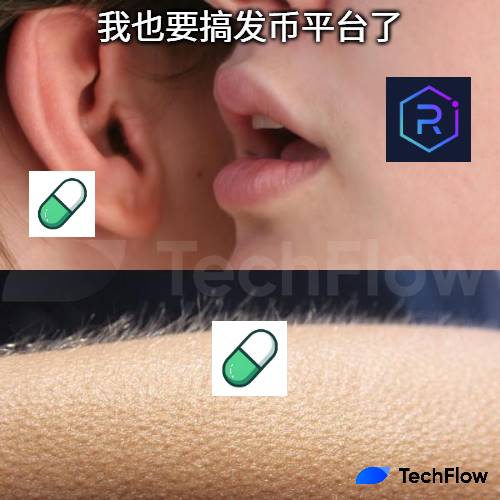
For example, Pump.fun and Raydium each launched a "clone" targeting the other.
Pump.fun Builds an AMM
Over 20 days ago, Pump.fun began encroaching on Raydium’s territory by launching its own self-built AMM pool, aiming to capture part of the liquidity revenue that originally belonged to Raydium.
(See “Is Pump.fun Building Its Own AMM Pool? Intent to Take Raydium’s Profits Clearly Revealed”)
User trades are first matched internally within Pump.fun using the platform’s own liquidity. When internal liquidity is exhausted, transactions are routed externally—relying on Raydium’s liquidity pools.
In this model, Pump.fun has long served as a “traffic provider” for Raydium, but in doing so remained subject to Raydium’s rules. Each time trades spill over to the external market, Pump.fun must pay a portion of fees, which ultimately flow to Raydium’s liquidity providers (LPs). Currently, Raydium charges 0.25% in transaction fees per trade.
The motivation here is straightforward: as a traffic gateway, Pump.fun hasn’t fully captured the profits generated by its own traffic.
We previously noted that in a tough market environment, not only are retail users engaged in PVP battles, but projects are also fiercely competing against each other.
Raydium Launches a Launchpad
And now, Raydium’s countermove has emerged.
According to a report from Blockworks, Raydium is launching a token launchpad called LaunchLab—an apparent direct fork of pump.fun.
Although Raydium’s official Twitter account hasn’t publicly announced this change, such developments don’t happen without cause. It appears the unwritten cooperative understanding between Raydium and Pump.fun is gradually breaking down.
From an observer’s perspective, the sentiment is clear—if you’re taking my business, I can take yours too.
Raydium’s motivation is simple: as a backend liquidity pool, why not move forward and capture some of the front-end traffic?
But taking business requires strength.
For a token launchpad like Pump.fun, cloning a similar product isn't technically difficult—the real advantage lies not in technology, but in capital.
Further reports indicate Raydium still holds approximately $168 million on its balance sheet, providing ample confidence—and funds—to build a competitor.
A quote from an anonymous core contributor to Raydium, cited in the Blockworks article, indirectly confirms this:
"The protocol started developing LaunchLab several months ago, but paused the project because it 'didn’t want the team to feel Raydium was directly competing with them.' After pump.fun announced its AMM plans, this so-called generosity seems to have dried up."
In other words, even as Pump.fun moved into AMMs, Raydium was already planning its own launchpad.
This reflects not just mutual competition, but a shared drive to push their businesses further.
Project teams clearly understand better than retail users that trading is the soul of crypto business—profiting from any part of the trading pipeline is valuable.
Even better, of course, is being able to control the entire pipeline—from front-end access to backend infrastructure.
Internal Wars and Moats
AMM pools are inherently open-source designs; building a meme coin launchpad isn’t particularly hard. Since neither side faces technical development barriers, Pump.fun and Raydium could theoretically coexist in their respective domains.
The key question is: where do their moats lie, and what will determine victory?
Pump.fun’s moat clearly stems from traffic advantages driven by user habits. As a meme coin launch platform, Pump.fun has firmly captured user attention through its unique community culture and strong user stickiness.
Once such habits form, they’re difficult to shift. More importantly, Pump.fun’s user ecosystem naturally functions as a traffic gateway, fueling continuous growth.
On the other hand, Raydium’s moat rests on the essential demand for its liquidity pools. As one of the most important DeFi infrastructures on Solana, Raydium’s ecosystem dominance comes not only from deep liquidity, but also from its central role in Solana’s broader trading network.
In short, Raydium’s advantage isn’t merely technical—it’s the ecosystem’s dependence on it.
Yet, moats aren’t static.
In the current environment, both Pump.fun and Raydium face distinct challenges to their competitive advantages:
Pump.fun’s ability to sustain traffic growth depends on its capacity to continuously roll out new features and engaging mechanics. Raydium, meanwhile, must maintain its lead in liquidity competition and further solidify its ecosystem position through capital and technological investment.
Liquidity Drought: How Many Will Join This Civil War?
As these two giants focus on battling each other, a bigger question emerges:
How many users will actually participate in this internal war? Is there truly enough market space and user base to support it?
Given the current market conditions—where the crypto industry as a whole is in a downturn, with significantly reduced liquidity and user activity—both Pump.fun and Raydium are essentially fighting over a shrinking pie.
Without new liquidity injections or fresh “retail investors” entering the market, this competition may prove largely meaningless.
Whether it’s BSC, Solana, or other public chains, both inter-chain and intra-chain competition are intensifying. Underlying this rivalry is the entire industry’s hunger for traffic and transaction fees. However, if the broader crypto market doesn’t improve, such competition may ultimately be nothing more than a flash in the pan.
For the industry as a whole, the real breakthrough doesn’t lie in internal wars or chain-on-chain battles, but in how to enhance the sector’s overall appeal. Whether through innovative product designs, lowering user entry barriers, or broader education and outreach efforts, attracting new liquidity remains the key to solving the problem.
Join TechFlow official community to stay tuned
Telegram:https://t.me/TechFlowDaily
X (Twitter):https://x.com/TechFlowPost
X (Twitter) EN:https://x.com/BlockFlow_News
 深潮TechFlow