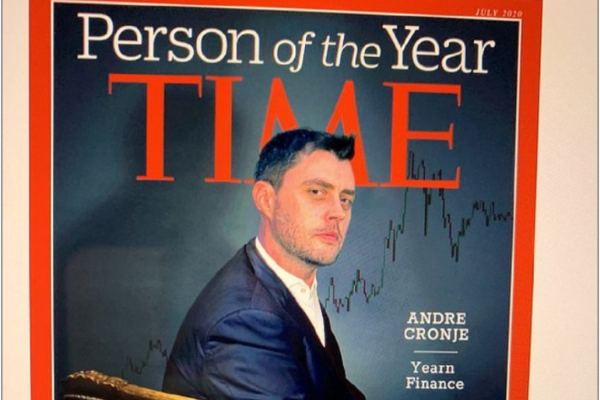
Andre Cronje's Latest Interview: "I Didn't Enter Crypto to Make Money"
TechFlow Selected TechFlow Selected
Andre Cronje's Latest Interview: "I Didn't Enter Crypto to Make Money"
AC frankly admitted he didn't enter the crypto industry to make money, and expects "crypto-native" developers to drive DeFi forward.
 Navigating Web3 tides with focused insights
Original interview: Decypher Podcast;
Guest: Andre Cronje, Co-founder of Sonic Labs;
Translation: BlockBeats Deepseek
Editor’s Note: In this episode, Andre Cronje shares his original motivations for entering the crypto industry, his views on its current state, and future outlook. He mentions that he is not driven by money but rather attracted by the sector's innovative potential. Despite the prevalence of low-quality projects and problematic capital flows today, he remains committed to solving critical challenges within the space. Andre discusses how meme coins affect capital movement, compares differences between the ICO era and now, and notes that infrastructure progress has reached about 50%-60%, though further breakthroughs are still needed. He emphasizes that future innovation will come from “crypto-native” developers and expresses a desire to advance decentralized exchanges and infrastructure, ultimately transforming the financial industry.
Below is the full transcript (slightly edited for clarity):
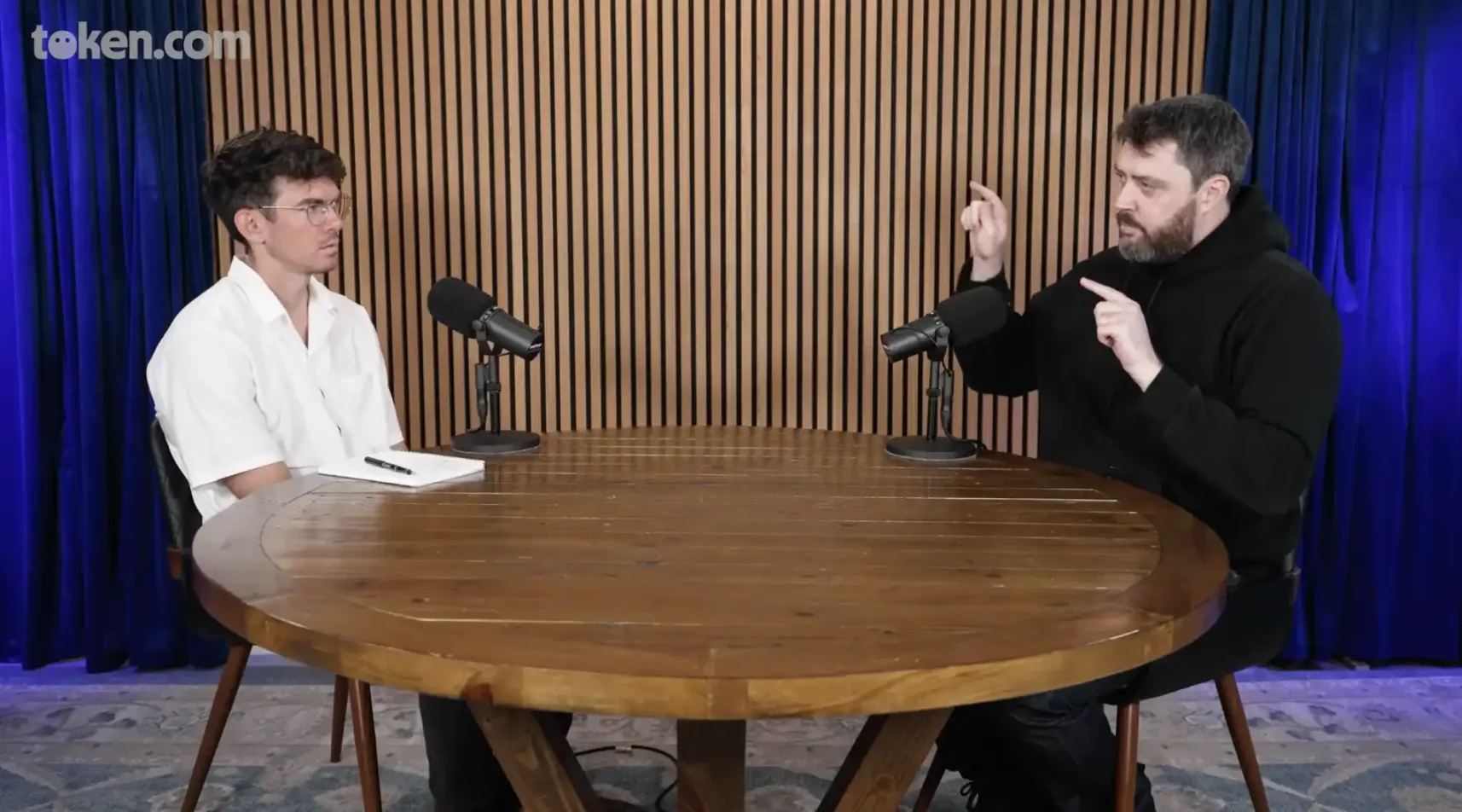
Andre Cronje’s Motivation for Entering Crypto
Host: It’s really exciting to sit down with you today, Andre. I’ve been following your DeFi developments closely—many people have been inspired by your work. You’ve produced so much in this field and achieved great success. Given that you’re likely financially free already, why do you keep going?
Andre Cronje: When I entered this space, I was already financially free. I've never been someone driven by money—whatever the reason, money has never been my compass. Back then, I was CTO at a traditional bank, had a stable job, and earned enough that even if I lost it, my savings could support me for five years without any issues.
Initially, I came into crypto as a skeptic because there were so many exaggerated claims. You may know my background—I started by writing code reviews on Medium. Many project teams claimed they solved long-standing distributed systems problems that had stumped the industry for decades, but when you looked at their code, it was just a "Hello World" app doing absolutely nothing. The gap was glaringly obvious.
The reason I stayed is simple: although 99% of things here are garbage, that 1% is real. There genuinely are new financial paradigms emerging at the base layer—a better model for finance. Even though traditional finance constantly calls crypto a scam, data shows crypto-related fraud accounts for less than 0.02% of all financial fraud.
Of course, it's also a numbers game—the scale of traditional finance is vastly larger. But fundamentally, you can see one side is a highly opaque system, while the other is extremely open and transparent, accessible to anyone.
My reason for staying is straightforward: I’m naturally someone who loves solving problems, and this industry still has too many unsolved ones. In my previous career, most problems were already solved—there wasn’t true innovation happening. Banking, finance—even now, while there are some improvements like UX/UI optimization or mobile apps—they don't excite me intellectually. Not to disrespect designers or UX professionals; their work matters, but it doesn’t stimulate my brain.
In blockchain today, very few people are truly trying to innovate. Back in 2016 and 2017, when I first joined, I saw multiple deep, valuable whitepapers every day. Now, seeing one solid whitepaper in six months feels like a lot. I understand why things changed—I lived through it myself. For example, ACC (the protocol I created) got squeezed out by the ecosystem. I know exactly how that feels, and I understand why many developers eventually gave up.
Additionally, capital flow is deeply flawed. Most developers are essentially lazy. If a skilled developer has two choices—either spend five minutes launching an ERC-20 meme coin on Solana or Ethereum and potentially earn millions, or spend years writing papers, undergoing peer review, auditing contracts, fixing vulnerabilities—the lazy choice is almost obvious.
Host: And worse, the lazy option is actually more rewarding, right? Like meme coins aren’t even risky anymore?
Andre Cronje: No, you're 100% safe now—we’ve got legislation saying clearly that you’re protected here. But ironically, that makes things worse, doesn’t it? Because it further discourages those willing to take risks for innovation. This is something I've been thinking about deeply.
For instance, when I launched my first token, it was designed as a community-driven model and also served as a way to be regulation-immune. There was no fundraising, 100% community-driven, no team allocation, so there were no expectations about what the team should do.
In a sense, it provided a blueprint for others, showing a real path to bypass regulatory constraints. But at the same time, the incentive structure had flaws—teams lacked economic incentives or long-term development support, not even salary guarantees.
So I feel like the whole industry has stopped trying to innovate. I hope this changes again, because right now we just see the same codebase endlessly repackaged across different blockchains, L2s, or rebranded. Honestly, it feels exhausting.
Host: I’d love to dive deeper into this with you because I think you have strong opinions on how the industry can improve. Let’s revisit your earlier point about ‘99% of projects being scams or extracting value’—do you still believe that ratio holds true today?
Andre Cronje: I think it’s gotten worse, but my view on this is conflicted. On one hand, in my early blog post *Building in DeFi Sux*, I said that crypto is funded by votes via capital. If everyone pours money into low-quality copycat projects, then that’s what the market will supply because they’re easier to monetize. Investors avoid real risk, preferring to park funds in “Project #5062 Aave Clone.”
On the other hand, I must admit that people chasing meme coin mania would never have invested in DeFi infrastructure or real decentralized financial protocols anyway. So my mindset has shifted. Previously, I was angry about misallocated capital. Now I realize those putting money into meme coins or clones wouldn’t have touched real DeFi regardless.
Host: One basic assumption in crypto is that all these assets are financialized from the start, right? They’re priced and freely tradable immediately, meaning the entire ecosystem revolves around asset trading. Those who enter purely for technology (though that’s become a meme itself) aren’t mainstream—and even they want to profit eventually.
Andre Cronje: Yes, I don’t blame capable builders for making meme coins to earn money. Even Vitalik wrote something similar—he suggested earning money first, then reinvesting it into projects you truly care about building. That does happen. Recall the ICO boom: many made huge sums and reinvested significantly back into the crypto ecosystem.
But I think the situation is different now. Compared to past capital flows, crypto is increasingly integrated into traditional finance—which is both good and bad. Early on, if you participated in a successful ICO and earned large amounts of ETH, there weren’t mature off-ramps like stablecoins. You couldn’t easily cash out, so you naturally reinvested—into new projects, ideas, or liquidity provision.
Today’s meme coin markets follow a pattern of “capital in → make money → capital out.” Funds don’t circulate back into the broader ecosystem. But as I mentioned, you need to adjust your mental model—those funds wouldn’t have gone into DeFi or infrastructure anyway.
Still, this creates a new phenomenon: in the past, a dev team might raise money via token issuance, but since cashing out directly to a bank account was hard, they’d often reinvest in new protocols. Today, they can easily withdraw and retire immediately.
Infrastructure Progress
Host: You mentioned the ICO era—was inadequate infrastructure one of the key problems back then? How big a role did infrastructure limitations play? After all, you built highly successful products under those conditions, and now you're pushing for further infrastructure advancement. How limiting was poor infrastructure in the past, and how far are we from resolving these issues?
Andre Cronje: Participation was much harder back then—registering exchange accounts, depositing funds, acquiring ETH to participate, even setting up wallets—all complicated. From an infrastructure standpoint, everything was harder than today.
We didn’t even have on-chain oracles. Leaving aside participation, just from a builder’s perspective, oracles barely existed. No fast RPCs—you often had to read data directly from smart contracts.
Today’s infrastructure is far better. Teams require less experience to launch products that previously took us massive effort. Tools are more complete, infra spending is higher, user onboarding smoother. Roughly estimating, I’d say we’ve completed over 50% of the necessary infrastructure evolution—maybe 50% to 60%, but not much beyond that.
Host: So you think this percentage is lower than most assume?
Andre Cronje: It depends on how deeply someone engages with the industry. Even at the blockchain level, many problems remain unsolved. Tech advancement isn’t linear—it progresses in jumps, where each phase requires a breakthrough before moving forward. Like the internet: initially, 56K dial-up modems required specific hardware, phone lines, dedicated network cards—high barriers. Fast-forward to today, you just open your phone and everything is seamlessly wireless.
Blockchain follows a similar path. We haven’t reached the fiber-optic era yet. By analogy with traditional internet, we’re somewhere between ISDN and ADSL—approaching the edge of the next major leap. Infrastructure will only succeed when users no longer care which blockchain they’re using. Just like when using an app, you don’t think whether its servers run on Hetzner or AWS—those details are irrelevant. Blockchain apps need to reach that level of seamless experience. Only then will the infrastructure be truly mature.
Developer Ecosystem
Host: Do you think it’s worth building applications now? You once focused on apps but later shifted toward infrastructure. I'm curious about that shift. But if we’ve only solved half the infrastructure problem, shouldn’t we focus more on infrastructure first?
Andre Cronje: Using the internet analogy, it’s like waiting for fiber networks to roll out before starting application development. But in reality, decades of valuable apps emerged before fiber existed. Sure, you could argue MySpace failed in hindsight—but at the time, it was essential. Products like MySpace paved the way for future social platforms.
Investors now chase companies expected to last centuries, but that’s unrealistic. Even if replaced later, such companies serve vital roles. The industry needs iteration—people must build apps now so future applications can emerge.
I like another analogy: look at today’s major apps—their creators grew up immersed in the internet era. I was born before the internet, so my thinking isn’t “native” to it.
To this day, social media feels foreign and unnatural to me. I dislike it—I only use Twitter. But for those raised alongside the internet, juggling 20+ different apps simultaneously comes naturally. They understand this world better than I ever could and can build the next generation of apps. I can’t. Blockchain is the same. The killer apps will likely come from people who grew up with blockchain, not those entering in their 30s.
Host: So is this a difference between ‘crypto-native’ vs ‘non-crypto-native,’ or more like ‘mainstream’ vs ‘non-mainstream’? You get what I mean?
Andre Cronje: Ultimately, apps will make this distinction irrelevant. People won’t ask “Is this a decentralized Uber or centralized Uber?”—they’ll just pick whichever works better. Decentralized internet will eventually prevail because its design aligns better with incentives and connects directly to consumers, cutting out middlemen.
Take a decentralized YouTube. Instead of creators being subject to platform rules, ad approvals, revenue splits, etc., decentralization enables direct monetization.
Even YouTube itself shows signs of this trend. Creators used to rely on ad revenue, but now prefer in-video sponsorships—they’re more direct and foster stronger audience relationships. A decentralized YouTube optimizes precisely for this model.
Host: In the Ethereum whitepaper and early writings, Vitalik mentioned concepts like ‘decentralized Uber.’ Today, that idea has become a meme—many believe crypto won’t go in that direction. But based on what you’re saying, you seem to still believe it’s possible, maybe someday?
Andre Cronje: People always compare today’s internet with current blockchain apps—that comparison sets you up for disappointment. Try changing perspectives. Chain-based gaming (on-chain gaming) is a great example. I actually enjoy chain games. Why? Because they remind me of early 2000s Flash games—clunky, crash-prone, requiring 4-minute reloads. Compared to those, chain games already offer a superior experience. The problem arises when people compare them to modern AAA 3D games with photorealistic graphics. Of course they look bad then.
Host: Right—like running a mini-game on a graphing calculator and expecting Xbox-level performance.
Andre Cronje: Exactly. We’re still limited by hardware and capability. There are many parallels. Go back to early internet days—it only made sense in military operations and financial prototypes. Outside defense, we’re seeing the same in blockchain today. These are the first domains where real value becomes apparent because people invest to access infrastructure. Back then, paying thousands per month for a megabyte of data wasn’t uncommon. Today’s gas fees are similar—you’re paying bandwidth costs. While still expensive, this restricts viable applications to certain types.
We’re witnessing this transition, though slower than market cycles or attention spans allow. People ask, “Why don’t we have it yet?” But we will—it might just take another decade.
Host: How confident are you about this future? Do you believe crypto can truly transform the world?
Andre Cronje: I don’t think crypto will necessarily “eat” the entire world. Some areas benefit from centralization. Centralized systems can be more attractive. Yet, there will always be demand for decentralization. For example, large banks store all data in proprietary databases like Oracle—they willingly pay enterprise licenses because they want dedicated support teams on call.
You wouldn’t choose a decentralized version for that. But elsewhere, communities favor decentralized models. Look at informal banking in parts of Africa—someone holds communal funds, acting like a local banker. Stockvels, I think they’re called. It works because it offers better transparency—everyone sees the ledger—while maintaining trust assumptions.
I don’t believe it will fully replace centralized systems, but I do think it offers advantages in many areas. Consider bank settlement systems—they’re outdated, operate on daily batches, rife with fraud opportunities. Simply tokenizing small processes—like email-based Excel sheet transfers—could save trillions for banks and clearinghouses, and such changes could happen quickly.
Andre Cronje’s Reflections on Crypto
Host: To reach the stage you described—where consumers and enterprises can freely choose between decentralized and centralized products—what lessons does the industry need to learn? At times in your career, you seemed weary or disillusioned. First, how burned out are you now? Second, what should we do? How should the industry move forward?
Andre Cronje: I feel less burnt out now than before, but not because the industry changed. I used to be extremely exhausted—on one side, the blockchain community offered almost zero support; on the other, regulators like the SEC attacked daily.
There was no incentive to stay. Partly because the participant base shifted dramatically. When I started in 2017–2018, nearly everyone was technical. Conversations were meaningful. By 2021–2022, non-technical participants flooded in, mostly money-focused. The discourse changed completely—I felt alienated.
I don’t see a solution—it’s inevitable when more people join. I think teams and developers need to adapt. Whether that’s possible is unclear, but regulatory pressure is a real issue.
We have roughly a four-year grace period—let’s see what we accomplish in these years. After that, the tide could turn. Everyone must remember this. If we optimize during these four years—embedding blockchain into as many places as possible—it becomes nearly impossible to remove. Then we’ll be in a completely different position. That’s our responsibility as a community.
The lesson is: people need to give builders and teams more leeway, especially those experimenting. But I doubt this will happen. Look at today’s crypto communities—they’ve transformed. The mental model I try to convey is: someone posting online behaves very differently in person—they often become more aggressive.
Add anonymity, and people feel no accountability—making them more hostile and extreme. Imagine it like a sports match with two competing teams—more attacks and insults occur.
Now add financial incentives—it becomes a vicious cycle showcasing humanity’s worst behaviors. We’re actively incentivizing this. I don’t know how to fix it. Personally, I’ve grown thicker skin. When I started, among the tech crowd, I aimed to satisfy 99% of people.
If someone said something hurtful or disagreed, I’d message them privately. Talked, called, spent time understanding their view. Nine times out of ten, they became friends or allies. That worked back then. By 2021, after deep reflection and shifting perspectives, I lowered my target—from pleasing 99% to satisfying 51%.
It’s not that I only want 20% of genuine users happy and ignore 80%. But it’s a process I had to learn—one every team entering this ecosystem goes through. Many teams get filtered out along the way.
I estimate today’s active builders are only about 5% of what they used to be. More have left the space than joined recently. All real builders are the same people I interacted with back in the day.
Host: You’ve touched on the lack of developers and innovators in crypto. What should future developers look like? How do we attract them to build here?
Andre Cronje: Great question—I don’t have answers. If I did, I’d already act on them. Now we’re seeing a revival of the “Silicon Valley VC-funded” model—projects compete fiercely, but I find it somewhat meaningless. Still, some apps will emerge and gain traction.
What drew me to building smart contracts was their strong permissionless nature and composability. Everything I built relied on platforms like Uniswap, Alpha, Compound—I never needed permission. Never contacted any team or individual behind those platforms. So anyone coding at home deploying smart contracts has a shot at creating something impactful that could grow big.
What we need to optimize is sustained composability and open-source culture. That’s what attracts and motivates developers. But now we see more projects turning closed-source instead of remaining open.
This kills incentives for others to build on top—they literally can’t. You shut them out from the beginning. We probably need to return to a more open-source ethos. When I say open source, I mean anyone can build on it—not like my current code, which needs licenses to protect it. Today, truly opening source is hard—others might fork it within 24 hours, add a token, and profit unfairly.
Host: Sometimes I like to be optimistic about crypto—comparing it to platforms like Shopify or WordPress. Your early projects embodied that modular spirit—building atop existing pieces. Ironically, the constraints you faced made the products more interesting.
Andre Cronje: Right? Exactly. A quick lesson from Yearn: don’t try to solve every problem. Leave some unresolved—you often get better outcomes. Sometimes you get lucky, usually you end up with a better result. That’s the trade-off.
Andre Cronje: I kept wondering—why was Yearn more successful than other yield aggregators? Simple: others weren’t designed for composability. Many had vaults but didn’t tokenize them. So when I deposited, I couldn’t do anything else. My first step: tokenize deposits so they can be used elsewhere. That was the key. Optimize for composability so others can build. It’s a different design philosophy. Building standalone products is easy—but if no one can build on top, it’s meaningless. Always ask: how do I open this system for others to innovate upon? People will build things I can’t even imagine. You can do this in FIFA and across crypto.
Host: Also, I know some of your future products were inspired by problems encountered while building current ones. In Web2, people say “build for your past self” or “solve your own pain points.” I feel crypto sometimes lacks that mindset.
Andre Cronje: We definitely have that in crypto. I hear this often. Many major products today were built by teams splitting from original groups. That’s why most builders are the same cohort—they came from the same OG roots. Specifically, they worked there, saw gaps, thought “I can do this,” and left to build independently. But yes, we can do much more here.
I think we should focus more on enhancing composability—it’s changed drastically over the years. Even looking at Compound and Uniswap, their initial v1/v2 versions were optimized for interoperability—easy to extend interfaces and functionality. Today’s products may be better consumer-facing but worse for integrators—much more complex. Often you need direct communication with the team. Once you require that, you’ve excluded 99% of builders who lack access channels. So actually, I hadn’t thought about it this way until now—but continuing this conversation, I realize the biggest missing piece is the mindset of “how do I enable others to build on me”—because it’s completely absent.
Host: Any applications stand out to you? You mentioned the 99% vs 1% divide—so some apps still excite you. Which ones?
Andre Cronje: My interest lies in apps attempting innovation and experimentation. They don’t reach past scales, but I see teams trying. Shadow Guys, for example, with Shadow Exchange on Sonic—they’re exploring novel tokenomics, something unprecedented. I believe tokenomics is severely underdeveloped—we have much work ahead. But due to high financial stakes, everyone fears innovation here. Understandable—it’s scary tying your reputation to volatile assets. But progress is needed, and they’re doing well.
Silo is another team releasing fresh tokenomics. I appreciate their overall design philosophy. Emerging game elements—account abstraction, economic abstraction, UI innovations like Pasky—are promising. Games I play on-chain—Faith, Adventure, Sacrifice for Kingdom—are engaging. Who’s innovating? Metropolis is building a new dlmm AMM—great stuff. In yield, Spectral and Pendle lead. Not my expertise, but more is coming.
I see on-chain options and derivatives slowly resurfacing. Historically, accurate, cheap option pricing was impossible on-chain—lacking data and facing prohibitive fees. Now we’re seeing revival, but unlike UNISWAP revolutionizing trading, we haven’t seen equivalent breakthroughs in options, futures, and derivatives. I believe that’s coming. Teams experimenting with Margin Zero Strike are pushing boundaries—I’m watching them closely.
More work remains in on-chain purpose—the few innovations we see, like GMX and Hyperliquid models. Another forgotten one uses liquidity pools as counterparties instead of exchanges. But LPs still bear aggregate risk in these pools. I believe we can evolve so they only carry spot risk—like in Uniswap. Insurance is another primitive we’ll see more of on-chain. Little activity now, mostly finance-linked. Expect growth in 6–12 months. As fees drop and disappear, wallets become optional, and users stop noticing blockchains, we’ll see more in gaming and social layers.
Sonic Ecosystem
Host: Many projects you mentioned are in or moving toward the Sonic ecosystem—Polymarket, Pump Fun, etc. Are these appealing to you? Any apps not on Sonic that you’d like to bring in?
Andre Cronje: Polymarket—absolutely. They’re doing fascinating things in markets and could do more. Feels constrained—lost accounts, FTC issues. They could be more than just prediction markets. A new protocol, True Markets, uses prediction markets to verify article sources—very novel.
Host: Yes, insurance fits here too.
Andre Cronje: Indeed. Chain-based decentralized insurance faces a core issue: needing third parties to confirm payouts. As long as that’s required, doing it off-chain makes more sense. No reason to do it on-chain. But once we have reliable truth sources, on-chain justification emerges.
Other interesting things? I think we already have key players—solid game content. Fantasy Top guys are building cool things. Don’t mind Pump launching—it’s a niche product effective only in its current form. Don’t see multi-chain strategy. Inbound interests? Wish Fantom Wallet joined—we’re close to speed levels that make interaction noticeable. Currently, the slowest part of Sonic interaction is the wallet. That’s where 99% of time is spent. Click from app to wallet—instant. Submit from wallet—also instant. But the loading phase in between is painfully slow. Could be a longer list, but these come to mind.
Host: You seem passionate about apps—you’re known as an app builder. Why shift focus to infrastructure?
Andre Cronje: Well, I worked on Fantom before any app. I’ve been with Fantom since 2018. Focus remained on infrastructure because I realized underlying issues prevented debt adoption. The clearest example? Proof-of-work designed to be slow—not for speed, but security. So improving consensus mattered. Our 2019 abft consensus—still used in Sonic—is, in my view, the gold standard.
My pivot to apps began with Yearn—I managed Fantom Treasury and tired of moving funds across protocols. As a programmer, I decided to automate it. Everything spiraled from there—each project addressing a personal pain point.
From Yearn to Keep3r—Yearn needed bots and keepers for off-chain tasks like liquidations. Thought: why not build an on-chain version? Keep3r succeeded—still used by Maker and many protocol managers. Core idea: pay someone to handle on-chain infrastructure.
Then I became fascinated with classic banking issues—capital efficiency, IMMs, lending. Most of my subsequent work centered here. When I built and released Solidly, it introduced a new AMA model—not perfect by today’s standards, but solid at the time.
Then I realized foundational layer issues needed resolution before launching my next app. That’s what we’ve focused on in Sonic—it’s the culmination. Not just speed, though that’s table stakes to compete today. Faster finality, better UX—difference between 400ms and 300ms? Users won’t notice a blink.
Our real focus: fee monetization—apps receive 90% of fees. This unlocks entirely new possibilities. Fee subsidies let apps refund or subsidize new users—eliminating gas requirements. Native abstraction removes wallets—users won’t even know they’re interacting with blockchain. Reaching that point allows me to launch my next app series—they depend on it. Again, the beauty is I build selfishly for myself, and coincidentally, it benefits all builders. Win-win. But ultimately, I’m doing all this for myself.
Host: Interesting. So much of Fantom’s design stemmed from your firsthand challenges. Are you still motivated to explore new concepts? You’ve experimented with fee-sharing mechanisms—Berachain aims to integrate DeFi at the base layer. Are you interested?
Andre Cronje: Obviously, we’re doing fee monetization. I fully agree alignment incentives are fundamentally broken. They’re modeled after Bitcoin—where only one actor exists: miners. Everything flows to them. Every blockchain blindly copied this without asking: who are the other participants? The answer: applications. That’s why our approach—though perhaps oversimplified—says: hey, the contract gets 90% of the gas it spends. Automatically rewards apps people actually use.
I admire Berachain’s attempt to solve incentive alignment—it’s a real problem, currently broken. Fees shouldn’t all go to validators—it’s wasteful. That’s what we observe. Maybe not the sole reason, but I believe it explains why Uniswap launched Unichain—they generated $2.8B in fees on Ethereum, received nothing. So they launch their own chain to capture that revenue. But launching a chain isn’t as easy as some claim on X. Yes, technically you can deploy an L2 like clicking a button—you get the tech, but no infrastructure, integrations, third-party tools. Costs tens of millions to catch up. Better to happen on chains with existing ecosystems.
Different apps approach this differently—Arbitrum tried native fee switches allowing alternate tokens. I know they removed it eventually, but they tried—asking: how do we incentivize our apps? Avalanche clearly embraced this with subnet models. Many recognize the incentive misalignment.
My only critique of Berachain: it demands too much active involvement from validators. Different team culture. We run DevOps efficiently, but I don’t want them distracted voting on protocols or managing pools. Especially for validators, less is more. I want them securing the network—install hardware in a bunker, leave it untouched for 10 years. Ideal for security. The more you ask them to do, the larger the attack surface. That’s my only concern with their model. But yes, they’re moving in the right direction—rewards shouldn’t all go to validators. They should go to apps. What apps do with it—pass to users or keep as revenue—is their choice.
Host: You said you’re still interested in building apps—just waiting for infrastructure. It’d be negligent not to ask: what excites you most?
Andre Cronje: Many things I’ve mentioned. We basically have two formulas: constant product (Uniswap), or constant sum (stable swaps). Nothing else dominates. Concentrated liquidity lets you alter curve shapes, but ultimately remains constant product—the quote mechanism stays the same.
I’ll avoid specifics, but I built a new AMM with a volatility-self-referencing curve. The more volatile an asset, the closer it behaves to constant product. The less volatile, the closer to concentrated liquidity. The beauty? My north star is a world where 99.9% of real-world assets exist on-chain. Constant product won’t work. Constant sum won’t work. You need hybrids—say 80% constant sum, 20% constant product. This achieves that. Each trade measures volatility—recent deviation, hourly, daily, monthly, 200-day moving average—annualized—to inform pricing. Better quotes, better valuations, more fees for LPs. On top of this, I believe a new lending market model is possible.
This is what I introduced in Solidly. Not sure how much time we have—feel free to interrupt—but I’ll summarize quickly. In Solidly, I introduced Reserve-Weighted Asset Pricing. Uniswap popularized TWAP. My issue with TWAP: fixed price regardless of trade size. Sell one unit? Price is $3. Sell a trillion units? Still $3. Unrealistic. If I offer you 1000 of something, what price do you give? I wanted this on-chain primarily to inform liquidations. The inverse question: given this asset, how much of another can I liquidate? Answering this reveals Loan-to-Value ratios. Meaning: I know how much I can borrow against this asset. Now borrowing becomes feasible.
Next challenge: you can’t lend without knowing your interest rate model—you need safety thresholds to protect LPs. In crypto, we have two models: volatile and stable. We already have volatility inputs. Feed identical inputs into my AMM. Now I can derive interest rate curves. Now I can lend B against A, and A against B. Since I can lend both ways, implied leverage emerges. Leverage becomes a function of LTV. So leverage is implicit, relative to actual pool size. More liquidity = higher leverage. Self-referential again. With leverage and rates, you get implied perpetual positions—only AMM liquidity providers face counterparty risk. Earlier I said I believed this would be solved. I solved it. Just hasn’t launched yet.
Finally, with volatility and other data points available, you can start writing options within the same AMM. Create several perpetual options to derive implied volatility, then standard European and American options. I have other components too.
Host: How developed are these features?
Andre Cronje: Fully completed. Only reason we haven’t launched is awaiting regulatory shifts—this falls squarely under CFTC jurisdiction. Watching Brian’s new appointment and their stance on such products. That’ll determine whether we can launch with or without derivatives.
Host: Will these functions integrate tightly? Are you envisioning a financial super-app, essentially?
Andre Cronje: Again, built on composable principles. I believe all apps in our ecosystem should interact in various ways.
Host: Founders should note this pattern—solutions create new problems, and those problems become opportunities. That’s part of crypto’s magic.
Andre Cronje: The platform. Leverage composability and create problems for others to solve.
Host: Creativity is never lacking in crypto. People say “it’s already been done.” No—be more creative.
Andre Cronje: I originally didn’t build Yearn because I thought, “Others are already doing it—why duplicate?” In my career, this stopped me from launching many apps. Or if I saw something unimplemented, I assumed: “Such a basic idea—surely someone tried and failed. That’s why it doesn’t exist. Must be junk.” Turned out nine out of ten attempts failed not because the idea was bad, but because timing was wrong. It didn’t exist because I thought too early.
Host: What’s your biggest regret in your crypto career?
Andre Cronje: Oh god, that’s a long list. We don’t have time. Things I’d change. I used to blame participants—people sent money to contracts just because I didn’t update my deployer address within half an hour. You shouldn’t send millions into unannounced contracts. But I must acknowledge: with so much attention, I needed clearer communication. Learned that afterward. Had to explicitly state: unless I announce X on these platforms, it’s not real—stay away.
Started rotating addresses—using new ones for new projects. Definitely something I’d change. Another major regret: trusting Multichain. We got burned—we were told we were part of the original ceremony. From our view, everyone destroyed original validator keys—no way to regenerate. Didn’t know their CEO kept backup keys, retaining full access.
Host: Did that impact current bridge infrastructure?
Andre Cronje: Absolutely affected many things—we learned hard lessons. Also, Fantom launched before standard bridge infrastructure existed. Now every chain has official bridges—including Sonic. Essential today. Back then, we were naively over-trusting decentralization—thought others would connect, didn’t want to build ourselves—felt we lacked internal expertise. Turns out you must do it yourself. Big lesson. Most regrets center on communication and expectation management.
I regret how my past communication style harmed people. Vitalik experiences this now—he returned to X/Twitter after long absence, and nearly every post gets attacked. He needs to adapt. Can’t communicate with on-chain crowds the way he did years ago.
These are lessons I had to learn. I regret people losing money due to them—absolutely. Would reverse if possible. But simultaneously, these same lessons shaped who I am today. So I don’t know. It’s always a tough question—because fundamentally, you change as a person. If these events hadn’t happened, I wouldn’t have learned. Might repeat mistakes later, bigger and worse.
Host: Also, persistence feels like punishment, right? If you quit after a $600M hack, no one remembers you. But if you keep trying…
Andre Cronje: It comes back every time, right? People remind you daily. So you just need—like I said—thicker skin. That’s the only thing you can do.
Andre Cronje’s Ultimate Goal
Host: You’re a true icon in this space—shaped much of DeFi’s trajectory. People look up to you, you wield significant influence. What legacy do you want to leave? What’s your ultimate goal in crypto?
Andre Cronje: Ask me in five years, answer will differ. But today? Make financial /Coinbase/ whatever your reference point—fully on-chain, including fiat on/off ramps, with equal or better UX. My 2–5 year mission: the largest crypto exchange must be a decentralized exchange. I believe we’ll achieve this. Infrastructure and tools are finally ready—expect launches this year. Soon after, it’ll dismantle centralized exchanges—DEX entry barriers will fall below CEX levels. This is the big five-year goal. Then, deeper integration with traditional finance—reach a point where removal is nearly impossible. Need to secure this in the next four years post-current administration. Beyond that, we’ll see. Eventually, infrastructure will mature enough to support gaming and social applications. I expect many cool things I can’t even conceptualize today.
Host: Yes, that’s incredibly cool. So personally, you’re deeply interested in embedding crypto into societal layers.
Andre Cronje: Yes, it needs to become part of the social layer, technical layer, settlement layer—everything.
Host: Amazing. Andre, I think we’ll wrap here. Truly a pleasure speaking with you. Thank you so much for your time.
Andre Cronje: Thank you.
Join TechFlow official community to stay tuned
Telegram:https://t.me/TechFlowDaily
X (Twitter):https://x.com/TechFlowPost
X (Twitter) EN:https://x.com/BlockFlow_News
 BlockBeats