








Understanding Crypto Market Cycles: Why This Cycle Is Different?
TechFlow Selected TechFlow Selected
Understanding Crypto Market Cycles: Why This Cycle Is Different?
The rise of institutional adoption, market dilution, retail liquidity shifts, and changes in the macro environment have collectively shaped a new market landscape.
 Navigating Web3 tides with focused insights
Original: SubQuery Network
Compiled by: Yuliya, PANews

Cryptocurrency markets have always been known for their cyclical volatility, commonly characterized by extreme highs and deep corrections. Since Bitcoin's inception in 2009, the market has gone through multiple cycles, each influenced by different factors. While certain elements remain constant—such as the four-year Bitcoin halving cycle—each cycle also introduces new dynamics that reshape how the market operates.
With the arrival of the 2024–2025 market cycle, there is a widespread belief that this time is different. Multiple factors—from institutional adoption to shifts in retail participation—are giving this cycle unique characteristics. Below we explore why this cycle is unfolding differently from previous ones, and what that means for investors and builders.
Review of Traditional Cryptocurrency Market Cycles
Cryptocurrency market cycles typically follow this pattern:
-
Correction/Bear Market: The market returns to reality, profit-taking accelerates, and liquidity dries up for speculative assets.
-
Frenzy/Peak: The market overheats, speculation dominates, and altcoins experience extreme rallies.
-
Expansion/Bull Market: Optimism returns, prices rise, and media coverage draws in new retail investors.
-
Accumulation Phase: After the bear market, smart money and long-term holders accumulate assets at lower prices.
This pattern has repeated across multiple cycles—from the boom and bust of 2013, to the ICO frenzy of 2017, to the 2021 bull run driven by DeFi, NFTs, and institutional interest. However, the 2024 market cycle presents a different landscape, with unique forces reshaping the environment.
Institutional Adoption Driving Bitcoin’s Strength
The biggest difference in this cycle is the role of institutional capital. Unlike past bull markets primarily fueled by retail speculation, this cycle has seen massive institutional adoption:
-
Growth in Derivatives Markets: Expansion of Bitcoin futures and options trading has made the market more structured and liquid, reducing volatility compared to previous cycles.
-
Corporate and Sovereign Interest: Major corporations and even some nations are adding Bitcoin to their balance sheets or using it as a hedge.
-
Spot Bitcoin ETFs: Approval of spot Bitcoin ETFs in the U.S. has opened the floodgates for institutional investors, enabling trillions of dollars in capital to enter the Bitcoin market in a regulated manner.
As a result, Bitcoin has emerged as the top-performing crypto asset, firmly claiming its title as the "king of crypto," reaching new highs and dominating market liquidity. Altcoins have struggled to achieve the same explosive growth seen in prior cycles.
Market Dilution: Surge in Altcoin Supply Reduces Return Potential
In previous cycles, newly launched altcoins were relatively scarce, creating opportunities for explosive growth. This time, however, the number of crypto projects has surged dramatically.
According to Dune Analytics, by the end of January 2025, over 36.4 million tokens were circulating in the market, compared to around 3,000 during 2017–2018. Key reasons for this shift include:
-
Token Unlocks: Many projects continue releasing locked tokens, increasing selling pressure and causing significant price corrections for most tokens.
-
Overcrowded Meme Coin Market: Unlike past cycles where a few meme coins (like Dogecoin and Shiba Inu) captured most attention, in 2024 hundreds of new meme coins launch daily, making it difficult for any single token to sustain momentum.
-
Explosion of Layer 1 and Layer 2 Solutions: The rise of hundreds of Layer 1 and Layer 2 scaling solutions has fragmented market liquidity.
This market dilution means that while some altcoins may still perform well, a broad-based rally where nearly all tokens surge—as seen in past cycles—is unlikely to repeat.
Retail Liquidity Redirected to New Frontiers
Retail traders have historically been a major driving force behind crypto bull markets, but a key difference in this cycle is that retail liquidity is being drawn toward new mechanisms beyond traditional spot trading.
The Rise of Pump.fun

Launched on January 19, 2024, Pump.fun has completely transformed the behavior of global retail crypto investors. The platform allows anyone to create a Solana-based token for free within a minute, fueling some of the biggest memes of 2024 and redirecting retail capital toward high-risk, high-reward micro-cap tokens instead of established altcoins.
This dynamic has led to several notable impacts:
-
Greater Exit Liquidity for Insiders: Insiders launch new tokens, quickly attract retail capital, but the rapid rotation often causes retail investors to incur losses before they can transfer profits into major altcoins.
-
Accelerated Capital Rotation: Retail funds now rotate between new tokens in hours or days, making it difficult for mature altcoins to establish sustained upward trends.
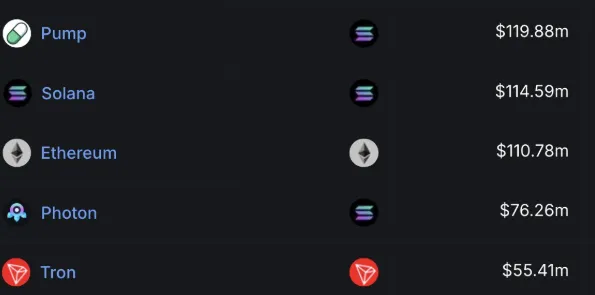
By January 2025, Pump.fun had generated $116.72 million in revenue, surpassing both Solana ($116.46 million) and Ethereum ($107.64 million).
What This Means for Crypto Investors
While this cycle is still unfolding, several key conclusions are already clear:
-
Retail speculative capital is being channeled into emerging platforms like Pump.fun and innovative on-chain trading mechanisms. Understanding these shifts helps traders anticipate liquidity flows.
-
Altcoin performance will be far more selective. Rather than a broad rally, only projects with real use cases, strong tokenomics, and genuine demand will emerge as winners.
-
Due to institutional adoption, Bitcoin remains the dominant force, with many investors focusing on Bitcoin rather than speculative altcoins.
Conclusion
While cryptocurrency markets still follow familiar cyclical patterns, the 2024 cycle is fundamentally different. Rising institutional adoption, market dilution, shifts in retail liquidity, and evolving macro conditions are collectively shaping a new market landscape.
For investors and builders, adapting to these changes is key to navigating this cycle successfully. The rules of the game have changed—but for those who can track capital flows, opportunities still exist.
Join TechFlow official community to stay tuned
Telegram:https://t.me/TechFlowDaily
X (Twitter):https://x.com/TechFlowPost
X (Twitter) EN:https://x.com/BlockFlow_News






