Interpreting Arena of Faith: The Time for Token Deflation Has Come, A New Paradigm for Web3 Esports
TechFlow Selected TechFlow Selected
Interpreting Arena of Faith: The Time for Token Deflation Has Come, A New Paradigm for Web3 Esports
AOF is not just creating a game, but building a complete Web3 esports ecosystem.
 Navigating Web3 tides with focused insights
Author: TechFlow
Currently, as competition intensifies in the Meme and AI sectors, returns from new projects are steadily declining.
The recent shift of capital from Solana to Base in search of new AI ventures is a clear signal: where the spotlight hasn't reached, golden opportunities may lie hidden.
You should look beyond the mainstream when everyone else is rushing toward the noise—seek opportunities outside the limelight.
If you turn your attention to Ethereum, you'll notice that the recent rebound in ETH price has driven broad gains across its ecosystem, with L2 networks regaining both funding and attention.
Meanwhile, the gaming sector, after a prolonged period of stagnation, urgently needs transformation.
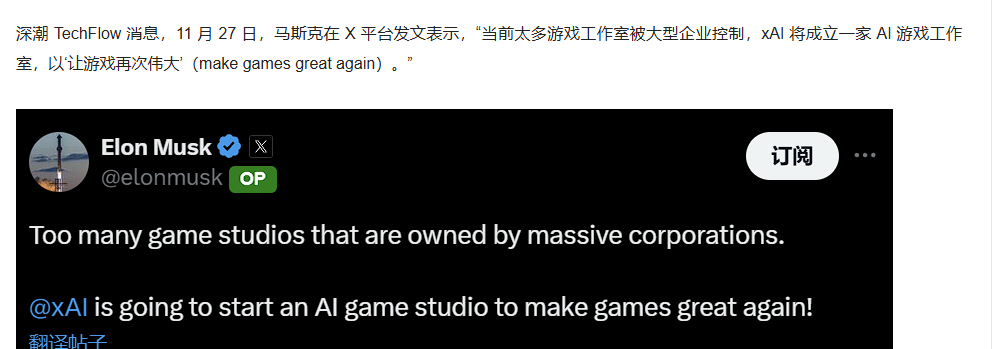
Even Elon Musk tweeted about wanting to “make gaming great again”—though not referring directly to Web3 gaming, this sentiment echoes the collective desire among players and investors for meaningful change in the industry.
The current issues plaguing Web3 gaming are well-known and persistent: prevalent "rugged" tokenomics, predatory actors undermining fairness, bot farms squeezing out real players, and unsustainable single-game economies lacking effective value circulation systems...
Following the logic of seeking hidden opportunities, one L2 within the Ethereum ecosystem—Metis—has flown under the radar. Despite its strong performance capable of supporting game operations, its ecosystem remains relatively undeveloped, offering significant potential for标杆-level impact.
So could a game built on Metis, designed specifically to solve these long-standing problems, gain first-mover advantage for early adopters?
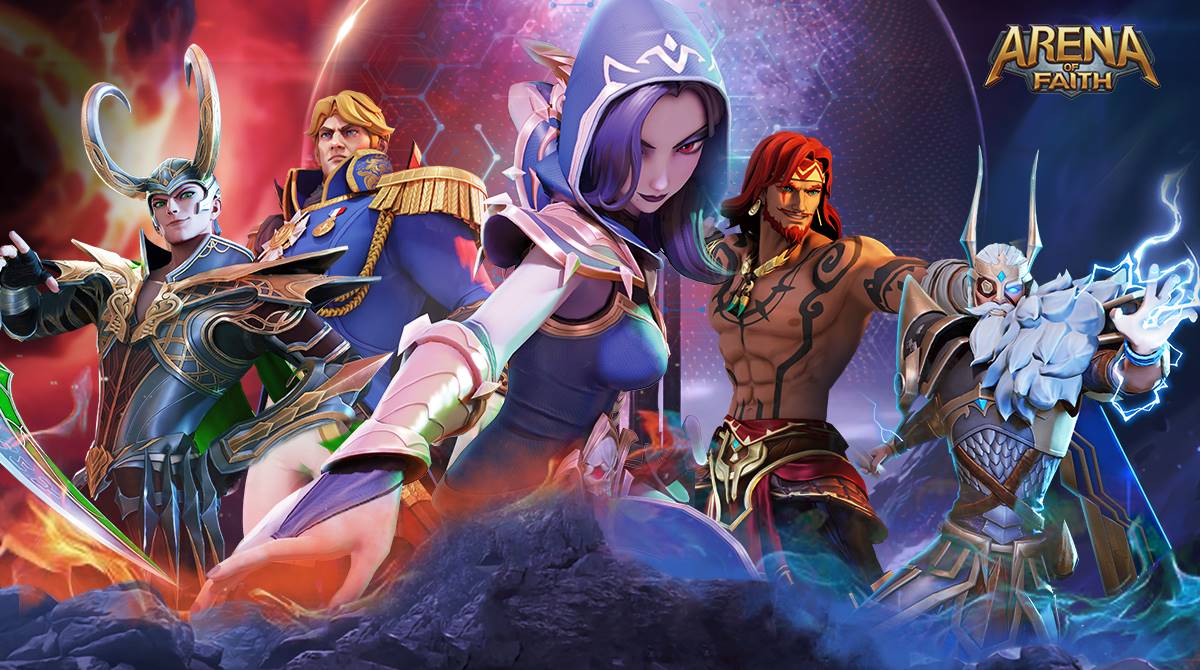
This leads us to the subject of our research—Arena of Faith, a MOBA-originated game actively expanding its gameplay matrix and introducing innovative mechanics.
After playing the game and studying its ecosystem, I believe it has shed the historical baggage of previous Web3 games and is attempting to break the death spiral that has plagued the entire sector.
For those short on time, here's a quick summary:
-
Deflationary token design ensuring each token is "valuable and fully utilized"
-
Innovative POFS (Proof of Frame Sync) technology making fair play more than just a slogan, eliminating cheating and farming abuse
-
Multi-game matrix with shared economy and cross-game interoperability of tokens and NFTs, enabling sustainable value circulation
-
Focusing on long-tail esports, pioneering untapped value spaces overlooked by giants
If these value propositions resonate with you and you still care about Web3 gaming, consider hitting the ready button to dive into this analysis.
Rooted in Classic MOBA, Expanding the Game Matrix
Our initial experience playing Arena of Faith (hereafter AOF) felt both familiar and novel.
Familiar because it follows the MOBA genre known to nearly all gamers; novel because it’s not just one MOBA game but part of an interconnected multi-game matrix where titles influence each other.
Let’s start with AOF’s core MOBA gameplay.
The traditional 5v5 battle mode lies at the heart of AOF, where players push through three lanes, destroy enemy turrets, and ultimately annihilate the opposing team’s base.
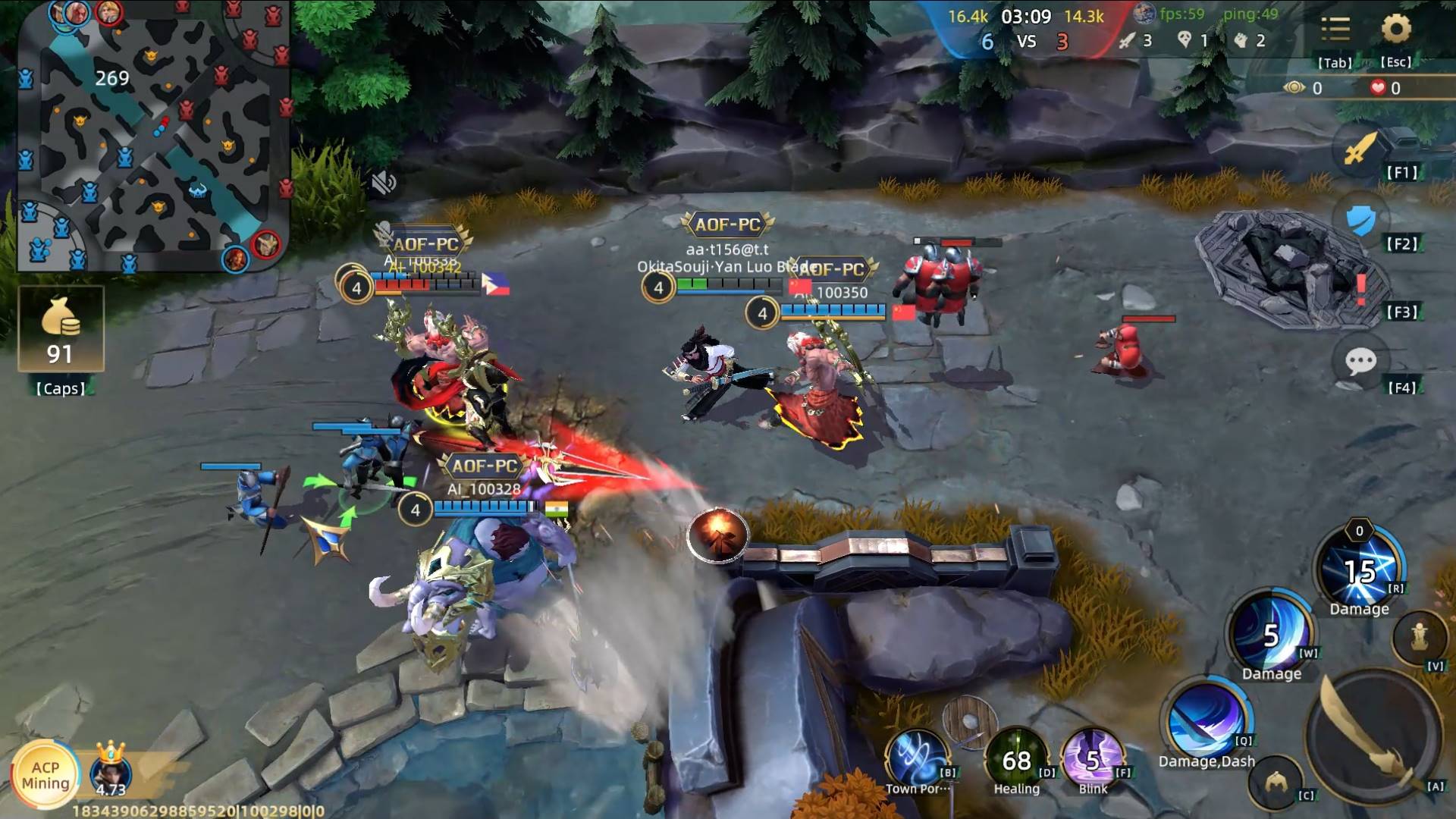
This format has proven enduring and market-validated.
As one of the most successful global game genres, MOBA boasts over 500 million users. By drawing on over a decade of design wisdom from DOTA2 and League of Legends, and leveraging existing esports ecosystems, AOF allows seamless transfer of player habits and tactical thinking—significantly lowering adoption barriers.
For Web3 games, incorporating such "familiar" elements is essential to broaden their user base.
Additionally, AOF introduces a unique arena room system, allowing players to instantly create or join matches. The matchmaking system uses the popular ELO rating model to ensure balanced competition. The game also features seasonal cycles lasting 30 days, during which players earn ranking points through competitive play to unlock season rewards. All match data is recorded on-chain, ensuring competitive integrity and providing verifiable data for professional esports.
At this point, you might wonder: where’s the Web3 element? What about asset design?
Within matches, players farm minions and monsters for gold to buy gear and level up skills—consistent with traditional MOBA mechanics. However, AOF adds an off-match progression system (on-chain): hero NFT cards gain experience through use, unlocking stat boosts upon leveling up. Skin NFTs offer varying degrees of enhancement based on rarity, all carefully balanced to maintain fair gameplay.
This ties into the on-chain incentive structure—play and earn are decoupled.
Regular players can enjoy core gameplay for free, while economic incentives stem primarily from the competitive system: winning arena matches earns ACP tokens, with daily reward pools dynamically adjusted based on network activity.
At the end of each ranked season, players receive NFT rewards according to their rank. Major tournaments feature substantial prize pools funded by sponsors and ticket sales, distributed in on-chain tokens.
To further expand its user base, AOF employs a globally unified server architecture supporting cross-platform play, complemented by AI-assisted tutorials that help newcomers get started quickly—eliminating lag between regions and reducing entry barriers.
Notably, unlike many blockchain games that prioritize economics over gameplay quality, AOF developed its own mobile graphics rendering engine. It supports real-time lighting, soft shadows, multi-layer texture blending for enhanced visuals, and ambient occlusion (AO) optimizations for improved performance—enabling smooth high-quality gameplay even on mid-tier smartphones.

Still, a standalone MOBA has limited lifespan and reach. Success stories of single-game triumphs in Web3 gaming are exceedingly rare.
AOF clearly learned from past projects. Beyond its core MOBA, it is aggressively building a broader game matrix to maximize the value of its IP and associated on-chain assets.
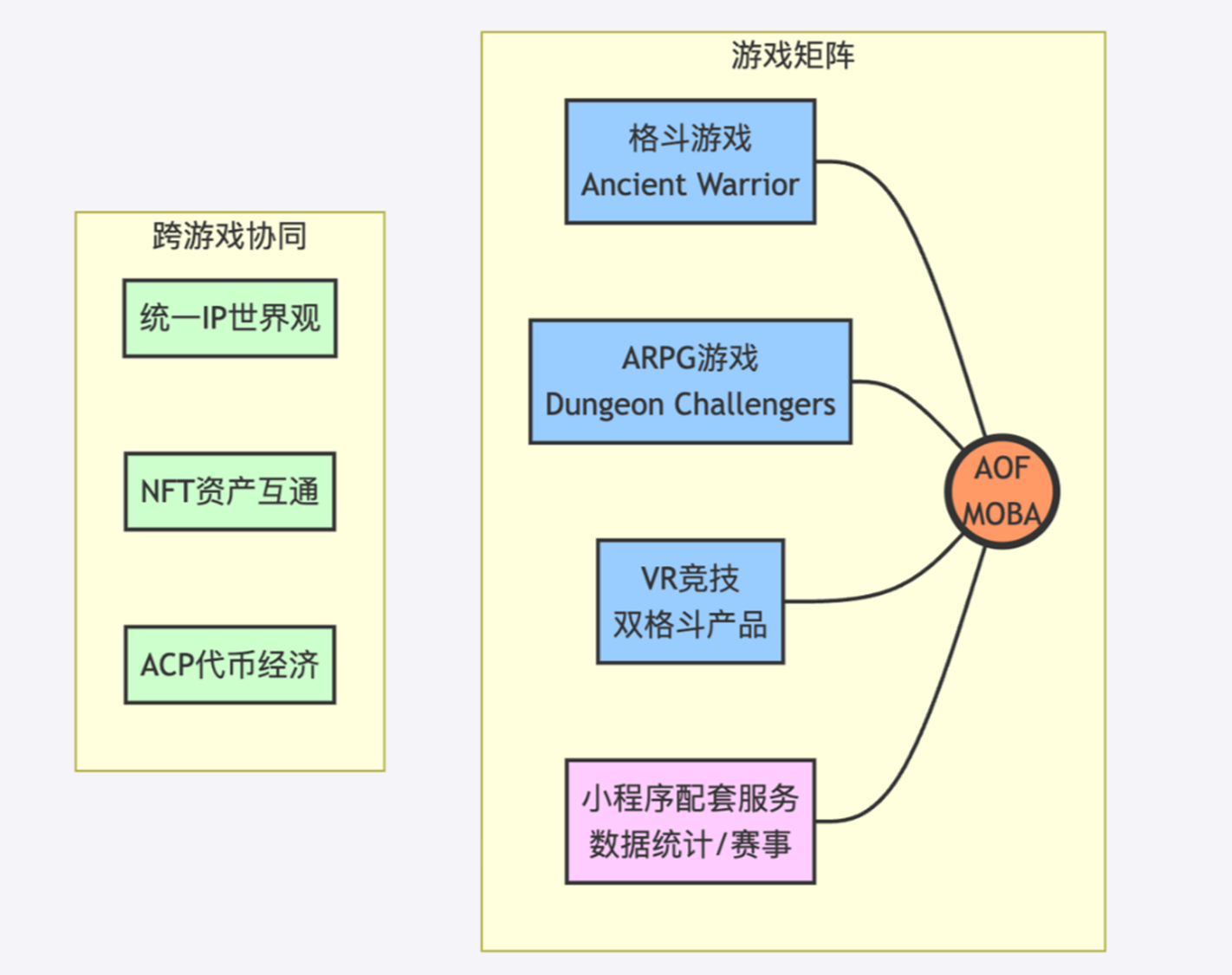
Beyond the flagship title, AOF has announced several additional games:
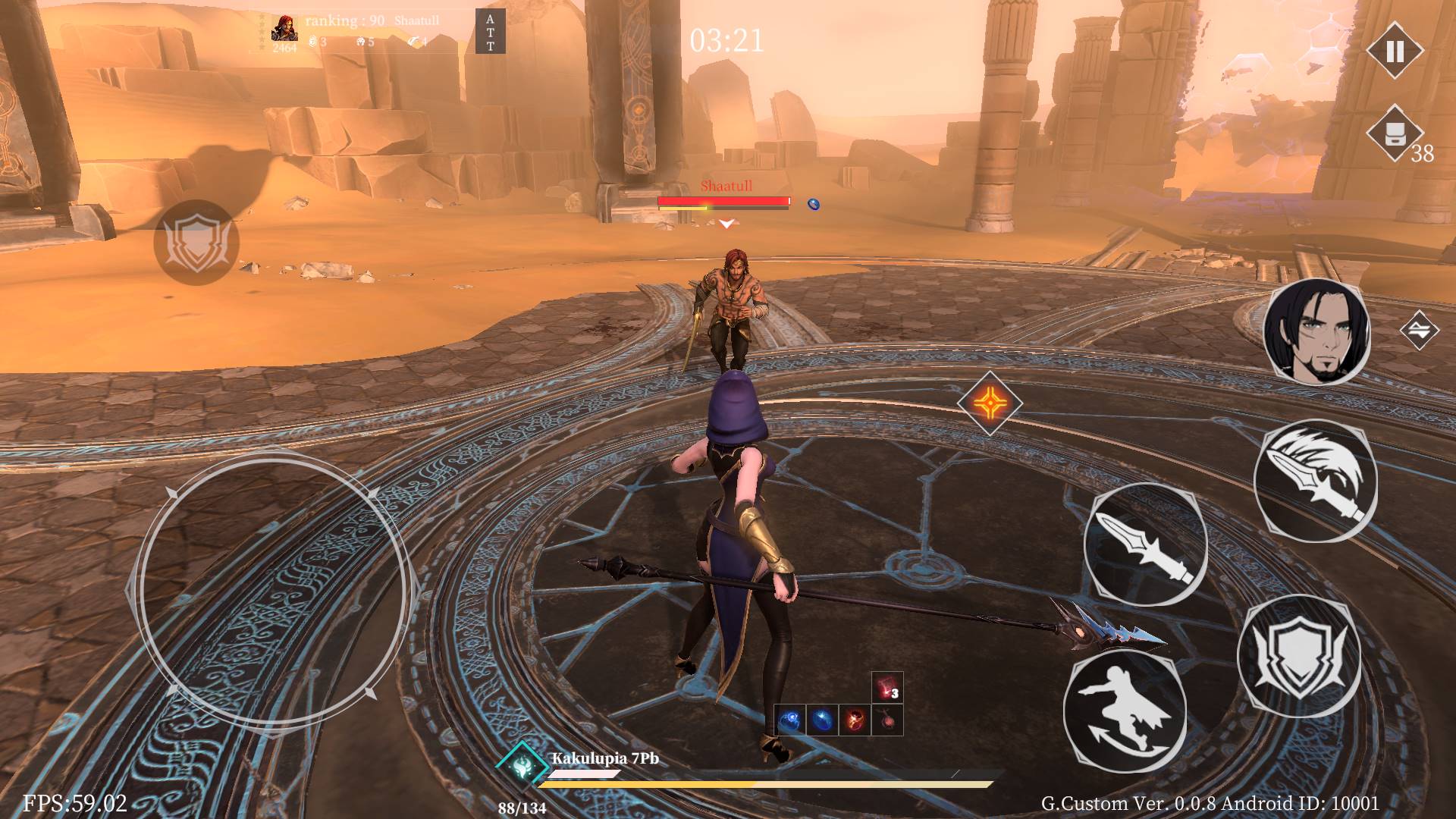
1. Action PvP game (Arena of Ancient Warrior): A 1v1 fighting game launching Q1 2025, combining Street Fighter-style combo mechanics with a unique on-chain ranking system. It will support cross-platform battles and reuse AOF heroes, giving NFT holders new utility.
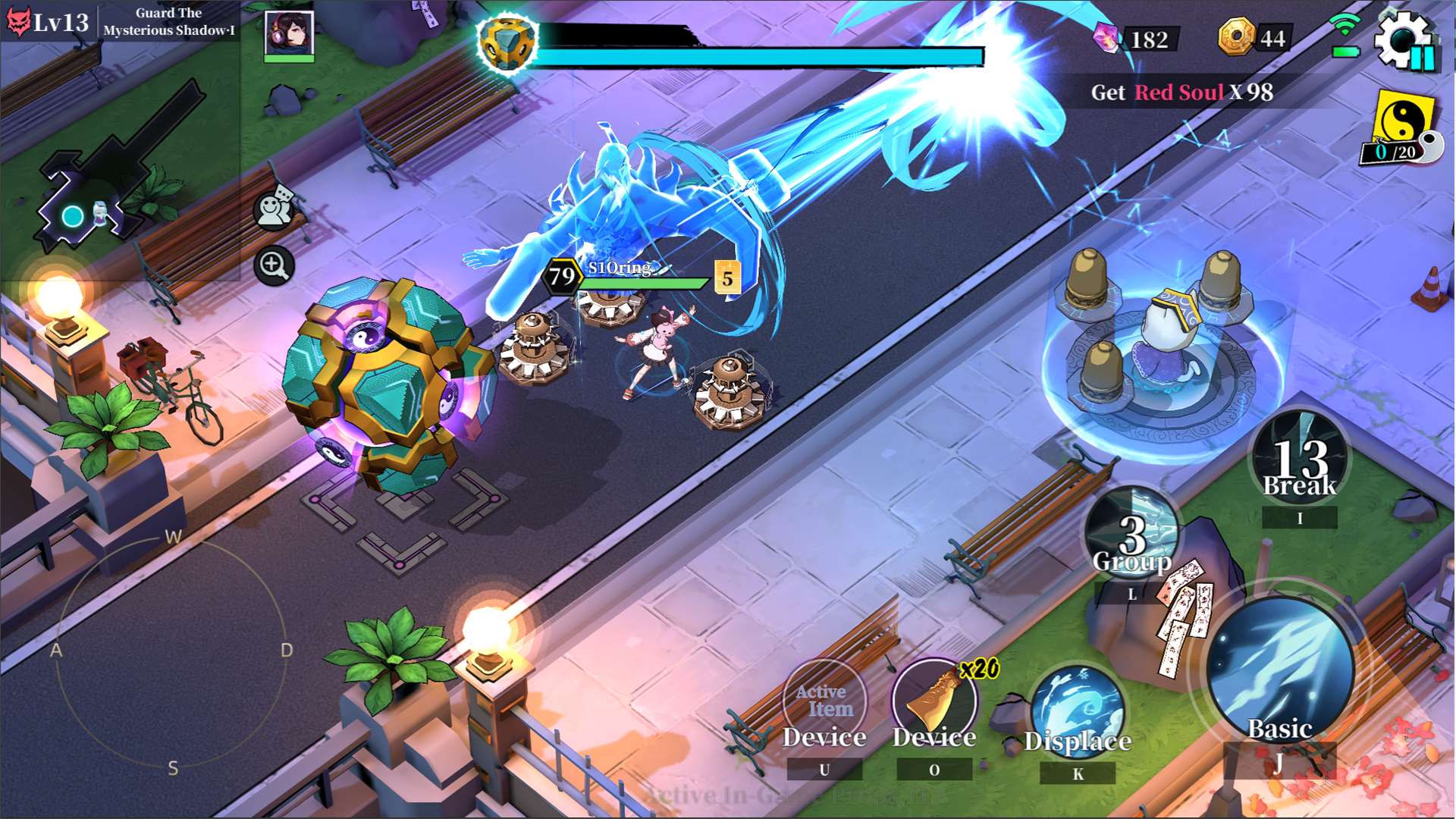
2. ARPG PvP game (Arena of Dungeon Challengers): An innovative blend of Roguelike dungeon crawling and PvP combat, scheduled for release in Q3 2025. It will integrate AOF’s skin system.
3. VR Competitive Lineup: Two VR fighting games targeting the metaverse, planned in collaboration with leading VR hardware manufacturers. These will connect with AOF’s NFT system, allowing digital assets to appear in virtual reality.
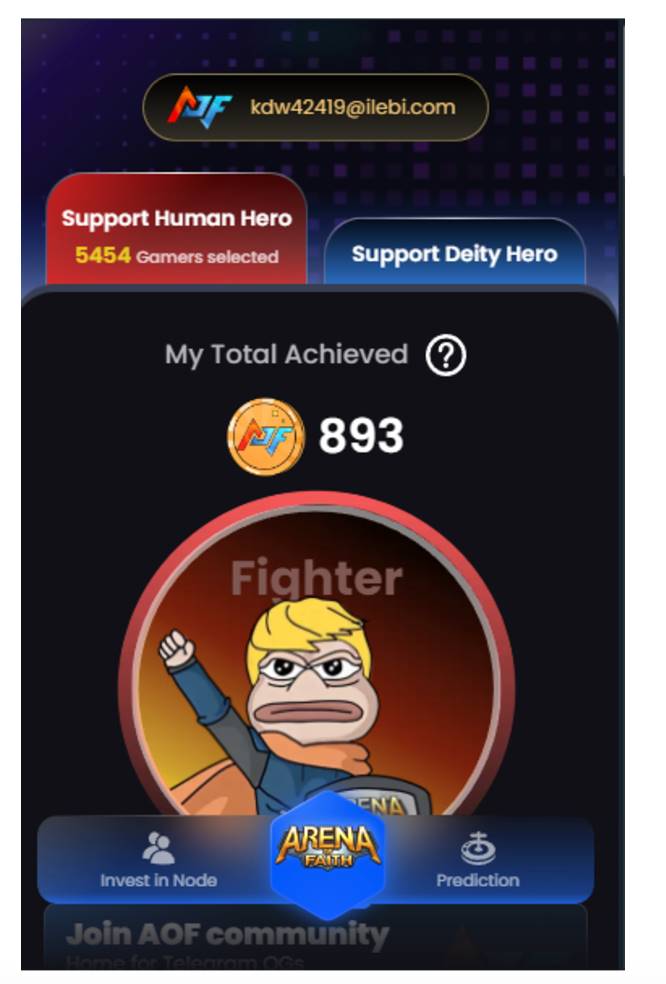
4. Mini-program integration: A Telegram bot service designed for casual users and community engagement, offering live event stats, performance tracking, and equipment recommendations.
What benefits does this multi-game matrix bring to on-chain assets?
AOF enables cross-game asset interoperability, maximizing liquidity utilization. By sharing a unified IP across titles, they amplify each other’s impact, forming a cohesive economic ecosystem where assets circulate sustainably.
First, all games share a consistent world-building framework, maintaining uniform character designs and lore. Each new release deepens the universe, enhancing the IP’s cultural value.
Second, since key in-game rights are tied to NFTs, reusing them across multiple games is technically straightforward. Enabling NFTs across the entire game matrix significantly increases their utility and unlocks greater value.
Finally, ACP serves as the universal settlement currency across all games. In-game activities—including NFT trading, tournament rewards, and item purchases—are settled in ACP.
We’ll delve deeper into ACP tokenomics later.
Clearly, a single game acts merely as the foundation. AOF aims to become a platform and full-fledged ecosystem.
But as they say, beginnings are hard. Does AOF already have a solid foundation? Recent data offers some answers.
In terms of user acquisition and retention, public figures show AOF has accumulated over 250,000 active users across PC, Android, and iOS platforms. Users span global regions: 45% from Asia-Pacific, 35% from North America and Europe, and 20% elsewhere. Daily new users average nearly 1,000, with retention rates exceeding industry benchmarks.
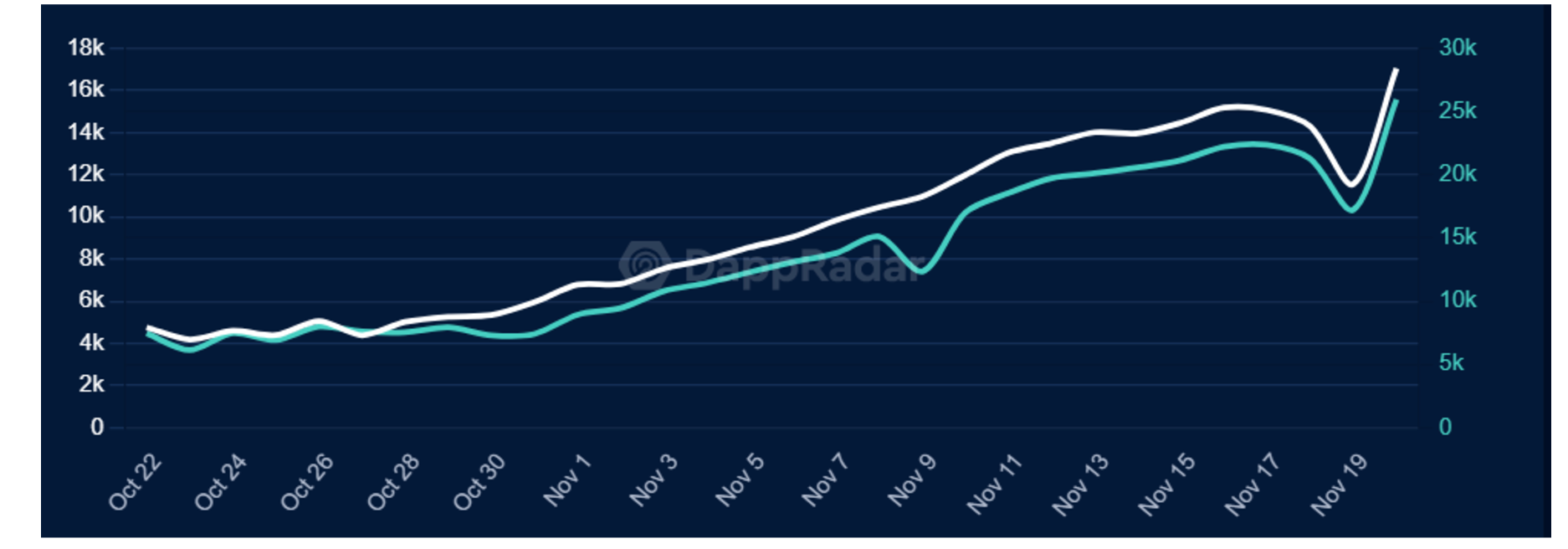
On-chain metrics are also strong: daily active wallets (UAW) stabilize around 5,350, with approximately 28,790 on-chain transactions per day and a daily transaction volume of ~$185,000—impressive given the current lukewarm state of blockchain gaming.
Notably, using Immutable (IMX)'s login components and related tech, AOF has fully deployed contracts on both IMX and Metis chains. The former hosts on-chain check-in and prediction systems—essentially on-chain proof of operational activities—while the latter runs testnet data and corresponding node infrastructure.
Beyond technology, AOF’s funding pedigree is impressive.
Web3 gaming giant Animoca Brands led the Series A round with $8 million; Immutable and Metis joined as strategic investors in the Series B, providing technical and ecosystem support; YGG, the world’s largest gaming guild, made an early strategic investment.
Moreover, AOF has established a deep strategic partnership with Metis, receiving $1 million in ecosystem fund backing, direct access to marketing resources and technical teams, and participation in Metis’ early project incubation program. These collaborations provide not only capital but crucial ecosystem integration.
In the less crowded Metis ecosystem, the value generated by a flagship project like AOF may far exceed what similar projects could achieve in more saturated environments.
In summary, AOF currently demonstrates solid gameplay foundations, a comprehensive game matrix, strong market performance, and credible backing—key ingredients for breakout success.
POFS On-Chain Verification: Reinventing Fairness
Yet, despite these strengths, do they fully address the longstanding curses of blockchain gaming and esports—widespread cheating and farming bots destroying game economies?
We need not just a good game, but also robust infrastructure and technology to protect its integrity.
This is another key value proposition offered by AOF.
Why aren’t you excited about Web3 gaming? My answer might be:
First, rampant cheating—players using scripts and bots to automate earnings, diluting rewards for genuine players. Second, traditional blockchains’ low-frequency confirmation mechanisms make real-time detection of cheating impossible.
To tackle this systemic issue, AOF proposes POFS (Proof of Frame Sync)—a frame-by-frame validation mechanism.
In simple terms, it splits game logic into fixed frames and uploads player behavior data from each frame to detect anomalies.
Whether you’re actually playing becomes obvious under this POFS mechanism.
Naturally, POFS requires AOF to build its own network for verification and post-event auditing:
Decentralized nodes validate every frame operation in real time, allowing any observer to participate as a validator, ensuring complete transparency. All action data is stored on-chain, enabling replay and audit, creating tamper-proof historical records for each match.
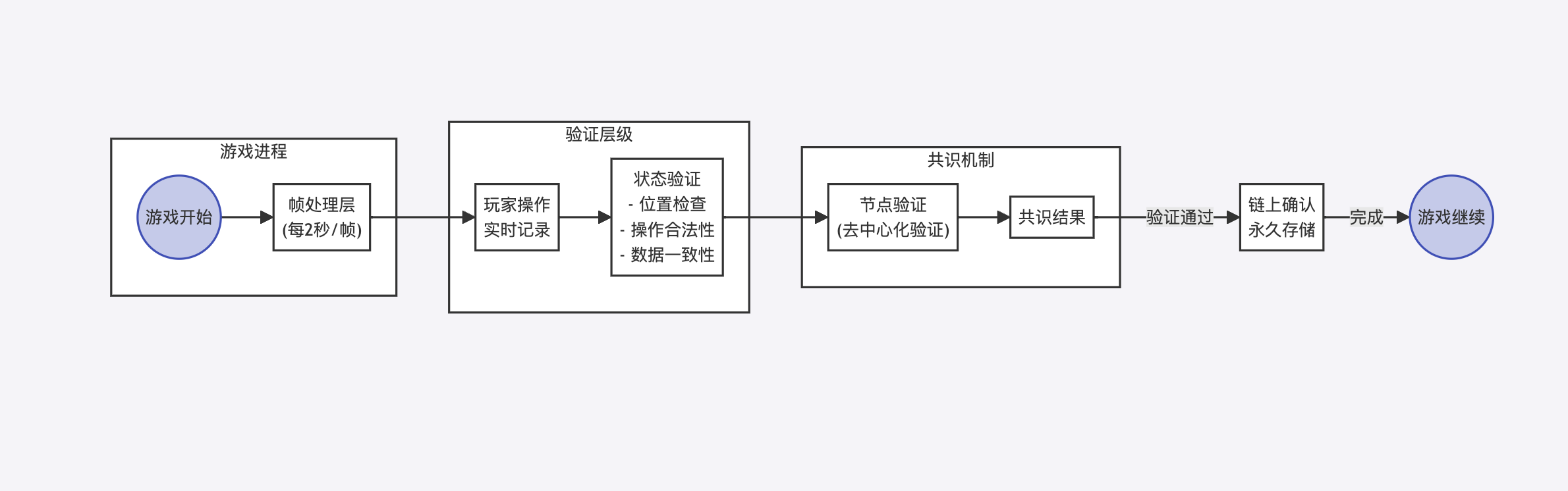
This resembles a PoS-based network, using POFS as a technical tool to verify game integrity.
-
By verifying compliance of each frame’s actions against game rules, abnormal behaviors can theoretically be detected at millisecond precision, preventing unfair token distribution or theft.
Currently, earning tokens in the game requires owning a hero card NFT and actively participating in matches. Gameplay data is recorded on-chain and verified by nodes to confirm whether users meet minimum requirements (basic gameplay metrics—idle behavior fails to qualify).
Users who don’t meet standards cannot generate tokens. Thus, valueless farming activities are effectively prevented.
While currently used internally by AOF, if released as an SDK, this mechanism could become a standard solution for competitive blockchain games, reshaping fairness standards across Web3 gaming.
Token Deflation Art: Every Coin Used, Every Coin Valued
Technical solutions can curb cheating—but how to treat Web3 gaming’s chronic “death spiral”?
We’ve seen too many games collapse due to overreliance on mining without real utility, causing supply to vastly exceed demand, leading to token crashes and ecosystem collapse.
AOF’s solution is a naturally deflationary mechanism driven by multiple use cases, ensuring every participant has a clear demand for ACP tokens.
From game energizing, node staking, to tournament tickets, diverse consumption paths ensure “coins are fully used,” thereby achieving “coins are valued.”
Typically, participants in a Web3 game fall into three categories: hardcore players (including farmers), light contributors (earning via assets or staking), and organizers/marketers running events around the game.
Let’s examine how AOF ensures token utility across these three roles.
-
Hardcore Players: Play-to-Earn as Proof-of-Work (PoW):
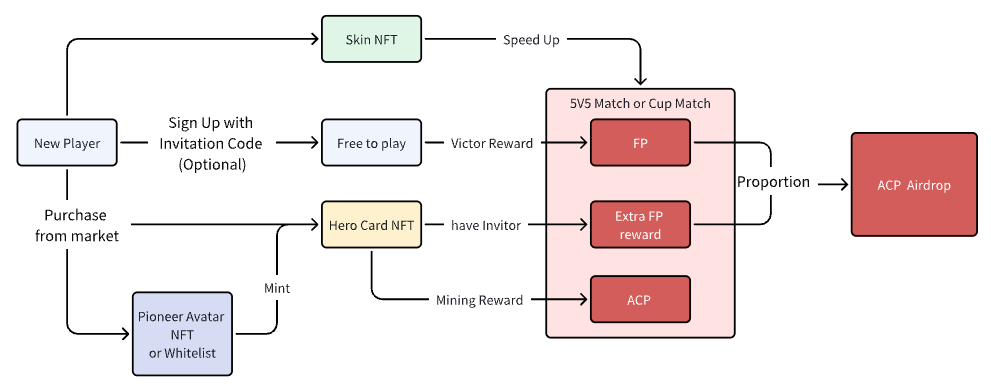
As mentioned earlier, players must purchase hero NFTs to join matches and begin earning tokens.
In essence, NFTs become mining rigs, and skilled players operating them resemble workers in a gameplay-based proof-of-work system—winning matches validates effort, and the system rewards accordingly.
In short: play-to-earn = play-as-mining.
To prevent infinite inflation from constant grinding, NFTs operate on a 30-day energy recharge cycle. Players must periodically spend tokens to recharge NFTs and maintain earning efficiency. For higher returns, players invest ACP into skin synthesis and upgrades—better skins and higher-level heroes yield greater earning power.
Thus, active players follow this token consumption path:
-
NFT Recharge: Consumes ACP every 30 days, with amounts dynamically adjusted based on game popularity
-
Skin Synthesis: ACP投入用于合成,部分永久销毁
-
Validators: Co-builders Ensuring Fairness (PoS):
AOF’s competitive integrity relies on decentralized data validation, requiring a trustworthy network of validators based on POFS (Proof of Frame Sync).
Building a decentralized validator network around anti-cheating creates profit opportunities for light participants.
You can stake tokens to become a validator. For the game, staking ensures data authenticity; for yourself, it generates staking rewards—integrating POFS with staking mechanics.
Node operators earn base yields from staking plus additional rewards for validating match data. AOF implements linear vesting to ensure long-term node stability and locks tokens to create deflationary pressure.
The required token consumption paths include:
-
Node Staking: Long-term locking
-
Punishment Mechanism: Malicious behavior results in token burns
-
Transaction Fees: Partially permanently destroyed
-
Tournament Organizers: ACP as the Value Bridge for Esports
As an esports-focused game, AOF requires ongoing tournaments to sustain ecosystem vitality. Event organizers bring traffic and attention, while the game’s token economy provides a sustainable business model.
Organizers issue tournament passes for revenue and establish prize pools to incentivize high-quality events and player participation. A portion of ticket sales funds ACP buybacks and burns, converting esports热度 into deflationary momentum.
The necessary token consumption paths are:
-
Tournament Registration: Consumes ACP, with burned portion permanently removed
-
Ticket Revenue: Used to repurchase ACP tokens, implying burn
-
Tournament Deposit: Temporarily locks ACP, akin to a security deposit
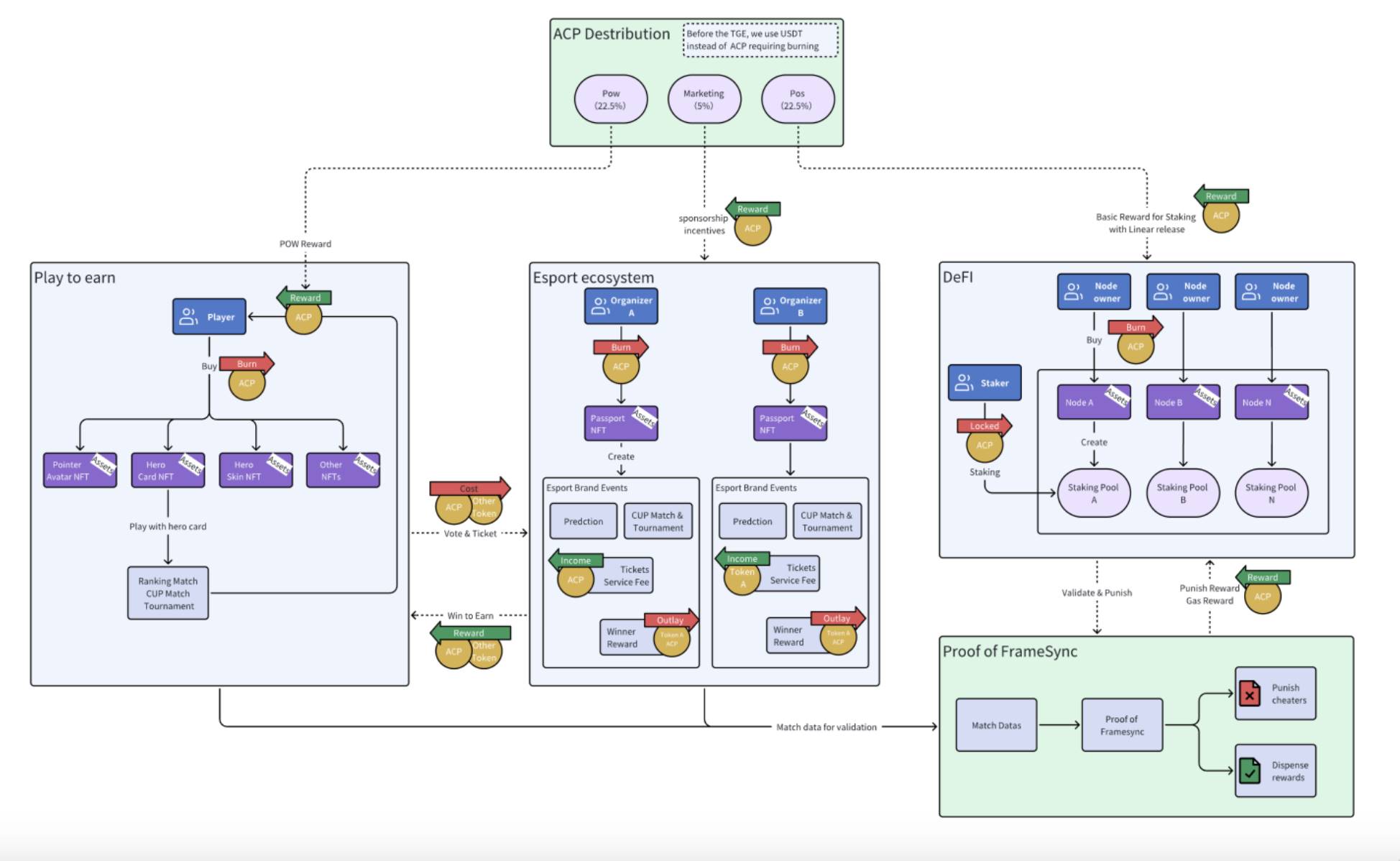
When viewed together, these three roles form a multi-layered deflationary loop for ACP. Daily spending by hardcore players, continuous locking by validators, and buyback-burns from tournaments create short-, medium-, and long-term deflationary pressures. This multidimensional deflation ensures token value is supported across different timeframes. As the player base grows, more validators join, and tournament scales expand, demand from all three roles rises in tandem. This increasing demand-driven deflation reinforces token value, attracting more participants—a virtuous cycle.
Capturing the "Long-Tail Esports" Niche, Securing a Unique Position
The idea of using esports to consume tokens is solid—but is hosting tournaments really necessary today?
This touches on a structural issue in gaming—the long-tail esports segment remains underserved.
Most associate esports with events like LoL’s World Championship or CS:GO Majors—elite, top-of-the-pyramid competitions. These are monopolized by major organizations, leaving small-scale organizers starved of resources, resulting in an overly sharp esports pyramid.
Below the surface, grassroots tournaments face massive unmet demand, yet lack stable business models or revenue streams to survive.
Web3 thrives by disrupting from the edges—targeting long-tail esports presents a new breakthrough.
As previously described, AOF implements a decentralized tournament organization mechanism: any user holding an AOF validator node can become an event organizer. Smart contracts automatically handle registration and prize distribution, drastically cutting operational costs.
Tournament revenues are recorded on-chain in real time, prize pools auto-distribute, and tips go directly to recipients—ensuring transparent and efficient financial flows.
Regarding fairness and cheating, POFS technology enables real-time validation and permanent storage of match data, providing a credible technical foundation for esports.
While currently used only within AOF, this logically sound and functionally complete tournament framework holds great potential to expand outward, unlocking long-tail value.
I believe that with proper operation and promotion, AOF’s tournament infrastructure offers two notable value points:
First, democratization of tournament operations. Providing one-stop tools including registration, scheduling, and analytics, enabling grassroots events to enjoy pro-level production quality.
Second, activation of community economies. Through mechanisms like ticket revenue sharing, digital merchandise creation, and commentator incentives, it builds diversified income streams for sustainable growth.
ACP Token Launch and Airdrop Rewards
With that, our full overview of AOF concludes. But for practical-minded Web3 players, what opportunities exist now?
First, staking was a cost-effective choice.
Early official data showed over $1 million worth of Metis staked; participants received dual rewards in Metis and ACP, with the latter holding greater future value post-mainnet launch.
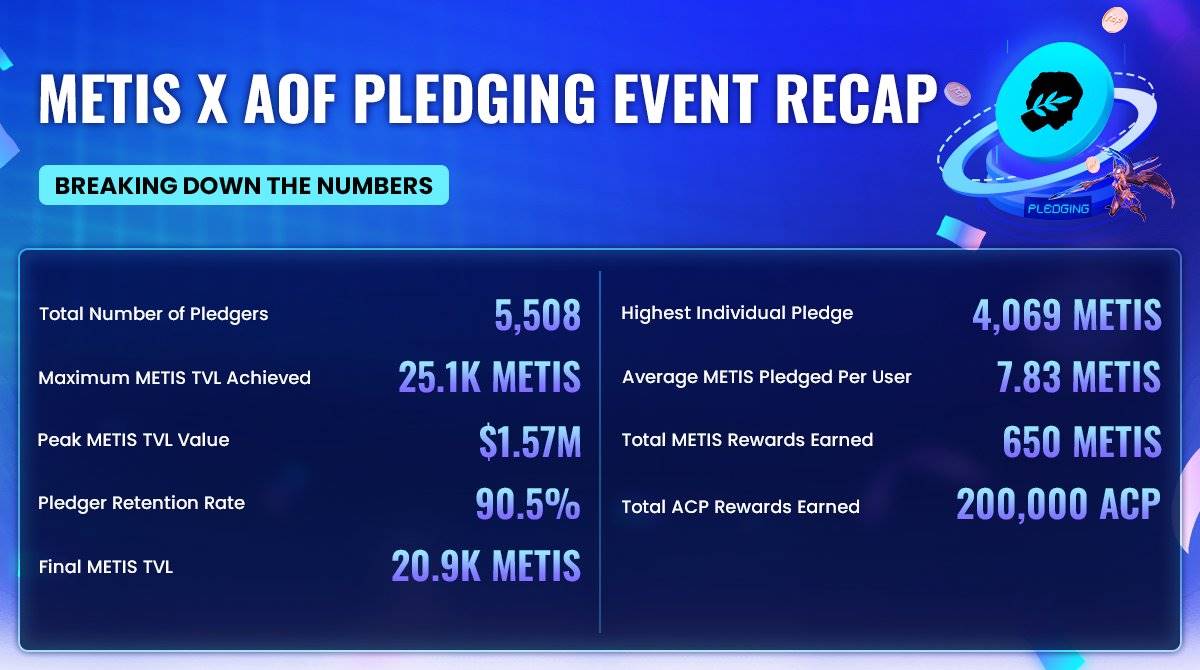
However, the staking campaign has ended. Public data reveals it attracted 5,500 users, with around 21K Metis staked, generating 200,000 ACP in rewards—demonstrating strong community engagement.
Second, for those who missed staking, there are upcoming airdrop campaigns tied to the ACP token launch.
According to AoF’s official announcement, the ACP token will undergo TGE and listing in January—marking the beginning of a new phase with expanded possibilities around the token.
To support the launch, AoF will host a 14-day “Airdrop Tournament” starting January 6th within the MOBA game Arena of Faith, featuring a total prize pool of 5 million $ACP.
Earning these ACP tokens is simple: just play Arena of Faith.
The game features a season pass system similar to traditional MOBAs. Players complete matches to earn points—every 100 points equals one level—and unlock corresponding rewards upon reaching certain tiers.
Rewards include:
-
FP: Faith Points, which can be exchanged for official ACP tokens at TGE;
-
ACP: Project tokens usable for skin synthesis or purchasing tournament tickets to unlock more features;
-
Different-tier ACP Chests: Randomly drop ACP upon opening, with probabilities and amounts varying by chest tier;
-
Season Chests: Contain skin fragments of various grades, usable to craft hero skin NFTs.
Notably, if you hold in-game NFTs—such as avatars or hero cards—you can stake them to earn boosted rewards:
By staking NFTs, players unlock VIP tiers that accelerate leveling, increase reward amounts per tier, and reduce resource costs per match.
For dedicated players, holding and staking NFTs offers a more efficient way to maximize returns. For casual players, rewards remain accessible through regular gameplay. Overall, AoF keeps the barrier to earning low while delivering a rewarding gaming experience worth trying.
In sum, Arena of Faith isn't just building a game—it's constructing a complete Web3 esports ecosystem. Through POFS technological infrastructure, deflationary tokenomics, and decentralized tournament systems, it offers a sustainable blueprint for the entire industry.
For itself, AOF achieves cross-game value interoperability through unified token economics and NFT rights. This innovation not only enhances asset utility but also strengthens network effects across the ecosystem.
Looking ahead, by targeting the long-tail esports market, AOF delivers a comprehensive solution—from technical support and economic incentives to event management and data ownership—paving a new path for Web3 esports.
It’s no longer just about one game. We look forward to seeing AOF chart a unique course of development.
Join TechFlow official community to stay tuned
Telegram:https://t.me/TechFlowDaily
X (Twitter):https://x.com/TechFlowPost
X (Twitter) EN:https://x.com/BlockFlow_News
 深潮TechFlow