From the Historic Summit of Power of Women, Insight into Web3 Gaming's Path to Mainstream Breakthrough
TechFlow Selected TechFlow Selected
From the Historic Summit of Power of Women, Insight into Web3 Gaming's Path to Mainstream Breakthrough
Slow to warm up, pragmatic, enduring, returning to the essence of entertainment.
 Navigating Web3 tides with focused insights
By Professor Zhou
The recent Web3 gaming market seems shrouded in uncertainty.
Up close, rebranded mining games repeat Ponzi-like life-and-death cycles;
Looking further ahead, highly anticipated AAA blockchain games are predictably struggling to launch.
To cut through the fog, a breakout product capable of crossing over into the mainstream is essential.
And just two days ago, a Web3 game called Power of Women: Genesis, built on Solana, successfully claimed the top spot on Google Play's overall U.S. games chart.
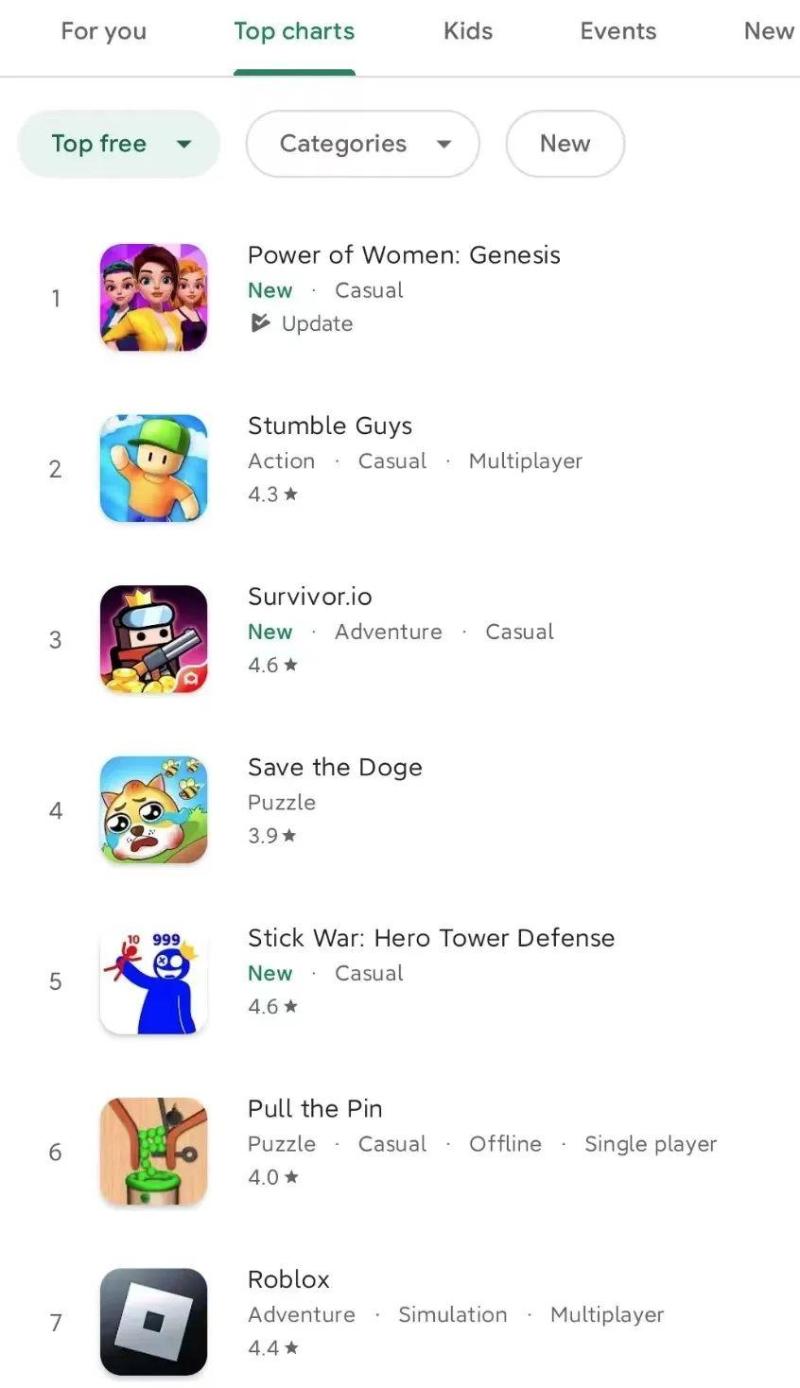
This marks the first time any product from the entire Web3 or blockchain gaming industry has reached #1 on the U.S. overall games ranking chart.
The U.S. games ranking chart serves as a bellwether for mobile gaming trends. Beyond reflecting popular entertainment preferences, appearing on this list signals broad recognition and acceptance by the mainstream mobile gaming market.
When Web3 gaming meets Web2 users, Power of Women has delivered an unexpectedly successful crossover performance.
Behind its undeniable market success, we’re curious: what exactly makes this game stand out, and could it spark a sustained wave of consumer-facing, mobile-native Web3 products breaking into the mainstream?
The answers require a deep dive into the actual gameplay experience.
Easy to Learn, Smart Blend of Content and Technology
After thoroughly playing Power of Women, we found its most notable advantage over most other blockchain games is its ease of use.
No advanced gaming skills required. No need to understand complex economic models or master Web3 technical concepts—both game content and on-chain interactions are designed to be as simple as possible.
In the game, you play as a woman who has been cheated on and criticized by her boyfriend for lacking charm. Your journey involves regaining confidence, becoming stylish and sophisticated, and ultimately achieving success in life and work.
Gameplay is straightforward: simply follow task prompts, clicking to freely select and change makeup, clothing, and accessories, combining them into full outfits to earn in-game coins.
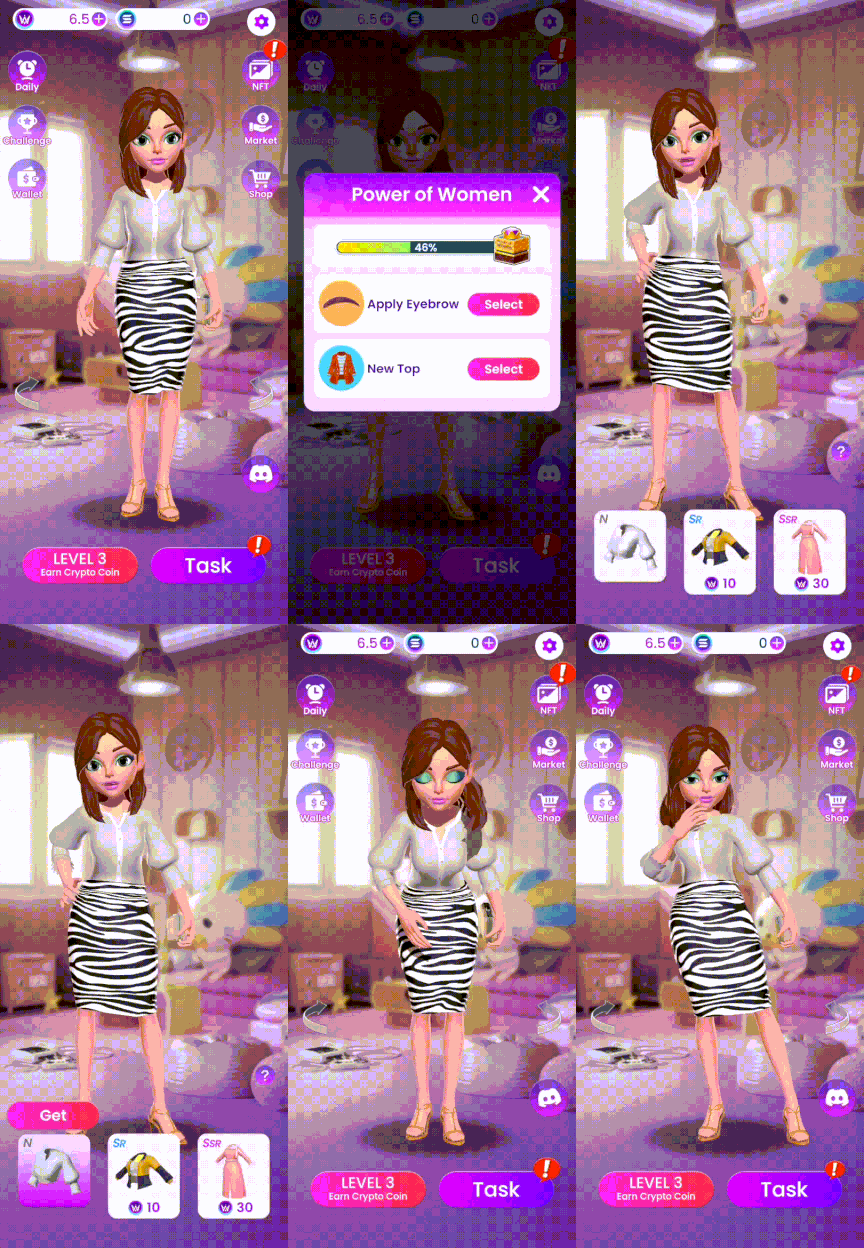
Additionally, the system includes a mini-game involving color-matching potions. Clearing it successfully earns players the game’s native token, W3T, on the Solana blockchain.
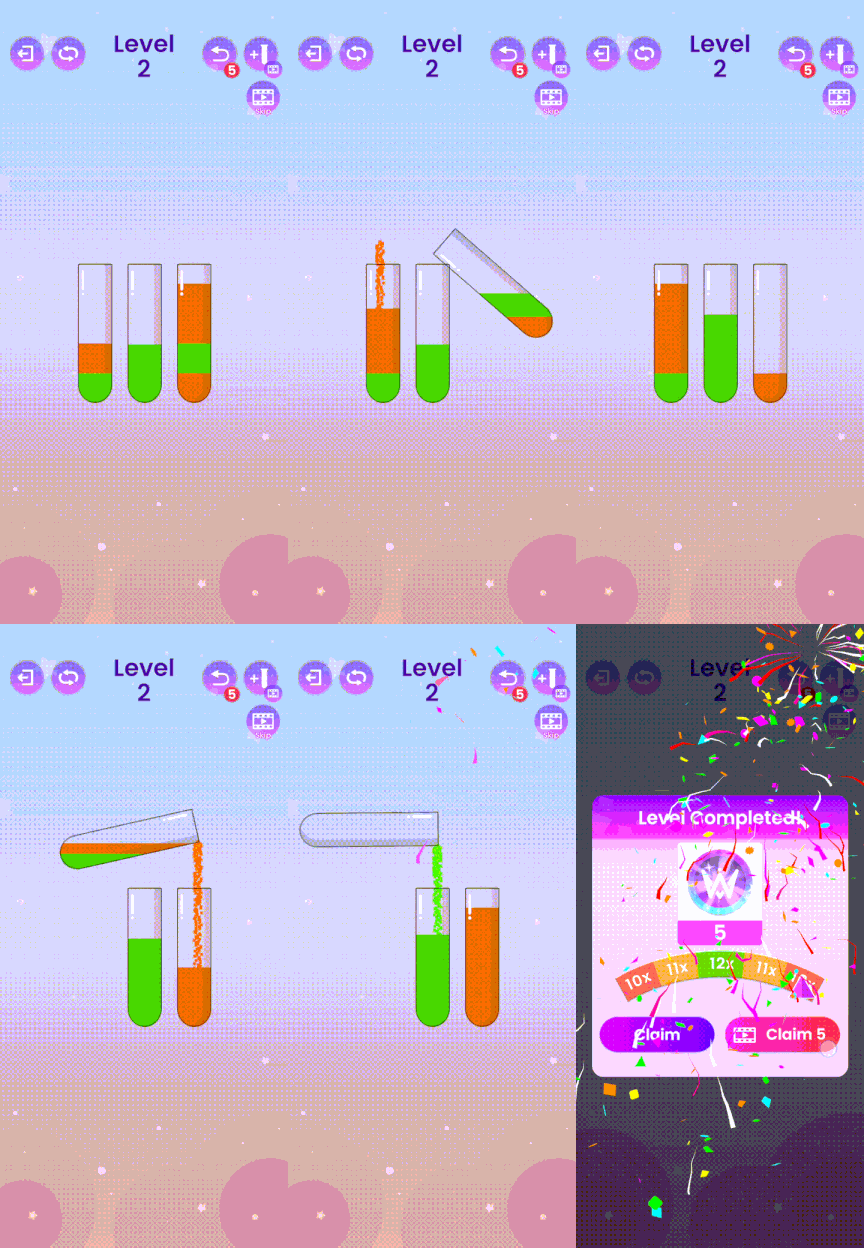
Coins earned in-game can be used to purchase rarer clothing and accessories, enabling more unique outfit combinations. This forms the core gameplay loop—DIY fashion styling.
Notably, this fashion-styling mechanic feels particularly crypto-native:
Every outfit you create is minted as an NFT. This composable NFT design effectively gives players a free-to-own (Free to Own) NFT experience.
From selecting preferred clothing items to forming a personalized NFT, the gameplay feels more like creative expression, naturally sparking desires to share and show off.
Correspondingly, you can list your uniquely composed NFTs on the game’s built-in marketplace for sale, or purchase curated outfits created by other players.
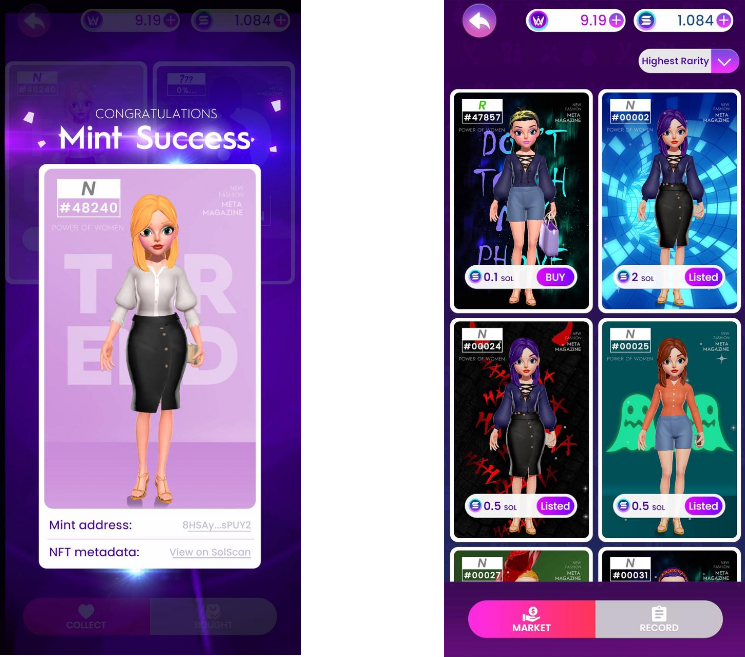
The game uses a rarity algorithm for NFTs, as indicated by labels such as "N" and "R" in the image above.
To mint rarer NFTs, users keep progressing through levels, earning W3T tokens to unlock new outfits and compose more valuable NFTs.
Throughout this process, players invest their taste and creativity, ultimately forming unique NFTs they deeply identify with—and whose scarcity they personally value.
Click, choose, own. The core gameplay loop is surprisingly simple—making it highly accessible to users outside the crypto world.
But the “own” part may not be as straightforward as it appears.
Owning an NFT inevitably involves concepts like minting, gas fees, and wallets—barriers that feel like roadblocks to completely new users. Power of Women’s crossover success clearly stems from significant effort put into simplifying on-chain interactions.
Seamless Experience: The Key to Mass Adoption
For most non-crypto users, the first hurdle to entering Web3 and trying a game is logging in. For them, understanding wallet creation and seed phrase security from scratch is extremely unrealistic.
Considering user familiarity, Power of Women does not limit login to mainstream wallets like Solana. Instead, it offers multiple login methods aligned with common user habits:
Email, phone number, Google account, Facebook account—the game provides many familiar Web2 login options. After selecting any common account, the system automatically initiates authentication and brings users directly into the game—all within less than 5 seconds.
The image below illustrates this intuitively:
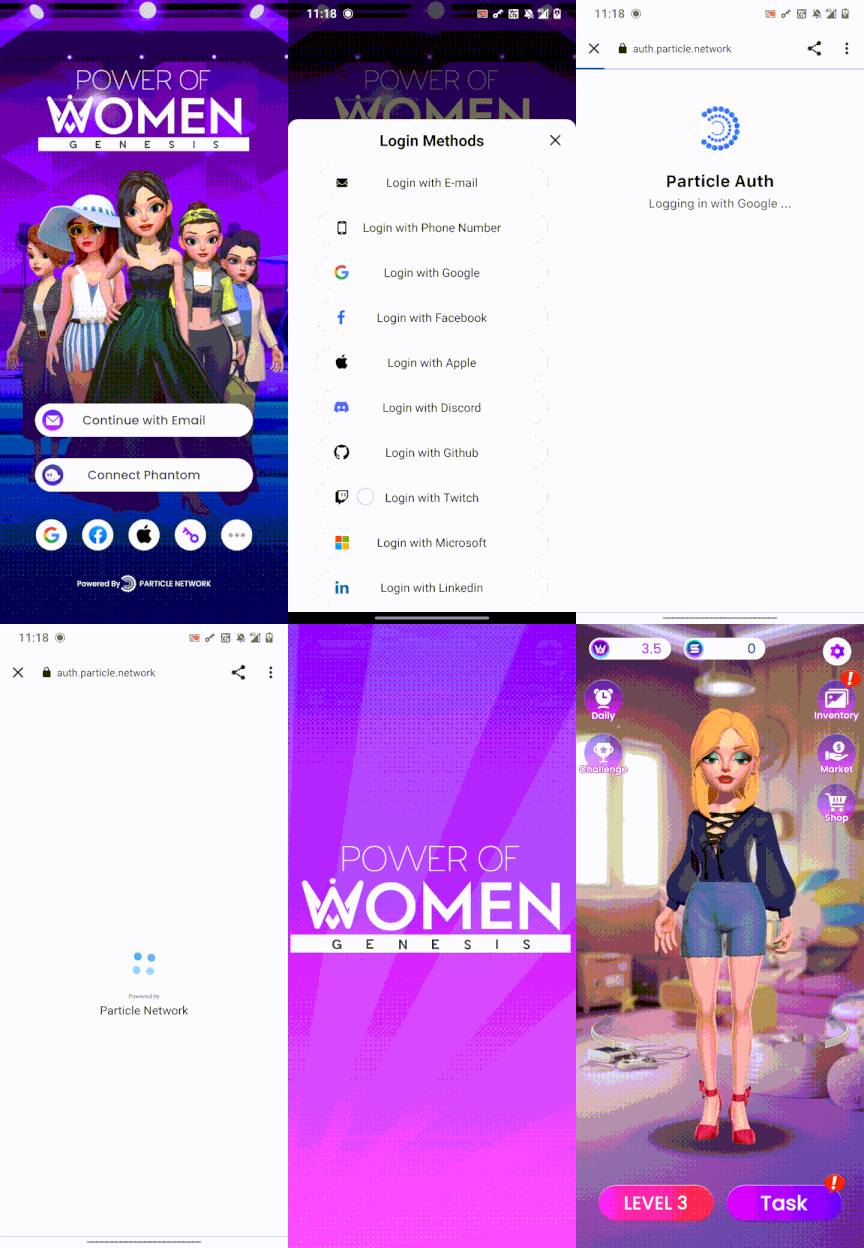
Compared to the wallet connection processes used by most current blockchain games, this Web2-style authentication dramatically reduces cognitive load and operational friction for mainstream users.
This is key to acquiring new users: lowering barriers is critical. But you might wonder—doesn’t convenience at login still leave wallet creation unresolved?
Even after more new users enter the game, minting NFTs still requires wallet setup and management. Most existing Web3 wallets offer clunky, non-intuitive experiences. Moreover, wallets are typically standalone apps requiring separate access for asset management.
Here, Power of Women delivers an even more surprising level of smoothness in wallet experience:
Clicking the wallet button in-game automatically redirects to an integrated wallet interface, showing your current balance of W3T (in-game currency) and SOL.

Clearly, after authenticating with a Web2 account, the system has automatically created an in-game wallet for you. Whenever you perform on-chain actions (transfers, minting, trading), the game seamlessly activates this wallet, syncing your crypto asset balances and displaying your owned NFTs.
If you attempt to mint an NFT but lack sufficient gas fees, the game will prompt you to acquire some SOL, then directly redirect you to a payment interface. Where permitted by local regulations, it even offers an instant purchase option. You can also swap between different crypto assets directly within the game—no need to switch to another wallet app or DEX:
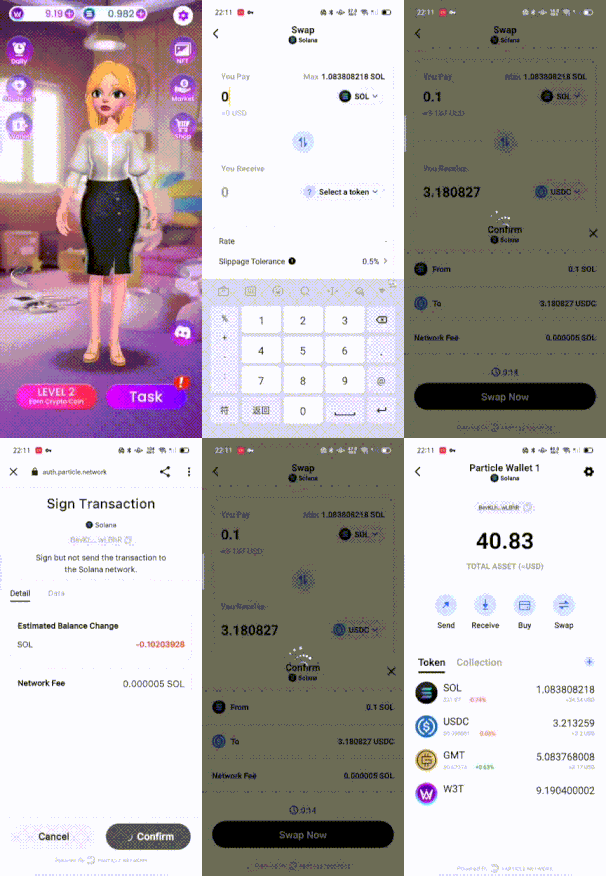
This is an experience no other blockchain game has achieved yet: from login to on-chain interaction, everything happens seamlessly within a single app, fully closed-loop.
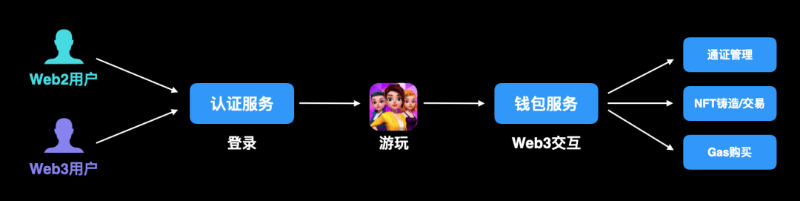
Moving from “Sorry, you don’t have a wallet” to “You don’t even need to create one”—this is precisely where true crossover begins. Let’s summarize how the game achieves this seamless experience:
-
At login: Authentication services connect common Web2 accounts, enabling broader user acquisition;
-
During gameplay: Composable NFT creation naturally drives users to showcase and trade;
-
During on-chain interactions: Built-in wallet services handle wallet creation, token management, NFT minting, and trading.
All three stages are fully contained within a single game app—zero additional knowledge burden for users.
Does this feel too un-Web3? Worried about centralization or security risks from auto-created wallets?
Upon closer inspection, during login you’ll notice a small line saying “Powered by Particle Network.”
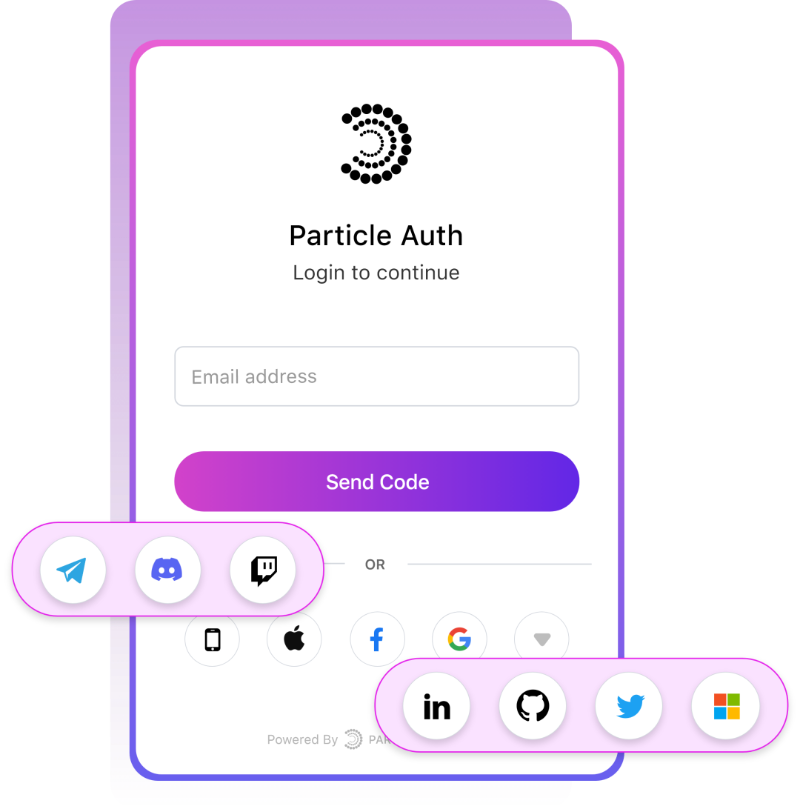
In fact, the seamless login and wallet experience in Power of Women is powered behind the scenes by Particle Network:
Using MPC (Multi-Party Computation) for authentication allows users to skip seed phrases entirely and jump straight into gameplay;
And via a unique Wallet-as-a-Service infrastructure, it preserves Web3’s core principle—user ownership of assets—while delivering the smooth UX of Web2.
Due to space constraints, we won’t delve into technical implementation details here. In essence, technology plays a behind-the-scenes role—keeping complexity hidden while delivering simplicity to players.
Players benefit from authentication and wallet services invisibly embedded in the background—imperceptible yet foundational to the entire experience;
What players see is a fun dress-up mini-game with polished UI and models, simple taps delivering delightful and varied visual transformations;
At its core, multi-step styling leads to distinctive NFTs, fulfilling self-expression and status-sharing needs.
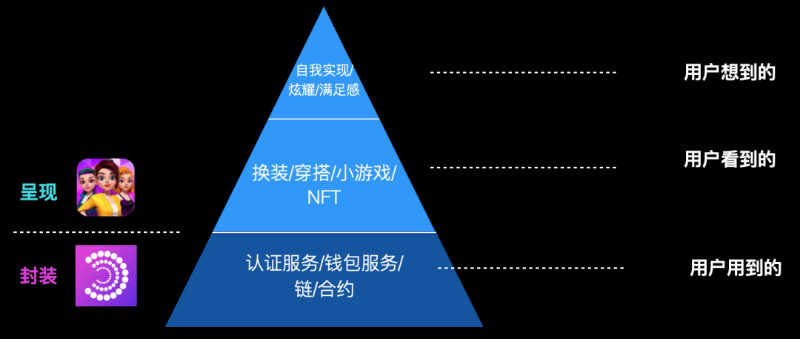
No app switching, no awareness of underlying tech—just simple gameplay and strong emotional rewards.
It’s the combination of these elements that made crossover inevitable.
Back to Fun: The Long-Term Path for Web3 Gaming
Beyond user experience, Power of Women’s chart-topping success may offer fresh insights for a blockchain gaming market lost in confusion.
We’ve grown accustomed to the wealth effect of traditional GameFi—Ponzi-like structures attracting capital through FOMO, fueling a race of “get in early, get rich first.”
But this wealth effect is a double-edged sword. On the flip side of rapid enrichment lies an unavoidable death spiral. Reckless speculation brings fleeting fortune to a few, while leaving most others devastated—and GameFi branded as scams or pyramid schemes.
Rough, fast, direct, death spiral.
This cycle of rebranded GameFi hype keeps mass adoption perpetually out of reach.
Games, as consumer entertainment products, should be measured by play volume, engagement, and sustainability—not just financial returns. Yet excessive financialization in GameFi often renders gameplay meaningless, while removing financial incentives altogether undermines user acquisition and appeal.
But this tension isn’t irreconcilable.
Power of Women’s approach: attract users with free NFT ownership, build engaging gameplay through mini-games and diverse styling options, and retain players gradually through casual, low-pressure progression.
You can still earn crypto assets in the game, but not as directly or quickly as in traditional blockchain games. Logging in during spare moments, reinvesting earnings into new outfits and decorations—this satisfies deeper emotional needs.
Slow-burning, practical, sustainable, returning to the essence of entertainment.
Not solely focused on grinding for profit, this type of Web3 game may not generate quick riches, but better aligns with mainstream players’ expectations and understanding. Once enough new users are retained through enjoyable gameplay, the in-game marketplace can introduce premium paid fashion items, paving the way for a healthy, gameplay-driven business model.
Moreover, the scale of mobile users cannot be overlooked. While browser-based blockchain games may offer more direct earning, smartphones remain the dominant gaming platform globally.
Power of Women’s rise to the top of Google Play’s U.S. charts may mark the beginning of a promising trend.
While most blockchain games remain stuck in endless competition over economic models and feature stacking, Power of Women has already tasted success in acquiring mainstream users. Hopefully, more projects will follow its lead in game design, capturing wider audiences and helping redeem the GameFi space.
Ultimately, how blockchains are used determines a project’s fate. Prioritizing tech gimmicks or running Ponzi schemes leads only to short-lived flashes. Only by thoughtfully integrating blockchain with entertainment and emotion can long-term success be achieved.
Join TechFlow official community to stay tuned
Telegram:https://t.me/TechFlowDaily
X (Twitter):https://x.com/TechFlowPost
X (Twitter) EN:https://x.com/BlockFlow_News