AI Arena: A Product Integrating Three Major Concepts—AI, Web3, and Gaming—Raises $11 Million
TechFlow Selected TechFlow Selected
AI Arena: A Product Integrating Three Major Concepts—AI, Web3, and Gaming—Raises $11 Million
AI Arena is not just a game integrating AI, but also a platform for cultivating players' AI capabilities.
 Navigating Web3 tides with focused insights
Author: SenseAI
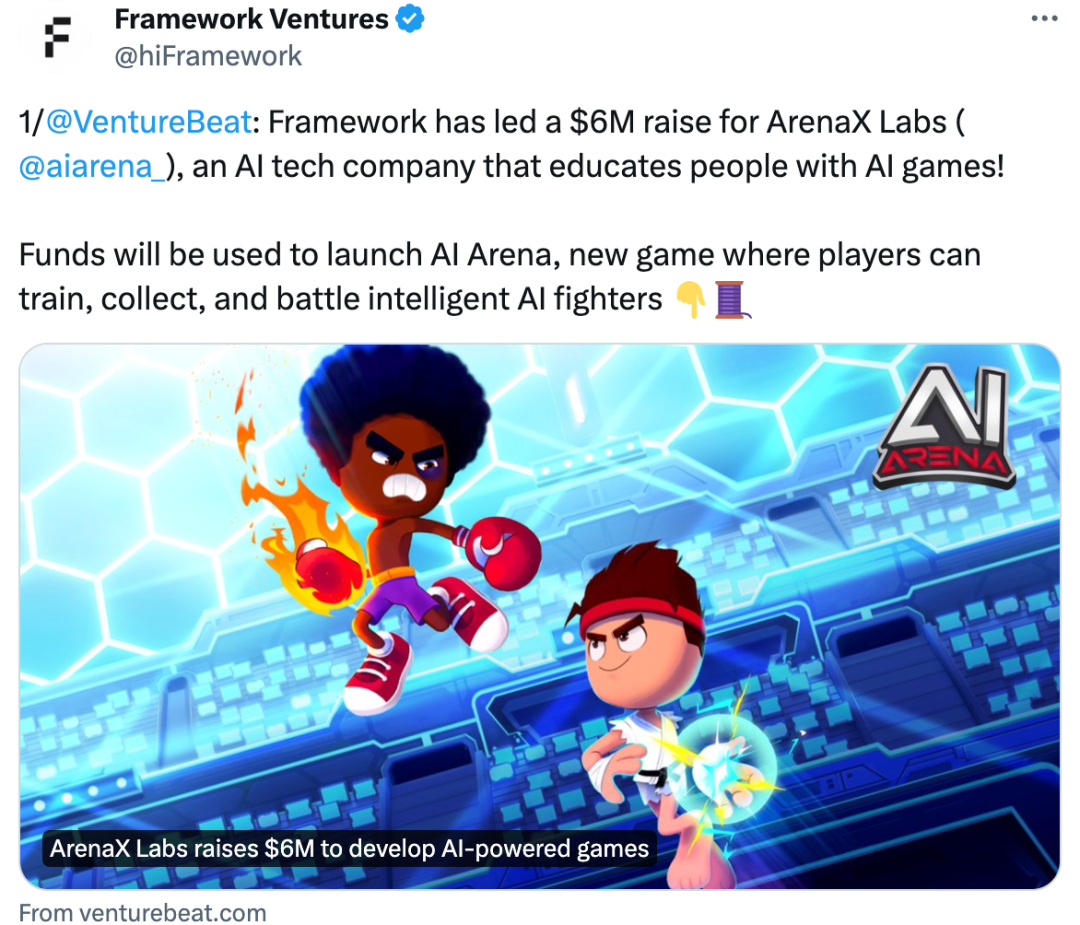
AI Arena is an AI-powered Web3 fighting game that allows users to train their own AI characters for battle. The outcome of each match depends on the player's training skills, aiming to help users understand how artificial intelligence operates and learns. AI Arena is currently open for pre-registration, and ArenaX Labs plans to soon launch a test version of the game on the Arbitrum mainnet.
ArenaX Labs, the developer behind AI Arena, has announced the completion of a new $6 million funding round led by Framework Ventures, with participation from SevenX Ventures, FunPlus/Xterio, and Moore Strategic Ventures. The company plans to use these funds to build its PvP combat platform and develop similar games.
Sense Reflection
We attempt to offer more divergent interpretations and deeper reflections based on the article’s content—feedback and discussion are welcome.
- AI Arena is not merely a game integrating AI; it's also a platform for cultivating players' AI capabilities. As the AI era approaches, learning how to train personalized AI assistants is becoming an essential skill in both work and life, emerging as a key metric for evaluating employees’ professional competence.
- The integration of AI and gaming enables players to enhance soft skills while enjoying entertainment. AI Arena has boldly experimented in this direction and identified a suitable entry point. In the future, as more players master the ability to train AI assistants, AI Arena could provide a bilateral AI marketplace that protects intellectual property rights of AI practitioners and facilitates matchmaking between buyers and sellers.
This article contains 2,334 words and takes approximately 8 minutes to read carefully.
AI Native Product Analysis
AI Arena
1. Product: AI Arena
2. Founders: AI Arena was developed by its parent company ArenaX Labs, which was co-founded in 2018 by three individuals—Brandon Da Silva, Dylan Pereira, and Wei Xie—with a focus on creating independent games.
3. Product Overview:
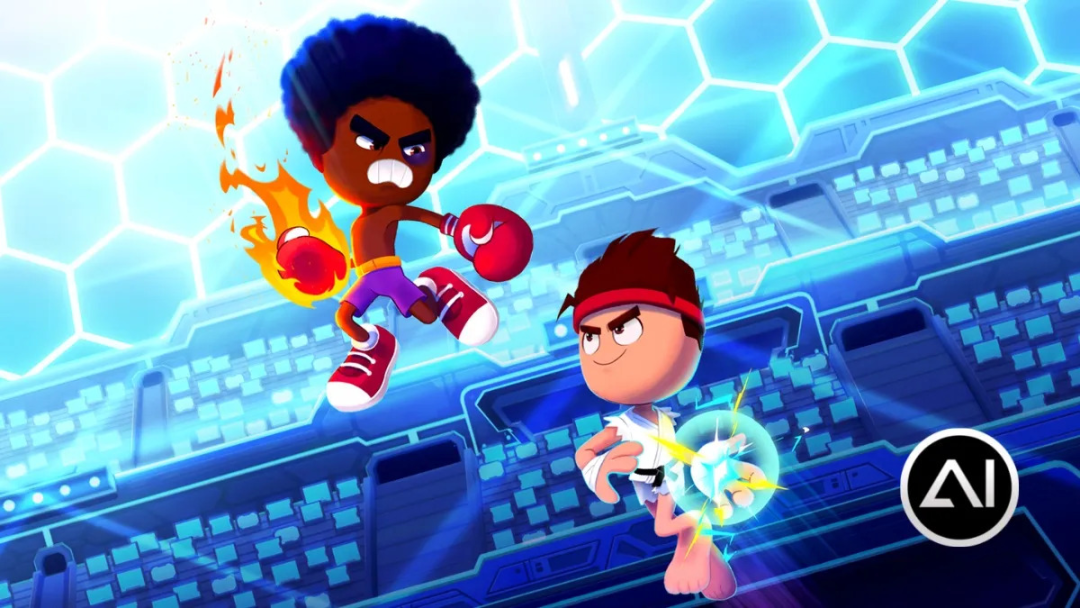
AI Arena is an Ethereum-native game where players worldwide can purchase, train, and battle AI-driven NFT characters—a tokenized platform powered by real AI. Within the game, players design and train AI-powered NFT fighters in a global PvP arena, enabling them to engage in autonomous combat, with the ultimate goal of knocking opponents off the platform. Players advance their AI characters through a process called "imitation learning," where AIs learn skills by observing human behavior. In turn, players can evaluate an AI’s capabilities via the “AI Inspector” tool, identifying weaknesses to target during future training sessions.
4. Development Timeline:
- October 2021: Completed a $5 million seed round led by Paradigm, with participation from Framework Ventures;
- January 2024: Closed a new $6 million funding round led by Framework Ventures, joined by SevenX Ventures, FunPlus/Xterio, and Moore Strategic Ventures.
01.AI Arena’s Product Vision
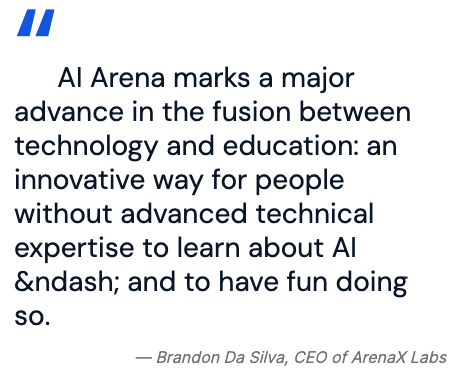
Brandon Da Silva is the CEO of ArenaX Labs, the parent company of AI Arena. Before founding AI Arena, he spent five years at OPTrust, managing Canada’s largest pension fund, where integrating machine learning into investment analysis was central to his career. On Twitter, Brandon explained his motivation for launching AI Arena—to lower barriers in the AI industry so that AI enthusiasts aren’t restricted by formal education, providing a platform to showcase their talents; to use NFTs to represent AI models, enabling developers to fully own the fruits of their labor; and to attract broader audiences to AI through engaging gameplay that sparks interest in learning. These three goals form AI Arena’s value flywheel. In the long term, AI Arena aims to establish a two-sided AI marketplace on its gaming platform to protect AI practitioners’ intellectual property, enable monetization, and facilitate transactions between buyers and sellers.
02.How AI Arena Integrates Artificial Intelligence
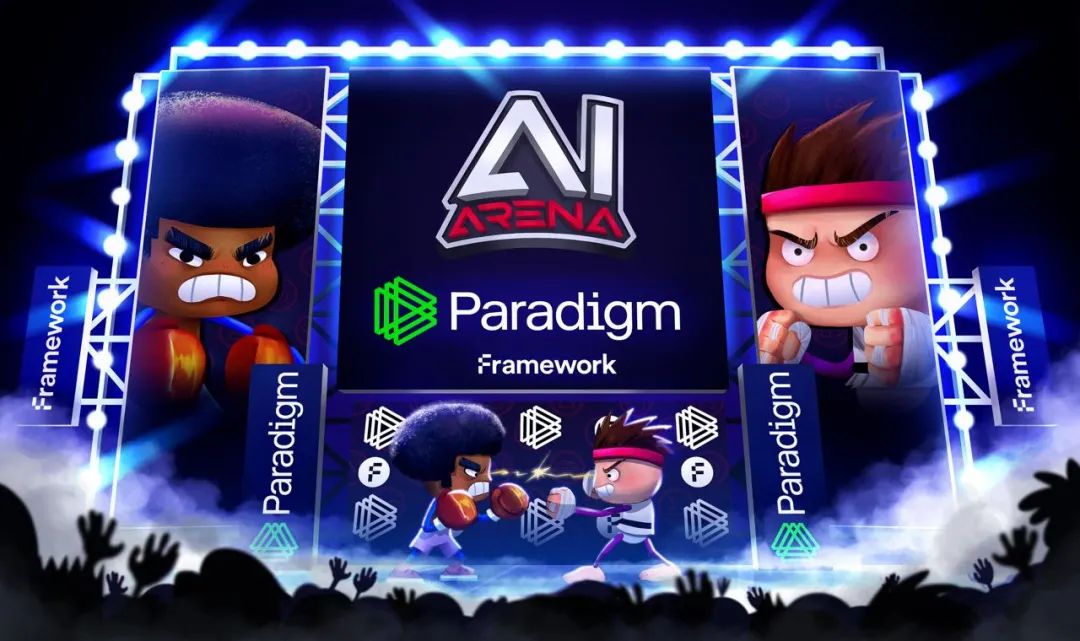
Although AI Arena is a fighting game akin to titles like Super Smash Bros. and Street Fighter, it is also an interdisciplinary project combining AI/ML, blockchain, gaming, and NFTs. One major difference from traditional fighting games is that players cannot directly control their owned "fighters."
So how do they fight?
Each fighter is powered by AI, which determines what actions to take under specific circumstances. Every fighter runs on a unique AI model, meaning whether your fighter becomes a champion depends entirely on you as the trainer.
You can think of the game as coaching a real boxer preparing for a match. Players upgrade their fighters by configuring training regimens or engaging in实战 battles, allowing the AI to learn and replicate your movements.
Why neural networks?
In simple terms, neural networks theoretically allow the system to learn any mapping of user actions. To enable fighters to learn strategies using neural networks, AI Arena employs imitation learning and reinforcement learning, with neural network architectures stored on IPFS (InterPlanetary File System).
The connections between neurons are known as "weights." When a neural network is "learning," it adjusts these weight values. Ultimately, weights determine how states map to actions—thus, we can interpret weights as representing "intelligence." Each NFT’s neural network weights are unique and stored on Ethereum.
Training a fighter involves adjusting the weights within the neural network so that the AI performs effectively. For example: if we're facing an opponent, we may want our fighter to initiate attacks. There exists a set of weights that enables this behavior—the training objective is to teach the AI to execute desired actions in specific situations.
AI Arena embeds the following training programs within its application:
(1) Imitation Learning
Learning by observation. The best way to understand imitation learning is to imagine yourself as a master trainer and your AI as a boxer preparing for combat. You fight using your AI, and it learns by mimicking your actions in various scenarios.
Through live demonstrations, you can try different moves and observe how the AI imitates you. Note: It won't immediately copy your actions since the neural network requires time to learn—you may need to repeat certain moves multiple times before the AI masters them.
(2) Self-Learning
The ideal sparring partner is oneself. Through self-learning, your AI continuously challenges itself and improves. However, having the AI fight against a clone of itself isn’t particularly meaningful because there’s no expert demonstrating effective techniques. So how does it know what to do? — Through rewards. The AI learns to favor actions that yield positive rewards and avoid those resulting in negative outcomes.
That said, AI Arena repeatedly emphasizes its commitment to equal opportunity—its team wants to reward persistence in training rather than advantage derived from greater resources.
03.A Brief Analysis of Innovative Paths Combining Games and AI
Currently, large language models (LLMs) are the dominant force within the rapidly advancing field of artificial general intelligence (AGI). As more teams invest in developing LLM-powered AI agents, redefining innovation in Web3 gaming through AI agents becomes increasingly feasible. For instance, in the game *The Sims*, LLM technology generated 25 virtual characters, each controlled by an LLM-based agent living and interacting within a sandbox environment.
Generative Agents are cleverly designed—they combine LLMs with memory, planning, and reflection capabilities, enabling agents to make decisions based on past experiences and interact with other agents. This game demonstrates the potential of AI agents, such as generating novel social behaviors, spreading information, remembering relationships (e.g., two characters continuing a previous conversation), and coordinating social events (e.g., hosting parties and inviting others). In short, AI agents are a fascinating tool whose applications in gaming warrant deeper exploration.
While various attempts have emerged in applying AI to Web3 gaming, NFT Agents are currently considered the most mature application in the Web3 gaming space. NFTs will undoubtedly remain a core component of future Web3 games. With advancements in metadata management technologies within the Ethereum ecosystem, programmable dynamic NFTs have appeared. For creators, algorithms allow NFTs to have more flexible functionality. For users, interactions with NFTs become richer, and the resulting interaction data serves as a valuable information source. AI agents can optimize these interactions and expand the application scenarios of interaction data, injecting greater innovation and value into the NFT ecosystem.
As previously mentioned, AI Arena is the world’s first combat game combining AI and NFTs. Users can continuously train their battle avatars (NFTs) using LLM models, then send the trained avatars into PvP/PvE battlefields. The gameplay resembles Super Smash Bros., but the addition of AI training introduces significantly enhanced competitive depth and fun.
In summary, integrating games with AI not only helps address the issue of compromised user experience in Web3 games due to security and decentralization requirements, but also stands as one of the most promising application areas for AI where rapid user base expansion is likely to occur first.
Join TechFlow official community to stay tuned
Telegram:https://t.me/TechFlowDaily
X (Twitter):https://x.com/TechFlowPost
X (Twitter) EN:https://x.com/BlockFlow_News