Building Web3 Business Applications
TechFlow Selected TechFlow Selected
Building Web3 Business Applications
User data assets are the core of Web3 applications.
 Navigating Web3 tides with focused insights
Author: KK, Founder of Hash Global
*Article compiled based on materials from the HG Web3 Business Closed-Door Exchange Meeting
We believe Web3 is more than just Bitcoin and crypto finance—it is Web3, the internet of value, an evolution and upgrade from Web2. Because it involves a fundamental shift in data storage architecture and payment mechanisms, the arrival of Web3 will not be as visibly clear-cut as the transition from PC internet to mobile internet. Instead, it will arrive "like wind penetrating the night, silently nourishing all things." What is this "wind"? We believe it is the massive creation of user data and data assets on-chain. After all, the superior user experience of Web3 must revolve around users' own data.
The core of Web3 is Own—ownership. For Web3 to truly become Web3, rather than merely crypto finance, it must empower users to own their data assets—not just financial assets. When users control their own data, they gain access to better service experiences and personalized offerings. The internet has evolved from fulfilling basic needs, to personalization for each individual, and now toward delivering unique services for every person. AI provides the productivity for "thousand services per person," but only Web3 can enable large-scale value coordination across these diverse services.
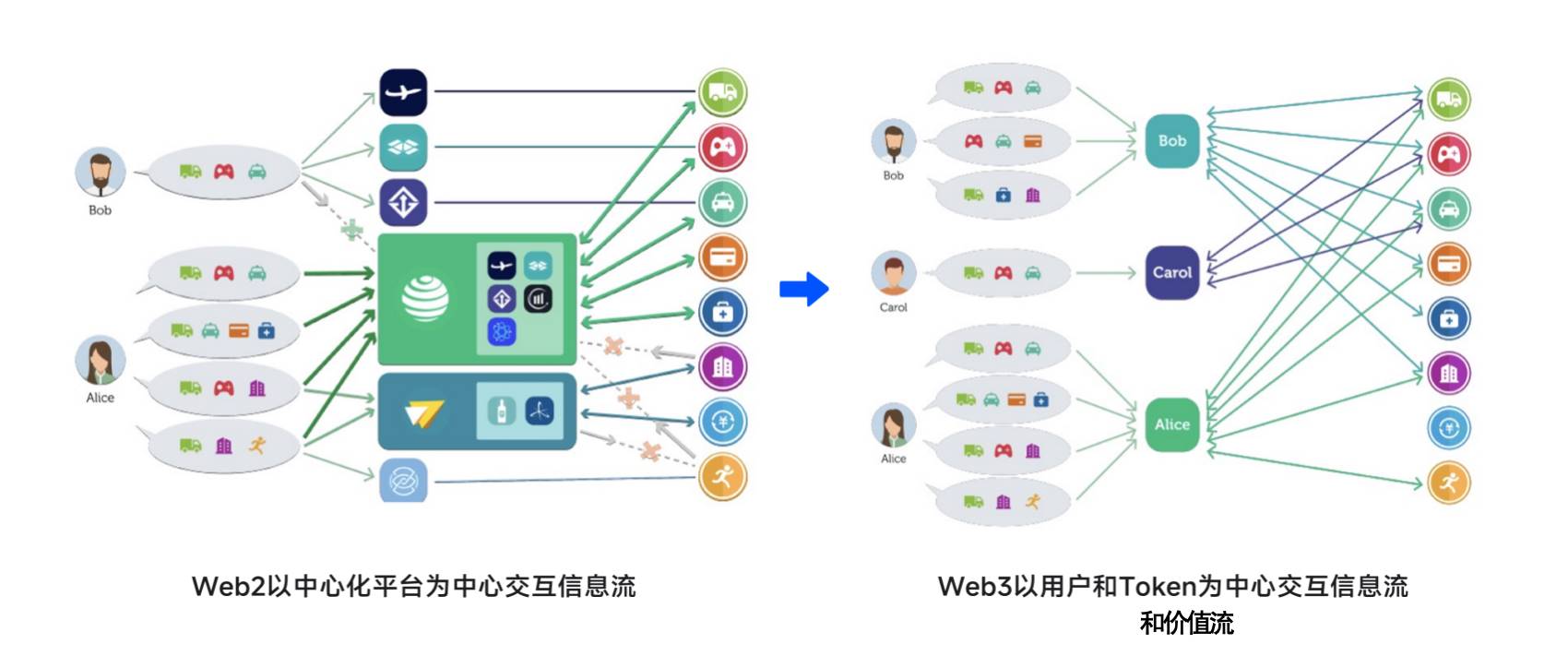
Recently, I attended a lecture by Professor Zeng Ming on the developmental stages of AI, which was extremely insightful (available via his academy’s video WeChat account). He suggested that the same analytical framework could also apply to understanding Web3's development—an idea that deeply resonated with me. Our observations and practical experiences over recent years, along with the investment strategies we've developed in response to various challenges, can now be validated and structured into a coherent thought framework once we have clarity about these developmental phases—helping us feel less anxious moving forward.
Professor Zeng also provided a definition for a native application (Killer App):
1. Fully leverages the unique technical advantages of the new technology;
2. Delivers massive innovation in user experience;
3. Explores and establishes a new business model;
4. Drives exponential growth in user base through a superlative consumer-facing (2C) service.
We see a dual-nature in Web3's development trajectory: its vanguard—crypto finance—is progressing rapidly, with active addresses reaching approximately 600 million, comparable to the number of internet users in 1999. This explains why we already see financial killer apps such as USDT, wallets, and DeFi. However, Web3's true essence—the next-generation internet—has yet to achieve widespread user adoption. Only when vast amounts of user data assets are created on-chain, along with services built around them, will users actively choose to use wallets to interact with the internet and adopt Web3-based products. That’s when Web3 will truly arrive.
For any technology to integrate into the mainstream economy, it must do so through commercial applications. At this stage of Web3 development, we need businesses across industries to leverage Web3’s core technological features for their own commercial purposes—issuing and creating large volumes of data assets for users on-chain, and building new internet business models around these assets. In doing so, they will generate immense commercial value and become Web3’s first generation of native applications.
All internet commerce revolves around data—whether centralized or decentralized. Web3 commercial applications emphasize data-decentralized dApps. The data assets referred to here include user identities, membership tiers, movie premiere tickets, concert passes, highlights from musical performances, early crowdfunding cards for a singer’s debut, the 5,000th global “like” on Kuisi Teacher’s photo collection, real-time issuance of “Fan Xian’s Smile” during a specific scene in *Joy of Life*, and various types of check-in credentials. These will all be carried by NFTs, while the original content can be stored on decentralized infrastructure like Greenfield.
We’ve identified five core technical characteristics of Web3:
1) Universal ID across the network;
2) Value Internet: merging the internet and banking networks into one;
3) Everything can be tokenized—both finance and data;
4) Ability to build complete, dynamic “live data” across regions and platforms;
5) Direct reach to users at both information and value levels.
Web3 commercial applications built upon these technical strengths will exhibit the following five traits:
1) Universal Data: Possess cross-platform and cross-regional data. Data can be tokenized, traded, and authorized to AI models, unlocking intelligent user services. On-chain data operations will become critically important.
2) Right Offering to the Right User: Direct connection between content/product creators and consumers, enabling differentiated experiences and pricing.
3) Value Direct Connection: Embedded financial network allowing value to be transferred peer-to-peer like information, with integrated clearing and settlement. Smart contracts enable automatic and timely distribution.
4) Effective Incentives: Under a healthy and sustainable business model, projects can issue NFTs and ecosystem tokens to bootstrap and accelerate ecological growth.
5) New Organizational Forms: Startups, shareholders, industry partners, users, and fans can align interests via tokens, reshaping organizational structures across industries—moving beyond traditional corporate hierarchies as the sole option.
We believe such Web3 commercial applications are aligned with the current development phase and represent genuinely valuable Web3 use cases. Today’s momentum in Chinese internet commerce and content going global presents the perfect timing for Web3 application teams. With Hong Kong as a base, there’s also geographical advantage. Web3 is the ideal infrastructure for globalized businesses. Web3 exports standards—and comes natively embedded with finance, making it functionally self-sufficient.
A potential growth path we envision for a Web3 commercial application targeting global markets could look like this:
1) Use Web3 to build a globally unified and fully functional user or fan account system.
2) Conduct business using NFTs and tokens as operational vehicles, with NFTs serving as various data tags.
3) Leverage public traffic effectively, using Web3 tools and various Web2/Web3 wallets to build private communities.
4) Rapidly establish comprehensive, continuously updated private data, leveraging analytics and feedback to improve operations.
5) Enable cross-industry and intra-industry data ad placements on-chain—cost-effective and highly precise.
6) Users receive personalized, intelligent services based on their owned data assets, achieving product experiences far superior to Web2.
7) Product stickiness increases, leading to strong word-of-mouth and retention, forming a self-sustaining cycle of data growth.
This path is particularly suitable for industries such as live event ticketing, film and culture, entertainment creation, and IP co-building. Without Web3-powered membership and fan systems, content economies and IP economies cannot thrive. Web3 excels at maximizing functional value for creators, generating substantial emotional and asset value for fans, supporting IP incubation and collaborative development, and enabling fair value distribution across the entire chain. We have already begun investing actively in these areas. We’re also investing in essential Web3 commercial infrastructure needed to support such applications—including data chains, smart tokens, payments, stablecoins, human resources, and global payroll services. We welcome outstanding entrepreneurial teams to reach out—we’ll handle everything else technically so you can focus on your business logic. Given that technology currently outpaces application, this is precisely the moment of greatest imagination and opportunity for commercial innovation. When discussing this path with CZ, he emphasized another key factor: team execution. Therefore, we place high importance on a team’s track record and capabilities, especially seeking collaboration with winners and resource holders from Web2 to jointly drive Web3 commercialization.
Together with project teams, we reflect on this: the heart of all internet commerce is data. Whoever helps users create more data will possess the moat of future commerce. Why are Alibaba, ByteDance, and Tencent so profitable? If ByteDance and Tencent were to open up their user data and traffic, how would we operate? Our evaluation criteria for Web3 commercial application projects include:
1) Have they clearly articulated why they want to help users create on-chain data assets? How does going on-chain empower their core business?
2) How much data asset volume can they generate?
3) How will they utilize and analyze data to deliver more compelling user experiences (e.g., improved retention and upgrade motivation)?
4) How will they realize data value? How will they interface with AI models? How will they reduce costs and increase efficiency?
Web2 is no longer scalable—what we need now are better, cheaper data flows. Since Web3 data is on-chain and open, application teams can collaborate to share data and jointly grow their businesses. We encourage—and actively promote—project teams working together. Open Data, Open Business!
Web3 commercial applications are not the so-called "blockchain transformation" efforts from a few years ago, nor are they simply slapping Web3 onto existing industries. They represent the first generation of true Web3 native applications, built fundamentally around on-chain data assets. Noticeably, I haven’t mentioned token incentives—the centerpiece of past "chain reform"—because I believe tokens have been overused. Token incentives may seem free, but what’s issued must eventually be repaid. There’s no such thing as a free lunch in business. Just like how DiDi’s business model had to be collectively paused and recalibrated by the company and VCs. Regulatory lag in Web3 crypto finance, excessive use of token economics, and artificially inflated valuations have diverted the industry’s attention. Talent and capital have been excessively drawn toward both genuine and fake financial innovations. Web3 must return to its roots—value fundamentals and basic business logic. Can it make money? Can it deliver better experiences to internet users? Only when a Web3 commercial application has real product users—each with wallet addresses—should we introduce token economics. Only then will token holders not just be speculators and bounty hunters. With a robust commercial foundation, Web3’s ultimate weapon—token economics—can truly take off. Prioritize data assets first, then financial assets—that’s the healthier path. I told CZ: I hope every commercial application’s token carries the same solid value foundation and necessity as BNB in the exchange industry.
Web3 infrastructure has matured enough to compete with Web2 in acquiring user data. For Web3 to ultimately replace Web2, it must possess more user data than Web2 does. Geoffrey, founder of Datadance Chain, said: “The aggregation of content assets online gave rise to killer apps for PC and mobile internet; the creation of data assets on-chain will give birth to key users for Web3-native applications.” The internet is evolving from aggregating content assets online to issuing data assets on-chain.
Mr. Liang Xinjun asked me why AI has advanced faster than Web3 in recent years. Here’s my answer: because Web3 comes natively bundled with finance, startup teams feel like they’re launching businesses on Wall Street and in Vegas—full of temptations, easily distracted. In contrast, AI feels more like starting a venture on campus—focused and undistracted. Mr. Liang added that Web3 and AI are actually two sides of the same coin: Web3 must also focus on sound business logic and solving real business problems. I wholeheartedly agree. Now that AI is ahead, Web3 must catch up. If the data assets generated by AI are issued on-chain instead of trapped in Web2 data silos and information cocoons, they can naturally form a self-reinforcing loop of commercial value. The future of a digital economy powered by Web3 and AI is bright. As Professor Zeng envisioned, the coming decade’s explosion of intelligent business will be driven by the convergence of Web3, AI, and XR.
Web3 is to internet commerce what Bitcoin is to finance. Ethereum is nearly ten years old, and Web3 commerce is just beginning. Participating in building Web3 commerce today offers far greater opportunity than buying a $100 Bitcoin back in the day. If you’re interested in Web3 commerce—whether you’re a startup team or a resource partner—please contact us. For the soul of Web3 commerce to keep pace with AI’s body, we need your support and participation.
List of participating project teams (in no particular order):
I. Commercial Infrastructure Providers
A global human resources platform offering services including international talent recruitment and employment. It helps enterprises solve various challenges related to hiring and salary disbursement during globalization, leveraging Web3 technologies. SmartDeer has become Asia’s largest Web3-focused recruitment platform.
A global digital payment service provider offering secure, convenient, and efficient one-stop digital payment solutions for cross-border trade, overseas expansion, and Web3 clients. Committed to building a next-generation global digital payment network, the company currently focuses on delivering integrated Web2+Web3 payment services in emerging markets.
Yuanbi Tech is a blockchain-focused company specializing in digital wallets and stablecoins, and has joined the Hong Kong Monetary Authority's Stablecoin Issuer Sandbox. Its two core offerings are the "Yuanbi Wallet," supporting cryptocurrency and fiat payments, and the "HKD Stablecoin."
A full-stack, high-performance public blockchain designed to support large-scale real-world Web3 applications such as payments and RWA assets. Pharos aims to build a decentralized financial network capable of serving billions of users globally.
A bridge connecting Web2 users with Web3 products and services, providing solutions that bring internet-grade user experience and real-world applicability to Web3 applications and tokens. It has already completed technical integrations with major wallets like ImToken and DeBank, as well as leading dApps and public chains. Users within these ecosystems can seamlessly interact with Smart Token-standard tokens without friction.
An EVM-compatible Layer 2 network dedicated to building a decentralized monetization platform worldwide. By minting various data labels as NFTs on-chain, DataDance helps individuals and enterprises upgrade traditional data into Web3 data assets. While preserving data privacy, these NFTs become valuable user profiles and tags. DataDance’s long-term vision is to advance on-chain data tokenization and build an innovative, decentralized advertising platform, offering authorization-based monetization solutions for on-chain data and unlocking its full value potential.
A globally leading cryptography technology provider building foundational infrastructure for data verification and computation based on zkTLS and zkFHE. Through this combined innovation, data can smoothly transition from Web2 to Web3 and AI environments under privacy protection. The technology enables secure computation on encrypted data, ensuring confidentiality and integrity while enabling data assetization and monetization. With groundbreaking solutions, Primus provides critical support for data circulation and value realization in the Web3 ecosystem.
Bridging the blockchain world and human society by building a network for verifying real identities, enabling users to conveniently access the benefits of Web3. Products launched include EthSign, a decentralized signing tool, and SignPass, an infrastructure for digital identity registration and verification.
Founded by former core engineers from Google, Adot aims to redefine information discovery in the Web3 era by integrating search and AI technologies. As a key link between users and AI-driven information, Adot innovatively solves the pain points of being overwhelmed by massive AI and machine-generated data—"too much to read" and "hard to understand"—making Web3 content exploration effortless. Adot also provides powerful AI toolkits for Web3 developers, enabling them to easily build customized AI search engines.
II. Commercial Application Projects
Leveraging Web3 technology and deep expertise in the entertainment industry, Acemeta plans to launch the OffGrid app, delivering seamless, immersive entertainment experiences for participants in various events. Meanwhile, Acemeta is establishing a transparent, efficient, cross-market ticketing system to prevent scalping, ensure fair resale pricing, and protect the rights of genuine fans.
JustBest
With nearly two decades of experience in film and TV copyright operations, the team built one of China’s largest copyright management platforms and aspires to become the Disney of the Web3 era. Beyond launching a digital streaming platform, the team aims to create an ecosystem where artists engage deeply with global fans, and where artists, directors, and writers co-create, co-win, and co-share IP value—using Web3 technology to reshape the future of film, television, and entertainment industries.
A community focused on health, social interaction, and AI. By combining IoT devices and AI with Web3’s advantages in privacy and data ownership, GM Labs delivers more engaging and holistic user experiences.
Beijing Yidianma Intelligent Education Technology Co., Ltd.
A tech company centered on AIoT (Artificial Intelligence of Things), integrating intelligent books, smart education, and intelligent consulting. Core business segments include Yidianma Smart Learning Stickers, Yidianma Smart Textbook Study Rooms, and Yidianma Gaokao Admission Advisory Services.
Starting with distributed photovoltaic scenarios, Arkreen issues carbon credits and Renewable Energy Certificates (RECs) by putting power generation data on-chain. This creates innovative value for green energy assets, incentivizes long-tail producers and consumers to participate in ESG applications, and ultimately achieves universal recognition of green energy value.
Join TechFlow official community to stay tuned
Telegram:https://t.me/TechFlowDaily
X (Twitter):https://x.com/TechFlowPost
X (Twitter) EN:https://x.com/BlockFlow_News
 KK
KK