Bangkok Devcon Observations: ZK is Sparking a Grand Narrative of "Prove Anything"
TechFlow Selected TechFlow Selected
Bangkok Devcon Observations: ZK is Sparking a Grand Narrative of "Prove Anything"
The ZK world is undergoing a "big bang."
 Navigating Web3 tides with focused insights
Author: Haotian
I recently attended several major zero-knowledge (ZK) focused events, including the Proof Summit co-hosted by Eigenlayer and Altlayer, Provable organized by RiscZero, ZKHub initiated by ProjectZKM and @GOATRollup, as well as ZK Accelerate. There were too many events to attend them all, but I made sure to focus on the "ZK tracks." After hopping from one to another, I feel thoroughly infected by the ZK fever—utterly hooked.
Déjà Vu of the ICO Era: Onchain Anything → Prove Anything
I remember back in 2017 during the ICO boom, we saw a flourishing narrative of “everything going on-chain”: medical records on blockchain, traceability of agricultural products from farm to table, supply chain financing and transactions recorded on-chain, and more. Although it later turned out that not every use case could or should go on-chain, the “Onchain Anything” narrative did fuel the bull market of 2017.
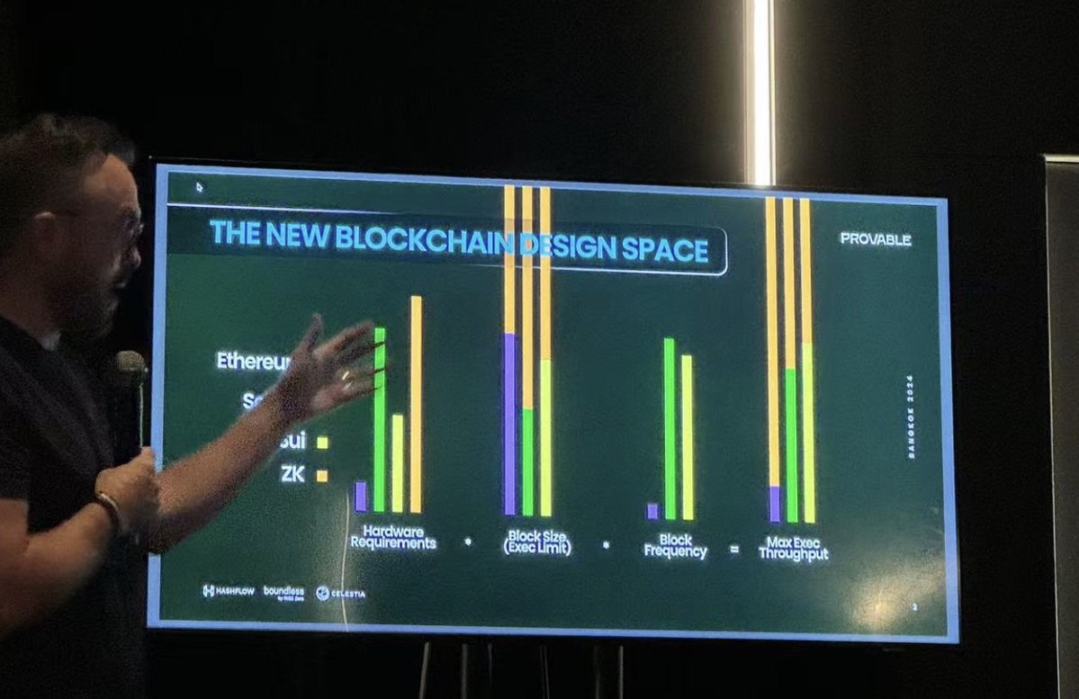
Attending these ZK-centric events gave me a similar vibe—the rise of a grand new narrative: “Prove Anything.”
The true value of ZK lies in decoupling off-chain computation from on-chain verification. By enabling off-chain computation to achieve maximum efficiency, ZK drastically reduces the cost of on-chain storage and execution. ZK tech serves as a “trusted bridge” connecting everything.
For the past two cycles, the dominant narrative has been about “going on-chain,” but Rollup Layer 2s represent only the tip of the iceberg for ZK’s potential. Once ZK reaches full maturity, the distinction between on-chain and off-chain will fade away, replaced by a new paradigm: verifiable computing.
Innovations under this “Prove Anything” vision are quietly igniting—verifiable computing games, identity verification, DeFi/RWA, private transactions, voting and governance, AI model verification, trusted proofs for IoT devices, enterprise supply chain privacy assurances—any application spanning both off-chain and on-chain realms will be transformed.
AVS Economic Consensus System is Crucial for ZK
At the Proof Summit, I encountered many exciting new projects: @alt_layer is building a VITAL ZK proof system to provide ZK proofs for OP-Rollups; @alignedlayer focuses on scalable ZK proof generation and integration with OP Stack; @OpacityNetwork leverages VDN, zkTLS, MPC, and other technologies to build infrastructure for data privacy and secure sharing; @lagrangedev's Prover Network aims to establish a dedicated proof service layer between L1 and L2, offering a unified, shared infrastructure for various ZK proofs.
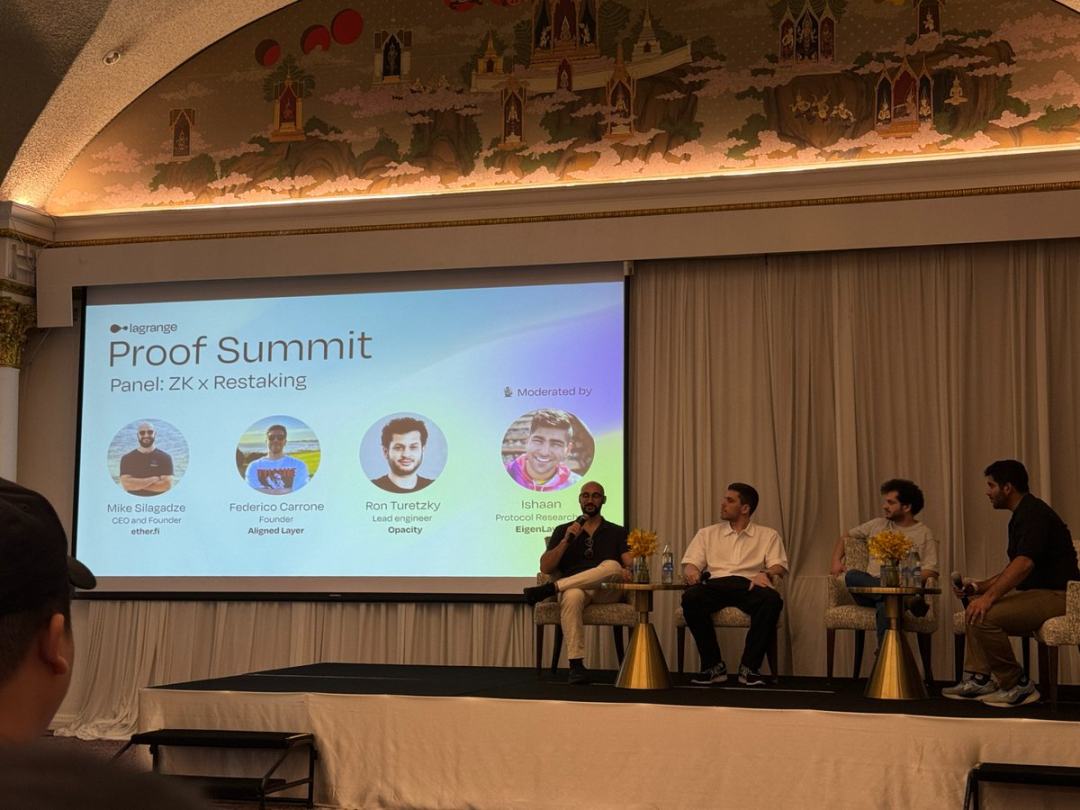
I previously analyzed how Eigenlayer and its AVS (Actively Validated Services) model represent Ethereum’s future. If that was speculative at the time, now I’ve seen real validation: Altlayer’s improvements to OP Fraud Proof rely on AVS, and Lagrange’s unified proof service layer depends on AVS consensus.
The commoditized, encapsulated “security consensus” provided by AVS will empower ZK to rapidly build middleware protocol networks, enabling emerging ZK infrastructures to interconnect seamlessly with existing on-chain VM environments.
It’s obvious to everyone now—Eigenlayer’s AVS ecosystem is buzzing with rising ZK forces. Though still early, let the momentum build.
TEE Verifiable Execution Environments Give ZK Wings
The TEE Salon lasted a full day—I didn’t have time to attend all of it—but the venue itself was a surprise: Google’s ultra-cool office in Bangkok. As someone who reveres major internet tech giants, being there felt like a spiritual pilgrimage, and I couldn’t help but feel excited.
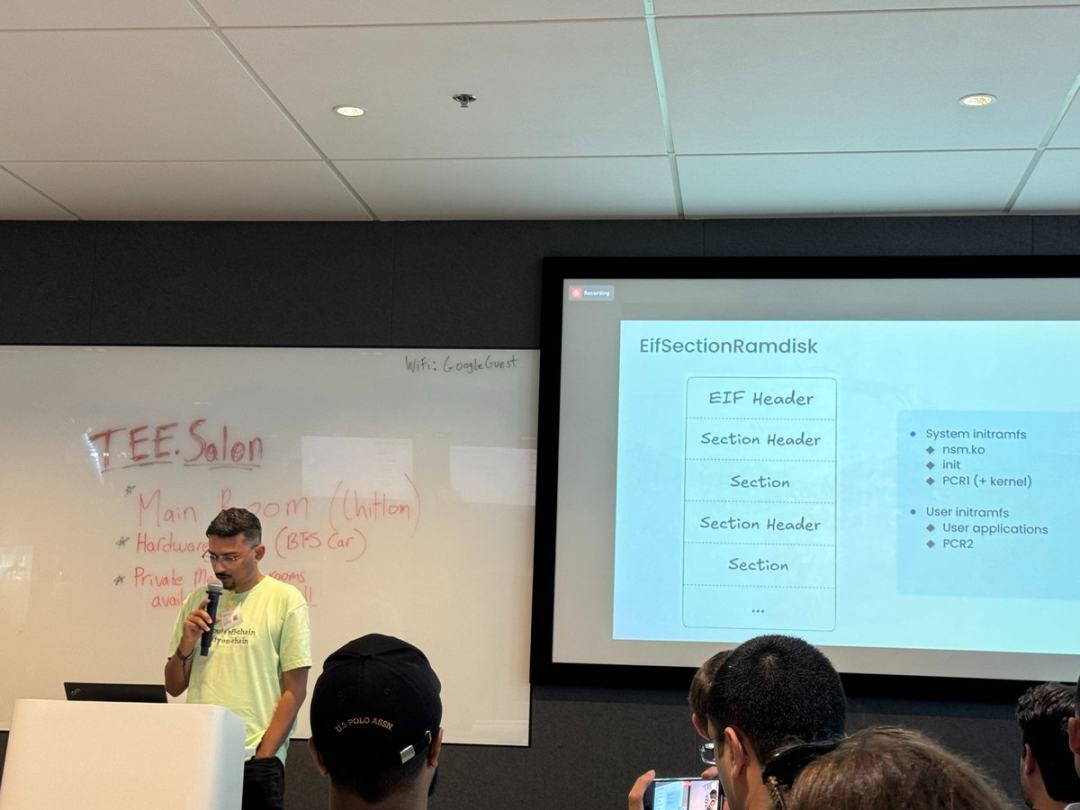
Google’s Confidential Computing cloud offerings, Intel’s SGX and TDX technologies—all are seeking their place in the new TEE narrative. The logic is simple: just look at how Alibaba Cloud, Huawei Cloud, and Tencent Cloud have long maintained ambiguous yet interested relationships with blockchain.
In my view, ZK and TEE are the twin guardians of the verifiable computing era. ZK handles computational proofs and verification data transmission, while TEE provides trusted execution environments and data privacy.
Projects like Aztec’s dark pool and Fabric’s planned VPU hardware innovation chip are increasingly combining ZK with TEE, along with other cryptographic techniques like MPC and FHE, accelerating the arrival of a new verifiable computing paradigm. While TEE may seem traditional, it will undoubtedly play a key supporting role alongside the rising popularity of ZK.
zkVM: The Foundational Infrastructure for ZK Tech Democratization
At the zkHUB event, an overwhelming number of ZK projects—ZKM, RiscZERO, Cysic, Mina, Goat Network, Succinct—were on display. When I say “overwhelming,” I don’t mean just quantity; rather, the depth and breadth of their layered solutions are astonishing.
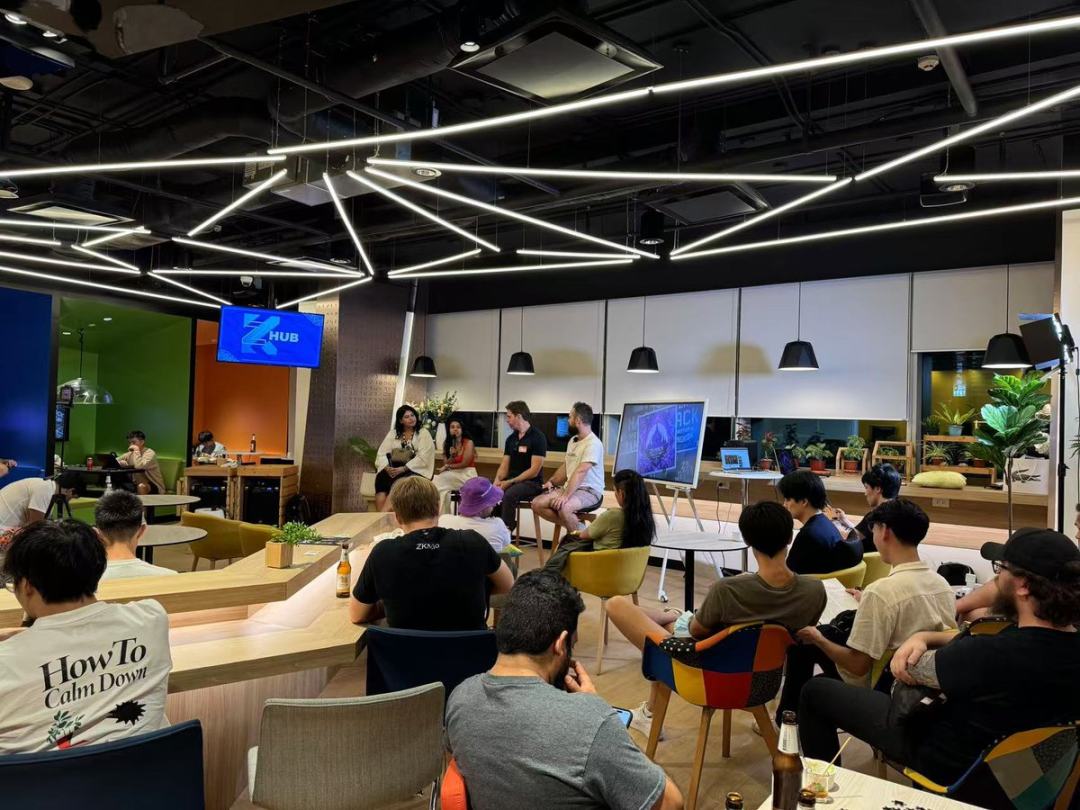
Many might have first heard about RISC-V virtual machines through @VitalikButerin’s writings. At this event, I saw engineers from @ProjectZKM presenting zkMIPS—a general-purpose zkVM designed to simplify ZK development by reducing the time and complexity of building custom ZK circuits, thus providing a standardized platform for ZK app development.
Unlike RISC-V, which leans toward hardware processor architecture, zkMIPS offers a software-optimized, reduced instruction set that greatly enhances efficiency in generating zero-knowledge proofs.
zkVM stands out in the modular narrative. Many recognize that zkVM holds even greater promise than zkEVM. The core reason? Future ZK systems will transcend the old, purely on-chain connectivity models.
zkVM can connect all AltVMs, turn Ethereum and Bitcoin into unified settlement layers across chains, and create a liquidity layer unbounded by technical architecture. That’s incredibly powerful.
I believe that as the EVM-Compatible narrative winds down, the emergence of zkVM as foundational infrastructure for universal verifiable computing will remain a dominant theme for years to come.
That’s all.
Let me close with a quote from the VP of RiscZERO, who said our blockchain world is transitioning from the “server era” represented by Ethereum and Solana into a brand-new “Cloud Era.”
Place that statement within today’s context—modular architecture, chain abstraction, zkVM—restructuring and redefining blockchain development, and you’ll understand exactly what bold, disruptive transformation lies beneath those words.
Join TechFlow official community to stay tuned
Telegram:https://t.me/TechFlowDaily
X (Twitter):https://x.com/TechFlowPost
X (Twitter) EN:https://x.com/BlockFlow_News
 Haotian | CryptoInsight