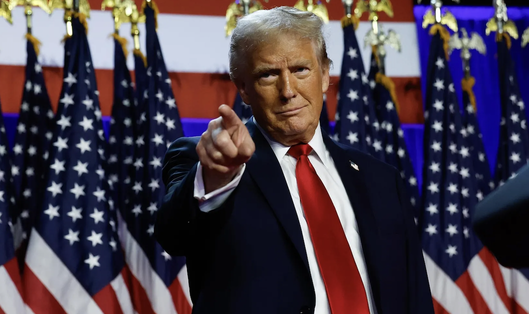
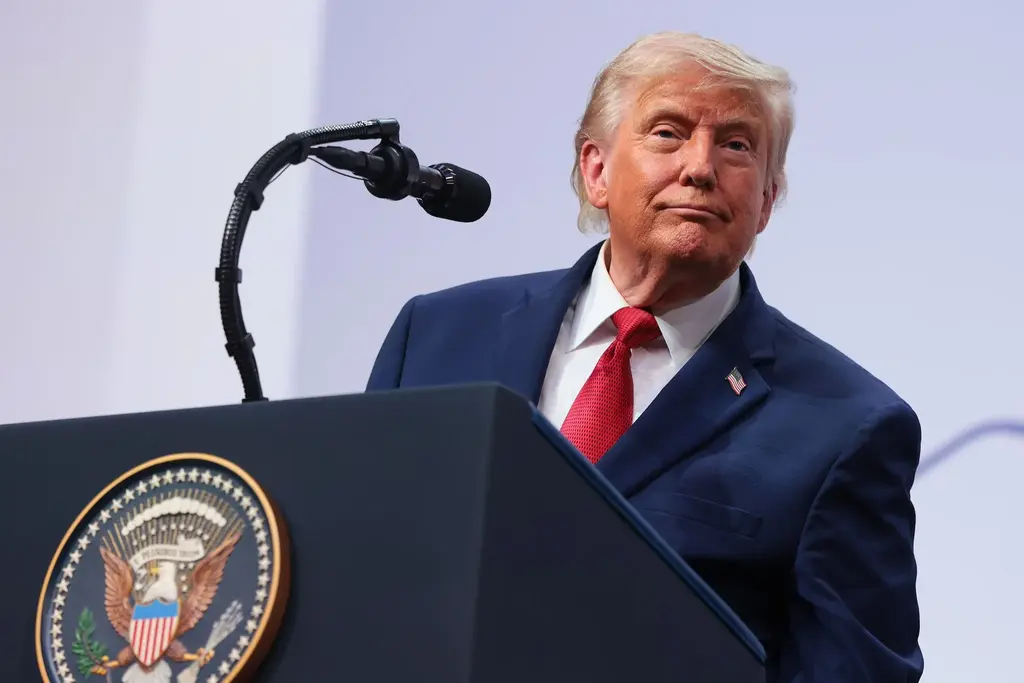
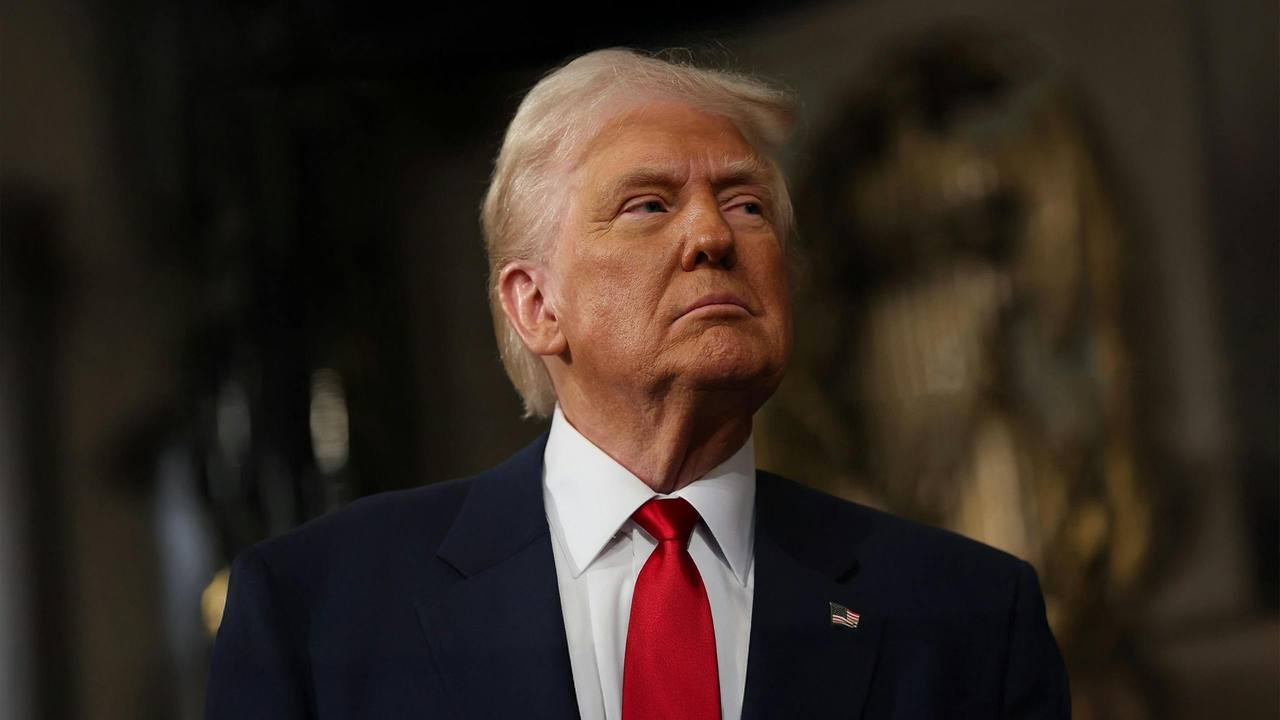
What does Trump's second presidential election victory mean for the tech industry?
TechFlow Selected TechFlow Selected
What does Trump's second presidential election victory mean for the tech industry?
Detailed explanation of changes in ten major fields.
 Navigating Web3 tides with focused insights
By: Lauren Feiner
Translation: MetaverseHub
Trump will begin his second presidential term in January 2025 with sweeping authority over the regulation of the tech industry, an industry that has transformed dramatically since his first term began in 2017.
The "honeymoon period" between the tech sector and the U.S. government has ended. Both Trump and his successor Biden have expressed skepticism toward tech CEOs, albeit for different reasons.
In the meantime, antitrust enforcers under both Trump and Biden have launched the most significant anti-tech monopoly actions in decades.
Now, the tech industry has "woken up," and most CEOs appear to have concluded from reviewing eight years of technological turbulence that they should remain as visibly "apolitical" as possible—though they are eager to lobby behind the scenes.
Meanwhile, some are attempting to reap rewards by maintaining "good relations with Trump."
Meta CEO Mark Zuckerberg, who once threatened to put Trump in prison, praised the president-elect's fist pump after the attempted assassination and reconciled with Republicans over Meta’s content moderation choices.
Amazon founder and Washington Post owner Jeff Bezos endorsed Harris in his newspaper.
Of course, Tesla CEO and X owner Elon Musk has become one of Trump’s key allies, pledging to run a “Department of Government Efficiency” (DOGE).
At the same time, Trump will wield more power than ever before.

Trump appears to have purged former supporters from his inner circle during his first term, while his main allies have developed sweeping plans to reshape the nation.
All told, tech policy over the next four years will be unpredictable and erratic. Yet even as Trump seeks to expand his own power, he will still require support from the courts and Congress.
Below are the policies we’ll be tracking after Trump resumes the presidency, along with potential concrete actions he may take.
01. Artificial Intelligence
A Trump presidency likely means fewer restrictions on the artificial intelligence (AI) industry.
Trump has pledged to overturn the Biden administration’s AI executive order, which directed agencies to develop testing standards and safeguards to prevent AI systems from issuing discriminatory directives—such as allocating housing or determining legal outcomes within the criminal justice system.
Trump previously signed his own executive order on AI safety and standards, but it did not address discrimination.
A second-term Trump administration may deprioritize AI anti-discrimination safeguards and block the use of the Defense Production Act to demand greater transparency, which conservatives view as government overreach.
AI policy is an area where Musk may seek influence, assuming he maintains good relations with Trump. Musk runs xAI and has been critical of established companies like OpenAI.

Though he co-founded OpenAI, he later distanced himself and sued the company. Musk supports AI safety measures such as California’s controversial SB 1047 bill (which was ultimately vetoed), and previously signed a letter calling for a pause in major AI development for safety reasons.
His focus is on existential risks, but some AI researchers criticize him for overlooking more immediate concerns like discrimination.
Additionally, it remains unclear how Trump will handle thorny copyright issues related to generative AI, including what data sources large language models are permitted to use for training.
AI executives, including Musk, may try to shape Trump’s perspective on this issue in ways favorable to their interests.
02. Antitrust Policy
Trump’s approach to antitrust enforcement may be driven primarily by personal grievances.
Jennifer Rie, senior litigation analyst at Bloomberg Intelligence, wrote: “Enforcement could be applied based on President-elect Trump’s views of particular companies or industries.”
While Trump’s vice-presidential pick JD Vance has publicly praised Federal Trade Commission Chair Lina Khan, it remains unclear how committed Vance is to this stance or how much influence he will wield.
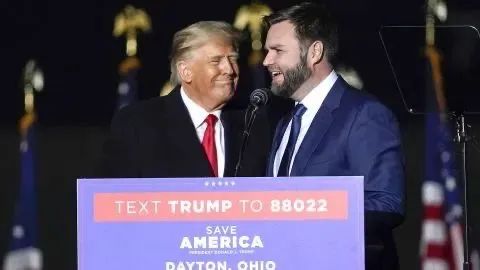
If Vance does have influence at the FTC, we might expect continued pressure on big tech to benefit “small tech” or venture capital firms like Andreessen Horowitz (another Trump supporter), favoring startups poised for rocket-like growth.
If Khan leaves the FTC, business leaders may breathe easier, but Rie says, “We shouldn’t expect a return to the lax antitrust environment of 10 years ago… certain aspects of the current aggressive approach will persist. Republicans are no longer uniformly more pro-business than Democrats.”
Still, while Rie notes much depends on Trump’s appointments, merger reviews may become faster, and recently updated merger guidelines could be rolled back.
The Trump administration will likely continue existing legal battles with Meta, Google, Apple, and Amazon—including two lawsuits filed during Trump’s first term. However, specific resolutions may be milder depending on whom he appoints—and Trump’s current feelings toward a given company (like Google).
Rie wrote: “The prospect of settlements may increase slightly, especially if these cases appear to be going poorly for the agencies. Trump doesn’t believe Google should be broken up, though we didn’t expect that to happen anyway.”
Rie also said Trump might leverage these cases “to exert influence over these companies” in exchange for favorable treatment on speech and content issues.
03. TikTok
Trump’s position on TikTok may represent his biggest reversal. Initially supportive of banning TikTok—a stance blocked by courts—he recently opposed the ban, arguing it would only benefit Meta.
Reportedly, Trump shifted his stance after meeting with Republican donor Jeff Yass, who holds significant shares in ByteDance.
During Biden’s presidency, Congress passed a bipartisan bill by overwhelming margins requiring ByteDance to divest by mid-January or face a potential ban on the social video app, which Biden signed into law.
The D.C. Circuit Court of Appeals is currently reviewing whether the law can stand and may rule by year-end. Bloomberg Intelligence litigation analyst Matt Schettenhelm believes TikTok’s chances of avoiding a ban under a Trump presidency would only “slightly” improve.

The law gives Trump “not much room to maneuver.” If the D.C. Circuit upholds the law and the Supreme Court declines to hear the case or affirms the ruling, Trump’s options will be limited.
Trump could approve ByteDance’s asset spinoff of TikTok within 90 days, but under the law, he must demonstrate to Congress that a viable plan is being implemented.
The law does leave some presidential discretion—such as determining whether other apps beyond TikTok fall under the divestiture mandate, or what constitutes sufficient separation.
But TikTok is explicitly named in the legislation, so Trump cannot simply decide whether it applies.
Schettenhelm wrote in an email: “The law doesn’t give Trump ‘much room,’ though he can exercise some judgment when approving TikTok divestiture proposals.”
04. Tariffs
Trump ignited trade disputes with China during his first term, and if his campaign rhetoric is any indication, such economic policies will continue.
Biden implemented some protectionist economic measures, including export controls on advanced semiconductors, while Trump proposed imposing 60% to 100% tariffs on goods imported from China.
This could significantly impact many tech companies that rely on Chinese-made components, as well as firms whose business strategies heavily depend on China—such as Apple and Tesla.
Yet due to these very dependencies, Musk’s influence could shine in another domain.
Alongside his promised mass deportation of immigrants, Trump’s tariffs on Chinese imports could drastically alter daily life in America, as soaring import prices would disrupt livelihoods across the board.
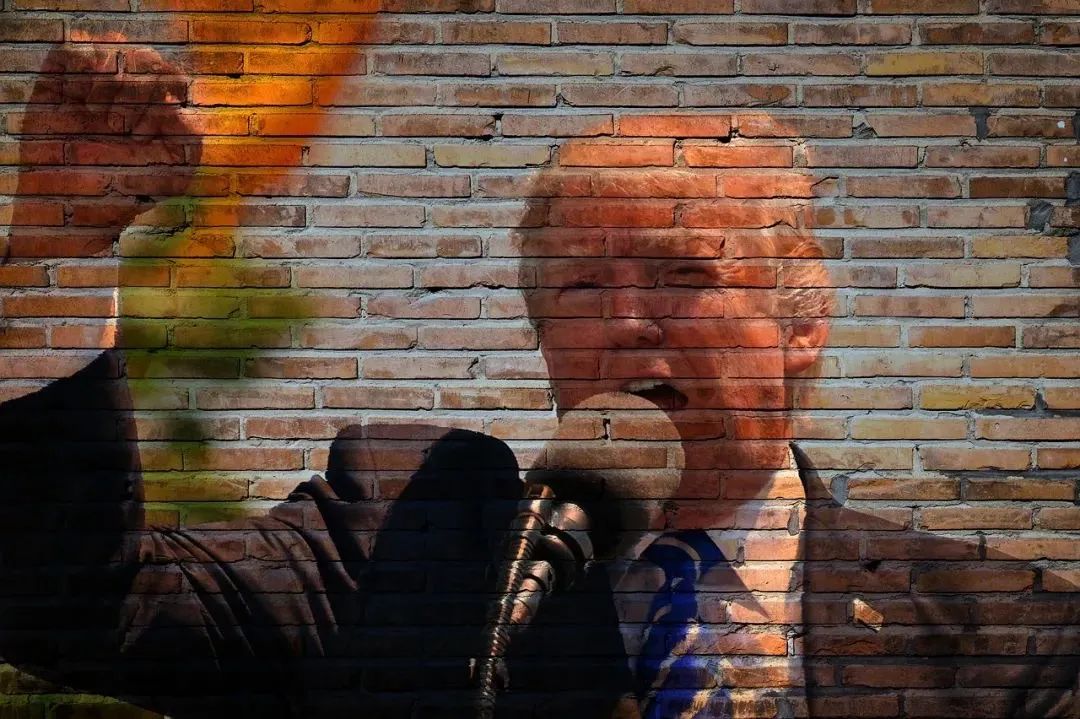
How far a Trump administration will go remains an open question, making it difficult for both tech and non-tech sectors to confidently predict the future.
05. Net Neutrality & Telecommunications Policy
Net neutrality faces an uphill legal battle following the House’s repeal of the Chevron doctrine.
Bloomberg Intelligence analyst Nathan Dean predicts a 90% chance that a Trump-led Federal Communications Commission (FCC) will reclassify broadband providers as common carriers and subject them to stricter regulation.
Dean wrote that an FCC led by Republicans may also allow greater concentration of control over television stations and loosen broadcast merger rules.
Brendan Carr, a Republican FCC commissioner who served during Trump’s first administration, has called for big tech companies to contribute to the Universal Service Fund (currently funded by telecom operators) and suggested penalties for TV networks under broadcast regulations.
It’s not yet clear how Trump’s FCC will handle other key broadband policy issues—including the rollout of the government’s Broadband Equity, Access, and Deployment (BEAD) infrastructure investment program—though Musk’s influence could prove pivotal.
Musk runs satellite internet company Starlink, which has been excluded from some government contracts. Under Trump, he could lobby for more favorable policies.
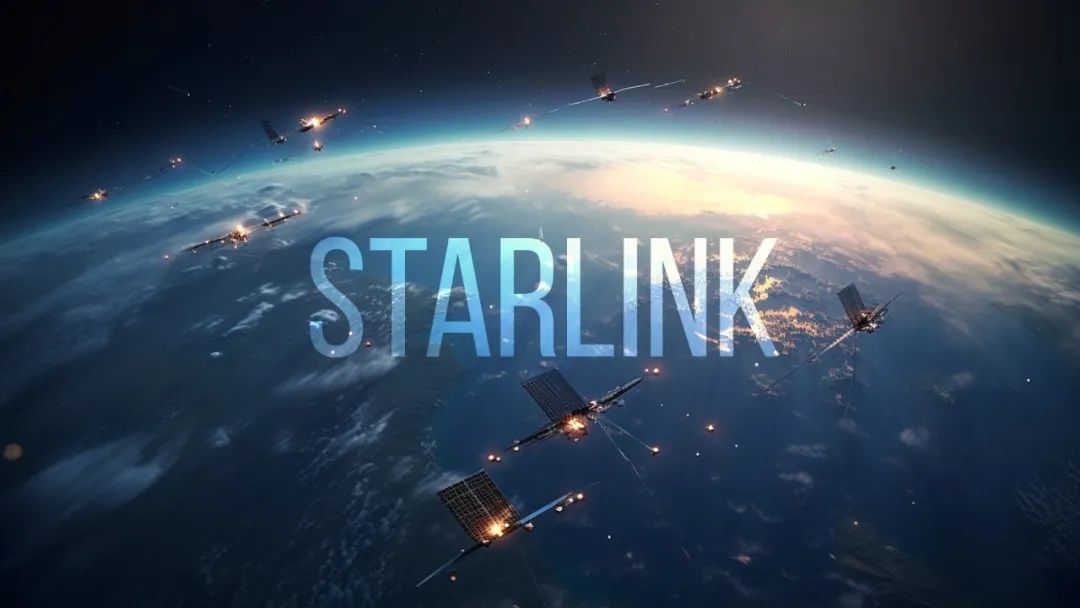
For example, the BEAD program currently favors fiber-optic broadband, which Musk has criticized as “an unreasonable waste of taxpayer money.”
According to CNET, Musk may seek—through his government efficiency role or informally—to limit programs that benefit Starlink competitors, such as the Universal Service Fund.
The fund helps connect remote communities to broadband—areas where Starlink has strong market potential.
06. Content Moderation
Conservatives, including Trump, have long complained that social media platforms suppress conservative speech, accusing them of bowing to Democratic government pressure by removing misinformation about elections or vaccines. Even before Trump’s reelection, platforms like Meta had already begun loosening moderation standards in response to Republican criticism.
A Trump administration and Republican-led Congress could revise Section 230 liability protections to enable real penalties against companies that make moderation decisions.
Brendan Carr, in a chapter of Project 2025, suggests that beyond actual legislative changes to Section 230, the FCC could narrow the scope of protections for various content moderation decisions.
In the end, any administrative or legislative changes to online speech rules could face Supreme Court review. Though the Court has signaled openness to future legal changes, it has so far upheld the right to conduct content moderation.
07. Children’s Online Safety
Trump hasn’t said much about the Kids Online Safety Act (KOSA). The bill passed the Senate but remains stalled in the House, and it’s unclear what will happen in the next congressional session.
Current Republican House leadership has expressed concern that KOSA might inappropriately restrict speech, so Democratic House members may be more willing to grant it floor time. Ultimately, concerns about the bill aren’t entirely partisan.
Adam Kovacevich, head of an organization opposing transgender-related legislation, advised Democrats to be cautious about passing KOSA under a Trump presidency.
Kovacevich referenced statements by lead sponsor Senator Marsha Blackburn about protecting children from online transgender content. He wrote: “Democrats will have to decide whether they want to hand Trump and MAGA state enforcers a powerful new censorship tool.”
08. Electric Vehicles
Tax credits for electric vehicles and other climate-focused policies may be at risk under Trump, though this could be complicated by Trump’s relationship with Musk, since Tesla would benefit from EV-friendly policies.
Nevertheless, Wedbush analyst Dan Ives previously stated that “Tesla’s scale and scope” could give Musk and Tesla a clear competitive advantage even in a non-subsidy environment for electric vehicles.
Bloomberg Intelligence analyst Nathan Dean estimates only a 30% chance that EV tax credits will continue under a Trump administration.
Dean expects Trump to continue claiming EVs are “good for the domestic economy” and shift toward consumer incentives instead of tax credits, benefiting traditional automakers like General Motors, Ford, and Stellantis.
09. Semiconductor Policy
During Biden’s tenure, Congress passed the bipartisan CHIPS and Science Act, funding the creation of a U.S. semiconductor manufacturing industry.
Experts regard this as essential for national security and maintaining control over critical technology supply chains, including medical devices.
But Trump called the bill “terrible” during a podcast appearance with Joe Rogan, and shortly afterward, House Speaker Mike Johnson said he was open to repealing it (though he later walked back those comments).
Trump cannot unilaterally repeal a law, but he could direct the Department of Commerce to slow down its implementation.
10. Crypto
Trump has made notable overtures to the crypto asset industry, headlining a major Bitcoin conference this summer and receiving strong backing from prominent crypto investors like Marc Andreessen and Ben Horowitz.
With Trump’s election, the industry is likely to achieve its biggest wish: the removal of SEC Chair Gary Gensler.
Trump has called for the U.S. to become a “Bitcoin superpower,” signaling that regulation in this sector will be significantly relaxed.
Join TechFlow official community to stay tuned
Telegram:https://t.me/TechFlowDaily
X (Twitter):https://x.com/TechFlowPost
X (Twitter) EN:https://x.com/BlockFlow_News