Trump's Shopping Cart: Greenland, a Canal, and Canada
TechFlow Selected TechFlow Selected
Trump's Shopping Cart: Greenland, a Canal, and Canada
Trump's way of looking at the world is no different from how he views Manhattan real estate.
 Navigating Web3 tides with focused insights
Written by: Curry, TechFlow
On April 4, 1949, twelve countries signed the North Atlantic Treaty in Washington, D.C.
Two of them were the United States and Denmark.
Seventy-six years later, the United States threatened to militarily invade Danish territory.
White House spokesperson Levitt said, "Military force is always one of the options available to the President." Danish Prime Minister Frederiksen stated that if the U.S. actually did this, NATO would be finished, and the post-World War II security system would be over.
"Everything would stop."
This is what one founding member of NATO said to another founding member.
The cause of the matter is Greenland.
Trump said the United States "needs" this island, citing national security reasons. Greenland is an autonomous territory of Denmark, covering an area of 2.16 million square kilometers with a population of 56,000, 85% of whom oppose joining the United States.
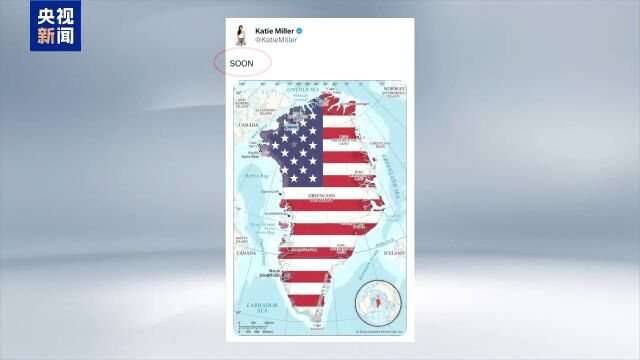
Trump doesn't care much about votes. Last weekend, U.S. forces went to Venezuela and captured President Maduro. A few hours after the operation ended, the wife of a senior White House advisor posted a picture on social media: Greenland colored in the colors of the American flag, with the caption: SOON.
You should know that Venezuela has no nuclear weapons. Neither does Denmark.
But Greenland is not the only item in Trump's shopping cart.
The Panama Canal is also on the list. Trump said China "controls" the canal and it needs to be "taken back." In reality, the canal is operated by Panama's own authority; Hong Kong's Hutchison Whampoa only manages ports at both ends, handling container loading and unloading.
Later, Hutchison Whampoa agreed to sell the ports to BlackRock. Trump didn't get the canal, but Chinese capital was out.
Canada is also on the list. Trump said Canada should become the "51st state," offering free inclusion in his $175 billion "Golden Dome" missile defense system as a condition. Not joining? Then spend $60 billion to buy it separately.
After two Canadian prime ministers refused, tariffs arrived. 100% on pharmaceuticals, 30% on furniture, 25% on trucks.
If negotiations fail, raise the price.
The way Trump views the world is no different from how he views Manhattan real estate.
Every piece of land has a price. Greenland has rare earths, Panama has shipping lanes, Canada has resources. If negotiations fail, apply pressure; if pressure doesn't work, threaten; if threats don't work, take action. Venezuela has already seen action.
This logic is also used in the crypto world.
In 2024, the Trump family established World Liberty Financial to sell tokens, with the family taking 75% of the profits. Justin Sun invested $30 million, and a few weeks later, the SEC dropped its investigation into him. An Abu Dhabi sovereign wealth fund invested $2 billion in stablecoins into Binance, and shortly after, Changpeng Zhao received a pardon.
Investment for regulatory exemption, investment for presidential pardon. Clearly marked prices, fair to all.
The real estate business works because there is a set of rules. There are courts to enforce contracts, police to protect property rights, and governments to recognize deeds.
Without these, a deed is just a piece of paper.
In the international order, NATO is that set of rules. The United States spent 76 years building it. Now the largest shareholder says, I want to tear down the neighbor's house.
He probably thinks he made the rules and can change them as he pleases.
The question is, if a real estate developer tears down the rules, will his own deeds still be valuable?
Join TechFlow official community to stay tuned
Telegram:https://t.me/TechFlowDaily
X (Twitter):https://x.com/TechFlowPost
X (Twitter) EN:https://x.com/BlockFlow_News
 深潮TechFlow