How Trump's Commerce Secretary Family Earned $2.5 Billion Annually from Crypto Boom?
TechFlow Selected TechFlow Selected
How Trump's Commerce Secretary Family Earned $2.5 Billion Annually from Crypto Boom?
After Howard Lutnick was appointed as Secretary of Commerce in the Trump administration, his family's investment bank, Cantor, is heading toward its most profitable year ever.
 Navigating Web3 tides with focused insights
By Todd Gillespie
Translated by Luffy, Foresight News
Cantor Fitzgerald LP might add a special item to its year-end expense report this year.
"I just left the office and joked that I’d be happy to buy him a fold-out bed because he comes in on Sunday and doesn’t leave until Friday," said 53-year-old Sage Kelly, co-CEO of Cantor’s investment banking division, in an interview at the firm’s New York office.
The New York-based private boutique financial firm is now steadily climbing Wall Street rankings, seizing early momentum from the cryptocurrency boom and reviving its transaction business driven by special purpose acquisition companies (SPACs), experiencing its busiest and most successful year on record.
Currently led by brothers Brandon Lutnick and Kyle Lutnick, whose father Howard Lutnick joined Donald Trump’s administration earlier this year as Commerce Secretary. According to people familiar with the matter, the company is on track to generate more than $2.5 billion in revenue in 2025—its highest ever—and over a quarter more than last year.
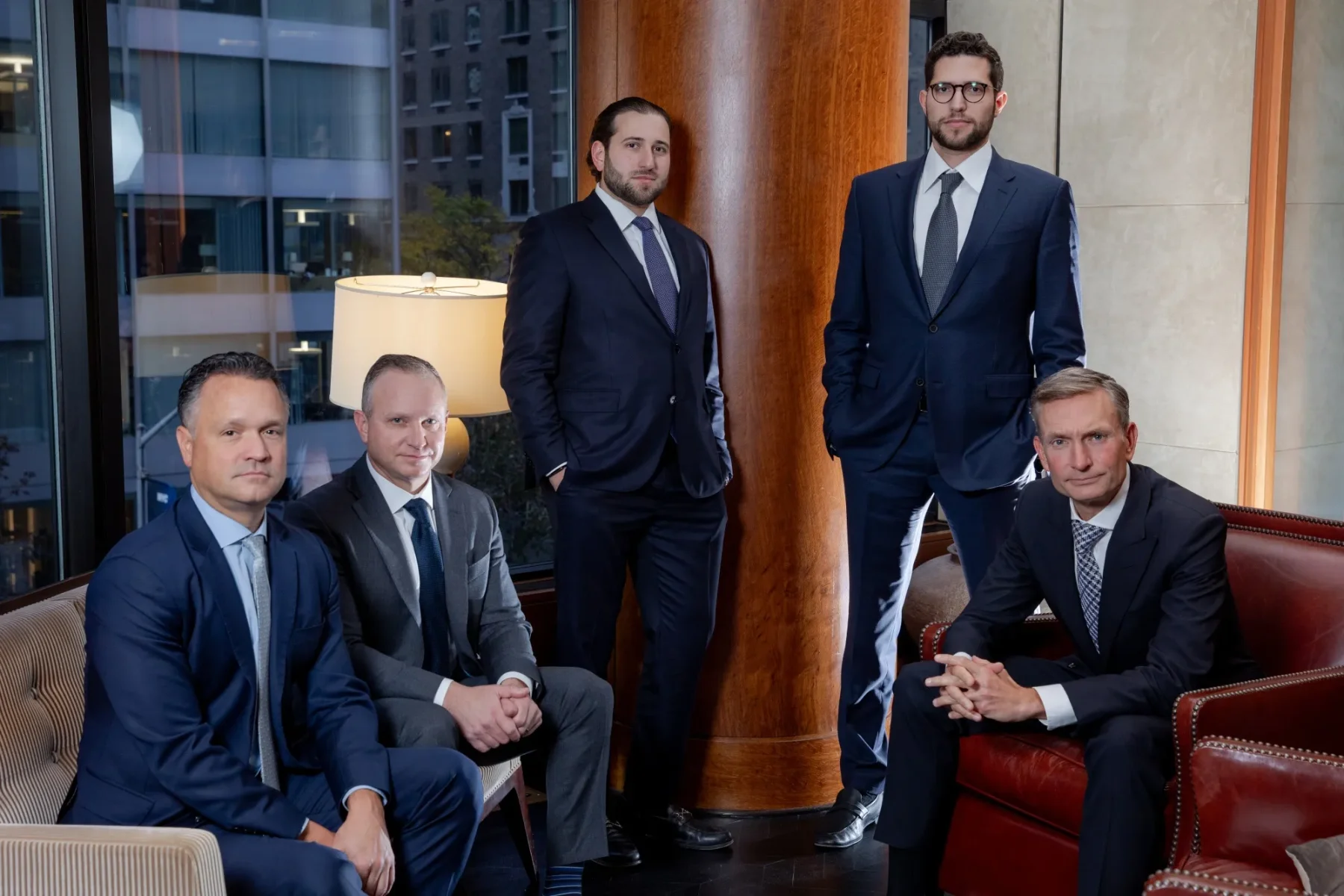
From left: Pascal Bandelier, Christian Wall, Kyle Lutnick, Brandon Lutnick, Sage Kelly, photographed at the company's New York office
"When someone like Howard, an industry titan and determined leader who worked here for 40 years and ran the firm for 30, departs, there’s inevitably a huge void," said Kelly, who shares operational leadership as co-CEO with Pascal Bandelier and Christian Wall. "But the entire company stepped up and succeeded — thanks to Brandon, and thanks to Kyle."
Executives bristle at suggestions that new connections in Washington have fueled the firm’s success. They say Cantor’s achievements are no accident, but rather the result of a lean team and years of proactive positioning in areas traditional banks have shunned.
According to people familiar with the matter, the firm’s 250 dealmakers are expected to generate over $1 billion in revenue. Coalition Greenwich data shows each banker brings in about $4 million in revenue—roughly double the efficiency of larger Wall Street firms.
A spokesperson for Cantor declined to comment on the company’s financial performance.
This year, Cantor ranked first in the number of U.S. IPOs underwritten and fifth across all U.S. equity offerings, outpacing established institutions such as Barclays and Citigroup. Its deal-making business is thriving, primarily serving clients outside the United States; additionally, Cantor is poised to acquire hedge fund O’Connor from UBS Group before year-end. However, the transaction faced last-minute obstacles due to losses tied to First Brands Group, a bankrupt auto parts supplier.
Cantor has also hired bankers to expand into Germany and is participating in the wave of mergers among U.S. regional banks (there are roughly 4,000 such banks in the U.S.). Another target market is the Middle East: Cantor has established a banking team in Dubai, is preparing to enter Abu Dhabi, and plans to bring equity sales and trading as well as investment banking services to the region.
Most of Cantor’s revenue stems from a surge in cryptocurrency-related transactions, including financing services for crypto treasury firms worth billions of dollars; additionally, the firm made early moves into now-booming sectors such as rare earth minerals, quantum computing, robotics, and data centers, which are now generating substantial returns.
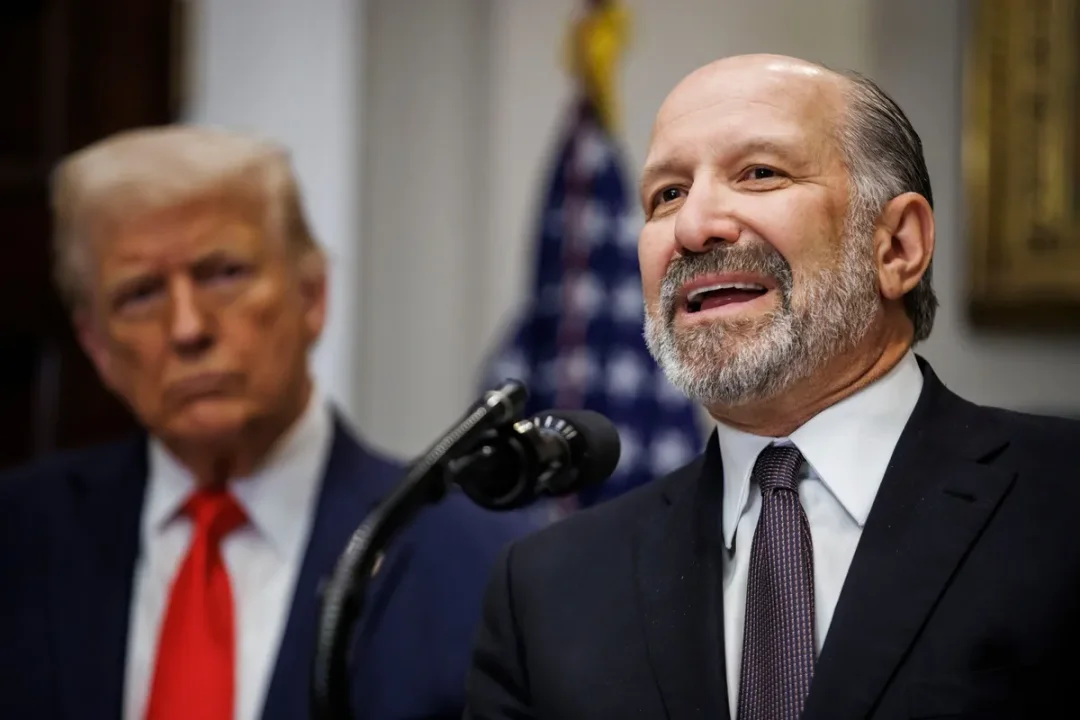
Howard Lutnick joined President Donald Trump’s administration earlier this year as Commerce Secretary
"The world’s five core themes happen to align exactly with our five largest investments over the past three or four years," said 46-year-old Bandelier, who also heads the equities business, where 2025 revenues are expected to double those of 2008—the previous best year.
The Lutnick brothers, along with their younger siblings, took majority ownership of the company, drawing widespread attention from both Wall Street and Washington. Executives dismiss conflict-of-interest allegations, saying they now run the firm independently of Howard and had long positioned themselves in businesses destined to heat up—the current profits are simply the natural outcome.
"I assure you, we didn’t get anything for free," said Kelly. "It’s easy for competitors to say otherwise, since they’re not doing the work every day and don’t understand how hard it’s been."
On Tuesday, at the luxurious Ritz-Carlton in Miami Beach, Brandon Lutnick described the family’s recent intense period during a conference.
"My brother Kyle and I always hoped to step into these roles, but it really came much sooner than we expected," said 27-year-old Brandon, chairman and CEO of the parent company, while his 29-year-old brother Kyle serves as executive vice chairman. "This has been a phenomenal year for our firm."
The night before, Brandon hosted a dinner where he sat alongside Bo Hines, former crypto adviser to the president; Winklevoss twins, founders of a cryptocurrency exchange; and Kevin O’Leary, a TV personality known for “Shark Tank” and a supporter of crypto assets.
Cantor is also partnering with long-time client Tether to launch a stablecoin in the U.S., while serving as its financial advisor (Cantor is also an investor in Tether) and assisting with fundraising. This round could value Tether as high as $500 billion, potentially bringing Cantor billions in profit. Additionally, Cantor benefits from the Genius Act passed by the Trump administration in July, which established a regulatory framework for U.S. stablecoins.
"We were already deep in crypto long before Howard entered government," said Kelly. "Long before Howard took office, we were investing in tech and industrial sectors, and had already entered power and renewable energy industries."

Tether CEO Paolo Ardoino and Cantor Chairman Brandon Lutnick at the 2025 Bitcoin Conference in Las Vegas
Not everyone believes in Cantor’s independence. In August, Democratic Senators Ron Wyden and Elizabeth Warren requested further information after reports surfaced that Cantor was considering arranging a deal that would allow a hedge fund to profit if U.S. tariffs were lifted. People familiar with the matter said that although other banks have participated in similar deals, Cantor abandoned this one and also declined to advise Trump Media & Technology Group on its Bitcoin treasury to avoid potential conflict-of-interest accusations.
"When the son of the Commerce Secretary runs the Wall Street firm once led by his father, people naturally question whether everything is above board," Wyden wrote in an email to Bloomberg in August.
Yet amid unprecedented entanglement between politics and business, Cantor hasn’t avoided engaging with government figures. At the Miami conference, the firm hosted Eric Trump, the president’s son, and Texas Senator Ted Cruz—who chairs the committee overseeing the Commerce Department led by Howard Lutnick. That evening, Brandon Lutnick rushed to Washington for a White House dinner, dining with Wall Street heavyweights and his father.
Cryptocurrency has long faced skepticism, but early believers thought wealth was only a matter of time.
"One must endure winter before spring arrives," said 50-year-old Wall, who oversees the firm’s fixed income business, which launched a multi-billion-dollar loan service backed by Bitcoin and completed its first transaction in May. He said that the Trump administration’s support for innovation, clearer regulation, and resulting institutional adoption "are giving rise to an entirely new world."
Bandelier said the firm’s success has also benefited from the struggles of mid-sized U.S. banks. "This is the easiest hiring period of my career," he said.
In a sense, both Cantor and the crypto industry have changed—the Miami conference this year, the third in four years, opened for the first time to media.
Another symbolic moment: keynote speaker Paolo Ardoino, CEO of Tether, took the stage ahead of two of the most influential U.S. financial regulators—SEC Chair Paul Atkins and acting CFTC Chair Caroline Pham.
During a break, the three posed for a photo with Brandon Lutnick and Cantor general counsel Stephen Merkel, all smiling broadly.
Join TechFlow official community to stay tuned
Telegram:https://t.me/TechFlowDaily
X (Twitter):https://x.com/TechFlowPost
X (Twitter) EN:https://x.com/BlockFlow_News
 @Bloomberg