Seeking aliens, raising bison, longevity science: Cardano's founder becomes crypto's alternative patron
TechFlow Selected TechFlow Selected
Seeking aliens, raising bison, longevity science: Cardano's founder becomes crypto's alternative patron
Charles Hoskinson is enthusiastic about injecting himself with stem cells and investing in bioluminescent plants.
 Navigating Web3 tides with focused insights
By Ben Weiss, DL News
Translation: Felix, PANews
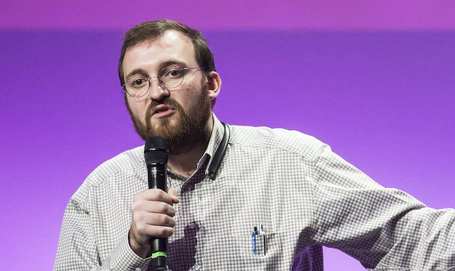
Charles Hoskinson, founder of the Cardano blockchain, loves talking about cryptocurrency. The 36-year-old billionaire also enjoys discussing aliens. In 2023, he funded an expedition to Papua New Guinea to investigate whether interstellar objects could be of extraterrestrial origin—but they weren’t.
He’s also passionate about bison. He owns an 11,000-acre ranch in Wyoming that supports a herd of 600 of these gentle grazers. “You can’t treat bison like cattle,” he explained in an interview. “Bison need space.”
With partial family roots tracing back to Florence, Italy, Hoskinson jokes he might be related to the Medici family—the powerful banking dynasty that once commissioned works from artists like Leonardo da Vinci.
In short, this crypto leader is a true "Renaissance man."
The Puzzle
Hoskinson may not rule an Italian city-state, but he certainly has financial clout.
In 2017, he helped launch Cardano, a Layer 1 blockchain designed to challenge Ethereum—a network he had previously co-founded.
Though often labeled a "zombie chain" or one with relatively low on-chain activity compared to other L1s like Ethereum or Solana, Cardano (ADA) still boasts a market cap of around $12.5 billion, according to DefiLlama. (PANews note: Hoskinson recently changed his stance on Bitcoin and announced that Cardano's L1 will transition into a Bitcoin L2.)
In June, responding to claims that blockchain is disconnected from real-world applications, Hoskinson said: “If we have to solve the economic, political, and social problems that we all face, that would be a massive force dragging down the entire industry.”
Yet it’s Hoskinson’s side ventures that continue to catch the attention of crypto enthusiasts. Recently in Singapore, Hoskinson elaborated on what drives his wide-ranging interests. “I just love solving puzzles,” he said.
Other crypto founders have similarly splurged on personal passions. Gavin Wood, another Ethereum co-founder, has invested in his DJ career. Arthur Hayes, co-founder of BitMEX, purchased a fish tank containing three blacktip reef sharks for his Hong Kong office. Yat Siu, chairman of Animoca Brands, bought a violin once owned by Russian Empress Catherine the Great.
Forward-Thinking Projects
Still, Hoskinson—owner of a private jet and a Blackhawk helicopter, with a self-reported net worth of around $1.2 billion—is a champion of forward-thinking initiatives.
“I’m friends with Steve Wolfram [the computer scientist] and all those guys. They always bring their burning questions, and when you work with them, those burning questions become your own.”
On a personal level, Hoskinson doesn’t come across as a flashy Silicon Valley tycoon, but rather as an affable scholar. Raised in Hawaii, he became one of Ethereum’s original eight co-founders in the early 2010s. Soon after, tensions grew between him and Vitalik Buterin, the primary architect of the blockchain network.
Hoskinson wanted Ethereum’s founders to form a for-profit entity and accept venture capital. Buterin preferred to keep it nonprofit.
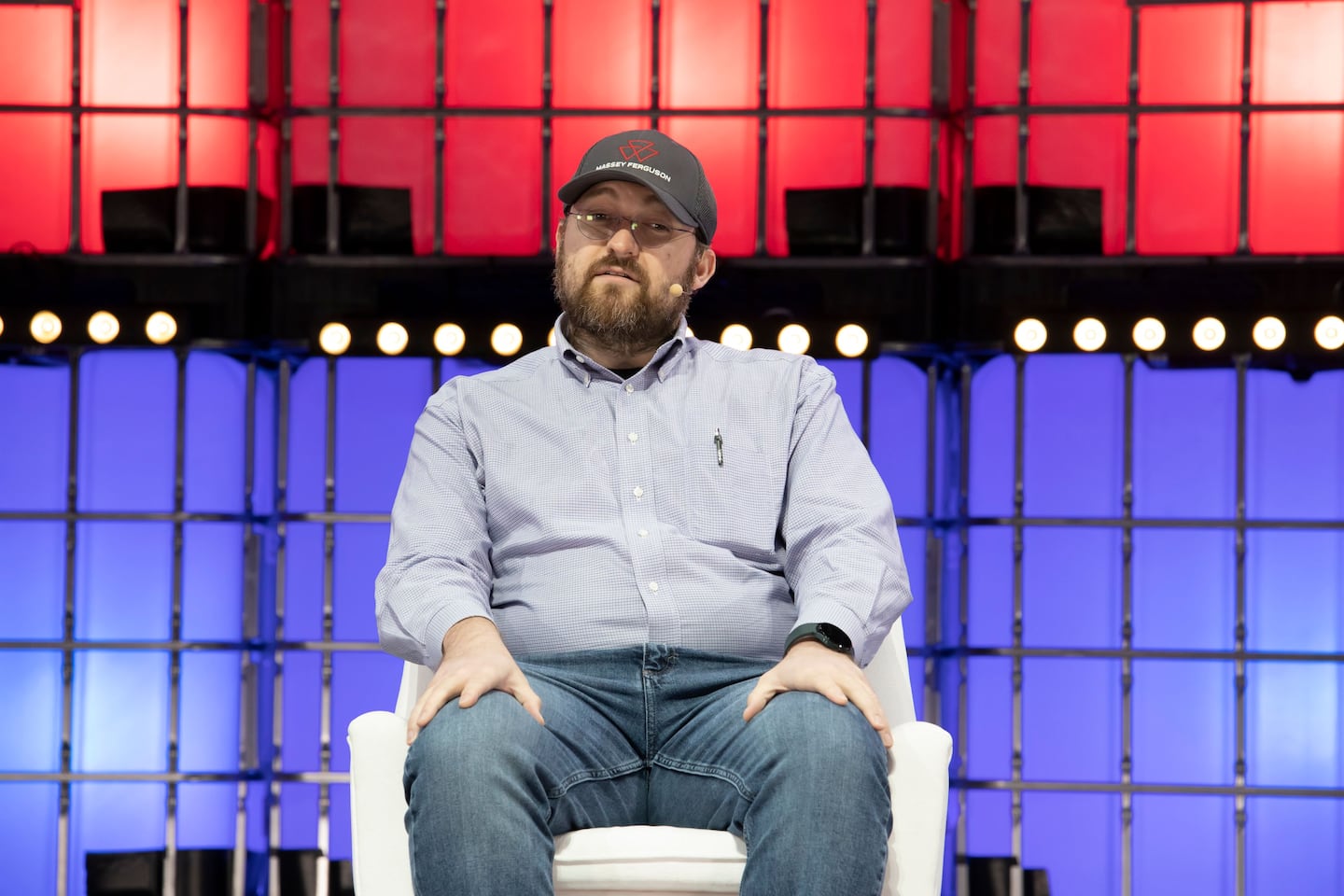
Ethereum co-founder Hoskinson is funding longevity science research
Photo source: Rita Franca/NurPhoto/Shutterstock
In late 2014, Hoskinson left Ethereum. The following year, he co-founded Input Output (IOHK) with former colleague Jeremy Wood. IOHK is a full-service blockchain company best known for creating Cardano. It has also worked on several other projects, including the Cardano sidechain Midnight and the Cardano wallet Daedalus.
Glowing Plants
Hoskinson’s interests extend well beyond cryptography or blockchain. He’s also fascinated by bioluminescent plants.
“If you want to tackle global warming or improve the environment, then engaging in plant genetic engineering makes sense.”
He believes specially engineered plants could not only generate organic lighting but also sequester carbon, eliminate toxic chemicals, and deliver other environmental benefits.
He showed a photo on his phone of himself smiling in the dark, holding a neon-green glowing plant. Among the species his team has illuminated are tobacco and Arabidopsis.
While Hoskinson declined to reveal the exact biological mechanisms behind the glow, he confirmed his team uses CRISPR, a new gene-editing technology that leverages enzymes.
Hoskinson plans to publicly showcase these plants within a year. He also mentioned bioluminescent cannabis.
“If it contains high levels of THC, it glows red,” he mused, referring to the psychoactive compound in marijuana. “Just a little bit, and it glows green.”
Longevity Science
Hoskinson is also enthusiastic about injecting himself with stem cells—self-renewing cells that play a crucial role in medical research.
His father and brother are both doctors. Hoskinson has invested $100 million to establish the Hoskinson Center for Health and Wellness in Gillette, Wyoming. The center will begin its first FDA-supervised clinical trial next year, according to Hoskinson.
Like many wealthy tech founders, Hoskinson is deeply interested in longevity science. This trial will assess the effectiveness of combining stem cell injections with hyperbaric oxygen therapy—where patients breathe pure oxygen in a pressurized chamber.
“If my hypothesis is correct, we can reverse aging by more than 10 years,” he said. The first test subjects will include Hoskinson himself. “I’m getting fatter and older—I’d love to live longer and healthier.”
Doctors have already extracted his stem cells, and his miniaturized Hoskinson cells are already multiplying at his facility. Once the FDA approves the trial, Hoskinson will begin receiving injections.
But this isn’t his only planned medical initiative.
By next summer, he plans to expand his Wyoming health center to 70,000 square feet, incorporating cardiology, radiology, and immunology.
And like any proper Medici, he intends to fill the expanded clinic with “priceless artworks.”
These include a “four-dimensional object,” an “infinity room” inspired by legendary Japanese artist Yayoi Kusama, and a towering 6-foot-tall Godzilla hologram.
Join TechFlow official community to stay tuned
Telegram:https://t.me/TechFlowDaily
X (Twitter):https://x.com/TechFlowPost
X (Twitter) EN:https://x.com/BlockFlow_News
 @DLNewsInfo