








Staking ADA for "Double Rewards": How to Maximize Gains from Cardano Ecosystem Growth?
TechFlow Selected TechFlow Selected
Staking ADA for "Double Rewards": How to Maximize Gains from Cardano Ecosystem Growth?
The long-term outlook for Cardano's smart contract ecosystem and the stable "dual rewards" from ADA staking are gradually positioning Cardano at the center of the crypto stage for value revaluation, driving a rapid rise in ADA's price recently and making its future performance even more promising.
 Navigating Web3 tides with focused insights
With the arrival of 2023, the crypto market has seen a long-awaited upswing and shift in sentiment. Projects like LDO, buoyed by anticipated upgrades in March, have drawn attention amid an otherwise sluggish market.
The logic behind the crypto market is always subtle yet traceable—every concept sector or specific token’s value discovery follows an inherent developmental trajectory. There are no sudden surges without prior buildup; only sectors that quietly accumulate momentum in advance. After the sharp rise of LDO and others, how can we interpret the long-term logic behind the next wave of trending sectors?
ADA Opportunities Under Cardano's Long-Term Outlook
Looking at total market capitalization rankings in the crypto space, even as most projects suffered from prolonged downturns in secondary markets, Cardano still maintains a market cap of $1.1 billion (CoinGecko data as of January 11), ranking 8th overall and 5th among non-stablecoin assets, trailing only Bitcoin, Ethereum, BNB, and XRP.
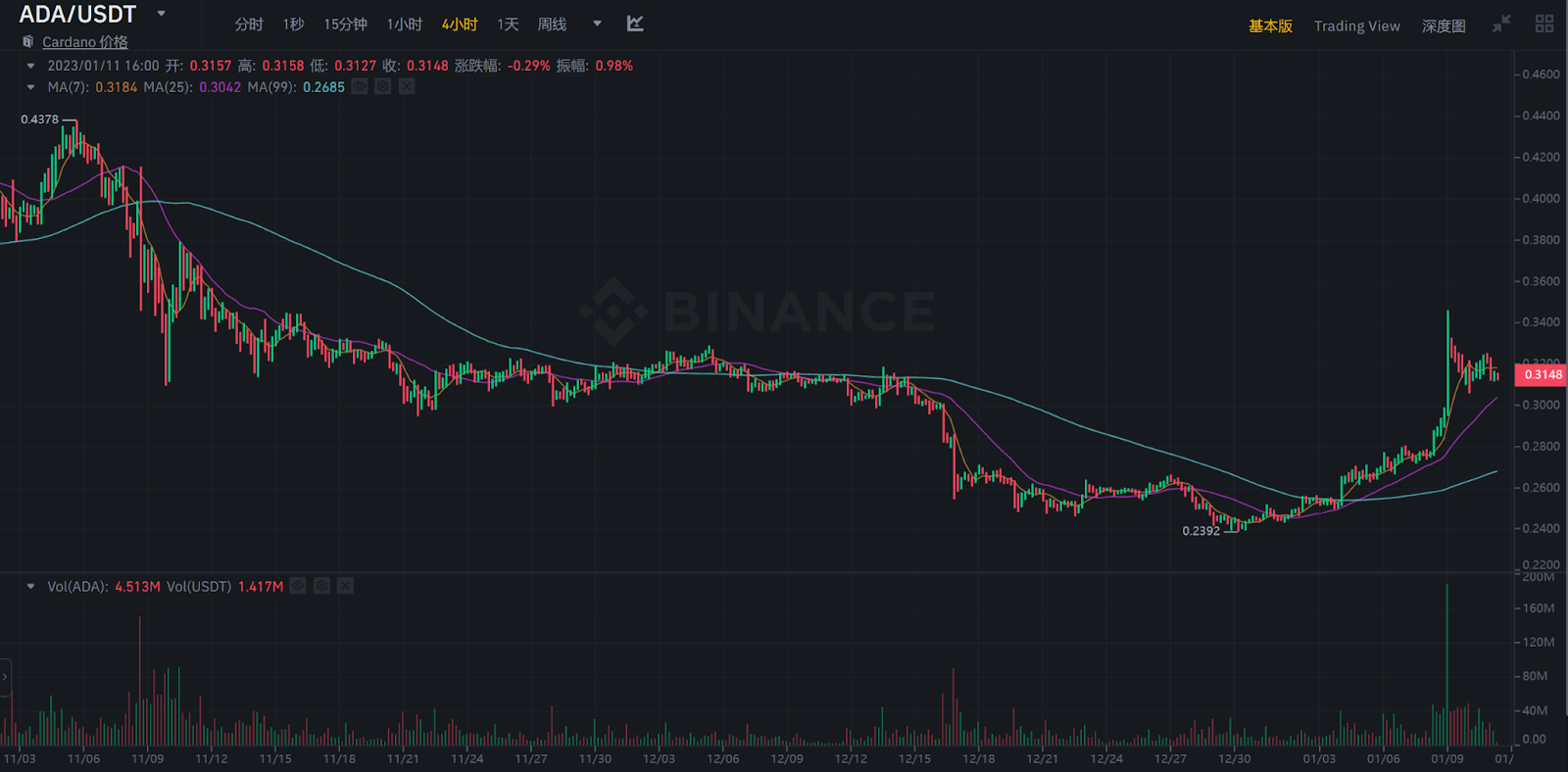
As the market began recovering on January 1, ADA’s price also stood out, rising from $0.239 to a high of $0.346 in less than two weeks—a 45% increase—outperforming nearly all other major smart contract platform tokens during the same period.
CaptainAltCoin previously forecasted ADA’s 2023 price performance, suggesting a potential recovery early in the year, with ADA possibly reaching $0.6395 by September 2023—indicating at least a doubling potential over the next nine months.
Given ADA’s recent strong performance and optimistic institutional outlook, what underlying catalysts are worth paying attention to?
Long-Term Ecosystem Catalysts From the Vasil Upgrade
Since Cardano’s major Vasil upgrade on September 22 last year, network speed and scalability have significantly improved, enabling better user experiences and supporting more complex DApps. Cardano’s ambitious goal of becoming a robust smart contract platform now appears closer to realization.
As infrastructure continues maturing over recent months, the Cardano ecosystem has gradually attracted market interest and capital inflows. This opens new narrative possibilities and valuation potential for this "veteran" blockchain, laying the foundation for a new wave of DApps, users, and ultimately growth in total value locked (TVL).
More utility applications are currently under development. Innovations in NFTs, DeFi, DAOs, and other emerging areas represent long-term expectations and will be key differentiators for Cardano’s future success—these are also likely to include the “critical few” investment opportunities in the next phase of the crypto market.
Among these efforts, Adaverse—the global venture fund and incubator for Cardano—backed directly by the official Cardano team—has already taken an early lead. Leveraging privileged access and funding, Adaverse is actively incubating and investing across the full spectrum of Cardano-based projects, building a broad Web3 DApp ecosystem atop Cardano’s blockchain infrastructure.
Adaverse’s core mission is to help developers eliminate redundant workloads, allowing them to focus entirely on product and business logic. This increases efficiency, reduces development costs, accelerates integration with other Cardano ecosystem DApps, and maximizes exposure to explosive growth in the second half of Cardano’s ecosystem development.
Emergence of the Cardano NFT Sector
At the macro level, Cardano has also made a counter-trend leap in the NFT space—since the Vasil upgrade in September, Cardano’s NFT trading volume reached $19 million in October alone, ranking third globally behind Ethereum and Solana.
In terms of overall rankings, Cardano’s activity growth since the Vasil upgrade has been evident. According to the latest data from CryptoSlam, Cardano’s NFT daily trading volume recently averages around $250,000.
From a micro perspective, individual NFT projects on Cardano are clearly gaining traction. Clay Nation is a prime example. A claymation art and culture project built on Cardano and acquired by Snoop Dogg, Clay Nation gained increasing attention following the release of music videos co-created by Snoop Dogg and his son Champ Medici. As of writing, the collection has surpassed 31 million ADA in trading volume (over $9 million).
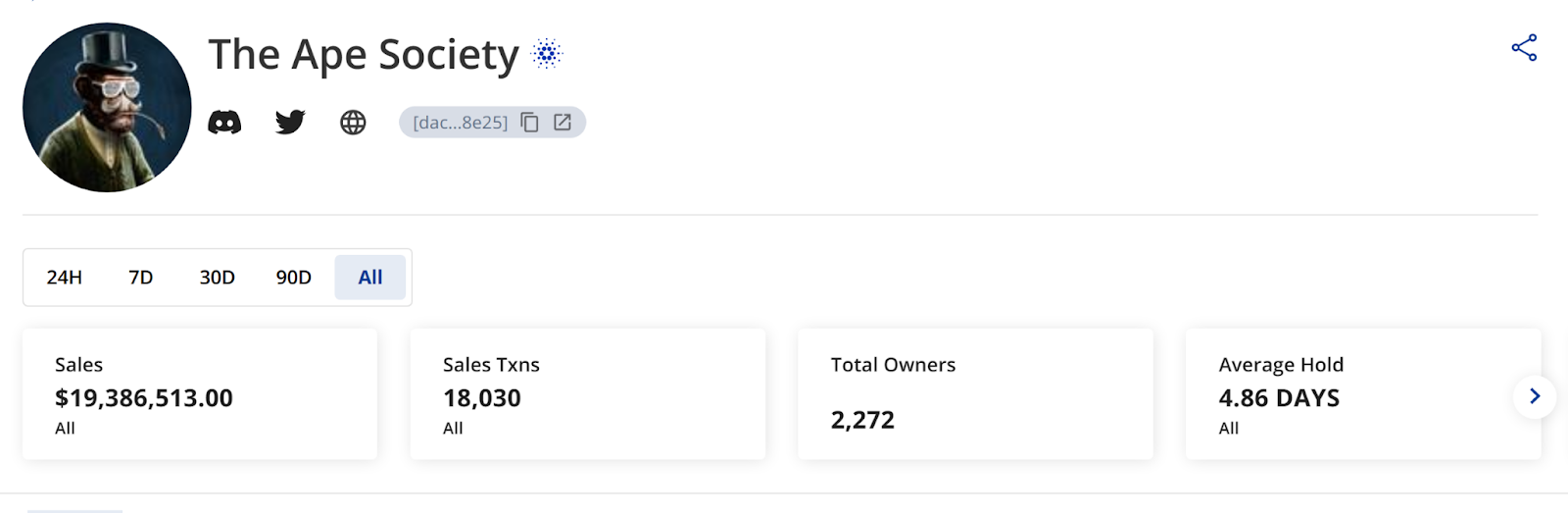
Additionally, Ape Society, the largest NFT project on Cardano, has surpassed $1,900 in total trading volume with over 18,000 transactions, placing it among the top-tier NFT collections globally—further indicating that Cardano’s NFT sector is gaining momentum and moving toward the forefront of blockchain networks.
ADA Staking: Capturing 'Dual Returns' From Cardano's Ecosystem Growth
Beyond long-term ecosystem development prospects, another attractive feature for ADA holders is the ability to earn stable staking rewards—even during bear markets.
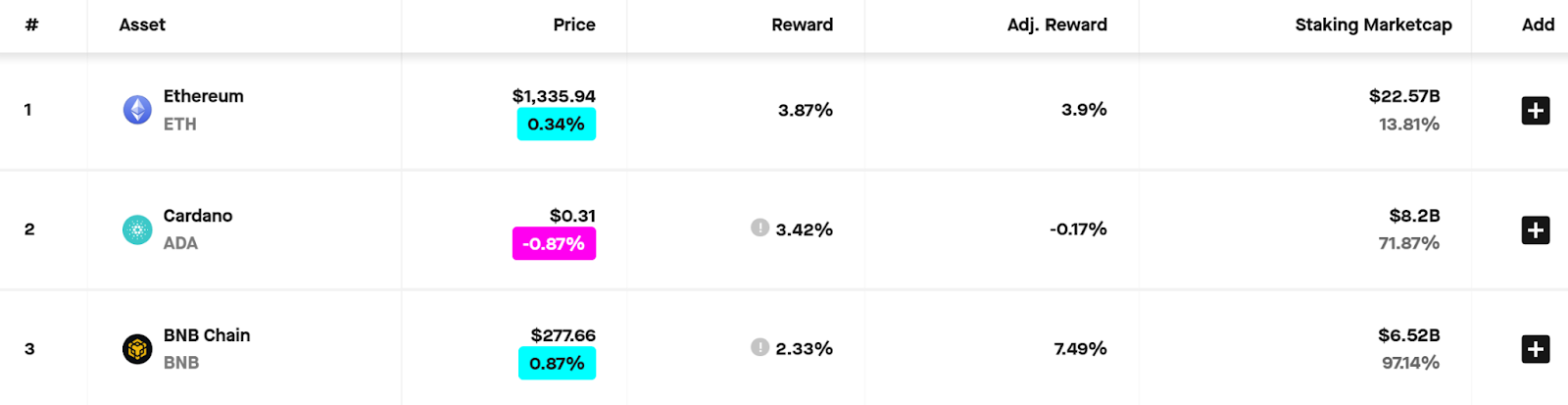
According to StakingRewards, Cardano ranks second only to Ethereum in terms of staked value, making it the second-largest staking ecosystem, with an annual yield of approximately 3.42%.
Meanwhile, amid continuous black swan events over the past year and tightening macroeconomic conditions, the crypto market has remained weak for over 12 months.
Under such conditions, rather than chasing broad market rallies during bullish periods, focusing on risk management and selecting relatively stable return strategies becomes one of the more prudent and defensive asset allocations worth prioritizing.
Therefore, to some extent, participating in ADA staking to earn staking rewards represents the most direct way to capture value from Cardano’s ecosystem growth—offering a reasonably predictable “dual return” composed of potential price appreciation (driven by demand from NFTs and other sectors, plus post-Vasil smart contract expansion) and staking yields (~3.42%).
Overall, the long-term outlook for Cardano’s smart contract ecosystem and the stable “dual returns” from ADA staking are positioning Cardano at the center stage of crypto revaluation, driving recent rapid price gains and setting the stage for promising future performance.
How to Stake ADA and Earn Rewards?
Now moving into practical steps—how can an average user stake ADA on Cardano safely and steadily earn staking rewards?
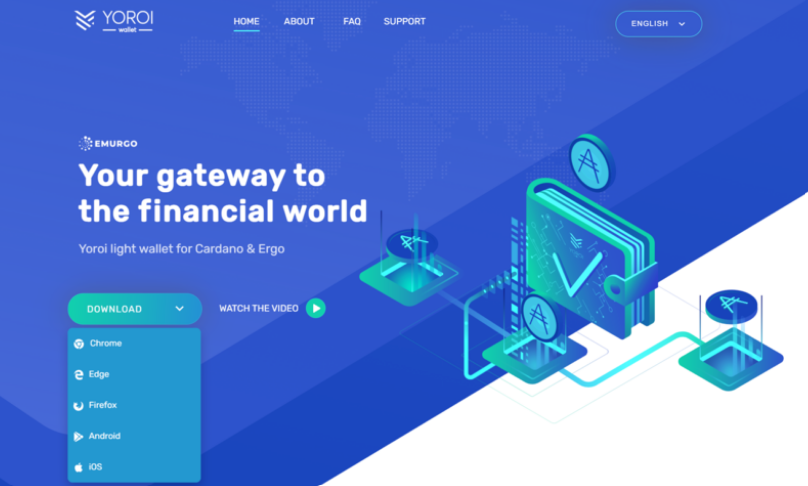
The first step is obtaining a Cardano wallet. Several wallets support ADA storage. For beginners, we recommend using Yoroi, a user-friendly staking wallet ideal for anyone looking to stake ADA.
1. Download the Yoroi Browser Extension Wallet
For security, download the appropriate browser extension from Yoroi’s official website. In this guide, we’ll use the Chrome extension.
2. Create a New Wallet
You can choose to restore an existing wallet, use a hardware wallet, or create a new one. This guide demonstrates creating a new wallet.
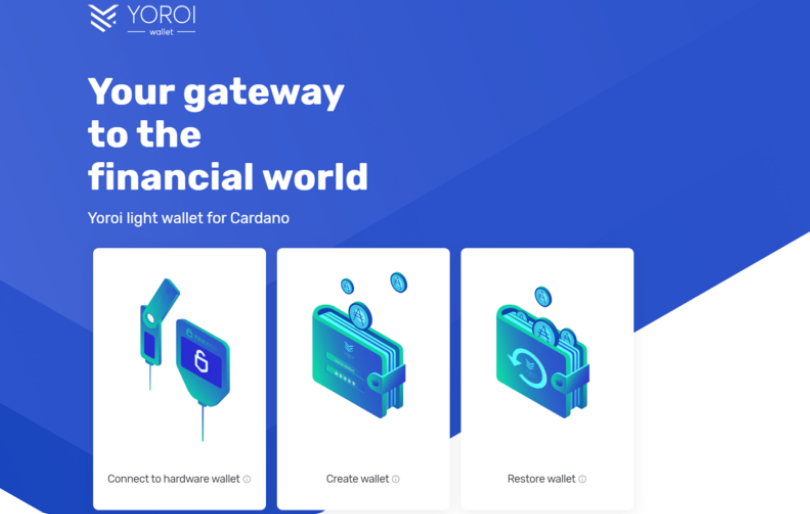
3. Set Username and Password
Next, name your wallet and set a password. A corresponding recovery phrase (mnemonic) will be generated.
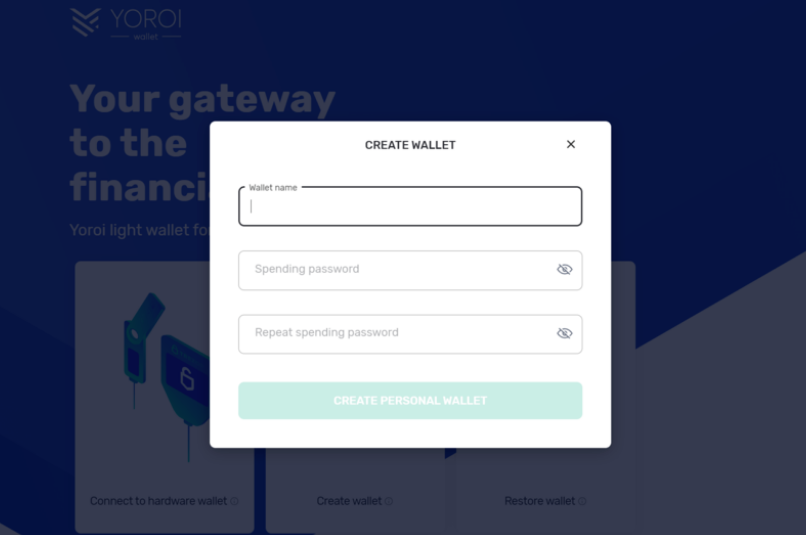
4. Securely Save Your Recovery Phrase
"Your keys, your crypto." Store your recovery phrase securely. If lost, you will permanently lose access to your wallet and funds.
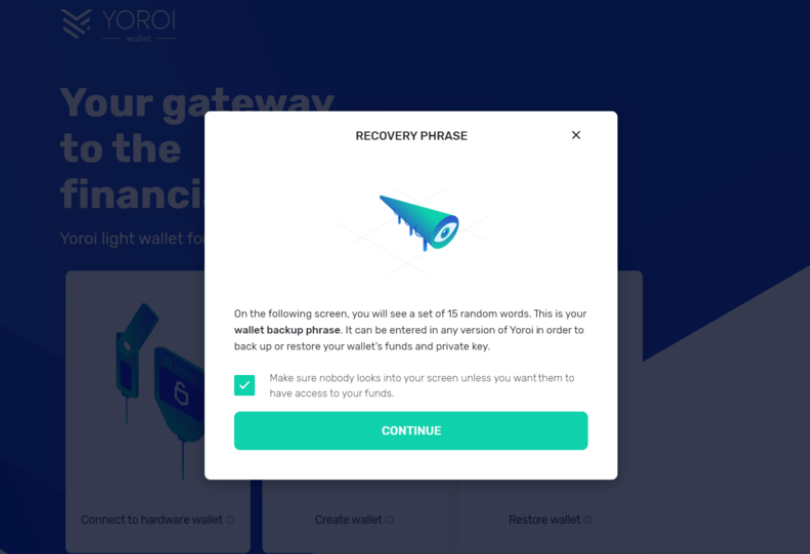
5. Deposit ADA Tokens
Now, deposit some ADA into your newly created wallet. Click the “Receive” option to display your personal ADA receiving address.
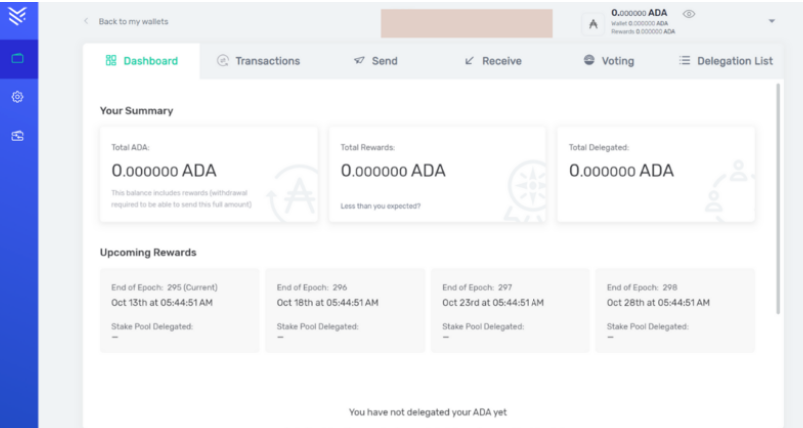
6. Withdraw ADA From Exchange
Copy your receiving address from Yoroi and enter it in the withdrawal section of your exchange to complete the transfer.
7. Begin Delegating ADA Tokens
Click the “Delegation List” in the upper right corner to select any staking pool.
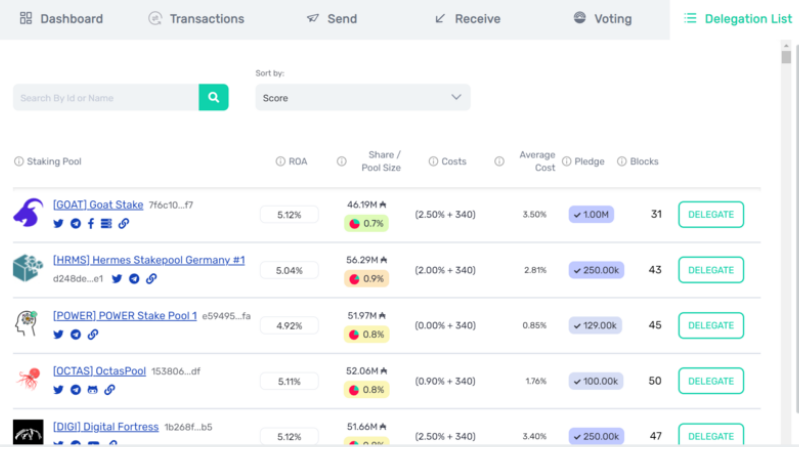
If you know the name of a staking pool, simply search for it and delegate your tokens.
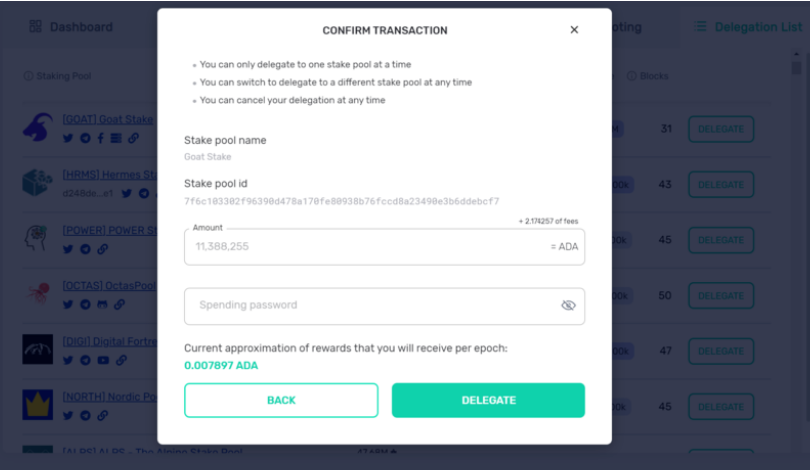
8. Complete Staking
After selecting a staking pool, enter the amount to delegate, confirm your password, and you’re done. You’ll then begin earning staking rewards.
Operating fees vary between staking pools. For first-time delegators, there is a 20-day approval period. Once approved, ADA rewards are distributed every epoch (approximately every 5 days).
About Adaverse
- Official Homepage: adaverse.co
- Twitter: @Adaverse_Acc
- Facebook: Adaverse Accelerator
- Instagram: @adaverse_acc
- Medium: Adaverse Accelerator ; Adaverse Asia
- LinkedIn: @Adaverse
- Telegram: @Adaverse Founders Group
Join TechFlow official community to stay tuned
Telegram:https://t.me/TechFlowDaily
X (Twitter):https://x.com/TechFlowPost
X (Twitter) EN:https://x.com/BlockFlow_News






