Has Harris finally warmed to Bitcoin? Is the path clear for crypto from here on?
TechFlow Selected TechFlow Selected
Has Harris finally warmed to Bitcoin? Is the path clear for crypto from here on?
Regardless of who takes office, it will be more favorable for the crypto industry.
 Navigating Web3 tides with focused insights
Author: Mu Mu
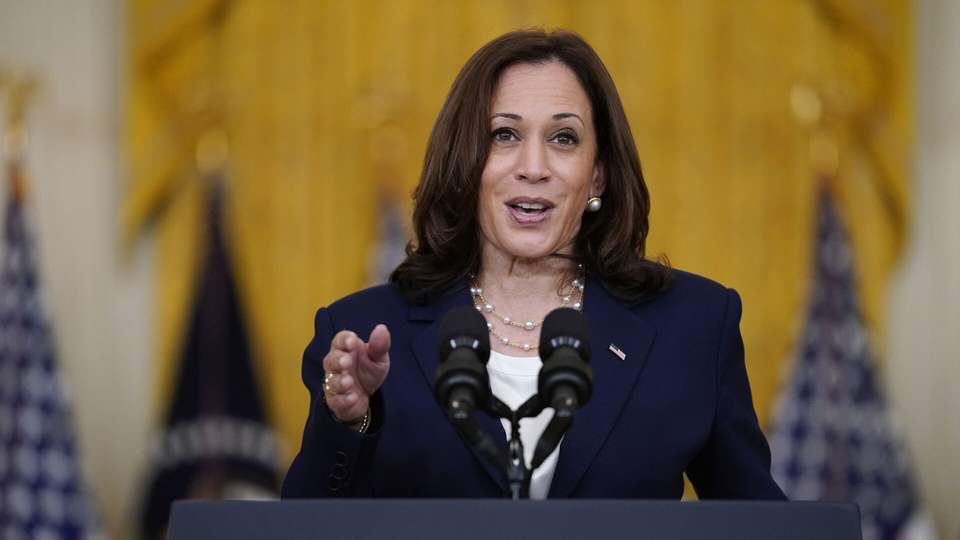
Recently, U.S. Vice President and presidential candidate Kamala Harris officially declared her support for digital assets. As a major contender against Donald Trump, another highly supported presidential candidate, her stance on crypto is clearly significant. While many crypto KOLs have welcomed Harris's move as positive, it would be premature to assume that Bitcoin and the broader crypto market now face smooth sailing ahead. So how is mainstream society currently viewing Bitcoin and other cryptocurrencies?
What does the next U.S. President think?
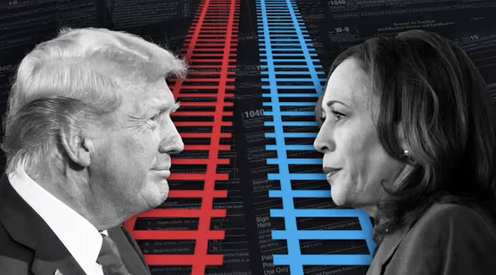
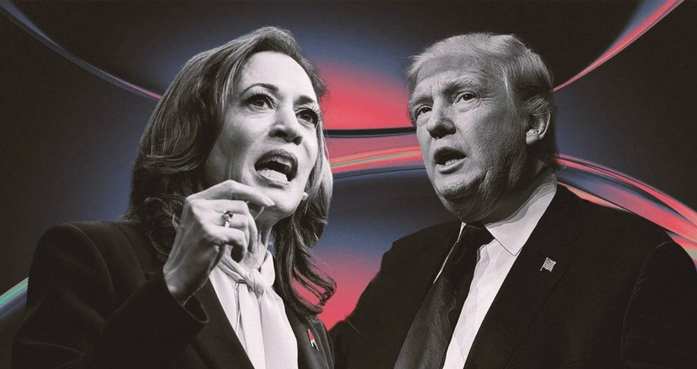
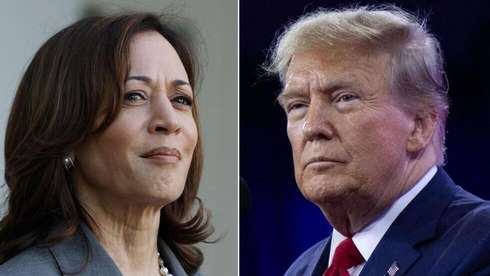
The U.S. presidential race is heading toward its final showdown. Unless something unexpected happens, either Trump or Harris will become the next U.S. President in a few months. Prior to Harris’s recent silence on crypto, Trump had been openly supportive of digital assets.
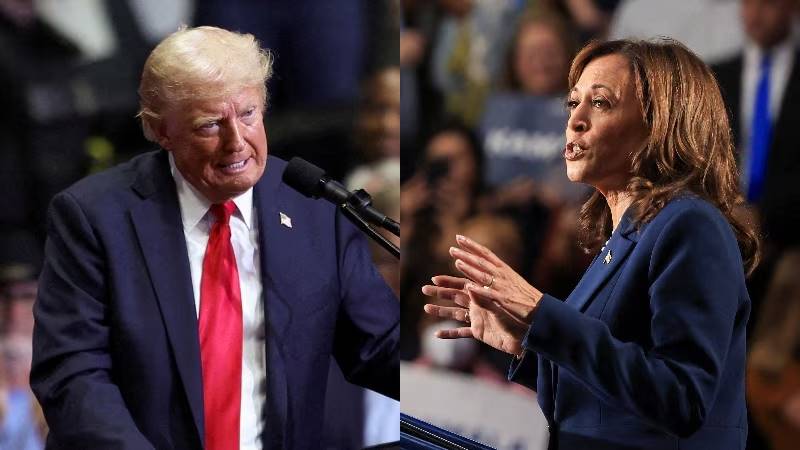
As discussed in our previous article, "How credible are Trump’s promises at the Bitcoin Conference?", Trump and Harris represent the sharply contrasting ideologies of the Republican and Democratic parties. The Republican Party tends to favor technological innovation and market freedom, while Democratic priorities include environmental impact and sustainability, financial inequality, social justice, and stronger regulation—reflecting values that emphasize collective over individual liberties. Bitcoin mining’s environmental footprint and the perception of unequal wealth accumulation among individuals have historically led Democrats to view crypto with skepticism.
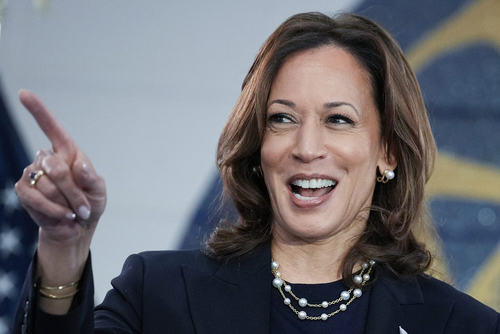
However, Democrats aren't uniformly left-leaning, and both parties ultimately share common national goals. Harris has recently made multiple public statements supporting digital assets. Speaking at the Pittsburgh Economic Club on Wednesday, she said that under her leadership, the U.S. would "recommit" itself to maintaining global leadership in key areas shaping the next century: “dominance in artificial intelligence, quantum computing, blockchain, and other emerging technologies.”
Previously, some analysts believed a Trump presidency would benefit Bitcoin and the crypto market, whereas Harris might take a less favorable approach. Now, others are offering a different perspective: VanEck analysts suggest that a Harris presidency could actually be more beneficial for Bitcoin, as it may “accelerate solutions to many structural issues driving Bitcoin adoption.”
In sum, following Harris’s commitments and public statements, whoever becomes the next U.S. President—whether Trump or Harris—is likely to adopt a more crypto-friendly posture than the current Biden administration (which has been relatively unfriendly), at least on the surface.
What about regulators?
It's well known that U.S. regulatory agencies under President Biden have created numerous challenges for the crypto industry—especially the SEC, which frequently files lawsuits and hunts for violations. Its chairman, Gary Gensler (pictured below), widely seen as anti-crypto, continuously issues hostile statements and warnings.

Recently, the U.S. Securities and Exchange Commission (SEC) Office of Investor Education and Advocacy issued a statement reminding investors that Bitcoin and Ethereum are highly volatile and speculative investments. The SEC warned that spot Bitcoin and Ethereum ETPs carry risks such as price volatility and potential fraud in unregulated markets. The regulator emphasized that “spot Bitcoin and Ethereum ETPs are not registered as investment companies under the 1940 Investment Company Act,” meaning they lack the custodial and valuation safeguards applicable to ETFs and mutual funds.
Overall, regulators remain cautious—partly due to their mandate, but also possibly due to Chairman Gensler’s personal bias against crypto. There is growing public demand to replace him after the upcoming election, with hopes that a new leader might bring a fairer approach. Still, the SEC will continue to treat the highly volatile crypto market with caution and urge investors to beware of risks. At heart, these decentralized assets represent a force beyond their control. Despite crypto’s contributions to innovation and technology, regulators will never feel fully comfortable with the underlying tensions.
What do institutions think?
Institutions vote with their capital—the flow of funds into Bitcoin ETFs reveals their true stance. Recently, Bloomberg analyst Eric Balchunas noted on X that year-to-date inflows into U.S. Bitcoin ETFs have reached $17.8 billion, a record high. The goal of holding 1 million BTC is now 92% achieved, with Bitcoin ETF holdings approaching Satoshi Nakamoto’s estimated holdings. Data shows Satoshi owns around 1.1 million BTC, while ETFs collectively hold over 916,000 BTC.
Today, most of the world’s largest asset management firms are actively involved in crypto. BlackRock’s Bitcoin ETF has even surpassed Grayscale’s holdings, making it one of the largest institutional holders of Bitcoin. In a research report we previously translated, "BlackRock: Bitcoin Is No Longer Just a Risk Asset," the firm elaborates on Bitcoin’s unique status as a leading cryptocurrency and explains its distinct value and significance globally.
Contrary to the SEC’s view of Bitcoin as a pure risk asset, institutions have increasingly refined their understanding in recent years. To institutional investors, cryptocurrencies like Bitcoin have evolved from purely speculative instruments into alternative assets capable of serving as hedges in certain scenarios—offering unique utility by mitigating fiscal, monetary, and geopolitical risks within diversified portfolios.
What about the general public?
Since the general public lacks professional financial expertise, public sentiment toward crypto remains uneven—shaped largely by regional attitudes toward digital assets.

Image source: B2Broker
Countries like Qatar, Egypt, Bangladesh, and Morocco explicitly ban or do not support crypto circulation, making them crypto-unfriendly jurisdictions—their positions are clear. In contrast, crypto-friendly nations such as Malta, Singapore, UAE, Germany, Portugal, and Switzerland typically provide clear regulatory frameworks, establish funds, and actively support innovative crypto startups through top-down policies. These pro-innovation environments foster greater public awareness and acceptance of digital assets.
Due to limited understanding, social media commentary in non-friendly regions often leans negative toward crypto. The opposite is true in friendly jurisdictions. Even in relatively neutral countries like the U.S., the crypto enthusiast community is sizable and has become a key demographic targeted during presidential campaigns.
Conclusion
As Uniswap founder Hayden Adams commented on Harris’s pro-crypto signals: this is a positive sign. The past four years under Biden have been disappointing for the crypto and tech industries. Harris’s hints suggest her administration would handle these sectors differently—with stronger support for innovation.
Looking ahead, regardless of who wins the presidency, the crypto industry is likely to receive more favorable support than today. Under more crypto-friendly leadership, regulation could become more open and inclusive, encouraging institutions to invest and build more boldly, while the general public gradually gains deeper understanding of crypto as it moves further into the mainstream.
Join TechFlow official community to stay tuned
Telegram:https://t.me/TechFlowDaily
X (Twitter):https://x.com/TechFlowPost
X (Twitter) EN:https://x.com/BlockFlow_News
 白话区块链
白话区块链