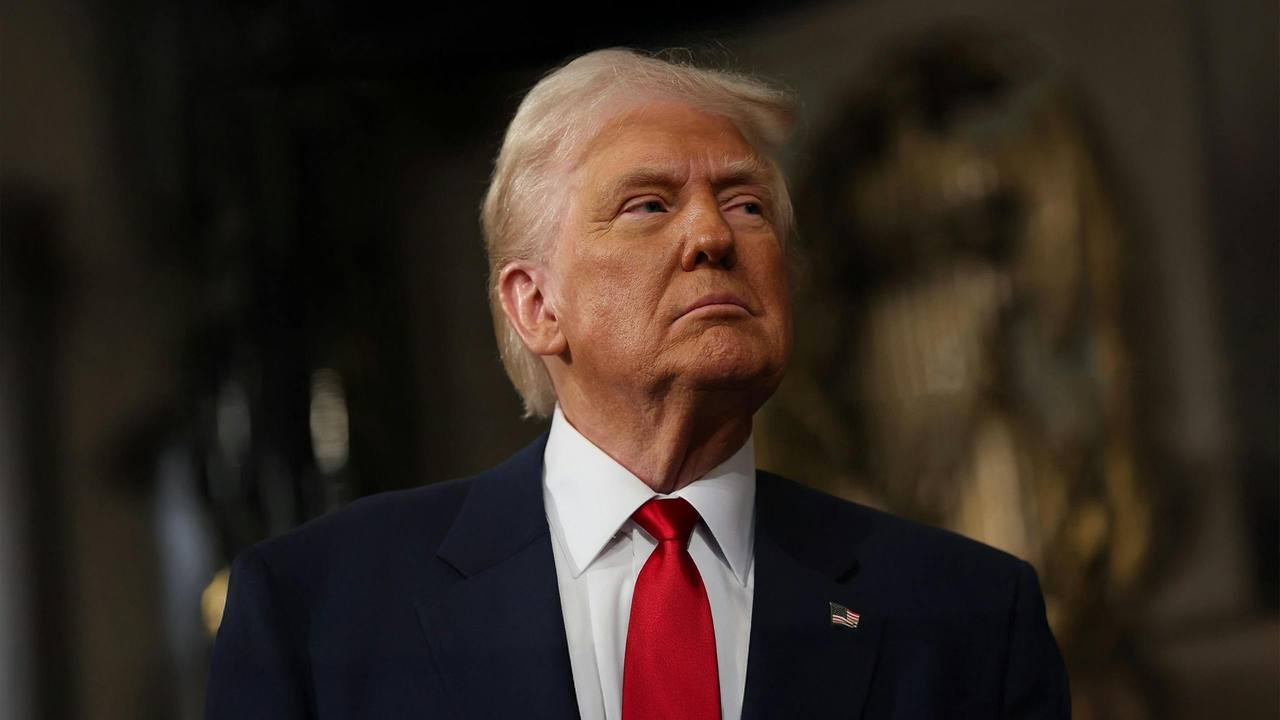
Harris and Trump face off in first direct debate: What matters most to markets?
TechFlow Selected TechFlow Selected
Harris and Trump face off in first direct debate: What matters most to markets?
The debate is expected to focus on domestic economic policies, with Harris and Trump likely to clash over inflation, tariffs, and taxation.
 Navigating Web3 tides with focused insights
Author: Li Xiaoyin, Wall Street Insights
Following the weak U.S. nonfarm payrolls data released last Friday, U.S. stocks declined sharply. The S&P 500 dropped over 1.7% and fell more than 4% for the week—the largest weekly decline in a year and a half.
Besides concerns about economic recession, uncertainty surrounding the final stretch of the U.S. presidential election has also weighed on U.S. equities.
On Wednesday morning at 9:00 a.m. Beijing time, presidential candidates Trump and Harris will face off in Philadelphia for the second debate of the 2024 election—the first direct confrontation since Harris replaced Biden as the Democratic Party’s nominee against Republican candidate Trump.
How Will the Debate Proceed?
According to Minsheng Securities, the debate rules stipulate that Trump and Harris will participate in a 90-minute live televised debate at 9:00 p.m. local time on September 10. There will be no live audience, and the microphone of the candidate not speaking will be muted.
Harris had previously requested that both microphones remain live throughout (to highlight Trump’s perceived character flaws), but on September 5 she agreed to the muting rule. A second debate in October is possible, though no specific arrangements have been confirmed.
On topics, the debate is expected to resemble the June 27 debate between Trump and Biden, focusing on domestic economic policies such as inflation, corporate and personal taxation, housing, and immigration. A key point of interest will be how Harris—whose policy experience is relatively limited—handles these issues.
What Does the Market Care About Most?
Media reports suggest that during Wednesday’s debate, Harris and Trump may clash on inflation, tariffs, and taxation.
Trump’s economic agenda centers on higher tariffs. He has proposed imposing 10% to 20% tariffs on all foreign goods and introducing baseline tariffs on all foreign-made products. In contrast, Harris supports targeted tariffs, continuing the current moderate trade stance and maintaining the "small yard, high fence" approach in technology sectors.
Economists have analyzed that higher tariffs would do more harm than good to economic growth and could exacerbate inflation. An analysis by the Peterson Institute for International Economics estimates that price increases under Trump’s tariff regime would raise annual expenses by $2,600 for the average American household.
Taxation is another major topic. Both parties use tax cuts as a campaign strategy, but differ on whether to raise or cut corporate taxes.
Harris advocates “Rewarding Work, Not Wealth,” proposing to raise the corporate tax rate from 21% to 28% (after Trump’s 2017 legislation reduced it from 35% to 21%) and increase the minimum tax. Trump’s tax relief plan is more straightforward and uniform—extending existing corporate and individual tax benefits—and he plans further corporate tax cuts.
Moreover, the tax cuts introduced by Trump in 2017 are set to expire next year, meaning the next president will face a critical decision on whether to renew them.
Guangfa Securities adds that on housing policy, Harris’s proposals are more aggressive, advocating large-scale supply expansion alongside demand-side subsidies, while Trump has offered very limited messaging on housing support.
On energy policy, Harris aims to boost clean energy adoption through increased investment and subsidy programs. Trump, however, has stated that if re-elected, he would consider eliminating the federal tax credit of up to $7,500 for electric vehicles.
In general, Harris takes a more aggressive stance on domestic economic policy, while Trump is more aggressive on foreign economic policy.
"Trump Trade" vs. "Harris Trade"
Guangfa Securities notes that the clearest areas for financial markets to differentiate between the “Trump trade” and the “Harris trade” are those where their policy positions diverge significantly—such as corporate tax and energy policy—and where the impact on related industries under different scenarios is most distinct.
In terms of broader implications, both candidates’ policy platforms carry risks of higher inflation and larger fiscal deficits, while their effects on economic growth remain uncertain. Trump’s trade policies could be negative for non-U.S. assets.
Inflation: Harris’s anti-inflation measures are more comprehensive, but face practical implementation challenges; her stimulus measures for the housing market, in particular, carry inflationary risks. Trump’s policy focus is narrower, but his positions on trade and immigration introduce additional inflation uncertainty.
Fiscal Deficit: Both candidates’ policies point toward higher deficit levels, though the increase would likely be more contained under Harris.
Economic Growth: The impact of both candidates’ policies on nominal GDP growth remains uncertain, making the market more sensitive to actual Federal Reserve policy in aggregate pricing. From a structural perspective, Harris’s policies would be relatively favorable for new energy, real estate, and mass consumer sectors.
Non-U.S. Assets: Trade policy could be a key differentiator. A Trump presidency might trigger short-term concerns over global trade conditions.
Join TechFlow official community to stay tuned
Telegram:https://t.me/TechFlowDaily
X (Twitter):https://x.com/TechFlowPost
X (Twitter) EN:https://x.com/BlockFlow_News