The Harris Era: A New Dawn for the Cryptocurrency Industry?
TechFlow Selected TechFlow Selected
The Harris Era: A New Dawn for the Cryptocurrency Industry?
What is Harris's stance on cryptocurrency?
 Navigating Web3 tides with focused insights
Author: Andrew Singer
Translation: Bitpush News an
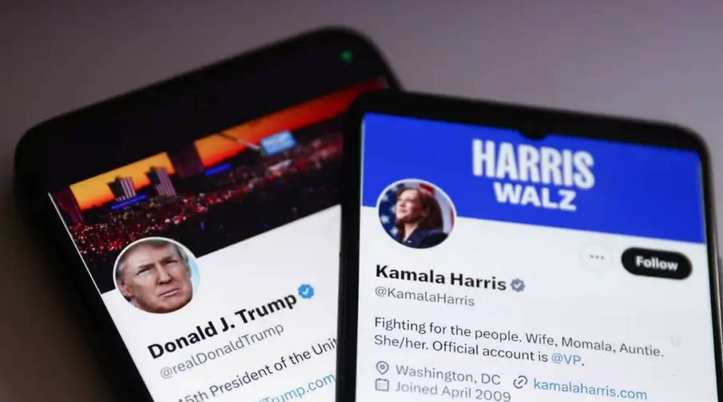
The campaign of Kamala Harris, current U.S. Vice President and presidential candidate, has sent several signals indicating her administration would be favorable toward the cryptocurrency industry.
As Harris continues to rise in the polls, industry observers are beginning to ask more questions.
Would a Harris presidency include younger advisors and political appointees who are more open to cryptocurrencies and blockchain technology—unlike Biden, Yellen, and Gensler from the older generation?
Would it support fair and balanced crypto regulatory reform legislation?
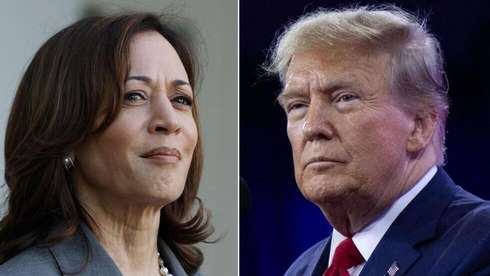
And would it serve crypto users and innovators better than the Republican Party—even though Donald Trump claims he wants to become the "crypto president" and has promised to remove SEC Chair Gary Gensler, a known crypto critic, on "day one" of his new administration?
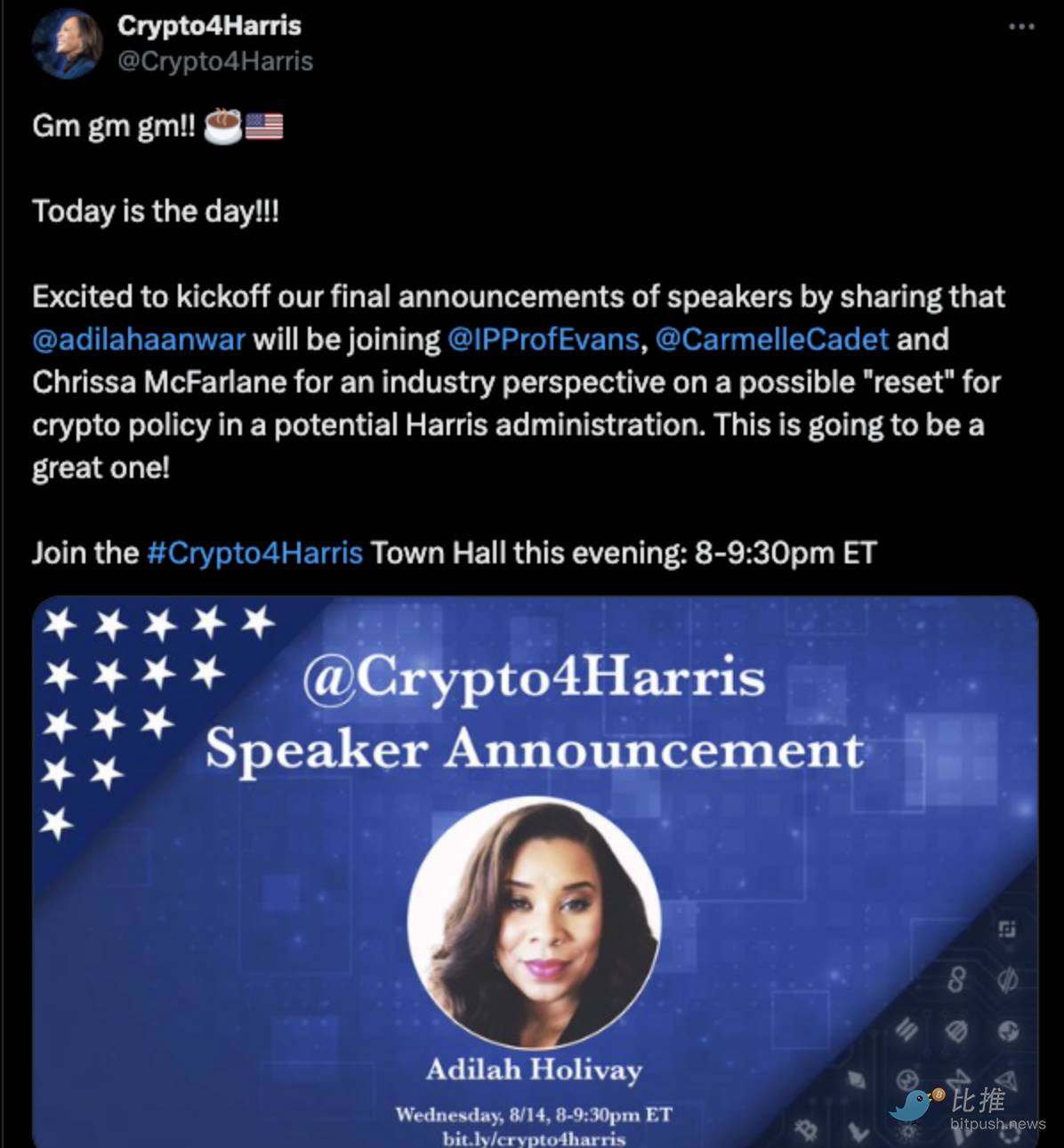
Elsewhere, an online town hall event titled "Harris Supports Crypto" is scheduled for Wednesday evening, featuring figures like Mark Cuban and Anthony Scaramucci, who are reportedly “determined not to let former President Trump win the crypto vote easily this fall,” according to Fox Business.
In recent days, even prediction markets have started tilting toward the Democratic candidate.
Harris and Walz Are Both 'Pragmatists'
It's still too early to draw definitive conclusions about what a Harris administration might mean for U.S. cryptocurrency and blockchain technology, but the background, political inclinations, age, and chosen campaign advisors of Harris and her running mate, Minnesota Governor Tim Walz, offer some clues.
Harris and Walz are both “pragmatists,” Mo Elleithee, former advisor to President Joe Biden, told Cointelegraph. “They build consensus and can work across party lines,” he added. Most agree that bipartisan cooperation is essential for passing crypto reform legislation.
“We need that balanced perspective”—rather than the sometimes confrontational approach of the Biden administration, he said.
Additionally, both candidates are younger. Elleithee expects a “fresh perspective on crypto.”
Harris grew up in Northern California, close to Silicon Valley. “She has deep experience with technology,” he noted.
Elleithee believes Harris and Walz together represent a “more modern and relevant viewpoint—almost an Obama-style approach.” He now serves as senior advisor for Unicoin, an asset-backed cryptocurrency.
Borislav Boyanovski, CEO of Concordium, told Cointelegraph: “I am optimistic that Kamala Harris, as president, will support crypto.” He added:
“She’s already engaging with the right people, like David Plouffe, former Binance advisor. She also has very close ties to Silicon Valley.”
They’ve brought not only Plouffe but also Gene Sperling, former board member of Ripple Labs. “These are crypto experts,” Elleithee said. “That says a lot.”
Harris and Walz are nearly two decades younger than Trump. “The crypto user base tends to be younger,” Elleithee pointed out, often more “trend-savvy” and open-minded when it comes to financial innovation.
Don’t Expect a ‘Miracle’
What specific actions can one expect from a Harris-Walz administration?
“Past performance does not guarantee future outcomes in financial markets or policy,” Jack Solov, fintech policy analyst at the Center for Monetary and Financial Alternatives at the Cato Institute, told Cointelegraph, adding:
“That said, improvement over the Biden-Harris administration sets a low bar.”
Solov also hopes to see “a firm public statement from the Harris-Walz campaign on their stance on crypto policy—something that has so far been lacking.”
Elleithee believes balanced and fair crypto regulatory reform legislation could be achieved under a President Harris, but the industry itself must also do its part.
He says the crypto industry has taken a “chaotic approach” to regulatory reform. For example, there are multiple blockchain associations. Companies like Coinbase operate “independently” on lobbying and regulation. “As an industry, we should unite.”
So, should Harris fire SEC Chair Gensler on “day one” of her presidency?
This remedy may sound appealing, but Elleithee replied, “but it’s just not how it works.”
The U.S. Securities and Exchange Commission (SEC) is an independent government agency. “The president lacks the authority to remove the SEC chair without cause,” as Tonya Evans recently wrote in Fortune. It might eventually be managed, but not easily—and certainly not on “day one.”
There’s no doubt Gensler has stirred strong emotions within the crypto community. “The reality is, Gensler has politicized the agency—that’s a big problem,” said Sheila Warren, CEO of the Crypto Council for Innovation.
Still, even under a future Democratic administration, the SEC chair may not survive, “because of the reality—and I think a point many in crypto overlook—that Gary Gensler is unpopular among a broad range of industry players, not just in crypto,” Warren added.
Party Divisions?
Complicating matters further, “Democrats are divided on crypto issues,” Aaron Klein, Miriam K. Carliner Chair and Senior Fellow in Economic Studies at the Brookings Institution, told Cointelegraph. “On one hand, a significant portion of elected officials are deeply skeptical, while many Democratic voters own and support crypto.”
Klein noted that Republican presidential candidates have seized on this gap, adding:
“Even though during his presidency Trump’s administration did little to support the industry, he’s now campaigning as pro-crypto.”
Perhaps the best way for the Harris campaign to approach crypto issues would be “to take a middle path—offering enough to crypto supporters to differentiate from the Biden administration, while retaining enough ambiguity to define her administration after the election,” Klein said.
Trump could very well lose interest in crypto again at some point. Klein recalled that in 2016, Trump campaigned on “restoring the highly regulated Glass-Steagall Act for banks,” “but once in office, he actually eased bank regulations.”
Three Pillars of Effective Regulation
Nonetheless, many unknowns remain. Solov is still waiting for “a clear public statement of principles from the Harris-Walz campaign on cryptocurrency and decentralized finance, let alone positions on regulatory agendas or crypto-related legislation.” He said perhaps the situation will change in the coming days and weeks. If a new Harris administration truly has a chance to pass federal crypto reform legislation, it will need to proceed carefully.
“Democrats tend to overregulate,” commented Elleithee, former CFO, managing director, and senior advisor to Vice Presidents Gore and Biden on Latino and LGBT policy.
He added that effective regulation rests on three pillars: it must foster innovation and growth, support businesses and consumers, and eliminate bad actors.
“If done properly, none of these would harm our industry,” Elleithee concluded.
Join TechFlow official community to stay tuned
Telegram:https://t.me/TechFlowDaily
X (Twitter):https://x.com/TechFlowPost
X (Twitter) EN:https://x.com/BlockFlow_News
 比推 BitpushNews