What is the altcoin MetaGame in this cycle?
TechFlow Selected TechFlow Selected
What is the altcoin MetaGame in this cycle?
Enhance cognition, stay sensitive.
 Navigating Web3 tides with focused insights
By Yu Zhong Kuangshui
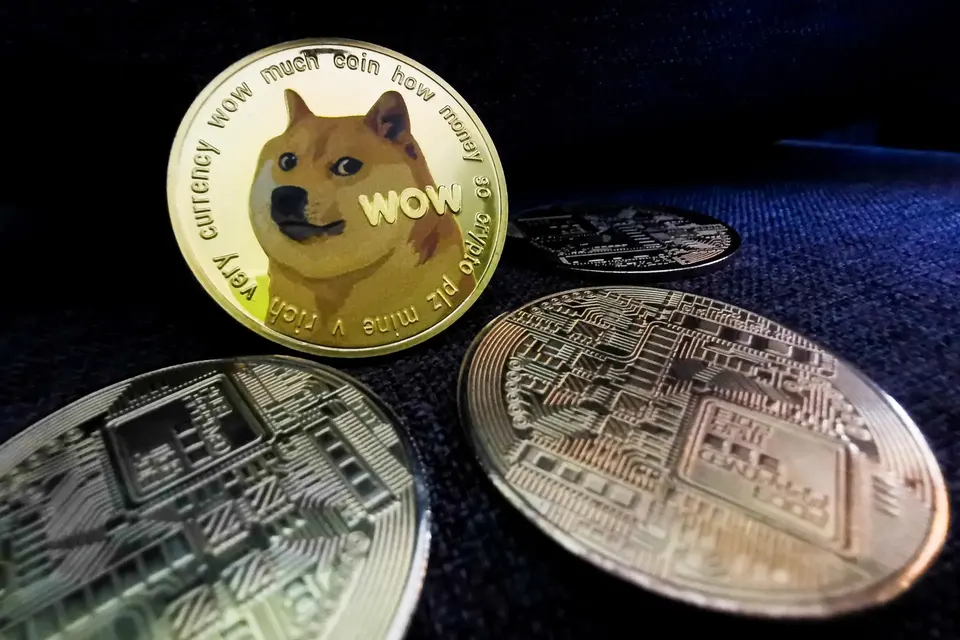
What impressed me the most personally are "inscriptions" and "Memecoins".
The emergence of hype around these two phenomena is driven by either "demand" (even if such demand is merely artificial or unsustainable) or "Ponzi" dynamics (high returns and capital efficiency fueled by greed).
A familiar topic: last cycle’s Alt-Layer1 hype stemmed from users’ desire for high-performance, low-fee public blockchains. The DeFi Summer (a Ponzi phenomenon) created demand for Ethereum blockspace, while Ethereum’s limited performance and high fees (thus generated demand) pushed many users toward its competitors.
"Demand" and "Ponzi" interact with each other, yet both are constrained by market cycles.
For example, the hype around DeFi and Alt-Layer1 resulted from the interplay between demand and Ponzi dynamics. GameFi was essentially an upgraded version of DeFi—wrapping liquidity mining into games and selling them to on-chain users. In the end, however, GameFi failed to generate any new real demand (perhaps only gaming guilds truly benefited from the GameFi hype), and thus faded quickly due to cyclical constraints. Had GameFi successfully created new demand alongside viable solutions, the bull market might have lasted a few more months.
@cobie refers to this kind of narrative-driven speculation as MetaGame.
In this cycle, we’ve seen many MetaGames—like the inscriptions and Memecoin mania I mentioned earlier (and some fleeting ones like modularity, Cancun upgrade / Layer2).
The inscriptions and Memecoin rallies are the most popular Ponzi plays of this cycle. In short, these Ponzis continuously launch new assets, using future expectations to attract subsequent buyers.
However, the hype around inscriptions and Memecoins isn’t baseless.
I believe, in the case of inscriptions, miners are likely the main driving force. Ahead of the halving, miners need to boost on-chain activity on Bitcoin to increase mining profits. In other words, going forward, as halvings continue, miners will need to drive the development of the Bitcoin ecosystem to subsidize mining costs. It’s foreseeable that the Bitcoin ecosystem will see an explosion of new assets and new gameplay, bringing new wealth opportunities.
What about Memecoins?
A mainstream view holds that market enthusiasm for Memecoins stems from participants’ disdain and resistance toward low-circulating, high-FDV VC-backed tokens.
I’d add that the current Memecoin wave is more like a convergence of timing, infrastructure, and social momentum: Solana needs a wealth effect to revive itself. Users must enter the Solana ecosystem so that Solana can then promote its other products (DeFi, phones, DePIN) to them. Memecoins serve as the catalyst.
The backlash against VC coins further elevated the Memecoin hype to new heights.
This Memecoin frenzy has created demand for both trading and launching Memecoins. That’s why we’re seeing the popularity of Telegram trading bots and Memecoin launchpads.
All of the above constitutes a brief recap of the past cycle. Now, let’s briefly discuss my predictions for future MetaGames.
These predictions are grounded in the industry’s prevailing challenges and mainstream market sentiment.
1. Alt Layer1 (Market Hype Demand)
Discussions about Alt Layer1 mostly center on the idea of a “Solana successor.” On social media, I’ve seen many argue that $SUI will be the next Solana. While such views may seem biased ($SUI conducted extensive OTC deals? I’m not sure about the details, but that’s the market rumor), $SUI does possess potential to become the next-generation Alt Layer1.
But here’s my question: has Solana really failed?
Not really—at least not to the extent Ethereum did in the previous cycle. Solana occasionally suffers lag or downtime, but it doesn’t hinder user experience. Solana’s current challenge lies in market fatigue toward Memecoin speculation—without sufficient on-chain wealth effects, there’s no expectation for further pumps. Pumpdotfun has contributed to this situation to some degree.
There’s currently no sign that $SUI can take over from Solana.
In my opinion, a chain’s core strength lies in its developers, and the ecosystem is what attracts and retains users. In the last cycle, Solana captured a large number of developers and left behind substantial on-chain infrastructure—that’s the foundation of its success. $SUI hasn’t achieved that yet.
$SUI also faces competition from chains like Fantom and $SEI. $SEI has recently seen strong fundamental data growth (driven by airdrop anticipation), possibly laying groundwork for a future price pump upon token unlock. Similarly, Fantom is offering airdrops to Sonic chain users. Though they’re following well-trodden paths, these tactics work in the short term.
Now, let’s talk about other chains.
Avalanche is focusing on enterprise adoption (via subnets) and RWA. Market expectations for RWA may decline as interest rate cuts begin, and enterprise adoption remains questionable. Avalanche’s hype doesn’t hinge on user numbers but on market attention. The way to capture attention is through frequent positive announcements that raise market expectations.
Berachain differs significantly from other chains in that its Proof-of-Liquidity (PoL) mechanism is highly visible and engaging for users. It encourages continuous interaction and博弈 (strategic gameplay) between users, validators, and projects. In contrast, consensus innovations on other chains are imperceptible to users, who may simply perceive them as another faster, cheaper Layer1. This makes Berachain more interesting. Combined with its strong community, Berachain is likely to generate significant buzz and market attention upon mainnet launch, which will positively impact PA (price action).
2. Liquidity Fragmentation (Real Market Demand)
In my view, solutions to liquidity fragmentation fall into three categories:
-
Chain abstraction / Intent abstraction
-
Shared liquidity
-
Cross-chain / Interoperability
Regardless of the type, abstraction essentially means creating a front-end where users can seamlessly access products across chains to fulfill their intents. The launch of Uniswap v4 could serve as a catalyst for hype around such infrastructure. However, widespread speculation likely won’t occur until massive liquidity and user inflow happens—typically in mid-to-late bull market phases. Simply put, on-chain activity isn’t vibrant enough yet; user volume determines the scale of demand.
Shared liquidity means exactly what it says—pooling liquidity together to serve multiple products uniformly. However, shared liquidity doesn’t solve user experience issues. Demand for such products tends to come from B2B, not B2C. I find it hard to envision significant hype around this sector—unless a project combines solid fundamentals, broad market awareness, and massive CT-led promotion.
I won’t dive deep into cross-chain; many others are already covering it.
3. Buying and Holding BTC (Real Market Demand)
This cycle may witness a shift from “institutions buying and holding” to “nations buying and holding” BTC. As such, trading venues may grow increasingly important under this demand pressure. Relevant tickers include $BNB and $COIN.
Additionally, we’re already seeing more nations acquiring BTC through mining. Speculation around energy-related assets is also likely (though timing is unpredictable).
4. AI (Market Hype Demand)
We’ve seen AI hype multiple times before. Continuous innovations from OpenAI, NVIDIA’s earnings reports, and similar events keep market expectations alive. In my view, the key to AI speculation lies in the trading venue: AI-related assets traded in liquid markets have greater potential than others. The quality of the trading venue itself also depends on the background and credibility of the underlying asset.
5. New Ponzi
New Ponzi mechanics are extremely hard to predict.
Currently, market attention remains focused on Memecoins and the BTC ecosystem. When the BTC ecosystem is strong, Memecoins tend to weaken. Throughout this cycle, everyone is obsessed with hyping newly issued assets, but we haven’t seen Ponzis on the scale of DeFi or GameFi emerge. Eventually, the market will grow tired of asset launches and shift focus to projects with real revenue—such as $BANANA—or fully circulating tokens with strong fundamentals, like $UNI and $LDO.
6. Final Thoughts
MetaGame is a concept I borrowed from cobie’s 2021 writings. Regarding future speculative waves, I remain uncertain—until clear signs emerge, no one can precisely predict which sector will host the next narrative-driven opportunity.
“Improving cognition and staying sensitive” is what we must do now.
This piece mainly focuses on predicting future MetaGames. I recommend reading cobie’s 2021 article (which also discusses MetaGame rotation and exit timing).
Join TechFlow official community to stay tuned
Telegram:https://t.me/TechFlowDaily
X (Twitter):https://x.com/TechFlowPost
X (Twitter) EN:https://x.com/BlockFlow_News
 雨中狂睡Sleeping in the Rain