Remember STEPN? Heard you can make $300 a day again?
TechFlow Selected TechFlow Selected
Remember STEPN? Heard you can make $300 a day again?
STEPN GO, hard to get even one code.
 Navigating Web3 tides with focused insights
Text: Jaleel Jia Liu, BlockBeats
When recalling the summer of 2022, many still remember the explosive popularity of StepN—buying a pair of running shoes and earning income by exercising daily became a major trend not only in the crypto world but also across the tech industry.
Two years on, StepN has launched its completely revamped 2.0 version—STEPN GO—the third game from developer FSL following StepN and Gas Hero. Although this new version is still in testing phase with a relatively small player base, improvements in its reward mechanisms and design have already attracted significant attention from both veteran and new players.
A Ming, a long-time StepN player, is now an early participant in STEPN GO. In his experience, earnings from the GGT token have been impressive. With a level 19 running shoe, he earns approximately $300 per day. He added, "The current breakeven cycle is around 30 to 40 days." While uncertainties remain, for veterans like him, this outcome is already quite favorable.
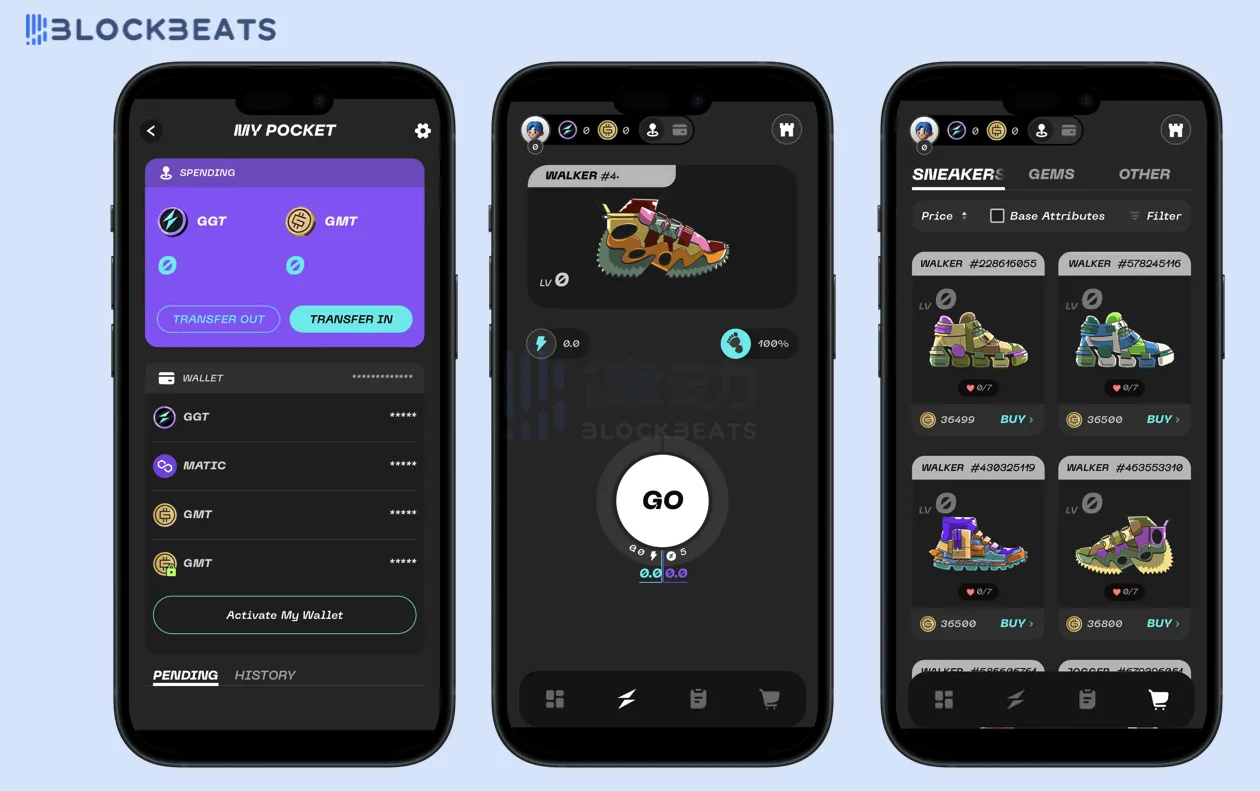
STEPN GO gameplay interface
In this article, BlockBeats dives deep into the upgrades introduced in STEPN GO, the entry barriers for new users, and the most critical aspects for players: earnings and breakeven cycles. It should be noted that STEPN GO is currently in testing phase, so specific data may change as the game evolves.
What’s New in StepN 2.0?
GGT: The New GST
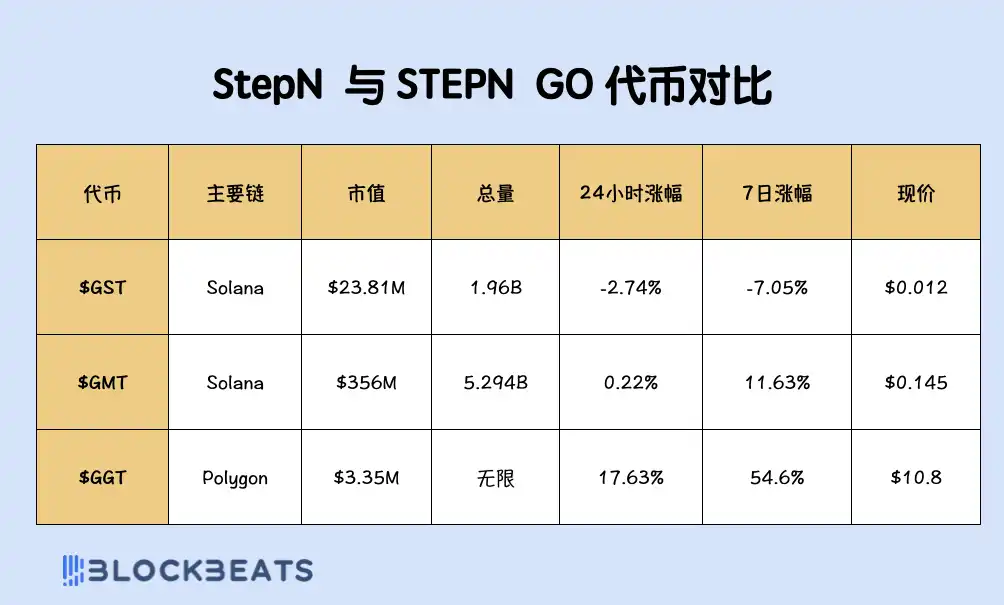
StepN used GST and GMT as its primary tokens. In STEPN GO, a new token—GGT (Go Game Token)—has been introduced, deployed on the Polygon chain with no supply cap.
Since its launch on September 5, GGT's price has been highly volatile. Within just one hour of going live, its price surged by 2,120%, then quickly dropped back to around $6. After a period of fluctuation, however, GGT has shown a steady upward trend over the past week. As of writing on September 12, GGT had rebounded to $10.
GGT is primarily earned by completing daily outdoor exercise tasks. Users can choose to earn GGT while using their NFT sneakers during physical activity. Many factors affect GGT earnings, including shoe type, level, efficiency stats, and quality. For example, Runners typically yield more GGT than Joggers.
STEPN GO also implements a daily earnings cap and token burn mechanism. Users start with a 5/5 daily GGT cap, which can be increased up to 300/300 through sneaker upgrades or gem destruction. Users can burn GGT to craft and "breed" new sneakers, upgrade existing gear, unlock slots, create clothing, or initiate and join events on interactive maps. Burned GGT is permanently removed from circulation, reducing supply to maintain ecosystem balance and control token inflation.
Sneaker Levels & Customization System
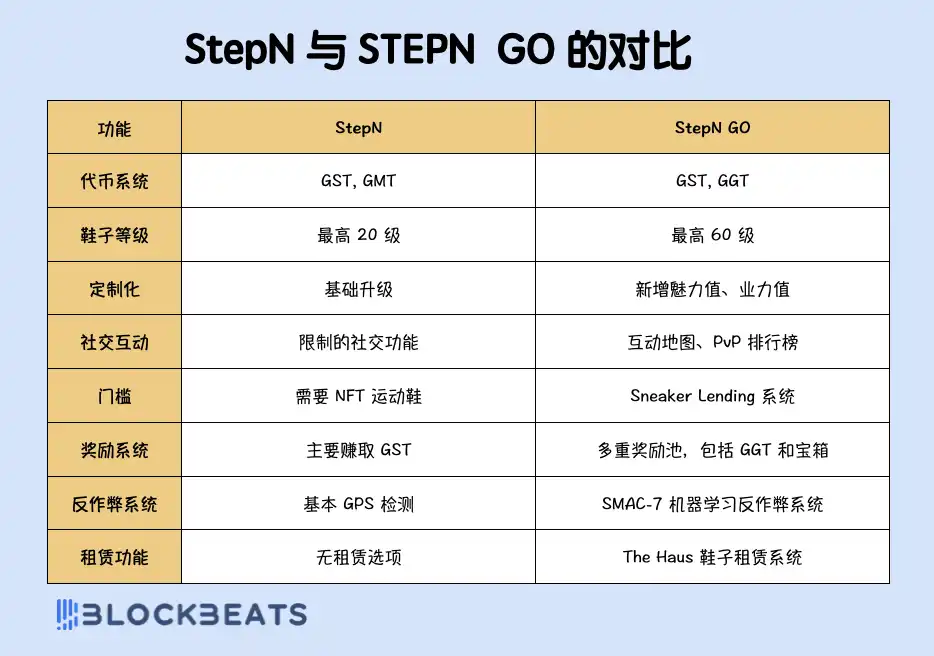
In StepN, the maximum sneaker level was capped at 20. In STEPN GO, this limit has been raised to 60. Additionally, two new attributes—Charm and Karma—have been introduced. These attributes influence in-game performance as well as social interactions and competition among players.
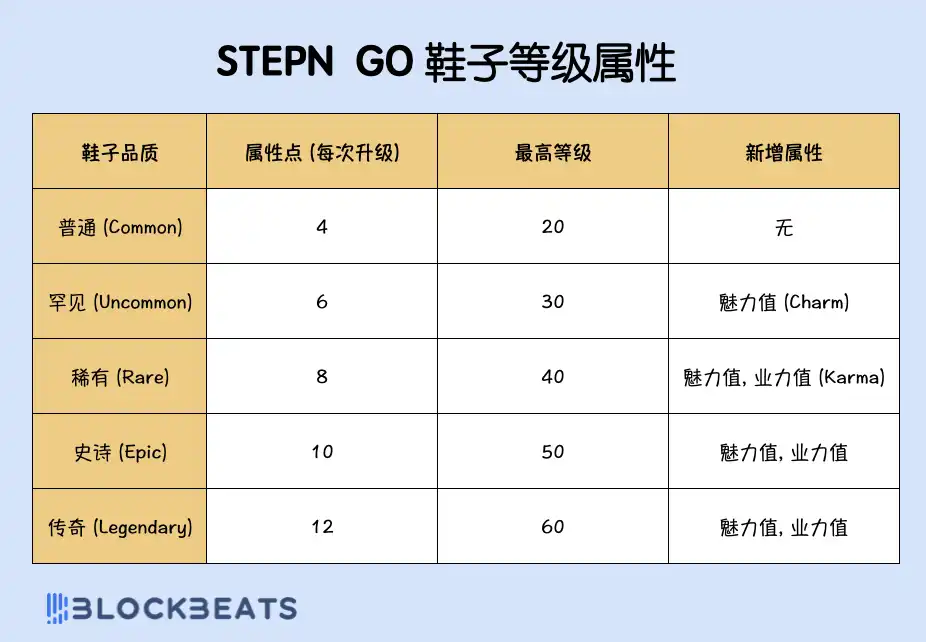
Charm helps players obtain more clothing fragments in the game, while Karma affects performance on the PvP leaderboard—the higher the Karma, the greater the rewards received.
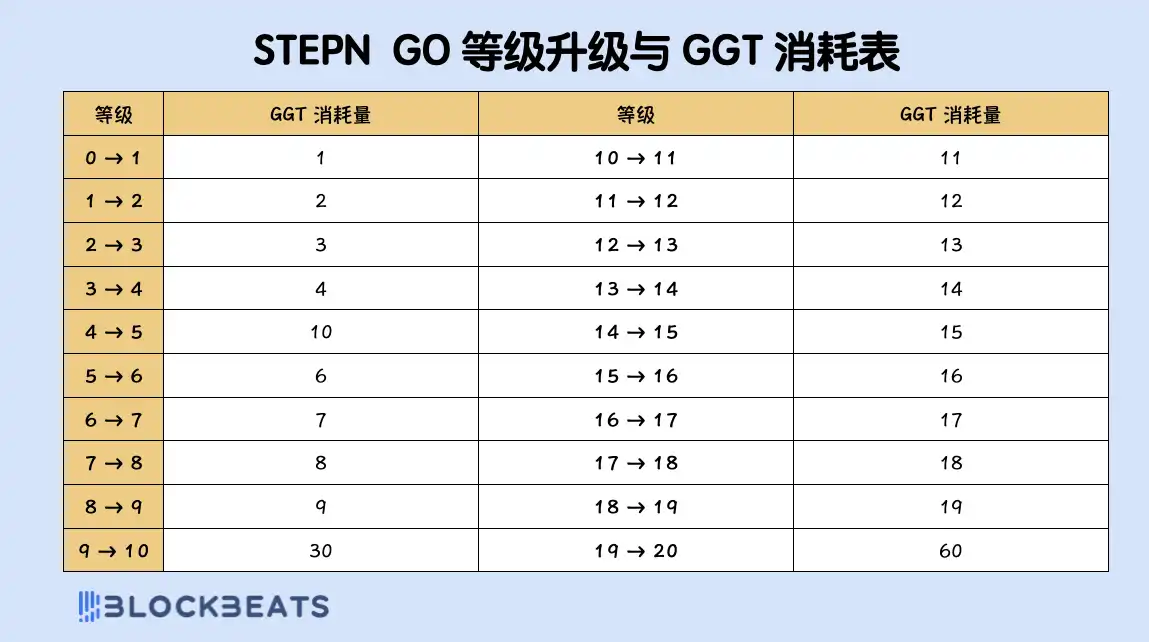
Players can enhance these attributes by upgrading their sneakers. The upgrade process consumes a certain amount of GGT, and some high-level stages also require GMT. Different-quality sneakers gain additional attribute points upon each upgrade, which users can freely allocate.
New Sneaker Rental Model: Turning Running Shoes into Financial Tools?
In StepN, users could only participate and earn by purchasing and holding NFT running shoes. Although a rental feature was once planned for version 1.0, it never launched, meaning users could only use their purchased shoes individually, without sharing options.
Now, in its 2.0 iteration, STEPN GO delivers on this long-awaited function through The Haus system—a platform similar to a shared economy model, allowing users to list idle sneakers for others to rent.
For sneaker owners, renting means generating passive income even when they don't have time to run. This transforms sneakers into something resembling financial assets (though owners won’t receive tenant-generated earnings if they fail to consume 2 energy per day). For renters, buying two pairs of shoes comes at a high cost—around $8,000 at current prices. The Haus system offers a low-cost entry point, enabling users to experience STEPN GO and earn GGT or other rewards without needing to purchase NFT sneakers upfront.
Beyond these three major upgrades, STEPN GO has enhanced social interaction, reward systems, and anti-cheating measures. Through an interactive map, users can locate nearby runners or compete globally via the PvP leaderboard. This breaks away from the previous solitary exercise model, introducing stronger social dynamics.
Additionally, STEPN GO introduces diversified reward options. Users can earn GGT not only through movement but also by discovering treasure chests and unlocking clothing fragments. To ensure fairness, the platform has implemented the advanced SMAC-7 anti-cheat system.
Entering the “Narrow Gate”: How High Are the Barriers Now?
"The design adjustments made by STEPN GO are very smart. The team clearly drew valuable lessons from both StepN and Gashero," said A Ming, who joined StepN in early 2021 and is now among the first players in STEPN GO. In his view, STEPN GO’s design greatly improves the game's lifecycle and sustainability, giving the project greater viral potential.
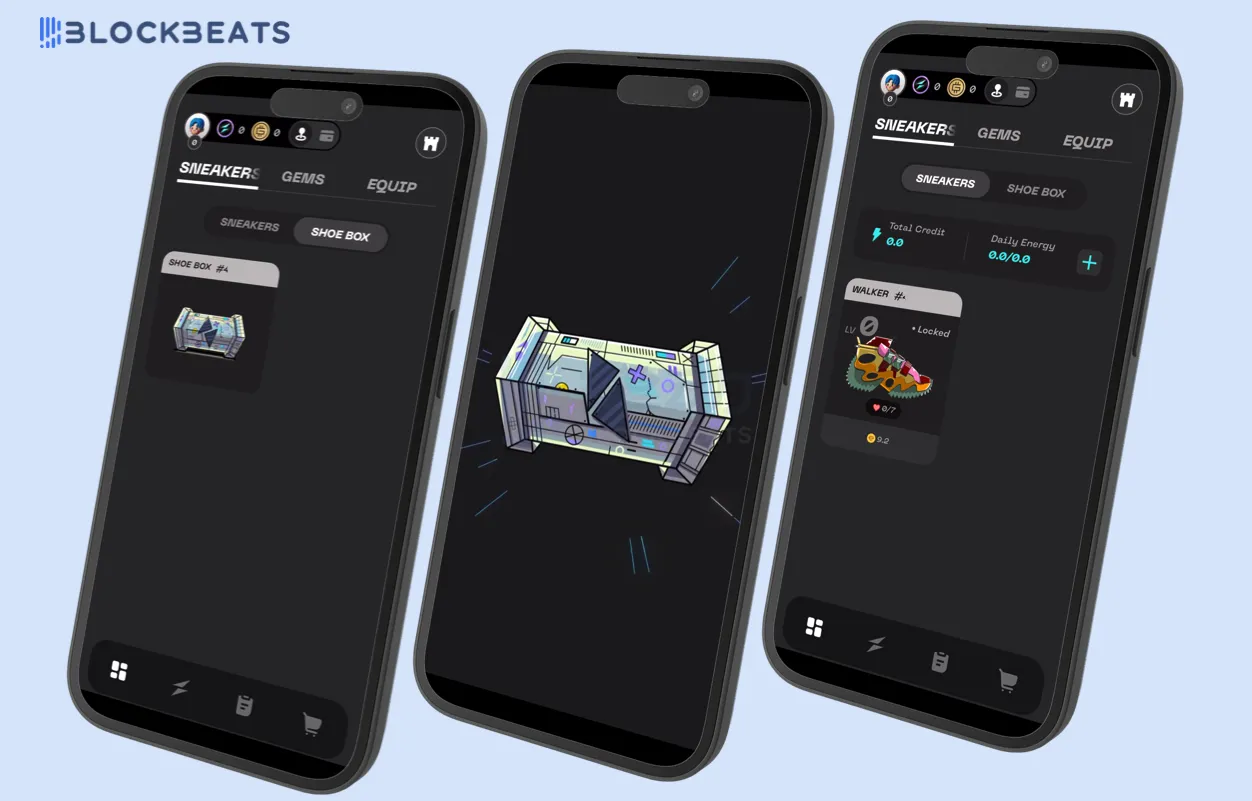
STEPN GO unboxing interface
STEPN GO maintains strict control over invitation codes in its early stages. Sneakers purchased from the Mooar marketplace cannot be used directly—they must first be activated with an access code. Clearly, controlling user growth rate is part of STEPN GO’s strategy to extend the mechanism’s longevity.
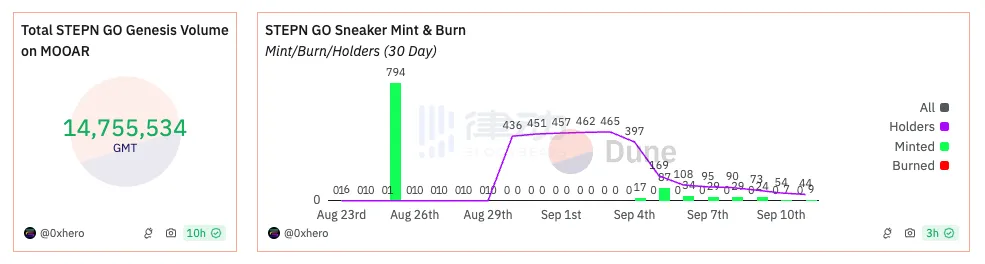
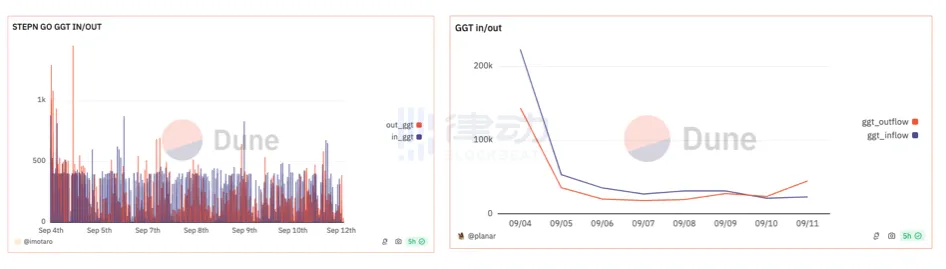
This trend is evident in the data: over the past 30 days, daily new user additions have declined from over 400 initially to about 50 today.
"StepN back then was too FOMO-driven; the sneaker growth mechanism was overly aggressive, which eventually crushed later-stage profits. Given the fixed size of the crypto market, slow and steady growth—like squeezing toothpaste—is how the sneaker ecosystem can survive longer," A Ming believes STEPN GO will maintain tight control over new user access for the foreseeable future.
A Ming obtained his sneaker by staking GMT in a STEPN GO lottery draw. "Of course, this is something many criticize—staking GMT locks funds for four years. Who knows what things will look like after four years?" A Ming remarked with some frustration.
Other ways to get an invite code include receiving one as a gift or renting a shoe. "Officially, there are occasional giveaways and promotions across channels, and I expect they’ll gradually loosen access a bit," A Ming told BlockBeats, adding that a small number of invite codes are also traded off-platform.
Receiving a free invite is nearly impossible. While renting through The Haus system remains an option, supply is extremely limited. "Looking for owner, waiting online"—in STEPN GO community channels, numerous users seeking low-cost entry actively search for shoe owners willing to rent.
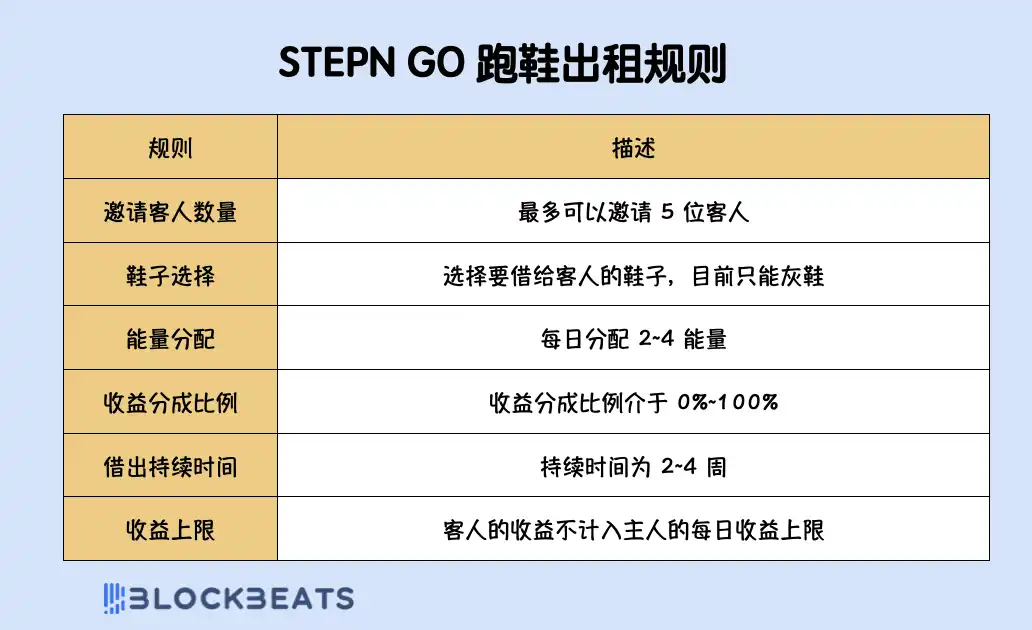
Currently, successful matches between "owners" and "renters" typically split earnings 9:1 or 8:2, with rental periods usually set at two-week intervals. However, for owners, unreliable renters—"three days fishing, two days drying net"—waste opportunity and time costs. Plus, since The Haus system is still new,
few users are willing to rent out their sneakers. Most prefer burning shoes for energy or lending them to family and friends rather than strangers.
High Risk, High Reward? What About Earnings and Breakeven?
A Ming currently owns a level 19 shoe. Having upgraded his cap once, he can now expend 3 energy points per day, earning 26 GGT. At the current GGT price of $11, this translates to roughly $300 in daily earnings.
"Calculating the breakeven cycle is tricky because daily energy caps and earnings differ between beginner and later stages—it’s all just estimation," A Ming explained when asked about return timelines.
Excluding special shoe effects, A Ming estimates a breakeven period of 30–40 days. Based on his cost breakdown—winning a shoe via GMT staking lottery and spending $4,000 to buy and burn a second shoe for energy—his total cost is around $5,000.
He earns 22 GGT per day. However, since upgrading consumes some GGT, the actual breakeven point is closer to 25 days. A Ming noted that burning one shoe yields 90 energy points, and early daily energy cap is 2 points—meaning continuous running for 45 days. Under ideal conditions, after breaking even around day 20, the remaining 25 days generate pure profit.
"Of course, this estimate overlooks many variables—such as possible increases in daily energy cap to 3 points later, bonus effects from special shoes, GGT price volatility, user growth rates, and other earning methods like breeding and renting," A Ming added. All these factors impact overall returns.
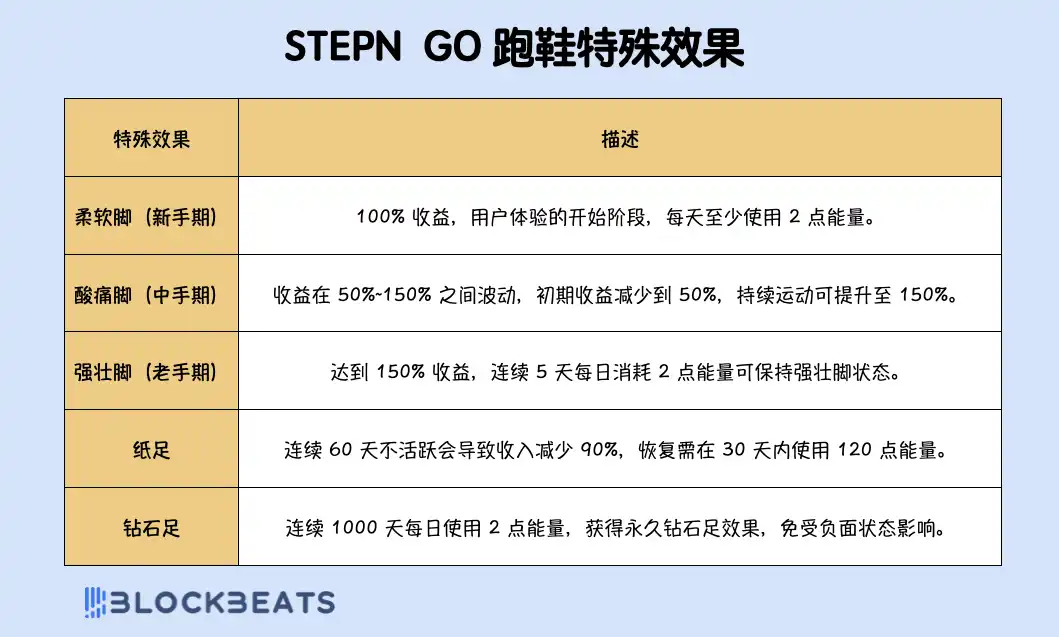
Currently, most users estimate a breakeven period of around 30 days, which is widely accepted. Another player, Max, who participated extensively in internal testing, recalled that early StepN had breakeven cycles of just 7–14 days. STEPN GO’s cycle is now 2–3 times longer.
Max believes the biggest factor affecting STEPN GO’s earnings and breakeven time is GGT’s price. "GGT is essentially the new GST, but its production cost is higher," he pointed out. A Ming echoed this sentiment.
Hence, both closely monitor GGT burn and emission data. From multiple sources, it’s clear that starting September 10, GGT burns have consistently exceeded emissions, with earlier days showing near parity. Meanwhile, trading volume for the $GGT/GMT pair across several DEXs has seen significant growth, leading both A Ming and Max to remain optimistic about GGT’s short-term price trajectory.
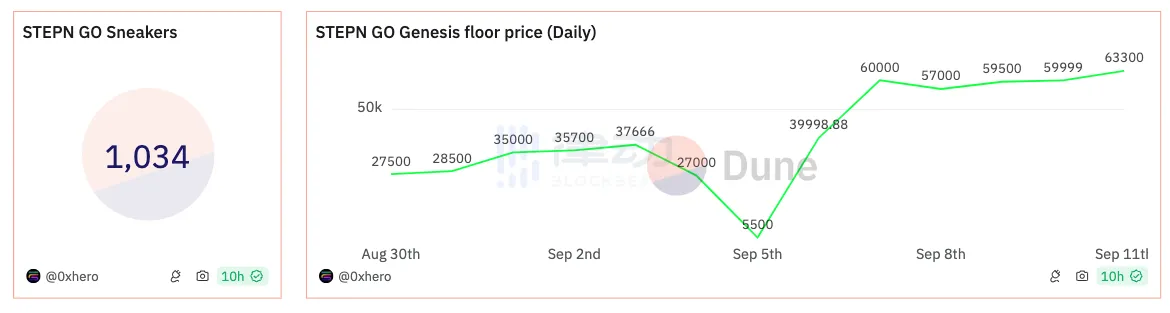
The recent rise in GGT and GMT prices isn’t particularly friendly to newcomers. Higher GMT prices have driven up sneaker costs—from 35,000 GMT just days ago to 63,300 GMT.
Max also noted that over time, STEPN GO’s energy replenishment cost amounts to about 35% of a shoe’s total value—similar to the "repair" cost in version 1.0—but this cost is fixed upfront. He believes that as long as daily user growth stays between 0.5% and 0.75%, the current pricing structure can be sustained, further supporting demand for sneakers and maintaining healthier floor prices.
Overall, STEPN GO’s 2.0 version brings numerous innovations to the sneaker ecosystem—especially through the introduction of GGT, the launch of a sneaker rental system, and a more strategic approach to entry barriers. For early adopters, this undoubtedly presents a fresh opportunity, though potential risks and rewards must be carefully evaluated.
Given that the game is still in testing phase, certain mechanics and rewards may evolve over time. As A Ming put it: "Even though entry barriers are higher, that also suggests potentially richer returns. For those who can get in early, STEPN GO’s rewards are still highly attractive."
Special thanks to: Mable, A Ming, Max, Zijing
Join TechFlow official community to stay tuned
Telegram:https://t.me/TechFlowDaily
X (Twitter):https://x.com/TechFlowPost
X (Twitter) EN:https://x.com/BlockFlow_News
 BlockBeats