Understanding STEPN GO: In-Depth Analysis of Innovative Design and Economic Model, Exploring the Breakthrough Opportunity for Sneaker 2.0
TechFlow Selected TechFlow Selected
Understanding STEPN GO: In-Depth Analysis of Innovative Design and Economic Model, Exploring the Breakthrough Opportunity for Sneaker 2.0
Surviving bull and bear markets reveals true strength
 Navigating Web3 tides with focused insights
Author: Dora, W Labs
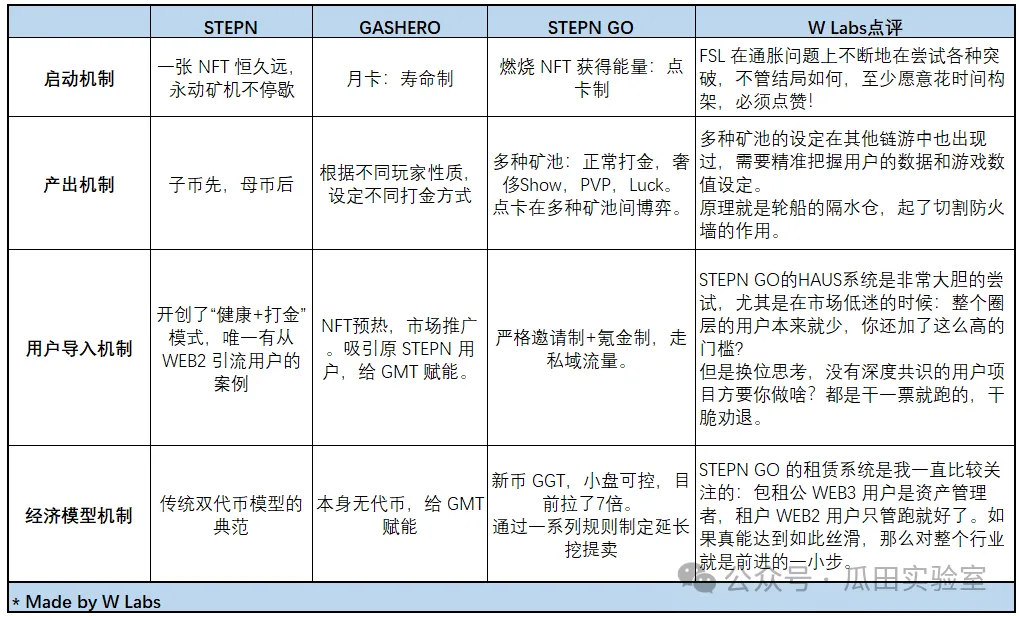
[Editor's Note] Sister Dora has been closely following the STEPN series for years. Since STEPN GO opened its beta testing in September, we’ve prioritized it as a rare case worth writing about amid today’s sluggish market. Honestly, when everyone is losing interest, finding a project compelling enough to write about is incredibly difficult. The FSL team continues to innovate aggressively on their new product, particularly addressing key pain points in the blockchain gaming industry. Regardless of the outcome, their alignment of vision and execution deserves respect. This article is long—we’ve summarized its key points into a table below and added some preliminary commentary, hoping to spark discussion.
In the crypto market, surviving both bull and bear cycles is the ultimate test for any project and team. Recently, #STEPNGO reignited community enthusiasm—since opening beta testing on September 5, its token has performed impressively (up 752% in 7 days), and community response has been strong. What makes this "sneaker 2.0" project so attractive? Can it replicate STEPN’s viral success from 2022? With this new market opportunity, do regular investors still have room to participate? And can it avoid the extreme volatility and challenges that plagued the original #STEPN?
If you’re interested in these questions, keep reading. This is likely the most detailed first-hand Chinese research report on STEPN GO available online—crafted specifically for anyone looking to find opportunities in this new wave👇
Preface
"Survive bull and bear markets, and true strength will show."
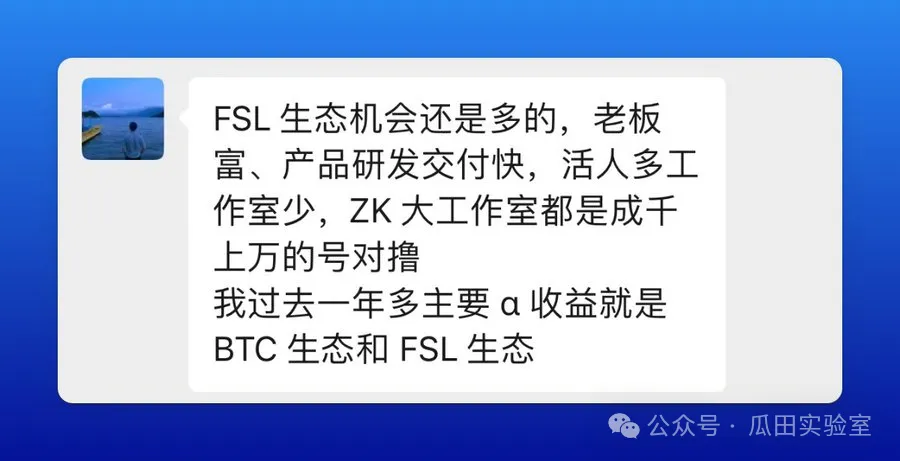
A few days ago, I chatted with Bitwater (aka Shui Ge) about investment insights over the past year. He mentioned that his primary alpha gains came from the BTC ecosystem and the FSL ecosystem. As a seasoned OG who has already achieved financial freedom and lived through multiple market cycles, his investment philosophy and mental discipline have deeply influenced me.
When investing in products, start with the team. In crypto, “soft rugs” by project teams are common, so team reliability is critical. FSL co-founders Yawn and Jerry have proven over more than three years that they are among the rare trustworthy teams in the space. Whether in bull or bear markets, they’ve consistently focused on product refinement and continued delivering surprises and value to the community. This sustained commitment and disciplined execution are key reasons why FSL remains standing in the volatile crypto landscape.
Innovations and Optimizations in STEPN GO
After spending hundreds of millions in real capital and learning from numerous product design and operational missteps, FSL has comprehensively optimized STEPN GO across economic modeling, market strategy, and user experience:
Economic Model Optimization: How to Achieve More Sustainable Growth?
Most blockchain games face the dreaded "death spiral"—early users profit by selling tokens mined from new users’ investments. Once early adopters stop reinvesting and user growth slows, the entire project collapses into a downward cycle. Traditional game economies struggle to solve this fundamentally. Common tactics like staking, loyalty points, multi-token layering, or grand visions (essentially PUA techniques) aim only to delay the inevitable by encouraging reinvestment and postponing sell pressure—these merely postpone the crisis.
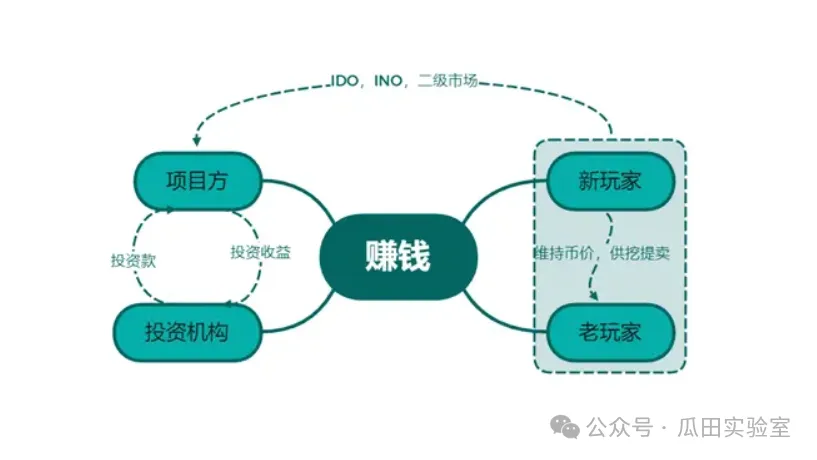
STEPN GO attempts to break this cycle by completely redesigning the energy system, introducing diversified mining pools, and regulating large-scale farming behavior—to build a more resilient and sustainable economic ecosystem.
1. Redesigned Energy System
In the original STEPN, the energy system caused severe inflation. Users continuously generated tokens simply by holding sneaker NFTs, making economic stability entirely dependent on reinvestment and new user inflows. When supply-demand imbalance occurred, low-tier NFTs piled up, prices dropped, and the system spiraled downward. Later fixes—like adding HP maintenance costs and five-in-one fusion mechanics—helped consume low-end NFTs but failed to address the root cause.
In STEPN GO, the economic model has been boldly restructured. It removes the old “hold sneakers to generate energy with time-based recovery” mechanism and replaces it with a new design: "burn sneakers to obtain energy and daily energy cap." This requires users to destroy NFTs to gain energy, ensuring ongoing demand for lower-tier NFTs and effectively preventing floor-price NFT accumulation.
To make it easier to understand via gaming analogies:
-
In the old STEPN model, users could continuously earn tokens just by holding sneakers—similar to a "free-to-play over time" game, requiring no additional cost.
-
STEPN GO is more like a "pay-to-play over time" model, where users burn sneakers to get game credits (energy), which they can use flexibly. This not only reduces user anxiety but also allows them to control costs based on actual needs, thereby reducing strain on the system.
2. Diversified Mining Pools and Game Theory Mechanisms
To further optimize user earnings, STEPN GO introduced a multi-pool mechanism. Initially, only the "Efficiency Pool" is open, allowing users to earn $GGT by consuming energy. According to future roadmap updates, three additional pools will gradually be unlocked:
-
Charm Pool: Drops clothing fragments used for customizing avatars, shifting spending toward luxury and non-productive assets;
-
Karma Pool: Offers PvP gameplay, where users compete against others to earn GMT rewards;
-
Luck Pool: Gives users a chance to receive mystery chests and random gems through physical activity, increasing fun and reward unpredictability.
During each workout, users can choose only one pool to earn from. This design diversifies user demands and avoids excessive single-token output that leads to inflation. Users can switch pools based on market dynamics and personal strategies, enabling dynamic adjustments within the overall economy.
More importantly, this multi-pool structure introduces stronger game-theoretic interactions. Players must strategize based on market conditions and individual goals. User behaviors become more distributed, reducing reliance on a single token stream, helping balance supply and demand, and decreasing dependence on funds from new users.

3. HAUS System and Social-Economic Drivers
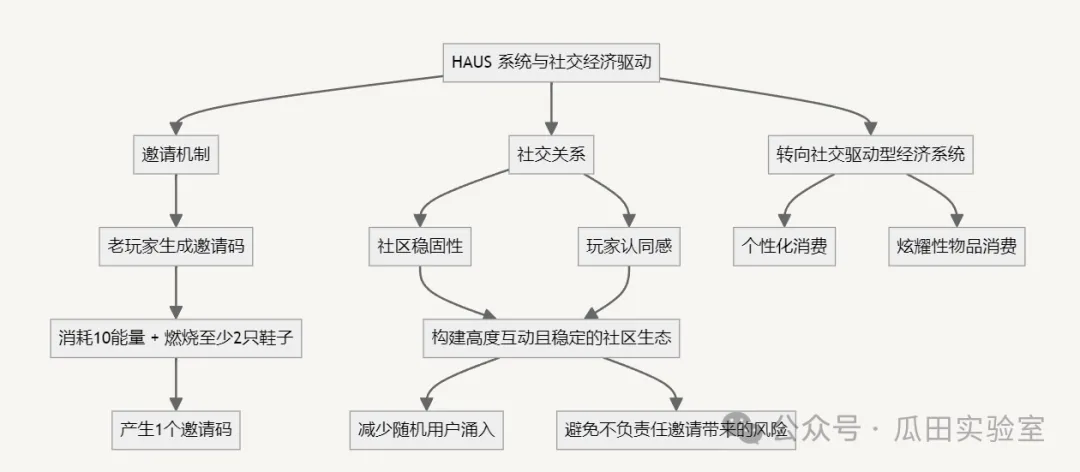
One of STEPN GO’s standout features is its HAUS system, tightly integrating economic incentives with social relationships through an invitation mechanism.
You can’t just buy your way in. To join, you need an “invitation code” generated by existing players. The baseline requirement for a veteran to generate an invite: consume 10 energy + burn at least 2 sneakers. One invite code is produced per 10 energy consumed plus one non-soulbound sneaker burned. At current shoe prices (~5,400 USDT), this means someone must spend at least ~6,000 USDT to issue a rental invite code, and ~11,400 USDT for a full buddy activation code—each invite represents significant prior investment by existing players.
When invites are this valuable, would you give one to a stranger—or to a close friend, family member, or someone you care about? This mechanism encourages veterans to invite trusted individuals rather than random people. This strengthens community cohesion and deepens players’ emotional connection to the game. By building on real social ties, STEPN GO fosters a highly interactive and stable community, minimizing influx from random users and avoiding risks from irresponsible referrals.
Looking ahead, with the introduction of luxury consumption and炫耀-style items (e.g., rare outfits), STEPN GO will shift away from pure “mine-and-dump” behavior, guiding users toward personalized, socially motivated spending. The invite-based community becomes essential to achieving this goal—not just empty promises anymore, but a realistic path forward. STEPN GO may thus evolve from a financially incentivized model to a longer-term, stable, socially driven economy.
4. Discouraging "Mine-and-Dump" and Farming Studios
Mine-and-dump and farmer exploitation are challenges nearly every Web3 project faces. Especially dangerous are efficient, rational, emotionless studio-style farmers who use multi-account setups or bots to extract maximum value quickly, intensifying market pressure and often crashing token prices—potentially destroying the project.
STEPN GO implements a set of soft constraints to discourage mine-and-dump behavior and effectively deter large-scale farming studios.
-
Hidden Time and Resource Costs
In STEPN GO, user earnings are tied to fitness levels. Each new user undergoes a 14-day fitness progression: earnings drop from 100% to 50%, then rise back to 150% ("Strong Feet" buff). But this buff isn't permanent—if a user fails to consume sufficient energy (at least 2 units) within 5 days, they lose the 150% bonus and revert to 50% ("Sore Feet").
NFT breeding now incurs higher time costs—users earn one mint quota per 15 energy spent. Renting out shoes speeds up quota accumulation, but all quotas are only reclaimable after a 14-day rental period. These changes eliminate the existence of pure "breeding-only" strategies seen in the original STEPN.
-
High Wear Costs and Withdrawal Fees
Withdrawing tokens in STEPN GO incurs a 5 GGT fee (10 GGT for NFTs), discouraging frequent withdrawals. This adds economic friction to dumping behavior, forcing users to think twice before cashing out, thereby slowing down sell-side pressure. Additionally, the continuous burning of sneakers to generate energy ensures steady NFT consumption, fundamentally reducing the risk of NFT and token overaccumulation.
-
Deterrence Against Farming Studios
STEPN GO is unattractive to farming studios: complex reward structures, uncertain returns, difficulty scaling accounts, high time costs with slow ROI, and strong anti-cheating tech... I can’t say more here dddd🤐
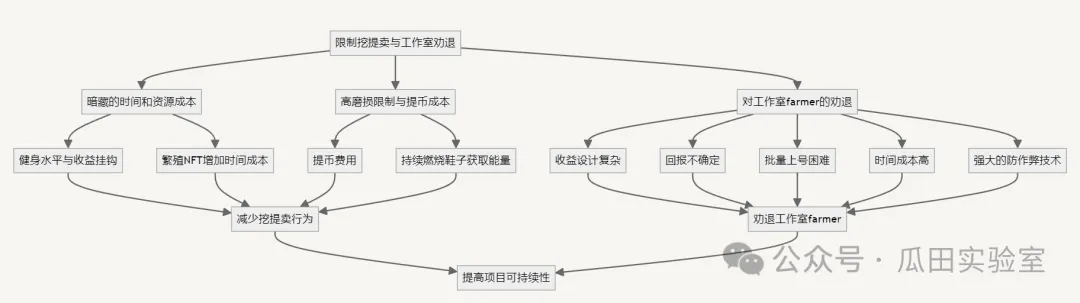
I believe this new economic model gives STEPN GO stronger sustainability potential and may offer a fresh solution for other blockchain games.
Optimized Marketing and Launch Strategy
I’ve studied many projects’ marketing strategies and even served as a consultant designing launch plans for top-tier projects. I know firsthand that "airdrops are a double-edged sword"—while effective at incentivizing users, poor execution can backfire severely:
-
Airdrop falls short of expectations → backlash
-
Airdrop rules have loopholes → backlash
-
Airdrops go to the “wrong” users → disaster
-
Airdropped assets exceed early-stage demand → bigger disaster
In contrast, STEPN GO’s airdrop and market strategy have been remarkably steady and successful so far—worth studying by every project team. Here’s how they did it:
-
First wave of soulbound assets awarded via 4-year staking lottery: This filtered for highly loyal users as seed participants, rewarding them with “early miner privileges.” A lottery format is far fairer than complex eligibility rules. The soulbound and randomized distribution effectively discouraged mercenary farmers and bot farms—an elegant design.
-
Consolation “single shoe” rewards for non-winning stakers: Entry requires at least two shoes—one burned for energy, one worn while walking. Giving away a 5,400 USDT shoe halves the barrier; buying one lets users start earning ~200 USDT/day. Who can resist that? This group forms the core demand base at this stage.
-
Offline events distribute “single shoe” invite codes to real users: Meetups in Taipei and Japan in August drew over 100 runners, with more than 100 “single shoe” invite codes handed out—further activating the target user base.
-
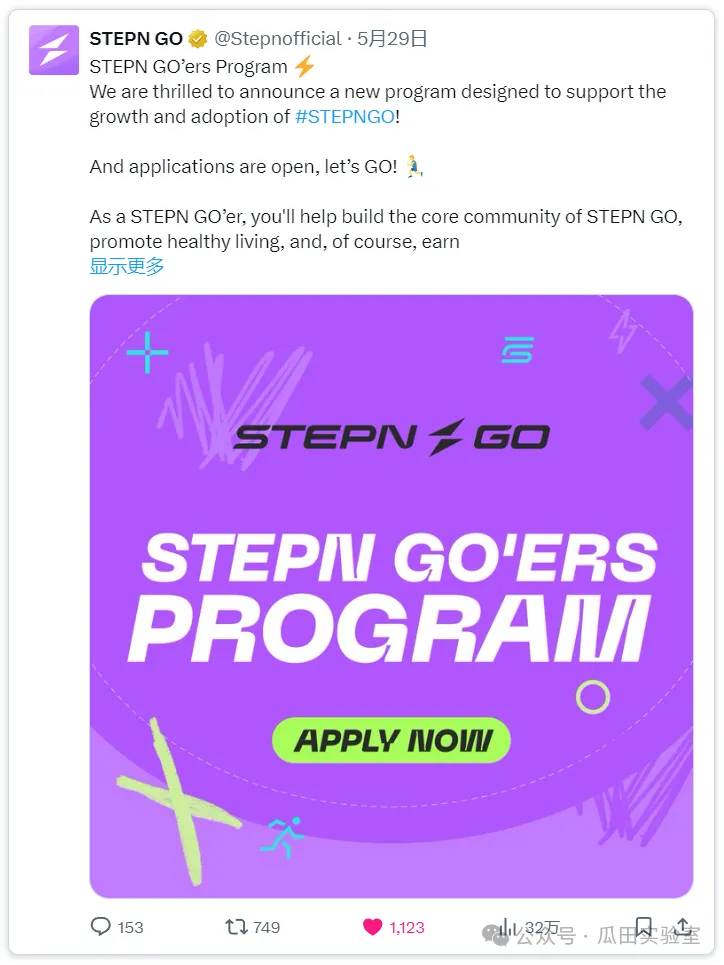
Recruiting GO'ers for organic community bootstrapping: Most Web3 projects pay KOLs for promotional content using tokens/NFTs. But KOL quality varies widely—many deliver only short-term hype without lasting impact, and their received assets often flood the market, increasing sell pressure. STEPN GO avoided this model entirely, instead recruiting GO'ers (a lighter version of ambassadors) to handle early content creation, community education, and pre-launch promotion.
-
Letting existing users decide who gets “zero-risk” free entry: As previously mentioned, only veteran users with active Haus systems can invite newcomers. They can rent extra shoes to newbies, sharing revenue—allowing newcomers to join with zero cost and zero risk. Meanwhile, Haus owners gain faster energy consumption rates, quicker mint quota accrual, and emotional satisfaction from being needed and respected. Social dynamics are fully leveraged here. Some might ask: “Why not give it to my alt account?” But STEPN GO’s AI anti-cheat system strictly limits automation and multi-accounting. Running also has physical limits. Not everyone acts purely out of self-interest—many prefer sharing with close friends or family. As long as not every new user is a sock puppet, the system can scale sustainably.
-
Tight control over user growth speed and circulating supply: The invite-code system caps user growth, ensuring initial liquidity and token price stability. GGT’s price has held up well, trending upward steadily. (I have no proof of market manipulation 🤐, but objectively speaking, when circulation and user count are small, propping up prices is relatively easy.) In crypto, nothing beats a rising price as advertising—price up, that’s the truth. No exchange listing yet, no futures contracts or borrowing, effectively curbing speculative trading.
-
Founders actively promoting the product: Just like the Black Myth: Wukong studio requiring candidates to deeply love and play their own game, great products are built by passionate users. Since STEPN GO’s launch, co-founder @Jerry10240 has shared his running stats daily on X. Today, he even surprise-dropped a limited “first-come, first-served” renter invite code: top-tier Trainer shoes, 50/50 revenue split, four-week lease! Follow him now and hit the bell.
User Experience Improvements
Web3 UX remains a major barrier to mass adoption, especially around wallet setup and initial asset acquisition. While “Connect Wallet” was once hailed as revolutionary in Web3 circles, it remains the biggest hurdle for average users.
STEPN GO’s team deeply understands this pain point and has made bold UX improvements, especially in login flow and asset management. These changes drastically reduce learning curves and bring Web3 experiences closer to Web2 standards—laying groundwork for true mass adoption.
1. A More Web2-Like Account Login Experience
Web3 platforms champion “wallet-as-account,” but this is precisely what scares off mainstream users. Getting initial assets, cross-chain transfers, seed phrase backups—all involve steep learning curves. Privy may be the leading Web3 login solution, but few realize STEPN predates Privy by offering email-based registration and login, significantly lowering entry barriers and enabling breakout success and mass adoption back then—making it the brightest star in Web3 during 2022.
With STEPN GO, the login process is even simpler. Just an FSL ID—identical to Web2 sign-in flows. For Apple users, registration takes two steps:
1) Click “Continue with Apple”
2) Click “Create Passkey”
Then, just facial recognition to log in. This ultra-simple design completely breaks down Web3 wallet barriers. Users no longer need to understand complex wallet systems—the entry threshold vanishes instantly.

2. Lower Learning Curve, Simplified Operations
The original STEPN had a steep learning curve: Which shoe type to pick? How to allocate attributes? What is HP repair? How to use gems and boxes? Every decision required research.
STEPN GO embraces the “Less is better” philosophy. Newcomers need to understand just one thing: walking earns money. No HP repairs, no gem choices, only one sneaker attribute—“efficiency.” No complex decisions. This simplicity lets users jump right in, start moving, and begin earning immediately—learning cost reduced to near zero.
3. Easier Asset Management and Cross-Chain Transfers
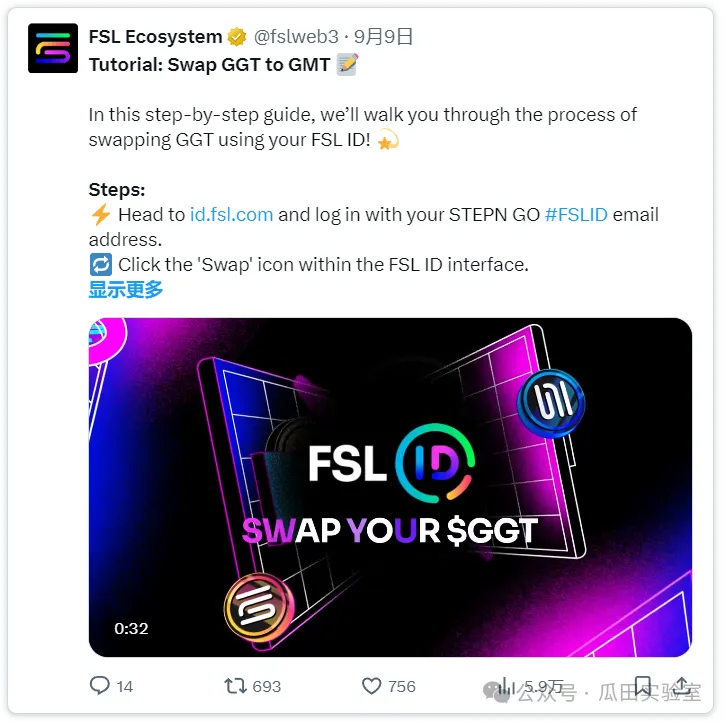
STEPN GO also made big strides in cross-chain operations and asset management. Through the FSL ID, users get multi-chain addresses upon email registration, can directly swap crypto assets within the FSL ID interface, and easily manage asset mappings across different chains and apps—eliminating the cumbersome processes typical of traditional Web3 products.
4. The Haus System Solves New Users’ Financial Barriers
For new users, acquiring crypto assets and bearing financial risk has always been the biggest psychological hurdle. STEPN GO cleverly sidesteps this with the Haus System.
The Haus System allows veterans to bundle their sneakers into activation codes and rent or gift them to newcomers. Under rental mode, the owner provides the shoe, handles selection, upgrades, and stat allocation—renters just enter the activation code and start earning zero-cost, zero-risk. No fear of losing crypto assets. In gifting mode, new users simply input the code—no longer needing to figure out wallets, gas fees, NFT transfers, etc., as was required before.
Most importantly, every new user is “onboarded” by someone, always guided—avoiding the loneliness of navigating crypto alone. This elegantly solves the financial barrier and risk concerns—it could be a pivotal step toward mainstream Web3 adoption.

Is STEPN GO’s Breakout Moment Here?
This year’s crypto market has been tough for nearly everyone. Sentiment is low. “Old degens” have seen it all—they’re afraid of getting rekt, afraid of missing out, keeping their wallets closed and investing cautiously.
Against this backdrop, STEPN GO stands out brightly. The Web3 market desperately needs a reliable, sustainable project—and STEPN GO seems to meet that need perfectly. So, how is STEPN GO different from STEPN in 2022? And how has the FSL team laid the foundation for another breakout?
How Is STEPN GO Different From STEPN in 2022?
Back in 2022, STEPN exploded overnight thanks to the “Move to Earn” trend—but as the market shifted, underlying issues emerged, pushing the project into a slump.
STEPN GO isn’t just “sneakers 2.0”—it’s a fundamentally new product:
-
Sustainable Economic Model: Building on the health-and-movement narrative, it completely restructures the economic model to be more resilient and sustainable—possibly pioneering a new paradigm that finally breaks the “death spiral” curse.
-
Healthy User Growth: Through the invite-code system, STEPN GO strictly controls user onboarding pace. This ensures high-quality users and avoids the market stress caused by sudden user surges. Combined with the Haus system’s “veteran-invites-newcomer” model, it enhances user interaction and strengthens community stickiness.
-
Simplified User Experience: Compared to 2022, STEPN GO is much easier to use. No need to study complex sneaker attributes or worry about repair costs. Just walk and earn tokens. This minimalist design lowers the entry barrier dramatically, letting even complete beginners jump in effortlessly.
STEPN GO has the potential to ignite the market once again.
Join TechFlow official community to stay tuned
Telegram:https://t.me/TechFlowDaily
X (Twitter):https://x.com/TechFlowPost
X (Twitter) EN:https://x.com/BlockFlow_News
 瓜田实验室W Labs