








The first modular L1 built specifically for the sports market: Atleta mainnet launch and TGE imminent (with testnet tutorial)
TechFlow Selected TechFlow Selected
The first modular L1 built specifically for the sports market: Atleta mainnet launch and TGE imminent (with testnet tutorial)
How can Atleta empower the comprehensive development of the sports industry in the Web3 world through blockchain technology?
 Navigating Web3 tides with focused insights
Author: TechFlow
Markets rise and fall without mercy, but that doesn't stop us from enjoying the Olympics.
From the artistic and abstract opening ceremony to Yusuf Dikec, the Turkish sharpshooter who went viral with his hands in his pockets, this year's Paris Olympics has been packed with talking points. Sports—or more broadly, athletic competition—never lack an audience. The pursuit of pushing human limits is inherently captivating, and the stories unfolding on the field—whether it’s a newcomer rising to fame overnight or a seasoned veteran finally achieving long-sought dreams—are deeply moving.
This level of attention is now extending into the Web3 industry. As the call to “embrace attention economy” grows louder, Web3 projects using sports as their core narrative are capturing significant interest. Among them, a project named "Atleta Network," with its testnet called "Olympia," feels particularly timely.
-
Atleta: From the Ancient Greek ἀθλητής, commonly referring to champions in public games;
-
Olympia: From the Ancient Greek Ολυμπία, a city located on the southern plain of Greece and the site of the ancient Olympic Games.
As the first universal, modular, multi-layer blockchain network specifically built for the sports industry, Atleta Network launched its testnet campaign in May this year. Participants can earn积分 (points) through completing tasks and staking interactions to accumulate eligibility for airdrops. In its first month alone, transaction volume surpassed 3 million, attracting over 200,000 Web3 users.
Additionally, to further attract users and developers into its ecosystem, Atleta Network has launched several incentive programs:Atleta Ambassador Program aims to recruit passionate, influential, and creative community members to create high-quality content and spread it across social media. Content creators will have access to a total prize pool worth $150,000 USD and other network rewards;Atleta Developer Grants Program encourages developers to build sports dApps, DeFi tools, infrastructure, and innovative solutions on Atleta. Successful applicants can receive up to $50,000 worth of ATLA tokens.
The impressive performance of the testnet and these incentive initiatives have sparked growing curiosity about Atleta Network: How does Atleta leverage blockchain technology to empower the comprehensive development of sports in Web3? Is participating in the testnet worthwhile?
This article dives into Atleta Network by exploring its project logic, team background, and specific ways to participate in the testnet, aiming to better understand the future opportunities and challenges of Atleta Network and Web3 sports.
Blockchain Sports Ecosystem Flagship Product: Backed by Adidas Web3 Director and Former Binance Executive
It's well known that behind sports' massive popularity—from ticketing and fan economies to prediction markets—lies a vast commercial ecosystem.
Take football as an example. According to Deloitte’s “2023 Football Finance Report,” one of the Big Four accounting firms, annual revenues from Europe’s top five football leagues exceeded 17.2 billion euros. Additionally, FIFA’s financial report for the World Cup cycle showed that the 2022 Qatar World Cup generated $5.769 billion in revenue and attracted over 5 billion viewers—about 62.5% of the global population.
As Web3 continues to grow in influence, major sports organizations have recently begun exploring how Web3 technologies can bring fresh innovations. The decentralized and transparent nature of Web3 offers broad applicability in sports: blockchain-based ticketing can enhance fairness and transparency; NFTs and token economies allow teams and athletes to build closer relationships with fans; smart contracts enable automated execution and settlement in prediction markets, greatly improving trustworthiness.
According to research by Mordor Intelligence, the Web3 sports market is projected to grow at a compound annual growth rate of 9% through 2028.
Today, we already see many Web3 projects centered around sports narratives. For instance, NBA Top Shot, backed by the NBA and its fan base, achieved peak daily trading volumes exceeding $40 million. Similarly, Sorare, a fantasy football platform, allows players to buy NFTs of their favorite athletes to form dream teams and compete for rewards. By July 2023, Sorare had accumulated 3.7 million registered players. Clearly, the Web3 sports market has already taken shape.
Unlike most application-focused Web3 sports projects, Atleta Network aims to build an EVM-compatible, natively interoperable modular Layer 1 ecosystem, offering high-performance, low-cost, one-stop Web3 services for sports organizations worldwide.
According to the official whitepaper, Atleta Network is the flagship product launched by Blockchain Sports Ecosystem. As an international blockchain sports initiative, Blockchain Sports Ecosystem aims to introduce advanced technologies such as AI, VR/AR, IoT, and blockchain into the sports world, helping talented young athletes develop while fostering the growth of blockchain experiences. After years of深耕 (deep involvement), Blockchain Sports Ecosystem has established three football academies in Brazil—one of the powerhouses of football—enrolling over 200 players and earning recognition from more than 500 professional athletes globally.
Years of experience in the blockchain sports space have given Blockchain Sports Ecosystem deep insights into industry pain points, market demands, and ideal product forms—laying a solid foundation for Atleta Network to better serve sports organizations and advance Web3 sports.

Although there is currently limited publicly available information about the project on social media—and neither team nor funding details appear on Rootdata—the official Atleta Network Twitter account recently revealed that several industry leaders have joined the project as advisors or investors:
Among them is Evgeniy Medvedev, former Global Web3 Strategy Lead at Adidas, a leading global sportswear manufacturer. Medvedev previously worked at NFT project Rarible in business development. His deep understanding of the sports industry and keen insight into emerging technologies mean his involvement will help Atleta Network better integrate sports resources, drive innovation and collaboration, and expand market share.
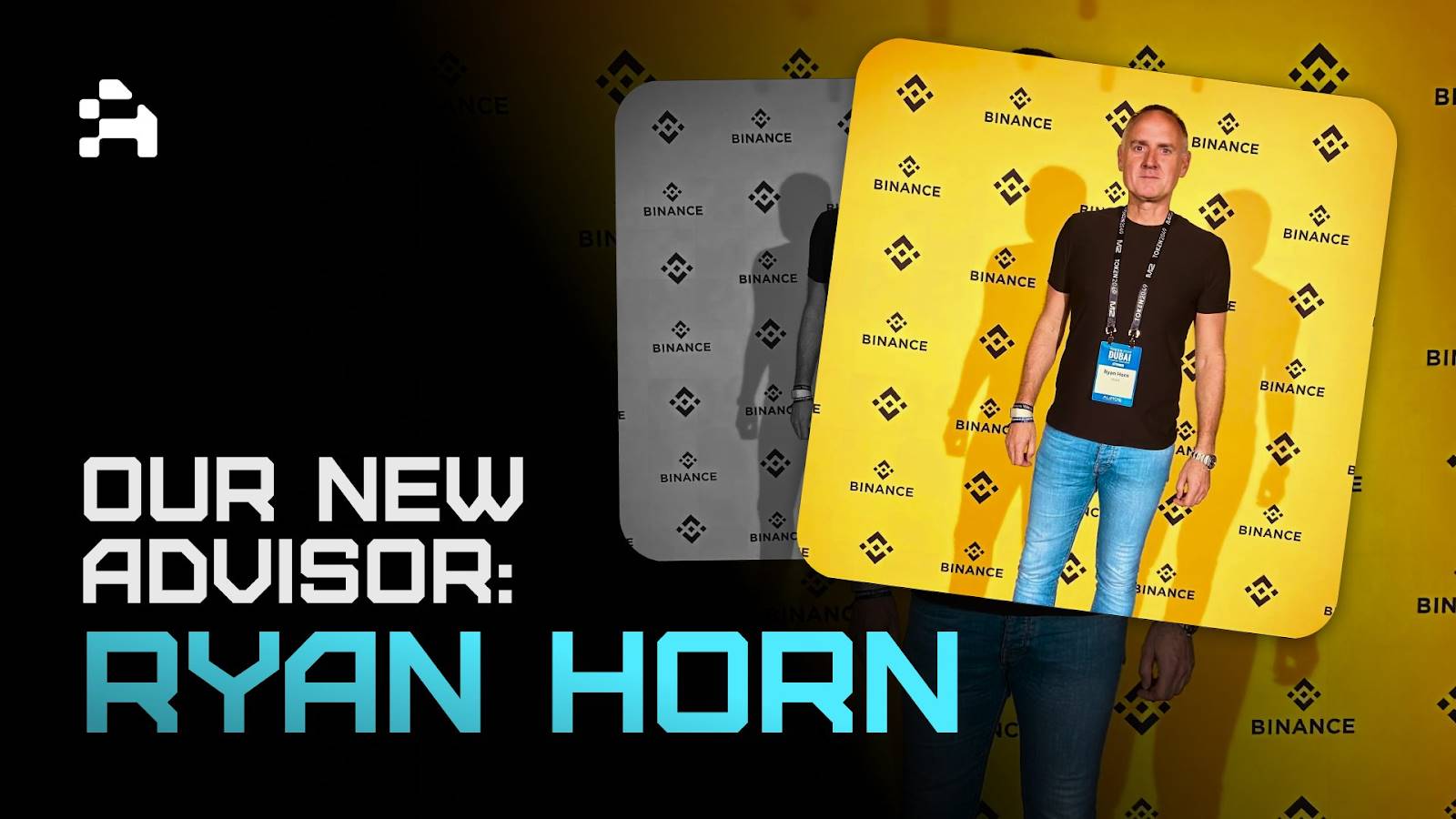
Another notable figure is Ryan Horn, a global leader in the Web3 space with extensive connections in sports, entertainment, and gaming. He formerly served as CEO of MARK, co-founder of N3On, and Director of Binance NFT. As a member of Atleta Network’s advisory board, Horn’s rich background provides forward-looking strategic guidance and raises strong community expectations for potential deep collaborations between Atleta Network and Binance.
Built for Sports: Inside Atleta Network’s Architecture
Atleta is an EVM-compatible, natively cross-chain interoperable modular Layer 1 blockchain that integrates smart contract creation, distributed data storage, financial transactions, and a dApp deployment ecosystem—designed to provide sports organizations with one-stop services as they explore the Web3 world.
Since early 2023, approximately 1,000 Web3 developers from around the world—including the UAE, Eastern Europe, Germany, and others—have been working on developing Atleta Network to better meet needs in sports data management, financial activities, and dApp deployment.
Architecturally, Atleta Blockchain is built on Polkadot’s Software Development Kit (SDK), combining four key elements: parachains, XCM+, cross-chain interoperability, and NPoS.
Parachains
Enables different sports organizations to create their own independent chains on Atleta, leveraging all network functionalities. Sports clubs can keep certain data private on Atleta’s distributed ledger while still utilizing the full validator set, block explorer, decentralized exchange, and other features.
XCM+
Atleta will use XCM (Cross-Consensus Message Format) for communication between parachains. The Atleta team is actively expanding XCM’s current capabilities, aiming to integrate complementary solutions like IBC or CCIP.
Three-Layer Modular Design
Atleta divides network functions into three distinct layers for improved performance. Its modular architecture includes layers for data storage, smart contract execution, and dApp deployment:
-
ATLETA - EL (Execution Layer): An EVM-compatible smart contract platform supporting transaction processing and dApp development.
-
ATLETA - IO (Interoperability Layer): Handles cross-chain communication, using relays to transfer assets and messages.
-
ATLETA - SL (Storage Layer): A data layer for storing any type of information (videos, text files, etc.) in a decentralized manner.
These three layers are interconnected and managed by a network of universal nodes, designed to leverage the verifiability and auditability inherent in blockchain data structures—providing an open, permissionless, censorship-resistant, and trust-minimized environment for dApp development and deployment.
NPoS
Atleta’s unique consensus mechanism differs from traditional Proof-of-Stake by introducing an additional layer of transaction validators—nominators. Users stake Atleta’s native token $ATLA to become nominators, randomly assigning validators among network nodes or users. This makes the network more secure and more rewarding for stakers.
This unique architecture makes Atleta Network especially well-suited to the needs of the sports industry. Specifically, Atleta Network offers sports organizations the following capabilities:
-
Secure and transparent decentralized data storage, enhancing data management;
-
Creation and deployment of custom dApps on Atleta’s dApp execution layer;
-
Issuance of fan tokens to strengthen connections between fans, sports organizations, and athletes;
-
Simplified financial operations via integrated DeFi components, enabling diverse investment strategies and lower transaction fees;
-
Sales of digital goods and memorabilia on the platform’s NFT marketplace, creating new revenue streams.
For individual users, Atleta Network also offers diverse participation options and earning opportunities:
-
Buy and sell sports-related digital products on the marketplace;
-
Store crypto assets including cryptocurrencies and NFTs in the native wallet;
-
Utilize Atleta’s DeFi ecosystem for crypto trading, swapping, and lending;
-
Participate in fantasy sports games and earn substantial rewards by winning leagues;
-
Interact directly with sports stars, support them, and receive rewards;
-
Vote on decisions related to your favorite teams or athletes.
With its unique architecture, flexible modular design, innovative consensus mechanism, and rich industry resources, Atleta Network not only enhances user experience but also opens up new business models and interaction methods for the sports industry—positioning itself as a key force driving deeper integration between Web3 and sports.
Token TGE Approaching: Atleta Olympia Testnet Participation Guide
As the native token of Atleta Network, all activities on Atleta are denominated in ATLA, which serves the following utilities:
-
Gas Payment: Users must pay gas fees in ATLA when interacting with Atleta Network;
-
Governance Participation: Users who stake ATLA earn staking rewards and gain voting rights in governance;
-
Parachain Deployment: To rent validator security and obtain a parachain slot on Atleta Network, participants must lock up a certain amount of ATLA.
Moreover, ATLA adopts a
Join TechFlow official community to stay tuned
Telegram:https://t.me/TechFlowDaily
X (Twitter):https://x.com/TechFlowPost
X (Twitter) EN:https://x.com/BlockFlow_News
 深潮TechFlow


