Interview with Delphi Digital Co-Founder: Token Unlocks Are Flawed but Hard to Change, and It's Inadvisable to Casually Attempt Secondary Investments
TechFlow Selected TechFlow Selected
Interview with Delphi Digital Co-Founder: Token Unlocks Are Flawed but Hard to Change, and It's Inadvisable to Casually Attempt Secondary Investments
Why are the prices of crypto assets so different between public and private markets?
 Navigating Web3 tides with focused insights
Compiled & Translated by: TechFlow
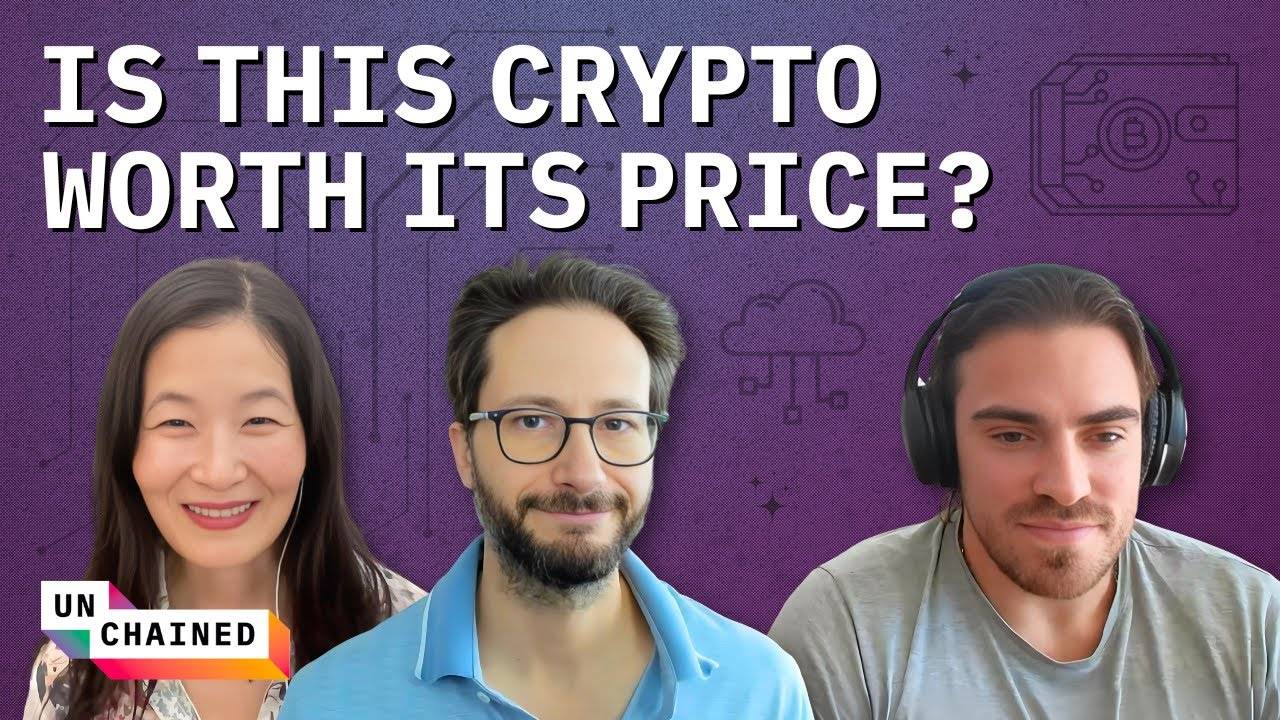
Guests: Jose Macedo, Co-founder of Delphi Digital; Ari Paul, CIO of Blocktower Capital
Host: Laura Shin, Author and Host of Unchained
Podcast Source: Unchained
Original Title: How to Figure Out Whether a Crypto Token Is Worth Its Trading Price
Air Date: July 3, 2024
Key Takeaways
-
In this episode, Jose Macedo from Delphi Digital and Ari Paul from Blocktower Capital discuss why crypto assets trade at vastly different prices in public versus private markets, and how they attempt to determine their true value.
-
The issue of low float and high fully diluted valuation (FDV) coins is frequently discussed in crypto. But another critical point investors need to understand is the unrealized gains on these tokens to truly grasp pricing dynamics.
-
Delphi Digital’s Jose Macedo and Blocktower Capital’s Ari Paul explain various metrics for uncovering a token’s real value, why the upcoming wave of token unlocks over the next few years isn’t bullish, and whether there are better ways to design vesting schedules for teams and insiders.
-
They also cover whether venture capitalists have been extracting value from crypto, whether games around circulating supply and FDV are driving investors toward meme coins, and why they believe the ICO era was better for retail investors.
Why Upcoming Token Unlocks Are Causing Market Anxiety
-
Laura notes that a massive amount of token unlocks are imminent, with about $750 million worth of tokens from 40 projects set to unlock in July alone. However, demand for these tokens is far from sufficient, creating significant market tension.
-
She mentions widespread discussions on social media, with general concern that the market won’t be able to absorb the flood of unlocked tokens.
-
Jose explains that during bull markets, people often dismiss fundamentals and fully diluted valuations (FDV) as “jokes.” FDV is calculated as total token supply multiplied by price, while market cap is based only on circulating supply.
-
Jose further elaborates on the impact of unrealized gains. These refer to potential profits held by teams or early investors who acquired tokens at very low cost bases. Some projects show unrealized gain-to-market-cap ratios as high as 4x to 8x—meaning an amount equivalent to the entire market cap could unlock every three to six months, overwhelming the market’s ability to absorb supply.
-
He notes that secondary market trading can help mitigate this—e.g., Multi Coin bought large amounts of Solana tokens on secondary markets before its unlock in 2020, reducing unrealized gains and stabilizing the market.
-
Ari details Solana’s January 2021 unlock, when supply increased by over 200%. By communicating with holders, they learned most were optimistic and didn’t plan to sell, minimizing market impact.
-
He emphasizes that the importance of the unrealized gains ratio ultimately comes down to human behavior and incentives. Investors typically want quick returns, and large unrealized gains incentivize selling immediately after unlock.
-
He adds that the type of token holder matters. If long-term investors like a16z hold the tokens, even a post-6-month unlock won’t significantly affect the market.
How the Unrealized Gains to Market Cap Ratio Affects Token Price Trends
-
Laura asks Jose to elaborate on how the unrealized gains to market cap ratio influences token price movements. She references a helpful example Jose shared on Twitter.
-
Jose illustrates using two hypothetical projects with identical $10 billion FDVs but different funding and team allocations:
-
Token A: Raised $200M at a $1B valuation, with 30% allocated to the team.
-
Token B: Raised $5M at a $100M valuation, with 20% allocated to the team.
-
Calculating unrealized gains:
-
Token A: Investor unrealized gains = $800M ($1B FDV - $200M raised), team gains = $300M, total = $1.1B.
-
Token B: Investor unrealized gains = $95M ($100M FDV - $5M raised), team gains = $20M, total = $115M.
-
-
Assuming both have 10% circulating supply, their market caps are both $1B.
-
Token A: Unrealized gains / market cap ratio = 1.1x.
-
Token B: Unrealized gains / market cap ratio = 0.115x.
-
-
Jose points out that while fundamentals matter, all else equal, investors would prefer Token B due to its lower unrealized gains ratio, indicating less selling pressure.
-
He stresses that projects with high unrealized gains face greater risk of price drops when unlocking, as the market struggles to absorb large volumes of newly available tokens.
How Some Token Projects Manipulate Reported Circulating Supply
-
Jose notes teams may report inflated circulating supply (float) to make their market cap appear higher and reduce the unrealized gains ratio. For instance, claiming a 10% float when actual circulation is only 1%.
-
Jose says market makers can control over 50% of float on day one, making price manipulation easier—especially ahead of unlocks.
-
He observes some projects include treasury tokens in circulating supply, even though these remain locked in multisig wallets or DAO controls.
-
Jose advises investors to check raw data on blockchain explorers like Etherscan to verify actual holdings. High-quality projects tend to be transparent, and investors should examine smart contracts and question teams directly.
-
Ari warns that simple metrics are easily gamed and shouldn't be relied upon exclusively.
-
Just like in equities, relying solely on P/E or P/B ratios doesn’t guarantee success—they can be misleading or manipulated.
-
-
He believes investors should read research deeply and understand underlying logic, not just conclusions.
-
Ari notes that over time, projects find new ways to manipulate metrics, so investors must continuously update their knowledge and analysis methods.
-
Air-drops have evolved similarly—early ones were less abused, but now require constant strategy adjustments to prevent exploitation.
-
Ari explains how complex legal and economic structures can distort Etherscan data.
-
Jose adds that founders might split their tokens across multiple wallets to disguise concentration, making it look like many team members hold small amounts. Investors must dig into on-chain data and ask questions.
-
Ari believes communication with teams and trusting their information is important—but requires thorough due diligence to assess credibility.
Can Retail Investors Actually Uncover the Truth Behind Token Projects?
-
Laura asks whether retail investors can realistically uncover project truths, especially without the VC-level resources of someone like Jose or Ari.
-
Jose believes it's possible, but requires strategy and tools.
-
Jose suggests joining investor group chats to exchange information with others interested in crypto. Quality teams engage openly on platforms like Discord.
-
Jose believes combining Etherscan data with team responses helps investors get closer to the truth.
-
Ari argues that uncovering truth requires wisdom, experience, and pattern recognition.
-
Ari cites FTX, where even top VCs were misled due to lack of pattern-matching experience.
-
He notes genuine due diligence involves extensive background checks—talking to former colleagues, other investors, etc.
-
Ari doesn’t recommend casual investing. He compares it to becoming a world-class tennis player or neurosurgeon—both require years of training and top-tier education. Without preparation, attempting such complex tasks is unwise. Crypto investing demands serious work and learning; otherwise, failure is likely.
Views on How Secondary Market Trading Might Impact Upcoming Token Unlocks
-
Laura references Jose’s tweets on unlock risks and wants to explore OTC and secondary market implications.
-
Jose expands on crypto’s future direction, particularly regarding unlocks and secondary markets.
-
Jose notes most tokens lack meaningful secondary market volume to offset unlock supply. Even larger ones like Tia and Layer 0 still can’t absorb full unlock impacts.
-
Jose believes most projects will face unlock-related pressure, but a few high-quality ones may maintain or increase value afterward.
-
He observes that unlike traditional VC, many crypto projects gain liquidity early—even pre-launch derivatives exist—making markets more complex and volatile.
-
Perpetual futures introduce strange dynamics—e.g., funding rates can stay positive even with no OTC buyers, meaning shorts pay longs.
-
Jose notes teams and investors are often unwilling to sell or short their tokens, partly because their net worth is tied up in them and they lack hedging expertise/resources.
-
Ari says hedging for VCs is highly complex and risky—requiring use of volatile exchanges, facing legal/compliance issues, and paying steep funding rates.
-
He notes valuation gaps between OTC and public markets can be huge, causing retail investors to overpay publicly.
-
Ari warns VCs may make poor investment decisions based on inflated public valuations, leading to overvalued investments. Borrowing against incorrect asset values can cause massive wealth destruction—a key reason behind many crypto collapses.
-
Laura concludes that many numbers in the market lack real meaning, urging investors to analyze data more carefully.
Current Token Launch Strategies Are Flawed but Still Favored by Insiders—and Unlikely to Change Soon
-
Laura brings up new proposals like Liquidity Adjusted Vesting and Liquid Vesting, asking Jose and Ari for their views.
-
Jose believes current launch strategies, despite flaws, work well for teams and insiders—which is why they’re unlikely to change quickly.
-
Jose notes projects often launch with low float, creating psychological price anchoring. Even if overpriced, investors accept it as normal.
-
Jose says high-valued tokens can be used to pay employees, attract talent, and improve retention. High valuations also boost market perception and allow partial monetization for teams and investors.
-
Jose argues such strategies give projects competitive edge via higher APRs and visibility. Projects trying alternative models often face bigger challenges and higher failure risk.
-
Jose mentions Friend Tech tried fully diluted and fully on-chain launches, but results were poor.
-
Ari agrees the strategy works short-term but may create long-term problems. As he puts it: "Choose your difficulty"—easy choices now may mean harder ones later, while hard choices now can lead to long-term rewards.
-
Jose agrees with Ari but stresses projects must survive in the short term to ever reach those long-term benefits.
Why Do Some Projects Favor Decisions That Prioritize Short-Term Gains Over Long-Term Success?
-
Laura references Carlson’s view: for a token to succeed, it should be distributed as widely as possible—meaning smaller allocations to early teams and investors. But current setups favor insiders, so they have little incentive to change.
-
Ari believes many founders and VCs play a “pump and dump” game, optimizing for short-term gains. Even founders with long-term visions face pressure from team members and investors demanding liquidity and returns.
-
Ari says founders must clarify their optimization goals and align early with investors. If pressured for liquidity, they need strong resolve to resist.
-
He believes in competitive markets, projects need rapid network effects—making “quietly building” difficult.
-
Ari gives the example of leading DEXs on Solana needing massive capital and marketing to build network effects. While new ideas exist, no clear solution has emerged.
-
Ari advises founders to keep strategies simple and remain humble in experimentation—not roll out new mechanisms across the whole project at once, but test small first, then scale.
-
Jose agrees, emphasizing survival in the short term is essential to enjoy long-term advantages.
-
Laura mentions other proposals like extending vesting periods (from 1–4 years to 2–7+ years) or price-based unlocking mechanisms.
How Can Crypto Projects Balance Funding with Real Success Metrics?
-
Jose believes time-based vesting is generally more effective than complex success metrics. In early-stage startups, stable success metrics are hard to define and evolve over time (e.g., TVL, user count, volume growth, liquidity).
-
Jose warns complex metrics are easy to game—teams may sacrifice real progress to hit targets, e.g., locking excessive LPs just to boost liquidity numbers.
-
With simple time-based unlocks, investors can assess at any point whether the project meets their definition of success and decide whether to sell.
-
Jose notes many projects raise far more than needed—especially software projects that can bootstrap via token incentives.
-
He believes overfunding leads to excessively high unrealized gains ratios and inefficient capital use.
-
Jose suggests increasing float as a solution, but not via airdrops—which are often exploited by “farmers” and sophisticated speculators who dump immediately, undermining fair distribution.
-
Jose argues ICOs are better—they enable earlier public participation, letting retail investors share in project upside.
-
Since the SEC banned ICOs, most gains have gone to VCs, reducing retail access.
-
Jose mentions they’re incubating a project aiming to reintroduce ICOs in a compliant way—enabling broader distribution and identifying truly committed investors through cost basis.
SEC Investigation Into VCs as Securities Dealers May Be Justified
-
Ari believes the SEC’s investigation into certain VCs acting as securities dealers is justified. These VCs talk to project teams pre-unlock, secure discounted tokens, and promote them upon public listing.
-
This makes VCs functionally securities dealers, profiting handsomely from token distribution. Ari believes legally and ethically, this resembles “pump and dump”—artificially inflating prices for profit.
-
Ari notes many early-stage crypto projects become financialized before achieving product-market fit or real usage. This allows intermediaries to extract outsized profits while the project itself sees little progress.
-
This financialization fuels speculation, pushing token prices far beyond intrinsic value.
-
Ari proposes two possible solutions:
1. Delay token issuance until the project has a real product and user base. This reduces early speculation and market hype.
2. Since the market is already highly financialized, eliminate vesting altogether to prevent middlemen and VCs from profiting via manipulation. This reduces unnecessary value transfer and creates a fairer market.
-
Ari stresses current mechanisms result in massive value transfer to intermediaries like market makers and certain VCs. Eliminating unlocks could reduce these rents and prevent market manipulation.
With Many Token Unlocks Approaching, Project Outlooks Are Bearish—What Challenges Exist in Mitigating Potential Sell-Offs?
-
Ari believes many existing projects will struggle with upcoming unlocks—especially VCs from 2017–2018 whose funds are maturing and need to realize returns.
-
With insufficient buyers to absorb unlocked supply, downward pressure is expected. Ari thinks individual projects may succeed, but overall market outlook is bearish.
-
Ari emphasizes that ultimately, building a great product and accumulating fundamental value and network effects is what gets projects through. With real users and product-market fit, short-term volatility becomes irrelevant.
-
Some projects may partner with OTC desks to repurchase tokens from early investors and redistribute them in a more orderly fashion, avoiding crashes.
-
Ari believes teams can ease pressure by allowing and encouraging secondary market trading. This lets early investors exit gradually, reducing unrealized gains overhang.
-
Ari thinks for new projects, extending unlock periods (2–7+ years) is reasonable. It aligns long-term incentives for teams and investors.
-
But for already-launched projects, extending vesting may just prolong pain—better to let sellers exit quickly and reset.
-
Jose agrees, noting many market caps are inflated. As unlocks happen, markets will face reality, and valuations will correct to more sustainable levels.
-
He adds that enabling secondary trading can help relieve pressure—especially post-funding, encouraging secondary activity reduces unrealized gains burden.
-
Jose stresses long-term success depends on building real products and value. While short-term volatility is inevitable, strong fundamentals ensure these issues are overcome.
Why Many Crypto Investors May End Up Holding Bags This Cycle Despite Planning to Exit Early and Avoid Losses
-
Ari emphasizes that tokenomics vary across projects—some tokens represent usage fees (like Bitcoin and Ethereum), others represent rights to future services. But some tokens lack clear economic value, making prices unsustainable.
-
He argues that if a project’s fundamental value is far below its market cap (e.g., $10M value vs. $1B valuation), no mechanism can fix it. The only solution is building a genuinely valuable product.
-
Ari reflects on the evolution of ICO mania—from organic early growth to rampant speculation. Initially, ICO participants were tech enthusiasts; later, everyone speculated, and each ICO sold out instantly.
-
Over time, investors pushed earlier—into public sales, private rounds, seed rounds, advisor tokens. Many believed they’d exit before the music stopped—but that mindset often means it’s already too late.
-
Ari believes in this cycle, many crypto investors will end up holding bags despite planning timely exits. With so many speculators hoping to flee before collapse, few actually succeed.
-
He notes the smartest money already sells at a discount via OTC deals before liquidity or exchange listing—while most investors become bagholders.
-
Jose observes many crypto investors implicitly believe the market is zero-sum—profiting means exiting before others lose. This played out in 2022’s crash, where high-risk players suffered massive losses.
-
He acknowledges many bad projects exist but believes crypto still has truly valuable ones that will become major global financial computing infrastructure.
-
Jose stresses that while 2x speculative gains may seem attractive short-term, finding truly valuable projects and holding long-term yields far greater returns.
-
He believes successful projects will generate enormous global value, and investors should focus on long-term potential, not just short-term volatility.
What Is the Future Role of VCs in Crypto, and How Will the Flood of Token Unlocks and Rise of Meme Coins Shape Bull Cycles?
-
Ari emphasizes that despite his earlier criticisms, he still believes in crypto’s technological and fundamental potential. He sees strong VC opportunities, especially in real-world asset (RWA) tokenization and social sectors.
-
He notes that while some projects are speculative, many are seriously building valuable products. The VC role is to identify these high-quality projects early and support their growth.
-
Ari points out a current market problem: high valuations. Top VC funds like Paradigm and a16z often drive up prices of good projects, turning excellent investments into mediocre or poor ones.
-
He stresses that investment success hinges on price—even a great project can yield poor returns if bought at too high a valuation.
-
Ari says meme coins reflect pure financial nihilism and speculation. For some retail investors, betting on meme coins may be more suitable than fundamental investing in crypto.
-
He warns most meme coin investors will lose money—but at least they know they’re gambling.
-
Jose believes the VC role hasn’t changed—to find high-quality projects early and help them grow. He notes VCs are often criticized for high FDVs and low floats, but this isn’t entirely their fault.
-
He explains VC returns take time—many projects don’t allow immediate selling even after listing.
-
Jose stresses that in bear markets, VCs take big risks to fund next-gen infrastructure. Despite envy and misunderstanding, they’ve played a crucial role in advancing the industry.
-
He notes that while real-world applications are still limited, successful projects like Uniswap show immense potential.
-
Jose views meme coins as pure exposure to crypto market risk—their rise reflects speculative demand. While they may attract capital short-term, truly valuable projects will prevail long-term.
-
Jose predicts that if ICOs return, they could disrupt the VC model by attracting broader capital and offering lower entry valuations.
Join TechFlow official community to stay tuned
Telegram:https://t.me/TechFlowDaily
X (Twitter):https://x.com/TechFlowPost
X (Twitter) EN:https://x.com/BlockFlow_News
 深潮TechFlow